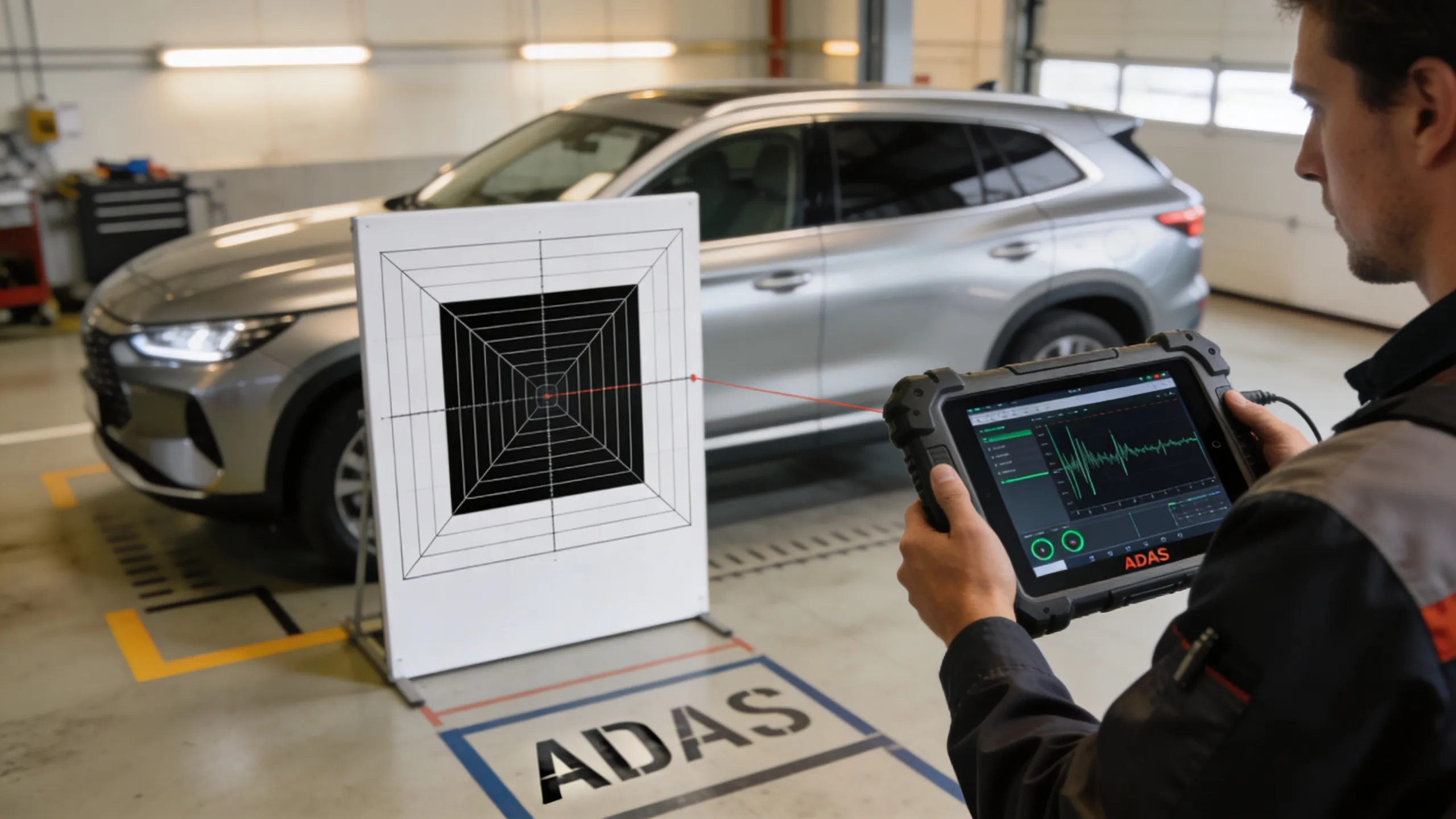
Modern vehicles can brake, warn, and steer with driver-assist technology. But those features only work as designed when ADAS calibration is correct. After collision repair, glass replacement, or suspension work, many cars need ADAS calibration before they return to normal driving. This guide explains what ADAS calibration means, why it matters, what it costs, and how car owners can verify the job was done right.
What Is ADAS Calibration?
ADAS calibration is the process of measuring and adjusting a vehicle's driver-assist sensors so they point and read correctly. It restores factory alignment for cameras, radar, and other ADAS sensors after repairs or parts changes. Without proper ADAS calibration, safety features like automatic emergency braking and lane support may react late, early, or incorrectly. That's the core issue, and it's why this topic matters more than most car owners realize.
For a full breakdown of this topic on its own, see what ADAS calibration is and why it's required.
How ADAS Systems Work in Your Vehicle
ADAS stands for Advanced Driver Assistance Systems. These features help reduce driver error by using electronic sensors to watch the road and nearby traffic. Common examples include:
- Automatic emergency braking (AEB)
- Forward collision warning
- Lane departure warning
- Lane keeping assist
- Adaptive cruise control
- Blind spot monitoring
- Rear cross-traffic alert
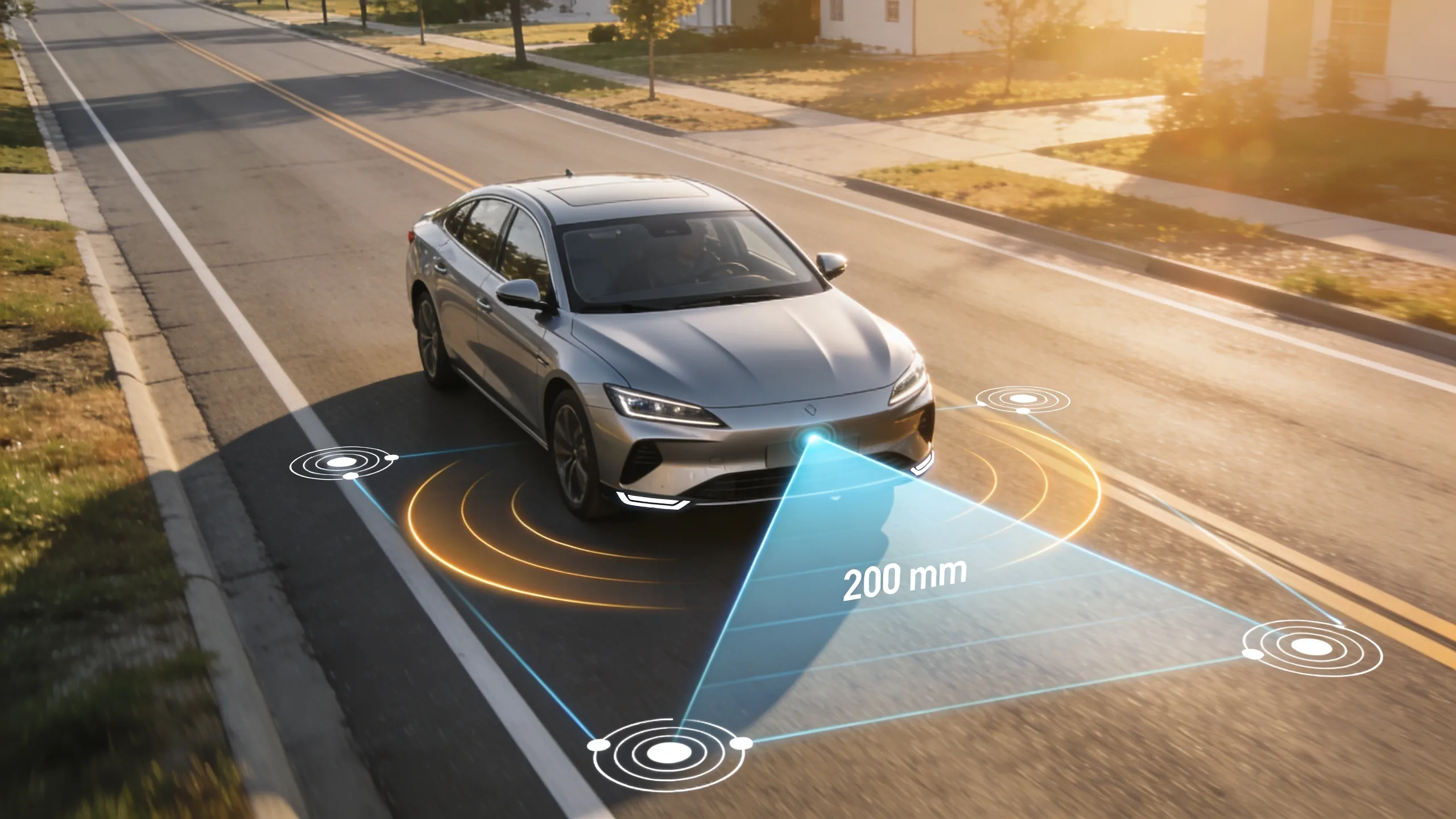
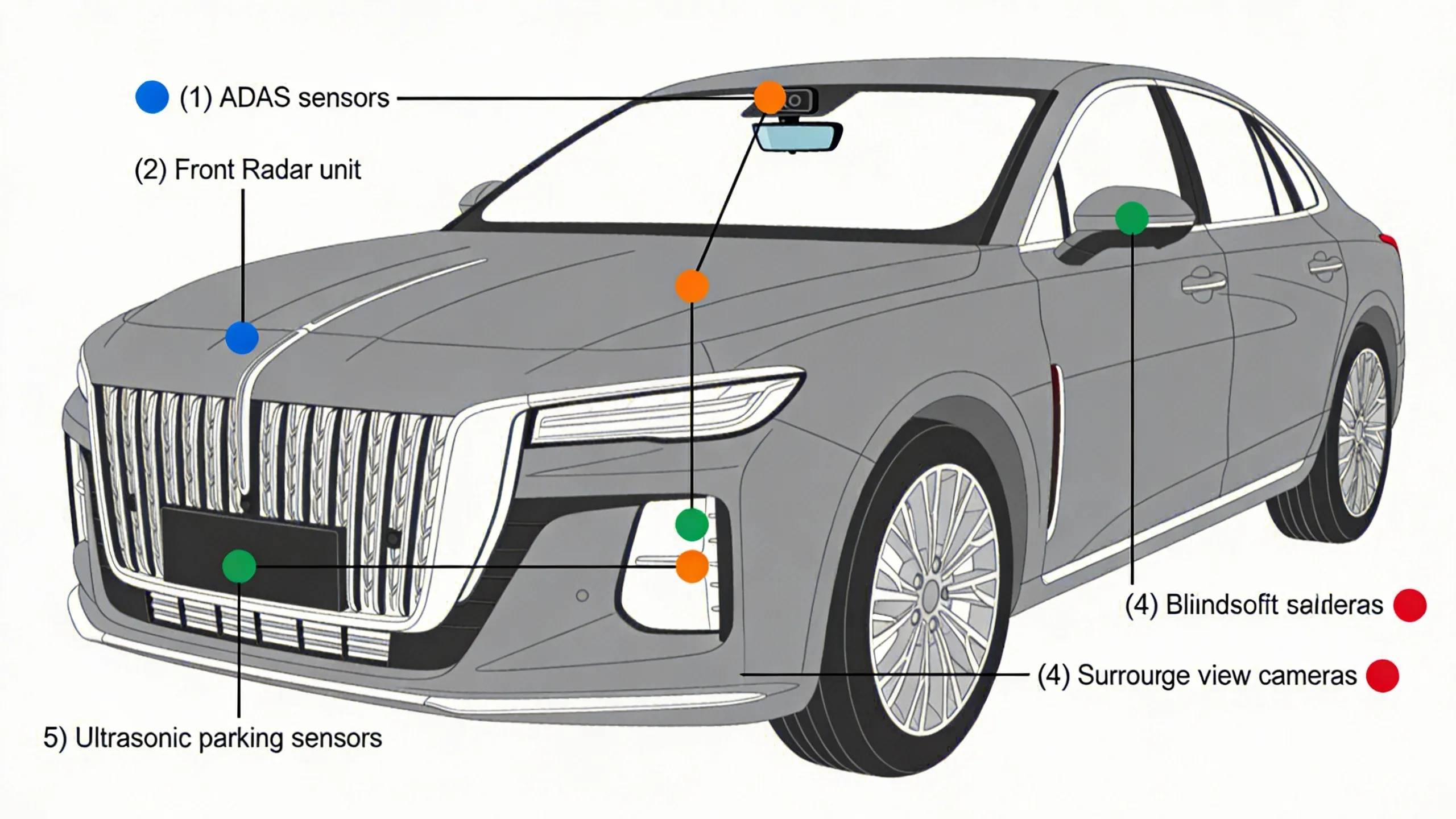
Most systems rely on at least one forward camera near the windshield and one radar unit in or behind the front bumper. Some vehicles add side radar, rear radar, ultrasonic parking sensors, and surround-view cameras. Newer models may also use LiDAR.
Each sensor has a fixed target zone. A front camera may track lane lines and vehicle shapes. A front radar may calculate distance and closing speed. Software then combines those inputs and decides when to warn or brake.
But sensor math is sensitive. If a camera angle is off by a fraction of a degree, the detection zone shifts by several feet at highway speed. That is why ADAS calibration is required after many common repairs.
What Calibration Actually Means (Plain Language)
In simple terms, ADAS calibration is a reset-and-aim process.
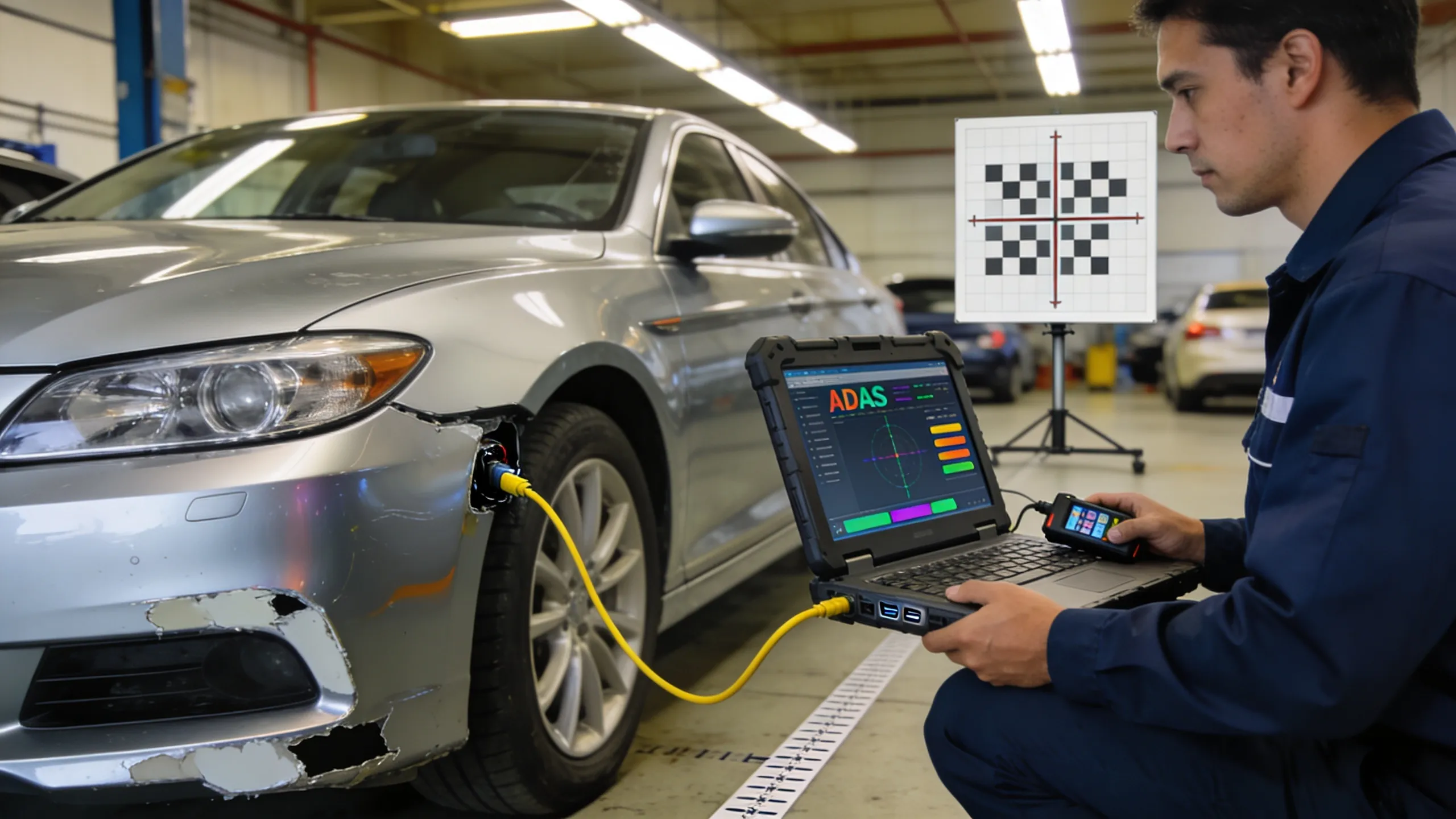
A trained technician uses OEM (original equipment manufacturer) procedures and calibration tools to make sure ADAS sensors see the road exactly as the vehicle maker intended. The process can include setup measurements, software scans, target boards, and test drives.
The goal is not "good enough." The goal is factory-spec accuracy.
Car owners often ask, "Is ADAS calibration just clearing a warning light?" No. Clearing diagnostic trouble codes is a separate step. ADAS calibration is a physical and software alignment procedure tied to strict dimensions, ride height, tire condition, and environment.
That's also why ADAS recalibration may be required even when no warning light appears.
Another way to picture ADAS calibration is to think about eyeglasses. If lens alignment is slightly off, a person can still see, but depth and timing get worse. ADAS sensors behave in a similar way. The system might still run, yet the margin for error gets smaller. In highway traffic, small timing errors can become safety problems quickly.
Manufacturers set calibration tolerances because their braking and warning logic assumes exact sensor orientation. When a vehicle leaves those tolerances, the software is still making decisions, but with less reliable input. Professional ADAS calibration is tied to measurable setup steps, not guesswork.
Why ADAS Calibration Matters for Vehicle Safety
ADAS systems are now a core part of real-world crash prevention. If the sensor setup is wrong, the safety system loses timing and reliability.
Industry numbers show why this is now a mainstream repair issue:
- The ADAS calibration market is projected at about $280.5 million in 2026, with 11.3% annual growth.
- Calibrations appeared on 28.3% of all repairable appraisals in 2025.
- 35.6% of direct repair program estimates now include calibration, up from 26.9% year over year.
- Around 61% of vehicles need calibration after qualifying repairs, yet nearly half are still missed.
- ADAS-related lawsuits rose from 3 in 2018 to 61 in 2024.
More cars have more ADAS sensors, and repair standards are catching up. ADAS calibration is no longer a niche service.
Safety Statistics That Show Why Calibration Isn't Optional
A key data point for car owners comes from crash reduction research. The Insurance Institute for Highway Safety reports that front crash prevention systems with automatic braking can cut rear-end crashes by around 50%. Source: IIHS front crash prevention research.
That benefit depends on proper performance. AEB timing is measured in fractions of a second. If ADAS calibration is skipped and sensor aim is off, the system may identify hazards too late.
Federal safety agencies also stress proper repair practices for advanced systems. Source: NHTSA vehicle safety technologies.
Repair education groups emphasize the same point. Source: I-CAR ADAS calibration training resources.
And the AAA has documented real-world AEB performance issues tied to sensor condition. Source: AAA vehicle technology research.
Modern safety technology is a chain. Sensor position, software logic, and vehicle condition all connect. ADAS calibration keeps that chain intact.
Real-World Risks of Skipping Calibration
When ADAS calibration is missed, the risk isn't just a dashboard icon. It can show up in subtle driving behavior that owners may not notice right away.
Potential outcomes include:
- Late forward collision warnings
- Unexpected lane assist corrections
- Adaptive cruise following too close or too far
- Blind spot warnings that miss a nearby vehicle
- False alerts in clear conditions
And some failures are silent. A vehicle might not trigger a fault code, yet still have reduced accuracy. That is why documented ADAS calibration matters after repair operations that affect sensor position.
There is also legal risk. If a vehicle leaves a shop without required ADAS calibration and then a crash occurs, documentation gaps can become part of insurance disputes or liability claims. To understand the full range of consequences, read what happens when you skip ADAS calibration.
When Is ADAS Calibration Required?
Vehicle makers publish specific repair procedures. But across brands, the same pattern appears: if a repair changes sensor position, angle, ride height, or structural reference points, ADAS calibration is likely required.
Car owners can see this pattern in common service events.
After Collision Repair
Collision repair is the most obvious trigger for ADAS calibration.
A front-end hit can shift radar brackets, bumper covers, mounting tabs, crash bar geometry, or camera alignment relative to the body. Even minor damage can move components enough to require ADAS recalibration. And it's not just front hits. A side impact can affect blind spot radar modules, while a rear impact can alter rear cross-traffic sensors.
Structural pulls and panel replacement can change alignment reference points. If a vehicle has been through collision repair services, owners should assume ADAS calibration is part of proper post-repair work unless OEM documentation proves otherwise.
For a detailed look at what happens after a crash, see ADAS recalibration after collision repair. And if the damage was minor, ADAS calibration after a fender bender covers the nuances of low-speed impact cases.
After Windshield Replacement
Windshield replacement is one of the most common ADAS calibration triggers.
Many forward-facing cameras mount to the windshield area. Replacing the glass can alter camera position due to bracket transfer, adhesive thickness, curing behavior, or tiny installation tolerances.
Industry data suggests that roughly 9 out of 10 vehicles from model year 2023 and newer need ADAS recalibration after glass replacement.
So after auto glass repair and replacement, car owners should expect an ADAS calibration discussion. If a provider says calibration is never needed after windshield work, that's a warning sign. For the full story on this trigger, see ADAS calibration after windshield replacement.
After Wheel Alignment or Suspension Work
Many owners are surprised by this one.
ADAS calibration may be required after wheel alignment, ride-height changes, steering angle sensor work, or suspension component replacement. Lane-centering and camera-based features use vehicle orientation data. If chassis geometry changes, sensor interpretation can change too.
Examples that may trigger ADAS recalibration:
- Strut replacement
- Control arm replacement
- Subframe adjustment
- Steering rack replacement
- Major alignment correction after impact
Not every alignment needs every system recalibrated. But checking OEM procedures is mandatory. See ADAS calibration after wheel alignment for more detail on this specific trigger.
After Bumper Replacement
Front radar often sits behind the bumper cover, and side or rear radar can be behind corner panels.
Replacing a bumper can shift sensor depth and angle based on bracket fit, clip pressure, cover contour, and paint layer thickness near sensor windows. That is why ADAS calibration is frequently required after bumper repair or replacement.
If the bumper absorbs even a low-speed hit, radar mounts should be inspected and measured. Visual checks alone aren't enough.
Dashboard Warning Signs That Indicate Calibration Is Needed
Warning lights are useful, but they're not the full story. Some systems degrade without clear warnings.
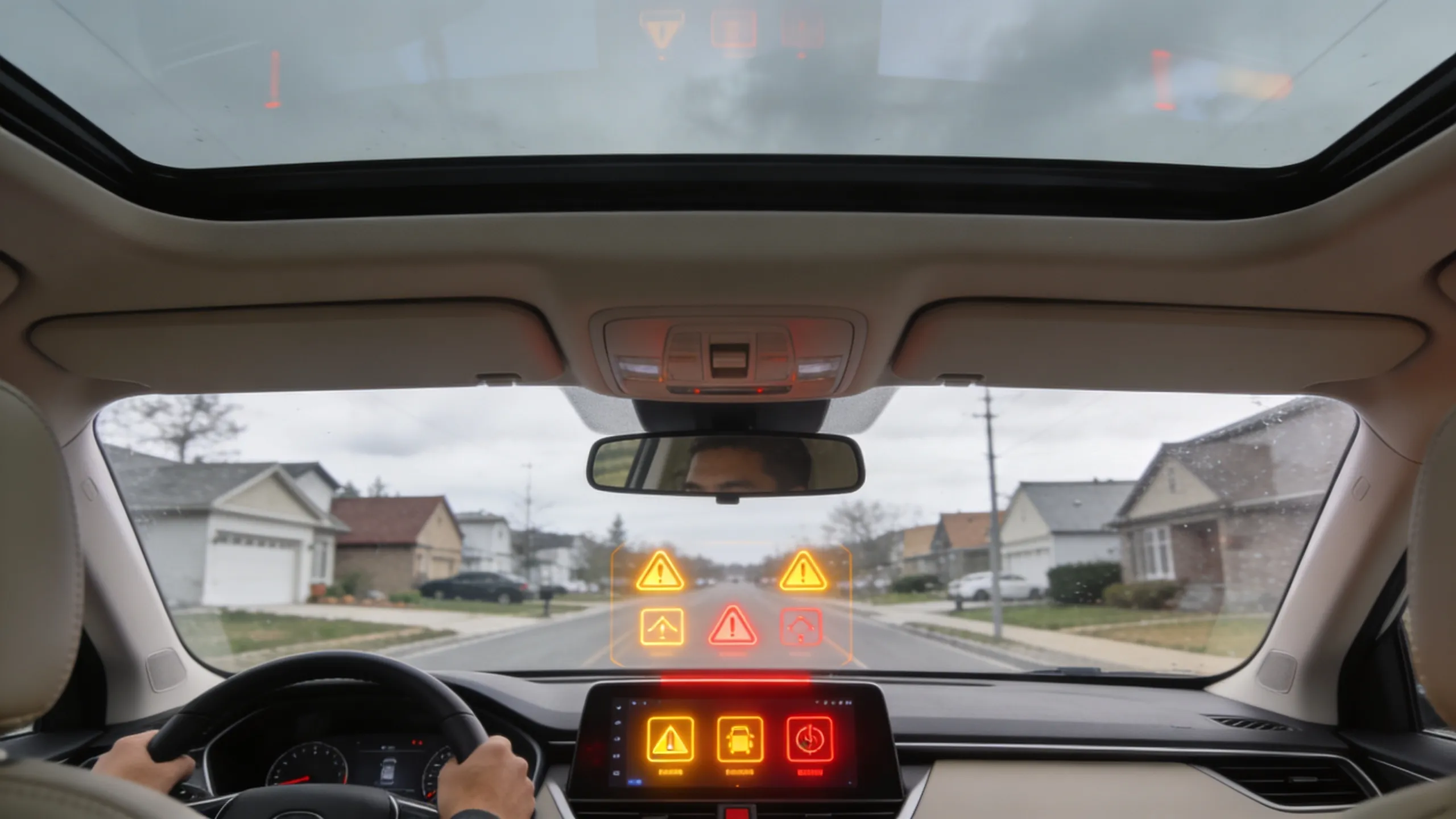
Still, car owners should watch for:
- "Front camera unavailable" or similar messages
- "Radar blocked" alerts in clear weather
- Lane assist unavailable notifications
- Adaptive cruise disabled unexpectedly
- Blind spot system fault messages
Behavioral signs also matter:
- New false alerts after repair
- Lane features drifting toward one side
- Late or inconsistent forward warnings
When these appear after repair, schedule a diagnostic scan and ADAS calibration check.
Owners should also watch for feature behavior changes that seem minor at first. For example, adaptive cruise may brake harder than before in light traffic, or lane assist may feel inconsistent between left and right curves. Those patterns can appear when ADAS sensors are technically online but not correctly aligned. A shop should evaluate these symptoms with scan data and confirm whether ADAS recalibration is required.
Static vs Dynamic ADAS Calibration
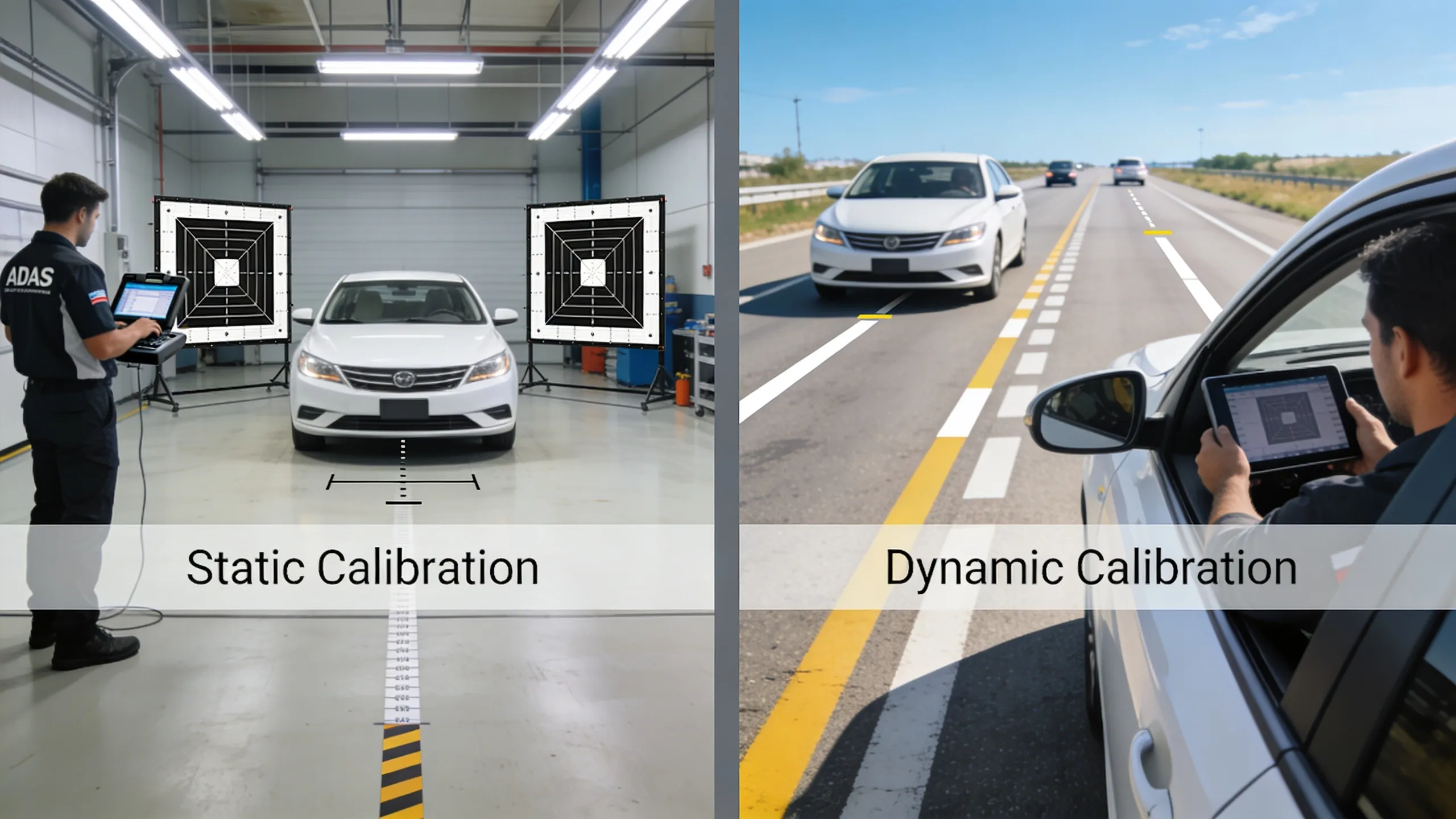
OEM procedures define two main methods: static and dynamic ADAS calibration. Some vehicles need one method. Others need both. For a deeper breakdown of the differences, see static vs dynamic ADAS calibration.
Static Calibration Explained
Static calibration is performed in a controlled indoor setup.
Technicians position the vehicle on a level surface, then place precise target boards or reflector fixtures at exact distances and angles. Scan tools communicate with ADAS modules while the system "learns" the target reference.
Static ADAS calibration depends on strict setup rules:
- Correct tire pressure and tread condition
- Proper fuel level and ride height
- No excess cargo load
- Controlled lighting and clear floor markings
- OEM-specified measuring points
A few millimeters can matter. Static ADAS calibration requires dedicated space and trained staff. There's no shortcut here.
Dynamic Calibration Explained
Dynamic calibration happens on the road during a guided drive cycle.
The vehicle is scanned first, then driven at specified speeds in required traffic and lane conditions so sensors can self-calibrate using real road markers and moving vehicles.
Dynamic ADAS calibration often needs:
- Clear lane markings
- Stable weather
- Speed range compliance
- Low to moderate traffic
- A minimum drive distance or time
Technicians monitor tool prompts throughout the drive. Some systems complete quickly. Others require repeat cycles.
Dynamic ADAS calibration can fail for reasons unrelated to vehicle damage. Faded lane lines, heavy rain, low sun glare, and stop-and-go congestion can all interrupt completion. When that happens, a qualified shop should document the failed attempt and re-run the procedure under suitable conditions. Car owners should expect this to be part of quality control, not an optional step.
Which Type Your Vehicle Needs
The answer depends on year, make, model, and system.
General pattern:
- Many forward cameras require static ADAS calibration, then a dynamic confirmation drive.
- Some radar systems can be dynamic only.
- Some luxury or newer platforms require both static and dynamic ADAS recalibration for one repair event.
Car owners should ask for OEM procedure references, not generic statements. A qualified shop should be able to show exactly why a given system needed static, dynamic, or both.
ADAS Sensors in Your Vehicle: A Quick Reference
Knowing basic sensor locations helps owners understand repair recommendations and ADAS calibration invoices. For a more technical breakdown, see ADAS sensors explained.
Forward-Facing Camera
Typical location: near the rearview mirror, attached to windshield glass or a module bracket.
Main tasks:
- Lane line detection
- Vehicle and pedestrian detection
- Traffic sign recognition
- High-beam assist support
Common calibration triggers:
- Windshield replacement
- Front-end collision
- Camera bracket replacement
- Suspension or ride-height changes (on some models)
Because this camera feeds several safety features, forward-camera ADAS calibration is one of the most frequent post-repair procedures.
Front Radar
Typical location: center grille area or behind the bumper cover.
Main tasks:
- Distance and closing speed measurement
- Adaptive cruise control inputs
- Forward collision support
- AEB trigger support
Common calibration triggers:
- Front bumper replacement
- Radar bracket replacement
- Minor front impact with mount disturbance
- Structural pulls affecting front geometry
Front radar ADAS calibration is especially sensitive to mounting angle.
Rear Radar and Blind Spot Monitoring
Typical location: rear quarter areas, often behind bumper corners.
Main tasks:
- Blind spot detection
- Rear cross-traffic alerts
- Lane-change warning support
Common calibration triggers:
- Rear bumper replacement
- Quarter panel repair
- Side impact repair
- Sensor module replacement
Blind spot ADAS recalibration is often required after side or rear body work, even when damage looks minor from the outside.
LiDAR (2025+ Vehicles)
LiDAR uses laser pulses to map distance and object shape. Not every vehicle has it, but adoption is growing in premium and newer technology packages.
Typical location: front fascia, grille zone, roofline, or integrated sensor pods.
Main tasks:
- Detailed 3D object mapping
- Improved object classification in mixed conditions
- Redundant input for advanced automation features
Calibration considerations:
- High sensitivity to mount position
- Model-specific OEM tooling
- Strict software version compatibility
As LiDAR spreads, ADAS calibration complexity and ADAS calibration cost can increase significantly. Luxury and EV platforms tend to have the most involved procedures.
Parking Sensors and Surround View
Parking assist systems often combine ultrasonic sensors and multiple cameras.
Typical location:
- Bumper corners and center points
- Side mirrors
- Tailgate and front grille zones
Main tasks:
- Close-range obstacle detection
- 360-degree stitched camera view
- Low-speed maneuver warnings
Common calibration triggers:
- Bumper repair or replacement
- Mirror replacement
- Camera replacement
- Wiring or module changes
Parking-related ADAS sensors may feel low-risk compared with AEB, but incorrect alignment can still reduce situational awareness in tight spaces.
How Much Does ADAS Calibration Cost in 2026?
ADAS calibration cost varies by system count, vehicle brand, labor rate, and whether OEM software subscriptions are needed. Below are common U.S. market ranges for 2026.
| ADAS Service | Typical 2026 Cost Range |
|---|---|
| Forward camera calibration | $250-$500 |
| Front radar calibration | $250-$450 |
| Blind spot monitoring calibration | $200-$350 |
| Multi-system calibration | $400-$800 |
| Dealership pricing | $400-$600+ per system |
Many repair events need more than one system. So total ADAS calibration cost can rise quickly when camera, radar, and blind spot modules all require ADAS recalibration.
A second comparison view helps owners budget by provider type:
| Provider Type | Typical Price Per System | Typical Use Case |
|---|---|---|
| Independent ADAS-capable shop | $250-$450 | Common camera/radar recalibration with local scheduling flexibility |
| Dealership | $400-$600+ | Brand-specific workflows, often higher overhead |
| Mobile calibration partner | $250-$500 | Shop-to-shop support where fixed bay tools are limited |
For a full breakdown of what drives price differences, see ADAS calibration cost: what to expect in 2026.
Dealership vs Independent Shop Pricing
Dealerships may have direct OEM access and model-specific familiarity, but pricing is usually higher. Independent shops with proper ADAS calibration equipment can perform equivalent procedure-based work at lower rates.
Price alone shouldn't decide. Car owners should compare:
- Whether the provider follows OEM procedures by VIN
- Whether both static and dynamic ADAS calibration can be done in-house
- Whether final documentation includes before and after scan records
- Whether road-test completion data is provided when required
If an independent shop has trained staff, proper targets, and OEM-compatible tools, ADAS calibration quality can be strong at a better price point.
Luxury vehicle owners face a distinct set of considerations. See ADAS calibration for Tesla, BMW, and luxury vehicles for brand-specific pricing and procedure details. And if the vehicle is a hybrid or electric, ADAS calibration for electric and hybrid vehicles covers what's different in those repair workflows.
Regional Cost Variation
ADAS calibration cost can differ by region due to labor rates, real estate costs, and local equipment availability.
Typical factors:
- Metro areas often charge more than smaller markets
- States with higher labor rates trend higher on all calibration services
- Areas with fewer equipped shops may show longer wait times and higher prices
- Luxury-brand concentration can raise local averages
For owners comparing quotes, these steps help:
- Request itemized pricing by system (camera, radar, blind spot)
- Confirm if scan fees are included
- Ask whether road-test labor is billed separately
- Ask whether sublet markup applies when calibration is outsourced
Some estimates bundle ADAS calibration into larger repair packages. That can hide the true per-system cost and make quote comparison harder. Owners can request a split view with labor hours, scan fees, target setup fees, and road-test charges listed separately. Itemization improves transparency and helps confirm that ADAS recalibration was budgeted for every affected system.
Does Insurance Cover ADAS Calibration?
In many collision claims, yes. But coverage depends on policy terms, claim type, and repair documentation. For a full walkthrough of the coverage question, see does insurance cover ADAS calibration.
When Insurance Pays for Calibration
Insurance is most likely to pay for ADAS calibration when:
- The calibration is tied to covered collision damage
- OEM procedures show calibration is required after the repair operation
- The shop documents that affected ADAS sensors were involved
Common covered scenarios:
- Front-end collision with radar or camera impact area repair
- Side impact affecting blind spot modules
- Windshield damage from a covered event requiring camera ADAS recalibration
Potential coverage friction points:
- Insurer questions whether calibration was "necessary"
- Missing proof of pre-scan and post-scan data
- No OEM procedure attachment in final invoice packet
Car owners can reduce denial risk by insisting repairers document every calibration decision against OEM requirements.
Documentation You Need for Your Claim
Good paperwork is the strongest tool for coverage success.
Essential files:
- Repair order with VIN-specific line items for ADAS calibration
- Pre-repair and post-repair diagnostic scan reports
- OEM procedure excerpts showing required ADAS recalibration steps
- Final calibration report with pass or completion status
- Sublet invoice if calibration was performed by a partner facility
If insurer review is delayed, these documents support clear escalation. They also protect resale value by showing safety systems were restored correctly.
When discussing a claim, owners can use clear wording: "Please confirm that required OEM ADAS calibration procedures are approved and reimbursable for this VIN and repair plan." This frames the issue around documented manufacturer requirements rather than shop preference. It often speeds approval because adjusters can tie payment decisions to procedure-based evidence.
Can You DIY ADAS Calibration?
Short answer: for almost all car owners, no.
DIY interest is understandable. Many owners search "what is ADAS calibration" and wonder if a scan tool can handle it at home. But true ADAS calibration is far beyond normal garage-level service.
Professional ADAS calibration often requires:
- Dedicated target systems and fixtures costing about $50,000 to $150,000
- OEM or OEM-approved software subscriptions
- Precise level floors and controlled bay dimensions
- Brand-specific procedures and tolerances
- Technician training on scan logic and setup measurement
Even a high-end consumer scan tool can't replace full static target systems and manufacturer workflows.
A do-it-yourself attempt creates hidden risk. A system may show no warning light yet still be out of specification. That's not a theoretical concern. It's a documented pattern in repair data.
Better path for owners:
- Ask a qualified shop for a calibration pre-check
- Request OEM procedure confirmation
- Keep documentation for safety and insurance records
DIY can still help in one way. Owners can learn enough to ask better questions and avoid incomplete repair work.
How to Find a Qualified ADAS Calibration Shop
Only about one-quarter of repair shops are properly equipped for ADAS work. That makes shop selection a safety decision, not just a price decision.
Car owners can use this checklist when comparing options. If you're searching locally, ADAS calibration near me: how to find a qualified shop covers how to evaluate providers in your area.
Certifications to Look For (I-CAR, ASE, OEM)
Helpful indicators include:
- I-CAR training in ADAS-related repair and calibration workflows
- ASE certifications relevant to diagnostics and electronic systems
- OEM collision program alignment or documented brand procedure access
No single badge guarantees quality. But certifications plus clear process documentation are strong signs.
Owners searching locally can also review repair networks in their area, such as a state and city body shop directory, then verify calibration capability directly before booking.
Questions to Ask Before Booking
Use direct questions. Good shops answer clearly.
- Which ADAS sensors on this vehicle typically need calibration after this repair?
- Do technicians perform static and dynamic ADAS calibration in-house?
- Which scan platforms and target systems are used?
- Are calibrations performed using OEM procedure steps by VIN?
- Will the final file include pre and post scans and calibration completion reports?
- Is any ADAS calibration sublet to another provider?
- How are test drives documented for dynamic procedures?
If answers are vague, keep looking.
It also helps to ask whether the shop has a written escalation path when a calibration fails on first attempt. Good facilities usually do: verify setup measurements, check ride height and tire specs, inspect mounts, update software if needed, then repeat the procedure. That process signals discipline and reduces the chance of a rushed handoff.
Red Flags to Watch For
Car owners should be cautious when a provider says:
- "Calibration is optional unless a light is on."
- "This model never needs ADAS recalibration after glass work."
- "We just clear codes and it's done."
- "Documentation isn't available."
Other red flags:
- No controlled calibration bay for static procedures
- No road-test process for dynamic procedures
- Flat quote without system-level line items
- No explanation of affected ADAS sensors after repair
If a shop also performs services like paintless dent repair for minor impact damage, that can be convenient. But convenience doesn't replace ADAS calibration capability.
How to Verify ADAS Calibration Was Done Correctly
Owners don't need to be technicians. They do need proof.
A solid verification process combines paperwork, basic functional checks, and follow-up if anything feels wrong.
Post-Calibration Testing Checklist
After vehicle pickup, owners can do a simple confirmation routine:
- Confirm no ADAS warning lights are active
- Test lane warning and assist availability on clear road markings
- Test adaptive cruise operation in safe traffic conditions
- Check blind spot alerts with passing vehicles
- Confirm parking and surround-view features if equipped
- Note any false warnings or unavailable messages
This is not a substitute for shop diagnostics. It's a practical owner-level check.
If unusual behavior appears, return immediately and request re-evaluation with documented scan results.
Documentation You Should Receive
At minimum, owners should receive:
- Itemized invoice listing each ADAS calibration operation
- Pre-scan and post-scan reports
- Calibration completion output by system (camera, radar, blind spot)
- Notes on static or dynamic method used
- Road-test notes when required
- Any sublet provider details
For long-term records, keep these documents with the vehicle history file. They support insurance claims, resale transparency, and liability protection.
If a provider can't produce calibration outputs, owners should request them before accepting final closure of the repair order. Documentation is part of the service itself. Without it, there's no objective proof that ADAS calibration was completed to spec.
How Long Does ADAS Calibration Take?
Time depends on vehicle complexity, procedure type, and scheduling flow. For timing expectations by scenario, see how long ADAS calibration takes.
Rough 2026 timing ranges:
| Scenario | Typical Time |
|---|---|
| Single-system camera ADAS calibration | 1-2 hours |
| Single-system radar ADAS calibration | 1-2 hours |
| Dynamic-only recalibration with clear conditions | 30-90 minutes |
| Multi-system ADAS recalibration | 2-4+ hours |
| Repair + sublet transfer workflow | Same day to next day |
Important timing factors:
- Setup time for static target positioning
- Required drive conditions for dynamic calibration
- Weather and lane visibility
- Queue delays at sublet facilities
- Software update or scan communication issues
Owners should ask whether ADAS calibration is done before delivery quality checks. The best process includes calibration completion, final scan verification, and functional confirmation before handoff.
Scheduling lead time matters too. In some markets, the actual ADAS calibration procedure may take two hours, but appointment delays can add several days if shops are backed up or relying on mobile partners. Ask about both "hands-on time" and "calendar time" to set realistic expectations.
For fleet owners or households with one shared vehicle, planning this window in advance can reduce disruption. Some repairers can stage parts, pre-scan early, and reserve a calibration slot for the same day as structural or glass completion.
Key Takeaways for Car Owners
ADAS calibration is now a standard part of safe modern vehicle repair. It's required more often than many owners expect, especially after collision work, windshield replacement, bumper replacement, and suspension or alignment changes.
Key points to remember:
- ADAS calibration restores sensor accuracy to factory intent.
- ADAS recalibration may be needed even without warning lights.
- ADAS calibration cost in 2026 typically ranges from $200 to $800 depending on systems involved.
- Insurance often covers ADAS calibration when tied to a covered repair and documented correctly.
- DIY ADAS calibration isn't realistic for most owners because the tools, environment, and software are specialized.
- Shop selection matters because many facilities still lack full ADAS capability.
For car owners, the best strategy is simple: ask for OEM-based procedures, request full documentation, and verify system behavior after pickup. ADAS calibration is not an add-on. It's part of returning a repaired vehicle to safe operation.
As ADAS sensors and software become standard across more models, ADAS calibration will continue to move from "special case" to normal repair protocol. Owners who understand that shift are better prepared to protect safety, claim coverage, and make informed repair decisions.