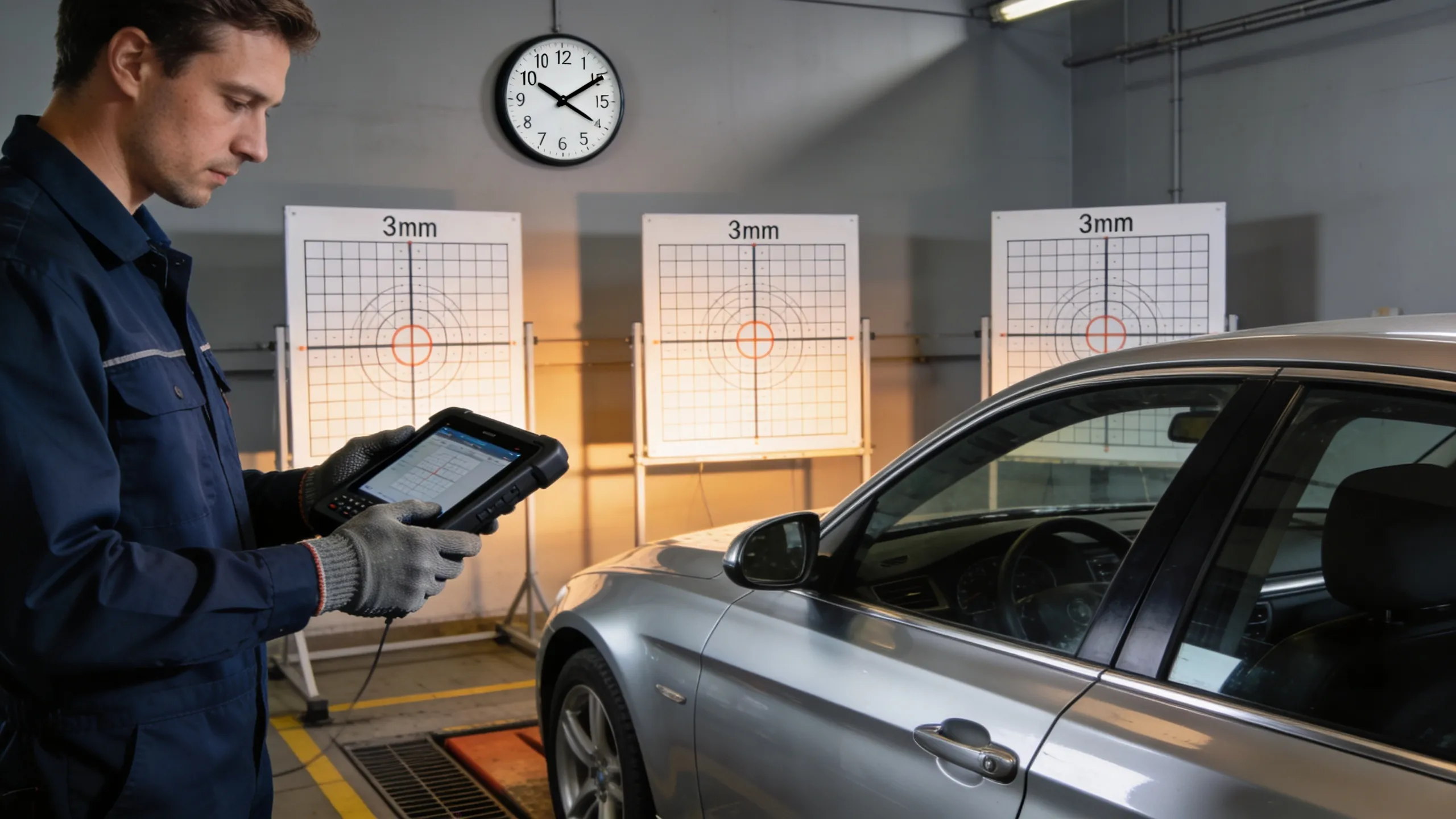
Modern cars can brake, steer, and warn drivers using cameras, radar, and sensors. But those systems only work right when they're aimed correctly. That's why many drivers ask how long does ADAS calibration take after a collision, windshield replacement, or suspension work. The short answer: it depends on the system and vehicle. Some calibrations take under an hour. Others can run several hours when multiple systems need setup, road testing, and verification.
This guide explains typical ADAS calibration time, what happens during each step, and what adds delays. It also shows how calibration fits into a full repair schedule so vehicle owners can plan with fewer surprises. For a full foundation, read the ADAS calibration guide.
How Long Does ADAS Calibration Take? The Quick Answer
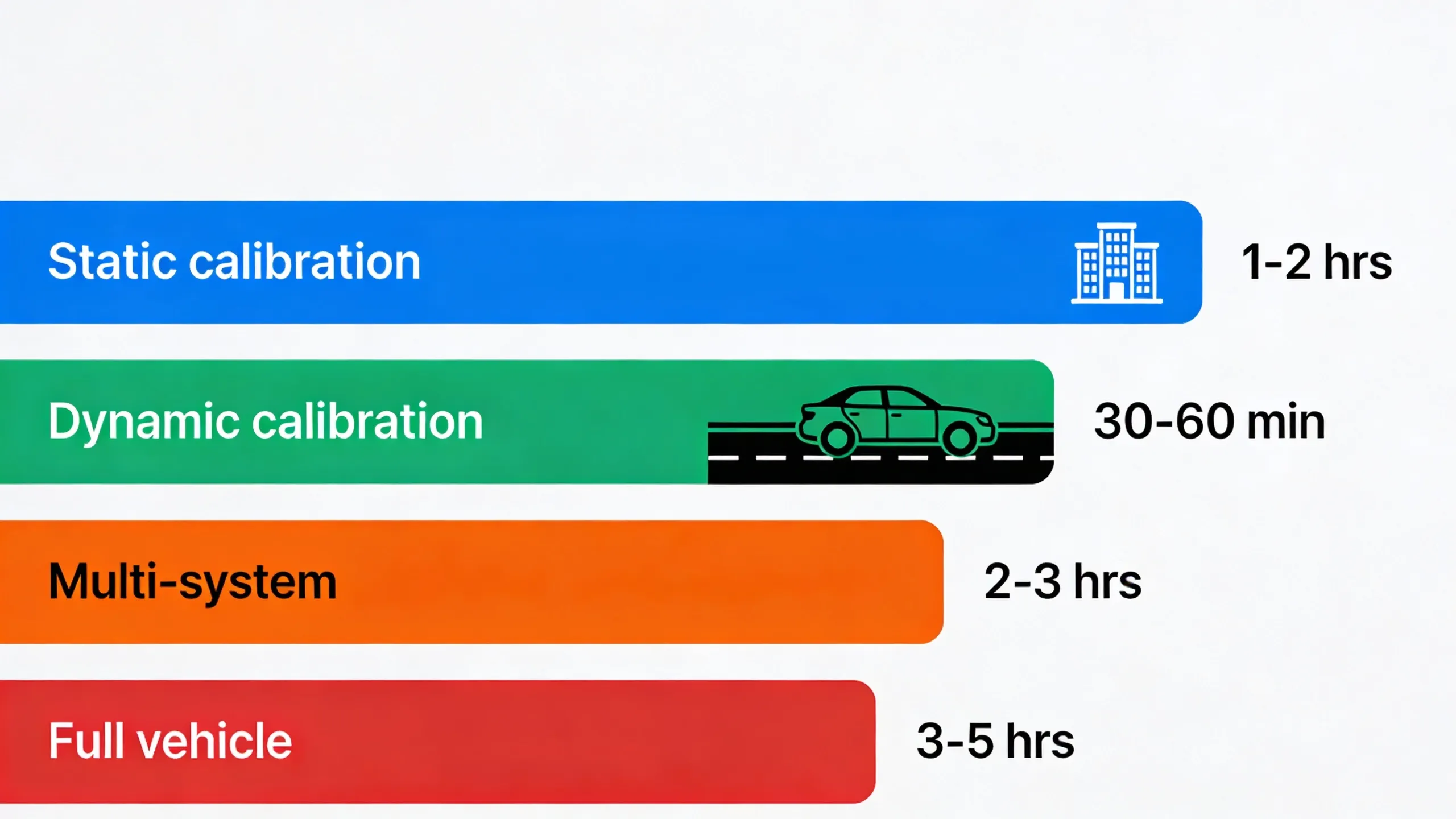
Most single-system ADAS calibrations take 30 minutes to 2 hours. Dynamic calibration runs 30–60 minutes on average. Static calibration usually takes 1–2 hours. When multiple sensors need calibration, the total reaches 2–3 hours. Full-vehicle calibration (think luxury or EV platforms with 8+ sensors) can run 3–5 hours.
That range covers most passenger vehicles in normal shop conditions. Shops still need to confirm OEM instructions for the exact year, make, trim, and ADAS package before giving a final time estimate.
| Calibration Type | Typical Duration | Factors That Add Time |
|---|---|---|
| Static (single system) | 1–2 hours | Complex vehicle systems, software updates |
| Dynamic (single system) | 30–60 minutes | Weather delays, traffic conditions |
| Multi-system (static + dynamic) | 2–3 hours | More sensors = more time |
| Full vehicle (all systems) | 3–5 hours | Luxury/EV vehicles with 8+ sensors |
| As part of collision repair | Adds 1–3 hours | Depends on systems affected |
| After windshield replacement | 1–2 hours | Usually static camera only |
Static Calibration Timeline
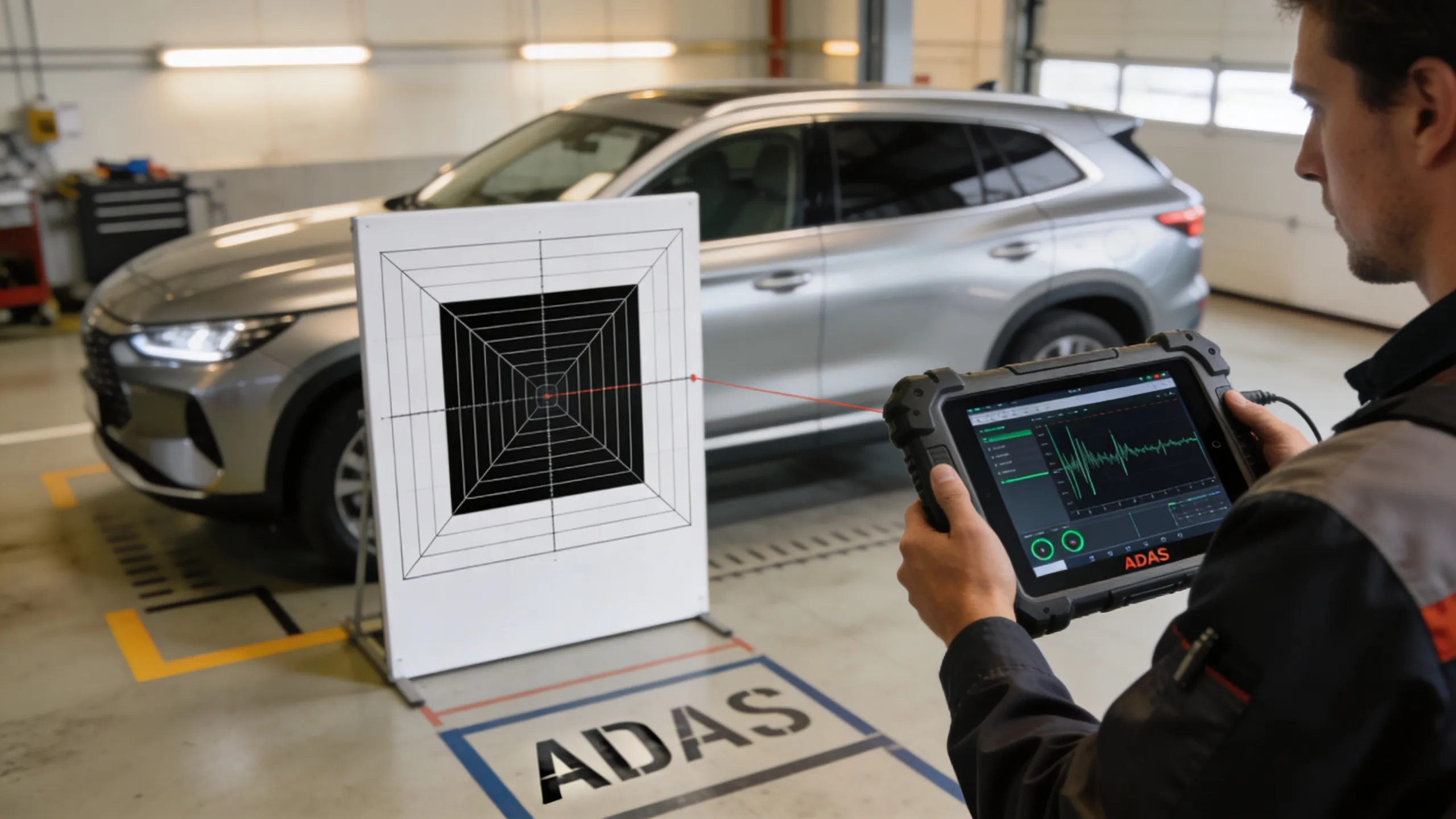
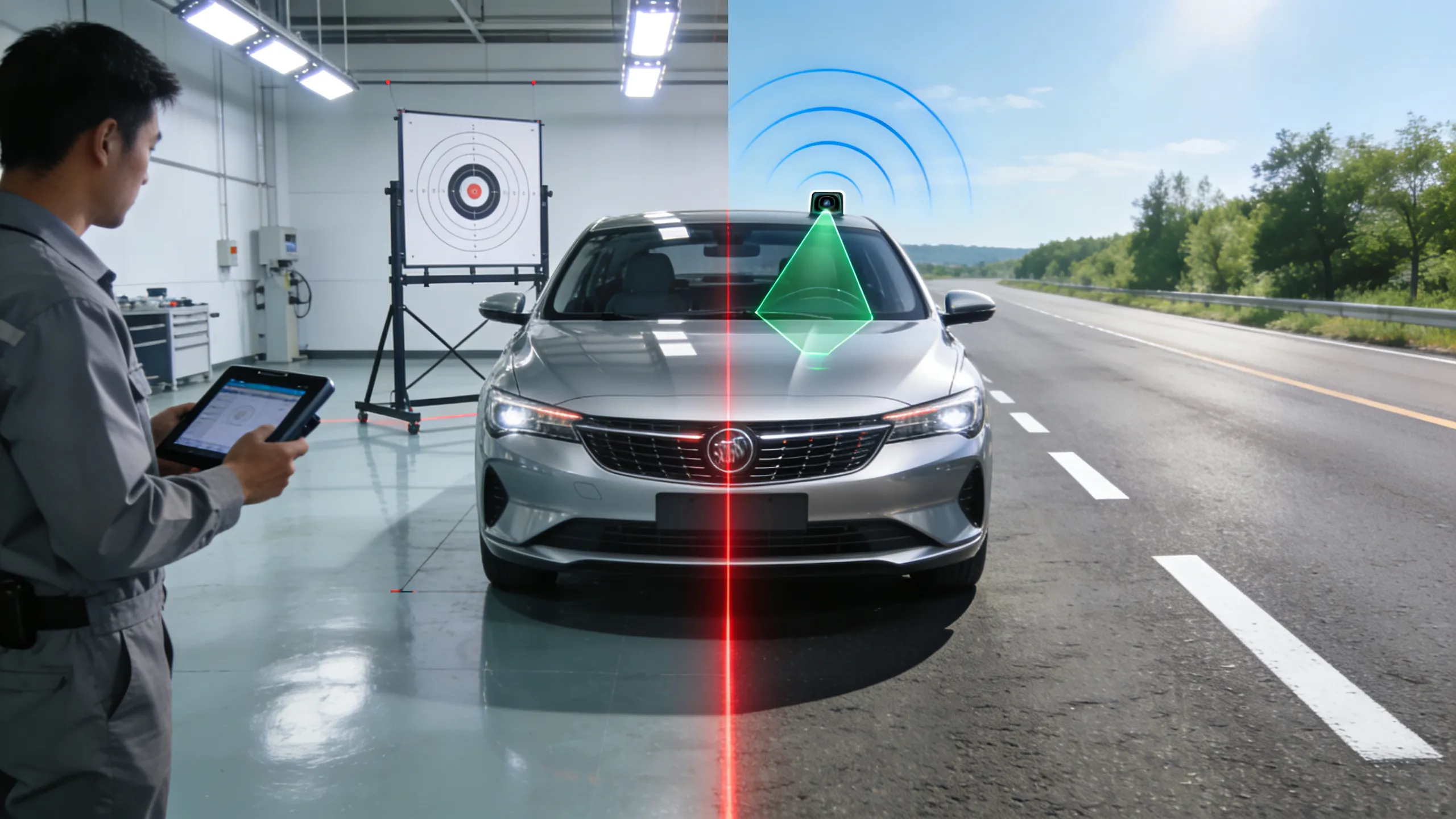
Static calibration is done inside a controlled bay using targets, laser or measuring tools, and a scan tool. It's common for forward-facing cameras and some radar setups. Static jobs often take the longest per system because setup must be exact.
1) Setup Time
Technicians first check tire pressure, ride height, fuel level, and suspension condition as required by the OEM procedure. Then they position the vehicle on a level floor and place calibration targets at precise distances and angles.
Typical setup time: 20–45 minutes.
2) Calibration Process
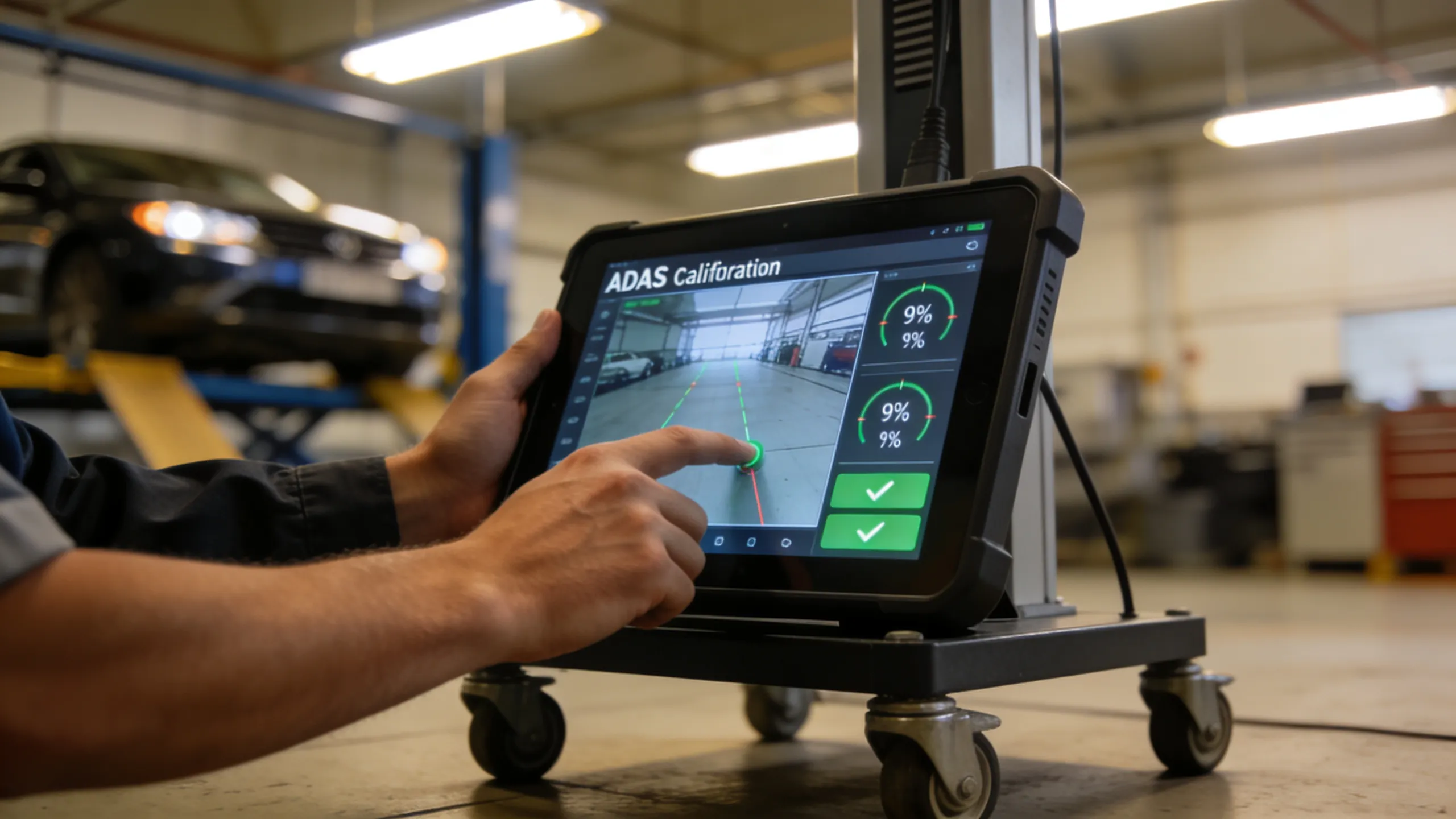
After setup, the scan tool runs the calibration routine. The module reads target data and adjusts camera or radar reference points. Some vehicles finish quickly. Others need repeated alignment checks if measurements are off by even a small margin.
Typical calibration process time: 20–40 minutes.
3) Verification and Documentation
Final steps include fault-code checks, function checks, and repair order documentation. Many shops also produce a post-calibration scan report for the vehicle's records. This step takes less time than setup, but skipping it is not an option — incomplete documentation creates liability exposure for both the shop and the owner.
Typical verification time: 10–20 minutes.
Total static ADAS calibration duration: usually 1–2 hours for one system.
Need a side-by-side method breakdown? See static vs dynamic ADAS calibration.
Dynamic Calibration Timeline
Dynamic calibration is performed on the road under specific driving conditions. The vehicle uses lane markings, road edges, speed ranges, and time intervals to learn reference values. It's common for lane camera systems and some radar combinations.
1) Pre-Drive Preparation
Before driving, technicians run a pre-scan and confirm no blocking faults exist. They also verify windshield clarity, tire condition, and alignment prerequisites when required by the OEM.
Typical prep time: 10–15 minutes.
2) Test Drive Requirements
The technician drives at OEM-defined speeds, often on clearly marked roads. Some procedures need steady speeds for 10–30 minutes. Others wrap up faster when lane markers are clean and traffic is light.
Typical drive time: 15–35 minutes.
3) Verification
After the drive, the scan tool confirms calibration status. If the module doesn't complete, the drive cycle may need repeating under better conditions.
Typical verification time: 5–10 minutes.
Total dynamic ADAS calibration time: usually 30–60 minutes.
But weather can derail this quickly. Heavy rain, fog, sun glare, faded lane markings, and stop-and-go traffic can all push ADAS calibration duration past an hour.
How Long Does ADAS Calibration Take With Multiple Systems?
Many late-model vehicles have multiple ADAS features: front camera, front radar, blind-spot radar, rear cross-traffic sensors, and surround-view cameras. When more than one system is affected, calibrations run in sequence.
Typical multi-system calibration time: 2–3 hours.
Full-vehicle jobs take 3–5 hours, especially on luxury or EV platforms loaded with modules. And that doesn't always include wait time between repair stages.
Why so long? One sensor can depend on another system finishing first. A shop may need to complete wheel alignment, then static camera calibration, then radar routine, then a dynamic drive — in that exact order. Skipping steps or running them out of sequence can cause calibration failures.
Shops doing collision repair alongside calibration (a common scenario) should account for this in the repair timeline. For context on what that work involves, see the collision repair service page.
Factors That Affect How Long ADAS Calibration Takes
Two cars can have the same damaged part and still show very different ADAS calibration durations. Here are the most common reasons.
Vehicle Make and Model
OEM procedures vary widely. Some models use simple single-target setups. Others demand tighter tolerances, extra measurements, and additional preconditions that add 30–60 minutes on their own.
Number of Systems Being Calibrated
A front camera-only job is faster than front camera plus radar plus blind-spot. More systems means more scan steps and more verification time. It adds up fast.
Shop Equipment and Bay Setup
Shops with dedicated calibration bays and trained technicians move faster and more consistently. Shops that must rearrange floor space or share tools may need extra setup time (sometimes 30–45 minutes just to prepare the bay).
Software Updates and Diagnostic Issues
Sometimes a module needs a software update before calibration can begin. Other times, stored trouble codes block the process until underlying repairs are completed. Either issue can add 30–90 minutes or more to the job.
Weather and Road Conditions for Dynamic Jobs
Dynamic routines depend on real road data. Bad weather and poor visibility delay completion. Traffic can prevent the steady driving pattern the OEM requires. On a heavy rain day, a shop may not complete a dynamic job at all and will need to reschedule.
Industry repair guidance consistently points technicians to OEM procedures and documented calibration requirements. Key references include:
- I-CAR: ADAS Calibrations Part of a Proper, Complete Repair
- I-CAR RTS: ADAS Identification and Calibration Requirements
- NHTSA: Automated Vehicles and Advanced Safety Technologies
How ADAS Calibration Fits Into a Full Repair Timeline
Most drivers don't schedule calibration as a standalone first step. It's usually tied to other repair work. Knowing the sequence helps set realistic expectations.
Collision Repair + Calibration Scheduling
After collision repairs, calibration is typically near the end of the workflow. Structural and suspension repairs come first. Then alignment, scanning, and calibration follow. In most cases, ADAS work adds 1–3 hours to that final stage.
Windshield Replacement + Calibration Same Day
Many windshield jobs include same-day camera calibration (often static only). Typical added time is 1–2 hours. But some vehicles also need a dynamic drive afterward, which extends the appointment. Owners replacing their windshields should ask the shop upfront which calibration type the OEM requires. See the auto glass repair page for more on how windshield replacement and calibration are handled together.
Standalone Calibration Appointments
Standalone appointments can move faster when no extra repairs are needed. A single dynamic job may wrap up in under an hour. Multi-system static and dynamic work may still require half a day. Don't assume a short window is enough without checking first.
Cost planning matters too. This related guide covers pricing variables in detail: ADAS calibration cost.
Tips for Scheduling ADAS Calibration
Drivers can cut delays with a few simple steps before the appointment.
- Call ahead with VIN details. Ask the shop to check exact OEM calibration procedures before the visit.
- Ask about current wait times. Even when ADAS calibration time is short, shop backlog can add days to the schedule.
- Schedule around weather when possible. This helps ensure dynamic calibration can be completed in one trip.
- Combine services in one visit. Alignment, scan, and calibration together can cut total vehicle downtime significantly.
- Request documentation. Ask for scan reports and calibration completion notes for repair records.
Still searching for a qualified provider? This page can help narrow it down by location: ADAS calibration near me.
Conclusion: How Long Does ADAS Calibration Take in Real Life?
In real-world shop conditions, how long ADAS calibration takes comes down to system type and count. Dynamic single-system jobs run 30–60 minutes. Static single-system jobs take 1–2 hours. Multi-system work lands at 2–3 hours, and full-vehicle calibration can reach 3–5 hours.
Those are planning ranges, not guarantees. OEM procedures, weather, diagnostic issues, and shop workflow all move the final clock. No two similar cars will always take the same time. Skipping documentation isn't an option. The best next step is straightforward: confirm procedures by VIN, ask for a realistic appointment window, and request final calibration documentation before leaving the shop.