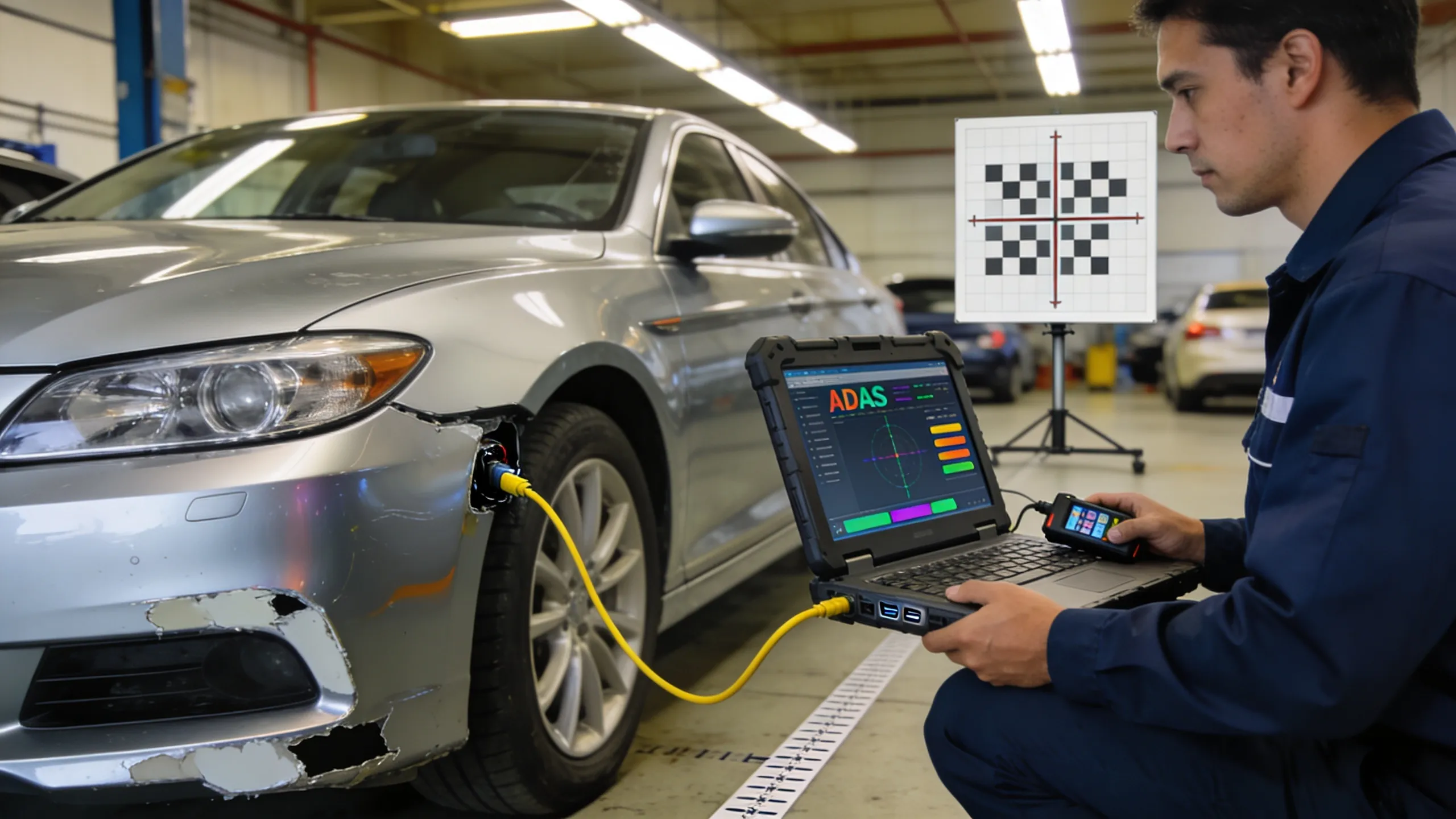
Yes — ADAS recalibration is required after most collision repairs, any time a camera, radar sensor, or lidar unit is removed, replaced, or shifted by structural work. Skipping it means your automatic emergency braking, lane-keeping assist, and blind-spot monitoring may not function correctly, even if no dashboard warning light appears.
Advanced Driver Assistance Systems (ADAS) include features like automatic emergency braking, lane departure warning, adaptive cruise control, and blind spot monitoring. These systems rely on cameras, radar, and ultrasonic sensors. After impact, even a small one, those sensors can shift just enough to produce bad data. That's why ADAS recalibration after collision repair is now a standard part of safe repairs on modern vehicles.
Car owners asking about ADAS calibration after accident work are asking the right question. A repaired bumper or fender may look perfect, but the safety systems behind it may still be out of spec.
For a full foundation on system types and calibration methods, see the ADAS calibration guide.
Why Collisions Require ADAS Recalibration After Collision Repair
Even minor collisions can shift ADAS sensors by millimeters — which translates to feet of targeting error at highway speed. I-CAR repair guidance states calibration will likely be required after any collision involving an ADAS-equipped vehicle, regardless of impact severity. Visible damage is not the only trigger for ADAS recalibration after collision repair. I-CAR sets that standard for the collision repair industry.
When is ADAS recalibration required after a collision? Any impact that affects a vehicle zone near ADAS hardware (bumpers, grille, windshield, doors, or quarter panels) typically requires recalibration of the sensors in that area. This applies regardless of impact speed or visible damage level. Even a sensor shifted by 1-2 millimeters can create real-world targeting errors of several feet at highway speeds.A front camera is a practical example. If its angle changes by a tiny amount, lane markings get interpreted incorrectly. If front radar is slightly misaligned, the system may brake late, brake early, or track the wrong object. That's the core risk that makes recalibration non-negotiable.
The NHTSA explains that ADAS is designed to reduce crash risk, but performance depends on correct operation and proper maintenance. Calibration is part of that maintenance after impact.
And the frequency is rising. CCC Intelligent Solutions has reported growing calibration line-item usage in repair estimates as newer vehicles with more sensors enter repair channels. That trend supports a simple point: collision repair ADAS work is no longer optional on many repairs.
Which Collision Types Trigger ADAS Recalibration?
Nearly every impact category can require ADAS recalibration after collision repair. The collision direction usually predicts which sensors are at highest risk.
Front-End Collisions (radar, camera displacement)
Front-end impacts commonly affect the grille area, bumper reinforcement, and radiator support. Many vehicles place front radar in this zone. Forward-facing cameras are mounted at the windshield, but structural force transfer can still change alignment tolerances even when the glass is intact.
If a front radar bracket bends slightly, target tracking goes off. That can affect adaptive cruise and automatic emergency braking. ADAS calibration after accident steps for front-end repairs usually include static and, on some models, dynamic calibration.
Rear-End Collisions (blind spot sensors, rear camera)
Rear impacts can alter blind spot radar angle and rear camera position. A bumper cover replacement alone can matter, because radar may look through that panel. Paint thickness, non-OEM materials, or mounting variation all affect signal behavior.
This is a frequent sensor recalibration after crash scenario. Car owners who skip recalibration may notice false blind spot alerts or inconsistent rear cross-traffic warnings weeks later. By then, the connection to the original repair isn't obvious.
Side-Impact Collisions (side radar, parking sensors)
Side damage can affect side radar modules, parking sensors, and harness routing. Door replacement, quarter panel repair, and mirror replacement may all require calibration checks depending on vehicle design.
For many late-model vehicles, side-impact repair and collision repair ADAS tasks are linked. The cosmetic repair and the electronic calibration are both required for a complete job. One without the other isn't finished work.
Minor Fender Benders (sensors are sensitive to sub-millimeter shifts)
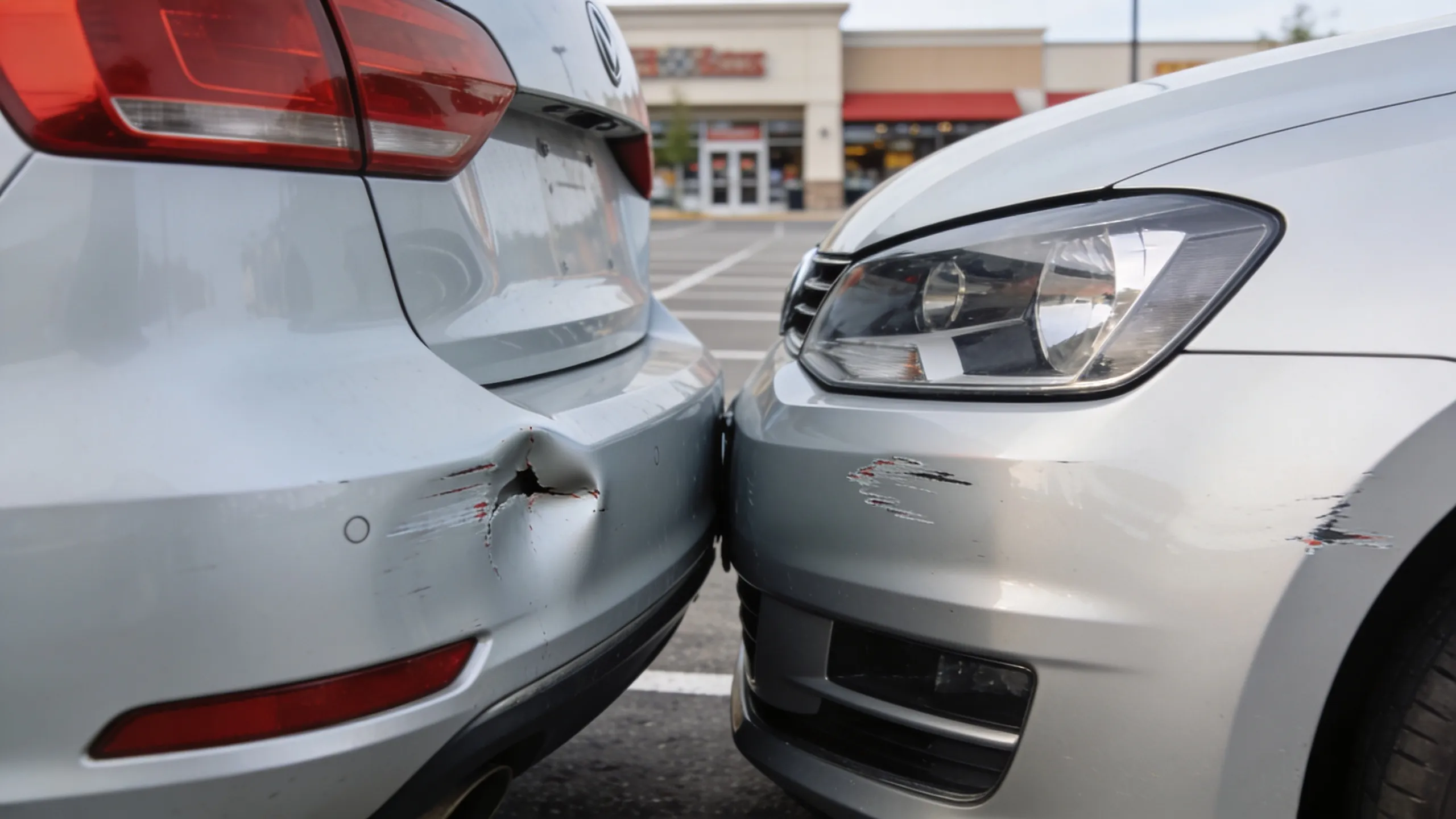
Minor impacts are routinely underestimated. A low-speed strike may leave little visible damage, but sensor brackets, clips, and mounts can move outside tolerance. That's why the question "do I need ADAS calibration after accident damage if it was minor?" almost always has one answer: likely yes, if ADAS hardware is anywhere near the repair area.
For related low-speed damage risks, see this guide on ADAS calibration after a fender bender.
| Collision Type | Sensors Commonly Affected | Typical Calibration Cost |
|---|---|---|
| Front-end collision | Front radar, forward camera, parking sensors | $300-$800 |
| Rear-end collision | Blind spot radar, rear camera, rear parking sensors | $250-$700 |
| Side-impact collision | Side radar, mirror camera, parking sensors | $250-$700 |
| Minor fender bender | Any nearby camera/radar depending on impact point | $250-$500 |
Costs vary by make, model, and number of systems. In each case, ADAS recalibration after collision repair should be evaluated before the vehicle is returned to the owner.
What Gets Calibrated During Collision Repair?
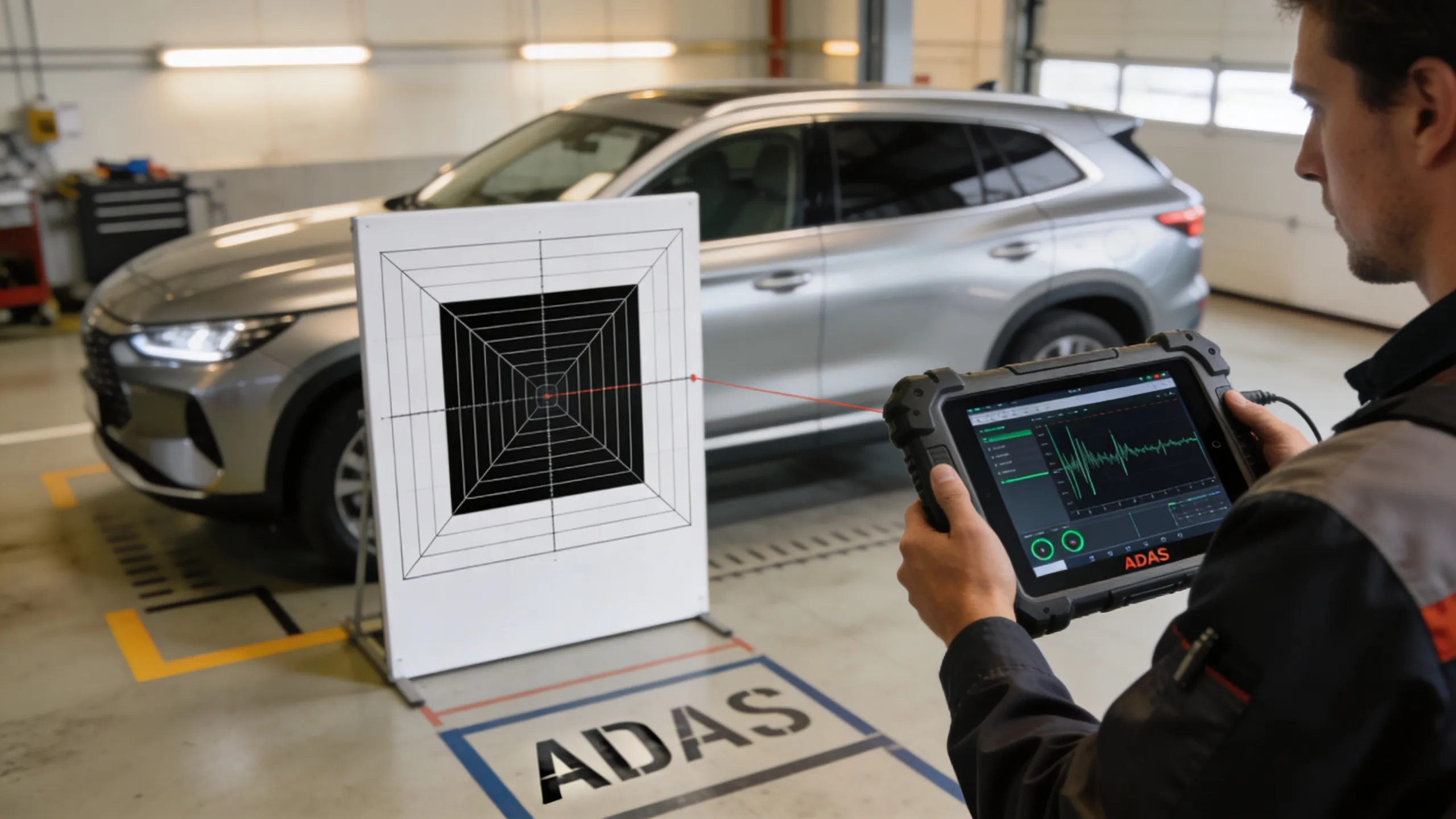
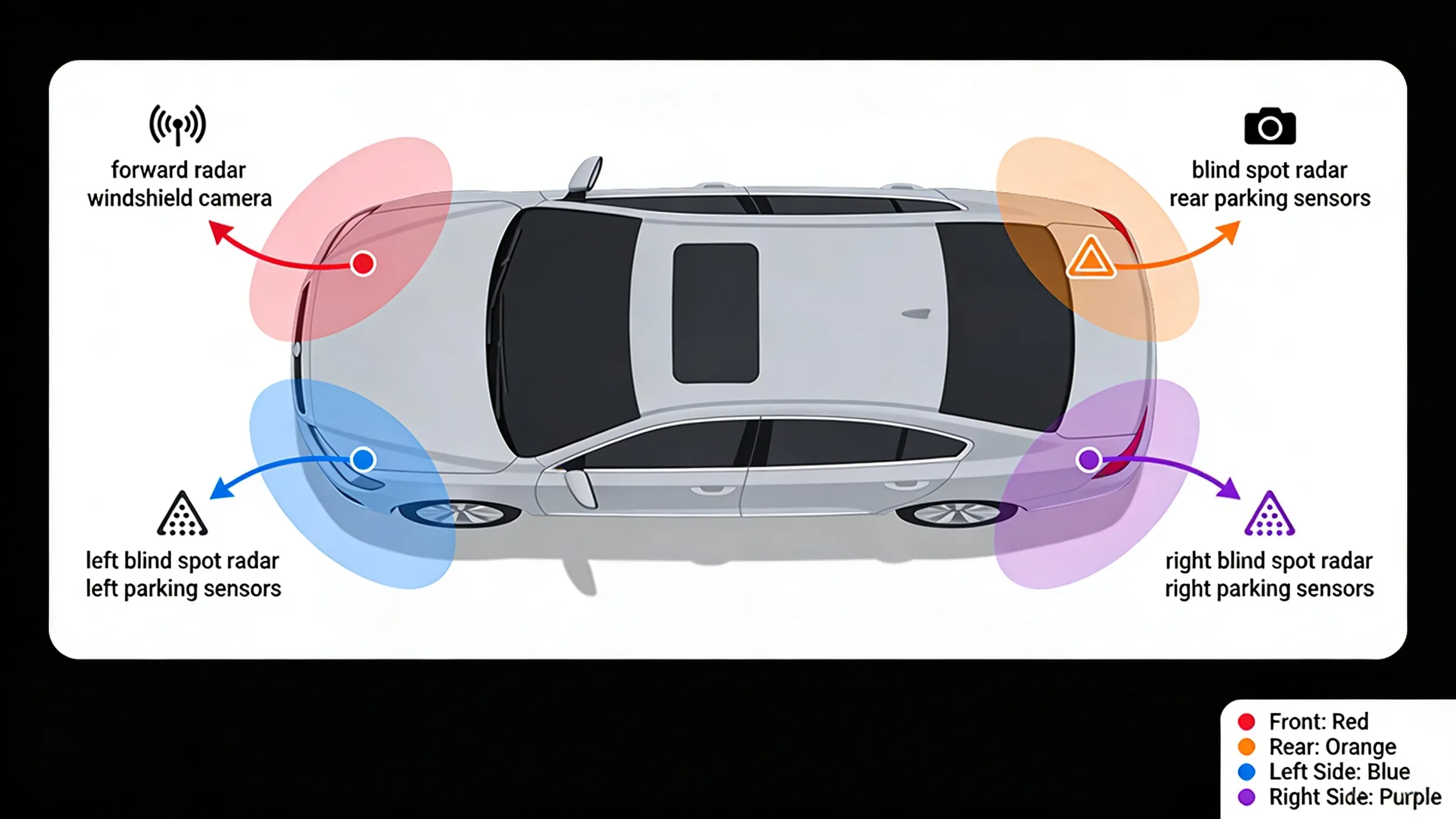
Not every car has the same hardware layout. But the most common calibrations involve cameras, radar, and ultrasonic sensors used by braking and lane systems. During ADAS recalibration after collision repair, technicians follow OEM procedures using level floors, targets, scan tools, and controlled conditions. It's a precise process. Not a quick checkbox.
| Sensor Type | Typical Location | What It Does | Signs of Miscalibration |
|---|---|---|---|
| Forward camera | Windshield near rearview mirror | Lane keep, lane departure, traffic sign support | Drifts in lane assist, warning lights, poor lane detection |
| Front radar | Grille or front emblem area | Adaptive cruise, forward collision alerts, AEB support | Late alerts, false alerts, unexpected braking |
| Blind spot radar | Rear quarter panels or bumper corners | Blind spot warning, rear cross-traffic alert | Missed vehicles, random warnings, inconsistent alerts |
| Rear camera | Trunk lid, liftgate, rear garnish | Rear view guidance, parking support | Distorted guidance lines, warning messages |
| Ultrasonic parking sensors | Front and rear bumpers | Close-range obstacle detection | Constant beeping, no detection, false obstacle alerts |
This is why ADAS recalibration after collision repair is technical work, not a formality. The process validates where the sensor points and how the control module interprets real-world objects.
How to Ensure Your Body Shop Includes ADAS Calibration
Car owners can take a few practical steps to confirm ADAS recalibration after collision repair is included. This matters: only about 25% of shops are fully equipped for end-to-end ADAS calibration in-house.
Check the Repair Estimate for Calibration Line Items
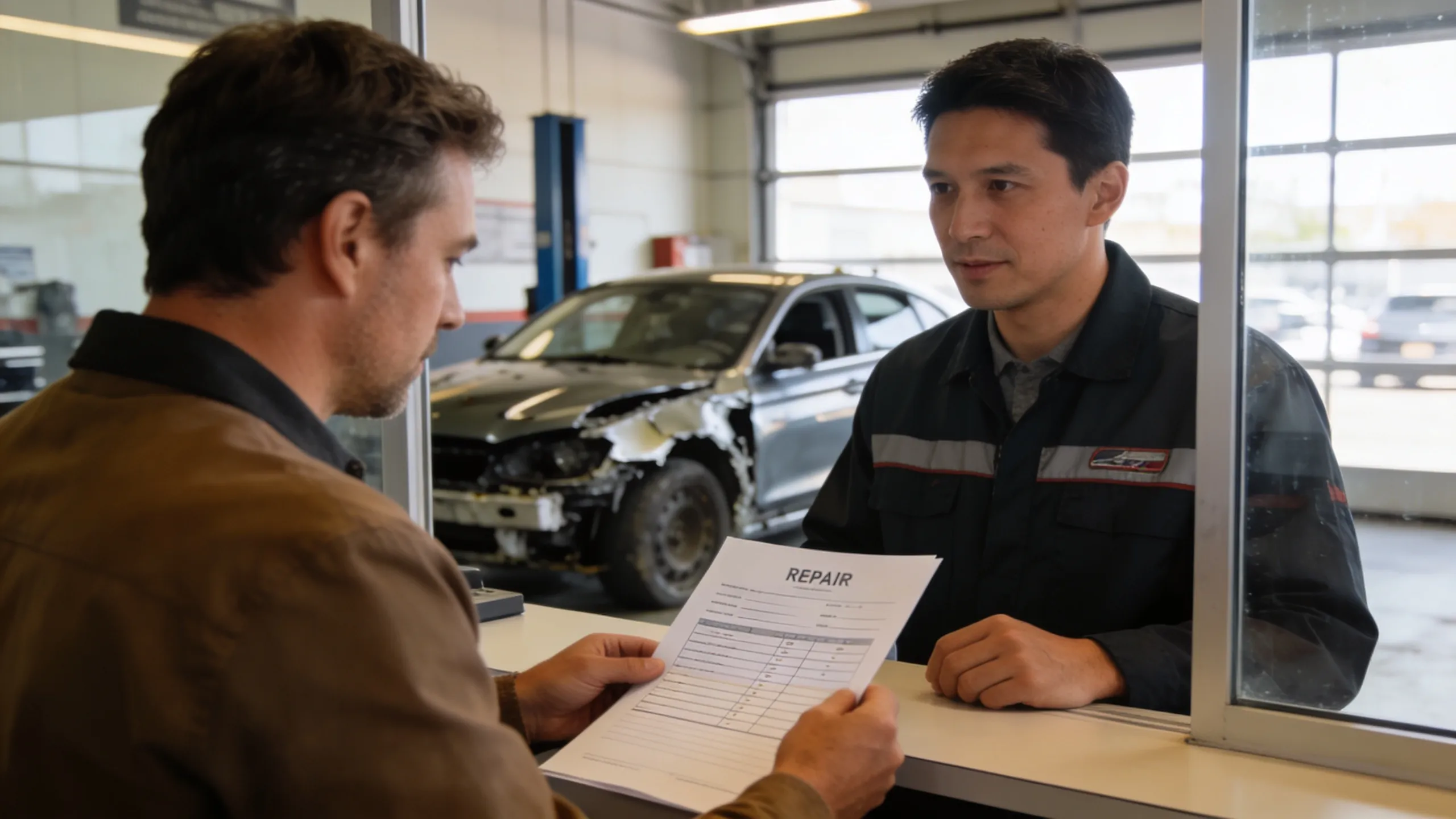
A complete estimate should list pre-scan, post-scan, and calibration operations where required by OEM procedures. If there's repair work near ADAS components but no calibration line item, that's a red flag. Don't accept a verbal assurance as a substitute.
The estimate should separate labor and sublet charges when applicable. Clear documentation improves claim handling and reduces disputes later.
Ask About Post-Repair Scanning
Post-repair scanning confirms diagnostic trouble codes and system status after parts are installed. Scanning alone isn't the same as calibration, but it's a required checkpoint in collision repair ADAS workflow.
Shops should explain which systems were scanned, what codes appeared, and whether any calibrations were completed or referred out to a specialist. If a shop can't answer those questions clearly, push for specifics.
Request Calibration Documentation
A professional shop should provide calibration records that include:
- Vehicle identification and date
- Systems calibrated
- Static or dynamic method used
- Before/after scan reports
- Technician or vendor reference details
This paperwork supports safe handoff and helps if a future warranty or insurance question comes up.
Verify the Shop Has Proper Equipment
ADAS calibration requires a target wall, precise measuring tools, compatible scan tools, software subscriptions, and a controlled floor surface. Many shops can't meet all requirements for every brand. But that's not automatically a problem. If the shop sublets correctly to a specialist and documents the work, the outcome can still be complete.
The key point stays the same: ADAS recalibration after collision repair must happen before vehicle release. No exceptions for modern ADAS-equipped vehicles.
For repair options and service standards, see the collision repair service page.
ADAS Calibration and Your Insurance Claim
Insurance estimates don't always include every needed operation on the first draft. That includes ADAS recalibration after collision repair. Sometimes calibration is omitted because the teardown isn't complete. Sometimes it's cost pressure.
When calibration is missing, a supplement can be requested based on OEM repair procedures and the documented impact area. Car owners have the right to a complete and safe repair, not just the lowest initial estimate.
Terminology helps here. Stating that the vehicle requires ADAS calibration after accident repairs, with scan and calibration line items, often leads to a clearer review. Shops that document procedure sources and post-repair results tend to have stronger supplement outcomes.
Another practical step is attaching OEM position statements or repair manual excerpts to the supplement request. That cuts back-and-forth with adjusters. If a claim reviewer questions whether do I need ADAS calibration after accident concerns are optional, documentation answers it. On many late-model vehicles, ADAS recalibration after collision repair is a required operation tied directly to repaired or replaced parts.
For a deeper breakdown of what insurers cover, read does insurance cover ADAS calibration.
Post-Repair Verification: What to Check
After pickup, verification matters. Even with proper procedures, road validation confirms that ADAS recalibration after collision repair actually worked in real conditions.
Car owners should check these items in a safe driving environment:
- Automatic emergency braking behavior (no unexplained warnings)
- Lane departure or lane keep behavior (stable detection of lane lines)
- Blind spot monitoring (alerts at expected times)
- Parking sensors and rear camera guidance
- Adaptive cruise consistency at highway speed where conditions allow
Watch for warning lights, phantom braking, repeated false alerts, or systems that seem unavailable. Those can indicate a remaining issue with sensor recalibration after crash work or a related component.
Report any problem immediately to the repair facility. Fast follow-up matters: diagnostic context is freshest right after delivery. Waiting a week makes root cause harder to establish.
Car owners can also ask for a brief joint road test with a technician when conditions allow. That short step helps confirm the completed ADAS recalibration after collision repair in real traffic. But if warning lights return after one or two drive cycles, take the vehicle back for recheck without delay.
The Cost of ADAS Calibration After a Collision
Most ADAS recalibration after collision repair bills fall between $250 and $800. Single-system camera calibration runs around $250-$500. Multi-system jobs cost more. The number of systems involved, the calibration type (static vs. dynamic), and local labor rates all factor in.
Compared to a full collision invoice, calibration is a small share of total cost. Skipping it can create larger safety and liability exposure.
CCC reporting shows calibrations appearing on a growing share of appraisals, which reflects how common ADAS recalibration after collision repair has become in modern claims. As model years advance, more sensors per vehicle means more frequent calibration events during otherwise routine body work.
Common price ranges:
- Forward camera calibration: $250-$500
- Front radar calibration: $250-$450
- Blind spot calibration: $200-$350
- Multi-system calibration: $400-$800
Pricing can exceed these ranges for premium brands, complex setup requirements, or dealer-only procedures. The decision framework is simple, though: if the repair touches ADAS zones, calibration is part of finishing the job correctly.
For line-item examples and factors that move pricing up or down, review the ADAS calibration cost guide.
Key Takeaways
ADAS recalibration after collision repair is required because modern safety systems depend on precise sensor alignment, and collisions can move those sensors by tiny amounts that create big real-world errors. Front, rear, side, and even minor impacts can all trigger this need.Car owners evaluating collision repair ADAS quality should look for scan and calibration line items, post-repair documentation, and proof of proper equipment or qualified sublet service. If calibration is missing from an insurance estimate, a supplement is the standard path — and it works.
The bottom line: ADAS recalibration after collision repair protects the performance of braking, lane, and blind spot systems that drivers rely on every day. A paint match is visible. Sensor accuracy isn't. Both are required for a truly complete repair.
Sources
- I-CAR repairability and collision repair guidance: I-CAR
- ADAS safety technology overview: NHTSA Driver Assistance Technologies
- Industry estimate and claims trend reporting: CCC Intelligent Solutions Insights