Most car owners have heard the acronym by now. ADAS. It shows up in vehicle brochures, insurance discussions, and increasingly in repair estimates. But ask the average driver what is ADAS calibration, specifically, and the answer is usually a shrug. That's a problem, because skipping calibration after certain repairs can put drivers and everyone around them at risk.
This guide breaks down what advanced driver assistance systems are, why calibration matters, and what car owners should expect when a shop says their vehicle needs it.
What Does ADAS Stand For?
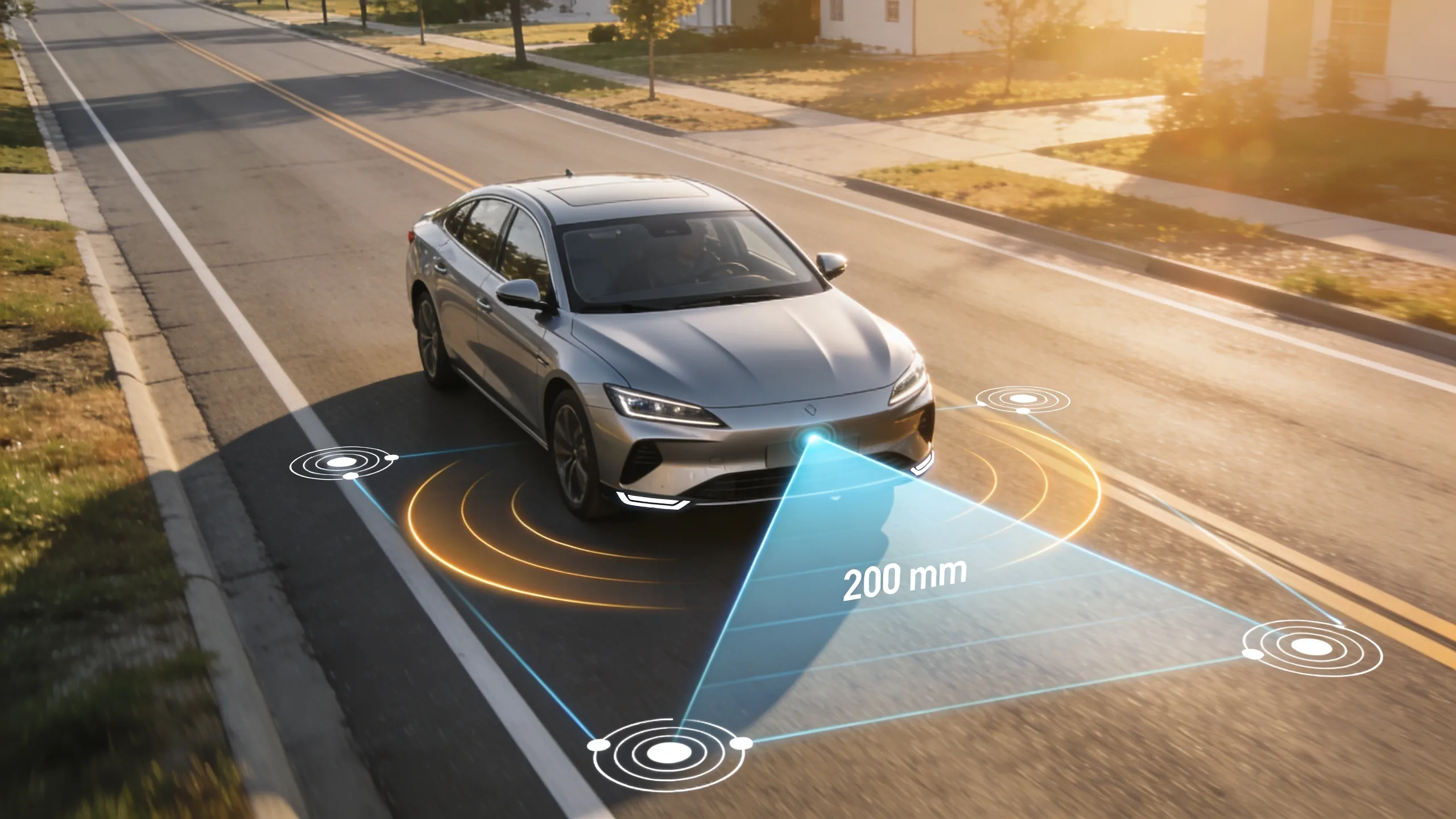
ADAS stands for Advanced Driver Assistance Systems. The term covers a broad set of electronic safety features designed to reduce crashes, assist with parking, and warn drivers about hazards they might miss. These aren't luxury add-ons anymore. They're standard equipment on almost every vehicle built since 2020.
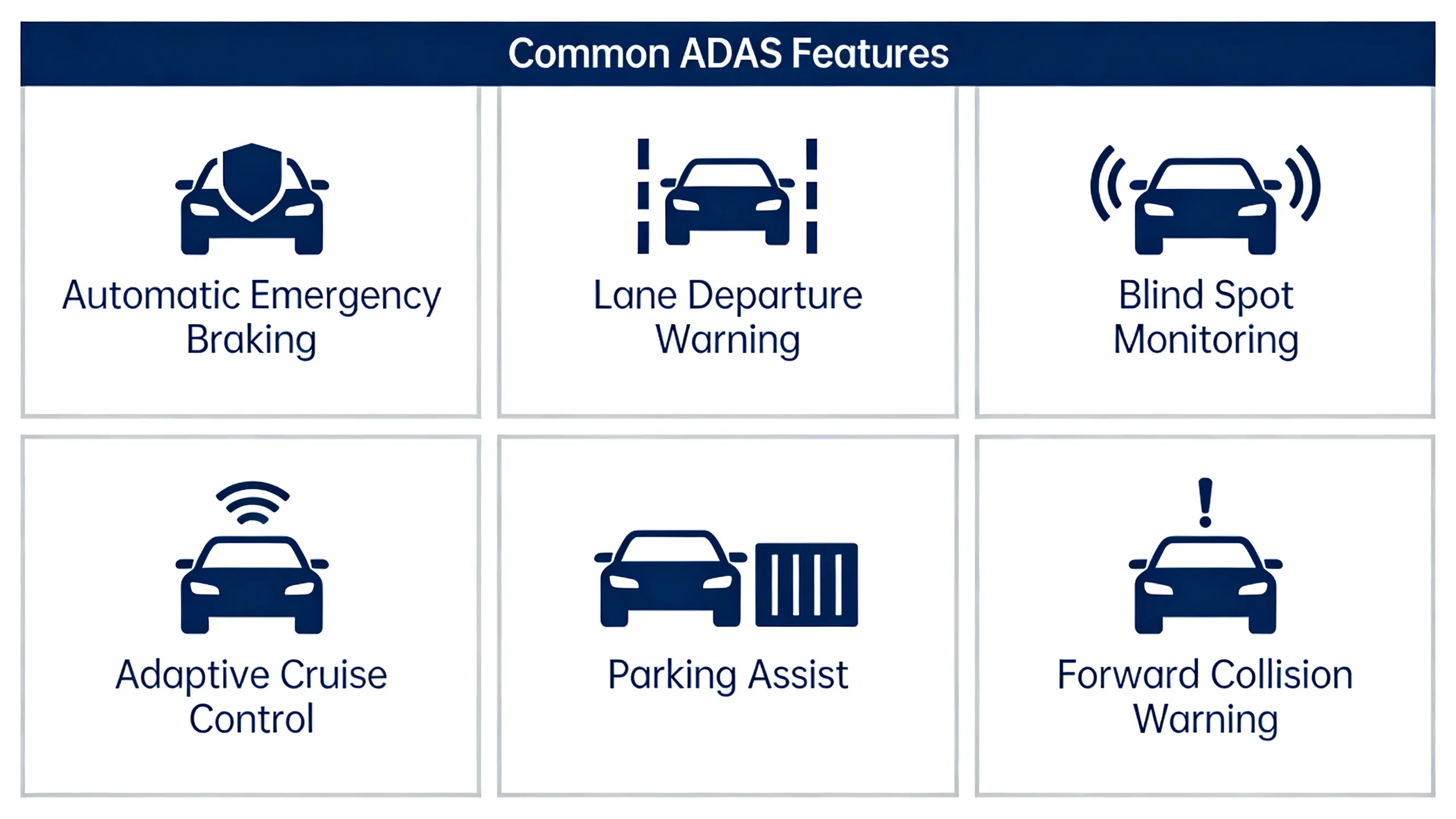
Common ADAS features include:
- Automatic Emergency Braking (AEB): detects an imminent collision and applies the brakes before the driver reacts
- Lane Departure Warning (LDW): alerts the driver when the vehicle drifts out of its lane without a turn signal
- Blind Spot Monitoring (BSM): uses rear-mounted radar to detect vehicles in blind zones and warn the driver
- Adaptive Cruise Control (ACC): maintains a set following distance by automatically adjusting vehicle speed
- Parking Assist: uses ultrasonic sensors and cameras to guide parking or brake automatically near obstacles
- Forward Collision Warning (FCW): audible and visual alert when the vehicle is approaching a stopped or slower object too quickly
The National Highway Traffic Safety Administration (NHTSA) mandated automatic emergency braking on all new light vehicles sold in the United States starting in 2022. In practical terms, that means the majority of vehicles on the road today carry at least one ADAS sensor that can go out of alignment and may need recalibration after any significant repair.
What Is ADAS Calibration, in Plain Language?
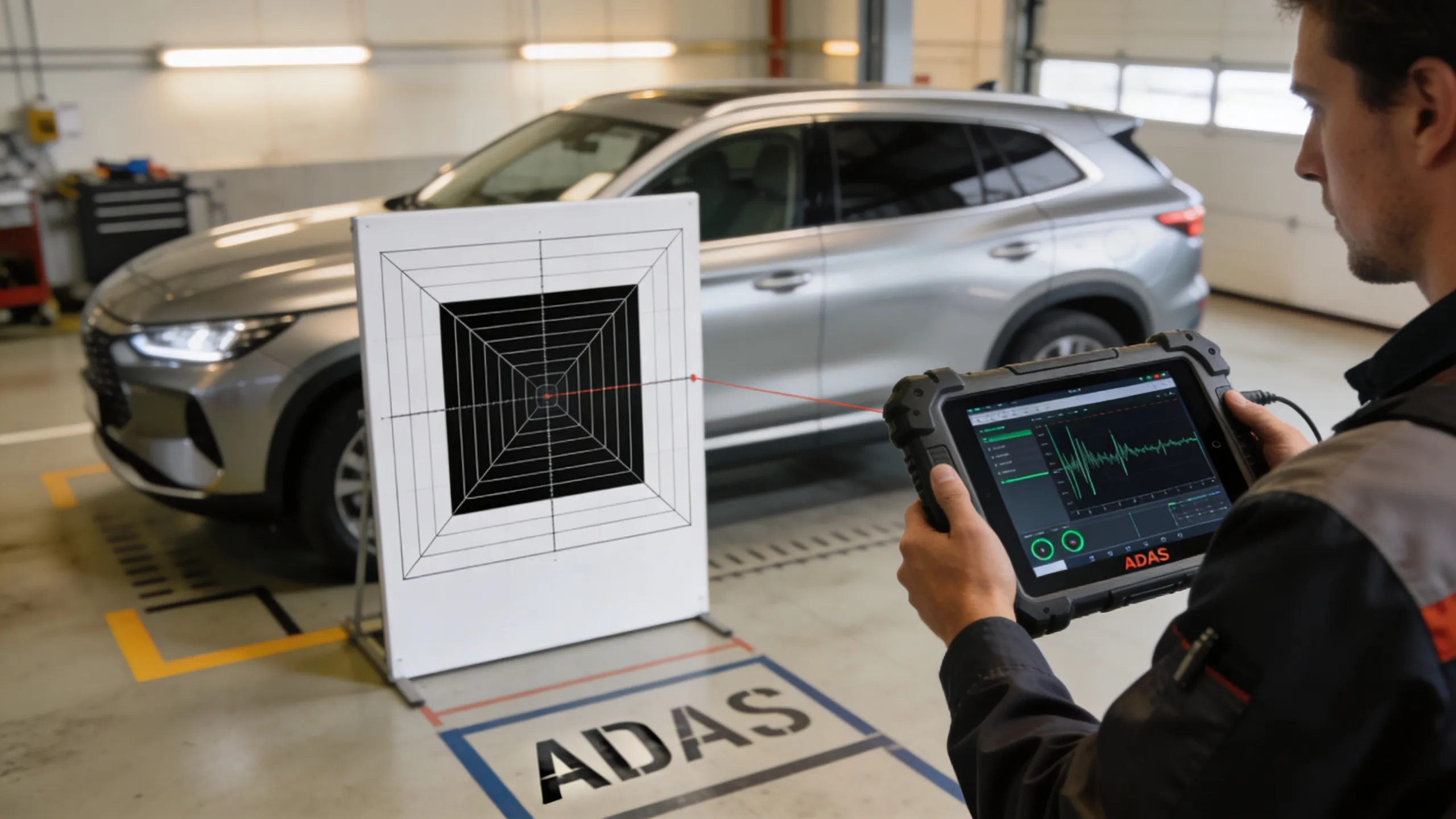
ADAS calibration is the process of realigning a vehicle's cameras, radar units, and ultrasonic sensors back to their factory-specified positions and angles after those sensors have been moved or disturbed. Think of it like re-sighting a rifle scope after dropping it: the scope still works, but it's pointing in a slightly different direction. Every shot misses. ADAS calibration corrects that drift so the system sees and responds the way the manufacturer intended.
Without calibration, an automatic emergency braking system might see a hazard late, or see one that isn't there (phantom braking). Lane departure warnings could fail to detect drift, or trigger randomly. None of that is acceptable in a safety-critical system.
For a deeper look at the full calibration process, see the complete ADAS calibration guide, which covers both static and dynamic calibration procedures in detail.
Which ADAS Features Need Calibration?
Not every ADAS feature uses the same type of sensor, and each has different triggers for recalibration. This table shows the main systems, how they sense the world, and what typically disturbs them.
| ADAS Feature | Sensor Type | Common Calibration Triggers |
|---|---|---|
| Automatic Emergency Braking | Forward-facing camera + radar | Windshield replacement, front-end collision, bumper repair |
| Lane Departure Warning / Keep Assist | Forward-facing camera (windshield-mounted) | Windshield replacement, any camera bracket disturbance |
| Blind Spot Monitoring | Rear-corner radar | Rear bumper repair, quarter panel work, sensor bracket replacement |
| Adaptive Cruise Control | Long-range forward radar | Front bumper repair, grille replacement, front-end collision |
| Parking Assist (front/rear) | Ultrasonic sensors | Bumper replacement, sensor damage from minor impacts |
| 360-Degree Surround View | Four exterior cameras | Any exterior panel work affecting camera mounting points |
| Driver Monitoring System | Interior infrared camera | Headliner work, airbag replacement, rearview mirror service |
The Insurance Institute for Highway Safety (IIHS) has documented that AEB cuts rear-end crashes by roughly 50% when functioning correctly. That benefit disappears if the forward camera is even slightly off-axis after a repair.
Why Would Your Car Need ADAS Calibration?
Several repair scenarios can displace or disturb the sensors that ADAS depends on. Here are the most common ones.
After Collision Repair
Any collision that involves the front bumper, grille, hood, windshield, or rear bumper likely disturbed one or more ADAS sensors. That holds even for minor impacts. Sensors are mounted with precision tolerances measured in fractions of a millimeter, and enough force to crack a bumper cover is enough force to shift a radar bracket.
Industry data shows that 35.6% of direct repair program (DRP) estimates now include ADAS calibration line items, up from 26.9% the prior year. Shops that handle collision repair properly should include calibration verification in every estimate where sensors fall in the affected repair zone. For damage limited to the bumper fascia, it's also worth checking whether bumper repair or replacement qualifies as a calibration trigger for your specific vehicle model.
After Windshield Replacement
This is the one that surprises most drivers. Replacing a windshield shouldn't affect safety sensors. Except it does, significantly. Most modern vehicles mount the forward-facing camera directly to the windshield glass or to a bracket bonded to it. When the glass comes out, the camera comes with it.
Nine out of 10 vehicles from 2023 and newer require ADAS recalibration after a windshield swap. The camera has to be re-mounted and the system has to relearn what "straight ahead" looks like from that new position. Auto glass shops are increasingly aware of this requirement, but car owners should still ask specifically whether calibration is included (or get the answer in writing). See the auto glass repair service page for more on what to expect during a windshield job.
After Suspension or Alignment Work
Suspension repairs and wheel alignment adjustments change the vehicle's ride height and wheel angles. Since cameras and radar units are calibrated relative to the road surface and the vehicle's centerline, those changes flow directly into the ADAS system. A vehicle that's 0.5 degrees out of alignment (imperceptible during normal driving) can cause a lane departure camera to misread lane lines consistently.
Ride height changes from spring replacements, lift kits, or load-leveling adjustments carry the same risk. It doesn't take a dramatic suspension overhaul. Even a routine four-wheel alignment can shift camera angles enough to generate false warnings or missed detections, particularly on vehicles with low-mounted radar sensors near the front fascia.
Warning Lights or Strange Behavior
Sometimes calibration drift shows up as a dashboard warning. The ADAS, camera, or radar malfunction indicator illuminates and the system disables itself. Other times the signs are behavioral: phantom braking (the car brakes for no visible reason), false lane departure chimes on straight roads, or an adaptive cruise control that hunts (accelerating and decelerating erratically).
These symptoms don't always mean something is broken. They can mean something is slightly misaligned. A shop that performs ADAS calibration can run a diagnostic scan to determine whether a procedure will resolve it.
Does Your Vehicle Have ADAS?
If the vehicle was built after 2018, there's a good chance it has at least one ADAS feature. If it was built after 2022, it almost certainly has AEB. That's now a federal requirement for new vehicles sold in the U.S., per NHTSA rules.
A few ways to check:
- Owner's manual: the safety features section will list exactly what's installed. Look for any mention of cameras, radar, or collision detection.
- Windshield camera bracket: a black housing near the rearview mirror mount, or a sensor cluster at the top of the glass, is almost always a forward-facing ADAS camera.
- Rear bumper sensors or cameras: small circular sensors embedded in the rear fascia, or a rear camera visible on the dashboard display, indicate at minimum a parking assist or backup camera system.
- Dealer VIN lookup: any franchised dealer can pull the vehicle's build sheet and confirm factory-installed features by VIN within minutes.
According to I-CAR, the industry collision repair training organization, approximately 61% of vehicles in the current fleet have at least one ADAS sensor that would require calibration after a qualifying repair, yet nearly half of those are missed at the time of service. That gap is partly why ADAS-related lawsuits grew from 3 in 2018 to 61 in 2024, as documented by industry liability trackers.
Can You DIY ADAS Calibration? (Short Answer: No)
The short answer is no. And this isn't a liability disclaimer. It's a practical reality.
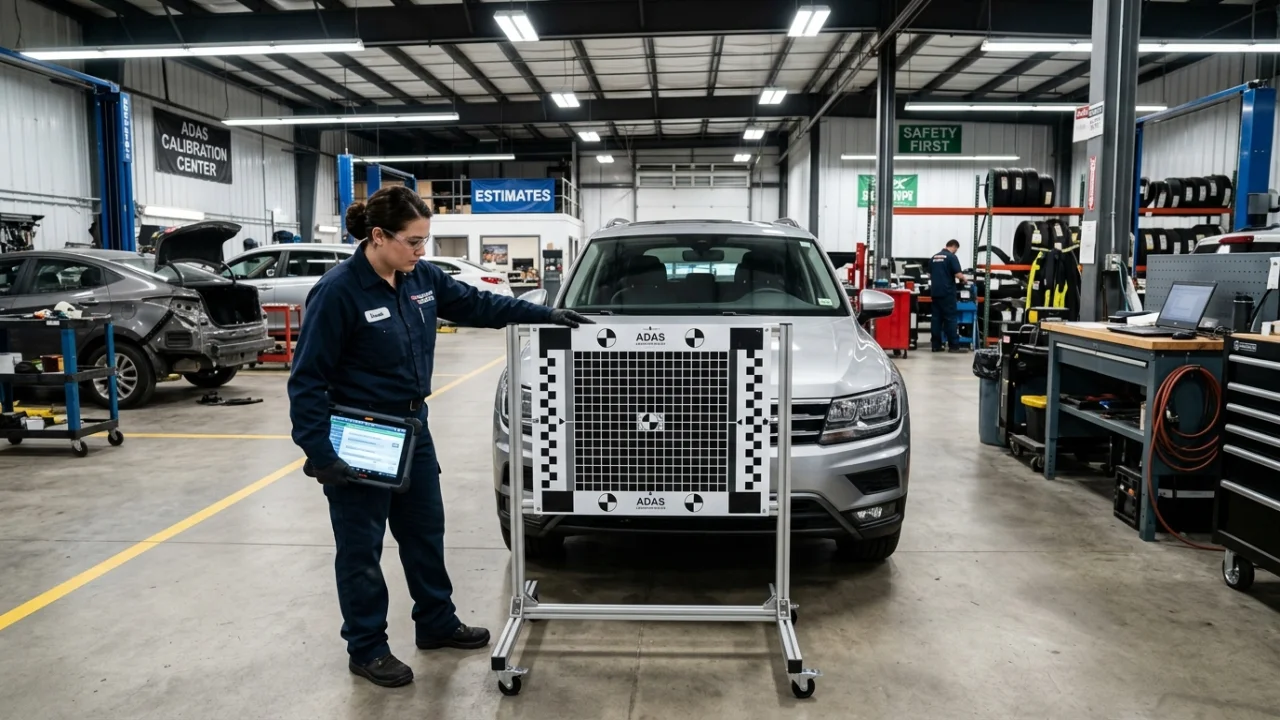
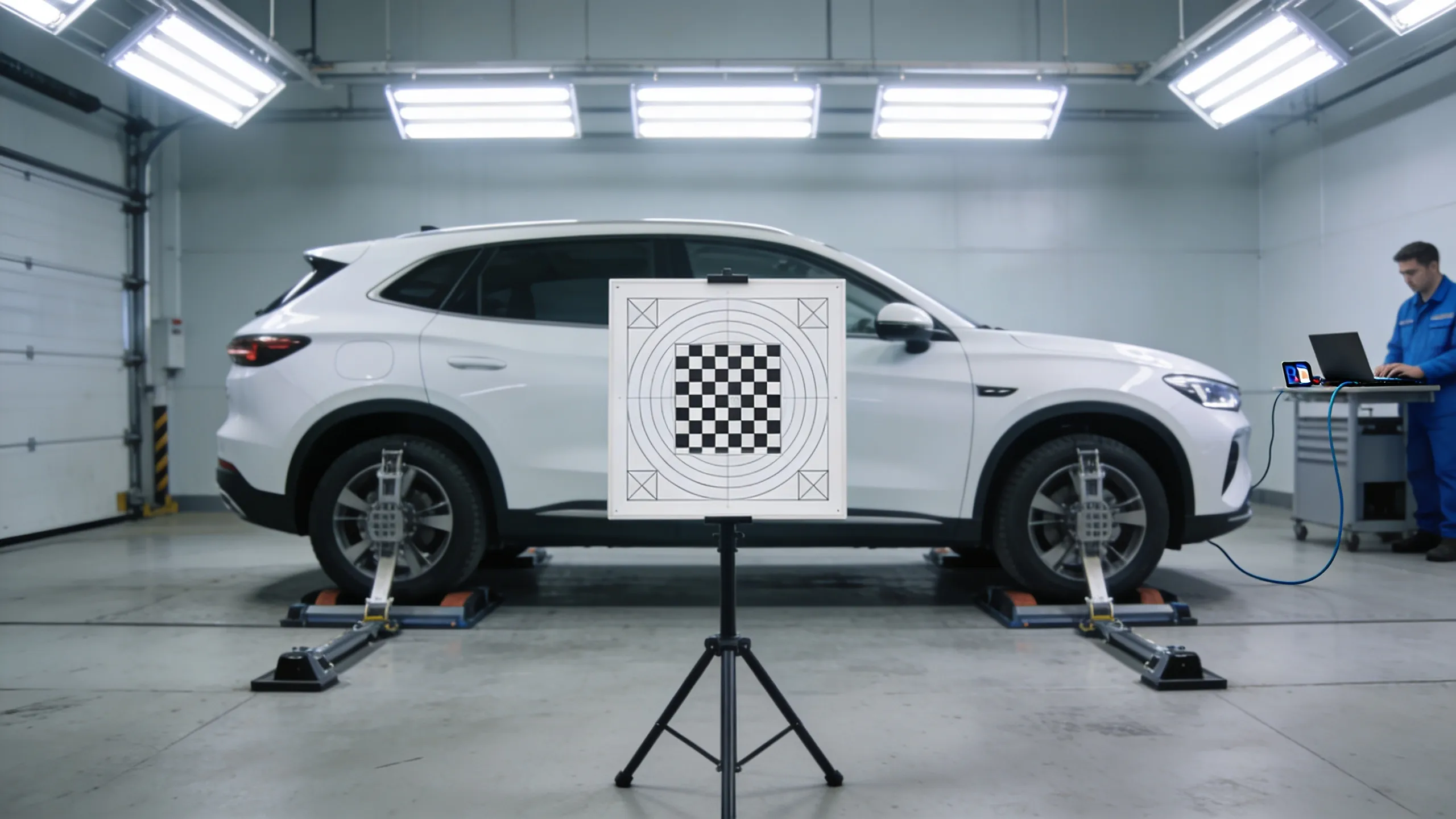
Static ADAS calibration (the type done in a shop, not on the road) requires a precisely flat, level surface, a darkened controlled environment, and a set of OEM-specific target boards positioned at exact distances and angles from the vehicle. The targeting equipment costs between $50,000 and $150,000 depending on the vehicle brands supported. The software licenses to communicate with each manufacturer's control modules are separate ongoing costs.
Only about 25% of auto repair shops in the U.S. are currently equipped to perform ADAS calibration correctly. That means car owners are often referred out, even from the original repair shop, to a dealership or specialty calibration center.
What car owners CAN do:
- Check warning lights: before and after any repair, note whether any ADAS-related dashboard indicators are on or off. If a light appeared after a repair, that's documentation.
- Ask for calibration in the estimate: before approving any repair that touches bumpers, windshield, suspension, or exterior panels, ask the shop specifically: does this work require ADAS calibration? If yes, is it included?
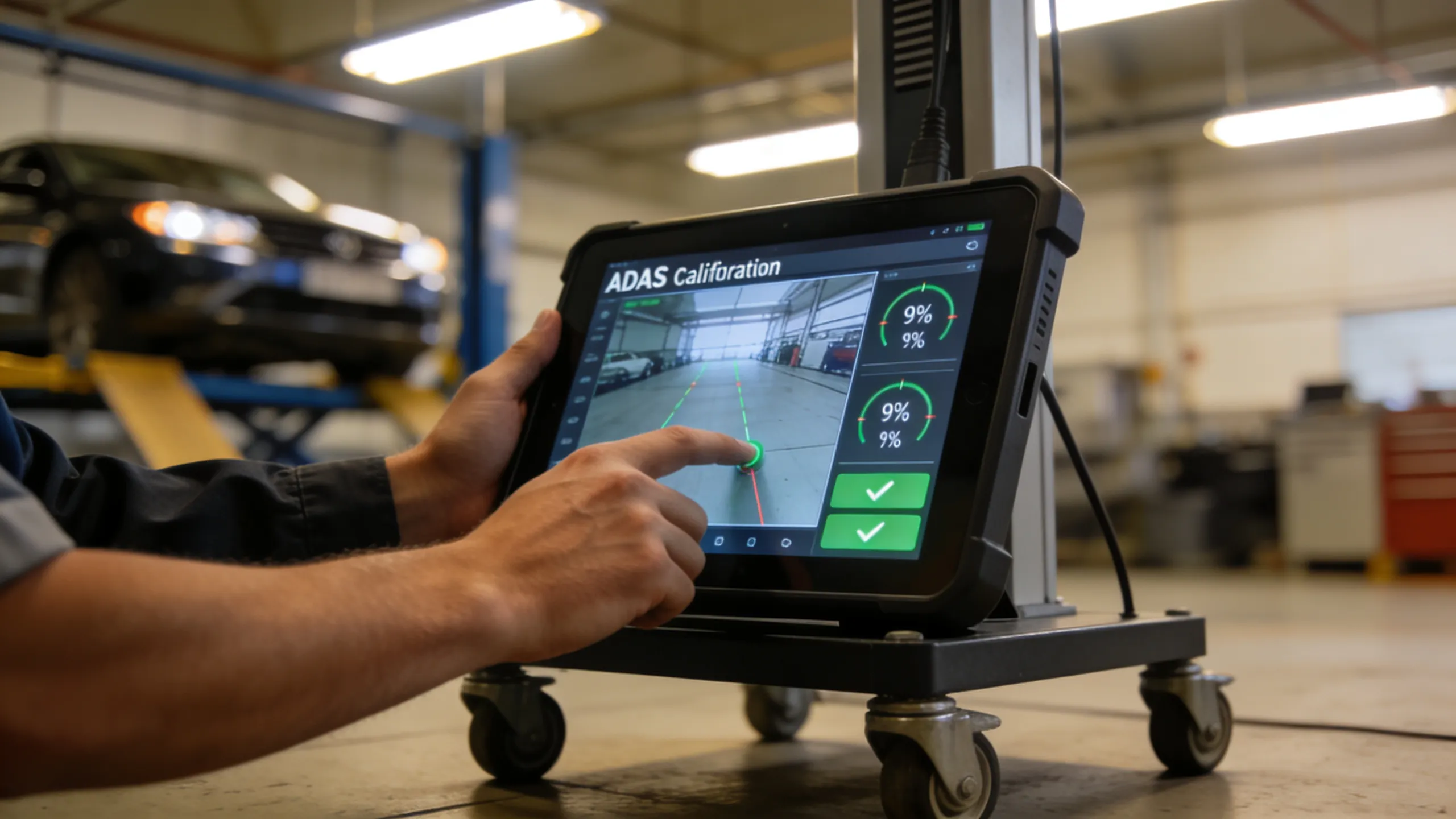
- Request calibration documentation: a legitimate ADAS calibration produces a report showing before/after sensor angles and confirmation that the system passed. Ask for a copy.
- Verify coverage with insurance: most auto insurance policies cover ADAS calibration when it's required by a covered repair. Confirm this before authorizing the work separately.
How Much Does ADAS Calibration Typically Cost?
Cost varies by vehicle make, number of systems affected, and whether the shop performs static calibration on-site or sends the vehicle to a calibration center. As a general range, most single-system calibrations run between $200 and $500. Multi-system calibrations (where several sensors need to be re-zeroed in one visit) typically fall in the $400 to $800 range.
Dealership pricing tends to run higher than independent specialty shops for the same procedure.
| Calibration Type | Typical Cost Range |
|---|---|
| Forward camera only | $250–$500 |
| Front radar only | $250–$450 |
| Blind spot monitoring (per side) | $200–$350 |
| Multi-system calibration | $400–$800 |
| Dealership pricing (per system) | $400–$600+ |
| Independent specialty shop | $250–$450 per system |
For a full breakdown of what drives calibration pricing, including dynamic vs. static procedures and how to avoid being overcharged, see the full ADAS calibration cost guide.
Key Takeaways
- ADAS (Advanced Driver Assistance Systems) includes AEB, lane departure warning, blind spot monitoring, adaptive cruise control, and other safety features now standard on most vehicles.
- What is ADAS calibration, in simple terms: it's the process of realigning cameras and sensors to factory specifications after they've been moved by a repair, windshield swap, or collision.
- Nine out of 10 vehicles from 2023 and newer require recalibration after a windshield replacement. It's not optional.
- Suspension work, alignment adjustments, and any collision affecting bumpers or panels can all trigger the need for calibration.
- DIY calibration isn't realistic: the equipment alone costs $50,000 to $150,000, and the procedure requires OEM software and a controlled environment.
- Car owners should request calibration documentation after any qualifying repair and confirm with their insurer whether it's covered.
- Typical costs range from $200 to $800 depending on the number of systems involved and whether work is done at a dealership or specialty shop.
When a shop includes ADAS calibration in a repair estimate, that's a good sign, not a red flag. It means they're following proper repair standards and returning the vehicle to the same safety baseline it had before the damage. And skipping calibration to save a few hundred dollars isn't worth the risk — not when the systems involved are the ones designed to prevent the next crash.