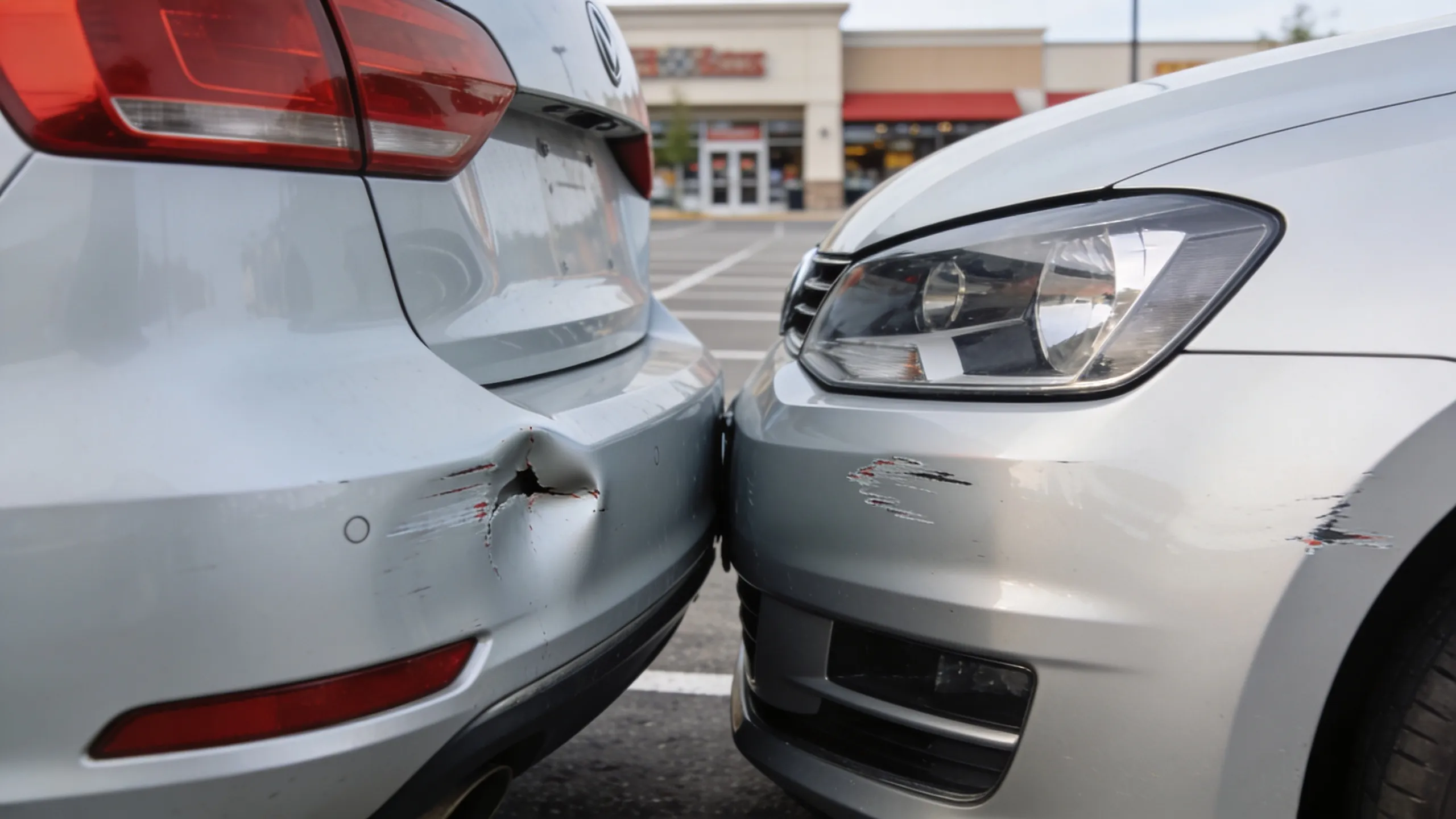
A low-speed bump can look minor. Paint transfer, a scuffed bumper, maybe a cracked grille. But ADAS calibration after a fender bender is often still necessary, even when repairs seem simple. The sensors behind that bumper don't care how small the hit looked.
ADAS stands for Advanced Driver Assistance Systems — features like automatic emergency braking, lane keeping assist, blind spot warning, and adaptive cruise control. They rely on cameras, radar units, and ultrasonic sensors mounted behind bumpers, windshields, mirrors, and trim pieces. When those parts shift, recalibration may be the only way to restore proper function.
Car owners who want the full background can start with this complete ADAS calibration guide, then come back here for minor collision scenarios.
ADAS Calibration After a Fender Bender: The Short Answer
Even a low-speed bump can shift ADAS sensors enough to cause safety system errors. Sensors operate within fractions of a millimeter. A parking lot bump at 5 mph can move a radar unit or camera mount enough to throw off automatic emergency braking, blind spot detection, or lane keeping.
That's why recalibration after minor collisions is commonly required by OEM repair procedures. The body panel may look fine after cosmetic work, but the sensor angle may no longer match factory specs. A calibration check confirms the system sees the road correctly again.
Why Even Minor Collisions Affect ADAS Sensors
ADAS systems aren't just "on" or "off." They make continuous distance and lane position calculations while the vehicle moves. Small physical changes create big digital errors.
Sensors Operate at Sub-Millimeter Tolerances
Most forward cameras and radar sensors are set to tight tolerances at the factory. A tiny shift in camera pitch or radar direction changes what the car thinks is in front of it.
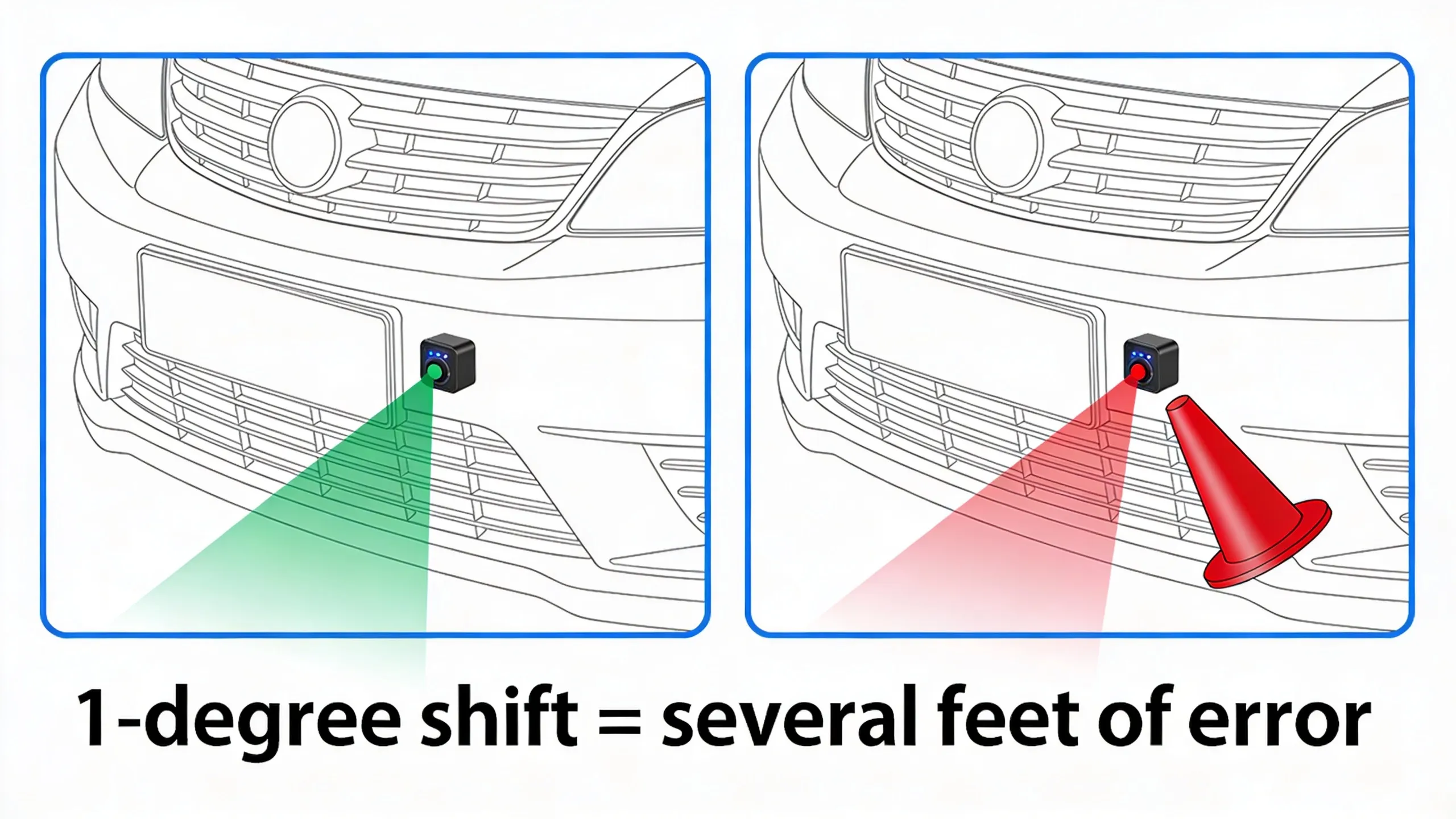
A common rule of thumb in the industry: a 1-degree camera shift can mean several feet of aiming error at highway speed. At 60 mph, that translates to a meaningful difference in how early or late the vehicle warns about a hazard ahead.
So, do you need ADAS calibration after a minor collision if there was only a small tap? In many cases, yes. Minor accident ADAS calibration is about measurement accuracy, not visible damage level.
Bumper Impacts Affect Front Radar
Many front radar units sit behind the bumper cover or grille emblem. A low-speed front impact can deform brackets, crack mounting tabs, or slightly reposition the cover.
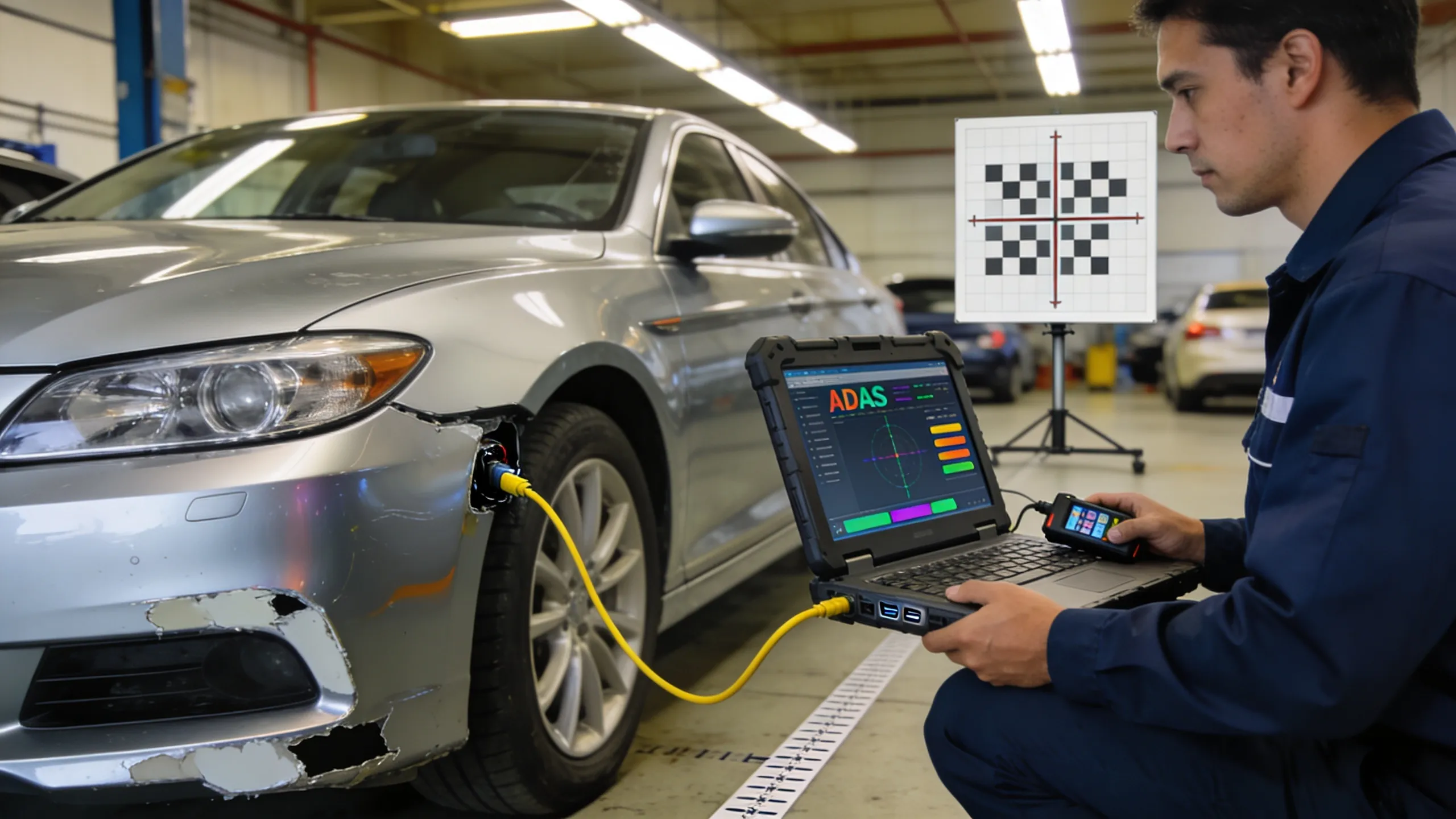
Even when a bumper is repaired and repainted cleanly, front radar orientation may still be off. That's why calibration after fender bender repairs matters after parking lot hits, curb bumps, and light front-end contact.
This topic is covered in more detail in this article on ADAS recalibration after collision repair.
Rear-End Taps Affect Blind Spot Sensors
Rear quarter panels and bumper corners often hide blind spot radar modules. These systems track vehicles approaching from behind and to the side. A rear tap can shift mounting points just enough to trigger false alerts — or missed alerts.
That's a common pattern with fender bender sensor damage. The bumper looks mostly fine, but blind spot behavior changes weeks later. ADAS issues after small accidents can degrade slowly, which is why post-repair scans matter even on low-dollar jobs.
Which Fender Bender Scenarios Require ADAS Calibration?
Not every small incident carries the same risk. But many require at least a diagnostic scan, and often calibration.
| Scenario | Sensors Potentially Affected | Calibration Likely Needed? |
|---|---|---|
| Front bumper hit in parking lot | Front radar, forward camera | Yes |
| Rear bumper tap | Rear camera, blind spot sensors | Yes |
| Side scrape / door ding | Side radar, parking sensors | Maybe |
| Backing into a post | Rear camera, parking sensors | Yes |
| Shopping cart damage | Usually cosmetic only | Unlikely |
When car owners ask whether they need calibration after a minor collision, the safest answer is to scan first, then calibrate based on scan results and OEM repair procedures. Calibration should be treated as a technical step, not an optional add-on.
Signs Your ADAS Needs Recalibration After a Minor Accident
Some symptoms show up immediately. Others appear after a week of daily driving. If any of the following happen after a bump or repair, get calibration checked promptly:
- Phantom braking with no obstacle ahead
- False forward collision warnings in normal traffic
- Lane departure alerts on a straight, centered drive
- Blind spot indicator stays on or won't activate consistently
- Parking sensors beep constantly or fail to beep at close range
- Adaptive cruise control jerks or follows at the wrong distance
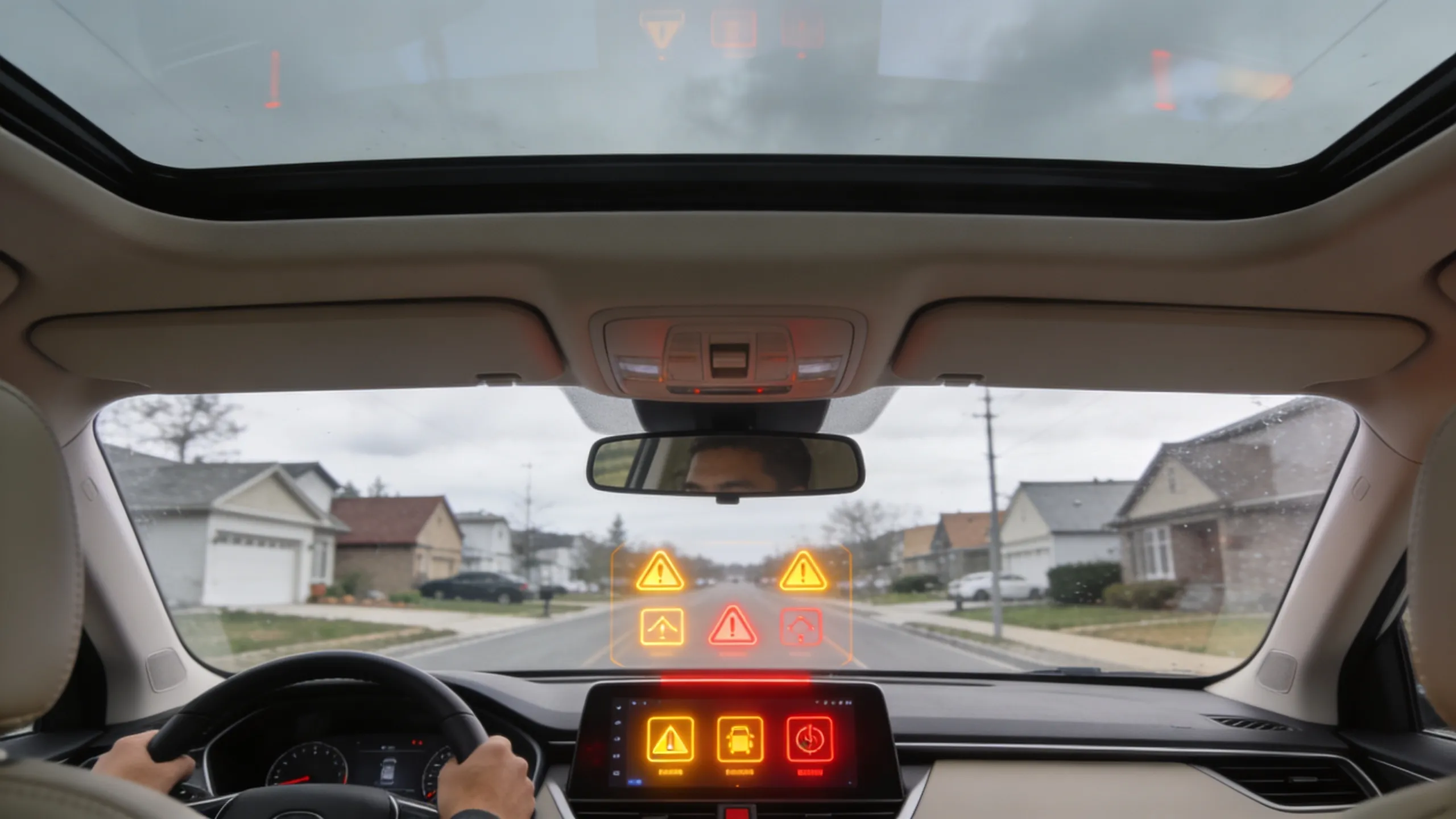
These signs don't always mean a failed sensor. They may mean a sensor that still works but is no longer aligned to spec. That's exactly what minor accident ADAS calibration is designed to fix.
For a deeper look at what happens when calibration is skipped, see this article on the risks of skipping ADAS calibration.
What to Tell Your Body Shop
Most repair delays happen because expectations are unclear at check-in. Car owners can avoid this by asking for specific steps up front.
1. Ask for a pre-repair diagnostic scan.A pre-scan records existing fault codes and system status before work starts.
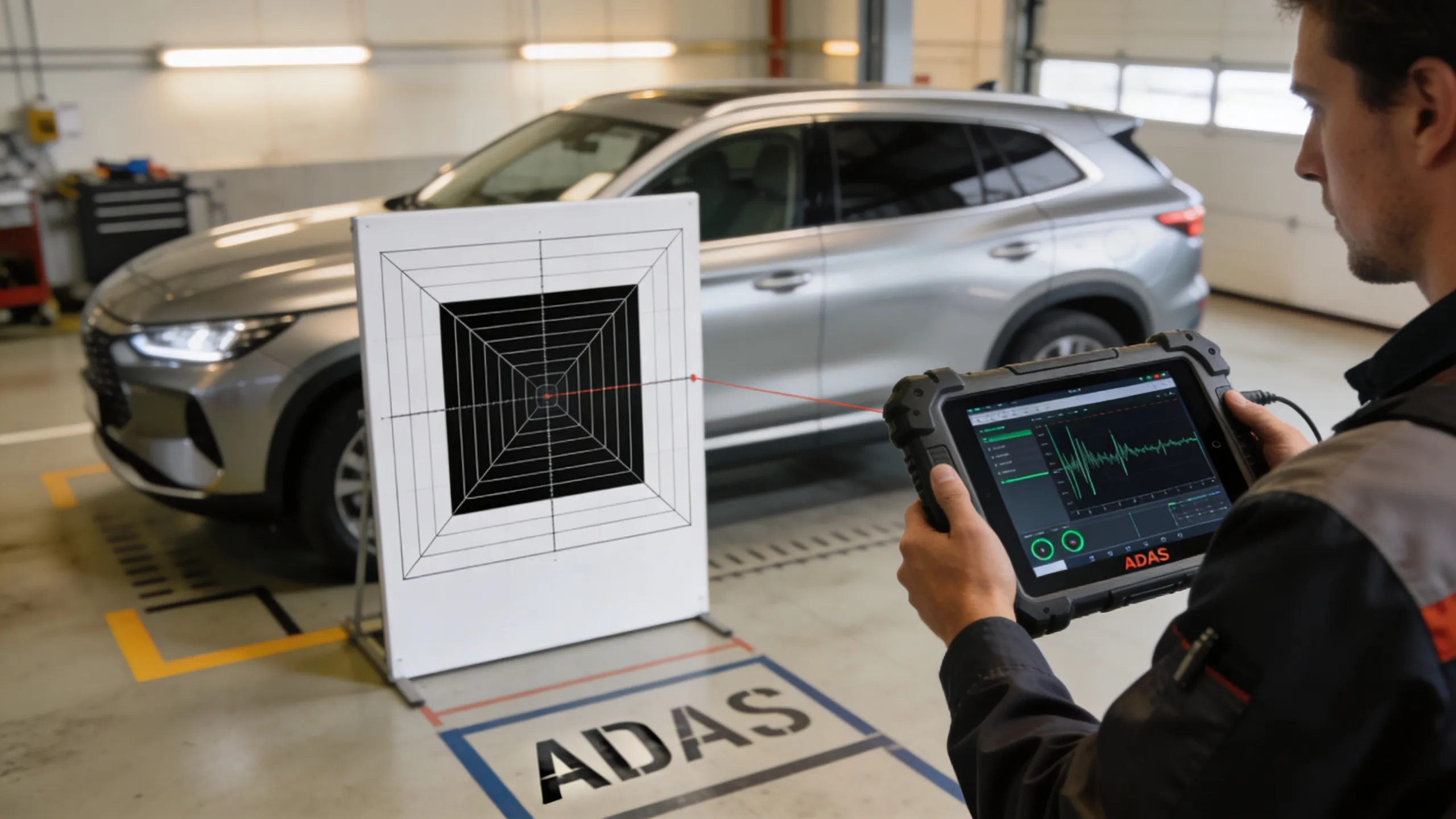
2. Request a post-repair scan and calibration.A post-scan checks what changed during repair and confirms whether static or dynamic calibration is required.
3. Ask for calibration documentation.Shops should provide printouts or digital records showing procedure type, target values, and completion status.
4. Confirm OEM procedure usage.The shop should follow vehicle-specific repair instructions, not a generic workflow.
5. Insist on scanning even for small repairs.Many shops still skip this step on low-dollar bumper jobs.
This is practical, not alarmist. ADAS calibration after a fender bender is quality control for safety systems. If a shop resists documenting scans and calibration, that's a signal to ask more questions.
Industry organizations back this process. I-CAR publishes repair guidance and training standards for post-collision procedures, including scanning and calibration workflows (I-CAR). NHTSA explains how driver-assistance features work and their limits (NHTSA Vehicle Safety). IIHS research has shown that front crash prevention systems can significantly reduce rear-end crash rates when functioning as designed (IIHS).
Will Insurance Cover Calibration After a Fender Bender?
In many cases, yes. When the incident is handled as an insurance claim, calibration should appear on the estimate as a line item — not buried in notes.
Coverage can still vary by carrier, policy terms, and how well the shop documents the work. Shops that include pre-scan results, repair procedure references, and post-calibration proof tend to have smoother reimbursement outcomes.
For out-of-pocket repairs, cost is still part of the decision. A single-system calibration typically runs $250 to $500; multi-system work can be higher. Full cost context is in this ADAS calibration cost guide.
Skipping calibration to save money can create bigger costs later if warning systems stop behaving correctly. And calibration is easier to approve, bill, and verify when it's scheduled as part of the same repair plan — not weeks later as an afterthought.
If a shop says calibration is unnecessary, ask what OEM procedure supports that decision. A clear paper trail protects everyone.
Key Takeaways
ADAS calibration after a fender bender is usually the right call, even when collision speed was low and visible damage was minimal. Modern sensors are precise instruments mounted on parts that move during impact and repair.
For most car owners, the path forward is straightforward:
- Treat any ADAS sensor zone impact as a safety and quality issue, not just a cosmetic repair.
- Get a pre-scan, post-scan, and documented calibration when sensor areas are involved.
- Use OEM procedures so the system returns to factory-intended performance.
- Confirm calibration appears as a line item on insurance estimates.
- Factor calibration cost into out-of-pocket repair decisions.
So, do you need ADAS calibration after a minor collision? Usually yes — if the impact touched a bumper, grille, windshield, mirror, or quarter panel area tied to sensor mounting. Calibration ensures automatic braking, lane support, and blind spot alerts perform the way they were designed to.
And for drivers comparing repair quotes: if one estimate skips scanning and calibration entirely, that estimate may be incomplete.