ADAS sensors in cars explained: cameras, radar, and LiDAR
Modern vehicles now watch the road with more than one set of eyes. ADAS sensors in cars help with braking, steering alerts, speed control, parking, and blind spot checks. When one sensor is bumped, replaced, or moved, the system can give wrong warnings or no warning at all. This guide explains each sensor type, where it sits, what it does, and when calibration is needed after repair.
For a full foundation on calibration process, tools, and safety steps, see the ADAS calibration guide. This article goes deeper on the sensor hardware itself.
What are ADAS sensors and why do cars have them?
ADAS sensors are vehicle devices that detect lanes, vehicles, people, and nearby objects. Common types include cameras, radar, ultrasonic sensors, and LiDAR. Automakers use these sensors to support braking, lane guidance, cruise control, parking help, and collision alerts that reduce crash risk and lower driver workload.
ADAS stands for Advanced Driver Assistance Systems. The software matters, but sensor input matters just as much. If the input is wrong, the decision is wrong. That's why calibration is tied closely to body repair and glass work.
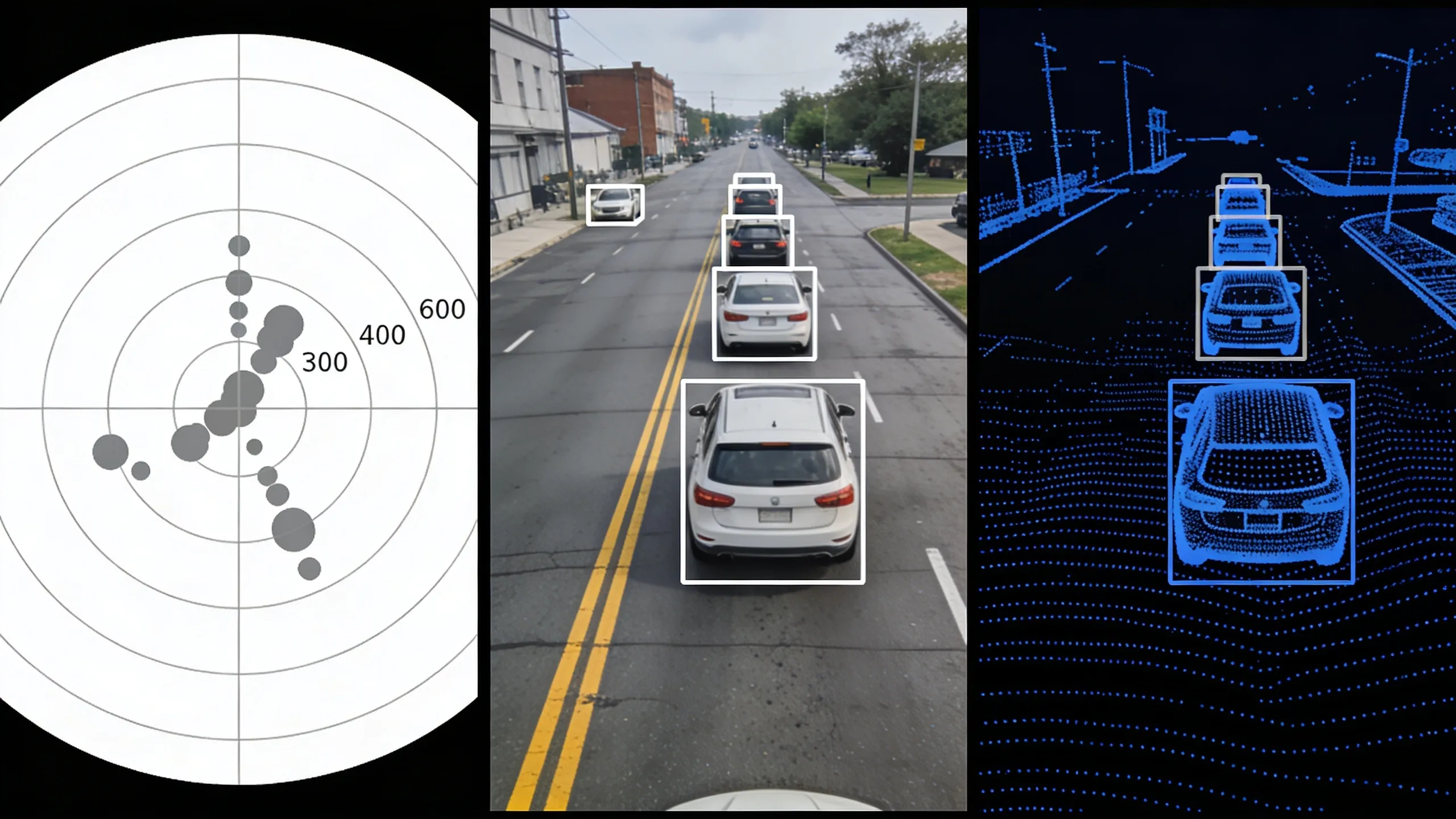
Most vehicles combine several sensor types. Each one has strengths:
- Cameras read visual detail like lane lines and signs.
- Radar tracks distance and speed through rain, fog, or darkness.
- Ultrasonic sensors map very close objects during low-speed moves.
- LiDAR, in some newer models, builds a high-detail 3D shape map.
Each type has limits, too. Cameras can be blocked by glare. Radar can reflect off metal shapes. Ultrasonic sensors have short range. LiDAR can be expensive to replace. That mix is why cars use sensor fusion, combining inputs instead of trusting one signal alone.
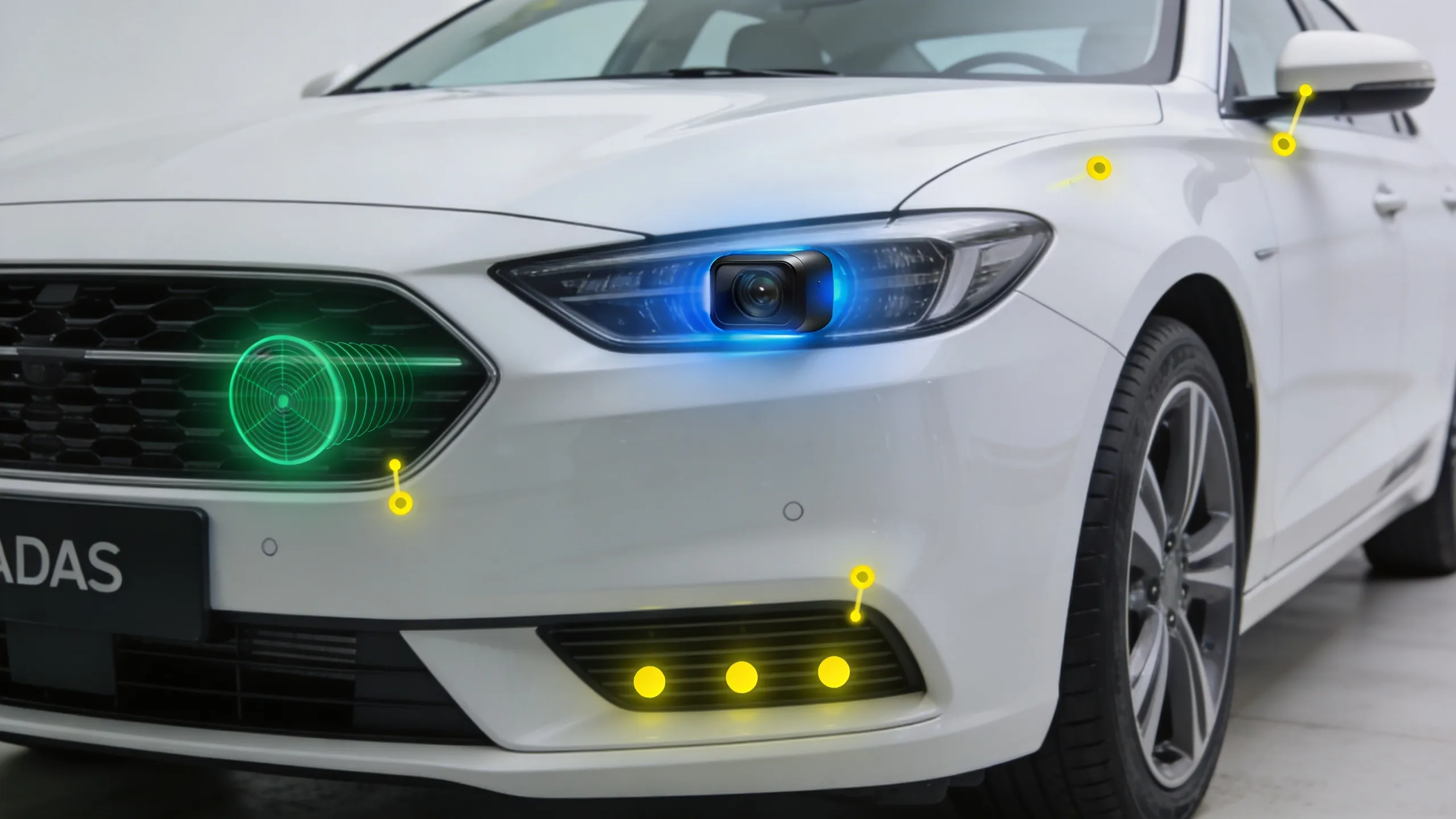
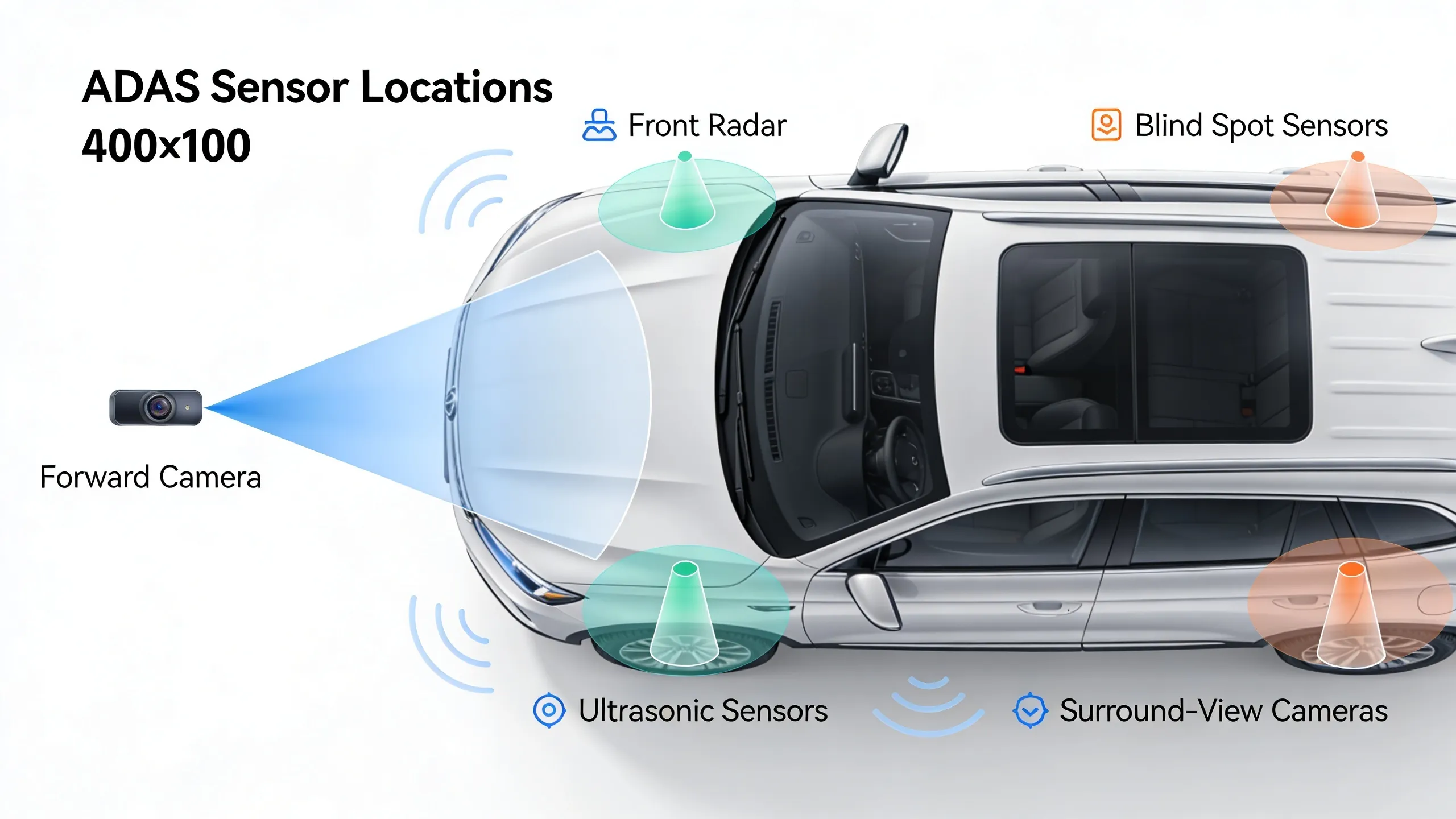
If a driver wonders where are ADAS sensors located, the short answer is: windshield, grille, bumpers, mirrors, side panels, roofline, and tailgate area. The exact layout changes by brand and trim.
NHTSA provides a broad consumer overview of these technologies and their intended safety role on its Driver Assistance Technologies page. IIHS also explains how crash avoidance systems are tested in vehicle ratings on its vehicle ratings hub.
Forward-facing camera: the most common ADAS camera sensor
Where it sits and what it sees
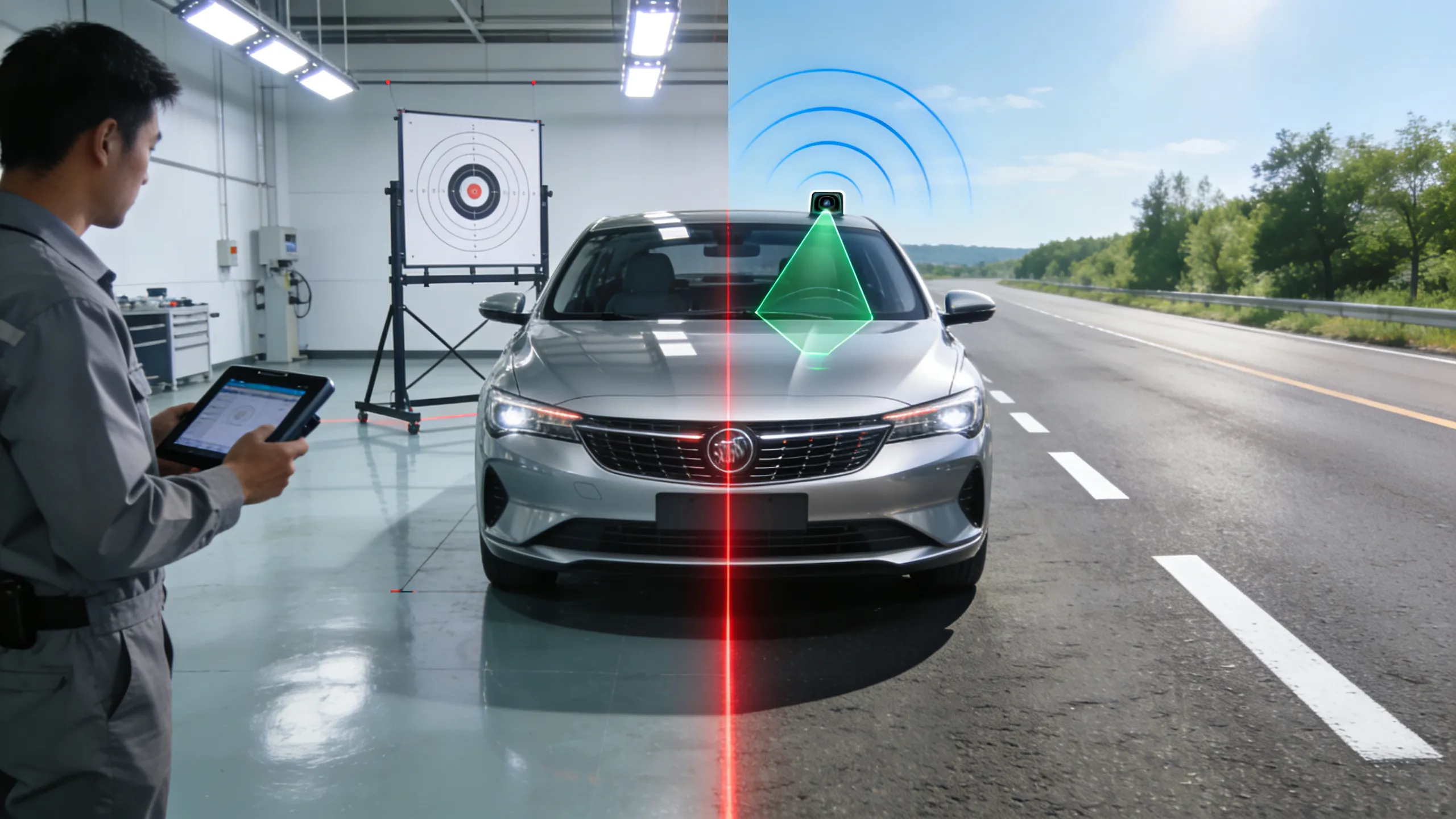
The forward camera is usually mounted near the top center of the windshield, close to the rearview mirror bracket. On some cars it sits in a front emblem module, but windshield mount is still most common in 2026 models.
This ADAS camera sensor reads painted lane lines, vehicle edges, brake lights, and some traffic signs. High-resolution units can also detect pedestrians and cyclists at longer distances than early systems did.
Features controlled by the front camera
- Automatic Emergency Braking (AEB) support input
- Lane Departure Warning and Lane Keeping Assist
- Traffic Sign Recognition (speed, stop, no-entry in many systems)
- Driver lane-centering support on highways
The camera is very angle-sensitive. A slight mount shift can move lane detection several inches at road level. That's enough to create false alerts.
Why windshield work often triggers calibration
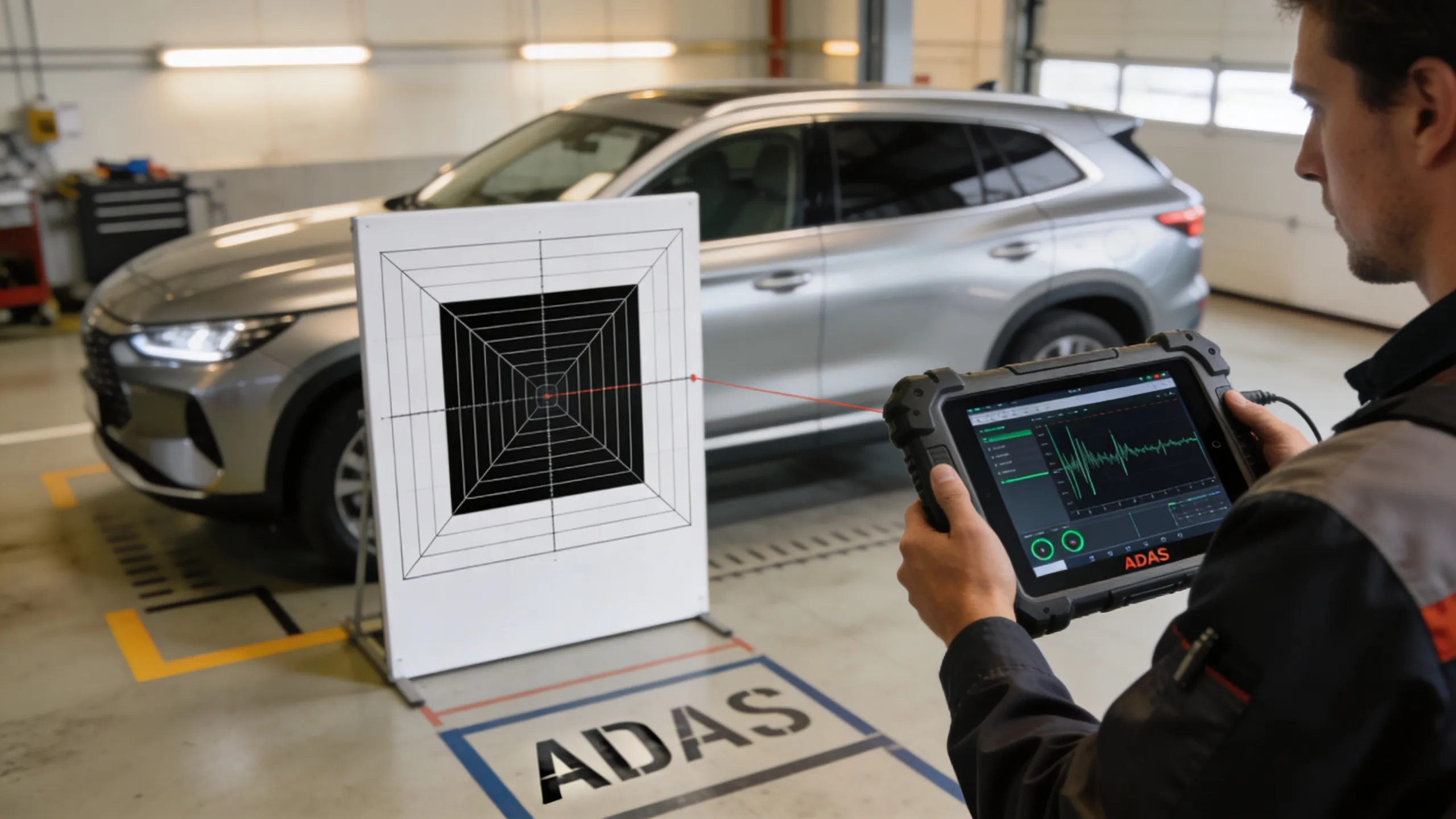
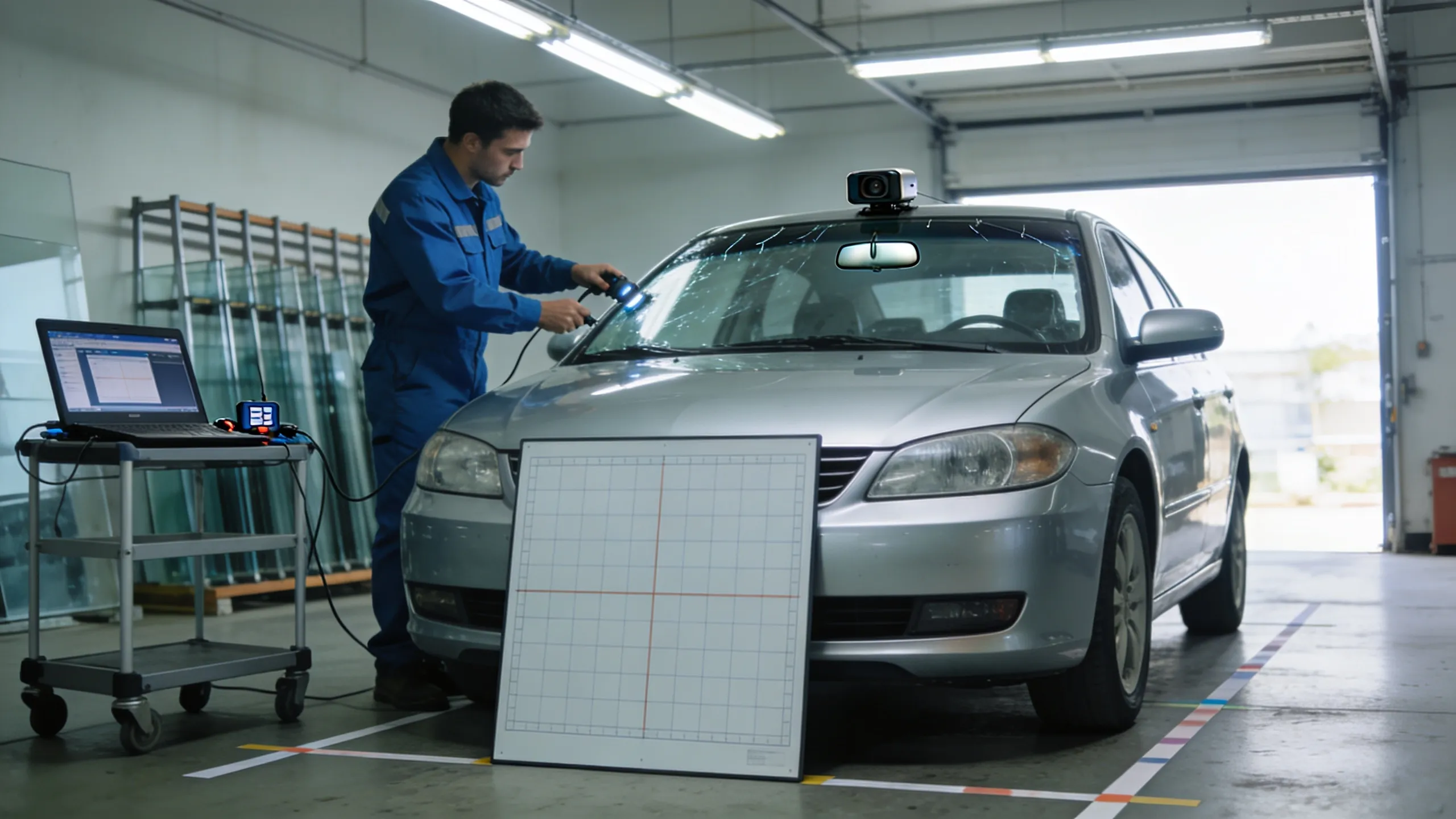
Windshield replacement is one of the top calibration triggers in the U.S. Even when glass looks identical, thickness, bracket position, or adhesive cure can change camera aim. Shops usually perform static calibration (targets in shop) and sometimes dynamic calibration (road test) depending on OEM procedure. 9 out of 10 vehicles from 2023 and newer need recalibration after a glass swap, according to industry data.
For a deeper comparison, read static vs dynamic ADAS calibration. For glass-specific steps, see ADAS calibration after windshield replacement. If auto glass work is needed, auto glass repair services can often include calibration in the same appointment.
Front radar sensors and ADAS sensors in cars for distance control
Location and design
Front radar units are commonly mounted behind the front bumper cover or grille badge. Some brands place radar in a lower grille opening. The module sends radio waves, then measures return time and frequency shift to estimate object distance and relative speed.
What front radar controls
- Adaptive Cruise Control (ACC) gap keeping
- Forward Collision Warning timing
- Part of AEB decision logic in multi-sensor systems
- Stop-and-go traffic following in some trims
Range and limitations
Long-range front radar can detect far ahead, often over 120 meters, and in many platforms much farther. It performs better than a camera in poor visibility. But radar returns can be noisy around metal guardrails, steep road crests, and angled trailers. That's why radar and camera data are usually fused before braking commands are sent.
After bumper repair, bracket replacement, or minor front impact, car radar sensor calibration is often required. Repaint thickness can also matter in certain bumper zones if the coating affects radar transparency. A shop that handles bumper repair should always check whether radar recalibration is part of the OEM procedure for that vehicle.
IIHS front crash prevention testing highlights why proper radar-camera alignment matters for real-world avoidance performance. See the current IIHS class summaries and crash prevention ratings.
Rear and side radar: blind spot and cross-traffic sensors
Where these modules are mounted
Rear corner radar sensors are typically mounted behind the rear bumper, one on each side, angled outward. Some vehicles also use mirror-integrated sensors or additional short-range side units. Together, these modules watch adjacent lanes and crossing traffic when reversing.
Key functions in daily driving
- Blind Spot Monitoring alerts in mirrors or cluster
- Lane change warning with side vehicle detection
- Rear Cross-Traffic Alert while backing from parking spaces
- Blind Spot Intervention on some higher trims
These systems reduce a common parking lot risk: backing out with blocked side visibility. They're sensitive to mounting angle and bumper geometry. A small change in rear cover fit can shift detection zones significantly.
Common calibration triggers
Rear-end collisions, bumper replacement, quarter panel repair, and mirror replacement can all trigger calibration. Some platforms require scan tool setup plus a drive cycle. Others require fixed targets before road verification.
Luxury platforms often have tighter tolerances. Brand-specific workflows are covered in ADAS calibration for Tesla, BMW, and other luxury vehicles. After a rear collision, shops that handle collision repair should include a scan check as part of the standard repair process.
Ultrasonic parking sensors
Short-range hardware built into bumpers
Ultrasonic sensors are the small circular modules visible on many front and rear bumpers. They emit high-frequency sound pulses and measure echo timing to estimate how close an obstacle is. Range is short, often best within a few feet.
What they do well
- Parking assist beeps and distance bars
- Low-speed object warning near curbs, poles, and walls
- Support for automated parking in equipped models
- Low-speed reverse braking in some systems
Ultrasonic sensors aren't highway tools. They're close-range devices, and heavy dirt, ice, paint buildup, and light physical damage can all affect output.
When recalibration or relearn is needed
Bumper repairs, repainting, and paintless dent repair near a sensor zone can change output. Some vehicles only need sensor initialization. Others require a guided calibration routine with scan equipment. If a parking warning seems late or constant after body work, inspection is due. Shops offering paintless dent repair near sensor zones should flag this to the vehicle owner.
LiDAR in 2026 vehicles
Which vehicles use LiDAR sensor technology
LiDAR sensor cars are still a minority in the U.S. market in 2026, but adoption is growing in premium and technology-focused trims. Most mainstream models still rely on camera plus radar plus ultrasonic combinations. LiDAR appears more often in limited advanced highway-assist packages and selected EV platforms.
How LiDAR differs from radar
Radar uses radio waves. LiDAR uses laser light pulses. That's a meaningful difference. LiDAR can build a dense 3D point cloud with high shape detail, which helps object edge detection and scene mapping. Radar usually performs better in rain, snow, and road spray. So many systems treat LiDAR as an extra layer, not a replacement for radar.
Future adoption and repair impact
LiDAR costs have dropped over the last few years, but service procedures remain strict. Mount stability is key. If the roof module area or front fascia mount zone is repaired, recalibration is often required. Costs run higher than camera-only calibration because procedures and targets are more specialized.
EV packaging can also change sensor placement and cooling design. For that angle, review ADAS calibration in electric vehicles.
Surround-view camera systems
How 360-degree view is created
Surround-view systems combine feeds from multiple wide-angle cameras, usually front, rear, and both sides. Software stitches those feeds into a top-down parking view. Drivers get better awareness near curbs, posts, and low obstacles that mirrors can miss.
Typical camera mounting points
- Front grille or front emblem area
- Rear tailgate or trunk handle area
- Underside of side mirrors
- Sometimes fender or quarter panel positions
Calibration needs after body and mirror work
These cameras depend on accurate overlap zones. If one camera angle shifts, stitched lines can look bent or offset. Parking path guidance may drift as well. After mirror replacement, door repair, bumper work, or tailgate alignment, calibration is often required per camera and then validated as a full system.
That's why post-repair scan checks shouldn't be skipped, even when no warning light is active. Some faults are performance faults, not hard diagnostic trouble codes.
What triggers calibration for each ADAS sensor type
Below is a quick comparison of common triggers, mount points, and typical U.S. retail pricing ranges. Final cost depends on make, model year, OEM procedure, and whether static and dynamic calibration are both required.
| Sensor Type | Location | Common Calibration Triggers | Typical Cost |
|---|---|---|---|
| Forward camera | Windshield area | Windshield replacement, front collision | $250-$500 |
| Front radar | Behind bumper/grille | Bumper repair/replacement, front impact | $250-$450 |
| Blind spot radar | Rear bumper/mirrors | Rear collision, bumper work, mirror replacement | $200-$350 |
| Ultrasonic | Bumper surface | Bumper repair, repainting, PDR near sensors | $100-$200 |
| LiDAR | Roof/front fascia | Any structural repair near mount point | $400-$800 |
| Surround cameras | All corners | Any body panel repair near camera | $200-$400 per camera |
Why small repairs can still need calibration
Many drivers expect calibration only after a major crash. Small repairs can matter just as much:
- New windshield with slight bracket variation
- Bumper cover removed and reinstalled
- Mirror replaced after parking damage
- Ride height or alignment changes after suspension repair
- Battery disconnect that resets module settings on some platforms
Insurers increasingly ask for documented calibration proof when ADAS hardware is involved. Repair documentation protects the vehicle owner and the shop alike. Owners can search for qualified shops using the body shop directory to find locations equipped for ADAS work in their area.
Warning signs a sensor may be out of calibration
- Frequent false forward collision warnings
- Lane keeping pulls or drifts without clear lane changes
- Blind spot alerts that miss nearby vehicles
- Adaptive cruise braking too late or too early
- 360 camera stitching lines that no longer match body edges
Any of these showing up after body, glass, or suspension work means the vehicle should be checked promptly. Waiting can turn a small issue into a real safety risk.
Conclusion: understanding ADAS sensors in cars helps drivers make safer repair choices
ADAS sensors in cars are now core safety components, not optional extras. Cameras, radar, ultrasonic modules, and LiDAR each handle different jobs. Each one depends on accurate mounting and calibration to perform as designed. When repairs involve glass, bumpers, mirrors, fascia panels, or structural points near sensors, calibration should be part of the repair plan, not an afterthought.
Drivers who understand where are ADAS sensors located can ask better questions before and after repair. They can request scan reports, calibration records, and OEM procedure confirmation. That extra step keeps safety systems reliable in daily driving.
For next steps, start with the full ADAS calibration pillar guide, then compare methods in static vs dynamic calibration based on vehicle type and repair scope.