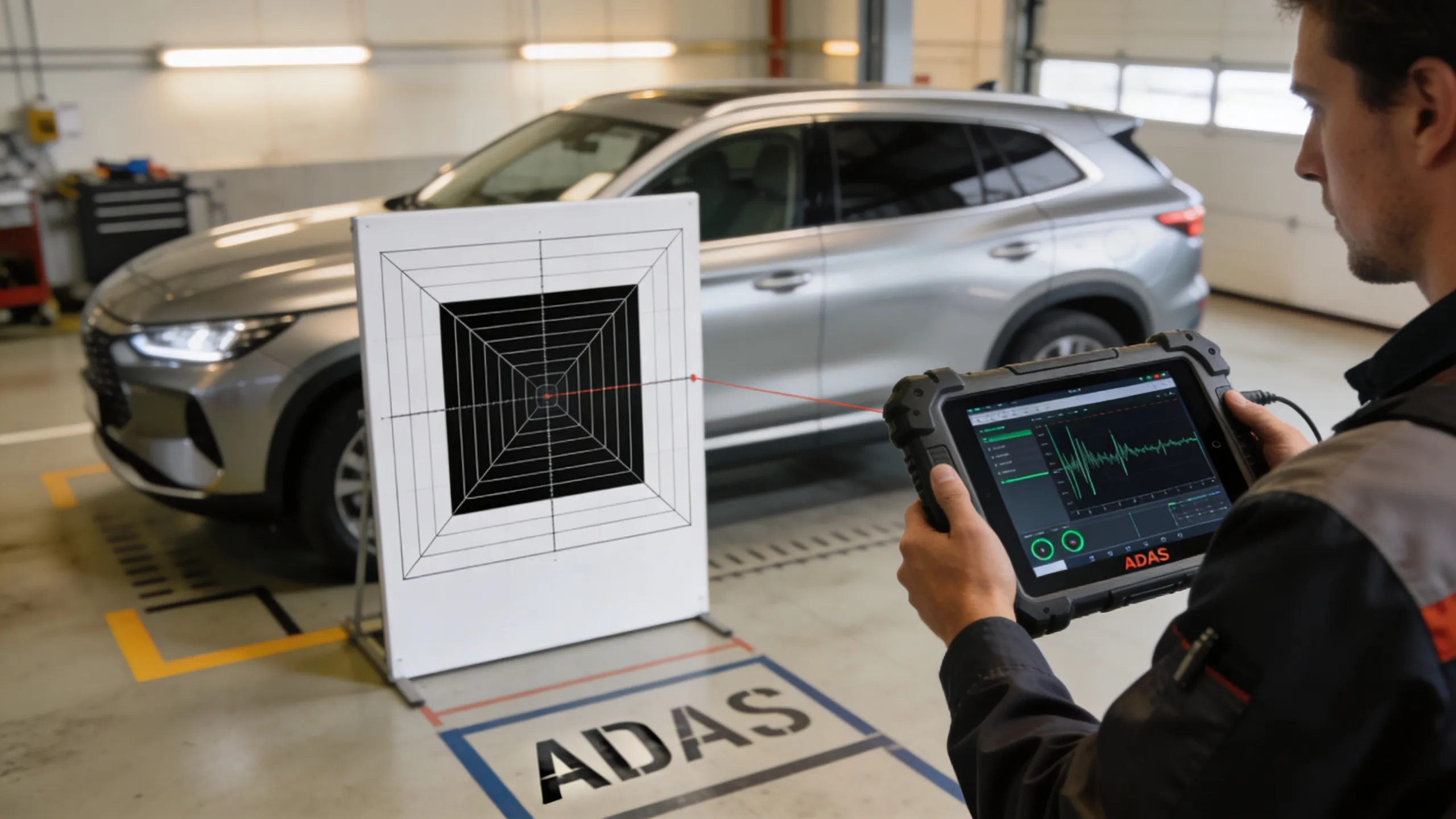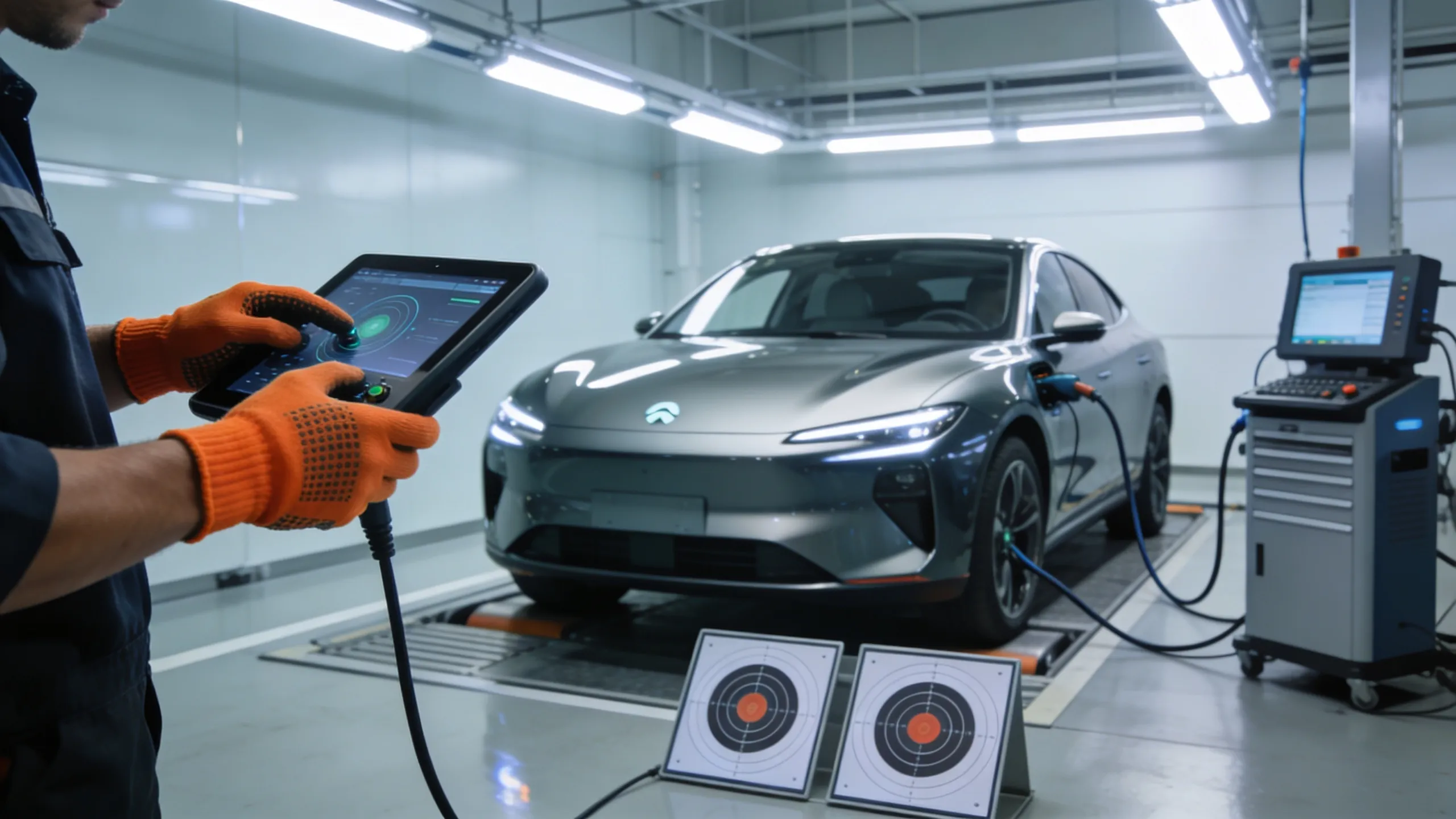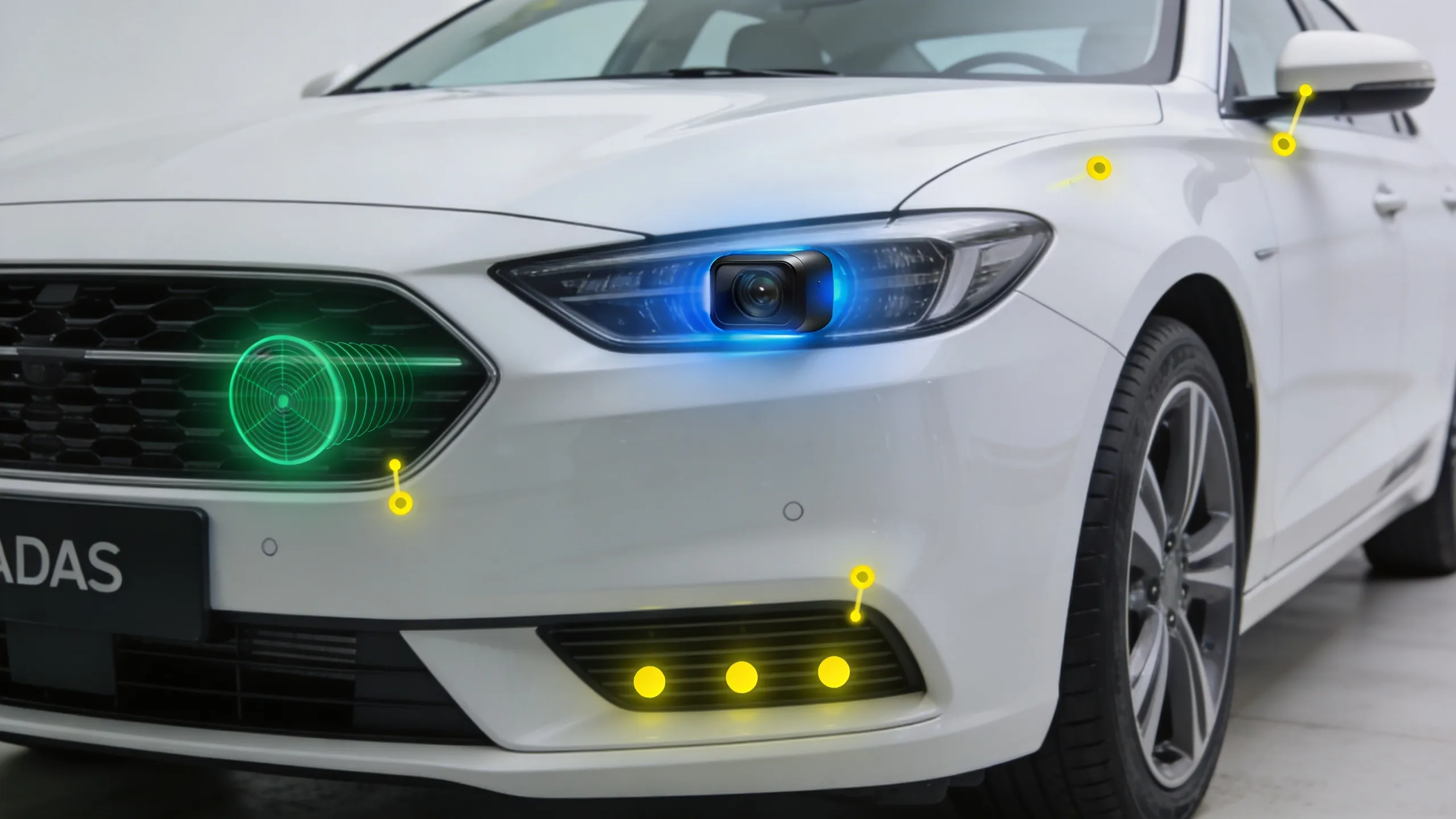
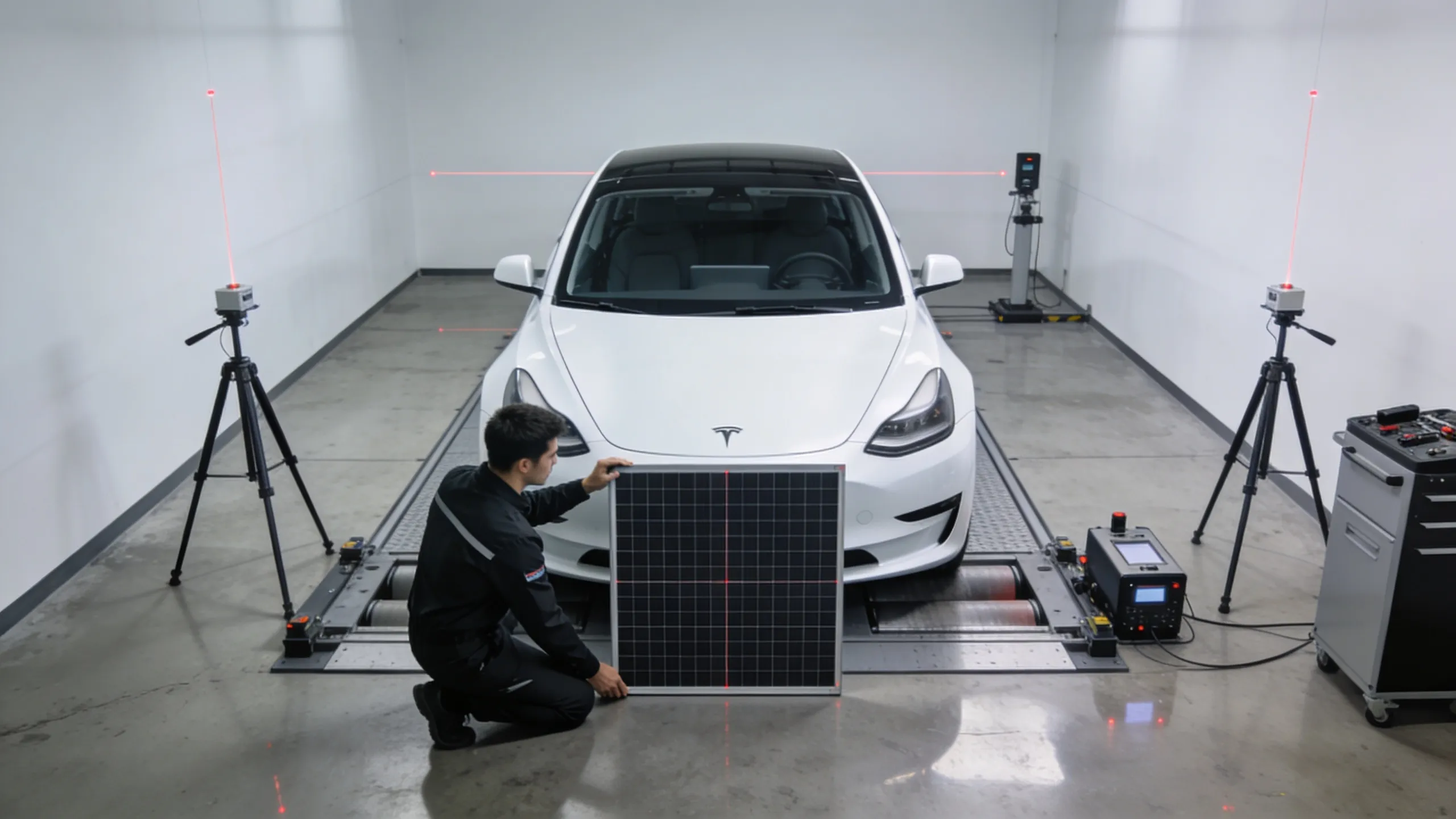
Modern safety systems can brake, steer, and warn in milliseconds. They only work as designed, though, when sensors are aligned to exact factory specs. That's why ADAS calibration Tesla searches have grown so quickly, especially among owners of premium and electric vehicles. Tesla, BMW, Mercedes-Benz, Audi, Volvo, and Lexus all use advanced camera, radar, and software stacks. Each brand has different post-repair calibration rules. This guide explains what changes by brand, what calibration really costs, and how drivers can find the right shop without guesswork.
For foundational context, readers can start with the full ADAS calibration guide, then return here for brand-specific details.
ADAS Calibration Tesla and Why Luxury EVs Need Specialized Service
ADAS calibration for Tesla and other luxury EVs is more complex than standard vehicles because these platforms use denser sensor layouts, tighter tolerances, and brand-specific software validation. A few millimeters of camera shift or ride-height change can alter braking and lane-centering behavior. Most systems also require OEM scan tools, guided procedures, and controlled shop setups — not just a quick road test. Luxury car ADAS calibration typically includes stricter final verification than economy-vehicle workflows.
Mainstream ADAS often uses one front camera and one radar. Luxury platforms layer more hardware, more software checks, and more dependencies. A windshield replacement, bumper repair, wheel alignment, suspension work, or minor collision can all trigger recalibration requirements.
The bigger issue is consistency over time. Premium driver-assist systems are tuned for smooth intervention, not just basic warning alerts. If calibration is off, the system may still operate but react later than expected or disengage more often in complex traffic. That's one reason shops servicing luxury vehicles invest in specialized equipment and training that smaller general shops don't have.
Drivers planning collision repair on a Tesla or BMW should confirm upfront whether the shop has brand-specific calibration capability — before any work begins.
Sensor Density Is Higher on Premium Models
A base sedan might have six to eight ADAS-related sensors. A premium SUV can have double that count, depending on trim and options. That creates more cross-checking between systems. If one sensor sits out of range, other modules may throw faults or downgrade driver assist features entirely.
Calibration Tolerances Are Tighter
High-end lane-centering and adaptive cruise systems are less forgiving. Small angle errors matter at highway speed. A camera error that seems tiny in the bay can become feet of targeting error down the road — changing how late or how hard the system reacts.
Software Validation Is More Controlled
Luxury brands increasingly lock procedures behind guided diagnostics. Some workflows require authenticated OEM software sessions, step-by-step checks, or post-calibration test drives under strict conditions. Independent shops can handle many jobs. Not every job, though.
Drivers comparing brands should also review ADAS calibration for electric vehicles and how ADAS sensors work to understand why EV packaging can shift calibration complexity.
ADAS Calibration Tesla: Autopilot and FSD Requirements
Tesla systems don't follow the same playbook as legacy brands. Older vehicles used a camera-plus-ultrasonic approach. Newer vehicles shifted to Tesla Vision, with heavy dependence on cameras and software interpretation. That transition changed both diagnostics and calibration workflows in meaningful ways.
Hardware and Architecture Differences
Many Tesla configurations are built around up to eight exterior cameras. Earlier builds also used up to 12 ultrasonic sensors for close-range detection. But newer Tesla Vision configurations removed ultrasonic hardware in many models and expanded camera-based estimation. Calibration outcomes are tied closely to camera aim, glass quality, mounting condition, and software version.
When Tesla Calibration Is Typically Required
Common triggers include windshield replacement, front-end collision repair, bumper replacement, suspension geometry changes, and some alignment events. Tesla may also require additional verification after module replacement or software-related service actions.
Sometimes owners don't notice a warning right away. A system can appear normal while hidden angle offsets or degraded confidence values sit in the background.
OEM-Only and Limited-Access Procedures
Independent shops can perform many static and dynamic ADAS procedures using capable tooling. But certain Tesla workflows may still require Tesla service access, brand-specific documentation, or procedures tied to Tesla-approved repair networks. That's especially relevant for deeper Tesla Vision checks or module-level operations.
Owners can review Tesla collision and repair resources at Tesla Collision Support.
Tesla Autopilot Calibration Cost
Typical Tesla Autopilot calibration cost ranges from $300 to $600 per system, depending on region, model, and repair scope. Multi-system jobs often land between $800 and $1,200. If a shop must coordinate OEM-level steps or additional diagnostic time, costs can move higher. If windshield work is also needed, reviewing the auto glass repair service process first can help owners understand what triggers calibration in that workflow.
Cost details by system type are covered in this ADAS calibration cost guide.
BMW ADAS Calibration: Driving Assistant Professional and Parking Systems
BMW ADAS calibration usually involves front camera alignment, radar checks, parking sensor verification, and diagnostic validation through BMW-approved workflows. On newer models with Driving Assistant Professional, calibration quality directly affects lane control, distance management, and intervention timing.
Key BMW Systems That Commonly Need Recalibration
Common systems include forward collision warning, active cruise control, lane keeping support, parking assistant, and surround-view integration. Repairs around the windshield, front grille, bumper covers, mirrors, and suspension geometry can all force recalibration steps. It's a longer list than most owners expect.
BMW Certified Collision Center Expectations
BMW publishes certified collision standards that emphasize trained technicians, approved equipment, and OEM repair methods. For many high-value repairs, insurers and owners prefer BMW-certified facilities because documentation and process controls are stronger. That can reduce liability disputes later.
BMW certification reference: BMW Certified Collision Repair Centers.
Typical BMW Cost Range
Single-system calibration commonly falls between $350 and $550. Multi-system jobs often run $700 to $1,000. Price can rise if the vehicle needs repeated setup, additional fault tracing, or post-repair road validation under narrow conditions.
Mercedes ADAS Recalibration: Pre-Safe, Distronic Plus, and Active Steering Assist
Mercedes ADAS recalibration is often more controlled than many drivers expect. Mercedes platforms combine camera, radar, ultrasonic, and steering-input data in ways that demand strict repair sequencing. Skip one required check, and the car may still drive, but assist behavior can degrade or disable under load.
Systems That Drive Calibration Complexity
Pre-Safe features, Distronic Plus adaptive cruise, active steering assist, lane intervention, and parking functions often share dependencies. A repair near one sensor can require verification across multiple modules. On newer trims, software checks can be as important as physical sensor aiming.
Why MB-Certified Networks Matter
Mercedes-certified shops are set up for brand-specific diagnostics, repair standards, and documentation. For some jobs, that infrastructure makes the difference between one clean calibration cycle and multiple retests. It can also affect claim approval speed when insurers review repair notes.
Typical Mercedes Cost Range
Single-system recalibration often runs $400 to $600. Multi-system service typically lands at $800 to $1,100. If OEM-only diagnostic paths are required, total billable time increases accordingly.
Audi and Other Luxury Brand Requirements
Tesla, BMW, and Mercedes get most of the attention. Audi, Volvo, and Lexus also have advanced requirements that owners should understand before authorizing repairs.
Audi pre sense and Driver Assistance Packages
Audi pre sense and related assist features rely on camera and radar consistency. Calibration is typically required after windshield replacement, bumper impact, front-end repair, alignment changes, or sensor bracket replacement. Some procedures can be handled by advanced independent facilities. Others require Audi-certified workflows.
Volvo City Safety and Lane Support Dependencies
Volvo City Safety stacks are known for strong integrated behavior across braking and steering support. That integration can increase recalibration steps after collision or glass work. Independent shops can handle many Volvo jobs, but equipment quality and technician experience matter a lot here.
Lexus Safety System+ Calibration Notes
Lexus Safety System+ typically uses front camera and radar coordination. Correct static targets, floor level, and lighting are central to reliable setup. If the vehicle had prior body repairs, a baseline geometry check is often needed before calibration begins.
Drivers comparing providers can use this local ADAS calibration checklist to screen shop capability before booking.
ADAS Calibration Tesla and Other Luxury Vehicle Cost Differences
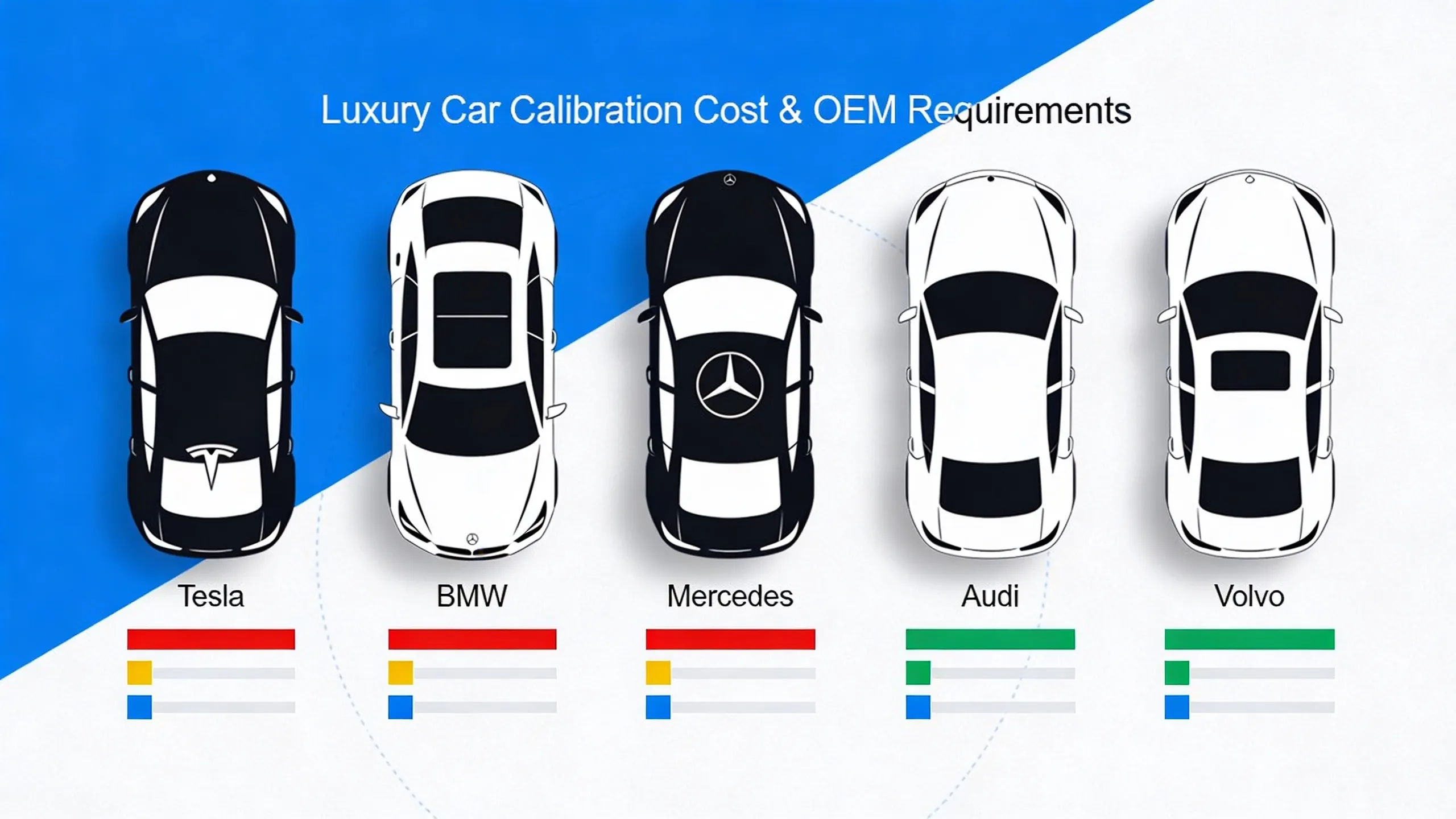
Luxury calibrations cost more for simple reasons: higher sensor counts, more setup time, stricter software checks, and greater documentation burden. Labor time isn't just "plug in a scan tool." Technicians may need target placement, ride-height verification, alignment confirmation, controlled lighting, and repeated validation runs.
| Brand | Single System | Multi-System | OEM-Only Required? | Certified Shop Needed? |
|---|---|---|---|---|
| Tesla | $300-$600 | $800-$1,200 | Partial (Tesla Vision) | Recommended |
| BMW | $350-$550 | $700-$1,000 | Some procedures | BMW Certified Collision |
| Mercedes | $400-$600 | $800-$1,100 | Most procedures | MB Certified |
| Audi | $350-$500 | $650-$950 | Some procedures | Audi Certified |
| Volvo | $300-$500 | $600-$900 | Varies | Recommended |
| Lexus | $300-$500 | $600-$850 | Some procedures | Lexus Certified |
These ranges reflect typical U.S. market pricing for 2026 and can shift by metro area, trim complexity, and repair type. They set realistic expectations before the estimate conversation starts.
Another cost factor is diagnosis before calibration even begins. On many luxury vehicles, technicians must resolve stored fault codes, confirm alignment status, and verify sensor mounting integrity first. If one prerequisite fails, calibration pauses until the underlying issue is fixed. That diagnostic loop isn't always visible line by line on the estimate, but it's real labor that protects system reliability.
Labor Time Adds Up Fast
A single calibration can take one to three labor hours. Multi-system jobs may take four to eight, especially when a repair requires setup resets between modules. Premium shops also spend time producing documentation that insurers may request later.
Equipment and Facility Requirements Increase Overhead
Shops need level floors, target systems, OEM or OEM-compatible scan tools, and trained staff. Only about 25% of repair shops in the U.S. are properly equipped for this work. Calibration bays are expensive to build and maintain, so prices reflect that infrastructure investment.
OEM-Only vs Third-Party Calibration for Luxury Vehicles
Most owners ask one direct question: should this go to the dealer or an independent ADAS shop? The answer depends on vehicle brand, damage scope, and procedure access.
When Dealer or OEM-Certified Service Is Usually Required
Dealer-level routing is often the safer choice when the vehicle needs authenticated brand procedures, deep module programming, or repair records tied to certification programs. Tesla Vision-heavy workflows, Mercedes high-level assist stacks, and certain BMW module operations commonly fall into this category.
When High-Quality Independent Shops Can Handle the Job
Independent ADAS specialists can perform many calibrations correctly when they have proper targets, scan capability, trained technicians, and documented final verification. Owners should confirm brand coverage in writing before work begins.
Questions to Ask Before Approving Calibration
- Will the shop perform both pre-scan and post-scan and share the reports?
- Is static calibration done in a dedicated level bay?
- Can the shop complete OEM-required steps for this exact VIN and trim?
- Will they road-validate dynamic systems when required?
- Do they provide documented pass/fail status for each system?
If a shop can't answer these clearly, that's useful information. Move on to a provider with stronger process control.
Finding a Certified ADAS Calibration Shop for Your Luxury Vehicle
Choosing the right shop isn't about the lowest estimate. It's about risk control. A cheap calibration that fails under real traffic conditions can cost far more later.
Start With Certification and Brand Fit
For BMW and Mercedes, brand-certified collision centers are a strong starting point. For Tesla, confirm whether the needed procedure is available through independent tooling or must route through Tesla-approved channels. Owners can search by state and city using the local body shop directory to find certified facilities in their area.
Request Documentation, Not Just Verbal Confirmation
Ask for scan reports, calibration completion records, and any required test-drive verification notes. Written records help owners, insurers, and future buyers understand exactly what was done and when.
Use National Safety Guidance as a Baseline
NHTSA has broad safety resources that explain ADAS function and limitations. Those references help owners ask better questions and avoid overconfidence in driver assist features. See NHTSA automated driving systems guidance.
Final Takeaway on ADAS Calibration Tesla and Luxury Brands
ADAS calibration Tesla requirements differ from BMW, Mercedes, Audi, Volvo, and Lexus in meaningful ways, but one rule stays constant: exact calibration protects real-world safety performance. Luxury systems are precise, interconnected, and expensive to get wrong. Owners should expect higher costs, confirm whether OEM-only steps are needed, and choose certified or proven specialists with documented results. When in doubt, use the brand's certified repair pathway instead of gambling on partial process shortcuts.
For a broader framework, return to the pillar ADAS calibration guide and compare with cost benchmarks before scheduling service.