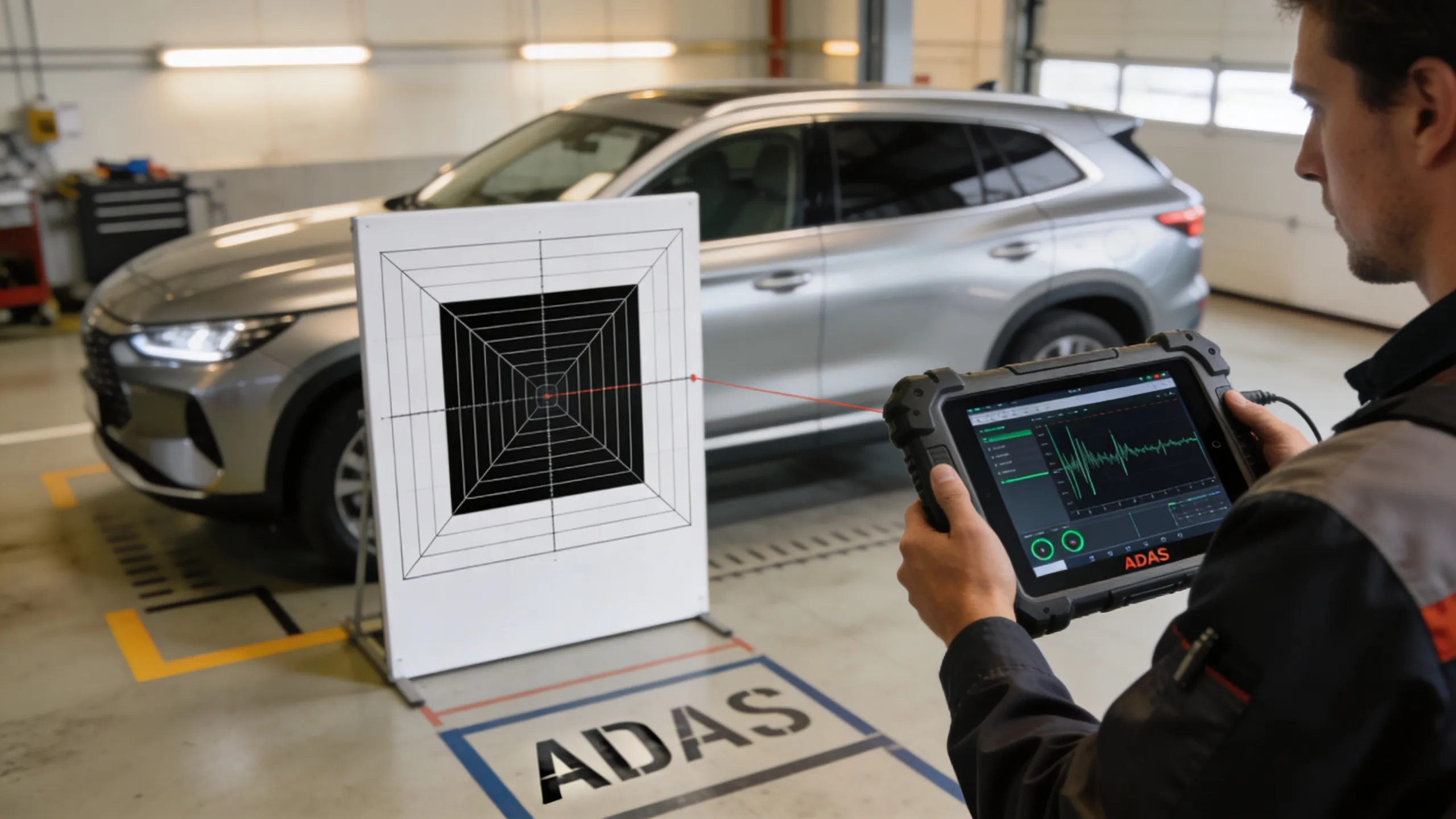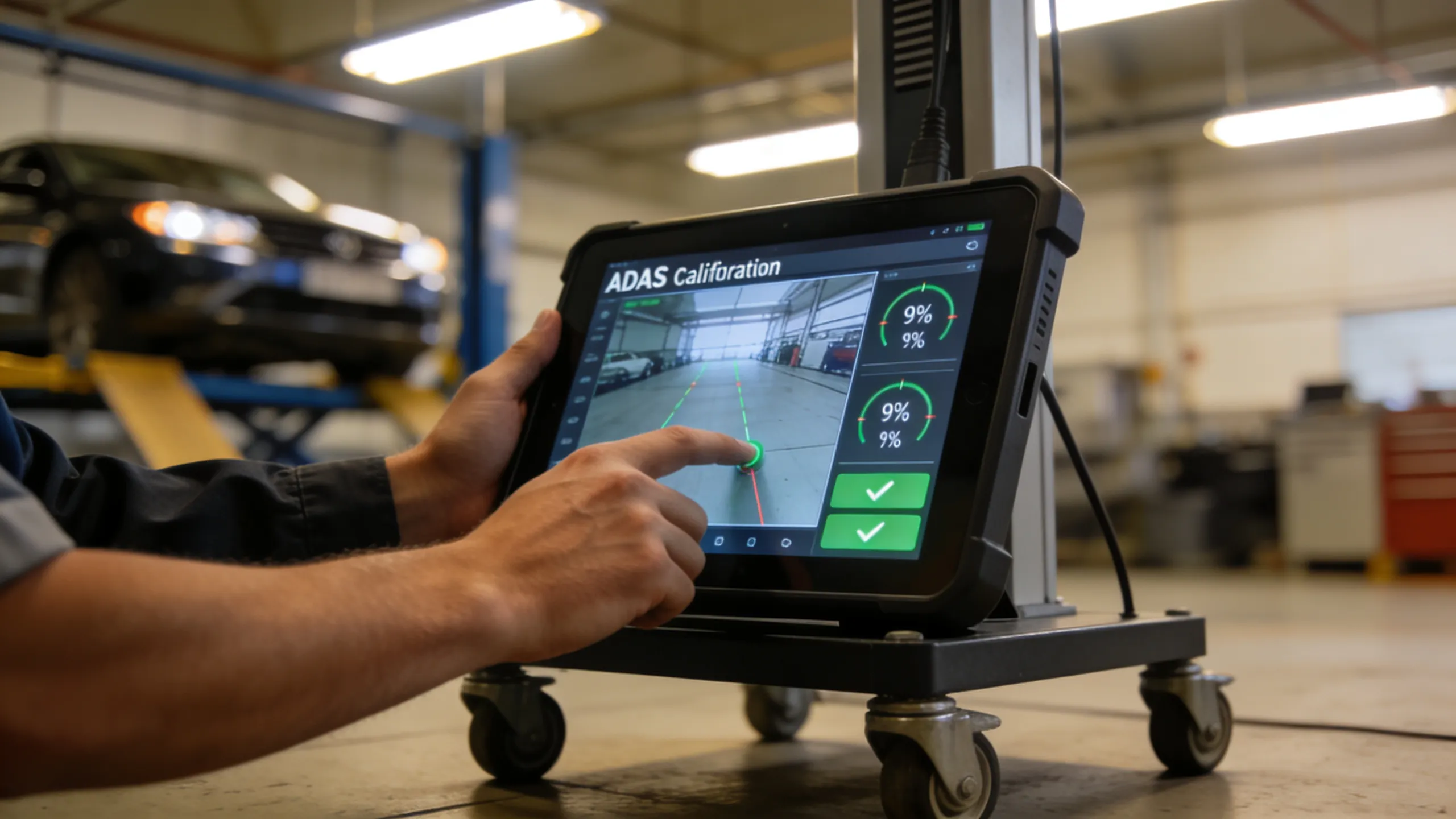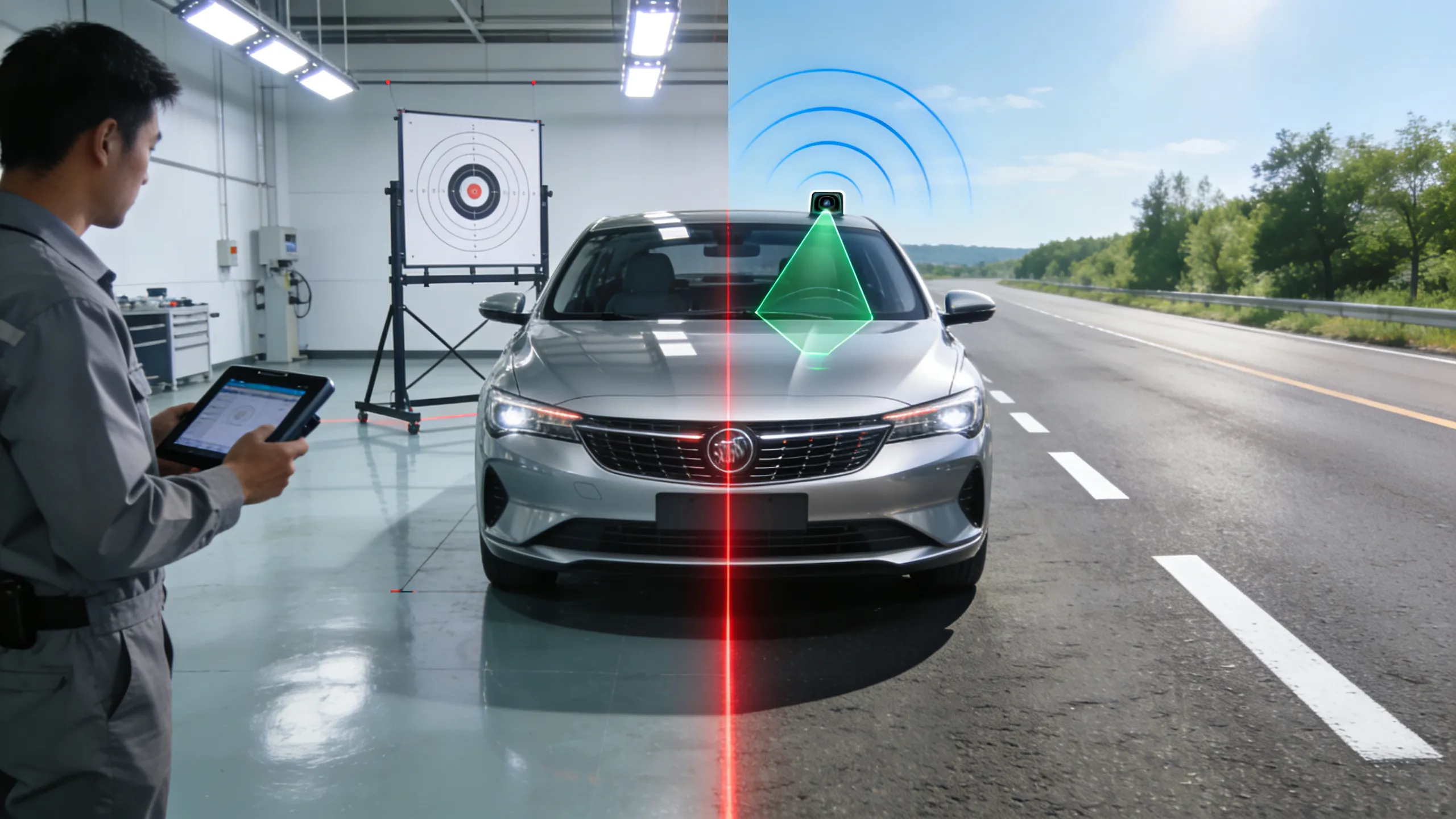
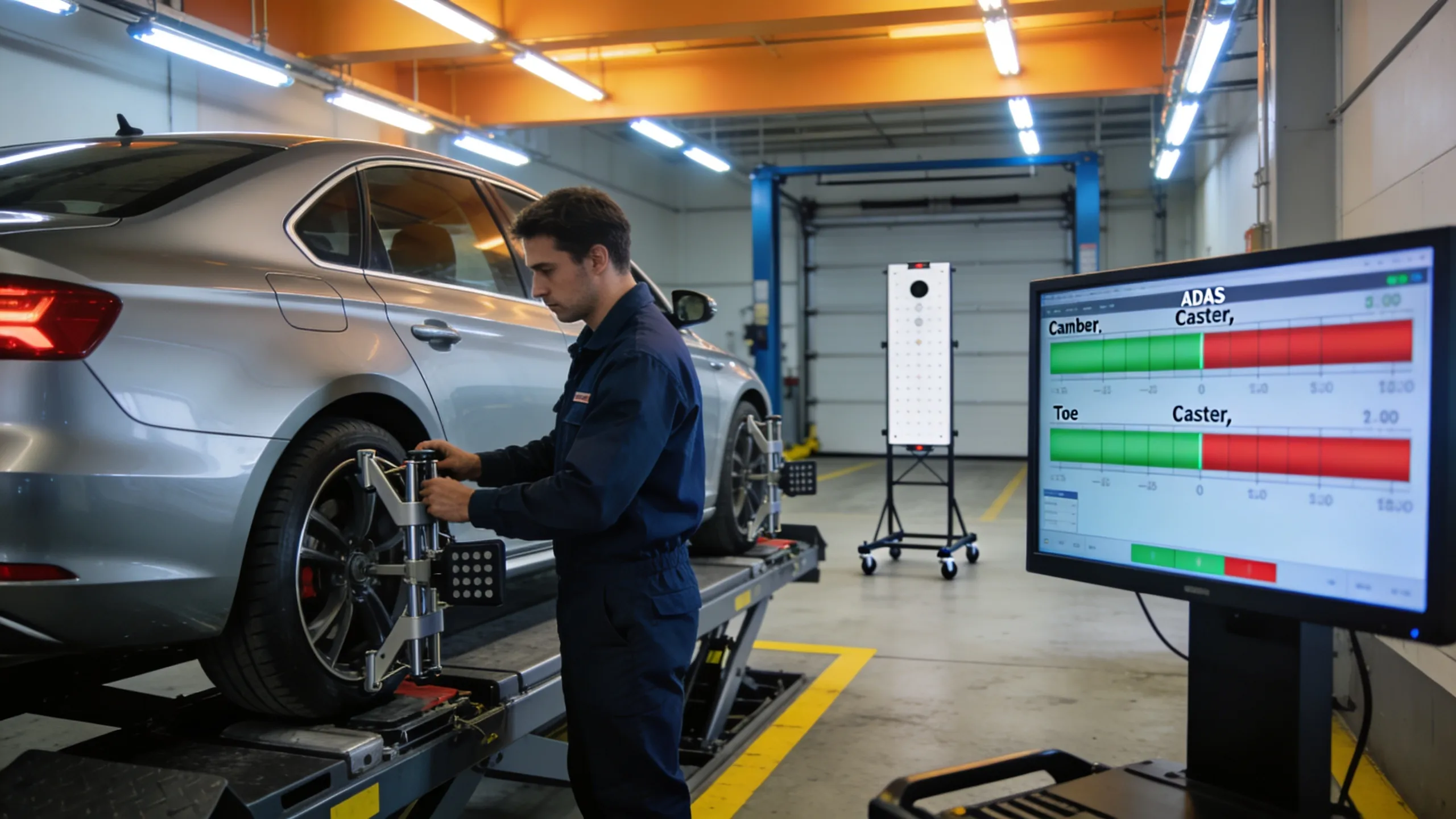
Many drivers hear about alignment and ADAS in separate conversations. But they connect. ADAS calibration after wheel alignment comes up because alignment and suspension angle changes can shift how cameras and radar view the road. If the sensor view moves even a little, lane and braking features may react late, overreact, or shut off entirely.
This guide explains when calibration is required, which repairs trigger it, and what fair pricing looks like in 2026.
For full background on system types and calibration methods, start with the ADAS calibration guide. Then come back here for alignment-specific decisions.
Does Wheel Alignment Affect ADAS Sensors?
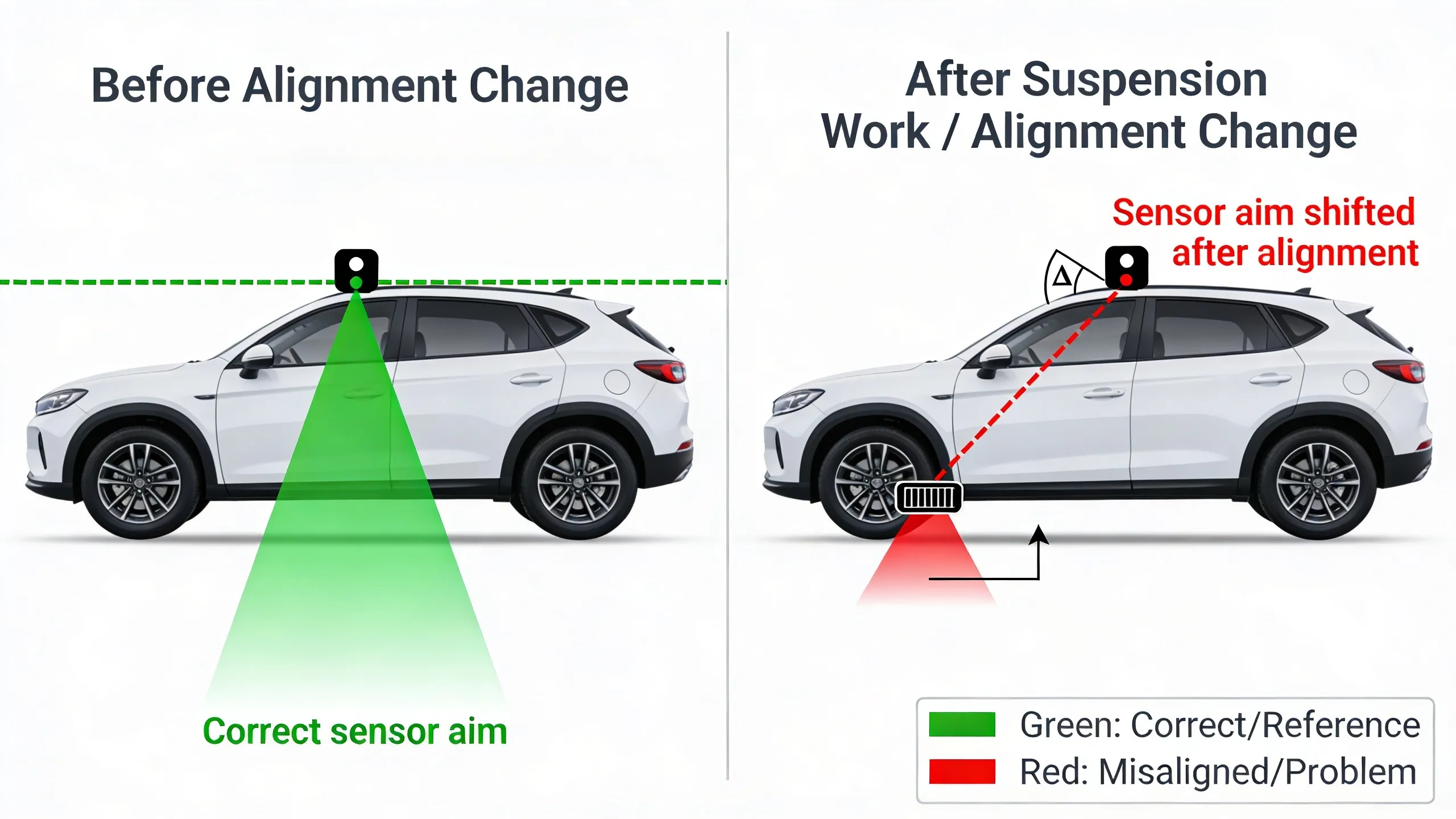
Yes. Wheel alignment can affect ADAS because alignment changes the vehicle's thrust angle, steering center, and sometimes ride height. ADAS cameras and radar are calibrated to precise reference angles. When those references shift, the system may need recalibration so lane, distance, and braking functions match factory targets again.
Why this answer matters
That short answer is the featured-snippet version. The longer reality depends on vehicle design, what was adjusted, and whether suspension parts were replaced. A minor toe correction on one model may not trigger a procedure. A similar adjustment on another model may require it. There's no single blanket rule that covers every vehicle on the road.
Why Alignment Changes Trigger ADAS Calibration After Wheel Alignment
Sensor angle precision is tight
ADAS hardware works inside narrow tolerances. A forward camera tracks lane lines based on a known centerline and pitch angle. Front radar tracks target distance and speed from a known mounting direction. Small geometric shifts can produce bigger errors down the road because the sensor projects far ahead. Even a fraction of a degree off can push a system outside its acceptable range.
But this doesn't mean every alignment automatically fails safety systems. It means geometry changes must be checked against OEM procedures.
Ride height changes the sensor view
The phrase ride height ADAS sensors matters for a reason. When ride height changes, sensor pitch changes with it. A front camera mounted near the windshield sees lane edges at a slightly different angle. A bumper-mounted radar can point a bit higher or lower than intended.
Those changes happen during spring replacement, worn strut replacement, load-leveling correction, lift kit installation, or lowering spring work. Alignment numbers may still look "green" on a rack, yet the ADAS baseline can still move. The rack doesn't measure sensor pitch.
Forward camera mounting and steering center
Many lane and forward-collision features rely on the relationship between camera aim and steering-angle center. If steering center is updated during alignment, the control unit may need recalibration or a relearn to keep camera interpretation synced with the vehicle path. It's a common miss at shops that don't specialize in ADAS work.
Hunter Engineering notes that modern alignment and ADAS procedures are increasingly connected in post-repair workflows. See Hunter's ADAS resources for shop-side process detail: Hunter Engineering ADAS.
Which Vehicles Require ADAS Calibration After Wheel Alignment
2020+ vehicles are the main group
Vehicles built from 2020 onward are far more likely to need wheel alignment ADAS recalibration checks because ADAS features became standard across trims. Many compact cars now include lane centering, AEB, and adaptive cruise where older versions offered none. About 61% of vehicles requiring calibration after repairs don't get it (source: industry claims data).
Make and model trends
There isn't one universal rule by brand. Still, these patterns show up often:
- Mainstream 2020+ sedans and crossovers: often require post-alignment confirmation procedures when steering-angle center changes.
- Trucks and SUVs with lift options: more likely to need calibration after suspension geometry changes because ride height shifts are larger.
- Vehicles with multi-sensor suites: camera + front radar + corner radar setups may require one calibration event touching several modules.
- Luxury models: often have stricter guided procedures and longer calibration times.
OEM statements drive the final answer
The final rule comes from OEM repair procedures, not shop habit. I-CAR and OEM position statements both stress this point: follow manufacturer instructions for scan, calibration, and verification after repairs that affect sensor geometry. Skipping that step isn't a gray area; it's a departure from required procedure.
Useful references:
Suspension Repairs That Trigger ADAS Calibration
Many drivers expect calibration after a windshield replacement. Fewer expect it after suspension service. But suspension repair ADAS calibration is common when component replacement changes vehicle stance, alignment baseline, or steering reference. Shops that handle collision repair run into this regularly, especially after side-impact or front-end damage that affects the suspension geometry.
Strut and shock replacement
Replacing struts can restore lost ride height by 0.25 to 1.0 inches, depending on wear. That's good for handling. Yet it can also change camera and radar pitch enough to require calibration, especially on vehicles with strict pitch thresholds.
Lift kits and lowering springs
Lift kits and lowering springs are high-probability triggers. A 1.5-inch lift can alter sensor orientation and forward target interpretation substantially. Lowering does the same in the opposite direction. These changes usually require alignment plus ADAS checks, and often full recalibration. Don't assume alignment alone wraps up the job.
Control arms, tie rods, and subframe work
Replacing control arms, tie rods, or correcting subframe position can change toe, caster, camber, and thrust angle. The shop may center steering and align wheels correctly, but the vehicle can still need post-repair scan and calibration confirmation to match OEM specs.
For pricing detail, see ADAS calibration cost. For method differences, compare static vs dynamic ADAS calibration. Shops performing bumper repair or auto glass repair may also trigger calibration if sensors mount in or near those components.
Cost of Combined Wheel Alignment and ADAS Calibration
Shops price this work differently by region and by procedure complexity. In 2026, the usual consumer ranges look like this.
| Service Type | Typical 2026 Price Range (USD) | What It Usually Includes |
|---|---|---|
| Wheel alignment only | $75–$150 | Toe/camber/caster adjustment and printout |
| ADAS calibration only | $250–$500 | Scan, setup, static or dynamic calibration, verification |
| Combined alignment + ADAS calibration | $300–$600 | Alignment plus required calibration workflow |
| Multi-system calibration (camera + radar) | $400–$800 | Multiple sensor modules in one session |
Why combo pricing varies
- Number of sensors involved: one camera vs camera + radar + steering-angle module.
- Procedure type: static target setup, dynamic road procedure, or both.
- Vehicle access complexity: some models need extra setup time and OEM software steps.
- Local labor rate: metro pricing can be 15% to 35% higher than small-market pricing.
And if a shop quotes a very low alignment with no ADAS check on a late-model vehicle, ask why. Sometimes it's fine. Sometimes they're skipping a required step. The distinction matters, because ADAS lawsuits in the repair industry grew from 3 cases in 2018 to 61 in 2024, mostly tied to skipped calibration steps.
How to Know If Your Vehicle Needs ADAS Calibration After Wheel Alignment
Check the owner's manual and OEM procedures
The owner's manual can confirm what ADAS features exist, but it won't list every repair trigger. For the full trigger list, shops use OEM service information by VIN. That lookup takes minutes and removes the guesswork.
Watch for dashboard warnings and behavior changes
Warning messages like "Front Camera Unavailable," "Radar Blocked," or lane-keep faults are obvious flags. Not all problems throw codes, though. Watch for new behaviors after a repair: late lane alerts, random warning beeps, or inconsistent adaptive cruise following distance. Those symptoms can mean calibration wasn't done or didn't pass.
Ask the shop for scan and calibration confirmation
A reliable process includes pre-scan, post-scan, and written calibration documentation when required. Ask for that paperwork. It should show what module was calibrated, when, and whether the procedure passed. If the shop can't produce it, calibration probably didn't happen.
For a plain-language refresher on camera, radar, and ultrasonic components, read ADAS sensors explained. Shops in your area can be found through the local body shop directory if you're searching for a facility equipped to handle ADAS work.
Questions to Ask Your Alignment Shop About ADAS
Use these before approving work. Short. Direct. Easy to document.
- Does this vehicle's OEM procedure require ADAS checks after this alignment?
- Will you perform pre-scan and post-scan, and provide copies?
- Which systems are affected: front camera, front radar, blind spot radar, steering-angle sensor?
- Is calibration done in-house or subcontracted?
- If subcontracted, which facility does the work and what documentation will I receive?
- Is the quoted price for one system or all required systems?
- If ride height changed after repair, how does that affect your calibration plan?
- What road test or verification steps are included before delivery?
Not every car needs full recalibration every time. But every late-model car needs the question asked.
Conclusion: ADAS Calibration After Wheel Alignment Is a Geometry Question
The rule isn't complicated. If alignment or suspension work changes the vehicle's geometric references, ADAS calibration after wheel alignment may be required to restore factory sensor accuracy. That's why wheel alignment ADAS recalibration decisions should follow OEM procedures, not guesswork.
For drivers, the practical move is simple. Ask for scan documentation, confirm whether ride height ADAS sensors were affected, and review written calibration results before pickup. The goal isn't an extra upsell. It's making sure the safety systems respond as designed when a split-second situation happens.