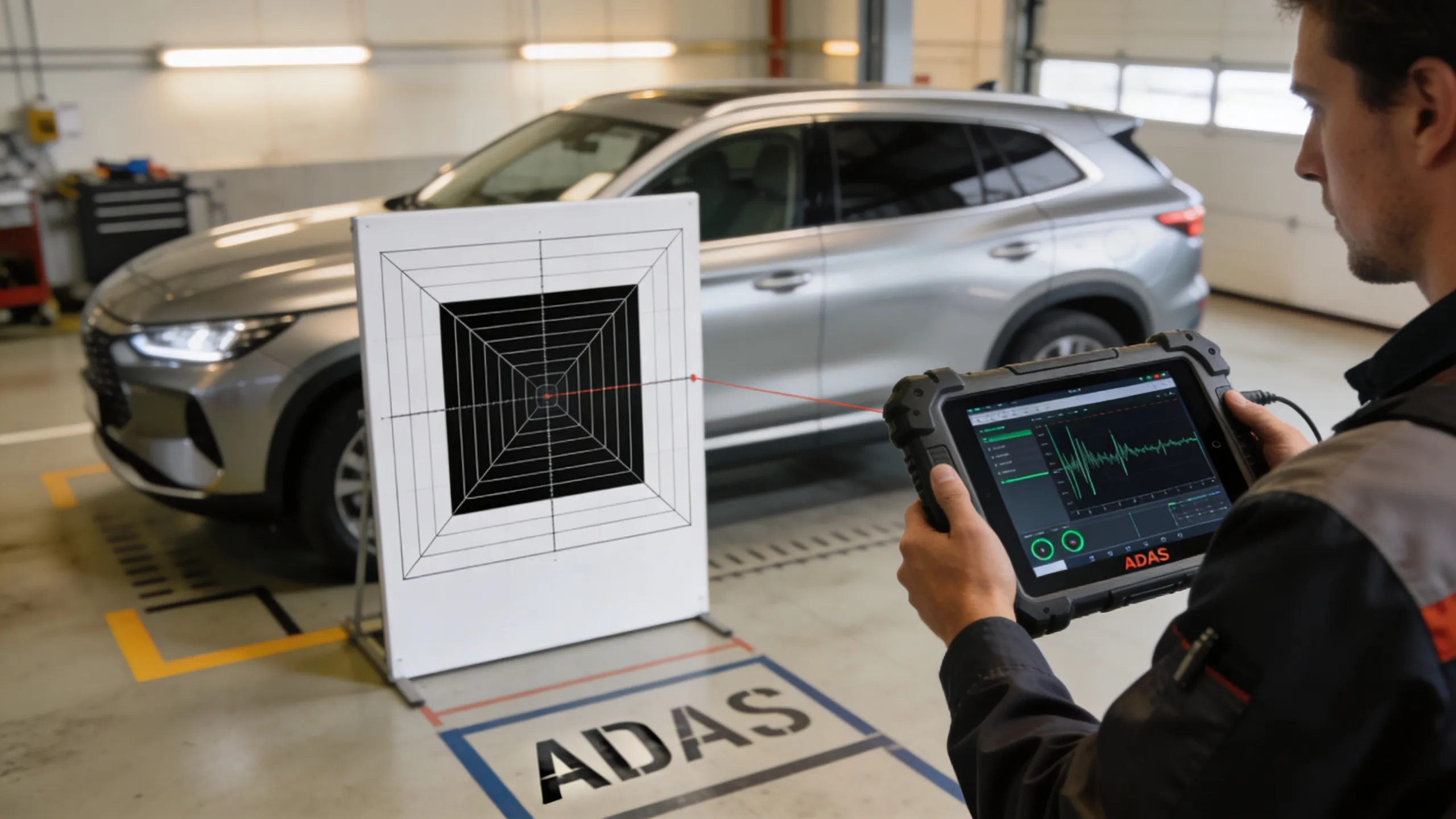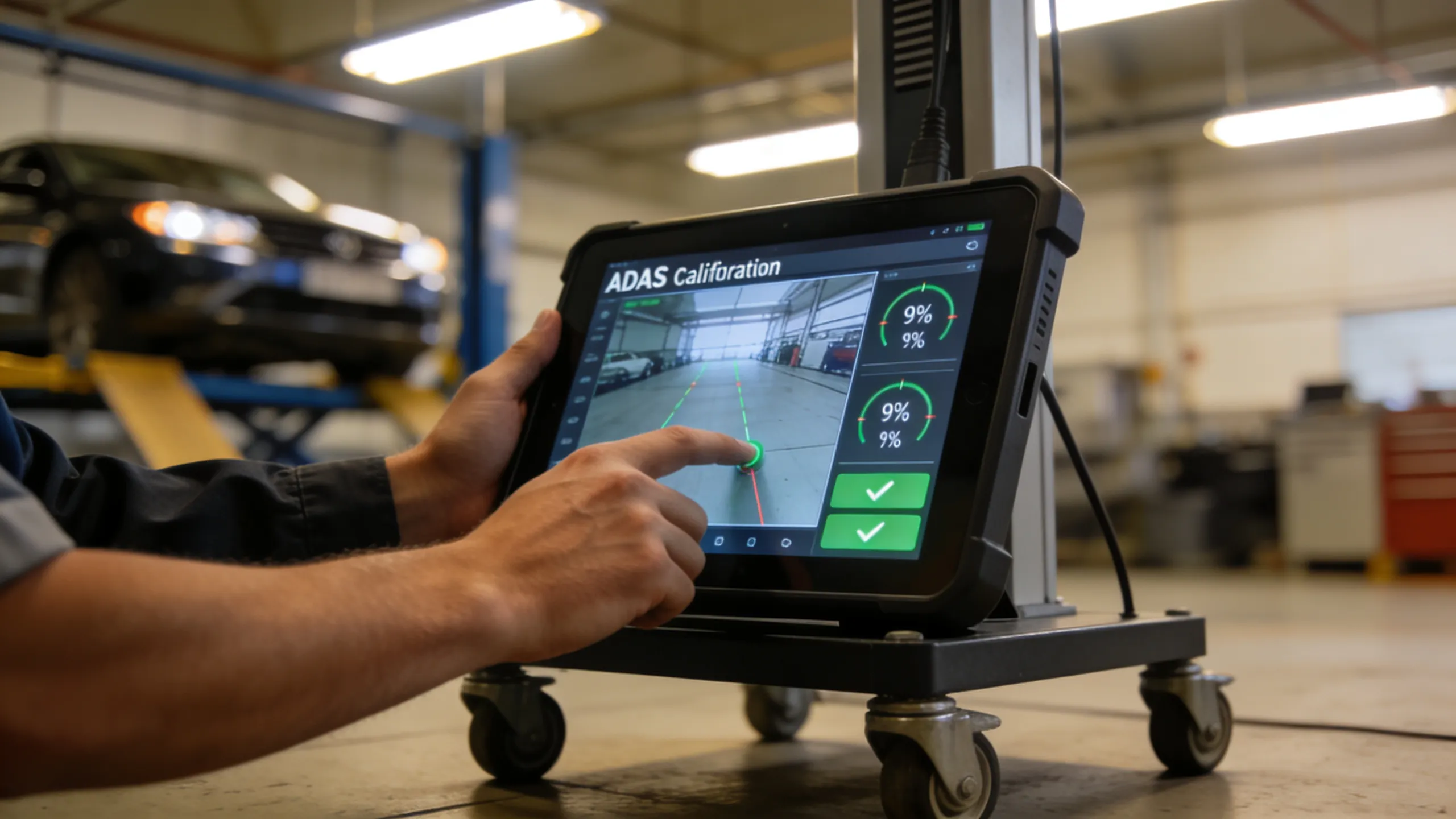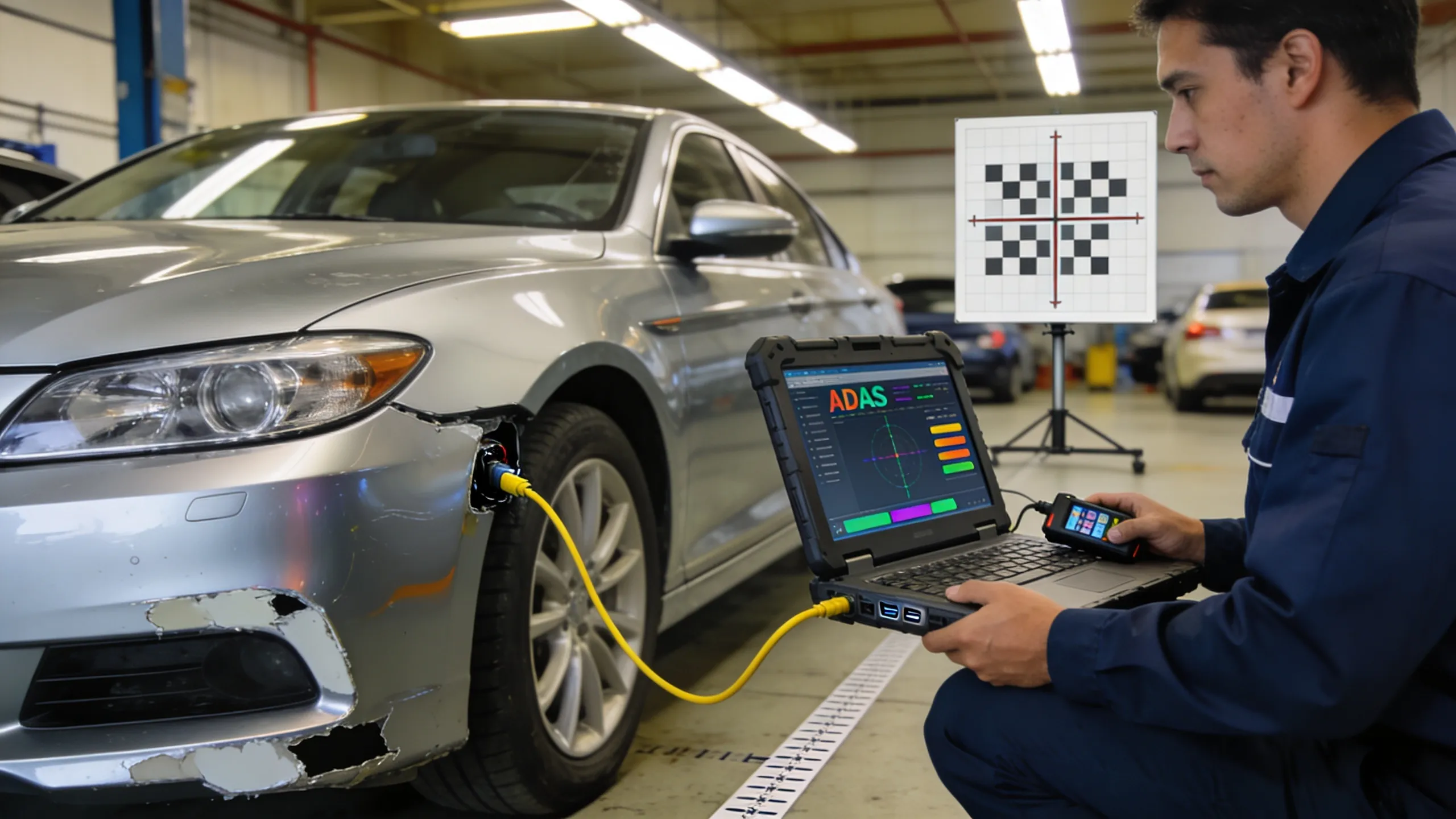
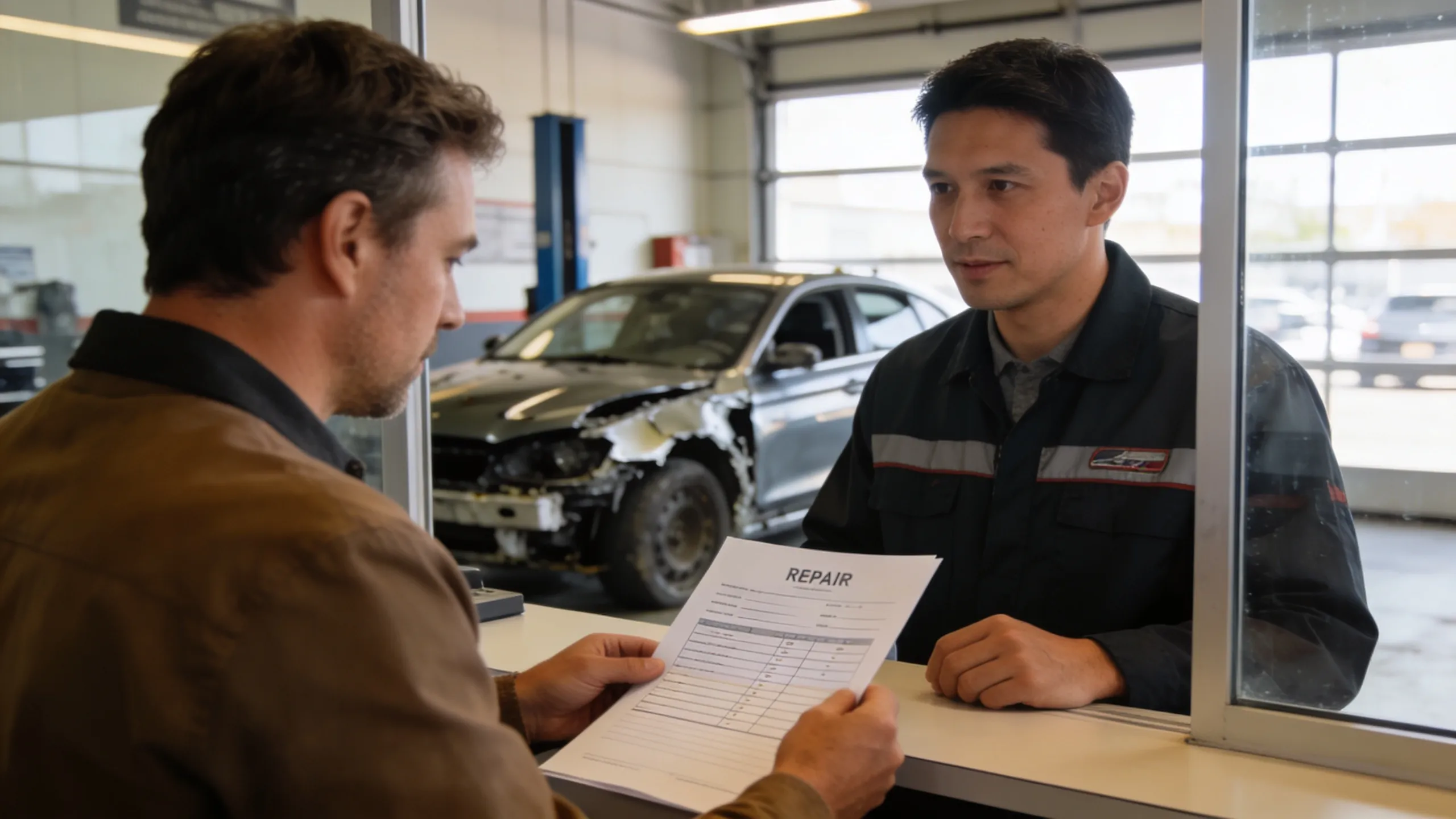
Does insurance cover ADAS calibration after a crash or windshield claim? In most cases, yes. But payment often depends on one detail: whether calibration appears on the written estimate and is tied to documented repair procedures. Without that line item, many claims close without calibration payment, even when the vehicle needed it.
ADAS means Advanced Driver Assistance Systems. These are safety features like automatic emergency braking, lane keeping, blind spot alerts, and adaptive cruise control. They depend on cameras and radar that must be aimed precisely after many repairs. If sensor alignment is off, warnings and braking timing can be wrong.
For a full technical foundation, car owners can review this complete ADAS calibration guide. For pricing context, this ADAS calibration cost breakdown explains what insurers often review during claims.
Does Insurance Cover ADAS Calibration? The Short Answer
Insurance typically covers ADAS calibration when it is required as part of a collision or non-collision claim. The issue is paperwork. If calibration is not listed as a line item on the repair estimate, it may not be paid. That gap still happens often, even when calibration is clearly necessary for safe repairs.
The 40-60 word answer: Insurance covers ADAS calibration when the repair is required by OEM procedures, tied to a covered loss, and listed on the estimate. Collision, glass, and third-party claims can all qualify. Documentation decides payment, not just policy language.
When Does Insurance Cover ADAS Calibration?
The question "does insurance cover ADAS calibration" usually comes down to claim type and documentation. Most policies pay for operations needed to restore a vehicle to pre-loss condition. If calibration is required by OEM repair procedures, it is generally considered part of that restoration.
Collision Claims (Accident Repairs)
Collision coverage applies when a vehicle is damaged in an at-fault crash, a single-vehicle impact, or another impact event covered by the policy. In these claims, insurers usually pay for ADAS calibration when affected sensors were in the repair area.
Common examples include:
- Front bumper repair affecting front radar.
- Windshield replacement affecting forward camera aiming.
- Rear body repair affecting blind spot radar.
- Suspension or steering repairs that require sensor recalibration.
In practice, does insurance cover ADAS calibration under collision? Usually yes, if the shop documents the operation and the estimate includes it.
For deeper context on impact-related triggers, see the guide to ADAS recalibration after collision repair and the collision repair service page.
Glass and Non-Collision Claims
Many ADAS-related repairs come from windshield damage, hail, theft, vandalism, or falling objects. Those are often processed under the non-collision portion of an auto policy (comprehensive coverage).
When a forward camera is mounted to the windshield, replacing glass can require calibration. Industry data shows about 9 out of 10 vehicles from model year 2023 and newer need recalibration after a windshield swap. So, does insurance cover ADAS calibration on glass claims? In many cases, yes, when it is billed alongside the glass replacement operation.
Car owners comparing this scenario can review ADAS calibration after windshield replacement.
Third-Party Claims (the Other Driver's Insurance)
If another driver is legally at fault, their carrier may owe for all reasonable repairs, including calibration. This is a third-party property damage claim.
Does insurance cover ADAS calibration in third-party claims? It often does. But approval can take more back-and-forth because the paying insurer is not the policyholder's own carrier. Shops may need to submit extra proof, including scan reports and OEM procedure references.
Timing matters here. Third-party adjusters sometimes approve body and paint first, then review electronic operations later. If calibration is delayed, the shop may need a supplement before final payment.
When Insurance Will NOT Cover Calibration
There are situations where the answer to "does insurance cover ADAS calibration" is no. Most denials are tied to policy scope, prior condition, or missing estimate detail.
Maintenance-Related Calibration
If calibration is needed because of elective maintenance or upgrades, insurance will not pay. Examples include:
- Aftermarket suspension changes.
- Wheel and tire size changes.
- Maintenance wheel alignment not linked to a covered loss.
These are ownership or maintenance costs, not loss-related claim costs. Insurance does not cover ADAS calibration after elective modifications.
Pre-Existing Miscalibration
If scans show the system was already out of spec before the covered event, coverage can become limited. Insurers may argue that part of the operation is pre-existing and not caused by the current claim.
This is where pre-repair scan data helps. A dated scan shows what changed after the event and what did not. Without it, claim disputes become harder to resolve.
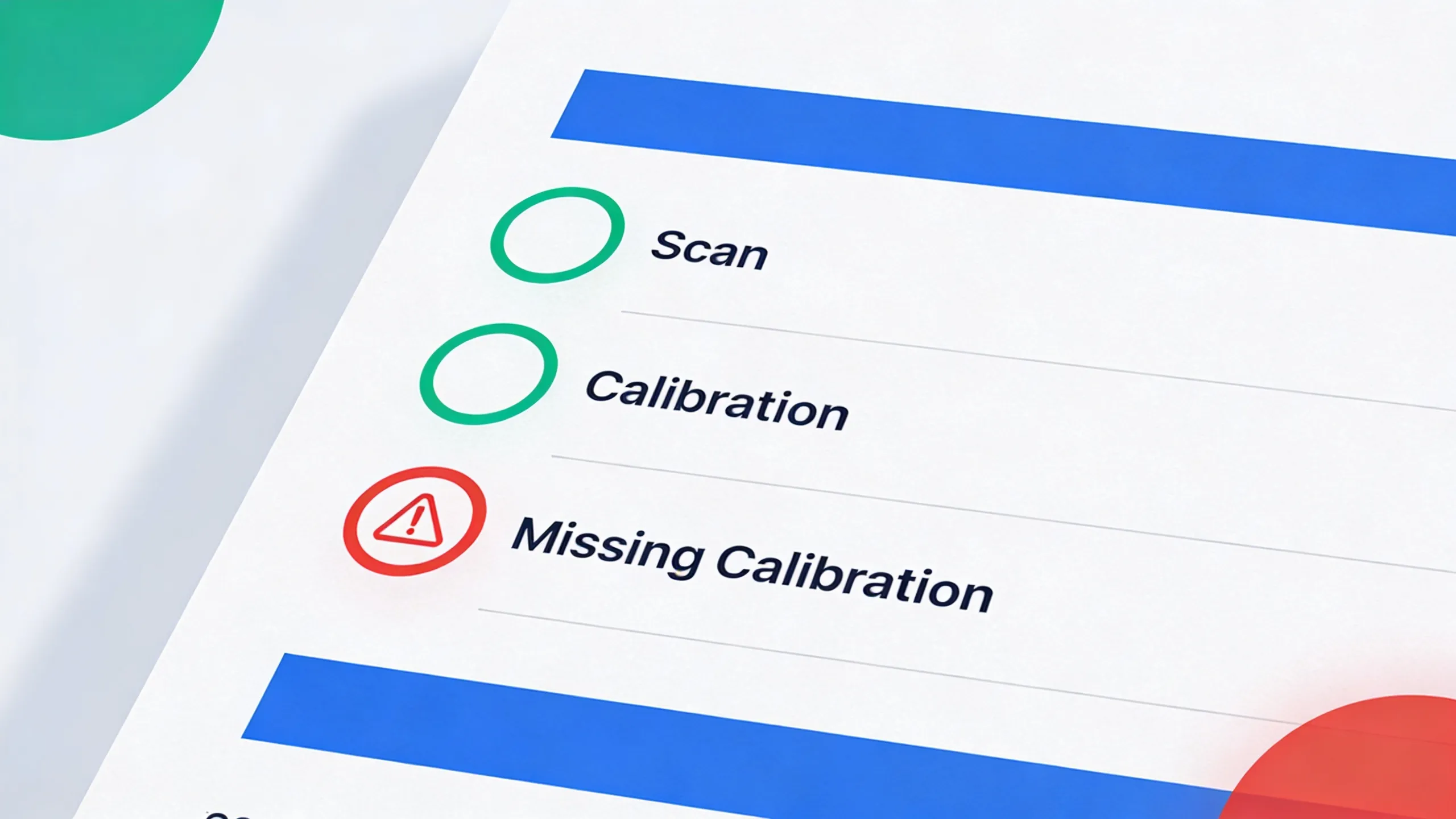
Calibration Not on the Estimate
This is the biggest operational reason claims miss payment. If calibration is absent from the estimate, payment systems may treat it as non-performed or non-requested work.
Does insurance cover ADAS calibration when it is done but not listed? Often not, or not without a supplement. Undocumented operations are harder to collect.
The Biggest Problem: Calibration Missing from Estimates
Claim data and repair data do not fully match real calibration need. About 61% of vehicles need calibration after qualifying repairs, but nearly half of required calibrations are still missed in workflow. Calibrations appeared on only 28.3% of repairable appraisals in 2025. And only 35.6% of DRP estimates included calibration line items, though that figure improved from 26.9% year over year.
This is why "does insurance cover ADAS calibration" keeps coming up. Coverage may exist in the policy, but line-item execution can fail in the estimate.
Why does this happen?
- Some initial estimates are written before teardown and before full scan review.
- Some adjusters use estimating templates that omit calibrations unless requested.
- Some shops are still building ADAS billing workflows.
- Some claims teams challenge operations to reduce total claim cost.
There is also legal pressure building around this issue. ADAS-related lawsuits grew from 3 cases in 2018 to 61 cases in 2024. That trend reflects rising risk around incomplete repairs and post-repair safety performance.
| Estimate Scenario | What Happens to Coverage | Risk Level |
|---|---|---|
| Calibration listed at first write | Insurer reviews and pays with standard claim flow in many cases | Low |
| Calibration added by supplement before delivery | Payment often approved after documentation review | Medium |
| Calibration performed but never listed | Payment often denied until corrected paperwork is submitted | High |
| Calibration skipped entirely | No payment and potential safety exposure after repair | Very High |
How Car Owners Can Catch Missing Calibration Line Items
- Look for pre-scan, post-scan, and calibration operations on the written estimate.
- Ask the shop, in writing, whether OEM procedures call for calibration.
- Check whether each affected system appears on the estimate by name.
- Confirm that documentation includes calibration certificates when work is complete.
If a required operation is missing, the shop can submit a supplement request. That is normal claim workflow.
How to Make Sure ADAS Calibration Is Covered
The most reliable way to answer "does insurance cover ADAS calibration" is to treat it as a documentation process, not a yes-or-no policy question.
- Ask the body shop which systems require recalibration. The question should be specific: which systems require recalibration based on OEM procedures for this exact repair. A vague answer is not enough.
- Check the estimate for calibration line items. The estimate should list scans and each calibration operation. If "calibration on repair estimate" is missing, payment risk increases.
- Request a supplement if missing. If calibration is required but omitted, ask the shop to submit a supplement before delivery. A supplement adds needed operations and supports payment.
- Get pre- and post-repair scan documentation. Scan data helps show why calibration was needed and confirms that faults were addressed. This documentation is often used in ADAS calibration insurance claim disputes.
- Keep all calibration certificates. Certificates and final scan reports prove the operation was completed. If questions arise later, records matter.
These five actions usually decide the real outcome. Policy language matters. But repair documentation, timing, and supplements often decide whether insurance pays for calibration in practice.
What If Your Insurance Denies ADAS Calibration?
A denial does not always mean the final answer is no. Many denials are documentation gaps or first-pass disputes that can be corrected.
Request a Supplement Through Your Body Shop
Most ADAS payment disputes are resolved through supplements. The shop can submit:
- OEM procedure excerpts.
- Scan reports showing required recalibration.
- Photos and repair notes linking sensor exposure to the loss.
- Updated labor and calibration operations.
In many files, the denial is not final. It is a request for better support. A stronger ADAS calibration insurance claim package often changes the result on re-review.
Cite OEM Repair Procedures
Insurers often ask whether the operation is manufacturer-required or discretionary. OEM procedure language answers that directly.
A repair is not complete if required operations are skipped. This point is reinforced in collision training and standards resources, including I-CAR's ADAS repair resources.
This is also where many consumers misunderstand the question. The better question is whether the operation is required to return the vehicle to pre-loss condition. If yes, ADAS calibration coverage is typically supported.
File a Complaint with Your State Insurance Commissioner
If claim handling appears unreasonable, consumers can file a complaint with their state regulator. State insurance departments review claim practice concerns and can request insurer responses.
Helpful starting points:
- National Association of Insurance Commissioners state department directory
- California Department of Insurance consumer services
Your Right to a Safe and Complete Repair
Car owners generally have the right to repairs that restore safe operation under the policy terms. That includes required electronic operations tied to covered damage. Whether the claim is first-party or third-party, the vehicle should not be returned with required safety procedures omitted.
This is a safety issue, not just a billing issue. AAA and other safety organizations continue to emphasize the importance of properly functioning driver-assist systems in real-world driving. See AAA's ADAS and vehicle technology safety resources.
State-by-State Differences in Coverage
State rules can affect how glass and related calibrations are paid. Some states have zero-deductible windshield replacement rules for qualifying policies. Others do not. Some states regulate claims language and repair disclosures more tightly.
Does insurance cover ADAS calibration equally in every state? No. The baseline answer is still "usually," but deductibles, glass rules, claim handling norms, and dispute pathways vary.
Car owners should also remember that claim type and policy form can change the answer. One policy may include broader glass benefits, while another uses a separate deductible. In both cases, does insurance cover ADAS calibration may still be yes — but out-of-pocket cost can differ.
Quick State-Level Coverage Snapshot
| Factor | States with Stronger Consumer Glass Rules | States Without Specific Glass Carve-Outs |
|---|---|---|
| Windshield deductible impact | Often lower for qualifying glass claims | Standard deductibles usually apply |
| ADAS calibration claim flow | Still requires estimate line items and procedure support | Same requirement: line items and procedure support |
| Dispute pathway | State DOI complaint process available | State DOI complaint process available |
No matter the state, the same claim principle applies: does insurance cover ADAS calibration is easiest to prove when documentation shows that calibration was required, performed, and tied to the covered loss.
For local repair planning, car owners can also review city-level directory pages, such as auto body shops in Los Angeles, while confirming exact claim terms with their carrier.
Key Takeaways
Does insurance cover ADAS calibration in 2026? Usually yes, when calibration is required by the covered repair and appears on the estimate. That holds for collision, glass, and third-party claims alike.
But this process breaks down when documentation is incomplete. If calibration line items are missing, payment can be delayed or denied. If required operations are skipped, safety systems may not perform as designed.
Car owners can reduce risk by checking estimates, asking for supplements, keeping scan records, and pushing for OEM-based repair decisions. The policy question matters. But the operational question matters just as much: was calibration documented, performed, and verified before the vehicle returned to service?
If the claim process stalls, escalate in a structured order: shop supplement, adjuster re-review, supervisor review, then state regulator complaint. That path keeps the focus on repair quality, safety outcomes, and documented ADAS calibration coverage.
The short answer holds: does insurance cover ADAS calibration is usually a yes — when the repair file is complete and safety procedures are documented from start to finish.