Most car owners think a windshield swap is just a glass job. On newer vehicles, that's no longer true. ADAS calibration after windshield replacement is now part of safe repair, not an optional add-on. If calibration is skipped, safety features can misread traffic, lane markings, or nearby cars.
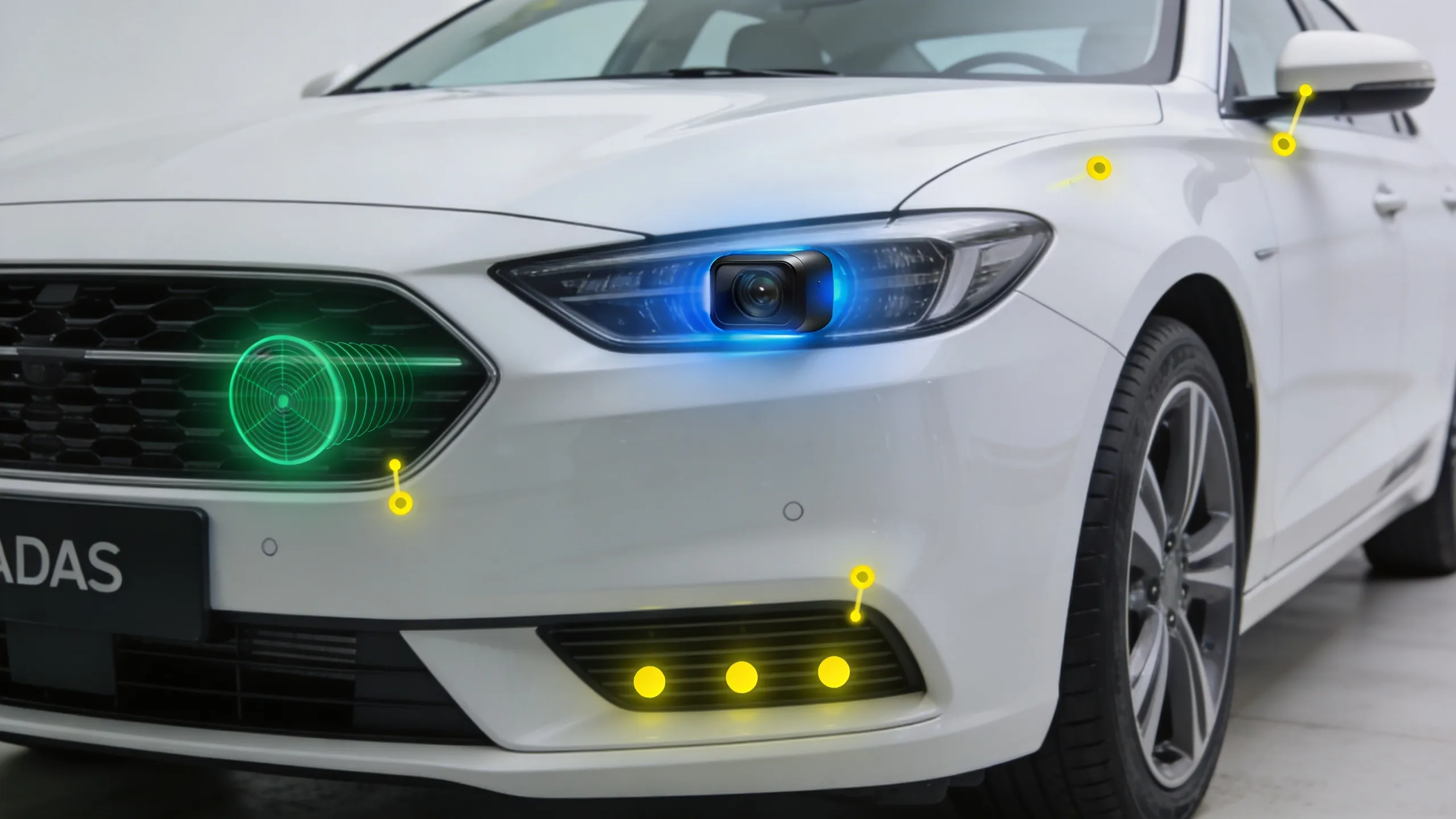
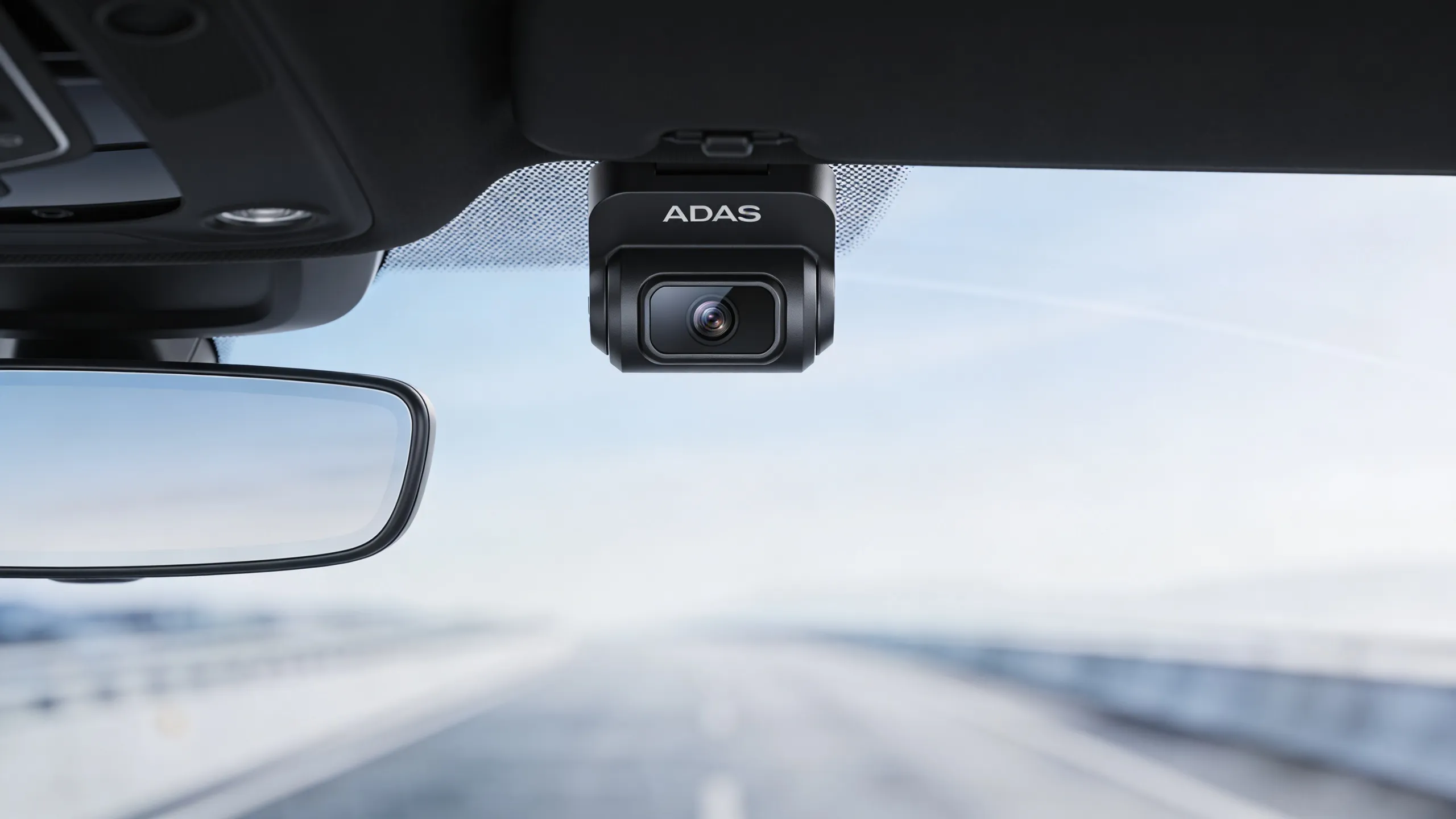
Advanced Driver Assistance Systems (ADAS) are the camera, radar, and sensor features that support safer driving. They power tools like automatic emergency braking, lane departure warning, and lane keeping assist. Because many of these systems depend on a camera mounted to the windshield, ADAS calibration after windshield replacement is often required before the vehicle is truly road-ready.
This guide explains why calibration is needed, which cars require it, what can go wrong when it is skipped, and what windshield calibration cost usually looks like in 2026.
Why ADAS Calibration After Windshield Replacement Is Required
ADAS calibration after windshield replacement is required because the forward-facing camera mounts directly against the glass. Replacing that glass can shift the camera's angle enough to affect lane, sign, and distance detection. Even a 1-degree shift can move target tracking by several feet at highway speed, and about 9 in 10 vehicles from 2023 onward need recalibration.
A camera that is even slightly off-center can make lane lines appear shifted. It can also change when automatic braking activates. That's why windshield camera calibration follows replacement, even when the new glass is installed correctly.
Industry data shows the repair market changing fast. Calibrations appeared on 28.3% of all repairable appraisals in 2025, and 35.6% of DRP estimates now include calibration services, up from 26.9% the year before. ADAS calibration after windshield replacement is a big part of that growth.
For technical standards, repairers often reference the Auto Glass Safety Council (AGSC) and OEM procedures.
Which Vehicles Need ADAS Calibration After Windshield Replacement?
Short answer: almost all modern vehicles. Since 2022, automatic emergency braking (AEB) has been standard on nearly all new passenger vehicles sold in the U.S. That feature usually relies on a forward camera, radar, or both. ADAS calibration after windshield replacement is now common across economy brands, luxury brands, EVs, and trucks.
Not every model has the same process. Some need static target-based calibration in a shop. Others need dynamic road calibration. Some require both.
| Brand | Common ADAS Features Tied to Windshield | Calibration Usually Needed After Glass Swap? | Typical Method |
|---|---|---|---|
| Toyota/Lexus | Lane tracing assist, pre-collision, sign assist | Yes, in most late models | Static or static + dynamic |
| Honda/Acura | Honda Sensing camera functions | Yes | Static + road validation |
| Ford/Lincoln | Co-Pilot360 lane and braking features | Yes | Dynamic or dual process |
| GM (Chevy/GMC/Cadillac) | Forward collision alert, lane keep assist | Yes | Static and/or dynamic |
| Hyundai/Kia/Genesis | Forward collision assist, lane follow | Yes | Static or dual process |
| Nissan/Infiniti | ProPILOT and camera-based safety systems | Yes | Static + dynamic common |
| Subaru | EyeSight stereo camera system | Yes, strongly procedure-driven | Static + dynamic often required |
| Tesla | Autopilot camera suite | Yes, software and camera alignment checks | Dynamic + software validation |
| BMW/Mercedes/Audi | Driver assist packages with camera/radar fusion | Yes | Multi-step OEM workflow |
A safe assumption in 2026: if the vehicle has lane or braking assist, ADAS calibration after windshield replacement should be expected.
To understand how each sensor type works, this ADAS sensors explained guide breaks down camera, radar, and lidar roles across modern vehicle platforms.
Car owners can also review broad ADAS safety resources from NHTSA.
What Happens If You Skip Calibration After a Windshield Swap?
Skipping ADAS calibration after windshield replacement creates real safety risk. Some failures are obvious. Others are subtle and only show up in emergency moments.
For a full breakdown of failure patterns and warning signs, see this article on the risks of skipping ADAS calibration.
Phantom Braking (car brakes for no reason)
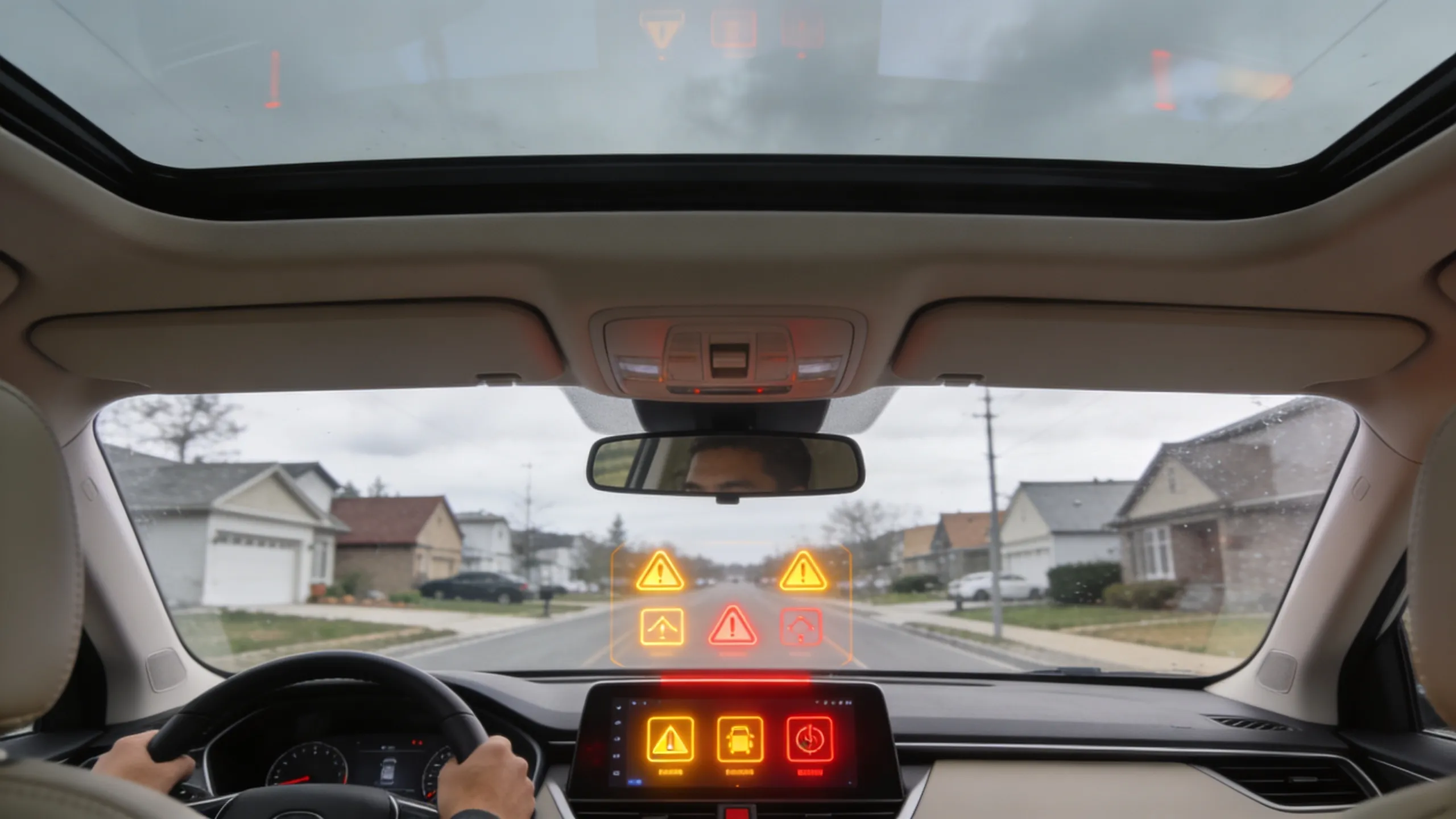
Phantom braking after windshield replacement is one of the most reported concerns when camera alignment is off. The system may see an overhead sign shadow, tar seam, or roadside object as an obstacle. Then it brakes hard with no real threat ahead.
At highway speed, sudden braking can cause rear-end collisions, especially in dense traffic. Even one false event can shake driver trust in safety systems.
Lane Departure Warnings That Fire Incorrectly
When windshield camera calibration is inaccurate, lane lines may be read in the wrong position. The car may beep or steer when the vehicle is centered, or fail to warn when drift is real.
That mismatch creates confusion. Drivers start ignoring alerts because they seem random. Then real warnings get missed.
Automatic Emergency Braking Failure
Automatic emergency braking helps reduce rear-end crashes. The Insurance Institute for Highway Safety (IIHS) has found that AEB can reduce rear-end crashes by about 50%. But that performance depends on accurate sensor input.
If ADAS calibration after windshield replacement is skipped, braking can trigger too late or not at all. A system that should reduce impact speed may fail in the exact moment it is needed most.
Insurance and Legal Complications
Documentation matters after a crash. If ADAS calibration after windshield replacement was required but never performed, claim handling can become harder. Carriers may question repair completeness. Liability arguments can get more complicated when a safety system did not work as expected.
The legal side is growing. ADAS-related lawsuits increased from 3 in 2018 to 61 in 2024. That trend shows how often sensor performance is now part of post-crash review.
How Windshield ADAS Calibration Works
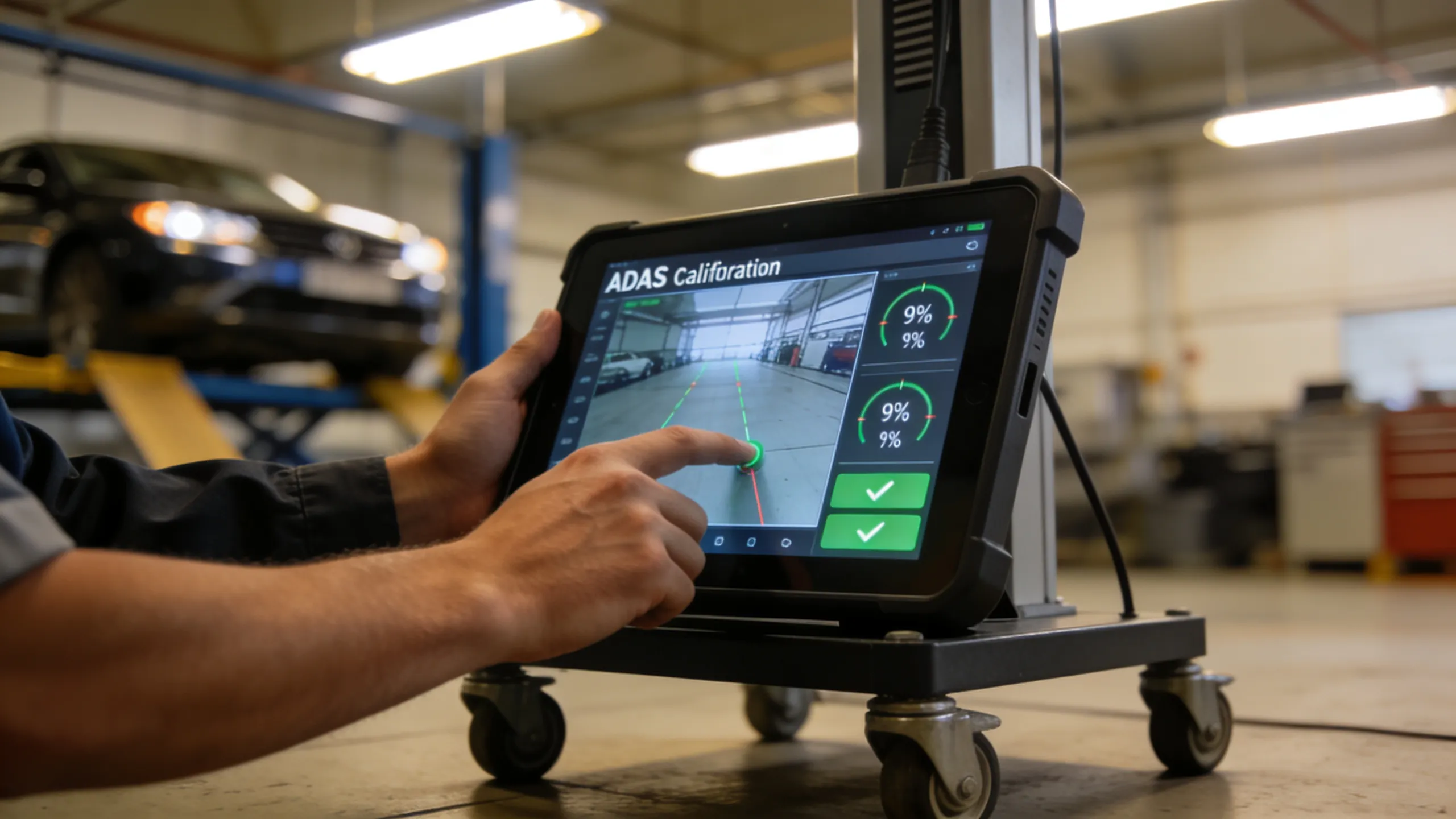
Windshield ADAS recalibration means resetting and validating the camera or sensor so it matches OEM tolerances. There are two main methods.
Static Calibration (most common for windshield work)
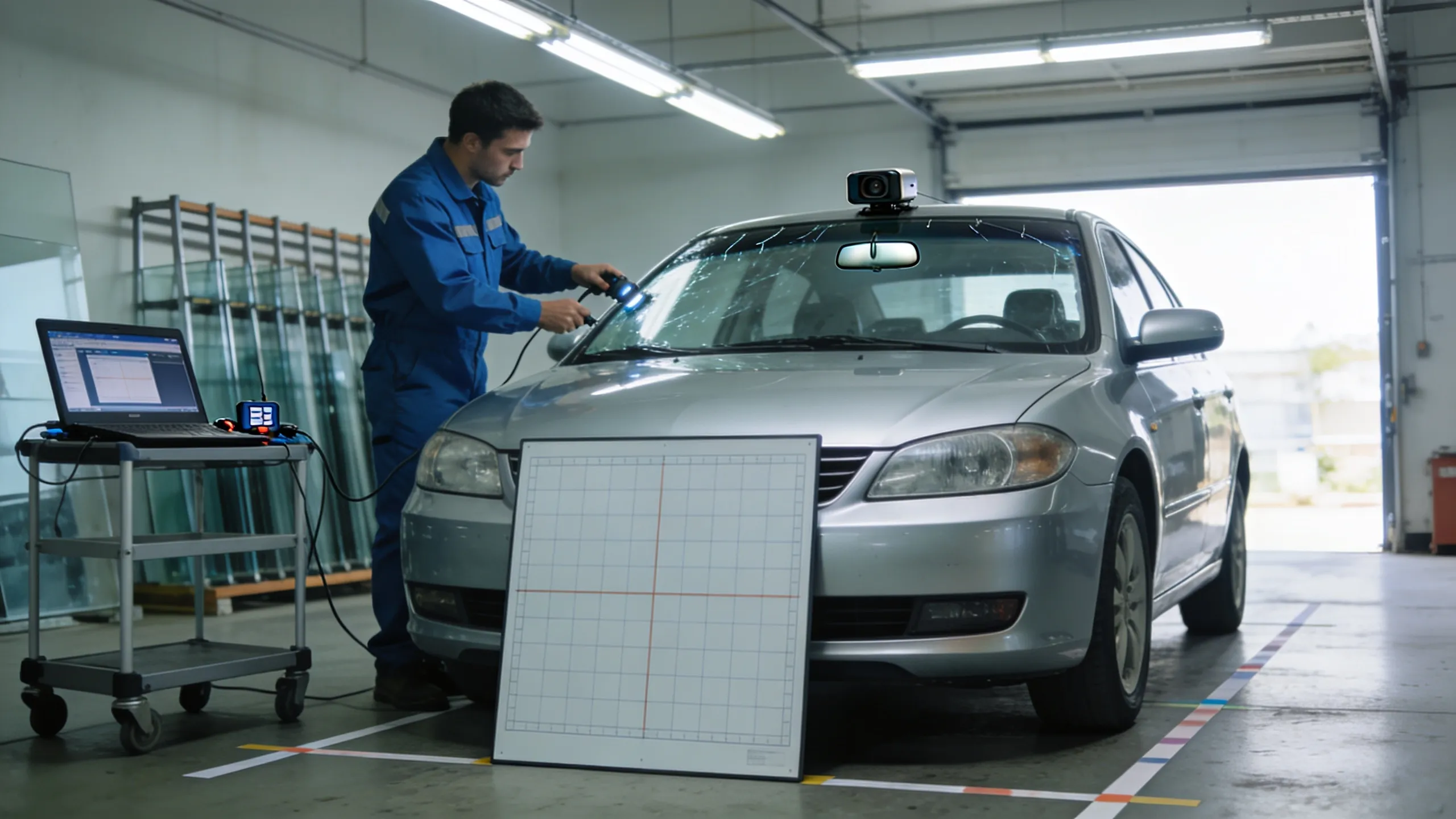
Static calibration is done in a controlled shop setting. The vehicle is placed on level ground with exact tire pressure and load conditions. A target board is set at a specific distance and height. Then scan tools and software align the camera to that target.
This is the most common process for windshield camera calibration because camera angle matters so much. Small setup errors can fail the calibration or produce bad results.
Dynamic Calibration (some vehicles need both)
Dynamic calibration happens while driving. The technician follows a specific route and speed range so the system can relearn lane lines, road edges, and object behavior.
Some manufacturers allow dynamic-only steps. Many require static first and dynamic second. That means ADAS calibration after windshield replacement can include both a shop bay process and road testing.
How Long It Takes (typically 30 min to 2 hours)
Most windshield ADAS recalibration jobs take 30 minutes to 2 hours once the car is ready. Timing changes based on vehicle brand, number of systems, and whether static plus dynamic steps are both required.
Real-world delays are common. Calibration may be postponed by weather, lighting limits for dynamic tests, occupied calibration bays, or missing OEM procedure access. Same-day completion is common but not guaranteed.
Also, many repair facilities still lack full capability. Estimates suggest only about 25% of repair shops are properly equipped for broad ADAS work. That gap is one reason ADAS calibration after windshield replacement is still missed in many cases.
How Much Does Windshield ADAS Calibration Cost?
Windshield calibration cost in 2026 usually falls into a predictable range. For forward camera systems, the common range is $250 to $500. That line item is often added to the windshield invoice.
When combined with glass replacement, total cost often lands between $500 and $1,200, depending on vehicle type and local labor rates.
| Service Item | Typical Cost Range (2026) |
|---|---|
| Forward camera calibration | $250–$500 |
| Front radar calibration | $250–$450 |
| Blind spot monitoring calibration | $200–$350 |
| Multi-system calibration | $400–$800 |
| Windshield + forward camera total | $500–$1,200 |
Dealership pricing may run higher, often $400 to $600 or more per system. Independent calibration-capable facilities are often lower, around $250 to $450 per system.
Car owners comparing estimates can use this ADAS calibration cost breakdown for a wider pricing reference.
The big point: ADAS calibration after windshield replacement can feel expensive upfront, but skipping it can cost much more after one missed brake event or failed insurance dispute.
Does Insurance Cover Windshield Calibration?
In many cases, yes. Comprehensive auto coverage commonly includes windshield replacement and required calibration when both are part of a proper repair.
Coverage details still vary by policy, deductible, state law, and insurer rules. Some states have zero-deductible glass rules for qualifying policies, which can reduce out-of-pocket cost for both the glass and windshield ADAS recalibration.
A simple verification process helps avoid surprises:
- Call the insurer before scheduling service and ask if ADAS calibration after windshield replacement is covered for the exact vehicle.
- Ask whether the claim includes both glass labor and calibration labor.
- Review the estimate for a separate calibration line item (camera, radar, or both).
- Keep final calibration records and scan reports with claim paperwork.
If an estimate includes only glass, ask why calibration is omitted on an ADAS-equipped model.
One more detail: insurers may expect calibration to happen in the same repair cycle as the glass install. Waiting weeks can create paperwork friction, especially if warning lights appear later and a second claim is opened. Keeping one complete invoice package usually makes reimbursement cleaner.
And documentation should be specific, not generic. Good records list the system calibrated (for example, forward camera), the calibration type used (static, dynamic, or both), and whether the procedure passed. That record can also support resale value by showing ADAS calibration after windshield replacement was completed to procedure.
Questions to Ask Your Glass Shop Before Windshield Replacement
A short checklist can prevent safety and billing problems. Before authorizing work, ask:
- Do you perform ADAS calibration in-house, or subcontract it?
- What calibration equipment and scan tools do you use?
- Is ADAS calibration after windshield replacement included in this quote?
- Will I receive calibration documentation and scan results?
- Do you follow OEM procedures for my exact make, model, and trim?
These questions also help filter out low-detail estimates. Shops that can explain windshield camera calibration steps clearly are usually better prepared for modern vehicles.
Car owners looking for glass services can compare options on the auto glass repair service page.
For a full foundation on when and why calibration is needed, the complete ADAS calibration guide covers calibration across collision, glass, suspension, and bumper repairs.
Key Takeaways
ADAS calibration after windshield replacement is now a standard safety step for most modern vehicles — not a niche procedure. The camera mounted to the windshield must be realigned to factory specs so lane, braking, and warning systems work as designed.
The main facts:
- ADAS calibration after windshield replacement is needed on most vehicles with forward camera safety features.
- Even minor camera angle shifts can cause lane and braking errors.
- Phantom braking after windshield replacement and missed AEB events are real risks when calibration is skipped.
- Windshield calibration cost is usually $250 to $500 for camera calibration, with total windshield-plus-calibration jobs often at $500 to $1,200.
- Insurance often covers both glass and calibration when claim documentation is complete.
The ADAS calibration market is projected at $280.5 million in 2026 with 11.3% annual growth, so this process is becoming routine across the repair industry. But missed calibrations still happen. Confirm ADAS calibration after windshield replacement in writing before work begins, and keep final documentation after the job is complete.