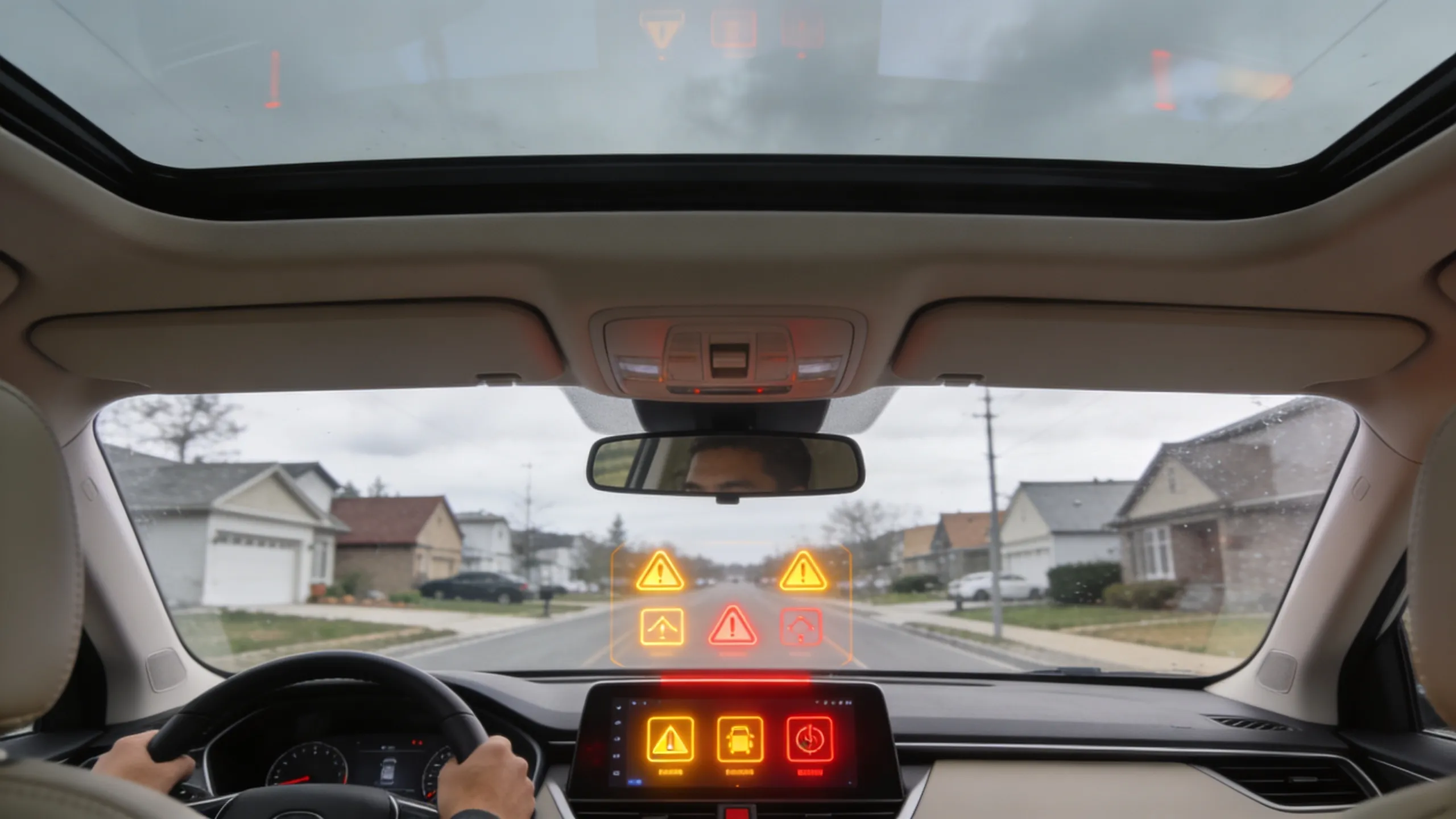
Skipping ADAS calibration after a repair can cause lane-keeping assist to steer toward oncoming traffic, automatic emergency braking to trigger at the wrong time (or not at all), and blind-spot monitoring to miss vehicles entirely. These are documented failure modes that occur when cameras and radar sensors are even slightly misaligned after collision work, windshield replacement, or suspension changes.
ADAS stands for Advanced Driver Assistance Systems. It includes automatic emergency braking, lane departure warning, blind spot monitoring, and adaptive cruise control. These features depend on cameras, radars, and sensors being aimed to factory specs. When that aiming is off, the systems may still power on — but they won't work correctly. That's the problem.
Car owners who want a full technical breakdown can start with this ADAS calibration guide, then return here for the risk analysis.
The Real Risks of Skipping ADAS Calibration
Skipping ADAS calibration after a repair can cause safety systems to malfunction. Automatic emergency braking may fail to activate, lane departure warnings can fire at the wrong time, and blind spot monitoring may miss vehicles entirely. These aren't theoretical risks — they're documented failure modes.
The core issue is sensor alignment. A forward camera that's off by even a small angle can misread lane markings or closing distance. A radar mounted behind a repaired bumper can report objects too early, too late, or not at all.
And unreliable safety tech can be worse than no safety tech at all, because drivers trust alerts and interventions that might arrive late or incorrectly. When people ask what happens if you skip ADAS calibration, the accurate answer isn't "maybe nothing." It's "the system becomes unpredictable."
Safety System Failures
Automatic Emergency Braking May Not Activate
Automatic Emergency Braking (AEB) detects an impending front-end collision and applies the brakes if the driver doesn't react in time. The Insurance Institute for Highway Safety (IIHS) found that front crash prevention systems can reduce rear-end crashes by about 50% in many scenarios. Source: IIHS front crash prevention findings.
That benefit depends on proper calibration. If camera or radar alignment shifts after a repair, AEB may not recognize the closing speed correctly. The system can delay braking, brake too lightly, or fail to trigger at all.
So what happens if you skip ADAS calibration in AEB-equipped vehicles? Part of the protection that cut crash rates in half may quietly disappear — with no warning light to tell the driver it's gone.
Lane Departure Warning Fires Incorrectly
Lane Departure Warning (LDW) tracks lane markings and alerts when a vehicle drifts out of lane without signaling. Many systems also include lane keep assist, which can gently steer the vehicle back.
When LDW is miscalibrated, false warnings become common. Alerts may trigger on curves, faded lines, or harmless road edges. In other cases, no warning triggers during real drift — the opposite failure.
This is one of the most common skip ADAS calibration dangers. Too many false alerts train drivers to ignore the system, while missed alerts remove the safety backup it was built to provide. Trust erodes fast, and once drivers tune out warnings, the system is effectively off.
Blind Spot Monitoring Misses Vehicles
Blind spot monitoring uses side radars, usually behind rear bumper corners. Even small changes in bumper mounting, bracket position, or sensor angle can change coverage zones.
A vehicle can sit in the adjacent lane but fall completely outside the radar's effective area, especially during lane changes at highway speed. The warning light stays off when it should be on. That's one of the clearest ADAS not calibrated risks in everyday driving.
Rear and side systems need attention too — not just front cameras. See ADAS calibration after collision repair for how shops handle multi-system checks after body work.
Adaptive Cruise Control Misjudges Distance
Adaptive Cruise Control (ACC) uses radar and sometimes camera data to maintain following distance. If sensors are misaligned, ACC may overreact or underreact to traffic ahead.
Overreaction causes abrupt slowing and unstable speed control. Underreaction is worse: the system may follow too closely before finally braking. At highway speeds, that delay can eliminate stopping margin.
ACC often gets overlooked because it feels like a comfort feature. But at speed, distance control is a safety function, and a miscalibrated radar makes it a liability.
Phantom Braking and False Alerts
A common symptom of missed calibration is phantom braking. The vehicle brakes hard even though no obstacle exists. At 60 to 75 mph, that sudden deceleration creates a rear-impact risk from following traffic.
Forward collision warnings can also trigger with empty road ahead. Parking sensors may beep continuously when nothing is near. Some drivers write these off as "annoying glitches," but the real ADAS not calibrated risks go well beyond annoyance.
False signals create three serious problems:
- Drivers lose trust in alerts and ignore valid warnings later.
- Sudden braking can create new collision risk in dense traffic.
- Diagnostic time and repeat repair visits increase total ownership cost.
The car may behave unpredictably — and unpredictability is unsafe. Once drivers start ignoring alerts, any remaining protection from the system is gone.
For low-speed impacts specifically, see ADAS calibration after a fender bender to understand when even minor collisions require a full calibration check.
Insurance Complications
Claim Denial If Uncalibrated Systems Contributed to a Second Accident
Insurers examine repair quality closely after a follow-up collision. If evidence shows a needed calibration was skipped and system performance contributed to the event, claim disputes follow.
Car owners often ask: is ADAS calibration required under insurance policy terms? The answer varies by carrier and state. But one point is consistent across most policies: insurers expect repairs to meet OEM procedures. If OEM documentation calls for calibration and the record is missing, that gap becomes a problem.
A deeper look at coverage is available in this insurance and ADAS calibration article. From a claims standpoint, what happens if you skip ADAS calibration can include longer investigations and harder settlement conversations.
Repair Documentation Gaps
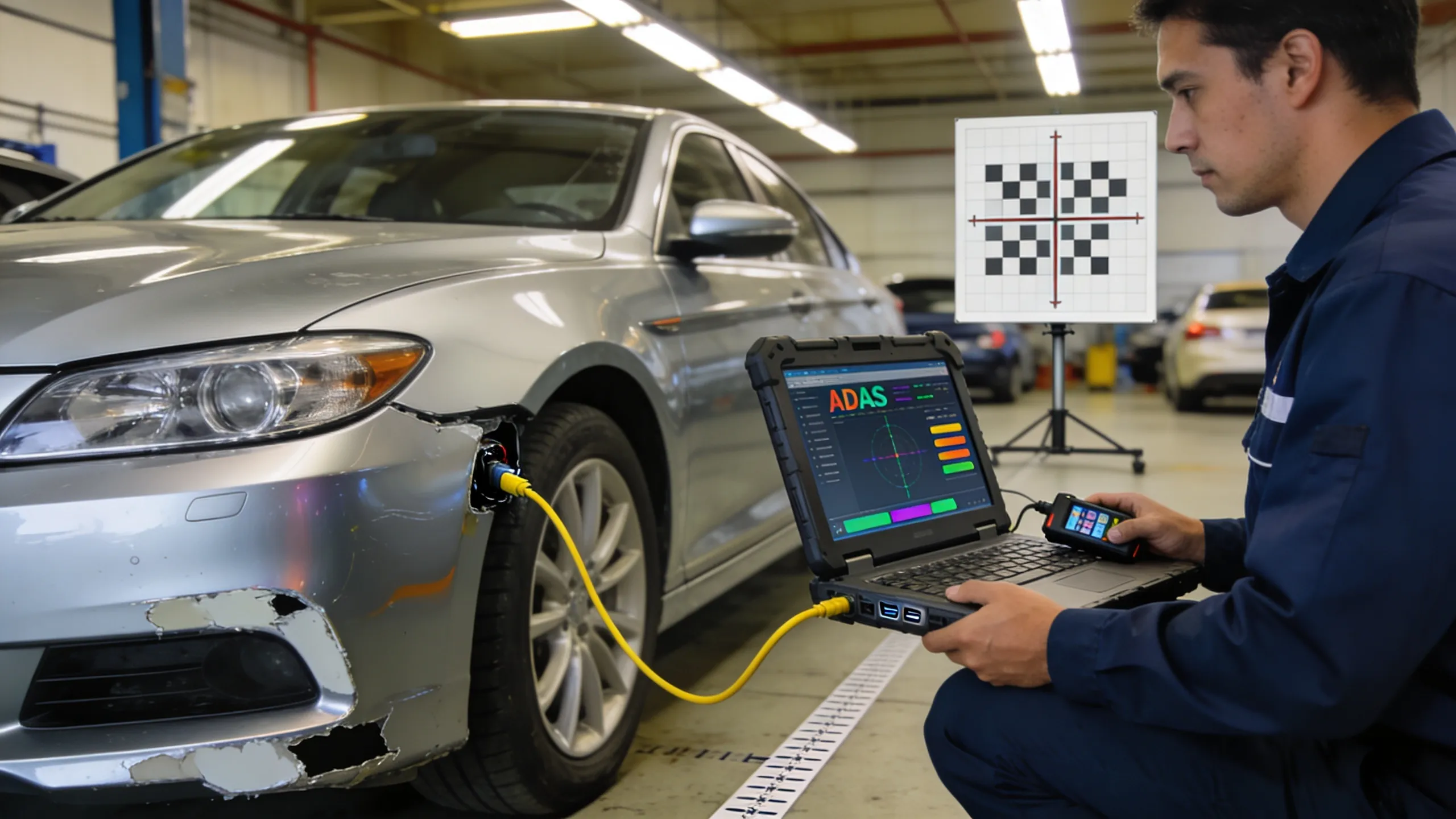
Documentation matters more than most car owners realize. A complete repair file should include scan reports, calibration results, target setup confirmation (for static calibration), and test drive validation when required.
When shops skip the paperwork, car owners may not even know calibration was missed. Later, if an ADAS event fails, proving what was or wasn't done becomes difficult — and costly.
Delays, conflicting reports, and extra diagnostic costs tend to follow. It's a messy situation that's easy to avoid with proper documentation upfront.
Diminished Value Impact
Diminished value is the difference between pre-accident and post-repair market value. On newer vehicles with full ADAS feature sets, buyers and dealers increasingly ask for proof of correct repair and calibration.
If that proof is missing, resale negotiations shift. Even if a car drives fine, uncertainty around sensor performance lowers offer prices. There's no universal legal rule for every private sale, but market behavior is moving firmly toward "documented or discounted."
Legal Liability Is Growing
ADAS-related lawsuits grew from 3 in 2018 to 61 in 2024. That trend tracks increased ADAS adoption and growing awareness of calibration requirements after repair.
If a shop fails to calibrate when OEM procedure requires it, liability can extend to the repair facility. In some cases, owners also face legal exposure when they knowingly declined required calibration and a system failure later contributed to a crash.
Courts are starting to treat skipped calibration as a negligence issue. The standard of care is tied to documented repair procedures, not visual damage assessment.
The National Highway Traffic Safety Administration publishes safety and recall information that supports consumer understanding of ADAS system behavior: NHTSA Vehicle Safety. Industry training bodies also link procedure compliance directly to safe repair outcomes: I-CAR ADAS and calibration resources. The AAA has documented real-world ADAS performance gaps in their independent testing: AAA Vehicle Research.
In legal terms, what happens if you skip ADAS calibration is a shift from mechanical uncertainty to financial and liability exposure — and that exposure is growing as ADAS becomes standard equipment on most new vehicles.
The Math: Calibration Cost vs Risk Cost
The cost question is understandable. Calibration is an added line item, and owners already face deductibles, rental days, and time off work.
But the numbers change the picture quickly.
| Item | Typical Cost Range |
|---|---|
| Forward camera calibration | $250–$500 |
| Front radar calibration | $250–$450 |
| Blind spot monitoring calibration | $200–$350 |
| Multi-system calibration | $400–$800 |
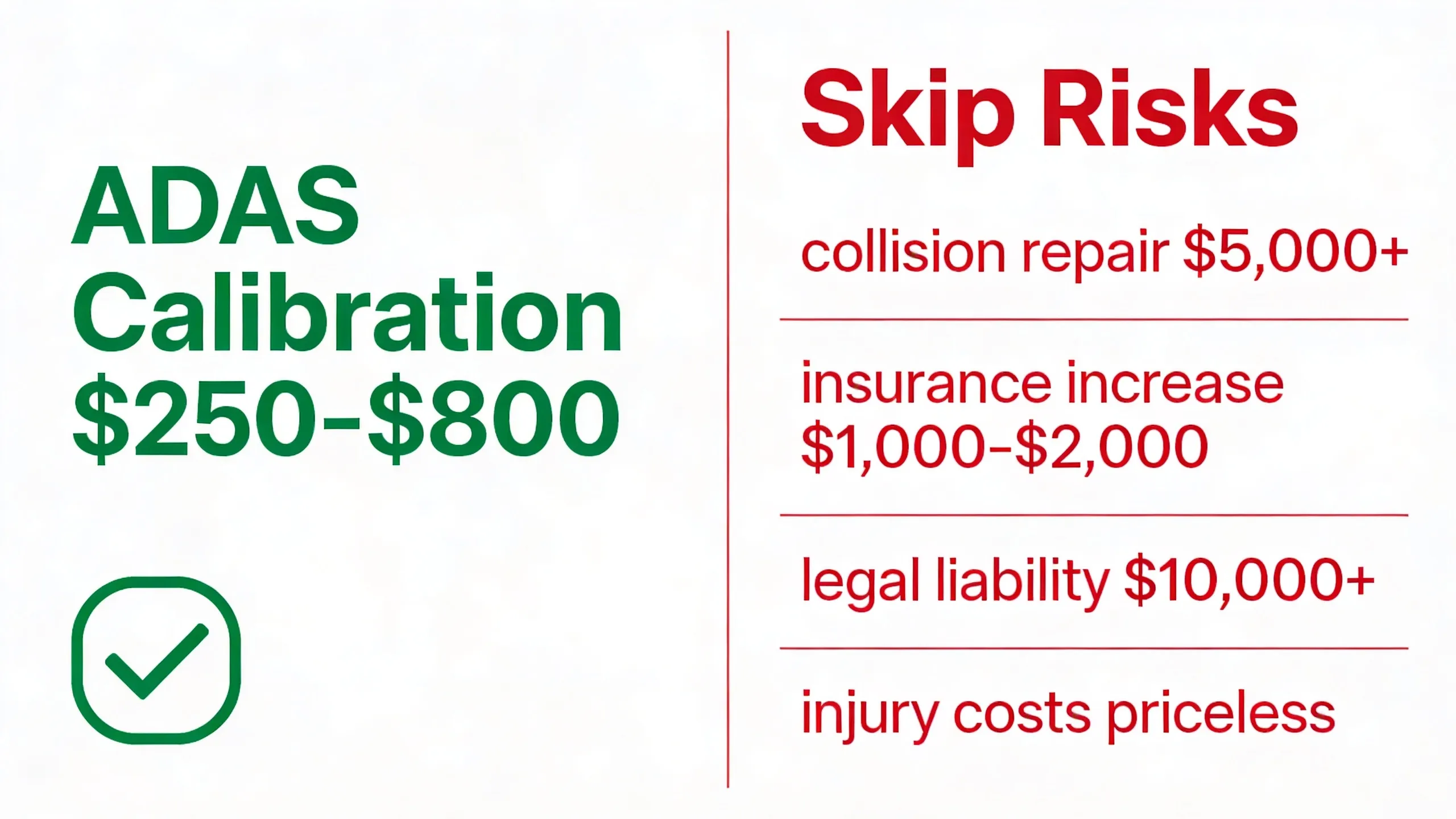
| Collision repair after ADAS failure | $5,000+ |
| Insurance premium increase after at-fault claim (3 years) | $1,000–$2,000 |
| Legal liability exposure | $10,000+ |
| Injury-related costs | Not fixed |
Skipping calibration to save $250 to $800 produces a poor risk-adjusted outcome. That's the practical core of this decision: short-term savings can create large downstream losses. For a service-by-service pricing breakdown, see the ADAS calibration cost guide.
Collision repair and auto glass repair shops that handle ADAS systems should be documenting calibration at every eligible job. If a shop doesn't mention it, ask directly before approving the final invoice.When Is It Actually Safe to Skip Calibration?
For modern vehicles, almost never.
The only clear exception is a vehicle with no ADAS features at all — no forward camera, no front radar, no lane assist, no blind spot sensors. That's genuinely uncommon in late-model vehicles.
For vehicles that do have ADAS, calibration is required when OEM procedures call for it. Common triggers:
- Windshield replacement on camera-equipped vehicles. (See ADAS calibration after windshield replacement for what that process looks like.)
- Bumper repair or replacement on radar-equipped vehicles.
- Suspension or alignment changes that affect sensor angles.
- Module replacement, disconnection, or software updates.
- Collision repair near sensor mounts, brackets, or structural points.
There are two main calibration types:
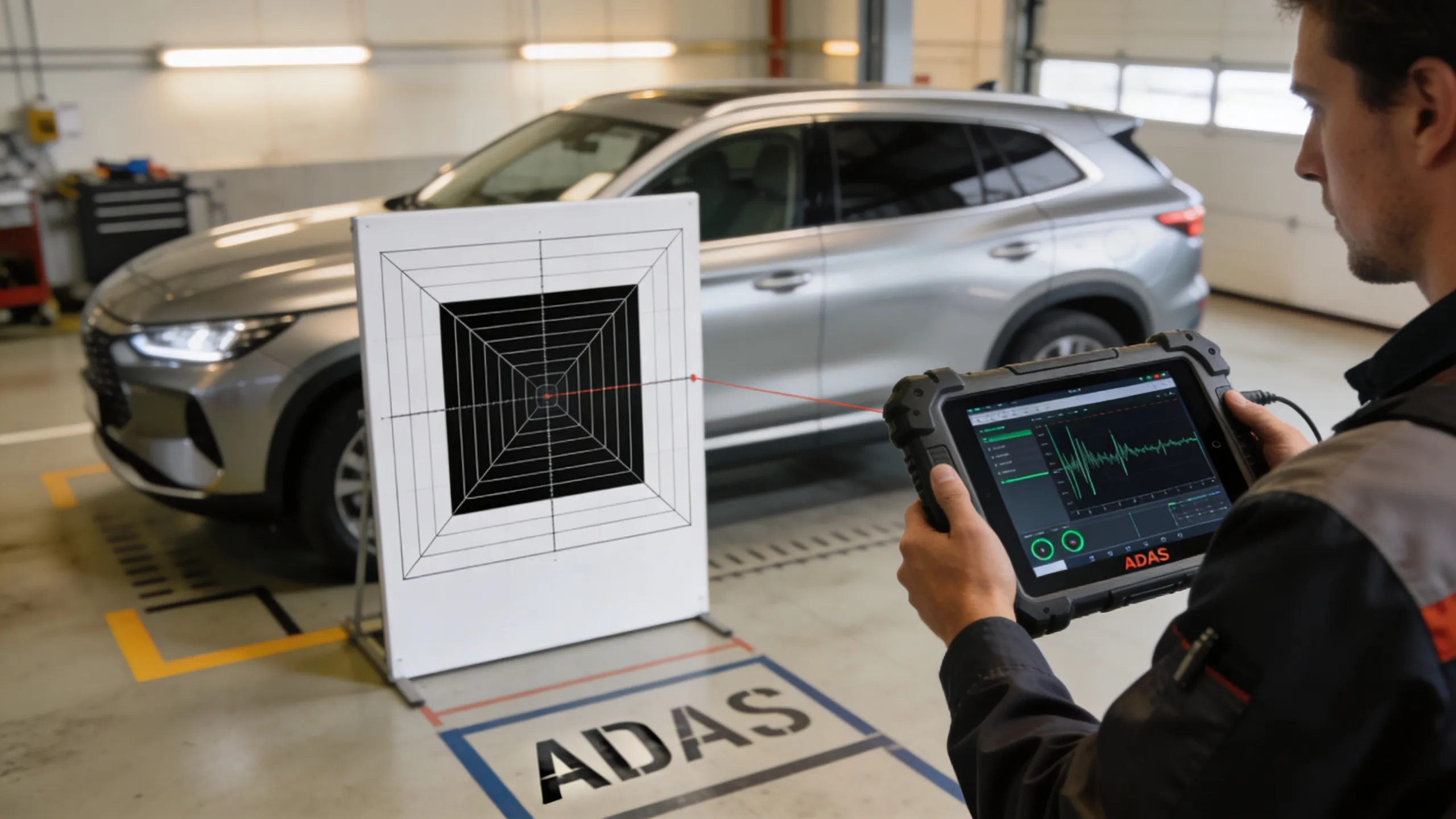
- Static calibration: done in a controlled shop environment with fixed targets, precise floor level, lighting, and measured distances.
- Dynamic calibration: done during a guided road test at specified speed and lane conditions.
Some models require both. And that's why calibration decisions should be based on OEM repair procedures, not visual damage assessment alone.
One practical note: many systems won't show a warning light when they're slightly out of spec. No dashboard error doesn't mean proper calibration happened.
If you're not sure whether a local shop can handle ADAS calibration, use the auto body shop directory to find properly equipped facilities in your area.
Key Takeaways
What happens if you skip ADAS calibration isn't a mystery. Safety systems can miss real hazards, trigger false alerts, or brake unexpectedly. Insurance disputes become more likely when documentation is incomplete. Legal liability is rising as ADAS procedure standards become better established.
For most post-repair situations on modern vehicles, calibration isn't a "nice to have." It's part of restoring the car to pre-loss safety performance.
Car owners deciding whether calibration is required can use a simple rule: if OEM procedures call for it after the repair that was performed, skipping it is a risk decision — not a cost-saving one.
The vehicle may look repaired. But its safety technology may not be.