Knowing how to get best results at a chain body shop matters more than most car owners realize. The average collision repair in 2026 costs $4,818 and takes 63% of vehicles through at least one supplement cycle, meaning hidden damage turns up after the initial estimate. That's a lot of money and complexity riding on a process most car owners deal with once every few years.
Choosing a chain like Caliber Collision, CARSTAR, or Crash Champions doesn't guarantee a great result. It raises the probability of one. The technicians, parts choices, and communication practices at any given location still vary considerably. What you do before drop-off, during the repair, and at pickup determines the outcome as much as the shop does.
This guide covers exactly how to get the best possible repair from a chain body shop: the documentation steps, the questions to ask, the parts authorizations to get in writing, and the checklist to run before signing off. None of it is complicated. All of it matters.
7 chain body shop tips for the best repair result:
- Document all vehicle damage with timestamped photos before drop-off
- Get parts authorization (OEM or aftermarket) in writing on the work order
- Ask about technician certifications and ADAS recalibration at drop-off
- Request photo updates after teardown and after body work, before paint
- Get a written copy of any supplement documentation if hidden damage appears
- Run a full paint, fitment, overspray, ADAS, and mechanical check before signing
- Photograph the completed repair and get warranty terms in writing at pickup
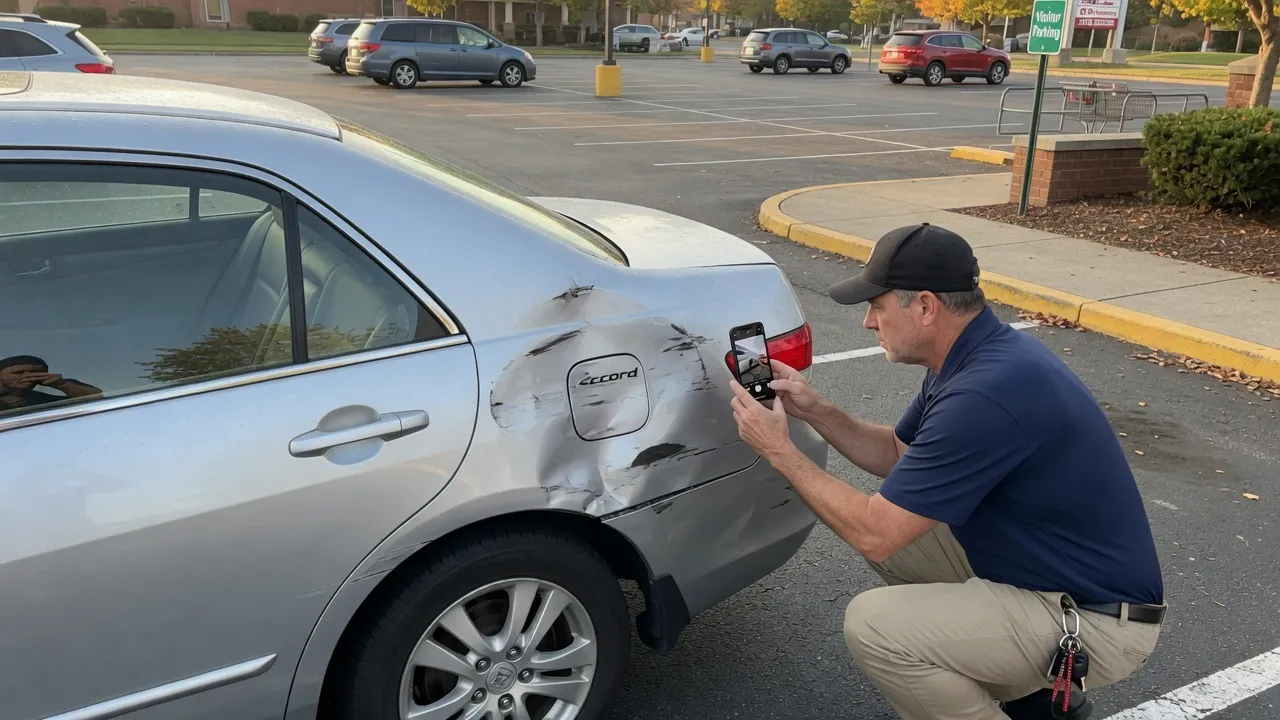
Step 1: Document everything before drop-off
Most disputes at pickup start because there's no baseline record of the vehicle's condition before work began. A chain shop handling hundreds of cars per month isn't going to catch every pre-existing scratch and ding. You need to.
Before driving to the shop, spend 15 to 20 minutes doing a thorough walkthrough with your phone camera. Photograph every panel, corner, and edge. Get close-up shots of any existing scratches, chips, or dents that have nothing to do with the damage being repaired. Photograph the interior, the wheels, and the glass. Timestamps activate automatically on most smartphones; if yours doesn't, email a few photos to yourself to create a dated record.
On the written estimate, note any pre-existing damage explicitly. If there's a chip in the passenger door that was there before the accident, write it on the paperwork. Ask the service advisor to initial it.
This documentation protects against two problems. First, you won't be charged for damage the shop caused during repair. Second, if a pickup dispute does arise, you have clear before-and-after evidence instead of a he-said-she-said conversation.
Video works even better than photos for capturing panel condition from multiple angles. A slow walk-around with verbal narration of what you're seeing takes three minutes and covers everything. Worth it.
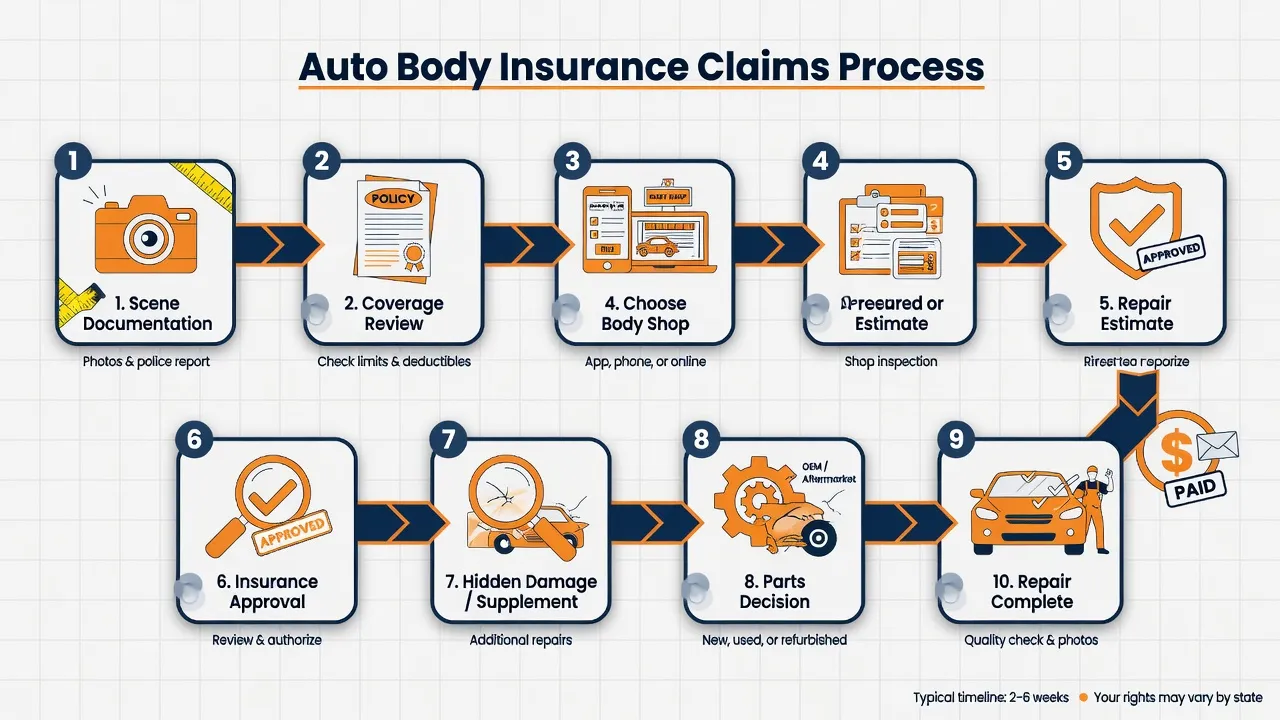
For more on documentation as part of the broader claims process, read our insurance claims guide for auto body repair.
Step 2: Get parts authorization in writing before work starts
Parts choice is where chain body shop repairs can quietly go sideways, especially on insurance-paid jobs. The shop writes the estimate with specific parts; the insurer pushes back with a cheaper alternative; the shop sometimes substitutes without telling the car owner. The result: parts that don't fit correctly or don't meet the vehicle manufacturer's standards.
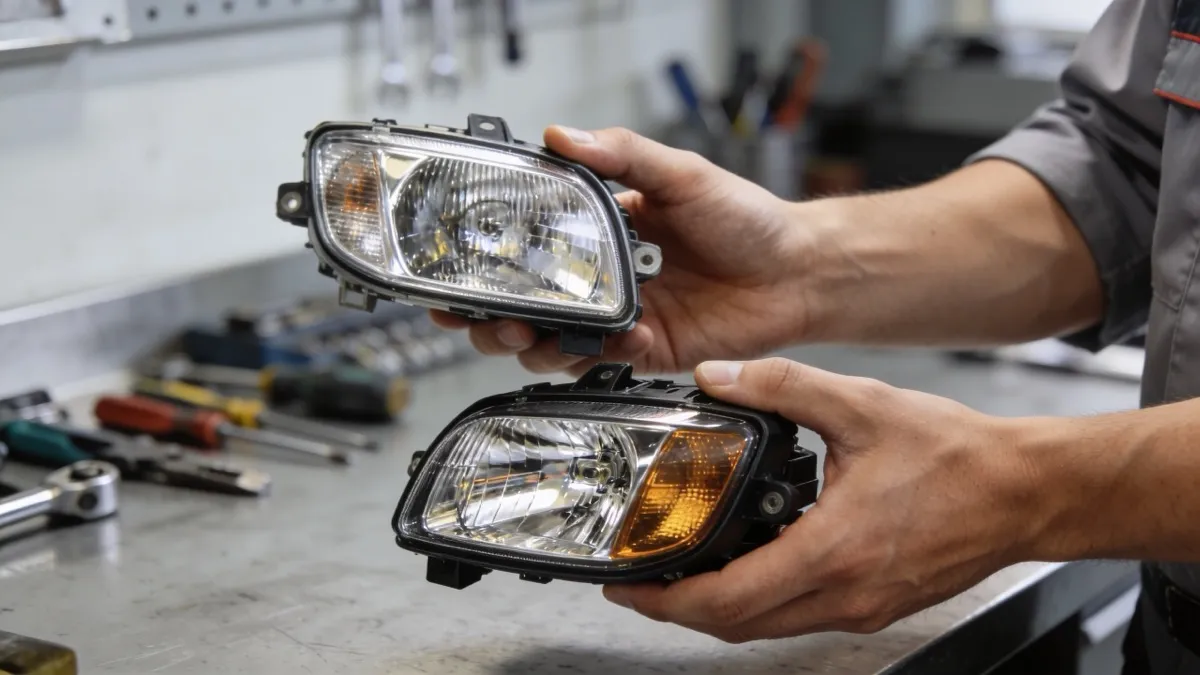
There are three categories of replacement parts in collision repair:
- OEM (Original Equipment Manufacturer) parts: Made by or for the vehicle's manufacturer. Guaranteed to fit exactly and typically carry the manufacturer's warranty.
- Aftermarket parts: Made by third-party suppliers. Generally less expensive. Quality varies widely across suppliers.
- Recycled/salvage parts: Used OEM parts pulled from other vehicles. Fit is usually excellent; condition varies by part and supplier.
Car owners have the right to request OEM parts for their repair. Many states require insurers to disclose when they're authorizing non-OEM parts, and some states require explicit car owner consent before aftermarket parts can go on certain vehicles. To understand your specific rights, read our guide on OEM vs aftermarket parts in insurance claims.
Before signing the repair authorization, ask the service advisor to write "OEM parts authorized for all replaced components" on the work order, or specify which parts you're authorizing as aftermarket if cost is a factor. Get their signature. This creates accountability that a verbal conversation doesn't.
If your insurance is paying and they've authorized aftermarket parts, the shop may not be able to use OEM without you agreeing to pay the difference. Understanding your rights as a DRP shop customer helps clarify what's negotiable and what isn't.
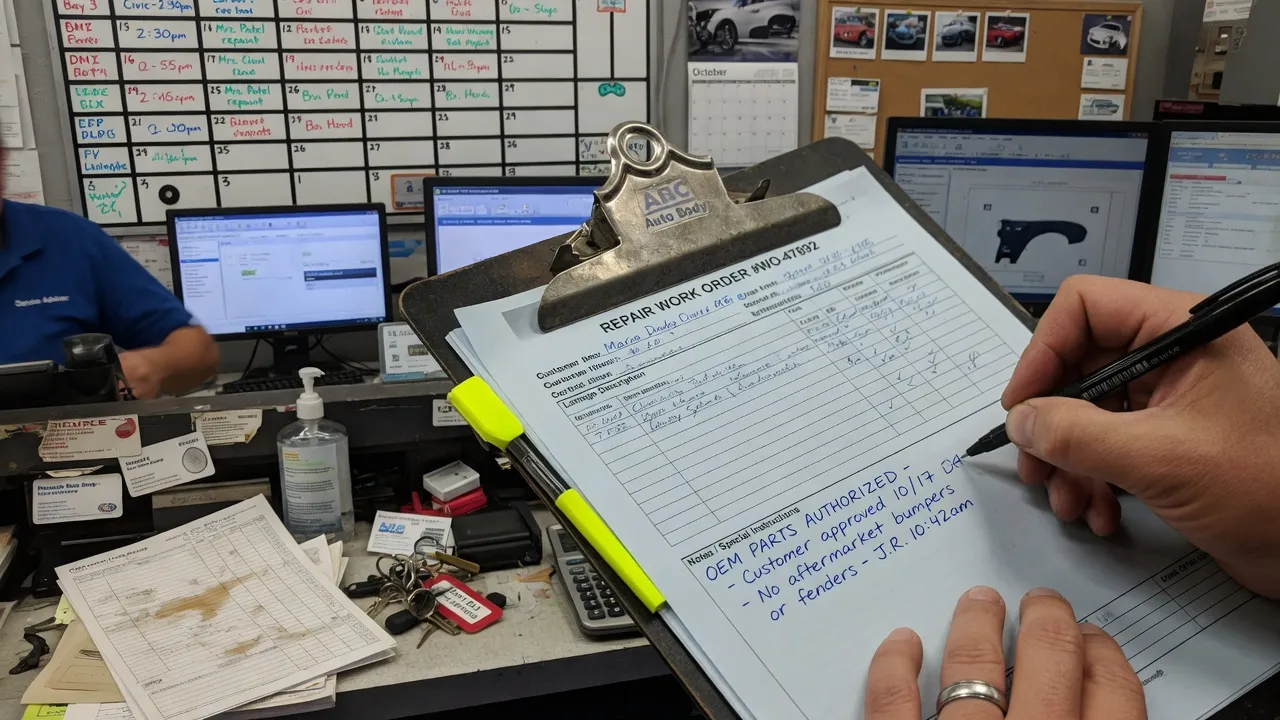
Step 3: Ask the right questions at drop-off
Drop-off is the only face-to-face time most car owners get with the shop before the repair is done. Use it. A few specific questions separate a shop that's prepared to do quality work from one that's running cars through like an assembly line. These are the questions worth asking — and they apply whether you're at Caliber, CARSTAR, or any other chain.
Who is the assigned technician?
Technician assignment is the single biggest variable in outcome quality. Large chain locations assign work based on availability and skill level — both of which vary. Ask which technician will handle your vehicle and whether they have certifications relevant to your repair type. I-CAR (Inter-Industry Conference on Auto Collision Repair) certification means the technician has completed standardized training in collision repair. Gold Class certification, I-CAR's highest shop-level designation, means the shop requires ongoing education from its technicians. ASE (Automotive Service Excellence) certifications cover specific repair disciplines. Not having these doesn't mean the work will be poor; having them means there's a measurable training standard in place.
Does your vehicle need ADAS recalibration?
If your vehicle was made in the past several years, it almost certainly has Advanced Driver Assistance Systems (ADAS): forward collision warning, lane departure, blind spot monitoring, backup cameras, or adaptive cruise control. According to 2026 industry data, 28.3% of all collision repairs now require ADAS recalibration. Many sensors are mounted behind bumpers, in windshields, or in mirrors, exactly the areas commonly damaged in collisions. Ask directly: "Will my vehicle require ADAS calibration after this repair, and is that included in the estimate?"
What's the timeline, and how do you handle delays?
Ask for a specific estimated completion date. Not "about a week." Ask how the shop communicates when timelines shift. Some chain locations have a customer portal or text-message updates built into their system; others rely on phone calls you have to initiate. Knowing the process upfront prevents frustration later.
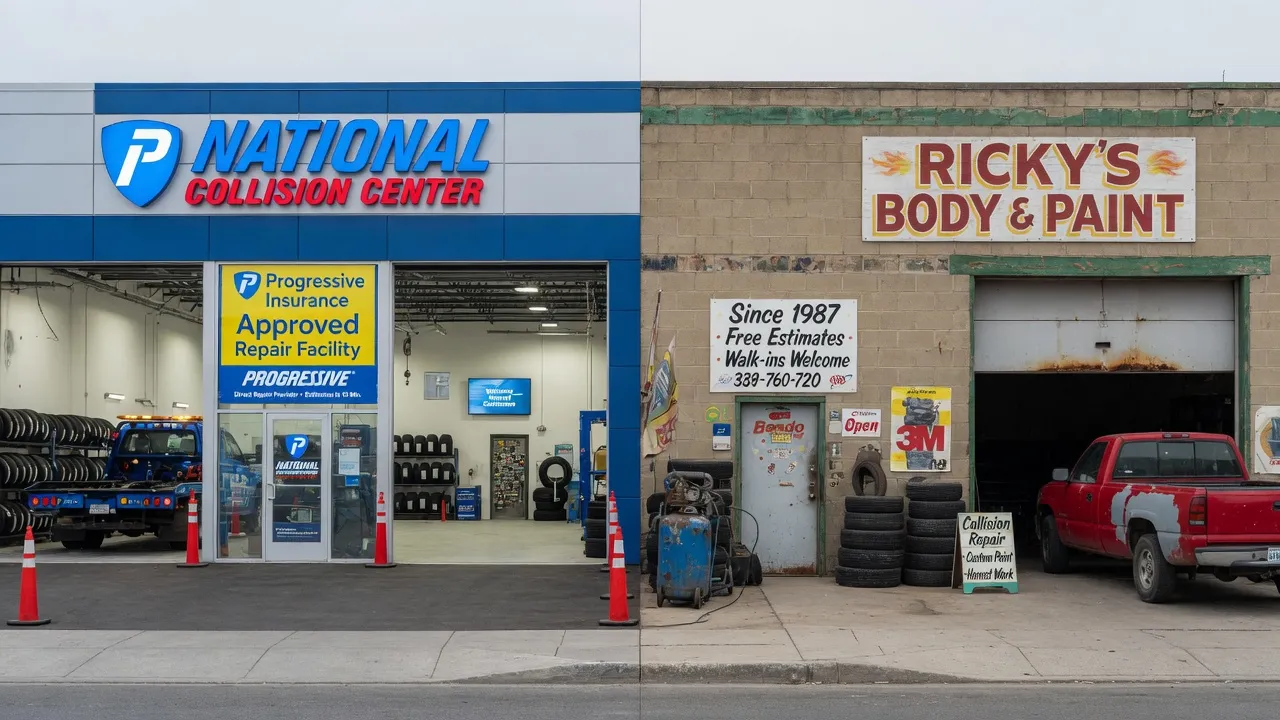
If you're weighing whether a chain shop is right for your situation at all, our comparison of chain vs independent body shops breaks down when each option tends to work better.
Step 4: Establish a communication schedule during the repair
Once the car is in the shop, communication doesn't manage itself. Staying proactive during the repair catches problems before they're baked into the finished product.
On the first business day after drop-off, call or send a message to confirm the vehicle has been teardown inspected. Teardown is when the technician removes damaged panels and gets a full picture of the damage, including anything not visible in the original estimate. Ask if there are any supplements and, if so, what the revised timeline looks like.
Request photo updates at two points: after teardown and after body work but before paint. Most chain shops will accommodate this. A photo after body work shows whether the structural repair is complete before the vehicle goes into the paint booth. It isn't about catching the shop in a mistake. It's about staying informed and asking questions before the process moves past where corrections are easy.
Some car owners worry that checking in too often signals distrust and causes the shop to treat them poorly. The opposite tends to be true. Shops know that engaged, informed car owners are more likely to catch problems and expect quality. Those cars get more attention. Every time.
Step 5: What to expect when hidden damage appears
63% of collision repairs involve at least one supplement. A supplement is additional damage discovered after the original estimate, typically during teardown, that adds to the repair scope and cost.
The process works like this: the technician opens up the damaged area and finds something the adjuster couldn't see from outside, a bent subframe rail, a cracked inner bracket, damaged wiring. The shop writes a supplement estimate for the additional work and sends it to the insurance company. The insurer reviews it, may send a field adjuster, and then approves, partially approves, or disputes it.
This can add two to five business days to a repair timeline, sometimes more on complex cases. It's not the shop doing something wrong. It's the normal reality of collision repair.
What car owners should do:
- Ask for a copy of the supplement documentation, including what was found and what additional work was authorized.
- If the insurer disputes the supplement, ask the shop what the dispute is about and what the path to resolution looks like.
- Know that shops occasionally have to do a second or even third supplement if additional damage surfaces. Each one adds time.
For a full explanation of how supplement negotiations work between shops and insurers, read our guide on the insurance supplement process.
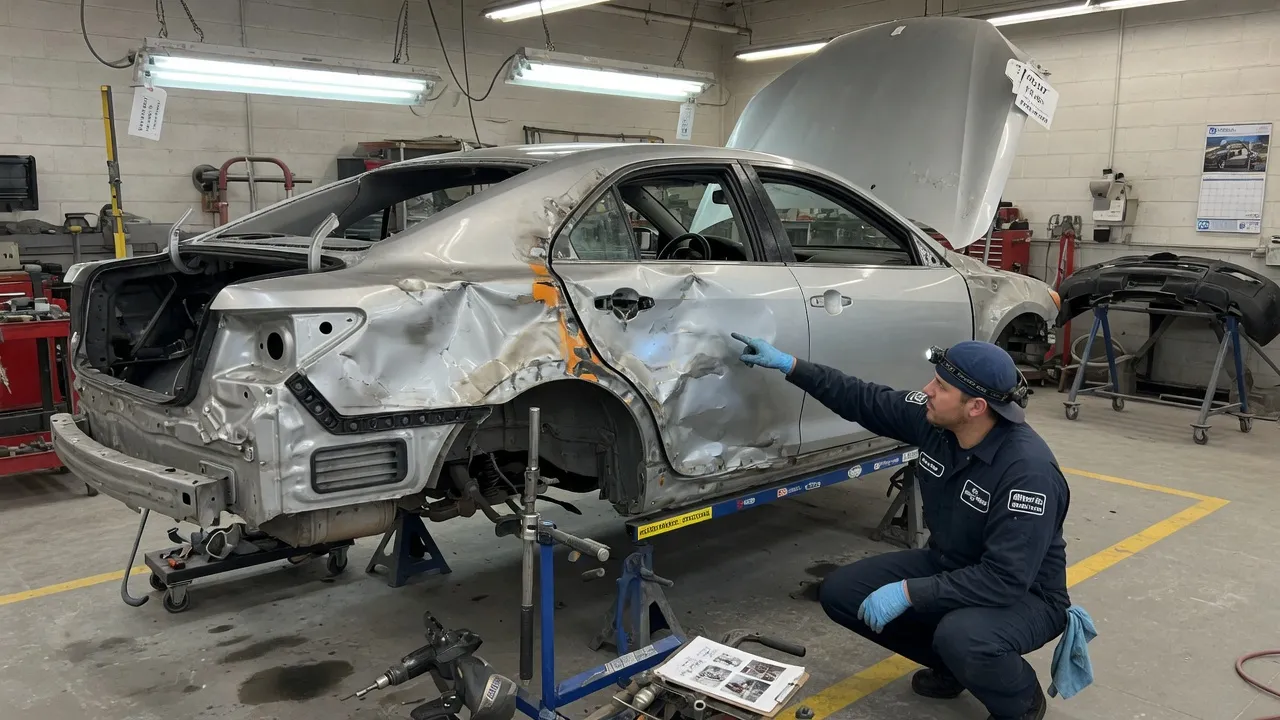
Step 6: Run the pickup inspection checklist before signing
The pickup inspection is the most important five minutes of the entire repair. Most car owners glance at the repaired area, decide it looks fine, and sign. That's a mistake. Picking up a vehicle without a thorough inspection means accepting whatever was delivered, including any issues that would have been easy to address right then.
Run through this checklist before signing anything:
Paint and color match
Stand at a 45-degree angle to the repaired panels in natural light or under bright shop lights. Look for color variation between the repaired panel and adjacent panels. Metallic and pearl finishes are especially hard to match exactly; some variation is normal and acceptable in industry standards, but a noticeable mismatch is not. Look for texture differences too: orange peel (a bumpy texture resembling orange skin) in one area but not another indicates inconsistent paint application.
Panel gaps and fitment
Open and close every door, hood, and trunk near the repaired area. Gaps should be consistent and even on both sides of the vehicle. A door that doesn't close smoothly or a gap that's noticeably wider on one side than the other indicates an alignment problem that needs correction.
Overspray
Overspray is paint mist that lands on surfaces that weren't supposed to be painted: rubber trim, glass, door jambs, or adjacent panels. Run your fingers along the edges of repaired areas, across window glass near the repair, and around door openings. Overspray feels like fine sandpaper. It's a quality control failure and should be corrected before you leave.
ADAS function check
If your vehicle required ADAS recalibration, ask the service advisor to show you documentation confirming it was performed. Many shops print a calibration report. Verify the specific systems that were recalibrated. If the shop says calibration wasn't needed but your vehicle sustained any impact near a sensor location, ask them to explain why. ADAS sensors that aren't properly recalibrated can cause unexpected system behavior that's difficult to trace back to the repair later.
Mechanical function
Drive the vehicle in the parking lot before leaving. Listen for any unusual noises. Check that the steering feels normal. Turn the heat and AC on briefly. A good repair leaves the vehicle driving exactly as it did before.
If you find problems at pickup, point them out calmly and ask the service advisor to write them up. Chain shops typically have a quality control re-do process. Most issues can be corrected same-day or within one additional day. The time to raise them is before you sign, not a week later.
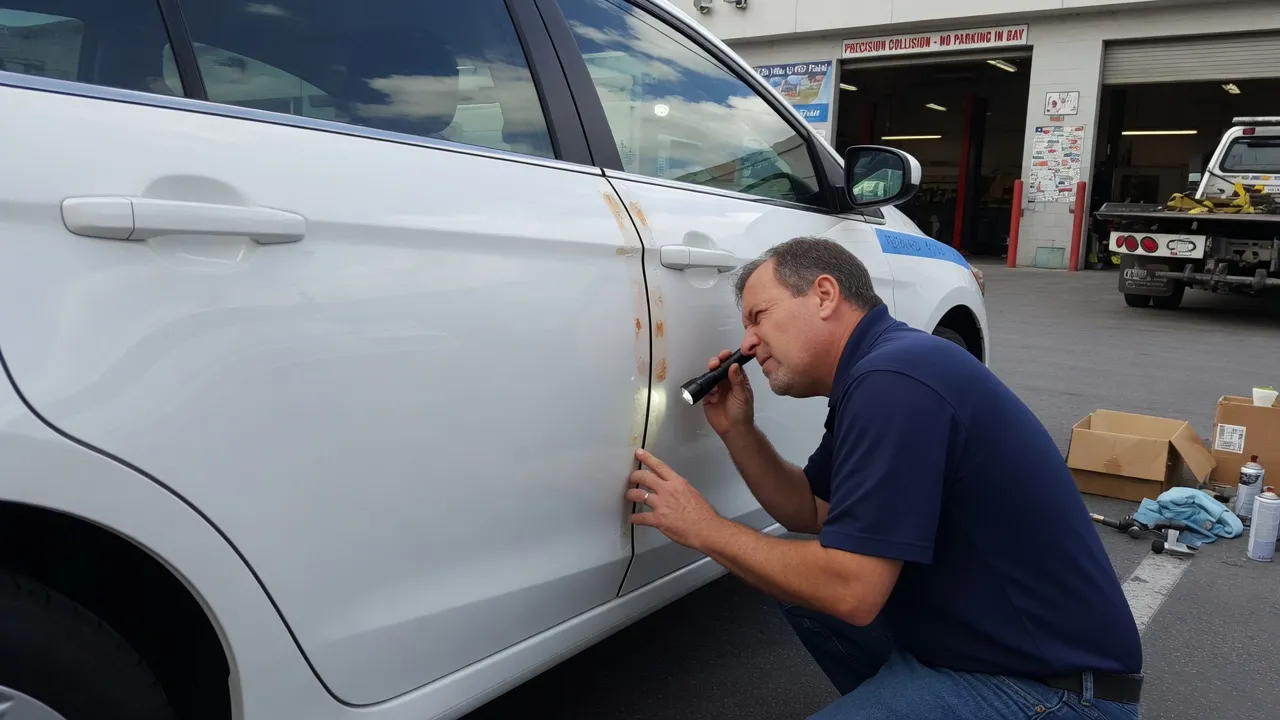
Step 7: Document the completed repair and understand the warranty
After pickup, a few quick actions protect the repair for the long term.
Photograph the completed repair immediately. Take the same walkthrough you did before drop-off, this time showing the repaired condition. These images establish what the repair looked like when you accepted the vehicle. If a problem develops later, you'll need to show it wasn't there at pickup.
Get warranty terms in writing. Most major chain body shops offer a lifetime warranty on their repair work for as long as the original customer owns the vehicle. That phrase "original customer" matters: the warranty typically doesn't transfer if you sell the car. Ask specifically:
- What does the warranty cover (workmanship, paint failure, panel fitment)?
- What does it exclude (parts manufacturer defects, damage from subsequent accidents)?
- Which locations honor it, and is it honored nationwide across the chain?
- What's the process for filing a warranty claim?
At Caliber Collision, CARSTAR, and most other major chains, the warranty is backed at the corporate level, meaning you can return to any network location, not just the one that did the original work. Verify this for the specific chain you used, since policies differ.
Keep repair records. The shop paperwork, the supplement documentation, the parts invoices, and the warranty terms should all go into a folder together. This documentation matters if you sell the vehicle, file a diminished value claim, or need to return for a warranty repair. If you're considering a diminished value claim after a major repair, our guide on understanding your right to choose your body shop covers related rights that apply to claims.
What to do if the repair quality is unsatisfactory
Most quality issues at chain shops resolve quickly when raised through the right channels. But car owners should know the full path if the shop doesn't respond adequately.
Start with the shop's management. Ask to speak with the shop manager, not just the service advisor. Describe the specific defect, point to it if possible, and ask for a written repair plan with a timeline. Document this conversation.
Contact the chain's corporate customer service. Every major chain has a customer experience team. A complaint filed at the corporate level creates a record and often speeds up resolution at the shop. This step costs nothing and frequently produces results.
Involve your insurance company. If the repair was insurance-paid and the quality is deficient, your insurer has a financial interest in the repair being done correctly. Call your claims adjuster and report the issue. Insurers carry real weight with their DRP shops that individual car owners don't.
File a complaint with your state's Department of Insurance. For insurance-paid repairs, the state insurance regulator can investigate complaints about insurers or shops that fail to meet repair standards. This step is appropriate if the shop refuses to address a clear defect or if the insurer is blocking a legitimate repair.
Contact the Better Business Bureau or file a small claims case. For repairs paid out of pocket, the BBB complaint process can prompt a response from shops that haven't been forthcoming. Small claims court is a viable option for documented defects under the court's dollar threshold, which varies by state.
Frequently asked questions
Can I switch to a different chain location if I'm unhappy with progress?
In most cases, yes. If work hasn't begun, you can retrieve your vehicle without charge. If the repair is underway, there may be disassembly charges. Contact the chain's corporate customer service line to understand your options before making this decision.
Does using a chain body shop affect my insurance claim?
Using a chain shop, particularly one that's part of your insurer's Direct Repair Program (DRP), can simplify the claims process, since the shop has a pre-existing relationship with the insurer. You still retain the right to use any licensed body shop regardless of insurance company recommendations. For a full explanation of DRP dynamics, see our guide on understanding DRP body shops.
What if the shop wants to use recycled parts and I want OEM?
You have the right to request OEM parts. If your insurance policy only covers aftermarket or recycled alternatives, you may be asked to pay the difference between what insurance authorizes and OEM pricing. Get any cost differential in writing before authorizing. For a breakdown of the parts decision, see our OEM vs aftermarket parts guide.
How long should a typical collision repair take at a chain shop?
Repair time depends heavily on damage severity, parts availability, and current shop workload. A minor bumper repair might take two to four business days. A moderate collision repair typically runs seven to fifteen business days when parts procurement and any supplements are factored in. Supplement processes can add two to five days on top of that. Ask for a specific date at drop-off, and ask the shop to communicate proactively if that date changes.
Is a lifetime warranty from a chain shop actually reliable?
The major national chains (Caliber Collision, CARSTAR, Crash Champions, and Gerber Collision) back their warranties at the corporate level, which provides more stability than a warranty from a single independently-owned shop that could close. The warranty covers workmanship and paint application, not parts defects (which fall under the parts manufacturer's own warranty) or subsequent damage. Read the warranty terms carefully before accepting the vehicle.
What is a supplement and do I have to pay extra?
A supplement is additional damage discovered during teardown that wasn't visible in the original estimate. If your insurance is paying, the shop submits the supplement to your insurer for approval, and you typically don't pay extra unless it involves upgrades or items your policy excludes. If you're paying out of pocket, the shop should show you the supplement documentation and get your approval before proceeding. For a full explanation, read our guide on the insurance supplement process.
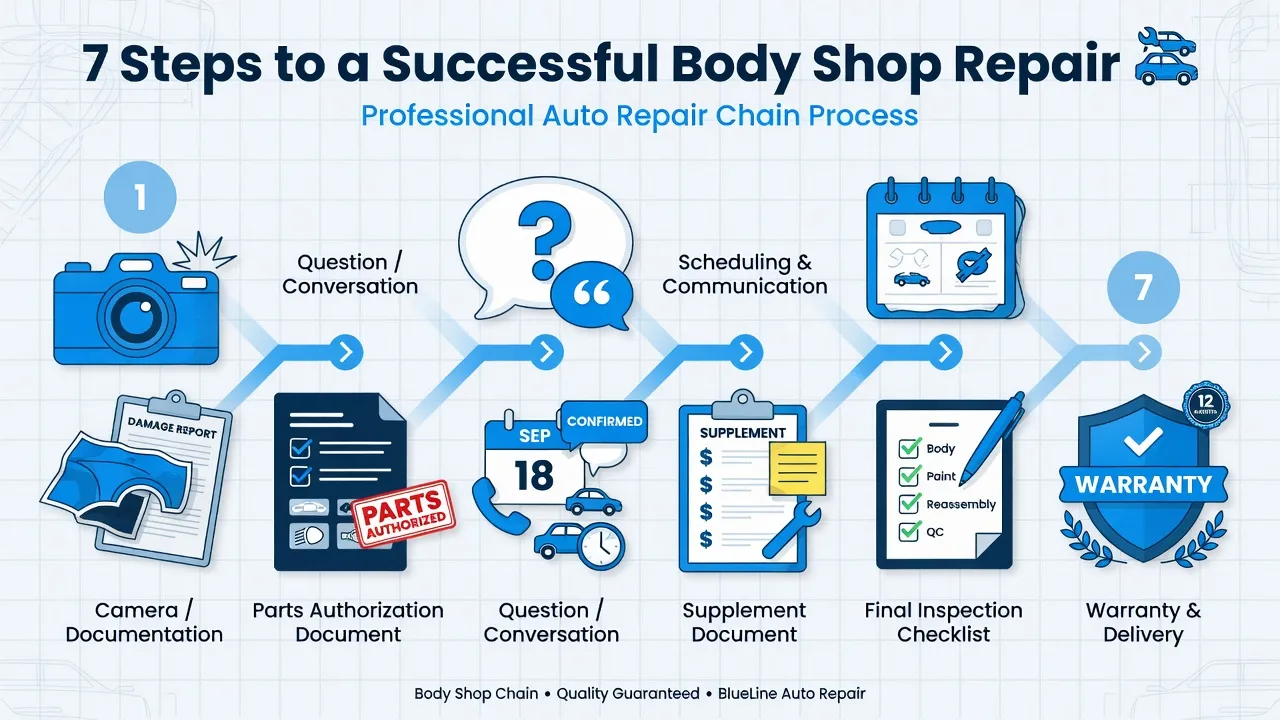
Key takeaways: how to get best results at a chain body shop
How to get the best results at a chain body shop comes down to preparation and engagement, not luck. The car owners who walk away with quality repairs documented their vehicle before drop-off, confirmed parts authorization in writing, asked specific questions about who was doing the work, stayed in contact during the repair, and ran a real inspection before signing. Not one of those steps is complicated.
The seven steps here work because they keep you involved at the moments that matter most: before the estimate is finalized, when hidden damage appears, and at the handoff when problems are still easy to fix.
Chain shops handle high volume. High volume creates processes that favor efficiency over individual attention. An informed car owner who asks the right questions and gets things in writing tends to get more careful treatment. There's accountability at every step. That changes what you get.
For a broader look at how chain shops compare across locations and quality metrics, see our comparison of major auto body shop chains. If you're still deciding between Caliber Collision and other options, our Caliber Collision vs Crash Champions comparison covers location footprint, DRP relationships, and what differentiates them.
To find collision repair or auto painting services near you, browse body shops by location on AutoBodyShopNear.com.
Last updated: June 2026. Repair cost and supplement rate data from the CCC Crash Course 2026 Industry Report. ADAS calibration rate (28.3%) from CCC 2026 data. Technician certification standards from I-CAR (Inter-Industry Conference on Auto Collision Repair). Consumer rights information referenced from the National Association of Insurance Commissioners (NAIC).