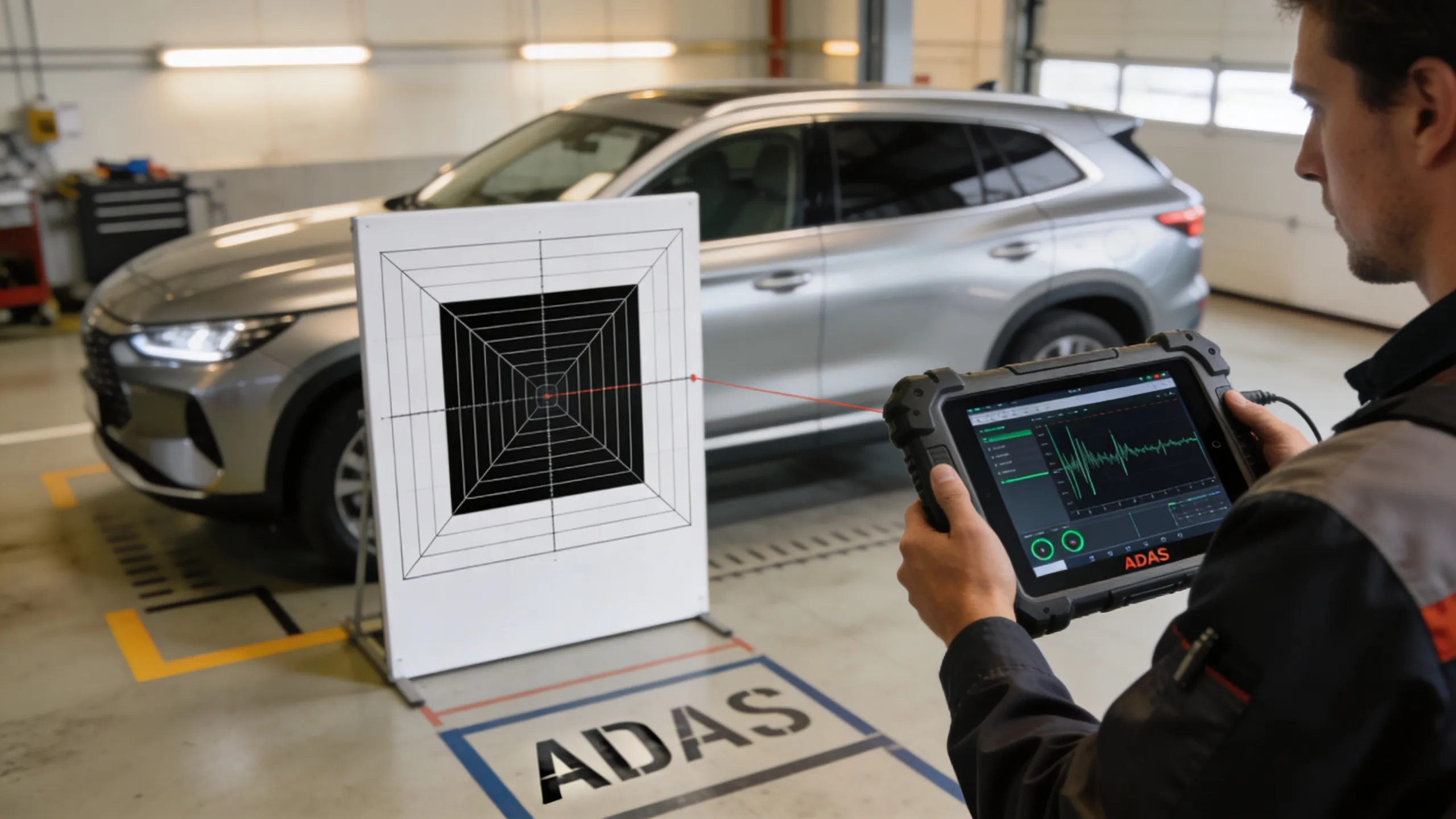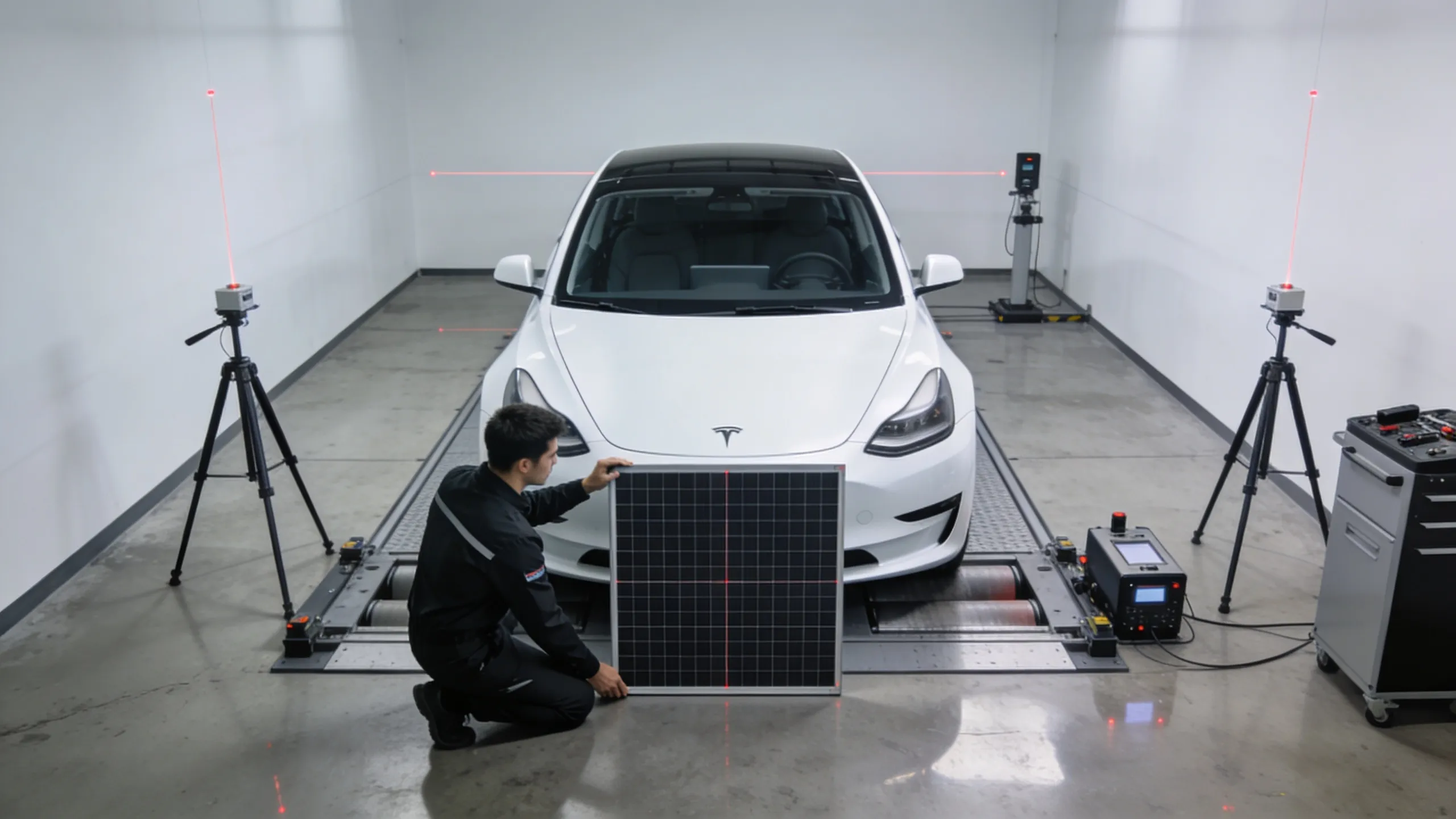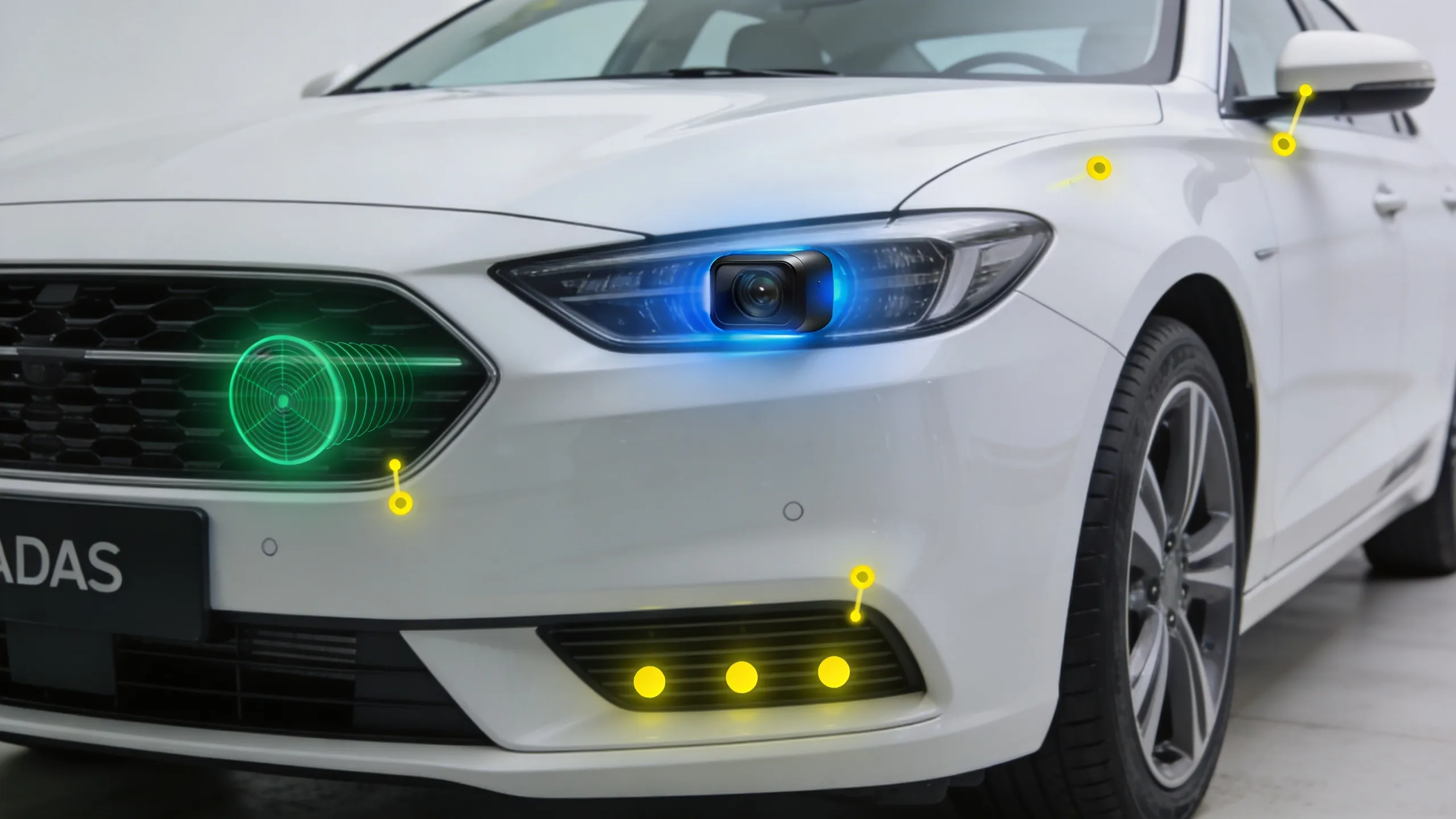
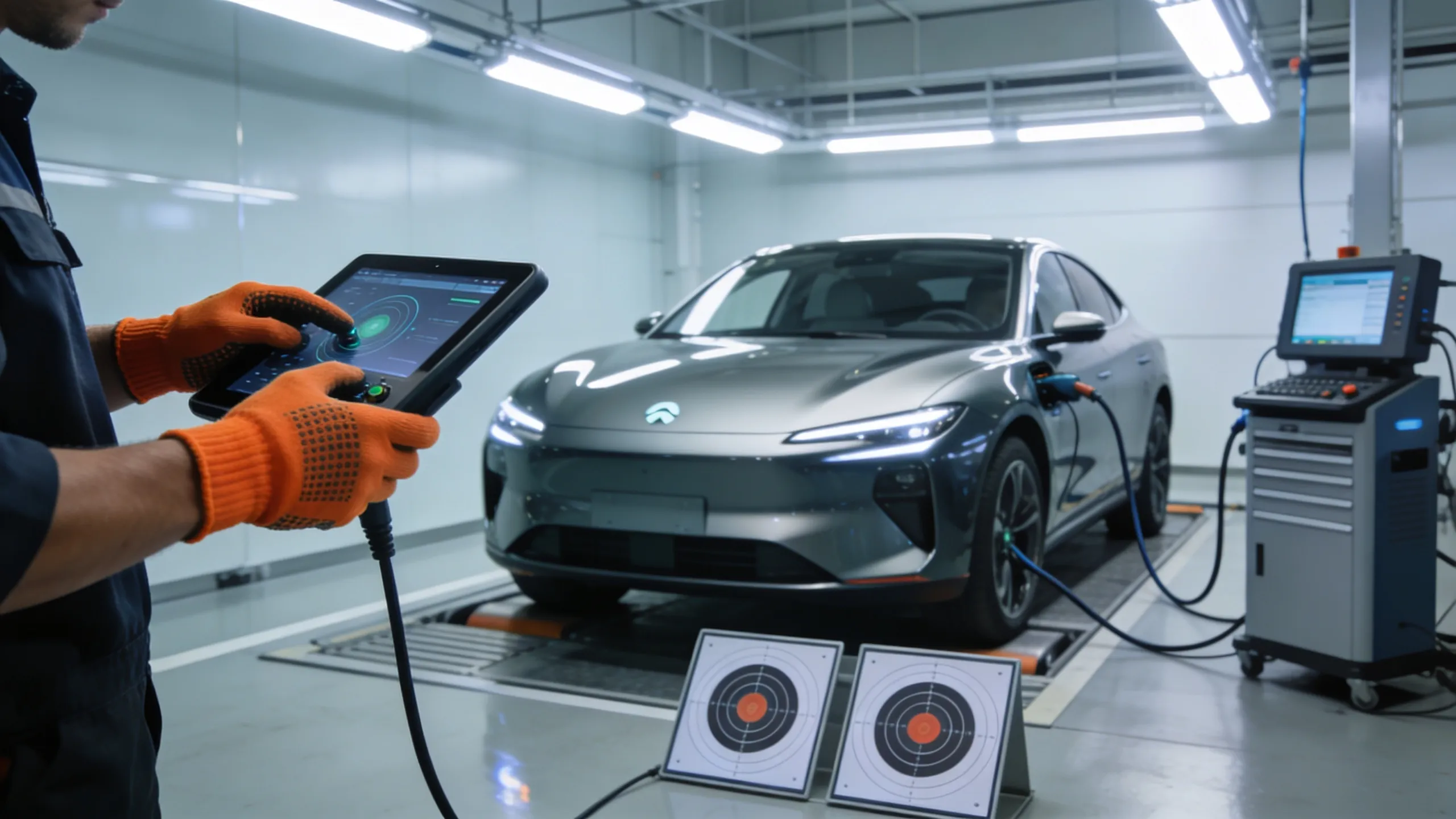
Electric and hybrid vehicles pack dense networks of cameras, radar units, ultrasonic sensors, and control modules into every panel. That density has made ADAS calibration electric vehicle work a much bigger piece of post-collision repair. It's not just a scan-and-clear process anymore. Shops must protect high-voltage systems, follow brand-specific procedures, and confirm each driver-assist function works on the road after calibration.
Owners feel the impact in two places: repair time and cost. A bumper hit that looked minor in 2018 may now trigger multiple calibrations in 2026. This guide explains why that happens, what's different in EV and hybrid workflows, and how to choose a repair facility that can do the work safely.
For broader background, start with the core ADAS calibration guide. This article focuses on EV and hybrid-specific details.
Why ADAS Calibration for Electric Vehicles Is More Complex
ADAS calibration for electric vehicles is more complex because EVs carry more sensors, stricter high-voltage safety lockout steps, and deeper software ties to OEM tools. Technicians must complete battery-safe procedures before touching sensor targets, then validate camera, radar, and braking integrations that can change after over-the-air software updates.
That summary covers the big picture. In real shops, though, complexity shows up in very practical ways. A windshield replacement can require forward camera calibration, static target setup, dynamic road validation, and then an electronic health check across modules that communicate with traction, braking, and stability systems.
EV architecture pushes this further. Packaging is tighter. Sensor locations can be unique by model year. OEM software access is often mandatory. Many shops handle standard ADAS work on gas vehicles — far fewer can complete full EV ADAS calibration to manufacturer standards.
Additional ADAS Sensors in Electric and Hybrid Vehicles
Most modern vehicles use ADAS sensors. EVs and advanced hybrids often add density and overlap. More inputs improve feature performance, but they also increase calibration steps after repairs.
Tesla Vision Platforms and Camera-Heavy Design
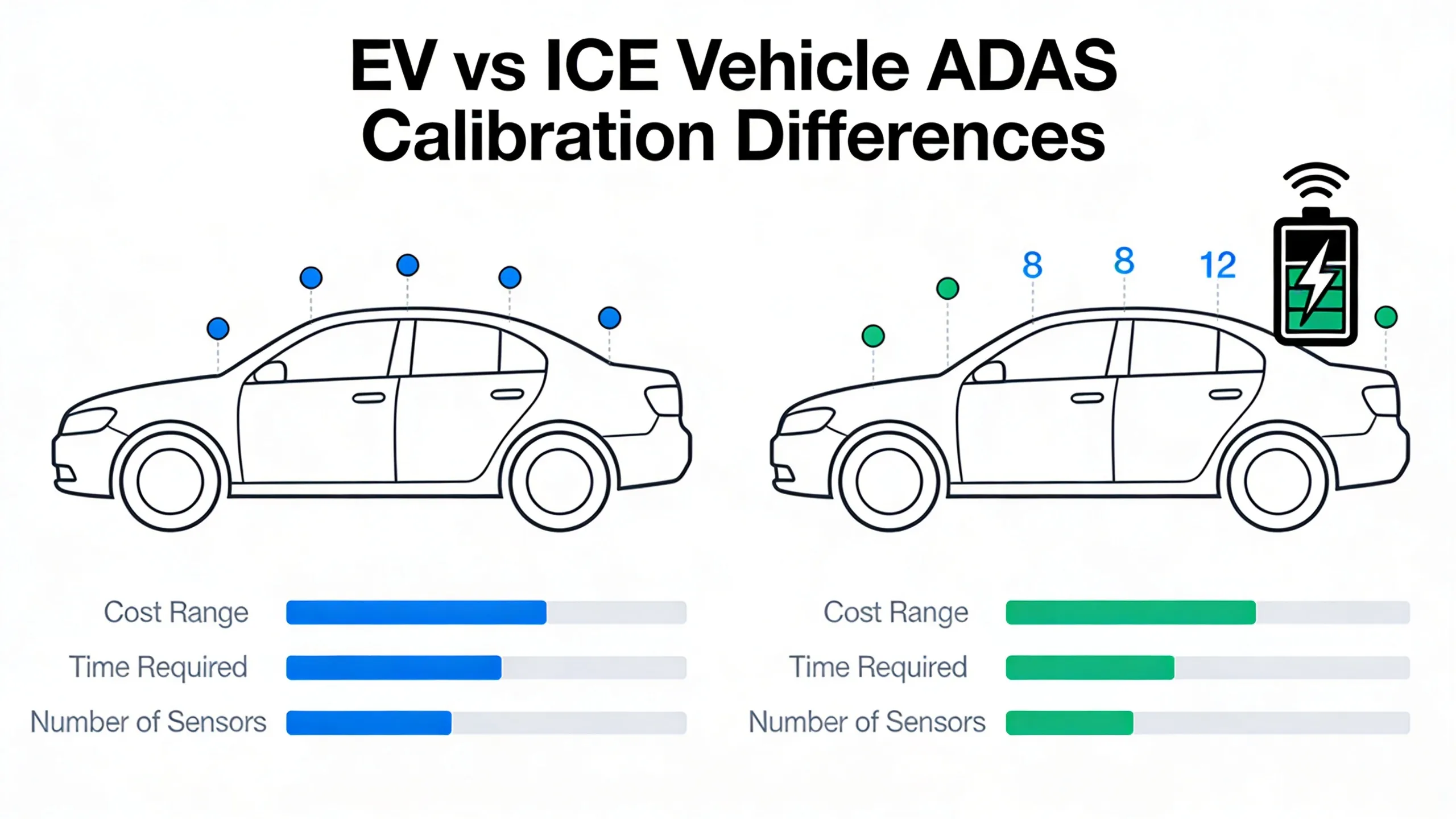
Tesla Model 3 and Model Y platforms use an 8-camera layout tied to Tesla Vision. When body panels, glass, mirrors, suspension geometry, or wheel alignment values shift, the camera system may need recalibration and verification. That's why even moderate repairs can require multi-stage setup and road testing.
Owners comparing brands can review model-specific differences in this Tesla and luxury calibration comparison.
Rivian, Polestar, and Other Premium EV Sensor Stacks
Several premium EVs combine multi-camera systems, radar, and ultrasonic sensors in ways that vary by trim and software release. Rivian uses an 11-camera hardware architecture in its driver-assist system. More cameras improve coverage zones. But they also raise the chance that one repair affects multiple viewing angles.
This matters for estimating. A rear impact might not only damage parking sensors. It can also shift camera orientation and trigger lane-support or cross-traffic recalibration steps that weren't on the original estimate.
Integrated Monitoring Systems Near ADAS Modules
EVs carry dense battery and thermal monitoring networks. These aren't ADAS sensors in the classic sense, but they live in the same electronic ecosystem. During repair planning, shops must avoid disturbing related harnesses, connectors, and control modules. Disturbing them introduces faults that can block calibration completion entirely.
For a plain-language breakdown of common hardware, see ADAS sensors explained.
EV-Specific ADAS Calibration Electric Vehicle Challenges
This is where delays start. The calibration itself may take 1-3 hours. Preparation and safety controls add significant time on top of that.
High-Voltage Safety Lockout and PPE Protocols
Before technicians begin some procedures, they must verify vehicle state, isolate high-voltage systems when required, and follow personal protective equipment rules. I-CAR's EV training resources emphasize this sequence for all EV repair work. Skip the lockout-tagout steps and both worker safety and repair quality are at risk.
Source: I-CAR EV and hybrid repair training resources.
Specialized Training and Tooling Gaps
Not every ADAS-capable shop is EV-capable. Teams need high-voltage awareness, insulated tools, model-specific service procedures, and software access. They also need controlled floor space and strict target positioning standards for static calibration. These aren't small requirements.
Staffing matters too. If only one technician in a facility can perform advanced EV calibrations, backlogs form quickly during storm season or high-volume claim periods.
Battery Disconnect and Reinitialization Procedures
Some OEM repair methods require battery disconnect sequences before specific body or sensor work. Reconnect and module reinitialization steps can then affect ADAS readiness states. Shops must clear this carefully before final road validation. Skip it and driver-assist warnings may return after delivery.
OTA Updates and Calibration State Conflicts
Software-over-the-air updates are a growing variable. A vehicle can receive new feature logic between estimate approval and repair completion. That update may alter calibration requirements, scan outputs, or acceptance thresholds.
There's no single universal fix here. Shops must follow current OEM procedures on the day work is performed, then document the software version and calibration completion records in the file.
Hybrid Car ADAS Calibration: What Is Different
Hybrid systems sit between ICE and full EV architecture. That means hybrid car ADAS calibration can look familiar on the surface, yet still require extra checks most technicians don't anticipate.
Dual Powertrain Variables
Hybrids combine combustion and electric systems, so technicians must evaluate interactions across both. Faults in one side can trigger warning states that interfere with clean ADAS validation — even if collision damage looks minor at intake.
Regenerative Braking and Sensor Integration
Many hybrids rely on blended braking logic that coordinates friction brakes with regenerative braking. ADAS features such as forward collision mitigation and adaptive cruise interact with this logic. Calibration and test drives must confirm the handoff behavior stays stable after repair.
Claim Trends and Repair Mix Shift
Industry claim data from CCC continues to show rising electrified-vehicle repair activity, with hybrid claim growth near the +20% year-over-year range in several insurer and market segments. Exact percentages vary by carrier mix and geography. The direction is clear: more hybrids in claims means more hybrid ADAS calibrations in the pipeline.
Source: CCC Crash Course 2026 report hub and CCC 2026 EV collision repair analysis.
ADAS Calibration Cost for Electric and Hybrid Vehicles
Consumers ask one thing first: what is the EV calibration cost? The short answer: EV procedures run 20-40% higher than baseline ICE calibration, especially for multi-system jobs and premium platforms.
| Vehicle Type | Single System Calibration | Multi-System | Notes |
|---|---|---|---|
| Standard ICE vehicle | $250-$500 | $400-$800 | Baseline |
| Tesla (Model 3/Y) | $400-$600 | $800-$1,200 | Tesla Vision, 8 cameras |
| Other premium EV | $350-$550 | $700-$1,000 | Rivian, Polestar, etc. |
| Hybrid vehicle | $275-$500 | $450-$850 | Similar to ICE + regen sensors |
| Luxury EV (Porsche Taycan) | $500-$700 | $1,000-$1,500 | OEM-only for many procedures |
These ranges reflect common U.S. market patterns in 2026 and change by city, brand, and repair severity. Labor rates, OEM software subscriptions, and required road tests all influence the final cost. When a shop must sublet calibrations to a second facility, total invoice amounts can rise further.
For a broader breakdown by system type, read ADAS calibration cost guide.
Why EV Costs Run Higher
Three factors drive most price differences:
- Preparation time for high-voltage safety steps.
- Higher sensor count and tighter tolerances.
- OEM software dependencies and model-specific workflows.
Owners should weigh cost against safety. Poor electric car sensor calibration can reduce ADAS performance when drivers need it most — in emergency situations where split-second reaction time matters.
What Can Change the Final Invoice
Two vehicles from the same brand can produce different calibration totals after similar impacts. Trim level differences, wheel size, ride-height changes, and module software states all add steps. A shop may also need to repeat a dynamic calibration run if traffic, weather, or road markings prevent a valid test cycle.
Parts choices matter too. Aftermarket parts that alter sensor mounting geometry can cause the system to fail setup checks, requiring additional correction time. That's one reason many repair plans specify OEM mounting components for camera, radar, and sensor brackets.
Finding a Certified EV Repair Shop for ADAS Calibration
Not all collision centers that advertise ADAS service can handle advanced electric car sensor calibration. Owners should verify qualifications before authorizing repairs — not after delivery.
What to Ask Before Approving Work
- Does the shop hold brand-specific EV certification for the vehicle make?
- Are technicians trained in high-voltage safety and documented EV procedures?
- Are calibrations performed in-house or sublet?
- Will the shop provide pre-scan, post-scan, and calibration completion reports?
- Will the final invoice list each calibration operation clearly?
Owners should request plain-language answers. If a shop can't explain its process, that's a warning sign worth taking seriously.
OEM Network and Equipment Standards
Many EV brands maintain approved network requirements that include dedicated tooling, floor standards, scan platforms, and technician credentials. Non-network shops aren't always unqualified. But owners should confirm equivalent capability with documentation before agreeing to the repair plan.
NHTSA's EV safety resources can help owners understand why high-voltage procedures matter during repair planning: NHTSA electric and hybrid vehicle safety resources.
Searching for a qualified shop? The body shop directory lists certified facilities by state and city, with filter options for EV experience.
How EV ADAS Calibration Affects Insurance Claims
Insurance timelines are changing as sensor and software complexity rises. EV claims often include more supplement activity, more diagnostic steps, and longer parts waits. Calibration becomes one of several schedule drivers — and not always the last one.
Higher Repair Cost Severity
CCC's public reporting describes higher complexity in collision repair, particularly for newer technology vehicles. Labor mix, scan requirements, and calibration tasks push severity upward across many claim categories. That pattern is consistent across multiple report cycles.
Longer Cycle Times in Some Cases
Some EV repairs move quickly. Others don't. If OEM procedures require sequential inspections, specific software states, or brand-restricted calibration workflows, cycle time increases. Rental car costs then rise for claimants and carriers alike.
Coverage Questions Owners Should Ask
- Does the estimate include all required calibrations, not just scans?
- Will supplements be needed after teardown?
- Is OEM procedure documentation attached to support operations?
- Does the policy handle OEM-only or certified-facility labor differences?
For a deeper claims discussion, see insurance coverage for ADAS calibration.
Simple Claim Documentation Steps for Owners
Owners can reduce disputes by collecting a few documents early. Ask the shop for the pre-scan report, post-repair scan report, and individual calibration completion records. Request photos of damaged sensor areas before teardown and after reassembly. Keep all supplement approvals in one email thread with dates.
Don't stop there. Confirm the final invoice lists each calibration line item instead of bundling everything into a general labor charge. Clear line-item detail makes it easier to resolve reimbursement questions with carriers and extended warranty providers.
The Future of EV ADAS: What Car Owners Should Expect
Sensor counts will keep increasing. Software stacks will keep evolving. Calibration workflows will become more data-driven.
More Sensors, More Cross-System Dependencies
Future EV platforms are expected to expand camera coverage, add higher-resolution radar, and deepen integration with automated parking and navigation support. Better convenience and safety features. But more hardware usually means more post-repair verification work, not less.
OTA-Assisted Calibration Potential
Some OEMs are exploring better remote diagnostics and software-assisted calibration states. This may reduce certain manual steps over time. It won't remove the need for physical alignment checks after structural or suspension-related repairs, though.
Growing Need for Documentation and Transparency
Owners, insurers, and shops will depend more on digital proof of completed calibration events. Repair files will include richer scan logs, photo evidence of target setup, and software version records.
This is a good trend. Better documentation protects everyone in the claim: the driver, the repairer, and the insurer. It also makes disputes faster to resolve.
What This Means for EV and Hybrid Owners in 2026-2028
Owners should expect calibration to be routine after more types of repairs (windshield replacement, mirror replacement, suspension work, moderate bumper hits). Repair authorization may take longer upfront because estimators now verify procedure data before work begins.
Shops that combine body, mechanical, diagnostics, and calibration under one roof tend to keep cycle time more stable than multi-vendor workflows. That doesn't guarantee a lower price. It usually improves process control and communication.
The practical takeaway: ask more questions before repairs begin, not after delivery. A ten-minute call at intake can prevent days of confusion later. Visit the collision repair service page to understand what a complete estimate should include for EV owners.
Conclusion: ADAS Calibration Electric Vehicle Repairs Need Better Planning
ADAS calibration electric vehicle work is now a standard part of many EV and hybrid collision repairs in 2026. It's more technical than most owners expect, and costs are higher than ICE benchmarks. But informed planning helps: choose a trained shop, confirm OEM procedures, and ask for calibration documentation before delivery.
When owners understand how EV ADAS calibration works, they make better repair and insurance decisions after a crash. That starts with finding a shop that's actually equipped to do the work right.