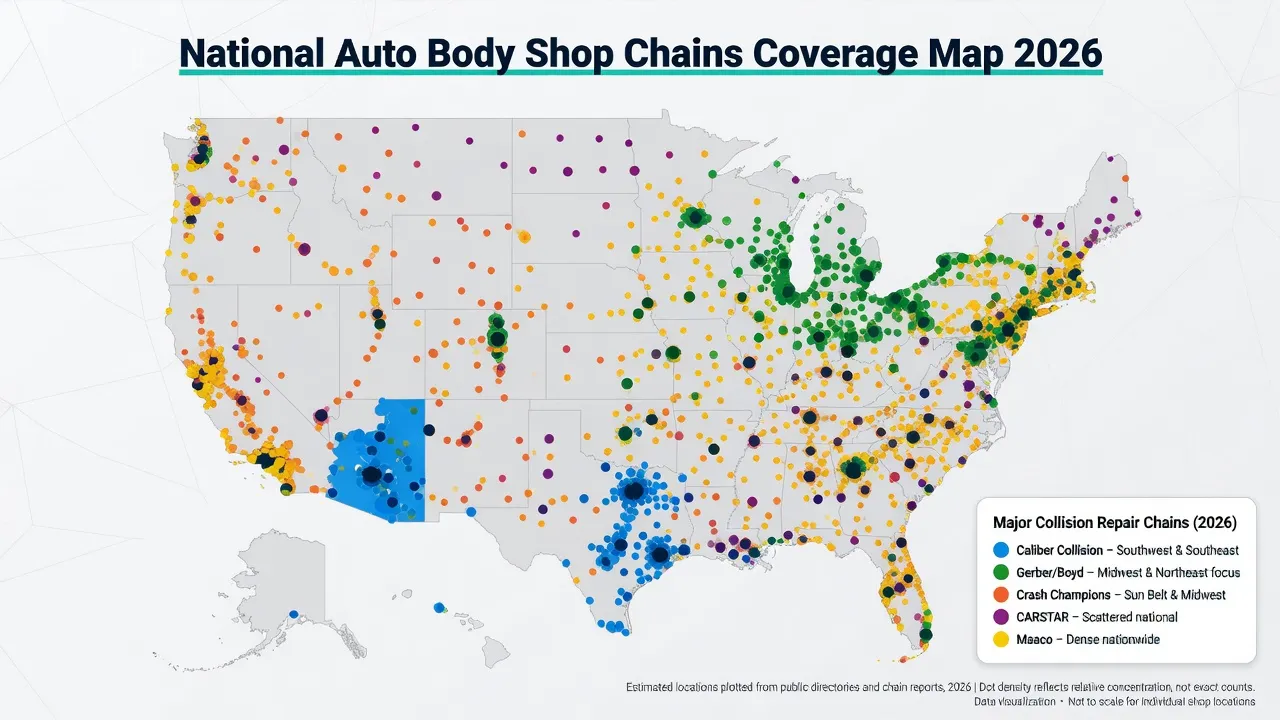
Caliber Collision is the largest collision repair chain in the United States. With 1,863 locations across 44 states, there's a good chance one is near you, and an equally good chance your insurance company will steer you there after an accident.
But size doesn't automatically mean quality. This caliber collision review pulls together what real customers are saying across multiple platforms, what the lifetime warranty actually covers, and how the chain handles ADAS recalibration. The goal is simple: give car owners the information they need to decide whether Caliber is the right choice for their specific repair.
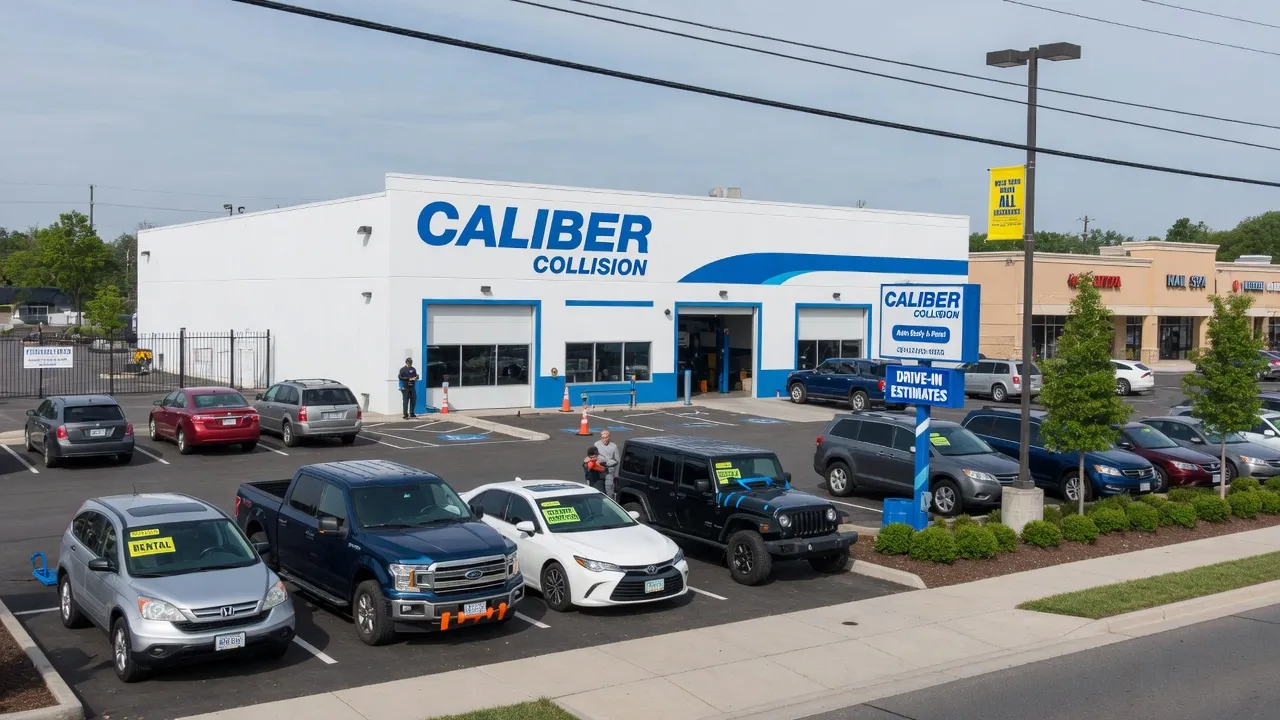
Caliber Collision review summary: Caliber Collision is a solid choice for standard insurance-claim repairs, offering a genuine lifetime warranty, I-CAR Gold Class certification at most locations, and ADAS recalibration capability that exceeds most independent shops. Quality varies by location, and communication during repairs is the most commonly reported weak point. Always evaluate the specific location, not just the national brand, before committing.
For broader context on how Caliber compares to other national chains, see our guide to national auto body shop chains.
Caliber Collision: the basics
Caliber was founded in 1997 and has grown almost entirely through acquisition, absorbing regional chains and independent shops to reach its current scale. The company is headquartered in Lewisville, Texas, and operates under the tagline "Restoring the Rhythm of Your Life." Our explainer on who owns Caliber Collision covers the ownership behind that growth.
Key facts:
- 1,863 locations across 44 states (as of 2026)
- Direct Repair Program (DRP) partnerships with nearly all major insurers, including State Farm, GEICO, Allstate, USAA, and Progressive
- I-CAR Gold Class certification at most locations, meaning technicians meet ongoing training standards
- Lifetime warranty on all repairs, for as long as the original owner keeps the vehicle
- ADAS recalibration capability at most locations
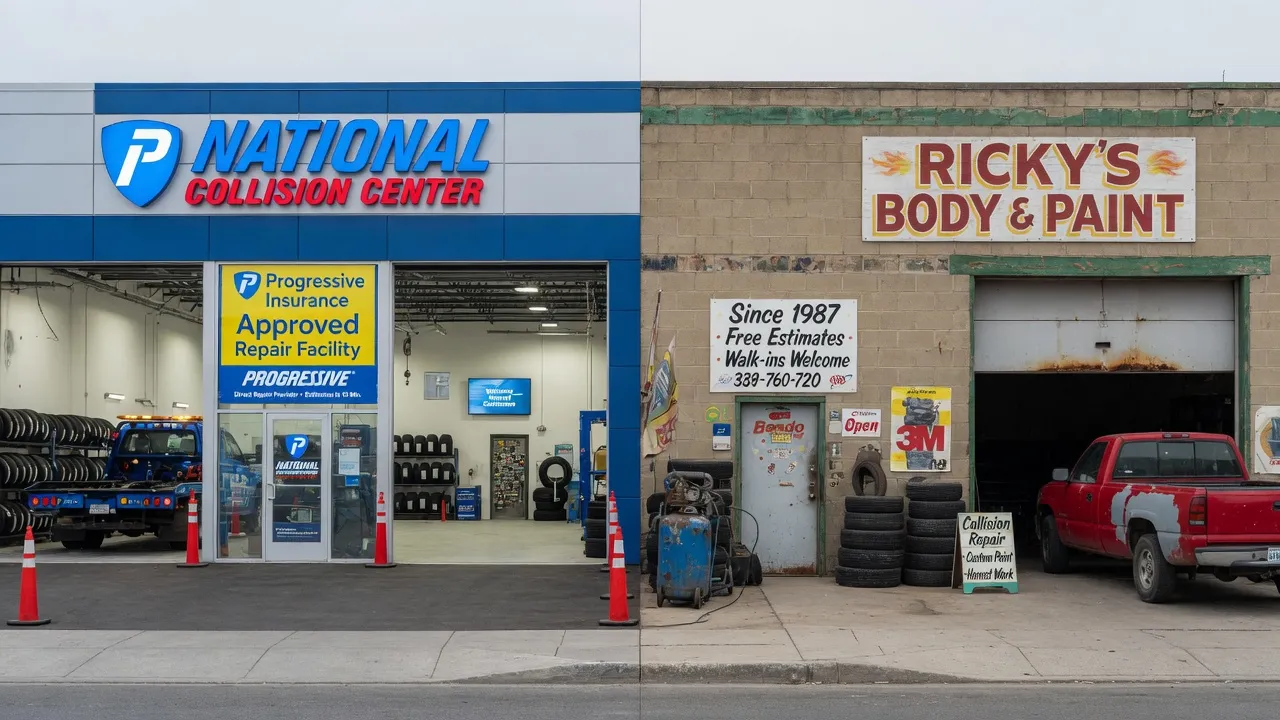
The DRP relationships are worth understanding before anything else. A DRP body shop has a pre-negotiated agreement with an insurer to handle claims at agreed-upon labor rates and parts sourcing guidelines. It means smoother paperwork and faster approvals. It also means the shop operates under insurer guidelines that can influence how repairs are written. That's not inherently bad, but it's a dynamic every car owner should understand.
What customers actually say: a multi-platform review analysis
Rating aggregators show Caliber averaging around 4.4 to 4.6 stars on Google, which looks strong at first glance. But those averages blend thousands of locations. Individual shop ratings can range from 3.1 to 4.9 stars within the same metro area. The aggregate score tells you almost nothing useful on its own.
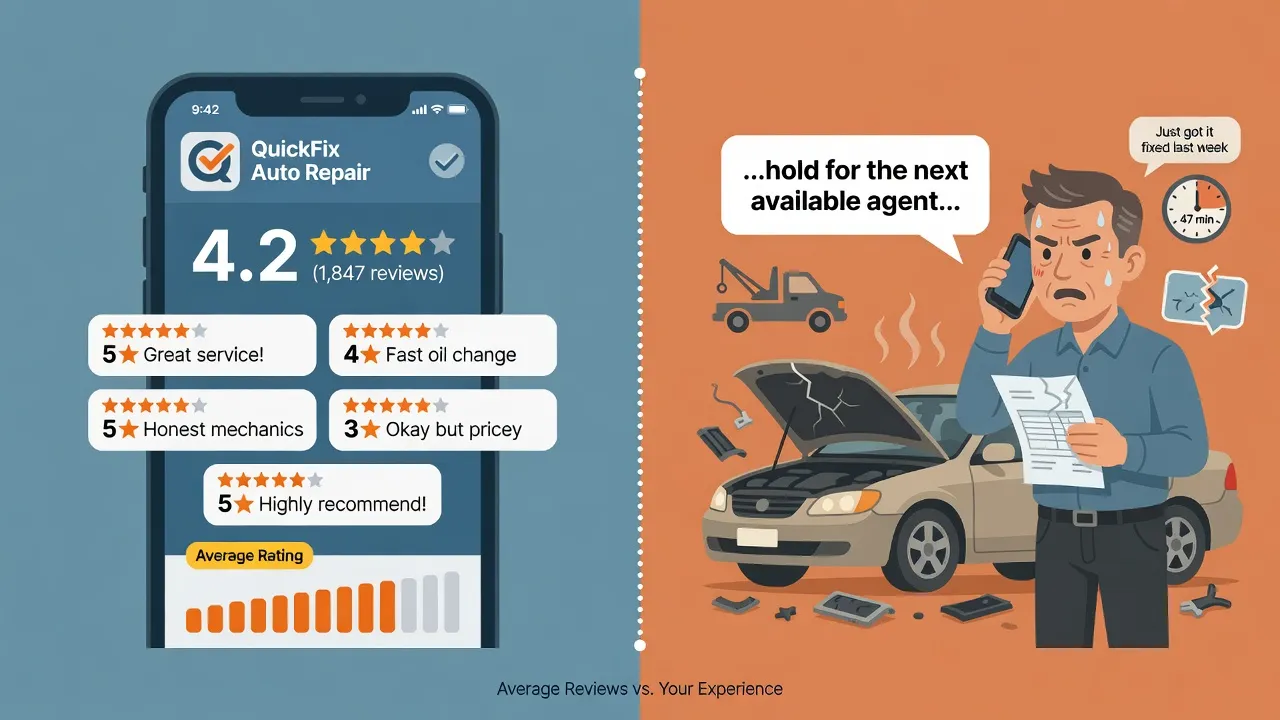
Across Google, Yelp, Trustpilot, and PissedConsumer, the review patterns are consistent enough to identify real signal:
What customers say when things go right
The most common positive themes in Caliber reviews:
- Communication during repair. Customers who had good experiences frequently mention proactive text updates and clear timelines. Caliber uses a customer-facing status portal, and when staff actually update it, customers notice.
- Rental car coordination. Caliber has partnerships with Enterprise and other rental companies. Reviews often mention how smoothly the handoff worked, which matters when someone is without their car for two to three weeks.
- Final appearance quality. Paint match complaints are rare in the positive reviews. When a repair goes well, customers say the car looked factory-fresh.
- Professional staff at the front desk. A lot of positive Yelp reviews name individual service advisors. Personal attention makes a difference, and it shows up consistently in the data.
The most common complaints
Negative reviews cluster around a smaller set of recurring issues:
- Missed supplements and return trips. The average collision repair in 2026 requires at least one supplement: 63% of repairs need additional work discovered after teardown, according to CCC's Crash Course 2026 data. Some Caliber customers report being told the car is ready, only to find unaddressed damage or a rattling trim piece.
- Delayed communication. The flip side of good communication: when staff fall behind on updates, customers feel ignored. This is the single most common complaint category across platforms.
- Labor-only repairs with no written documentation. A smaller but notable thread on PissedConsumer involves customers who say work was done on their vehicle without clear authorization or itemized records.
- Quality inconsistency between locations. This is the structural issue with any 1,863-location chain. Standards vary by regional management, local technician experience, and individual shop culture. A great experience at one Caliber says nothing about the next one.
The Trustpilot profile, where customers are more likely to write detailed accounts of serious problems, runs lower than Google, typically in the 3.5 to 4.0 range. That gap between Google scores and Trustpilot scores is normal for service businesses with high transaction volume, but it's a useful reality check for expectations.
The lifetime warranty: what it covers, and what it doesn't
Caliber's lifetime warranty is a genuine selling point. It covers workmanship and materials on every repair, for the life of the vehicle, as long as the original customer owns the car. The warranty transfers to a new owner for 36 months if the vehicle is sold.
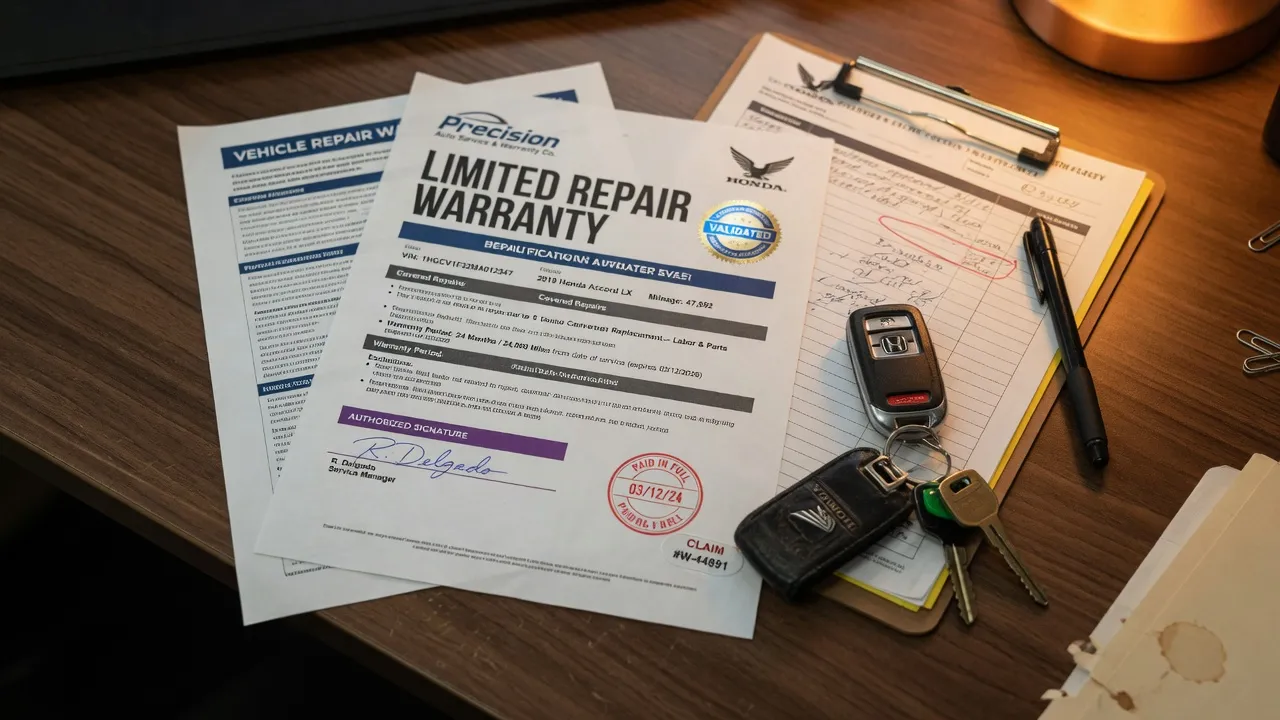
In practical terms, this means if your paint peels, a panel doesn't fit correctly, or a repaired area shows failure related to the original repair, Caliber is obligated to fix it. At no charge.
What the warranty doesn't cover
The warranty has real exclusions, and they're worth knowing before signing:
- Pre-existing damage not included in the original repair order. If Caliber didn't fix it, they don't warrant it.
- Damage from subsequent accidents or impacts. A rock chip, a new door ding, or a second fender bender voids warranty on the affected area.
- Normal wear and tear. Paint fade from UV exposure over several years isn't a workmanship defect under most warranty language.
- Parts supplied by the customer. If a car owner brings in their own aftermarket part and asks Caliber to install it, that part isn't warranted.
- Vehicles used commercially. If the vehicle is a rideshare or delivery vehicle, the warranty terms may differ.
The practical implication: always get the repair order in writing before work begins, and make sure every area of damage is documented. Anything not on the repair order isn't covered. This is standard for any body shop, but it matters more when a lifetime warranty is part of the value proposition.
ADAS recalibration: why it matters and what Caliber does
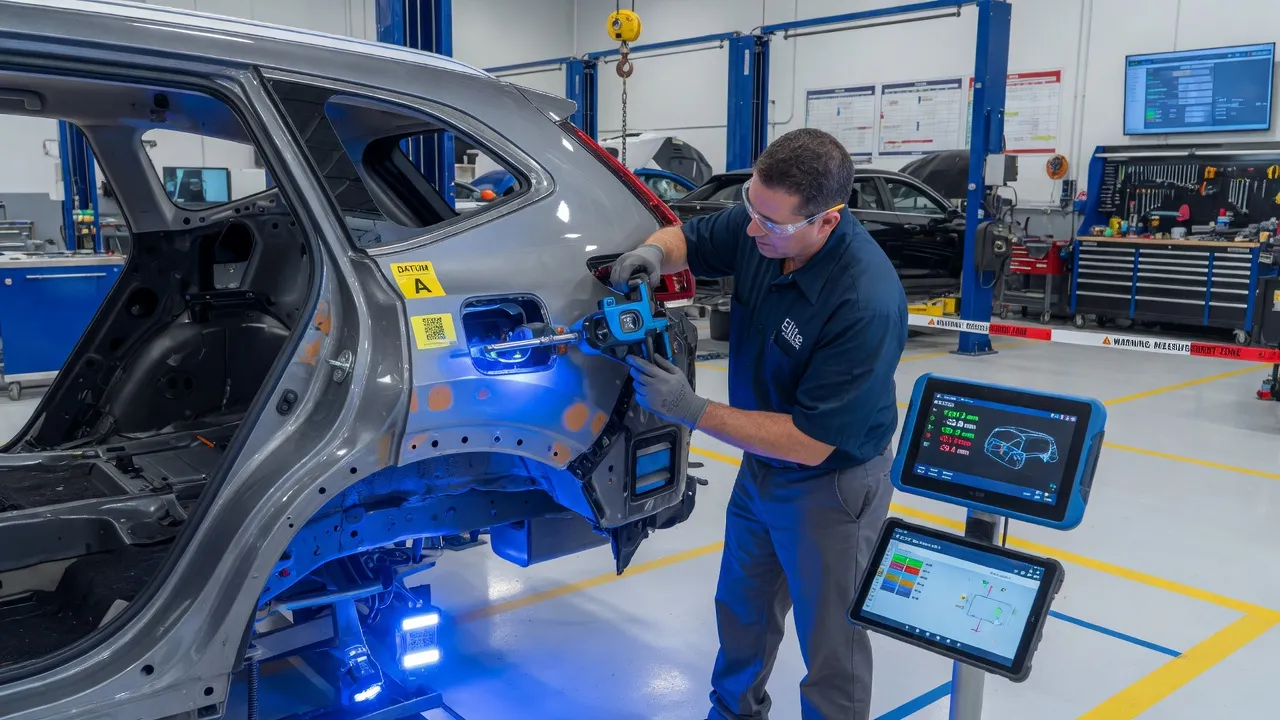
Advanced Driver Assistance Systems (ADAS) refers to the suite of cameras, radar sensors, and ultrasonic sensors that power features like automatic emergency braking, lane departure warning, and adaptive cruise control. These sensors are calibrated to precise angles. Any significant collision, or even a windshield replacement, can knock them out of specification.
The numbers from CCC's Crash Course 2026 report are striking: 28.3% of all repairable vehicles now require ADAS recalibration as part of the repair. On newer vehicles (2023 and later), the rate is even higher. A repair that doesn't address a miscalibrated sensor isn't just incomplete. It's a safety issue.
Caliber has invested in ADAS recalibration equipment at most of its locations, which puts it ahead of many independent shops where only about 25% are properly equipped for this work. Most Caliber facilities can perform static recalibration in-house, and many have the space and equipment for dynamic recalibration (which requires driving the vehicle at highway speeds with specialized diagnostic hardware running).
When asking about a specific Caliber location, these are the right questions:
- Does this location perform recalibration in-house, or is it subcontracted?
- What equipment do they use for ADAS calibration?
- Is recalibration included in the estimate, or is it a separate line item?
If a sensor needs recalibration and the shop misses it, the liability falls on the shop. Make sure it's documented in the repair order. For more detail on what this work involves and what it costs, see our article on ADAS calibration.
Understanding the 2026 repair cost context
The average collision repair cost in 2026 is $4,818, according to CCC Crash Course 2026. The total loss rate sits at 23.1%, meaning roughly one in four vehicles assessed for collision damage is declared a total loss instead of being repaired. The average vehicle in a collision is 6.8 years old. I-CAR's industry training standards also set the benchmark for technician certification levels referenced throughout this article.
These numbers matter when evaluating any large-scale chain. Caliber handles high volumes of insurance-directed claims, which means most of the vehicles it sees are going through the standard insurer workflow. The estimate is written against insurer guidelines, parts sourcing follows DRP agreements, and supplements (which occur on 63% of repairs) are negotiated between Caliber and the insurer, not the car owner.
This doesn't mean car owners are powerless. It means understanding the system helps. Car owners always have the right to choose their own shop, to request OEM parts in writing, and to ask for a copy of the final repair order documenting all completed work.
How to evaluate your specific Caliber location
National chain ratings are averages. What matters is the individual location. Here's a practical framework for evaluating a specific Caliber shop before committing to a repair.
Check Google reviews by date
Don't look at the overall score. Filter to reviews from the past 90 days and read the most recent 15 to 20. Look for patterns, not outliers. One furious one-star review in six months is noise. Three complaints about missed trim pieces in the same week is a signal.
Ask about the estimator's certification
I-CAR certification has different levels. Ask whether the person writing your estimate is I-CAR Platinum, which means they've completed the full curriculum for their role. Any location can claim "I-CAR Gold Class" as a shop while individual technicians have varying credential levels.
Get the timeline in writing
National averages for body repairs run longer than most customers expect, partly because supplement discovery adds time. Ask for a written projected completion date at drop-off. If the shop resists giving one, that's worth noting.
Verify ADAS recalibration is addressed
If the vehicle has any camera-facing damage, a windshield impact, or front-end structural work, ask explicitly whether ADAS sensors will be checked and recalibrated. Ask to see it as a line item on the estimate, not just a verbal assurance.
Understand parts sourcing before signing
The DRP agreement between Caliber and your insurer may default to aftermarket or recycled parts. If OEM parts matter to you (they're often required to maintain some manufacturer warranties), put the request in writing before work begins. Some insurers will cover OEM on newer vehicles; others won't. But the request needs to be documented.
For a complete walkthrough of how to work effectively with any national chain, see our guide to how to get the best results at any chain body shop.
Caliber Collision review vs. other chains: a quick reference
If you're deciding between Caliber and another large chain, the structural differences matter more than brand-level reviews. See our Caliber vs. Crash Champions comparison for a detailed side-by-side, our Gerber vs. Caliber breakdown, and the Caliber vs. Service King history.
At a high level:
| Factor | Caliber Collision | Crash Champions | Joe Hudson's |
|---|---|---|---|
| Number of locations | 1,863 (44 states) | ~600 (36 states) | ~120 (11 states) |
| DRP partnerships | All major insurers | All major insurers | Major insurers |
| Lifetime warranty | Yes, original owner | Yes, original owner | Yes, original owner |
| ADAS capability | Most locations | Most locations | Varies by location |
| I-CAR Gold Class | Most locations | Most locations | Most locations |
| Average Google rating | 4.4–4.6 | 4.3–4.6 | 4.5–4.7 |
The comparison isn't about which chain is "better" in the abstract. It's about which chain has a strong location near you, with recent positive reviews, and the specific capabilities your repair requires.
The verdict: is Caliber Collision good?
For most standard insurance-claim repairs, Caliber Collision is a competent, well-organized option. The lifetime warranty is real. The ADAS investment is ahead of many competitors. The DRP relationships make the insurance process smoother.
The problems, when they occur, tend to follow a predictable pattern: communication lapses, missed details on complex repairs, and inconsistency between locations. None of these are unique to Caliber. They're endemic to high-volume chain collision repair at scale.
The most honest answer to "is Caliber Collision good" is: it depends on the location. The brand provides infrastructure, training standards, and a warranty framework. What it can't fully standardize is the human element at 1,863 different shops.
Do your homework on the specific location. Read recent reviews. Ask the right questions before drop-off. Get everything in writing. Those steps will serve you well at Caliber or anywhere else.
Bottom line on this caliber collision review: Caliber is a legitimate, well-resourced chain with a real warranty and meaningful ADAS investment. But the brand name alone doesn't guarantee results. Location-level research is the most important step any car owner can take before committing to a repair.
For insurance claim guidance before or after your repair, our auto body shop insurance claim guide walks through the full process. For damage that involves ADAS sensors or front-end structural work, see our collision repair and auto glass repair service pages.
Frequently asked questions
Does Caliber Collision have a lifetime warranty?
Yes. Caliber offers a lifetime warranty on all repairs for the original vehicle owner. The warranty covers workmanship and materials. It doesn't cover damage from subsequent accidents, pre-existing damage not included in the original repair order, or normal wear and tear. If the vehicle is sold, the warranty transfers to the new owner for 36 months.
Is Caliber Collision a DRP shop?
Yes. Caliber Collision is a Direct Repair Program (DRP) partner with most major insurers, including State Farm, GEICO, Allstate, USAA, and Progressive. DRP status means the shop has pre-negotiated rates and procedures with those insurers. It simplifies the claims process but also means the shop operates under insurer guidelines on labor rates and parts sourcing.
How does Caliber Collision handle ADAS recalibration?
Most Caliber locations have invested in ADAS recalibration equipment and can perform both static and dynamic calibration in-house. Given that 28.3% of all repairable vehicles now require ADAS recalibration (per CCC 2026 data), this is a meaningful capability. Before drop-off, confirm that the specific location handles recalibration in-house and that it's itemized on the repair estimate.
Why do Caliber Collision reviews vary so much between locations?
Caliber operates 1,863 locations, many of which were acquired from independent operators and regional chains. Management quality, technician experience, and shop culture vary between locations. The national brand provides training standards and warranty infrastructure, but individual location performance depends heavily on local factors. Always read recent reviews for the specific location you're considering, not the chain average.
What are the most common Caliber Collision complaints?
The most frequently reported complaints across review platforms involve communication delays during repair, vehicles returned with small missed details (trim pieces, sensor covers), and difficulty reaching the shop during the repair process. These issues aren't unique to Caliber and reflect the general challenges of high-volume collision repair. They're also the areas most likely to be flagged in recent negative reviews for any specific location.
Can I choose Caliber Collision if my insurance recommends a different shop?
Yes. Car owners have the right to choose their own repair facility regardless of which shop an insurer recommends or "steers" them toward. If your insurer's preferred shop is different from Caliber (or vice versa), you can still choose Caliber. You may need to handle more of the paperwork coordination yourself, but the right to choose is protected in most states.
How long does a typical repair take at Caliber Collision?
Repair timelines depend on damage severity, parts availability, and shop workload. Minor cosmetic repairs (bumper scuffs, small dents) typically take three to five business days. Moderate structural repairs can run two to four weeks. According to CCC data, 63% of collision repairs require at least one supplement discovered after teardown, which adds time. Get a written completion estimate at drop-off and ask how supplements are communicated.