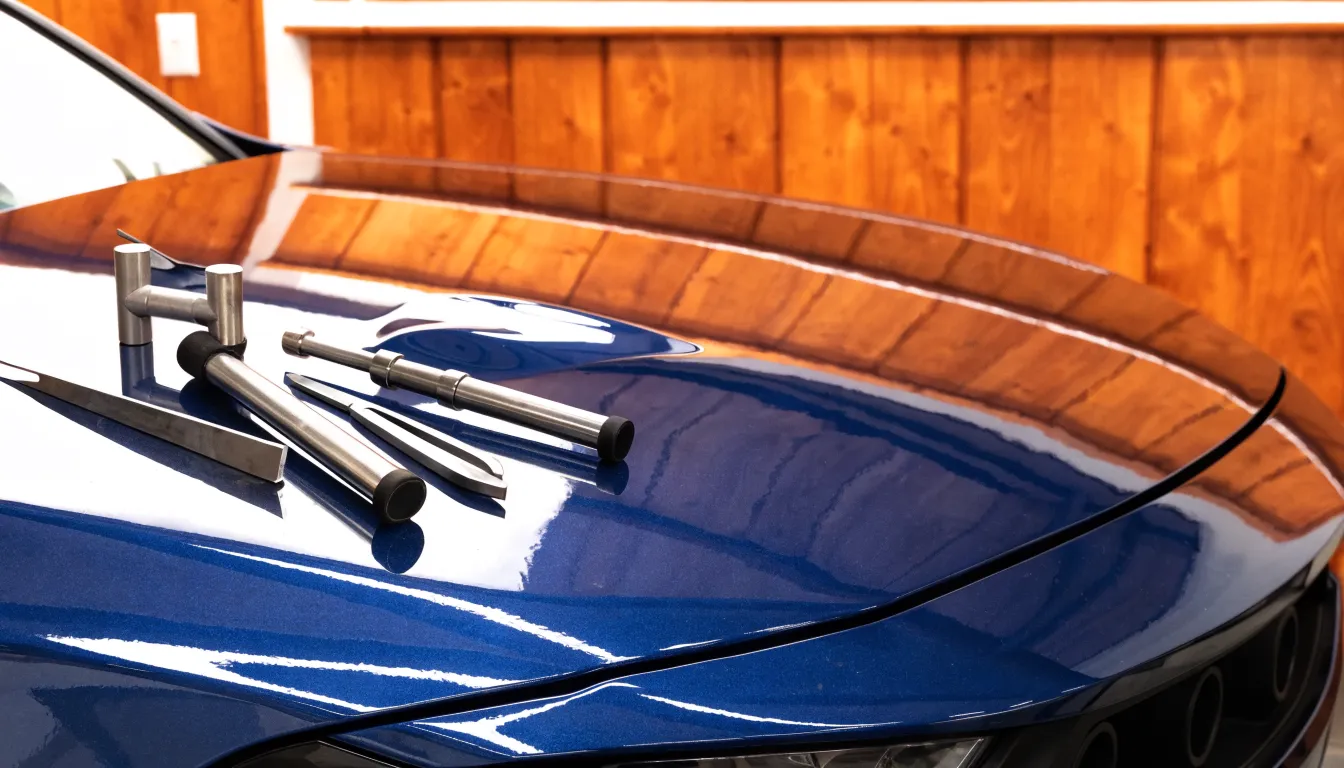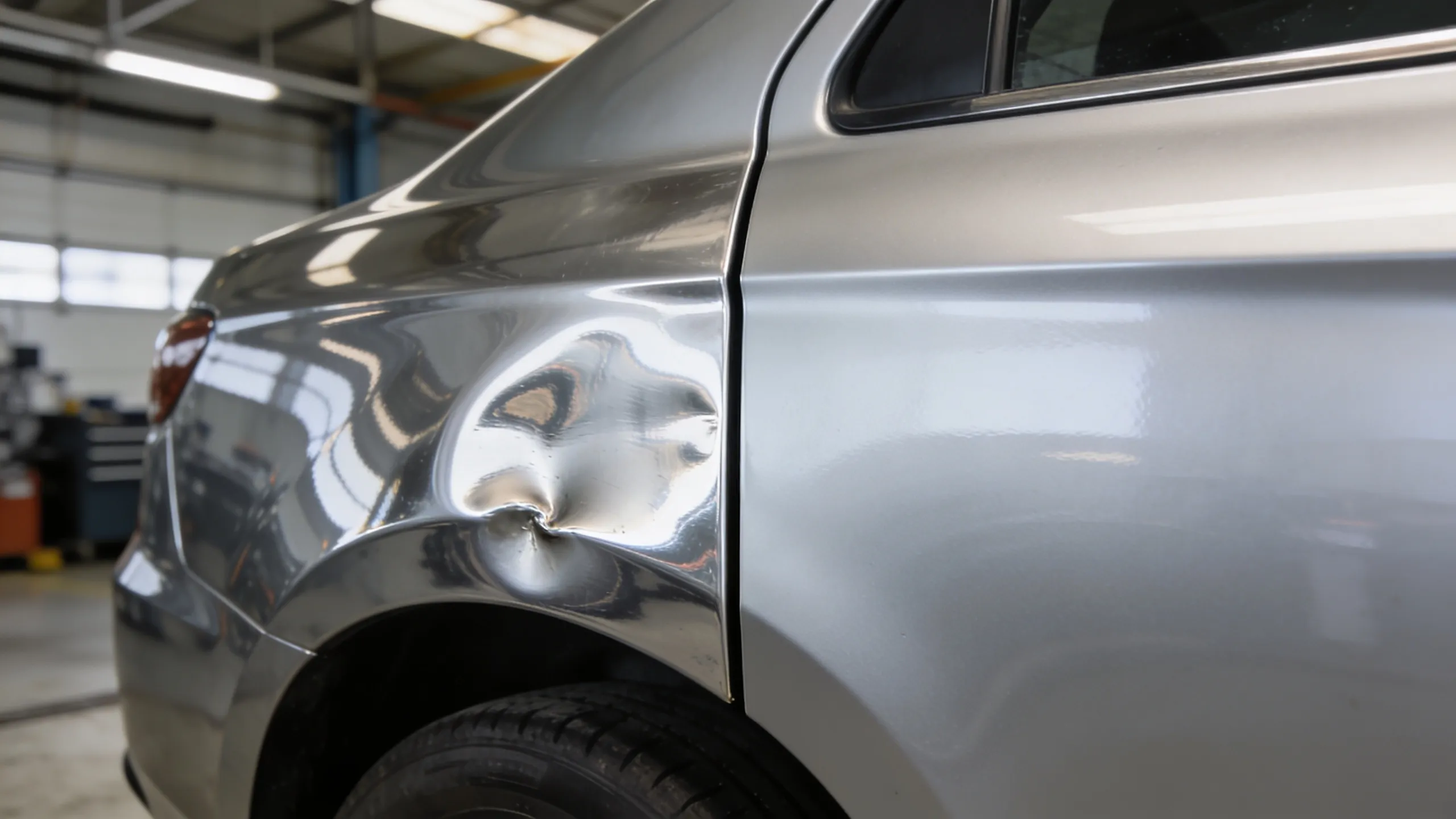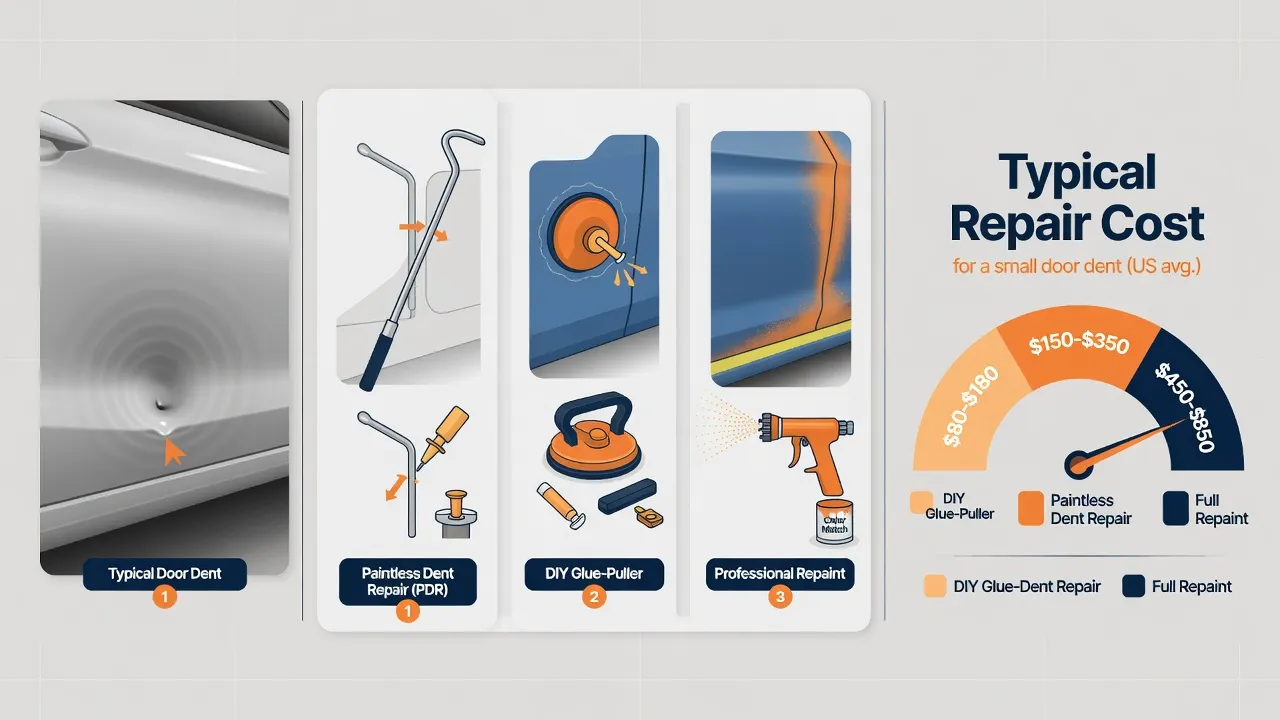
The best dent repair kit for most car owners is a glue-tab PDR set with a bridge puller, which can fix small to medium dents without damaging your paint for under $40. After comparing the top-selling kits from Anyyion, GLISTON, Manelord, and ARISD, we found that each targets a slightly different skill level and dent type. A suction cup alone handles parking-lot dings on flat panels, but a glue puller with interchangeable tabs covers far more situations , from hail damage to shopping cart dents , making it the better investment for a first-time buyer.
Key Takeaways
- Glue-tab PDR kits are the most versatile option for DIY dent repair, handling dents that suction cups can't reach or grip.
- The Anyyion 54-piece kit offers the best value for beginners, combining a bridge puller, slide hammer, and a full range of glue tabs for under $40.
- Suction cup pullers only work on large, shallow dents on smooth, flat panels , they fail on creased or body-line dents.
- Panel temperature matters: warm the metal to 100–140°F with a heat gun before pulling for best results; cold metal resists reshaping and risks cracking paint.
- Any dent with cracked paint, a sharp crease deeper than half an inch, or location on a structural pillar should go to a professional PDR technician, not a DIY kit.
How DIY Dent Repair Kits Work
Every paintless dent repair kit uses the same core principle: pulling the dented metal back to its original position without repainting. The method was originally developed by factory workers fixing assembly-line flaws and later adopted by hail damage specialists. Today, three pulling technologies dominate the consumer market.
Suction cup pullers
The simplest tool. A rubber cup seals against the panel, you pump a handle or lever to create vacuum, and pull. Suction cups work best on large, shallow dents on smooth panels , think a basketball-sized door ding on a flat fender. They struggle with small dents (not enough surface to grip), dents near body lines, or textured paint. Most kits include one as a supplementary tool, not the primary method. Prices range from $5 to $15 standalone.
Glue-tab bridge pullers
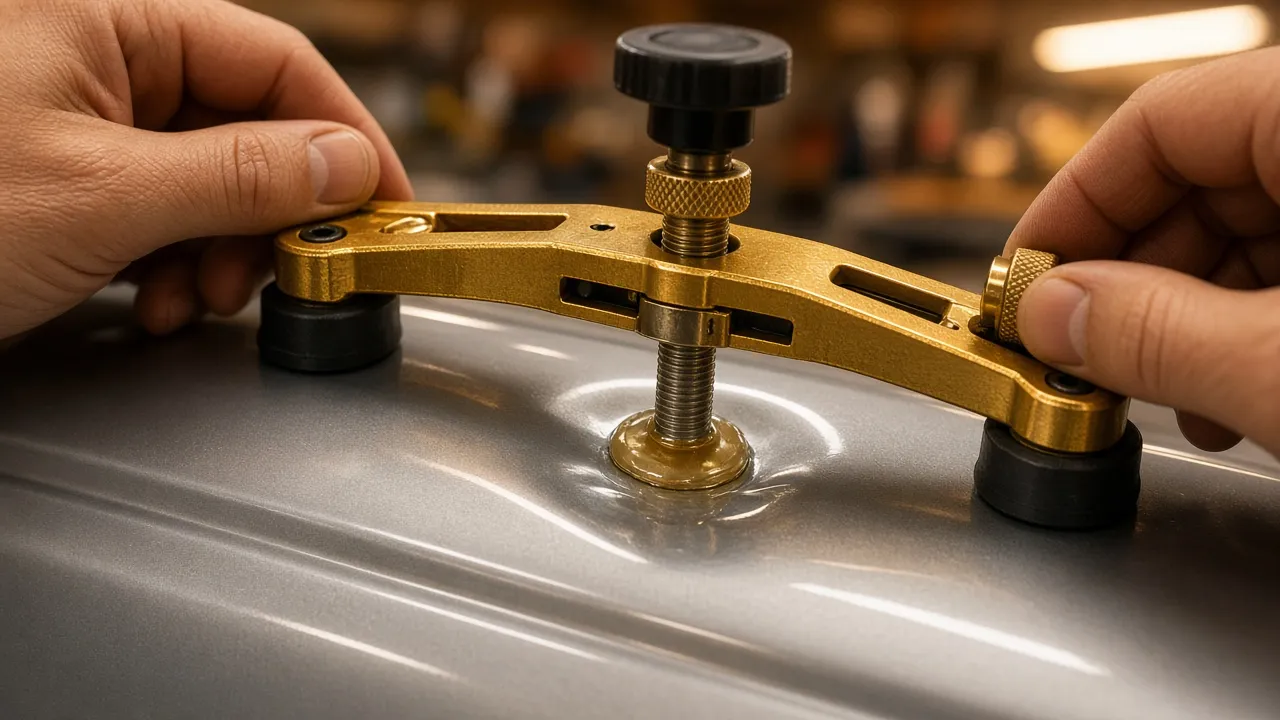
The most popular DIY approach. You attach a plastic tab to the center of the dent with hot glue, place a bridge or T-bar puller over the tab, and lift. Different tab sizes match different dent diameters, and the bridge feet distribute force evenly to avoid creating new damage. This method handles the widest range of dents, from dime-sized door dings to palm-sized hail hits. Most kits in the $20–$40 range use this system as their primary tool.
Slide hammer pullers
A step up in mechanical force. You glue a tab to the dent, attach the slide hammer's hook, and slide a weighted cylinder to generate pulling force. Slide hammers handle deeper, more stubborn dents that bridge pullers struggle with, but they require more finesse to avoid over-pulling. Many mid-range kits include both a bridge puller and a slide hammer to cover the full spectrum.
The 4 Best Dent Repair Kits in 2026
We evaluated these kits based on tab variety, pulling mechanism quality, included accessories, ease of use for beginners, and overall value. Every kit listed uses the glue-tab method, which is the most effective approach for home users doing paintless dent repair.
Anyyion 54-Piece PDR Kit , Best Overall
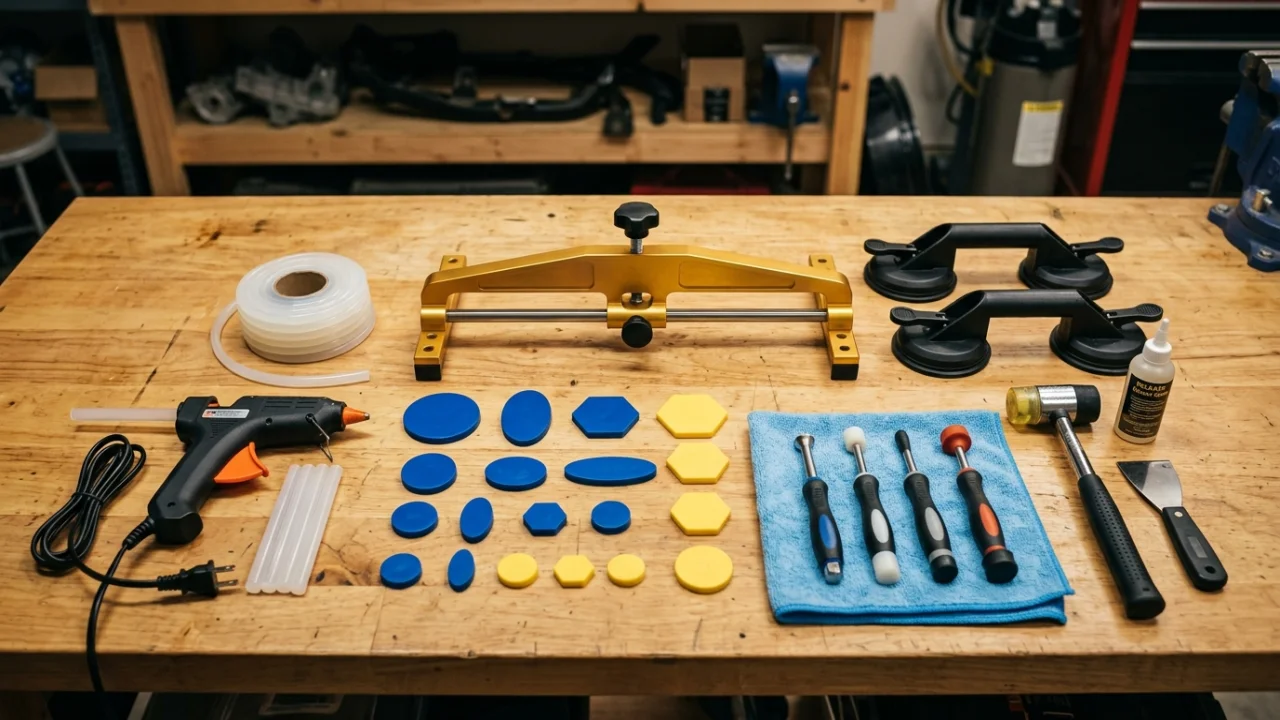
The Anyyion kit is the most complete package at its price point. It includes a golden bridge puller, a slide hammer, 24 glue tabs in various sizes, a hot glue gun with glue sticks, a tap-down pen set, a rubber hammer, and a line board for reading dent reflections. The bridge puller has an adjustable width that accommodates dents from roughly 1 inch to 6 inches across.
- Piece count: 54 pieces
- Price range: $30–$40
- Pulling methods: Bridge puller + slide hammer + suction cup
- Best for: First-time users who want one kit to handle most situations
- Limitation: The glue gun is basic , serious users may want to upgrade to a PDR-specific adhesive gun
GLISTON Adjustable Bridge Puller Kit , Best for Small Dents
GLISTON's kit is built around a well-designed adjustable bridge puller with padded feet that protect your paint. The 35-piece set focuses on glue-tab pulling with 18 different tab shapes , more tab variety per dollar than any competitor. The tabs include mushroom shapes for round dents, rectangular tabs for elongated damage, and small precision tabs for minor dings.
- Piece count: 35 pieces
- Price range: $20–$30
- Pulling methods: Bridge puller
- Best for: Small to medium dents, hail damage repair
- Limitation: No slide hammer included , for deeper dents, you would need a separate tool
Manelord Auto Body Dent Repair Kit , Best Slide Hammer
Manelord's kit centers on a high-quality golden slide hammer with a T-bar attachment, making it the strongest puller in this price range. The 39-piece set includes 15 glue tabs, a hot glue gun, a tap-down set, and a rubber hammer. The slide hammer generates significantly more pulling force than a bridge puller alone, making it the right choice for deeper dents that resist lighter methods.
- Piece count: 39 pieces
- Price range: $25–$35
- Pulling methods: Slide hammer + T-bar puller
- Best for: Medium to deep dents, experienced users
- Limitation: The slide hammer requires practice , beginners can over-pull and create high spots that need tapping down
ARISD 32-Piece Dent Removal Kit , Best Budget Option
The ARISD kit delivers the essentials at the lowest price point. It includes a bridge puller, 16 glue tabs, a hot glue gun, and basic tap-down tools. The bridge puller is functional but less adjustable than the Anyyion or GLISTON versions. For a single dent fix or occasional use, it gets the job done without a larger investment.
- Piece count: 32 pieces
- Price range: $15–$25
- Pulling methods: Bridge puller
- Best for: One-time fixes, budget-conscious buyers
- Limitation: Fewer tab sizes limits versatility; glue gun quality is the lowest of the four kits
How to Use a Glue-Tab Dent Repair Kit
The technique matters more than the tool. A $25 kit used correctly outperforms a $50 kit used poorly. Here's the process that professional PDR technicians teach for glue-tab pulling.
Step 1: Clean the panel
Wash the dented area with soap and water, then wipe with isopropyl alcohol to remove wax and silicone residue. Glue won't bond to a dirty or waxed surface. This step is non-negotiable , skip it and your tabs will pop off mid-pull.
Step 2: Warm the panel
Use a heat gun or hair dryer to warm the metal to approximately 100–140°F. Warm metal is more malleable and responds better to pulling force. Cold metal resists reshaping and increases the risk of paint cracking. In winter or on dark-colored cars parked in shade, this step makes a significant difference. Avoid exceeding 180°F, which can damage clear coat.
Step 3: Apply the glue tab
Heat your glue gun for 3–5 minutes until glue flows smoothly. Apply a generous bead to the glue tab (not to the car) and press it firmly to the center of the dent. Hold steady for 30–60 seconds, then let the glue cure for 2–3 minutes. The tab should feel solidly bonded , if it shifts when you touch it, remove and reapply with fresh glue.
Step 4: Pull
Place your bridge puller over the tab and begin lifting slowly. Apply steady, even pressure rather than jerking. Watch the dent as you pull , you want to bring it flush with the surrounding panel, not past it. If the tab releases before the dent is fully out, clean the residual glue and repeat with a fresh application.
Step 5: Tap down high spots
Over-pulling creates raised spots around the original dent. Use the tap-down pen (included in most kits) with light taps to bring high spots back level. This is the most finesse-intensive step and the one where patience pays off.
Which Dents Are DIY-Friendly and Which Need a Pro
Not every dent is a good candidate for a home repair kit. Knowing the difference saves you from making cosmetic damage worse. If you're unsure about the severity, get a professional estimate first , many PDR technicians offer free assessments. Check the dent repair cost guide for current professional pricing.
Good candidates for DIY repair
- Round, shallow dents smaller than 3 inches in diameter
- Door dings from parking lot incidents
- Minor hail dents on flat panels (hood, roof, trunk)
- Dents on smooth, accessible panel surfaces with intact paint
- Dents away from panel edges and body lines
Leave these to a professional
- Dents with cracked, chipped, or flaking paint
- Sharp creases deeper than half an inch
- Dents on body lines, edges, or near trim pieces
- Dents on aluminum panels (require specialized tools and techniques)
- Multiple overlapping dents from a significant hail storm
- Dents on structural pillars (A, B, or C pillar)
For hail damage specifically, a car cover designed for hail protection can prevent the damage in the first place , often cheaper than even a single professional PDR session.
Accessories That Improve Your Results
The kits above cover the basics, but a few additional tools make a noticeable difference in outcome quality.
- PDR-specific glue sticks: Standard craft hot glue is weaker and less temperature-resistant than purpose-made PDR adhesive. Brands like Anyyion and GLISTON sell their own PDR glue sticks for $8–$12 per pack.
- Line board (reflection board): A striped board that helps you see subtle distortions in the panel surface that are invisible under normal light. Essential for fine-tuning after the initial pull. The Anyyion kit includes one; others may not.
- Heat gun: A proper heat gun for auto body work with adjustable temperature gives you far more control than a hair dryer. Keep it below 180°F on painted surfaces.
- Rubbing alcohol and microfiber cloths: For surface preparation and glue residue cleanup.
Once you have removed the dent, consider addressing any remaining scuffs or scratches. For bumper damage that goes beyond simple dents, dedicated bumper repair kits handle cracks and plastic deformation that PDR tools can't fix. For general dent repair near you, our directory lists verified shops with PDR capabilities.
Frequently Asked Questions
Do suction cup dent pullers actually work?
Suction cup dent pullers work on large, shallow dents located on smooth, flat panels with intact paint. They're effective for dents roughly 4 inches or wider on surfaces like hoods, doors, and fenders where the cup can form a complete seal. They fail on small dents, creased dents, dents near edges or body lines, and any surface where the cup can't seal fully. For most real-world dents, a glue-tab system is more versatile and effective.
Can I use a dent repair kit on aluminum body panels?
Aluminum panels are more challenging for DIY dent repair. Aluminum has a different memory characteristic than steel , it doesn't spring back as readily, and it's more prone to cracking under stress. Glue-tab methods can work on very minor aluminum dents, but the margin for error is smaller. Most professional PDR technicians use specialized aluminum tools and techniques. If your vehicle has aluminum panels (common on Ford F-150s, Tesla models, and luxury vehicles), professional repair is strongly recommended for anything beyond a tiny surface ding.
How long does the glue take to cure before I can pull?
Standard PDR hot glue needs 2 to 3 minutes to cure after application. The exact time depends on ambient temperature and humidity , colder environments need longer cure times, sometimes up to 5 minutes. Don't rush this step. Pulling before the glue is fully set causes the tab to pop off without moving the dent, wasting glue and time. A properly cured tab will feel rigid and won't twist or shift when you touch it.
What's the difference between a bridge puller and a slide hammer?
A bridge puller uses a mechanical screw or lever to apply slow, controlled lifting force through a wide base. It distributes force evenly and gives you fine control, making it ideal for beginners and shallow to medium dents. A slide hammer uses a weighted cylinder that you slam along a rod to generate sudden pulling force. It produces more power for stubborn or deeper dents but is harder to control , over-pulling is common with slide hammers. Most beginners should start with a bridge puller and graduate to a slide hammer for tougher jobs.
Will a dent repair kit damage my car's paint?
When used correctly, glue-tab PDR kits won't damage your paint. The hot glue bonds to the clear coat surface and peels off cleanly with rubbing alcohol. The two main risks are using excessive heat during panel warming (stay below 180°F to protect clear coat) and over-pulling, which creates raised areas that may require professional correction. The tap-down tools included in most kits help address minor over-pulls. If your paint is already compromised , flaking, chipped, or oxidized , any pulling method risks further paint loss at the dent site.