The best heat gun for auto body work is the DeWalt D26960K if you need precise temperature control, or the Wagner Furno 500 if you want versatility at a lower price. A heat gun is one of the most underrated tools in a DIY auto body toolkit. It softens plastic bumpers for reshaping, strips old paint, removes vinyl wraps and decals, and assists with dent removal on thermoplastic panels. The right model depends on what jobs you tackle most and whether you need cordless portability or corded power.
Key Takeaways
- The DeWalt D26960K ($65–$85) offers LCD-controlled temperature in 50°F increments from 150°F to 1,100°F, making it the most precise option for auto body work where overheating means ruined paint.
- The Wagner Furno 500 ($35–$45) provides 12 temperature settings from 150°F to 1,200°F and is the best value for general auto body DIY projects.
- The Milwaukee 2688-20 ($55–$70, tool only) is the only cordless option worth considering , it reaches operating temperature in under 7 seconds and weighs just 1.7 pounds.
- Temperature matters more than wattage for auto body work: bumper reshaping needs 300–400°F, vinyl removal needs 200–300°F, and paint stripping needs 500–700°F.
- Never hold a heat gun in one spot on a car panel , constant movement prevents paint damage, clear coat bubbling, and plastic warping beyond repair.
The 4 Best Heat Guns for Auto Body Work
DeWalt D26960K , Best for Precision Work
The DeWalt D26960K is the go-to heat gun for auto body professionals who need exact temperature control. Its LCD display lets you dial in temperature in 50°F increments from 150°F to 1,100°F, which matters when you're working near painted surfaces where 50 degrees too hot can bubble clear coat. The 13-amp motor delivers 1,550 watts of power, and the kit includes a cone nozzle, fishtail surface nozzle, and carrying case.
At 2.3 pounds with a 10-foot cord, it's comfortable for extended use. The built-in overload protection prevents the heating element from burning out during long sessions, which is common when reshaping large bumper sections. The kickstand lets you set it down safely between passes. Expect to pay $65 to $85 for the full kit.
Best for: bumper reshaping, precise paint stripping near trim, plastic welding, anyone who needs repeatable temperature settings.
Wagner Furno 500 , Best Value All-Around
The Wagner Furno 500 hits the sweet spot between capability and price. Twelve temperature settings span 150°F to 1,200°F (100 degrees higher than the DeWalt), giving you range for everything from gentle vinyl removal to aggressive paint stripping. At $35 to $45, it costs roughly half what the DeWalt kit runs.
Users report it heats up fast and maintains temperature well during continuous use. The main limitation is an auto cool-down feature that kicks in during extended sessions , you'll need to restart the cycle if it shuts off mid-job. For occasional auto body work or a DIY garage, this is the tool that delivers 90% of the DeWalt's capability at half the price.
Best for: DIY enthusiasts, general auto body work, decal and vinyl removal, budget-conscious buyers who still want variable temperature.
Milwaukee 2688-20 , Best Cordless Option
The Milwaukee 2688-20 is the only cordless heat gun that makes sense for auto body work. Running on Milwaukee's M18 battery platform, it reaches operating temperature in under 7 seconds , 30% faster than most corded guns. At just 1.7 pounds and 6.4 inches long, it fits into tight spaces around fenders, wheel wells, and underbody panels where dragging a cord is impractical.
The trade-off is runtime and temperature range. You get two heat settings (500°F and 875°F) instead of variable control, and an XC5.0 battery delivers roughly 25 to 30 minutes of continuous use. That's enough for targeted tasks like removing a bumper sticker, softening a small dent area, or tacking down vinyl edges, but not for full bumper reshaping or large-area paint stripping. Sold as a bare tool at $55 to $70 , add a battery and charger if you're not already in the M18 ecosystem.
Best for: mobile work, tight spaces, quick spot tasks, anyone already invested in Milwaukee M18 batteries.
Porter-Cable PC1500HG , Best Budget Pick
The Porter-Cable PC1500HG is a straightforward dual-temperature heat gun at the lowest price point that still delivers enough power for basic auto body tasks. You get two settings , 750°F and 1,000°F , with 1,500 watts of power. It's not as refined as the DeWalt or as versatile as the Wagner, but at $25 to $35, it's an easy entry point.
The lack of low-temperature settings limits its usefulness for vinyl work (you'll need to keep more distance from the surface), but it handles paint stripping, bumper softening, and adhesive removal just fine. The fan-cooled motor and built-in stand are solid features at this price.
Best for: occasional use, paint stripping, adhesive removal, buyers who want a capable tool under $35.
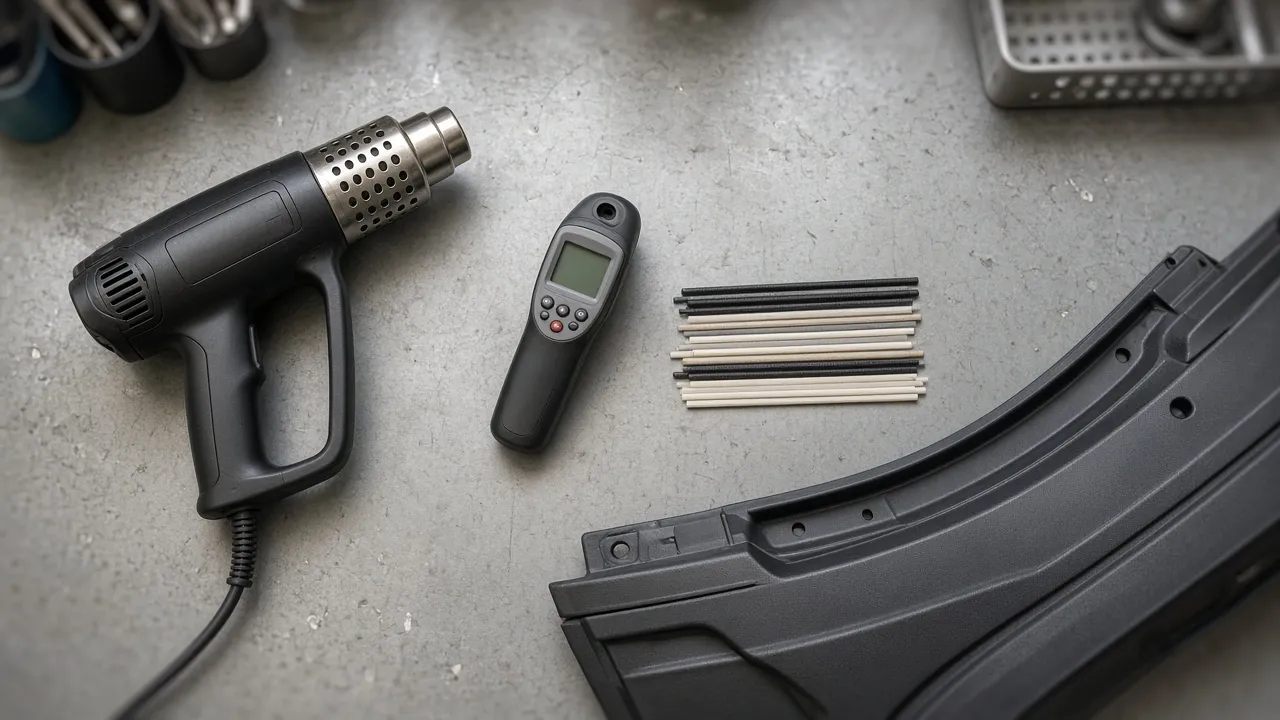
Heat Gun Temperature Guide for Auto Body Work
Using the wrong temperature is the fastest way to ruin a panel. Here's what each common auto body task actually requires:
- Vinyl wrap and decal removal (200–300°F): Hold the gun 5 to 6 inches from the surface and keep it moving. The goal is to soften the adhesive, not melt the vinyl. Once the material peels easily at a corner, you're at the right temperature. Never exceed 300°F on painted surfaces with vinyl , higher temperatures can lift the paint underneath.
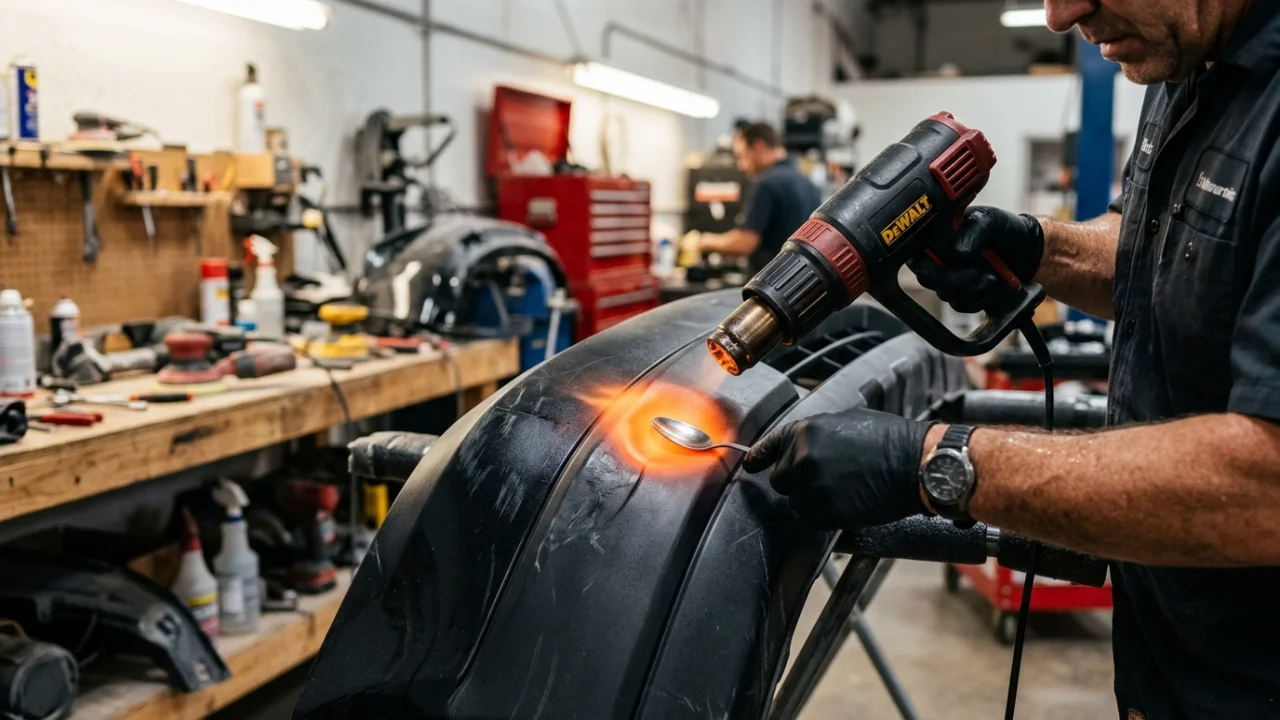
- Bumper reshaping and dent removal (300–400°F): Thermoplastic bumpers (polypropylene, ABS) become pliable in this range. Heat a section evenly by sweeping the gun in slow passes, then push the dent out from behind while the plastic is soft. Work in small sections , once the plastic cools, it holds its new shape.
- Plastic welding (400–500°F): Joining cracked bumpers or repairing broken plastic tabs requires melting the base material enough to fuse with a welding rod. Use a concentrator nozzle to focus heat on the crack line. This is where the DeWalt's precision matters , too hot and you burn through thin plastic.
- Paint stripping (500–700°F): Old paint softens and blisters in this range, making it easy to scrape off. Keep the gun moving constantly and scrape behind the heat path. Above 700°F you risk scorching the metal underneath and generating toxic fumes from lead-based primers on older vehicles.
- Adhesive and undercoating removal (350–500°F): Body adhesive, sound deadening, and rubberized undercoating soften in this range. Use a wide nozzle to cover more area and a putty knife to lift the material as it softens.
An infrared thermometer ($15–$25) is the best companion to any heat gun. It lets you verify the actual surface temperature rather than guessing based on the gun's dial setting, which can vary based on distance, airflow, and ambient temperature.
What to Look for When Buying a Heat Gun for Auto Body Work
Not every heat gun is suitable for working on cars. Here are the features that matter for auto body applications:
- Variable temperature control: A gun with only one or two settings forces you to control temperature by adjusting distance, which is imprecise. Variable control (the DeWalt and Wagner both offer this) lets you set the exact temperature and work at a consistent distance.
- Low-temperature capability: Many heat guns start at 500°F or higher. For vinyl removal and gentle plastic softening, you need a gun that goes as low as 150–200°F. Both the DeWalt D26960K and Wagner Furno 500 start at 150°F.
- Nozzle options: A concentrator nozzle focuses heat for plastic welding and detail work. A fishtail or wide nozzle spreads heat for paint stripping and bumper reshaping. The DeWalt kit includes both; the Wagner requires separate purchases.
- Ergonomics and weight: Reshaping a bumper or stripping a hood takes 20 to 40 minutes of continuous use. A heavy gun causes fatigue and shaky hands. Under 2.5 pounds is ideal.
- Overload protection: Auto body work often means long, continuous runs. A gun without thermal protection will burn out its element. The DeWalt's built-in overload protection and the Wagner's auto cool-down both address this, though the Wagner's implementation can be disruptive mid-job.
Safety Rules for Using a Heat Gun on Cars
Heat guns look simple but cause real damage when used carelessly on vehicles:
- Never hold the gun stationary. Even two seconds in one spot at 500°F can blister clear coat or warp thin plastic beyond repair. Keep the gun sweeping in slow, even passes.
- Protect adjacent surfaces. Use heat-resistant tape or a sheet of aluminum to shield paint, rubber seals, and plastic trim that you're not working on. A heat gun's airflow affects a wider area than the visible nozzle suggests.
- Work in ventilated spaces. Heated paint, adhesive, and plastic release fumes. Outdoors or with a fan is fine for small jobs. For paint stripping or plastic welding, wear a respirator rated for organic vapors.
- Keep away from fuel lines and electrical wiring. Know what's behind the panel you're heating. Fuel lines, wiring harnesses, and plastic coolant hoses can melt or ignite if you heat through a thin panel from the outside.
- Let the gun cool before storage. The nozzle stays hot for several minutes after shutdown. Set it on the built-in stand (not on a painted surface or your workbench) and wait for a full cool-down cycle.
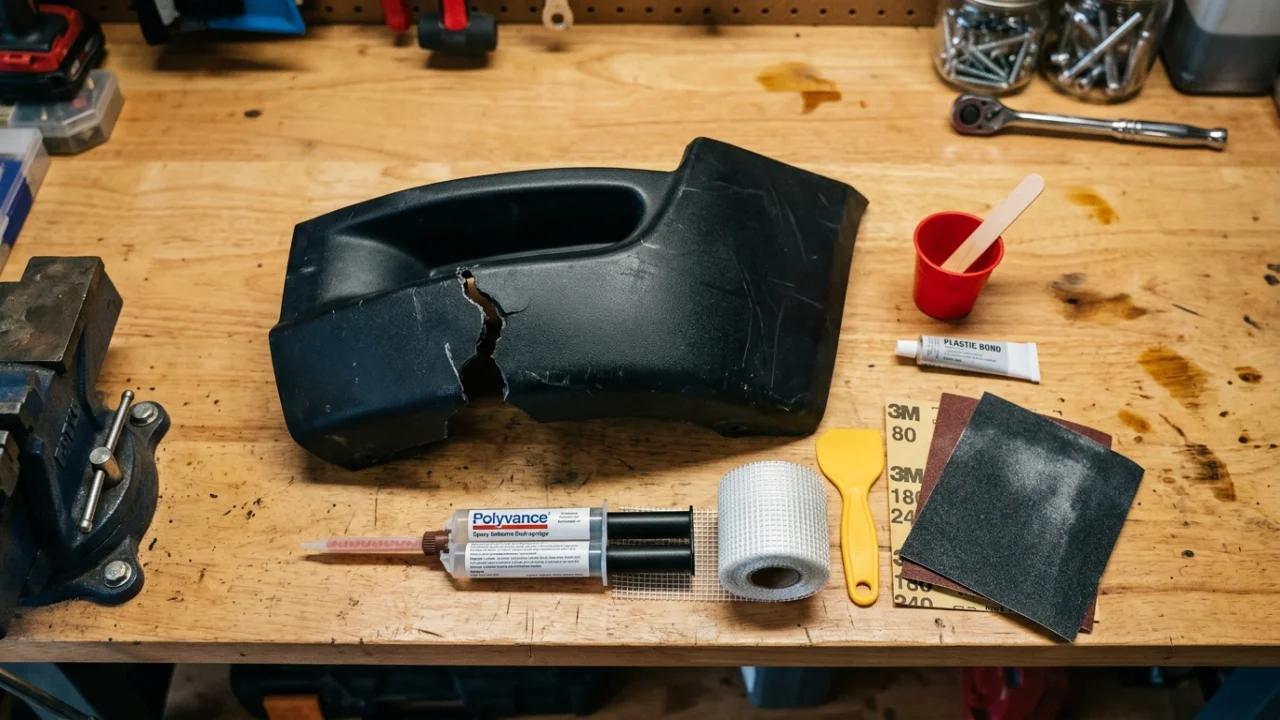
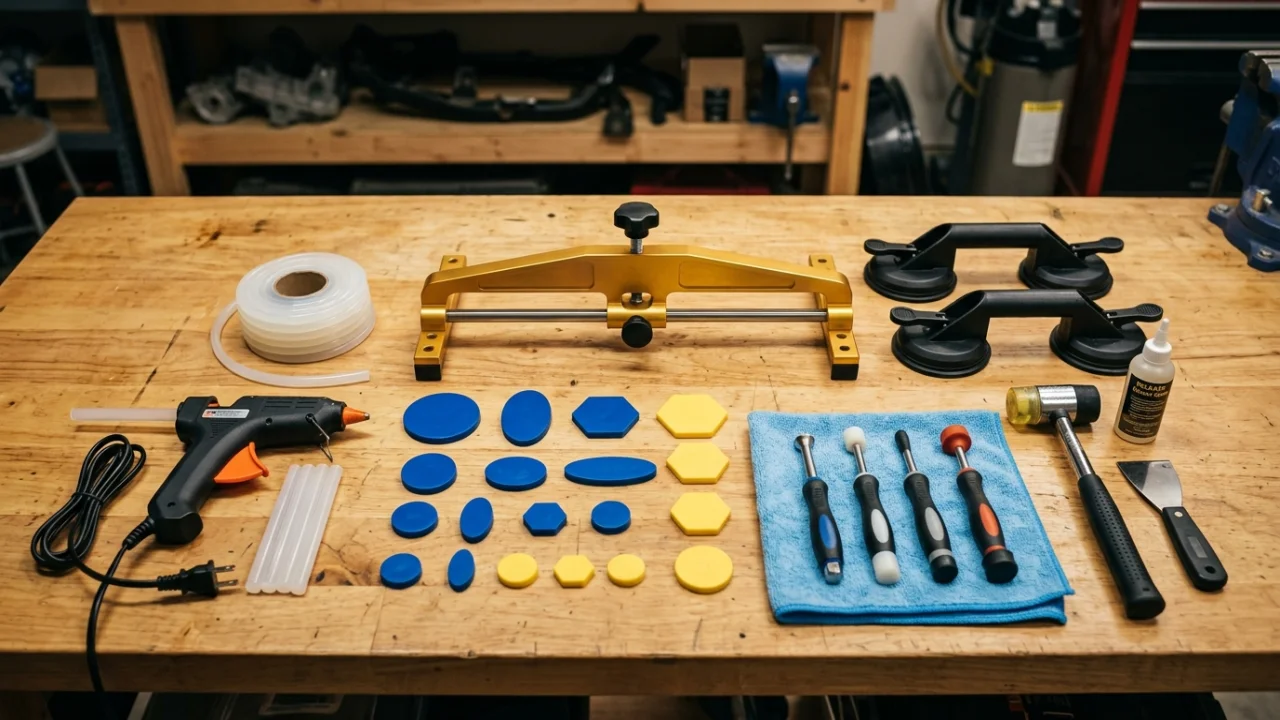
For more complex repairs beyond what a heat gun can handle, like cracked bumper covers or deep dents, check out dedicated bumper repair kits and dent repair kits that include the additional tools and materials needed. If the damage is more than cosmetic, you may need professional bumper repair to ensure structural integrity.
When to Skip the Heat Gun and Go to a Pro
A heat gun is the right tool for surface-level work on thermoplastic panels. It's the wrong tool when:
- The bumper has structural cracks. Heat reshaping fixes pushed-in dents, not broken plastic. Cracked bumpers need plastic welding at minimum and often replacement.
- The panel is metal, not plastic. Heat guns don't generate enough focused heat to reshape steel or aluminum body panels. That requires a stud welder and professional PDR tools.
- Paint damage is involved. If the dent also cracked or chipped paint, reshaping it with a heat gun still leaves you with paint repair, which is a separate skill set. A professional body repair shop handles both in one job.
- ADAS sensors are near the work area. Radar sensors and camera housings behind bumpers are calibrated to exact positions. Heating and reshaping the bumper around them can shift the mounting points, requiring recalibration. Check if your car has front-facing sensors before heat-forming a front bumper.
Frequently Asked Questions
What temperature should I use to remove a bumper dent with a heat gun?
Set your heat gun to 300°F to 400°F for plastic bumper dent removal. Hold it 4 to 6 inches from the surface and sweep slowly across the dented area until the plastic becomes pliable, usually 30 to 60 seconds. Then push the dent out from behind while the plastic is warm. Work in small sections and reheat as needed , once the plastic cools, it holds its new shape permanently.
Can I use a heat gun to remove vinyl wrap from my car?
Yes, a heat gun is the standard tool for vinyl wrap removal. Set the temperature to 200°F to 300°F and hold the gun 5 to 6 inches from the surface. Heat a small section, then peel the vinyl at a 45-degree angle. Never exceed 300°F on painted surfaces , too much heat can lift the factory paint underneath the wrap. An infrared thermometer helps you verify surface temperature for safe removal.
Is a cordless heat gun powerful enough for auto body work?
A cordless heat gun like the Milwaukee 2688-20 is powerful enough for targeted tasks , decal removal, spot heating for small dents, vinyl edge tacking, and heat-shrinking. It reaches 875°F, which covers most auto body applications. However, its 25- to 30-minute runtime on a single battery makes it impractical for extended jobs like full bumper reshaping or large-area paint stripping. Use corded for sustained work.
What's the difference between a heat gun and a hair dryer for bumper repair?
A heat gun reaches 1,000°F or more and delivers concentrated, high-velocity air. A hair dryer maxes out around 140°F. For automotive plastic, you need at least 300°F to make polypropylene or ABS pliable enough to reshape. A hair dryer physically can't reach the temperatures needed for any auto body application. Using one will waste your time without softening the plastic.
Do I need special nozzles for auto body heat gun work?
Two nozzles cover most auto body tasks. A concentrator nozzle narrows the airflow for precision work like plastic welding, crack repair, and heating small areas without affecting surrounding paint. A wide or fishtail nozzle spreads heat across larger areas for bumper reshaping, paint stripping, and vinyl removal. The DeWalt D26960K kit includes both. If your heat gun doesn't come with nozzles, universal kits are available for $10 to $15 and fit most standard-diameter heat guns.