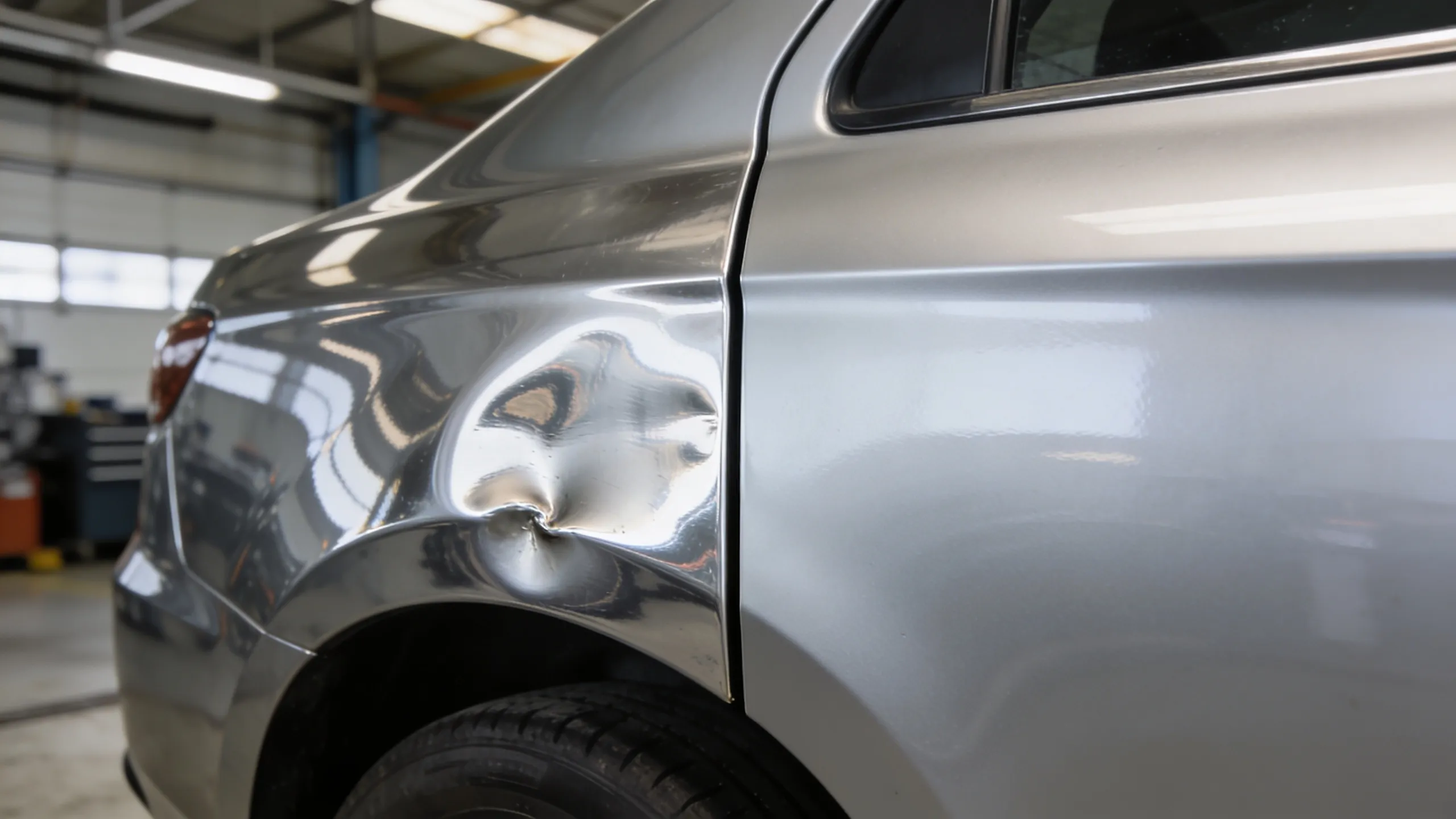
A sudden afternoon hailstorm can leave a vehicle roof and hood covered in dozens of shallow dimples before the pavement even dries. A crowded shopping center parking lot can produce the same frustration through a single door swing or cart impact. In both cases, car owners usually ask the same question: what's paintless dent repair, and can it restore the panel without repainting it?
Paintless dent repair (PDR) matters because it removes many dents while preserving the factory finish, cutting downtime, and lowering costs compared with conventional body work. Instead of grinding paint, applying filler, and refinishing a panel, trained technicians reshape metal with controlled pressure and precision tools.
For car owners looking for qualified technicians, AutoBodyShopNear.com maintains a directory of paintless dent repair services across the country.
What is paintless dent repair?
Paintless dent repair (PDR) is a technique that removes dents by reshaping a vehicle's metal panel from behind, or, in limited cases, from the exterior using controlled pull methods, without sanding, body filler, or repainting. It's designed for non-structural dents where the original paint remains intact and flexible.
Traditional dent repair involves sanding damaged areas, applying filler compounds, priming, painting, and blending color into nearby panels. PDR skips all of that. Because it doesn't break the factory coating system, it can preserve original paint thickness, corrosion resistance, and factory texture.
Paintless dent removal works best for common cosmetic damage: door dings, hail dents, minor collision dents, and shopping cart impacts. These dents often deform sheet metal without fracturing paint. When damage is shallow and tool access exists behind the panel, technicians can often return the surface close to pre-loss condition.
Intact paint is critical because PDR changes metal shape, not coating condition. If paint is cracked, chipped, or delaminating, reshaping the panel may worsen visible damage, and refinishing becomes necessary. In those cases, shops may combine partial PDR with conventional body and paint procedures.
How the PDR process works, step by step
The PDR process follows a measured sequence that prioritizes panel access, metal control, and visual precision under specialized lighting.
-
Damage assessment: The technician evaluates dent size, depth, location, panel material, and paint condition. This first pass determines PDR eligibility and flags risks like stretched metal, edge distortion, or hidden reinforcement.
-
Accessing the dent: The technician reaches the backside of the panel by removing trim, liners, or interior components, using factory openings when possible. Drilling access holes is a last resort, it introduces sealing and corrosion considerations.
-
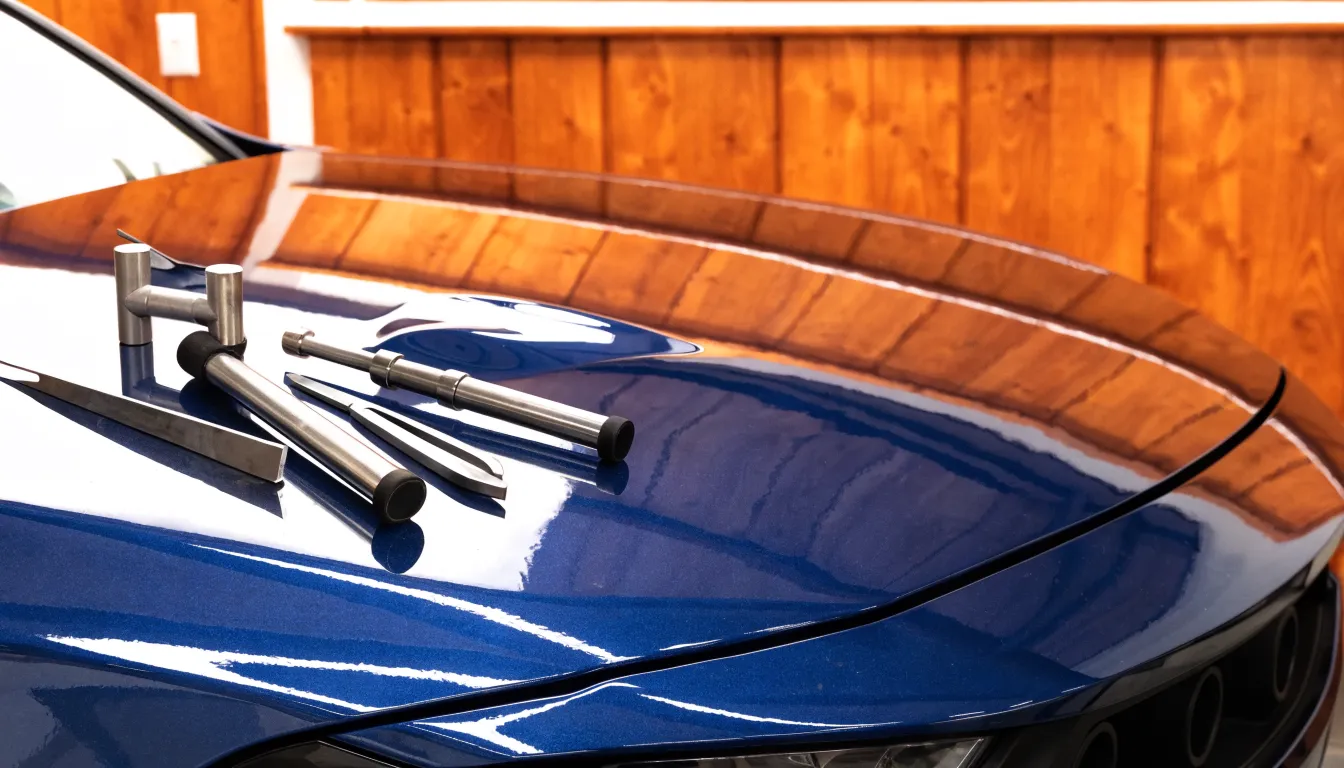
Positioning specialized tools: PDR rods, whale tails, picks, and leverage tools are placed with careful tip alignment behind low areas. Proper tip selection controls force concentration and helps avoid pressure marks.
-
Gradually massaging the metal: The technician applies slow, controlled pushes from behind, working from dent edges toward the center. Think of pushing a dent out from the inside of a tin can, except with far smaller, more precise adjustments.
-
Using reflection board lighting: A reflection board or LED line light projects patterns across the panel to reveal highs and lows invisible in ambient light. Distortion movement in those lines guides each micro-adjustment.
-
Tapping down high spots: As low areas rise, minor crowns can form around the repair zone. The technician uses tap-down tools and blending hammers on the painted surface to lower those raised areas.
-
Final leveling: Repeated push-and-tap cycles refine panel texture and contour until the repaired area matches surrounding factory shape. This stage often consumes most of the labor time on larger dents.
-
Quality inspection: The technician checks the panel from multiple angles, in proper lighting, and at different distances. A final inspection confirms shape consistency, paint integrity, and acceptable cosmetic finish before delivery.
When paintless dent removal works (and when it doesn't)
| Damage type | PDR eligible? | Notes |
|---|---|---|
| Small door ding (under 1 inch) | Yes | Ideal PDR candidate |
| Hail dents (most sizes) | Yes | PDR is the standard hail repair method |
| Large dents (2-4 inches) | Sometimes | Depends on depth and metal flexibility |
| Dents with creases | Usually no | Creased metal is harder to restore perfectly |
| Dents with paint damage | No | Paint must be intact for PDR |
| Dents near panel edges | Difficult | Limited tool access |
| Aluminum panels | Sometimes | Requires specialized aluminum PDR tools |
| Structural damage | No | Requires traditional collision repair |
PDR eligibility depends on three things: paint condition, metal deformation, and tool access. If paint remains unbroken, the panel hasn't been sharply creased, and backside access exists, the probability of a strong outcome rises significantly. Modern factory coatings often flex enough for moderate reshaping, but severe stretch in metal reduces recoverability.
Dent location also matters. Flat center sections of doors, hoods, and roofs usually provide better leverage than reinforced edges, tight body lines, or double-walled areas. Material type matters too — aluminum generally requires different tool control and can be less forgiving than mild automotive steel.
Marcus, a 2019 Honda Accord owner in Phoenix, discovered three door dings on his driver's side door after a busy weekend at a shopping mall. A PDR technician assessed the damage and determined all three dents, each under an inch wide with paint fully intact, were strong PDR candidates. The repair took about 60-90 minutes and cost roughly $180-$320 total. A traditional repair involving body filler and repainting the door panel would have run an estimated $900-$1,600 and taken three to five business days.
PDR cost vs. Traditional dent repair
| Dent type | PDR cost | Traditional repair cost | Time savings |
|---|---|---|---|
| Single small door ding | $125-$275 | $500-$1,000 | Same day vs. 2-3 days |
| Medium dent (golf ball size) | $200-$450 | $800-$1,200 | Same day vs. 3-5 days |
| Large dent (baseball size) | $350-$800 | $1,200-$2,500 | 1-2 days vs. 5-7 days |
| Hail damage (25+ dents) | $1,500-$4,500 | $5,000-$12,000+ | 1-3 days vs. 1-3 weeks |
PDR usually costs less because it cuts out several cost drivers present in traditional repairs. No fillers, primers, basecoat, clearcoat, masking materials, blend labor, or paint booth cycles for eligible dents. Labor hours drop because technicians correct shape directly instead of moving through multi-stage refinishing workflows.
Insurance coverage often applies to PDR for weather losses. Comprehensive auto policies typically cover hail and storm-related dents, subject to deductible and policy terms.
Deductible math matters. When a deductible exceeds a small or moderate PDR estimate, many owners choose to pay out of pocket rather than open a claim with limited financial benefit. Still, consider total damage scope across panels, rental needs, and any hidden costs discovered during teardown before deciding.
Sarah, a fleet manager in Dallas, needed 47 hail dents repaired on a company Chevrolet Tahoe after a May storm. Traditional repair estimates came in between $6,200 and $8,800. A PDR specialist confirmed 43 of the 47 dents were PDR-eligible. The repair cost about $2,850-$3,250, took two days, and left no evidence of the storm damage.
How to find a qualified PDR technician
No single universally required PDR license exists across all states, so qualifications must be verified through training history, repair portfolio quality, and process transparency. A credible technician explains limits clearly, they don't promise identical outcomes for every dent type. Shops that document assessments thoroughly tend to deliver more consistent results.
Experience with the specific damage pattern matters more than generic years in business. A technician who routinely handles hail grids may not be the best choice for deep quarter-panel dents near body lines, and the reverse can also be true. Before/after photos captured under proper reflection lighting provide better evidence than casual phone snapshots in shade.
References and warranty terms are practical screening tools. Strong candidates can usually provide recent customer references, insurer relationships, and workmanship warranty details in writing. Industry training organizations like I-CAR offer PDR-related coursework that gives technicians a foundation in metal finishing and damage analysis.
Key questions to ask: How long has the technician performed PDR full-time? Can the shop show examples of similar dents on similar panels? Is there a written warranty, and how are post-repair concerns handled? Clear answers indicate process maturity; vague answers often indicate risk.
Watch out for red flags: estimates dramatically lower than local market ranges, refusal to provide comparable work samples, and claims that PDR works on every dent regardless of paint condition. A shop that dismisses edge-location complexity or deep crease limitations without inspection is another warning sign. Reliable technicians define boundaries first, then quote based on realistic repair outcomes.
A Honda Pilot owner in Atlanta chose the lowest-priced PDR estimate for a basketball-sized dent on the rear quarter panel. The technician lacked experience with large dents and left a visible high spot in the metal. A second technician who specialized in large-dent PDR charged about $250-$450 more and got a factory-level result. The lesson: the technician's specific experience with similar damage matters as much as the quoted price.
Introduction
You walk back to your car after a quick grocery run and there it is — a door ding you definitely didn't put there. For a lot of dents, paintless dent repair (PDR) can fix it without touching the paint at all. But it only works when the metal and paint are in the right condition.
This guide walks through the full PDR process: what it is, the tools involved, typical costs, and when you're better off going the traditional repair route. Real examples are included so you can compare timelines, outcomes, and costs before booking anything.
PDR Cost: What Car Owners Can Expect to Pay
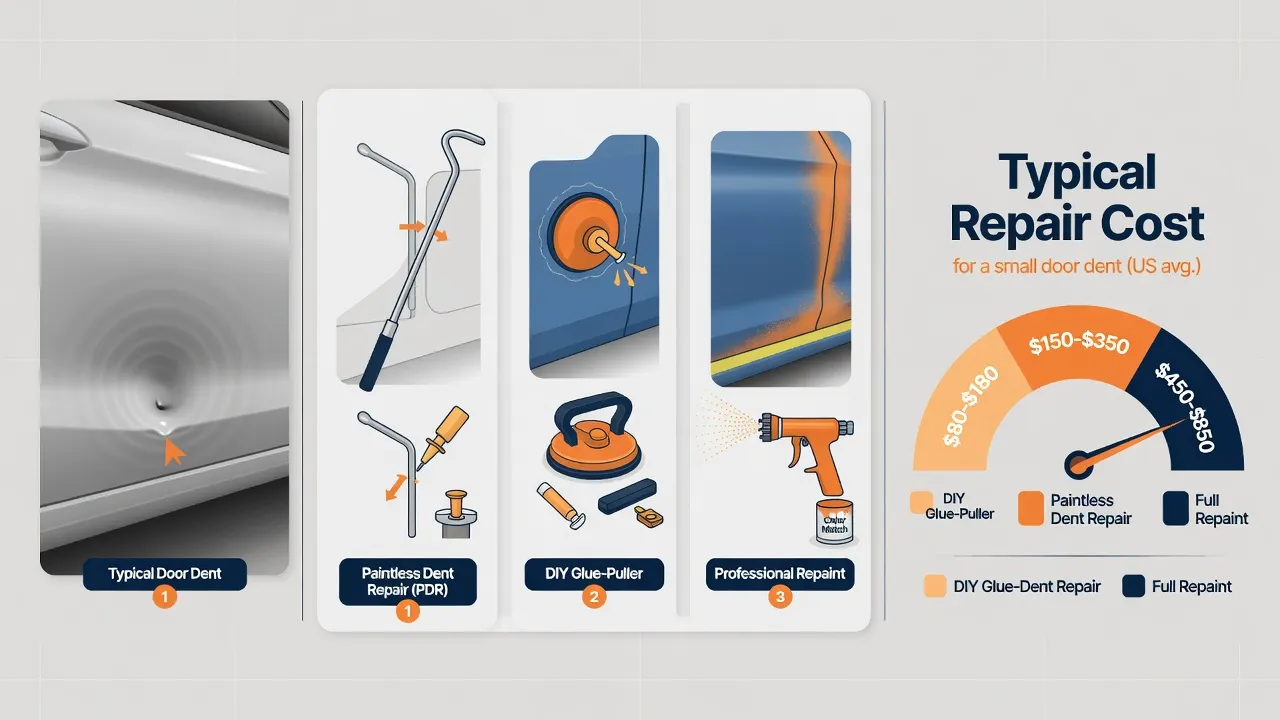
PDR pricing depends on dent size, depth, panel location, metal type, and how many dents you're dealing with. Shops price by complexity, not just diameter. A shallow two-inch dent in a flat area might cost less than a one-inch dent sitting on a sharp body line.
| Repair Type | Typical PDR Cost | Typical Timeline |
|---|---|---|
| Small door ding (under 1 inch) | $75 to $150 | 30 to 60 minutes |
| Medium dent (1 to 3 inches) | $150 to $300 | 1 to 2 hours |
| Large dent (3 to 6 inches) | $300 to $500 | 2 to 4 hours |
| Hail damage (per panel) | $50 to $150 per dent | Half day to full day |
| Glue pull repair | $100 to $250 | 1 to 2 hours |
Insurance can cover PDR under comprehensive coverage, especially for weather-related damage. Your deductible size determines what comes out of pocket, so compare the repair estimate against your policy terms before filing.
Real Examples: PDR in Action
Same process, different outcomes — because dent type, access, and paint condition change everything.
Marcus T., Denver (hail dents on hood)
After a spring storm, Marcus found 11 hail dents on his 2022 Honda Accord hood. A PDR tech mapped the damage and accessed the backside through wheel well openings. Two hours later, the hood looked factory-new. Cost: $380. Same-day service. His insurer covered it under comprehensive with no depreciation applied.
Sandra K., Phoenix (single shopping cart door ding)
One door ding, driver side. The tech verified intact paint with LED inspection and ran a single rod through the door jamb. Twenty minutes. Ninety-five dollars. Avoiding the repaint route saved her roughly $500.
James R., Chicago (large crease on truck bed)
A fallen tree branch left a softball-sized dent with a deep crease and visible paint stress. The tech looked at it, explained that the metal stretch made PDR unlikely to deliver clean results, and recommended traditional repair instead. James appreciated the straight answer.
What About DIY PDR Kits?
They work for very shallow dents in ideal locations. On anything more serious, they can make things worse.
A common DIY mistake is using a glue-pull kit and accidentally cracking the paint or creating high spots that look worse than the original dent. If the dent is worth fixing, it's worth paying a professional $100 to do it right.
PDR is one of the few auto repair services where you consistently get more than you pay for. When it works, it's the best option available.
Sources
- I-CAR (Inter-Industry Conference on Auto Collision Repair) — collision repair industry training standards
- NHTSA Vehicle Safety — federal vehicle safety and crashworthiness standards
Frequently asked questions about paintless dent repair
Is paintless dent repair permanent?
Yes, PDR results are permanent when performed correctly. Once the metal is restored to its original shape, it holds that shape. The repair doesn't involve temporary fillers or materials that can shrink or crack over time.
Can PDR fix all dents?
No. PDR works best on dents where the paint is undamaged and the metal hasn't been creased or stretched beyond its flexibility limits. Deep dents, dents with paint chips or cracks, and dents near structural components typically require traditional repair methods.
How long does PDR take?
Most PDR repairs are done within one to four hours for simple dents. Hail damage affecting multiple panels may take one to three days. Traditional dent repair on the same damage typically takes three to seven business days, since paint must cure between steps.
Does paintless dent repair affect resale value?
PDR typically preserves or improves a vehicle's resale value compared to leaving dents unrepaired. Because PDR maintains the original factory paint, it avoids the slight color variation that can result from repainting panels. PDR-only repairs generally don't appear on vehicle history reports either.
Will insurance cover paintless dent repair?
Thorough auto insurance generally covers hail and storm damage PDR, subject to the deductible. Collision coverage may apply when a collision caused the dents. Car owners whose deductible exceeds the PDR estimate often benefit from paying out of pocket, since filing a claim can affect future premiums. Review policy terms with your insurance carrier before filing.
Can I do paintless dent repair myself?
DIY PDR kits are available, but they produce professional-quality results only on the smallest, shallowest dents. Improper technique can stretch or crack the paint, leaving damage that costs more to fix than the original dent. For anything beyond a minor surface ding, professional PDR is recommended.
Key takeaways
- Paintless dent repair (PDR) is the most cost-effective method for repairing dents when paint is undamaged and metal is accessible.
- PDR typically costs 60-80% less than traditional dent repair for the same damage.
- The PDR process preserves original factory paint, which supports vehicle resale value.
- Not all dents qualify, paint damage, deep creases, and structural dents require traditional repair.
- Verifying a technician's experience with similar damage types is essential to getting a quality result.
Car owners ready to get estimates can find qualified technicians through the paintless dent repair services directory on AutoBodyShopNear. com. For hail damage specifically, hail damage repair specialists are also listed by location.