What affects dent repair cost?
Several factors shape pricing, even when two dents appear similar in photos.
- Dent size and depth: Wider or deeper dents require more tool time and skill, which increases labor cost.
- Paint condition: If paint is intact, repair may qualify for paintless dent repair. Cracked or chipped paint usually needs filler, sanding, and repainting.
- Panel location and access: Dents on doors and fenders are often easier to reach than dents on roof rails, body lines, or reinforced sections.
- Vehicle type and material: Aluminum panels and luxury finishes can cost more due to specialized tools and added refinement steps.
- Regional labor rates: Labor can run 40% to 60% higher in major metro areas compared with rural markets.
Repair complexity is often tied to access. A dent in a flat door center might be corrected quickly, but a dent near an edge, body crease, or sensor location can require trim removal and extra setup. Shops also price for risk. If a panel has thin paint or prior repair history, technicians may quote a more conservative method.
Shop certifications can matter too. Facilities that invest in ongoing technician training may charge more than low-overhead shops, but they often provide more predictable quality control. For many drivers, a slightly higher estimate is worth it if it reduces repaint mismatch or repeat visits.
Dent repair cost by size
The chart below reflects common national ranges for 2026. Actual estimates vary by city, damage complexity, and shop process.
| Dent size | PDR cost range | Traditional repair cost range |
|---|---|---|
| Small dent (<1 inch) | $75-$150 | $200-$400 |
| Medium dent (1-3 inches) | $150-$300 | $400-$800 |
| Large dent (3+ inches) | $300-$600 | $800-$1,500 |
Small dents are usually the most cost-effective to fix early. If caught quickly, many are repaired in a short appointment with no paint work. Medium dents often sit near the line where method selection matters most. If paint remains intact, PDR can still be efficient. If paint is cracked, traditional repair becomes more likely.
Large dents can still be candidates for PDR in some cases, especially on flexible panels with minimal paint disturbance. But once distortion is severe or paint has failed, traditional repair costs rise due to prep, blending, and finishing time.
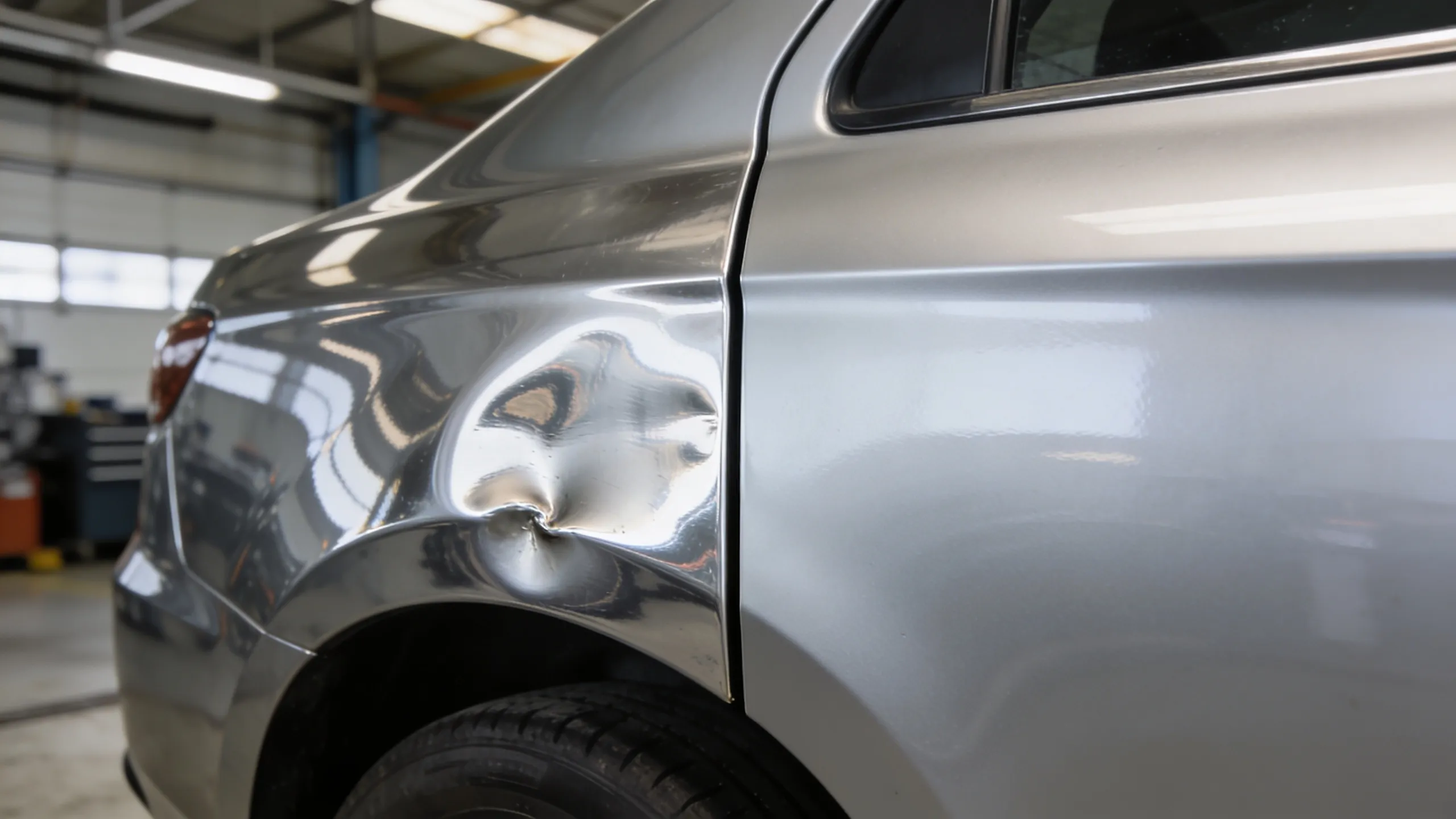
A practical rule many estimators use: the larger and sharper the dent, the more likely labor hours increase nonlinearly. Price doesn't always scale by size alone. A 3-inch soft dent may be easier than a 1.5-inch sharp crease.
Paintless dent repair cost vs. traditional repair
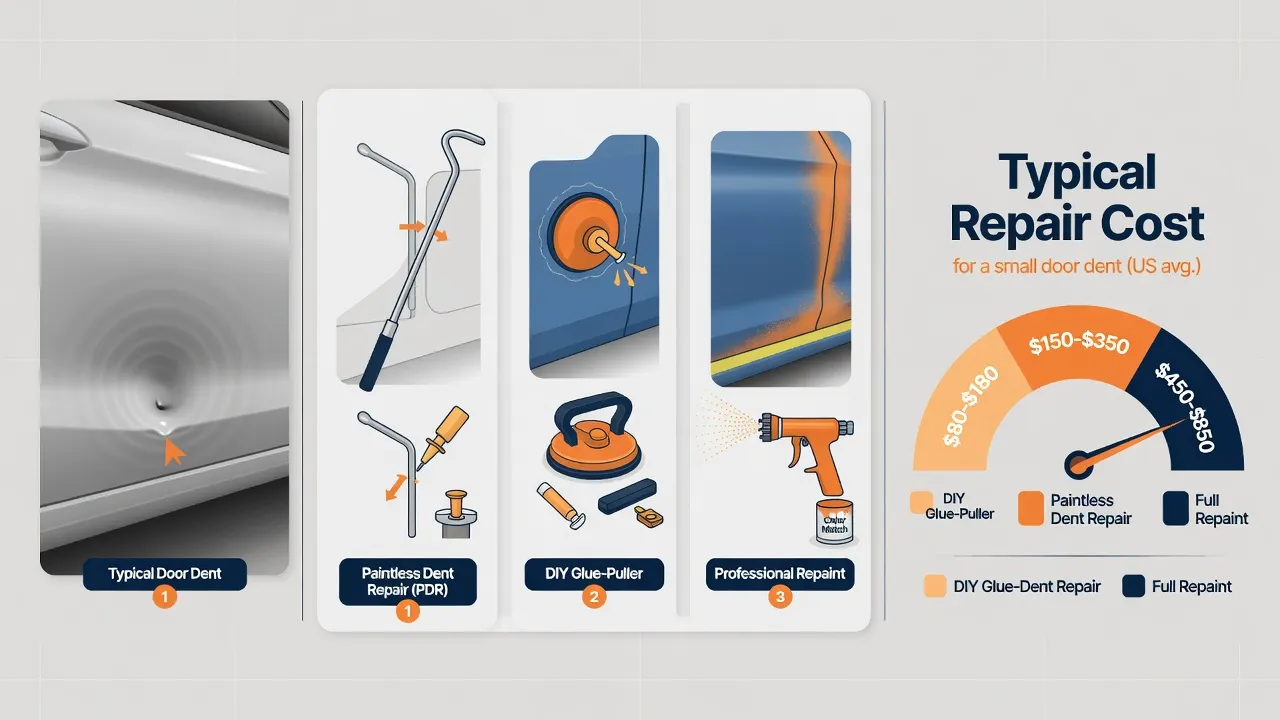
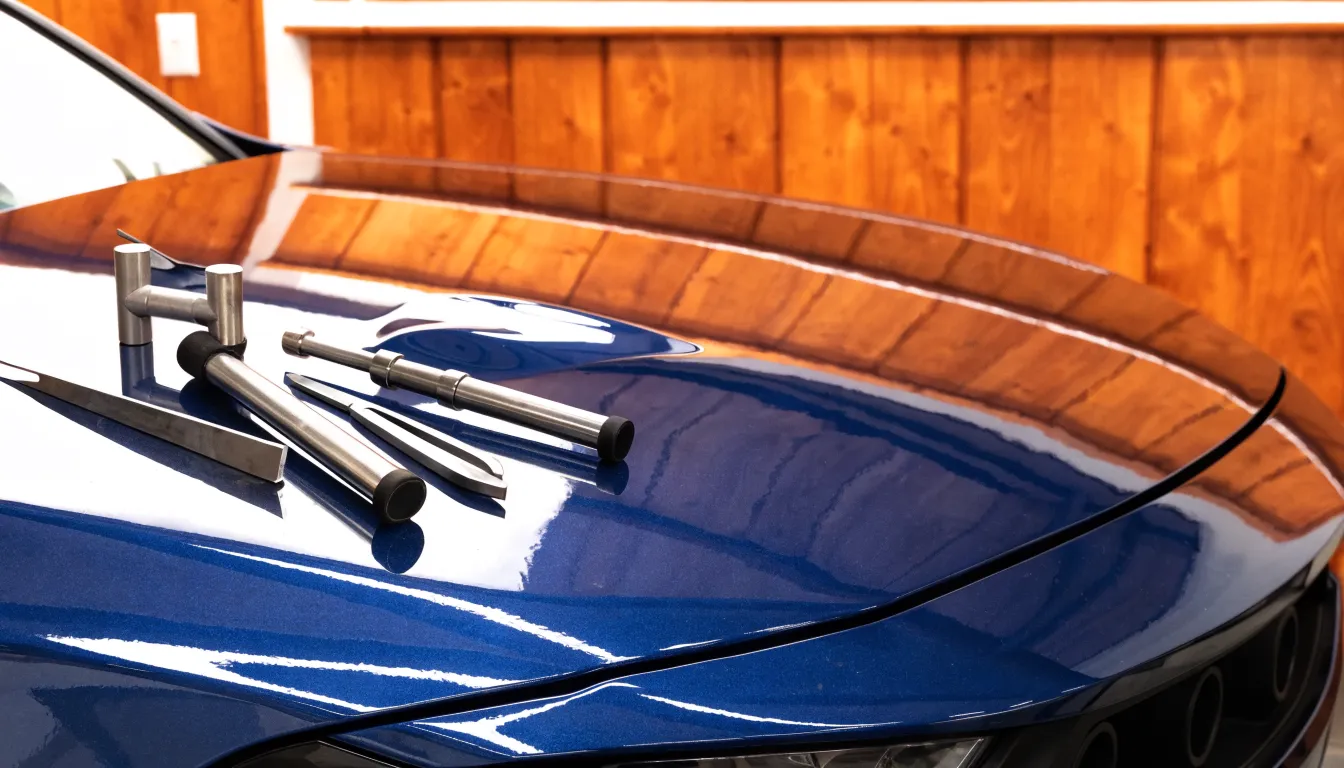
Paintless Dent Repair (PDR) removes dents by massaging metal back into shape without sanding, filler, or repainting. Traditional repair uses body filler, sanding, primer, paint, and clear coat to restore panel shape and finish.
PDR usually costs less because it avoids materials and color-blend steps. It also tends to preserve factory paint, which matters for resale value and finish consistency. Many parking lot dings, minor hail marks, and gentle panel impressions are strong PDR candidates.
Traditional repair applies when paint is damaged, metal is stretched, or panel geometry is sharply deformed. It's also common when impact affects mounting points, clips, or nearby parts that require disassembly. In those cases, refinishing labor and paint booth work drive cost.
The difference is especially clear on bumpers. Light deformation may qualify for bumper repair techniques close to PDR pricing, but torn plastic, deep gouges, or sensor-area damage can push repairs into the $500-$1,500 range.
From a scheduling view, PDR often has shorter turnaround. Traditional work can require additional days for prep, paint cure time, and quality checks. For drivers managing work commutes or family logistics, that timeline difference can be just as important as total cost.
Dent repair cost by vehicle location
Panel location changes labor time because of access, reinforcement, and curvature.
| Vehicle location | Typical cost range |
|---|---|
| Door panel | $100-$500 |
| Hood | $200-$800 |
| Fender | $150-$600 |
| Bumper | $150-$400 PDR or $500-$1,500 traditional |
| Roof | $400-$1,200 |
Door dents are common in urban parking environments. Costs are often moderate when the dent sits away from edges and paint is intact. Hood dents from debris can be more expensive because the panel shape, bracing, and visibility demand careful finishing. Fender dents vary widely depending on proximity to wheel arch lines and headlamp areas.
Roof dents are often among the costliest panel-specific repairs. Access is more difficult, and many roof repairs involve interior trim protection and additional setup. Hail events often concentrate on roof, hood, and trunk surfaces, which multiplies labor and total claim size.
Bumper pricing is split because material and damage type matter. Flexible bumper covers may recover well with localized repair, but cracks, punctures, mounting damage, or paint break usually push the repair into traditional methods.
Hail dent repair cost
Hail claims have some of the widest price spreads in collision repair. Typical totals range from about $1,000 to $8,000 or more, depending on dent count, panel spread, and paint condition. A light storm might leave a handful of shallow marks on horizontal panels. A severe event can impact roof, hood, decklid, and side panels at once.
When hail damage is extensive but paint remains intact, PDR is often the preferred method because it can restore many dents without full repainting. Shops may price hail work by panel, by dent count, or through insurer-approved estimating systems. Total labor can rise quickly when dozens or hundreds of impacts are present.
Insurance often plays a central role in hail repairs. Comprehensive coverage commonly applies, subject to deductible and policy terms. Claim outcomes depend on inspection quality, photos, and local adjuster practices. Drivers comparing estimates should confirm whether each quote is insurer-facing, customer-pay, or hybrid.
Regional factors also matter. States with frequent spring hail cycles may have stronger shop capacity and smoother claim workflows than areas with rare storms.
Safety context is important after any significant weather event. Even when dents seem cosmetic, impacts can affect visibility components, trim fit, and moisture sealing around panel edges.
Real repair scenarios
Marcus, a teacher from Denver: hail season damage on a midsize sedan
Marcus parked outside during an early summer hailstorm. After the storm, the car showed dozens of small dents across the roof and hood, with minor marks on the trunk. Paint remained largely intact, which made PDR possible for most areas.
Initial estimates ranged from $3,200 to $5,400. The gap came from dent-count methodology and labor assumptions. One shop quoted by panel with moderate dent density. Another used higher per-dent counts based on close-light inspection. A third estimate included trim removal and extra roof access time.
Marcus filed a comprehensive claim and selected a certified shop with a documented hail workflow. Final billed repair landed at $4,100 before deductible. Turnaround was five business days. The final result restored panel appearance without repainting major sections, which helped preserve original finish continuity.
Priya, a nurse from Atlanta: parking lot door ding with paint intact
Priya returned to her compact SUV after a hospital shift and found a fresh dent on the front passenger door. The mark measured just under one inch, with no visible paint cracking. Because the dent sat in a relatively flat section of the panel, PDR was a likely fit.
Quotes came in at $120, $165, and $240. The lowest estimate was from a mobile service with limited warranty terms. The middle estimate came from a local body shop offering same-day service and written workmanship coverage. The highest estimate included full door blend options if hidden paint stress appeared during repair.
Priya chose the middle option at $165. Repair completed in under two hours. No repainting was required, and door reflection looked uniform under daylight. This case reflects why early repair of small dents can keep total cost low.
James, a contractor from Houston: hood dent from highway debris
James encountered road debris on a freeway exit ramp. The hood took a direct hit, leaving a roughly 2.5-inch dent with a sharp center and chipped paint. Because the finish was broken, technicians advised traditional repair instead of PDR.
Estimates ranged from $620 to $980. The lower estimate covered localized repair and blend. The higher estimate included additional prep to correct a nearby micro-crease and ensure color consistency across viewing angles. Metro labor rates in Houston also influenced pricing.
James selected a quote near the middle at $780 after verifying paint warranty terms. The shop completed work in three days, including prep, refinish, cure, and inspection. Final color match was acceptable under direct sun and indoor lighting.
These examples show a consistent pattern: method selection, paint condition, and local labor rates explain most price variation. Similar dent sizes can produce very different final bills when damage type changes.
Sources
- CCC Intelligent Solutions — collision repair cost benchmarks and industry data
- Insurance Information Institute — auto insurance and repair cost statistics
Frequently asked questions about dent repair cost
Is it cheaper to repair a dent without repainting?
In many cases, yes. When paint remains intact and metal can be reshaped, PDR often costs less than traditional methods. Avoiding filler and repaint steps typically reduces labor and material charges.
How much does door dent repair cost on average?
Door dent repair commonly falls between $100 and $500, depending on dent size, depth, and panel access. Small paint-intact dings may be near the low end, while edge damage or paint failure can move pricing higher.
Does insurance cover hail dent repair cost?
Coverage is usually tied to comprehensive auto insurance terms. Many policies cover hail damage after deductible, but exact payout depends on policy language, inspection results, and local claim handling practices.
Why are estimates higher in large cities?
Labor rates are often 40% to 60% higher in major metros than in rural areas. Operating costs, technician demand, and shop overhead all contribute to higher estimates in dense urban markets.
Can a large dent still qualify for PDR?
Sometimes. Large dents can still be PDR candidates if paint is intact and metal isn't sharply stretched. A technician must inspect lighting reflections and panel tension before confirming method eligibility.
How can drivers compare estimates more accurately?
A fair comparison checks scope, method, warranty, turnaround time, and whether quotes include blending or trim work. Looking only at the bottom-line number can hide important differences in quality and durability.
Key takeaways
- Dent pricing depends most on size, paint condition, panel location, and local labor rate.
- Small dents are often the least expensive to fix when handled early.
- PDR is usually more affordable when paint is intact and panel access is workable.
- Traditional repair becomes more common when paint is cracked, metal is stretched, or impact points are sharp.
- Hail claims can range from $1,000 to $8,000+ and often involve insurance workflows.
- Metro-area estimates can be significantly higher than rural pricing for similar damage.
Consumers comparing quotes can start with this benchmark, then review method details and warranties before approving work.