The best ceramic coating for most DIY car owners in 2026 is CarPro Cquartz UK 3.0, which delivers 2 to 4 years of protection with a forgiving application process and exceptional water beading for around $65. If you just paid for a new paint job or collision repair and want to protect that investment, a ceramic coating creates a semi-permanent chemical bond with your clear coat that no wax or sealant can match. We tested and compared four of the top consumer-grade ceramic coatings to help you choose the right one for your skill level and budget.
Key Takeaways
- CarPro Cquartz UK 3.0 ($65) is the best all-around DIY ceramic coating, with a forgiving application window and 2 to 4 years of verified durability.
- Avalon King Armor Shield IX ($70) is the easiest to apply for first-timers, with a wide working window, though real-world durability is closer to 2 years than the claimed lifespan.
- Adam's UV Graphene Ceramic Coating ($110) includes a UV tracer flashlight that shows exactly where you have applied product, eliminating the biggest DIY mistake of missed spots.
- Gtechniq Crystal Serum Light ($90) offers the longest protection at 5+ years and is the closest thing to a professional-grade coating available to consumers.
- Proper surface preparation accounts for 80% of your coating's performance. No ceramic coating can fix swirled, contaminated, or poorly prepped paint.
What Ceramic Coating Actually Does (and What It Does Not)
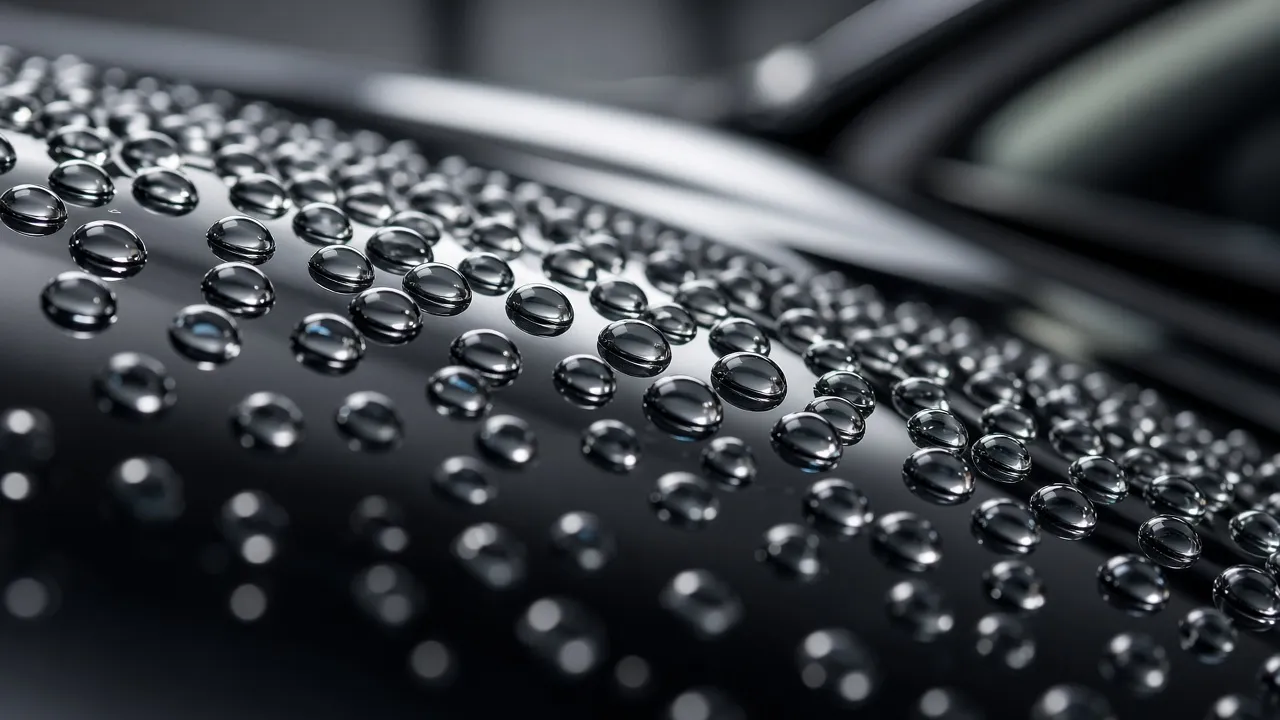
A ceramic coating is a liquid polymer containing silicon dioxide (SiO2) or graphene that chemically bonds to your car's clear coat when cured. Once hardened, it creates a hydrophobic, scratch-resistant layer that sits on top of your factory paint. Water beads and sheets off the surface, dirt has a harder time bonding, and UV damage is reduced.
What ceramic coating doesn't do: it won't prevent rock chips, deep scratches, or dents. It won't fix existing paint damage. And it won't last forever, despite what some marketing claims suggest. Consumer-grade ceramic coatings realistically last 1 to 5 years depending on the product, your preparation, and your maintenance routine. If you're comparing protection options after a repair, see our guide to whether ceramic coating is worth it for a full cost-benefit breakdown.
Our 4 Top Picks for 2026
CarPro Cquartz UK 3.0: Best Overall
CarPro Cquartz UK 3.0 has been the enthusiast community's go-to ceramic coating for years, and version 3.0 continues that reputation. At around $65 per 50ml bottle (enough for one mid-size car), it offers the best balance of durability, ease of application, and water behavior.
What makes Cquartz stand out is its forgiving application window. The flash time, the period between applying and wiping off, is wider than most competitors, giving you more room for error. The leveling phase is readable even in moderate lighting, so you can see when the coating is ready to buff. Most detailers and reviewers report 2 to 4 years of real-world protection with a single layer, and layering extends that further.
The tradeoff is that Cquartz isn't the easiest coating to apply if you have never done any paint correction. It performs best on properly decontaminated and polished paint, and the bottle's dropper applicator takes a bit of practice. But for anyone who has waxed a car before, the learning curve is manageable.
- Price: $60 to $70 per 50ml kit
- Durability: 2 to 4 years (single layer)
- Application difficulty: Moderate (wider flash window helps beginners)
- Best for: Enthusiasts who want pro-level results at a consumer price
Avalon King Armor Shield IX: Easiest Application
Avalon King built its brand on making ceramic coating accessible to complete beginners, and Armor Shield IX delivers on that promise. The application process is straightforward: spread the coating on a small section, wait for it to flash (you'll see a rainbow shimmer), then buff it off with a microfiber towel. The working window is one of the widest in the category.
CorvetteForum's one-year review found that Armor Shield IX produced a deep, glossy finish that made treated surfaces easier to clean and repelled water more effectively than wax. Ford-Trucks.com called it worth the premium price. At $70 per kit, it includes the coating, applicator pads, and microfiber towels.
The honest limitation: durability is closer to 2 years in real-world conditions than the marketed lifespan, especially if the car lives outside. Multiple professional detailer reviews note that prep quality is critical, and without careful surface decontamination, the coating doesn't bond well. That caveat applies to every ceramic coating, but Avalon King's marketing sometimes understates it.
- Price: $65 to $75 per kit
- Durability: 1.5 to 2.5 years (realistic)
- Application difficulty: Easy (widest working window)
- Best for: First-time ceramic coating users who want a complete kit
Adam's UV Graphene Ceramic Coating: Best for Avoiding Mistakes
Adam's Polishes solved the biggest problem in DIY ceramic coating: not knowing whether you actually covered every inch. Their UV Graphene Ceramic Coating includes a UV flashlight that causes the applied coating to glow, showing you exactly where product has been applied and where you have missed. For a first-timer, this is genuinely major.
The graphene-infused formula delivers 7+ years of claimed protection with 10H hardness rating. Real-world detailer reviews consistently praise the water beading performance and stain resistance. One reviewer on 3rd Gen Tundra Forum reported incredible water beading after the first wash, just one week post-application. The formula is also notably less prone to water spotting than traditional SiO2-only coatings.
The downside is price. At $110 for the Advanced kit, it's the most expensive option on this list. And while the UV tracer is new, the coating itself requires the same level of surface prep as competitors. You're paying a premium for the application confidence, not necessarily for superior protection.
- Price: $100 to $120 per kit
- Durability: 3 to 5 years (graphene formula)
- Application difficulty: Moderate (UV tracer compensates)
- Best for: Anxious first-timers willing to pay more for application confidence
Gtechniq Crystal Serum Light: Longest Lasting
Gtechniq Crystal Serum Light is the closest thing to a professional-grade ceramic coating that a consumer can buy. Originally developed as a companion to Gtechniq's professional-only Crystal Serum Ultra, the Light version uses the same two-layer technology in a more forgiving format. Car Supplies Warehouse's comparison testing confirmed that Crystal Serum Light leads on longevity with 5+ years of real-world protection.
The coating's chemical resistance and hardness ratings are measurably higher than consumer-grade alternatives. It handles bird droppings, tree sap, and industrial fallout better than softer coatings, and the water beading holds strong for years according to multiple long-term reviews.
The tradeoff is that Crystal Serum Light is less forgiving during application. The flash time is shorter, the leveling phase requires better lighting to read, and mistakes are harder to correct once the coating begins to cure. If you have experience with at least one other ceramic coating, CSL is a worthwhile upgrade. For your first coating, start with Cquartz or Armor Shield IX.
- Price: $80 to $95 per 50ml
- Durability: 5 to 7 years
- Application difficulty: Advanced (shorter working window)
- Best for: Experienced detailers who want maximum longevity
Ceramic Coating vs Wax vs Paint Sealant
The three main paint protection options differ in durability, cost, and application difficulty. A traditional carnauba wax lasts 1 to 3 months and costs $15 to $30 per application. A synthetic paint sealant lasts 3 to 6 months at a similar price point. A ceramic coating lasts 1 to 7 years but costs $60 to $120 for the product alone, plus several hours of prep and application time.
Ceramic coating makes the most financial sense when you're protecting a new or recently repaired paint job. If you just spent $3,000 to $5,000 on a quality paint job, spending $70 on a coating that protects it for 3+ years is straightforward math. For older paint that you plan to replace within a year, wax is the better value.
How to Apply Ceramic Coating: The Right Way
Every ceramic coating failure traces back to surface preparation. The coating itself is the easy part. Here's the process that professional detailers follow:
Step 1: Wash and decontaminate
Start with a thorough hand wash using a pH-neutral car shampoo. Follow with a clay bar or clay mitt to remove embedded contaminants like rail dust, tree sap residue, and industrial fallout. Your paint should feel glass-smooth after claying. If it doesn't, clay again.
Step 2: Polish or compound (if needed)
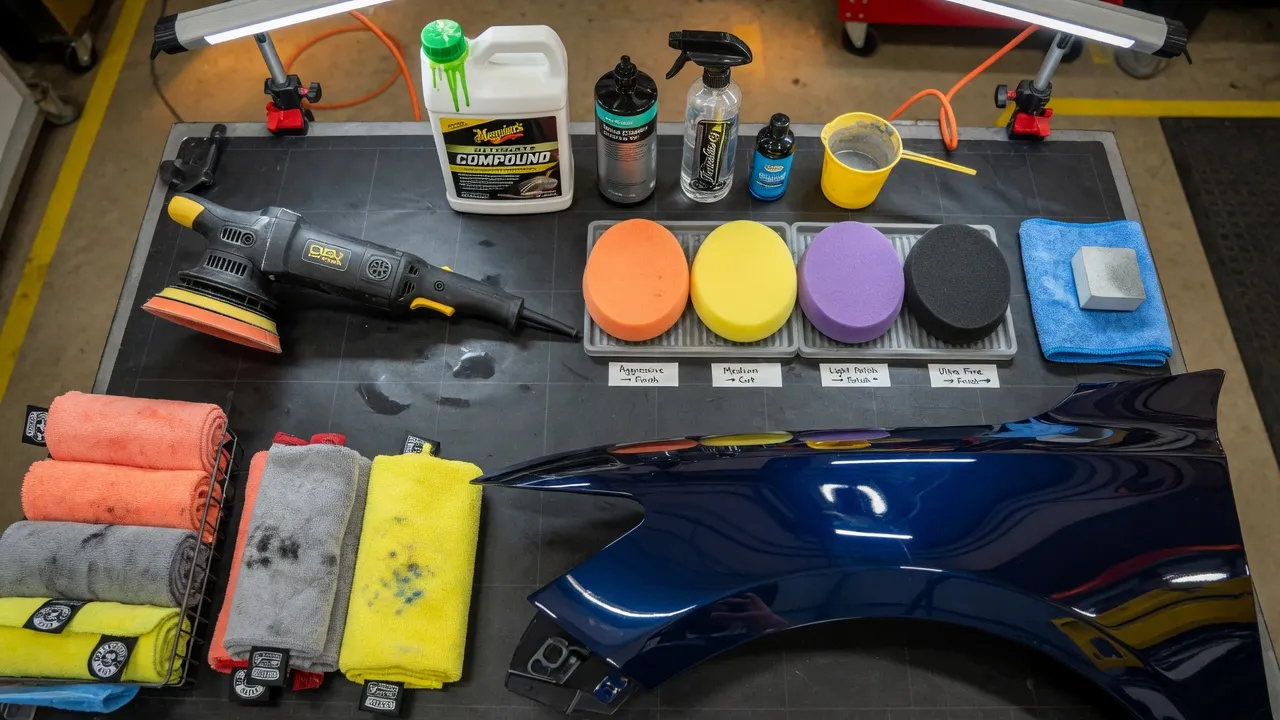
Ceramic coating locks in whatever is underneath it, including swirl marks and oxidation. If your paint has visible swirls under direct light, use a polishing kit for surface prep before coating. A single-step polish with a dual-action polisher handles most cases.
Step 3: Wipe with panel prep
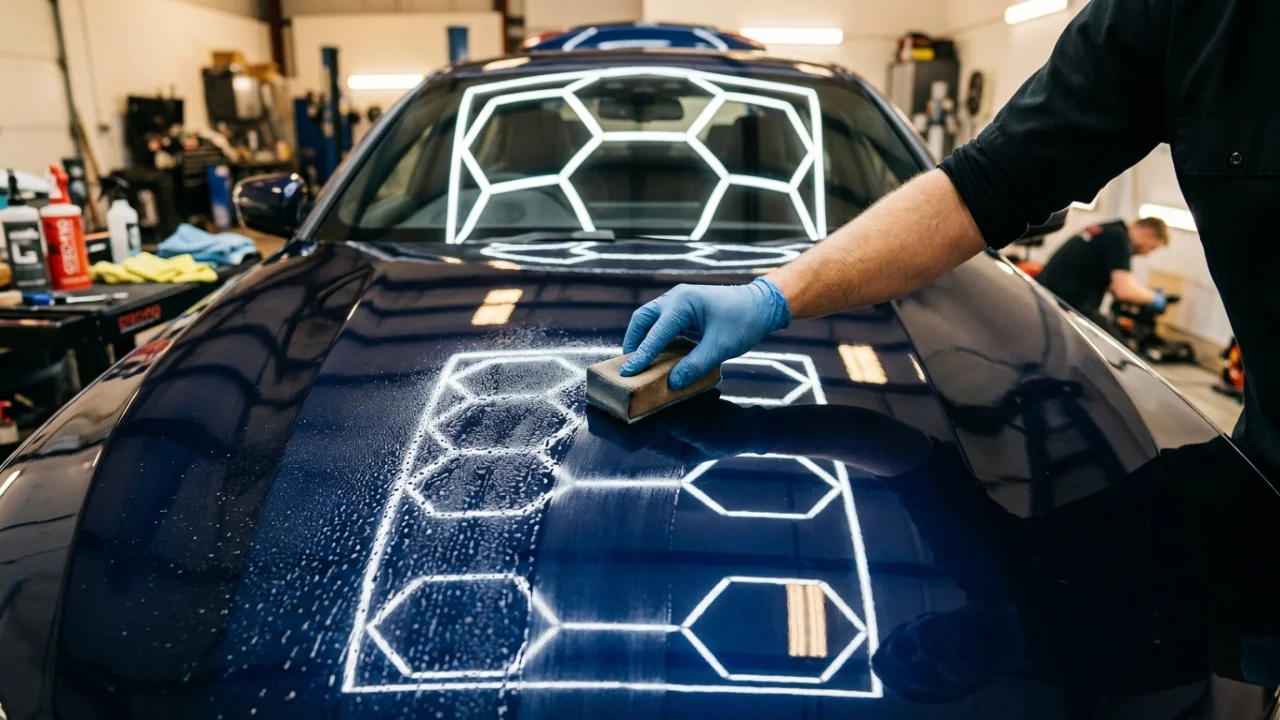
Use an isopropyl alcohol (IPA) wipe-down or dedicated panel prep spray to remove all polish residue, oils, and remaining contaminants. This step is non-negotiable. Any residue between the paint and coating creates a weak bond.
Step 4: Apply the coating
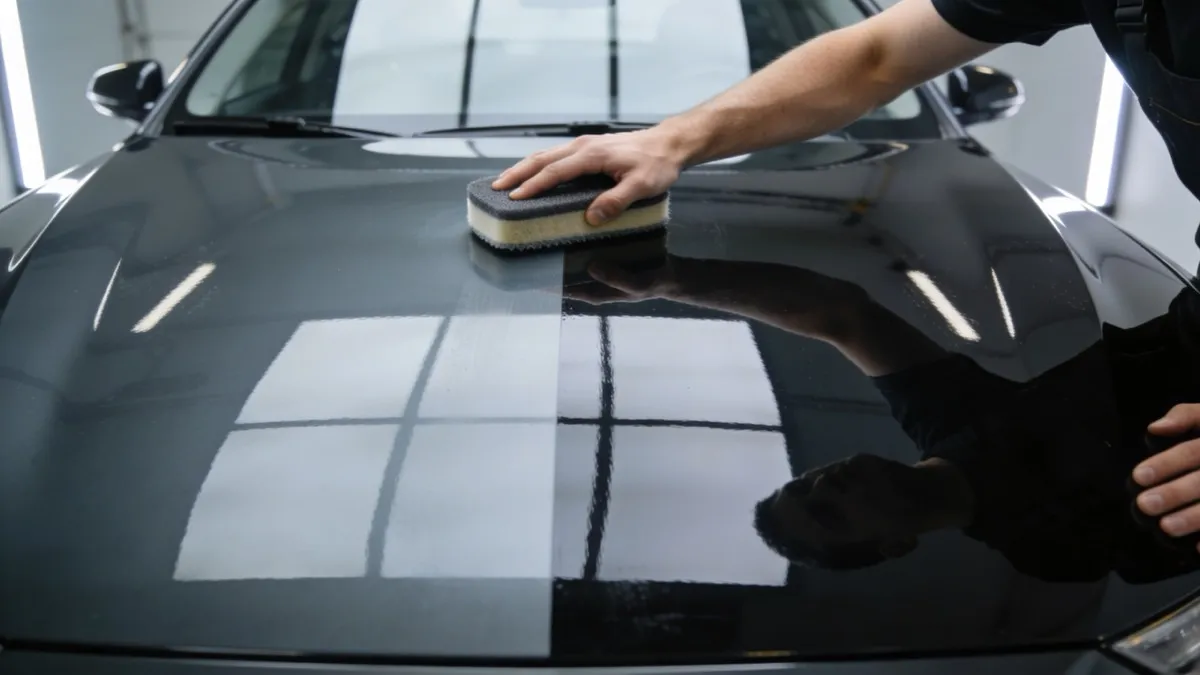
Work in a garage or shaded area between 50°F and 80°F. Apply the coating to the suede applicator in a crosshatch pattern (horizontal passes, then vertical) on one panel at a time. Watch for the flash, the point where the coating begins to look hazy or rainbow-shimmer, then immediately buff off with a clean microfiber towel. Move to the next panel.
Step 5: Cure
Most coatings need 24 to 48 hours of cure time before water exposure. Some advanced formulas like Gtechniq require up to 7 days for full chemical hardness. Don't wash, drive in rain, or park under trees during the cure window.
Maintaining Your Ceramic Coating
A ceramic coating reduces maintenance but doesn't eliminate it. Use a pH-neutral shampoo for regular washes (avoid automatic car washes with brushes), apply a ceramic coating booster spray every 3 to 6 months to refresh the hydrophobic layer, and address bird droppings and tree sap within 24 hours, even on coated paint.
For additional protection against physical damage like hail and parking lot dings, consider pairing your ceramic coating with paint protection film kits on high-impact areas like the hood, fenders, and mirrors. For overnight outdoor parking, car covers for hail protection add another layer of defense. And if your paint needs professional attention before coating, find a qualified shop through our auto paint shop directory.
Frequently Asked Questions
Can I apply ceramic coating myself or do I need a professional?
You can apply ceramic coating yourself with proper surface preparation. Consumer-grade coatings like Avalon King Armor Shield IX and CarPro Cquartz UK 3.0 are specifically designed for DIY application. The key is surface prep: thorough washing, clay bar decontamination, polish if needed, and an IPA wipe-down. Plan for 4 to 8 hours total for a full car including prep. If your paint has significant swirls, oxidation, or damage, a professional polish before coating is worth the investment.
How long does ceramic coating actually last on a daily driver?
On a daily-driven car parked outdoors, expect 1 to 3 years from consumer coatings like Avalon King or Cquartz, and 3 to 5 years from premium options like Gtechniq Crystal Serum Light. Garaged vehicles and properly maintained coatings last longer. Marketing claims of 7 to 10 years are measured under ideal conditions, not daily driving with road salt, UV exposure, automatic car washes, and neglected bird droppings. Using a ceramic booster spray every 3 to 6 months extends effective life by 30 to 50 percent.
Is ceramic coating worth it after a body shop repair?
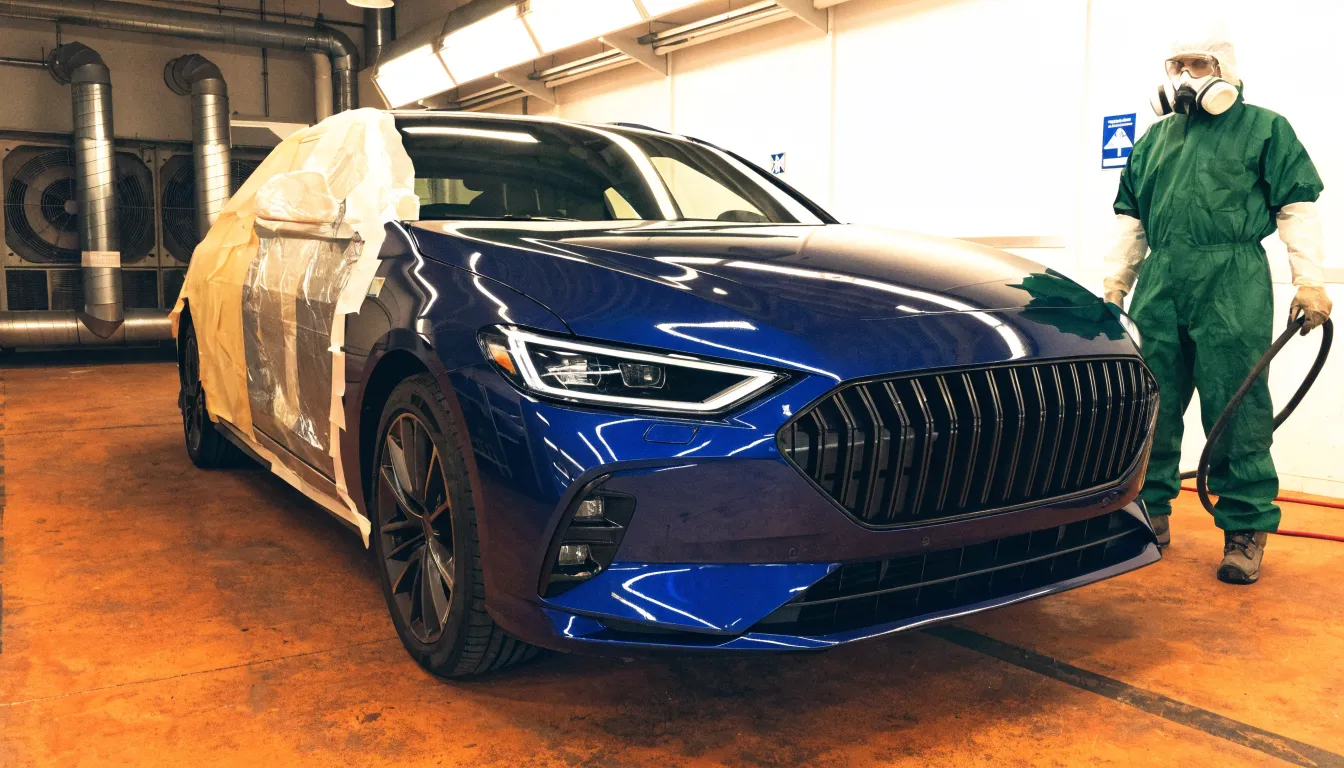
Yes. Fresh paint from a body shop is the ideal surface for ceramic coating because it has no existing contamination, swirl marks, or oxidation. The coating bonds directly to clean clear coat. If you spent $1,500 or more on collision repair with paint work, a $70 ceramic coating protects that investment for years. Apply the coating after the paint has fully cured, which is typically 30 to 90 days after the repair depending on the paint system used.
What's the difference between ceramic coating and graphene coating?
Graphene coatings like Adam's UV Graphene add graphene oxide to the traditional SiO2 ceramic formula. The practical differences: graphene coatings are slightly more resistant to water spotting, generate less static (attracting less dust), and may offer marginally better heat dissipation. In real-world testing, the durability difference between graphene and SiO2 coatings at the same price point is minimal. The biggest advantage of graphene coatings is reduced water spotting, which matters most in hard-water areas.
Do I need to polish my car before applying ceramic coating?
Only if your paint has visible swirl marks, scratches, or oxidation. Ceramic coating locks in the current condition of your paint permanently, so any defects underneath will be sealed in. Hold a flashlight at a 45-degree angle to your paint: if you see spider-web-like swirls, polish first. If the paint looks clean and glossy, skip polishing and proceed with clay bar decontamination and IPA wipe-down. New cars with factory paint in good condition often don't need polishing.