The best DIY paint protection film kits in 2026 are pre-cut PPF packages from XPEL, 3M, SunTek, and LLumar that let you protect high-impact areas for $150 to $600 instead of $1,500 to $5,000 at a professional shop. Pre-cut kits eliminate the hardest part of PPF installation , cutting film on the car , and modern self-healing films make minor installation imperfections disappear within hours. If you're comfortable with wet application (similar to applying a screen protector, just bigger), a DIY PPF kit can save you 50 to 70 percent over professional installation while delivering the same physical protection.
Key Takeaways
- DIY pre-cut PPF kits cost $150 to $600 for partial front coverage, compared to $1,500 to $5,000+ for professional installation of the same film.
- XPEL Ultimate Plus offers the strongest self-healing and brand recognition but commands a 15 to 20 percent price premium over competitors.
- SunTek Ultra delivers the best overall value: 8 mil thickness, 10-year warranty, and excellent self-healing at a lower price than XPEL.
- Pre-cut kits are vehicle-specific, so you get panels shaped exactly to your car's hood, bumper, fenders, and mirrors , no knife work on paint.
- PPF and ceramic coating are complementary, not competing , PPF blocks physical damage while ceramic adds hydrophobic gloss on top.
What Paint Protection Film Actually Does
Paint protection film is a clear, self-healing polyurethane layer that absorbs rock chips, road debris, bug acids, bird droppings, and light scratches before they reach your paint. The technology originated from a U.S. military program , 3M developed helicopter rotor blade protection film during the Vietnam era, and the same polymer chemistry now protects daily-driven cars.
Modern PPF is 6 to 8 mils thick (about the thickness of two sheets of paper), optically clear, and engineered to heal minor scratches when exposed to heat from sunlight or warm water. The film sits on top of your clear coat and takes the abuse that would otherwise create swirl marks, chips, and staining. When the film eventually wears out after 7 to 10 years, you peel it off and the paint underneath looks the way it did the day the film was applied.
For cars that have already had paint work done, PPF is the single most effective way to protect the investment. If you recently paid for a professional paint job, consider a PPF kit for at least the hood and front bumper , those two panels take 80 percent of road debris impact. Check car scratch repair cost to understand what unprotected paint repairs run when chips accumulate.
Best PPF Kits Compared
XPEL Ultimate Plus
XPEL is the most recognized name in paint protection film, and the Ultimate Plus is their flagship product. It uses a 6.5 mil polyurethane construction with an elastomeric polymer top coat that self-heals scratches when exposed to heat above 140°F (sunlight or warm water). XPEL's pre-cut patterns are generated through their proprietary Design Access Program (DAP), which has the largest vehicle template database in the industry , over 80,000 patterns covering most makes and models back to the early 2000s.
A partial front kit (hood, bumper, fenders, mirrors) runs $350 to $600 depending on vehicle size. The film carries a 10-year warranty against yellowing, cracking, peeling, staining, and hazing. The main drawback is price: XPEL typically costs 15 to 20 percent more than comparable films from SunTek or 3M. You're paying partly for the brand and partly for the DAP pattern precision, which matters most on complex curves where fitment is tight.
3M Scotchgard Pro Series
3M has been in the PPF business longer than anyone , they literally invented automotive paint protection film. The Scotchgard Pro Series is their current flagship, and it excels in optical clarity and consistent quality. At 6 mils thick, it's slightly thinner than XPEL, which makes it easier to conform to tight curves but slightly less forgiving on edges.
Pre-cut kits for partial front coverage run $200 to $450. 3M offers a manufacturer warranty, though the duration and terms vary by installer and region. For DIY buyers, the key advantage is availability , 3M film and pre-cut kits are sold through more retail channels than any competitor, including Amazon, auto parts stores, and dedicated PPF retailers. If you want a trusted name with broad support and slightly lower pricing than XPEL, 3M is the pragmatic choice.
SunTek Ultra
SunTek Ultra is the value pick of the top-tier PPF brands, and many professional installers consider it their preferred film. Manufactured by Eastman Chemical Company (a Fortune 500 corporation that also produces LLumar window films), SunTek Ultra offers 8 mil thickness , the thickest of the major brands , with a 10-year warranty and excellent self-healing properties.
Partial front kits typically cost $150 to $350, making SunTek the most affordable top-tier option. The thicker film provides slightly more impact resistance and is more forgiving during installation because it stretches further before reaching its limit. The trade-off is that thicker film can be slightly more visible on edges, though this is negligible on modern vehicles with most pre-cut patterns. For DIY installers looking for the best protection-per-dollar ratio, SunTek Ultra is hard to beat.
LLumar Valor
LLumar Valor is the sister product to SunTek , both are manufactured by Eastman Chemical , positioned as a premium option with an enhanced top coat. It offers self-healing properties, hydrophobic performance straight out of the package, and strong optical clarity. Pre-cut kits for partial front coverage run $200 to $400.
LLumar's advantage is its dealer and installer network, which is one of the largest globally. For DIY buyers, this means pre-cut patterns are widely available and the warranty infrastructure is well-established. The film performs nearly identically to SunTek Ultra in protection, with a slightly different top coat formulation that some installers prefer for its wet-out characteristics during application.
PPF vs Ceramic Coating vs Wax: Which Do You Need?
These three products protect paint in fundamentally different ways, and understanding the difference prevents you from spending money on the wrong solution.
PPF is physical armor. It absorbs rock chips, scratches, and impacts that would damage paint. No other product does this. If your concern is rock chips on highway driving, door dings in parking lots, or debris damage, PPF is the only real solution.
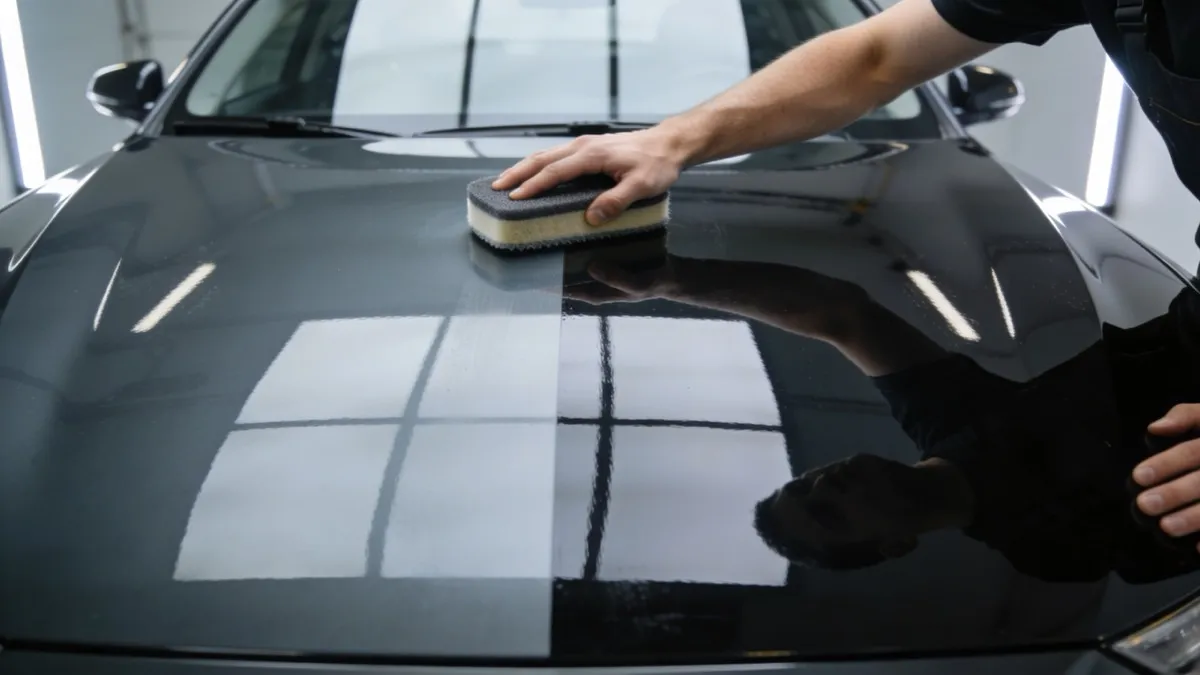
Ceramic coating is a chemical bond that creates a hydrophobic, UV-resistant surface. It makes the car easier to wash, resists water spotting and chemical staining, and adds depth to the paint's gloss. But it doesn't stop a rock chip. See our ceramic coating comparison for a detailed breakdown of what ceramic coatings actually do.
Wax and sealant provide temporary UV protection and water beading. They last weeks to months, not years, and offer minimal physical protection.
The ideal layering is PPF on high-impact areas (hood, bumper, fenders, mirrors, rocker panels) with ceramic coating on top of the PPF and on unfilmed panels. This gives you physical protection where it matters plus whole-car hydrophobic performance and gloss. Many PPF brands, including XPEL and SunTek, now sell ceramic-coated PPF that combines both layers into a single product.
How to Install a Pre-Cut PPF Kit
DIY PPF installation is a patience project, not a skill project. The technique is straightforward, but rushing causes bubbles, lifted edges, and misalignment. Budget 3 to 5 hours for a partial front kit on your first attempt.
Preparation
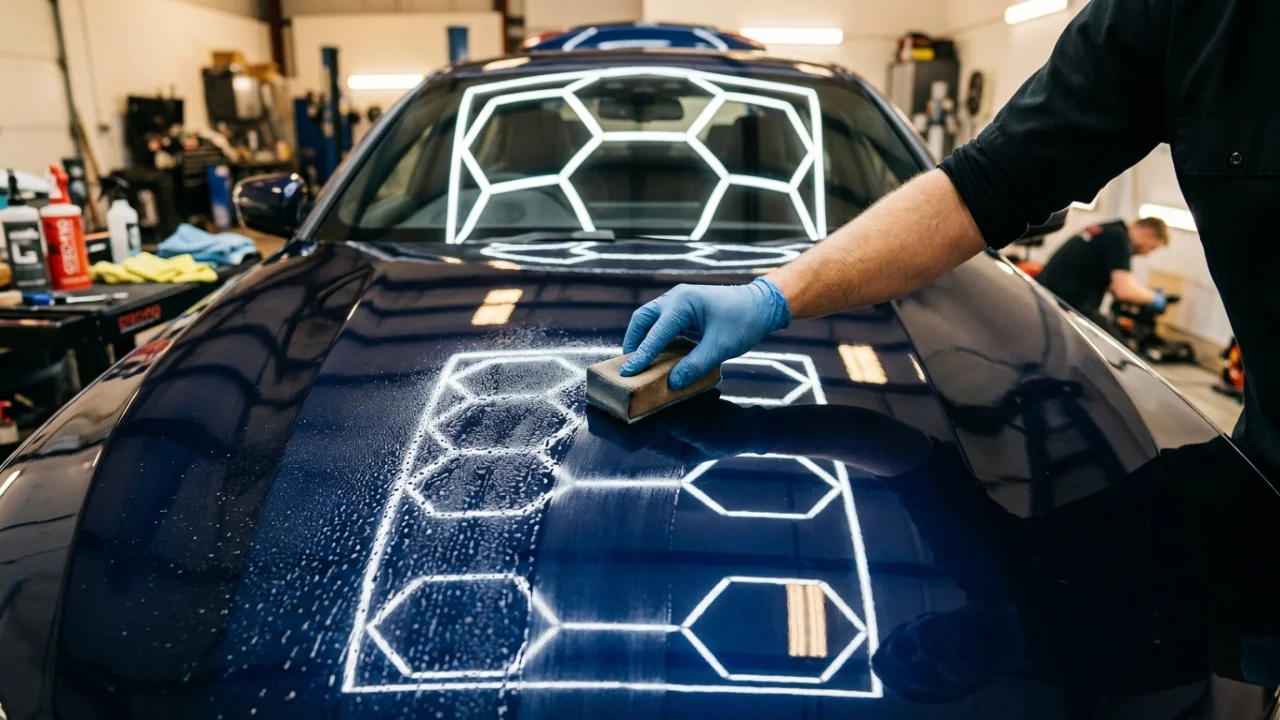
Wash the car thoroughly, then clay bar every panel you're filming. Any contamination trapped under PPF becomes a permanent blemish. Work in a garage or shaded area , direct sunlight activates the adhesive too quickly and prevents repositioning. Ideal temperature is 65 to 80°F. Spray the panel and your fingers liberally with slip solution (a few drops of baby shampoo in a spray bottle of water).
Application
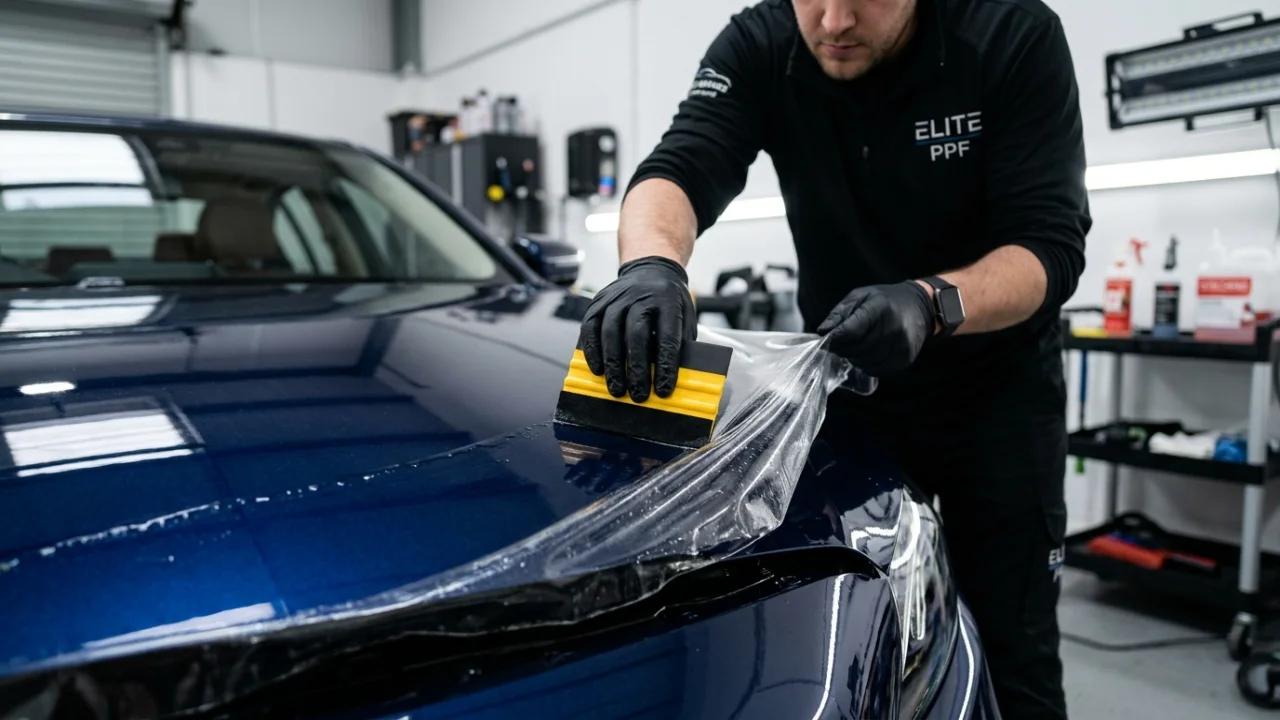
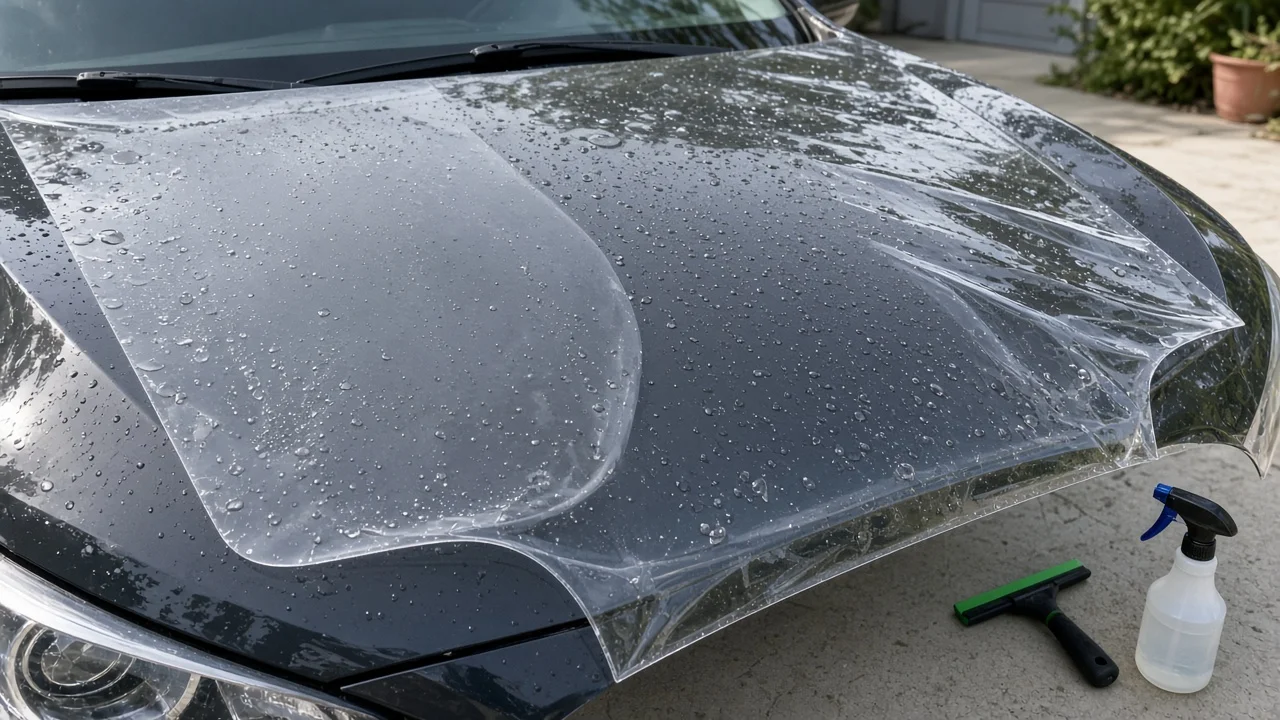
Peel the backing from the pre-cut piece, spray the adhesive side with slip solution, and position it on the panel. The slip solution lets you slide the film into alignment. Once positioned, squeegee from the center outward, pushing water and air bubbles toward the edges. Work slowly and use overlapping strokes. For curved areas (bumper corners, mirror caps), use a heat gun on low setting to soften the film and help it conform.
Finishing
After squeegeeing, wrap edges around panel borders where the kit is designed to tuck. Use a rubber-tipped squeegee for edge work to avoid scratching the film. Small bubbles under the film will disappear within 24 to 48 hours as moisture evaporates through the polyurethane. Don't wash the car or expose it to rain for at least 24 hours after installation to allow the adhesive to fully cure.
Which Areas to Protect First
If you're on a budget, prioritize panels by impact frequency:
- Front bumper : takes the most direct hits from road debris. A partial bumper kit ($50 to $100) is the single highest-value PPF investment.
- Hood : the largest forward-facing panel, and rock chips here are the most visible. Hood kits run $80 to $200.
- Front fenders : catch side-spray debris from your own tires. Usually included in partial front kits.
- Side mirrors : small area, easy to film, and mirror replacement is disproportionately expensive on modern cars.
- Rocker panels and door edges : high-scuff zones in parking lots. Door edge guards are the cheapest PPF product ($20 to $40 for all four doors).
A full front kit covering bumper, hood, fenders, and mirrors is the sweet spot for most owners. It protects the panels that actually get hit while keeping the cost under $600. Full vehicle wraps ($500 to $2,000 DIY, $3,000 to $8,000 professional) make sense for high-value or lease vehicles where any paint damage is expensive. Also consider car covers for overnight outdoor parking , PPF handles daily driving debris but isn't designed for large hail impacts.
Pre-Cut vs Bulk Roll: Which to Buy
Pre-cut kits are the right choice for almost every DIY installer. They eliminate the need to cut film on the car (risking blade scratches on paint), ensure accurate fitment for your specific vehicle, and reduce waste. The slight premium over bulk film ($20 to $50 more per panel) is worth it for the time savings and reduced risk alone.
Bulk rolls make sense only if you're filming non-standard areas (interior trim, door sills, luggage areas) or if your vehicle doesn't have pre-cut patterns available. A 60-inch by 25-foot bulk roll of mid-tier PPF runs $200 to $400 and provides enough film for a full vehicle with practice waste. You'll need a plotter or extremely steady hands with a blade , and even professionals occasionally nick paint when cutting on the car.
Warranty Considerations for DIY Installation
Most PPF manufacturers require professional installation for their full warranty to apply. XPEL, 3M, SunTek, and LLumar all tie warranty claims to certified installer records. If you install the film yourself, you typically retain the material warranty (covering defects like yellowing or delamination) but lose the labor warranty (covering installation-related issues like lifting edges or bubbling).
In practice, the material warranty is the one that matters. Installation problems show up within the first week and are your responsibility to fix regardless of who installed it. Material defects like yellowing or hazing appear years later and are covered under the material warranty whether or not the installation was professional. Check the specific warranty terms before purchasing , some retailers sell DIY kits with modified warranty terms that explicitly cover self-installation.
For professional paint protection near you, many body shops and detail shops offer PPF installation with full manufacturer warranty support.
Frequently Asked Questions
How long does paint protection film last?
Top-tier PPF from XPEL, 3M, SunTek, and LLumar lasts 7 to 10 years under normal driving conditions. All four brands offer 10-year manufacturer warranties against yellowing, cracking, and peeling. Actual lifespan depends on UV exposure, climate, and maintenance , cars garaged overnight and washed regularly can see PPF last well beyond the warranty period. When the film eventually degrades, you peel it off and the paint underneath is preserved.
Can I install PPF myself or do I need a professional?
You can install pre-cut PPF kits yourself with basic tools (spray bottle, squeegee, heat gun) and patience. DIY installation saves 50 to 70 percent over professional shops. Flat panels like hoods and fenders are the easiest starting point , expect 3 to 5 hours for a partial front kit on your first attempt. Complex curves (bumper corners, mirror caps) are more challenging and benefit from heat gun work. Most small bubbles self-heal or evaporate within 48 hours.
Is PPF better than ceramic coating?
PPF and ceramic coating serve different purposes and work best together. PPF is physical protection , it absorbs rock chips, scratches, and road debris that ceramic coating can't stop. Ceramic coating is chemical protection , it creates a hydrophobic surface that resists water spots, UV damage, and chemical staining. The ideal setup is PPF on high-impact areas (hood, bumper, fenders) with ceramic coating applied over the PPF and on unfilmed panels for whole-car protection.
How much does a DIY PPF kit cost compared to professional installation?
A DIY pre-cut partial front kit (hood, bumper, fenders, mirrors) costs $150 to $600 depending on the brand and vehicle size. Professional installation of the same coverage runs $1,500 to $5,000, with the difference being entirely labor cost. Full vehicle DIY kits run $500 to $2,000, compared to $3,000 to $8,000 professionally installed. The film itself is the same product either way , you're paying for the installer's skill and warranty coverage.
Does PPF damage paint when removed?
No. Modern PPF uses pressure-sensitive adhesive designed for clean removal. When you peel off aged PPF, the paint underneath should be in the same condition as the day the film was applied , often noticeably better than unprotected panels that weathered UV and debris exposure. In rare cases, very old film (12+ years) or film applied over fresh paint that was not fully cured can leave adhesive residue, but this is removable with adhesive remover or isopropyl alcohol without damaging the clear coat.