Ceramic coating has gone from a niche detailing product to a mainstream upsell at dealerships and body shops. The marketing sounds incredible: permanent protection, self-cleaning properties, scratch resistance. But after talking to independent detailers who have no financial stake in the sale, the picture is more honest.
What Is Ceramic Coating?
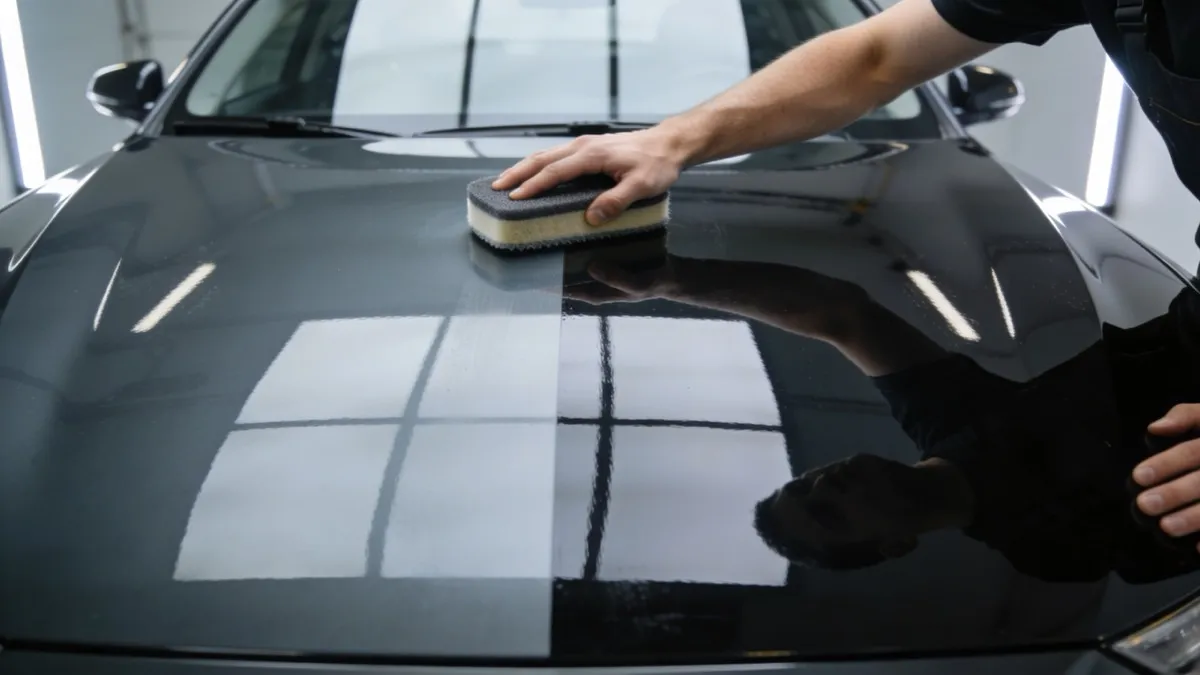
Ceramic coating is a liquid polymer applied to your car's exterior that chemically bonds with the factory paint. Once it cures, it creates a semi-permanent protective layer that's harder and more durable than traditional wax or sealant.
The active ingredient in most ceramic coatings is silicon dioxide (SiO2). Higher-end products also include titanium dioxide (TiO2) for additional UV protection and surface hardness. The coating fills microscopic pores in the clear coat, creating a smooth, hydrophobic surface that repels water and contaminants.
What Ceramic Coating for Cars Actually Does
- Hydrophobic properties: Water beads and sheets off the surface, carrying dirt with it. This is the most noticeable real-world benefit.
- UV protection: Blocks some UV radiation that causes paint oxidation and color fading over time.
- Chemical resistance: Provides a barrier against bird droppings, tree sap, and acid rain that would etch unprotected clear coat within hours.
- Easier cleaning: Dirt and grime don't bond as strongly to the coated surface, making washes faster and less abrasive.
- Enhanced gloss: A properly applied coating adds measurable depth and shine to the paint.
What It Doesn't Do (Despite the Marketing)
No ceramic coating is scratch-proof. Full stop. The "9H hardness" claims in marketing refer to pencil hardness scale, not Mohs mineral hardness. A shopping cart, a rock, or an aggressive car wash will still scratch through a ceramic coating.
- Won't prevent scratches: It can reduce minor swirl marks from washing, but it won't stop physical impacts
- Won't prevent dents: The coating is a few microns thick. It has zero impact-absorbing properties
- Won't last forever: Even the best professional coatings degrade over 2-5 years
- Won't eliminate washing: You still wash the car; dirt just releases more easily
- Won't fix existing paint problems: Swirl marks, scratches, and oxidation must be corrected before the coating goes on
Professional vs DIY Ceramic Coating
The gap between professional and DIY ceramic coating is real. It's mostly about preparation, not the product itself.
A professional application starts with hours of paint correction: polishing out swirl marks and scratches so the coating locks in a flawless surface. The coating then needs to cure in controlled conditions, specific temperature ranges, humidity levels, no airborne dust. Skip that prep and the coating either doesn't bond properly or seals in defects.
- Professional: $500-2,500 depending on the product tier, vehicle size, and how much paint correction is needed
- DIY consumer-grade: $30-100 for the product (results depend entirely on your prep and application skills)
- Professional coatings last 2-5 years; consumer-grade coatings last 6-12 months
- Improper application can leave high spots, streaks, or uneven protection that's difficult to remove
Cost Breakdown: What You're Actually Paying For
Most people are surprised when they find out where the money goes in a professional ceramic coating job:
- Paint decontamination (clay bar, iron remover): 1-2 hours
- Paint correction (machine polishing): 4-12 hours depending on paint condition
- Ceramic coating application: 1-2 hours
- Curing time: 12-24 hours in a controlled environment
- The coating product itself: typically $50-200 worth of material
- Everything else is skilled labor and time
Paint correction alone (without any ceramic coating) costs $300-800. If your paint is already in solid shape, the coating-only cost is much lower. Most of the expense on a full package is fixing the paint first.
Who Should (and Shouldn't) Get Ceramic Coating for Cars
Ceramic coating makes the most sense for:
- New cars you plan to keep long-term: Locking in factory-fresh paint from day one is the ideal scenario
- Dark-colored cars: Black, navy, and dark gray show swirl marks and water spots more than any other color
- People who care about appearance but don't want to spend weekends waxing
- Cars in challenging environments: coastal salt air, dense tree coverage, industrial areas with fallout
It probably doesn't make sense for:
- Cars you're selling within a year: The coating won't add enough resale value to justify the cost
- Older cars with badly neglected paint: Combined cost of correction plus coating may exceed any realistic value gain
- People who rarely wash their car. The coating still needs maintenance to perform as advertised.
- Lease vehicles: You won't own the car long enough to see the return on investment
Alternatives to Ceramic Coating
- Paint protection film (PPF): A clear urethane film that physically blocks scratches and rock chips. Better physical protection than ceramic but significantly more expensive ($1,500-6,000).
- Spray ceramic sealants: Consumer products that deliver some ceramic-like benefits for $15-30 per application, lasting 3-6 months.
- Traditional carnauba wax: Provides UV protection and good shine for 4-8 weeks. Much cheaper, but needs frequent reapplication.
- Paint sealant: Synthetic polymer sealant lasts 4-6 months with solid protection. The practical middle ground for most drivers.
Ceramic coating for cars is a real product that delivers real benefits, just not the miraculous ones the marketing suggests. Think of it as excellent paint insurance with a gloss bonus, not a force field.
Sources
- CCC Intelligent Solutions — collision repair cost benchmarks and industry data
- Insurance Information Institute — auto insurance and repair cost statistics