A faded hood that makes a 2019 vehicle look a decade older. A parking lot scrape that covers half a door. A weekend project car waiting on a fresh coat before its first show. The circumstances that lead someone to research car paint job cost are wildly different, yet the question is almost always the same: how much is this actually going to run?
The honest answer ranges from under $500 for a basic economy respray to well over $10,000 for a high-end custom paint job, and several legitimate options exist in between. Understanding what drives that range is what separates car owners who get a fair deal from those who either overpay at a premium shop or get burned by a cut-rate job that starts peeling within a year.
This guide breaks down 2026 car paint job pricing by service tier, vehicle size, paint type, and provider — with real cost examples and the factors that move the number up or down.
How much does a car paint job cost in 2026?
The short answer: a full car paint job costs between $500 and $10,000-plus depending on the quality tier, shop type, vehicle size, and paint choice. Most car owners who want a presentable result without a show-quality finish land somewhere between $1,500 and $5,000.
Here's a quick overview before diving into the details:
| Service Tier | Typical Cost Range | What's Included |
|---|---|---|
| Basic / economy respray | $500–$1,500 | Single-stage paint, minimal prep, limited color options |
| Standard respray | $1,500–$3,500 | Two-stage paint (base + clear coat), moderate prep, color options |
| Premium respray | $3,500–$7,500 | Full disassembly, wet sanding, factory-level finish |
| Custom / show quality | $7,500–$20,000+ | Specialty paint, extensive prep, multiple stages, artistic work |
These are national averages based on 2026 industry data. Actual prices vary based on where the vehicle is located, the shop's overhead and labor rates, and the specific condition of the vehicle before painting begins.
Full car paint job price: what each tier actually delivers
Understanding the difference between tiers matters more than the sticker price alone. A $900 paint job and a $3,500 paint job aren't the same product applied to the same surface. The gap reflects real differences in preparation, materials, and labor.
Basic / economy paint jobs ($500–$1,500)
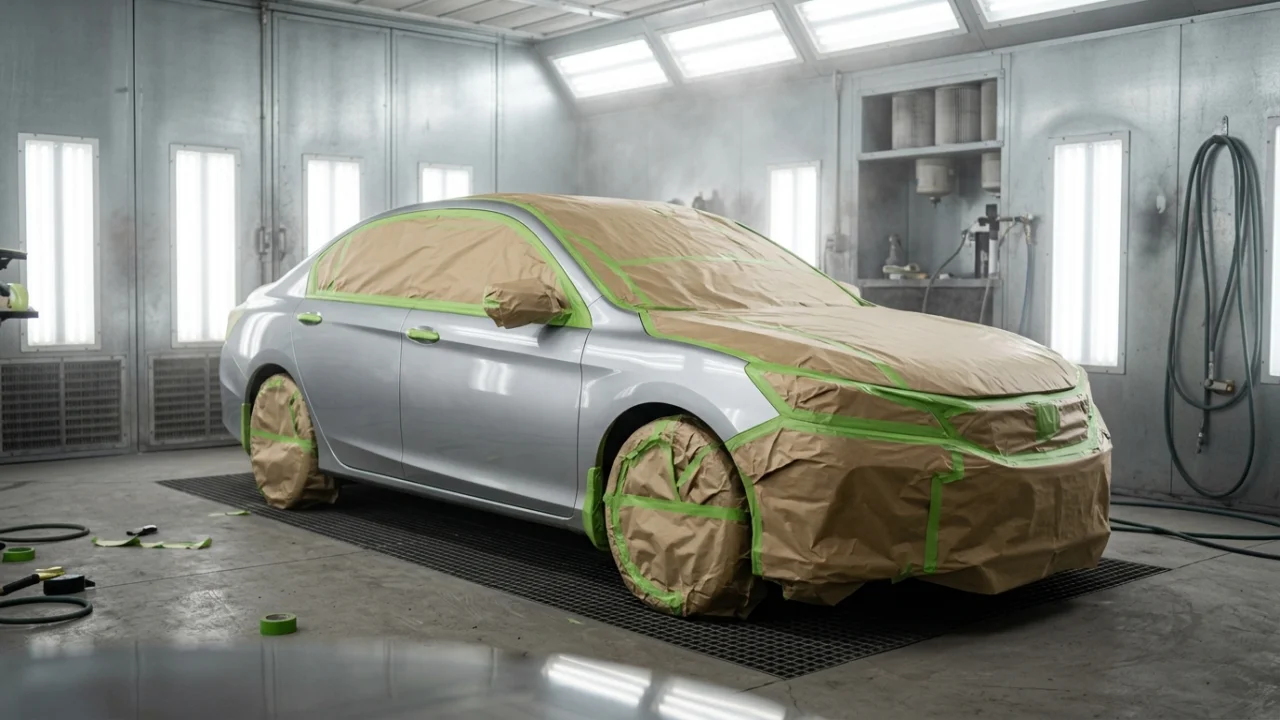
Economy paint jobs — often associated with national franchise chains — cover the most visible exterior panels with a single-stage paint that combines color and gloss in one layer. These jobs typically skip disassembly of trim, handles, and weather stripping; painters mask or work around them instead of removing parts for cleaner edges. Prep work is minimal: light sanding of the existing surface without stripping to bare metal.
The result is functional. From 10 feet away in daylight, the vehicle looks freshly painted. Closer inspection often reveals overspray on rubber seals, inconsistent edges at trim lines, and a thinner paint film that's more susceptible to chipping and fading over time. Economy jobs typically carry 1-year warranties or none at all.
This tier suits daily drivers with significant pre-existing cosmetic wear, vehicles being prepared for resale where appearance matters but deep quality does not, or owners on strict budgets who prioritize coverage over longevity.
Standard respray ($1,500–$3,500)
Standard-tier resprays use a two-stage paint system: a base coat (the color layer) followed by a separate clear coat (the transparent protective layer that provides gloss and UV protection). This is the same system most vehicle manufacturers use from the factory.
At this tier, shops invest more time in surface preparation — typically wet sanding the existing paint smooth, addressing rust spots, and applying primer where needed. Some trim pieces may be removed for cleaner paint edges. Color matching is more precise, and the finish holds up better over time with proper care.
Car owners choosing this tier are typically repainting a vehicle they plan to keep for several years, correcting significant sun fading or oxidation on older vehicles, or touching up accident damage that requires panel-level repainting. Warranties typically run two to five years.
Premium respray ($3,500–$7,500)
Premium-tier jobs begin with full or near-full disassembly: door handles, trim pieces, sometimes windows and weather stripping, come off the vehicle before a drop of paint is applied. The existing finish is stripped or block-sanded to a smooth substrate. Multiple layers of primer are applied and sanded between coats. The final clear coat is applied in multiple passes and wet-sanded after curing, then machine-polished to a deep, glossy finish.
The result is paint that matches or exceeds factory standards in both appearance and durability. This tier is appropriate for collector cars, vehicles undergoing restoration, or any situation where appearance quality must be indistinguishable from new. Warranties of five years or longer are common.
Custom and show-quality paint ($7,500–$20,000+)
Custom paint jobs go beyond replication — they involve specialty paints (candy, chameleon, pearl, matte, satin, or multi-stage metallic), hand-painted graphics or artwork, airbrushed designs, or color changes that require repainting interior jambs, engine bays, and trunk areas to match. The vehicle may spend weeks in the shop.
At the top of this range, custom car paint job cost reflects the skill of individual painters as much as materials. Award-winning custom shops command premium rates for their reputation and artistic capability.
Maaco paint job cost and national franchise pricing
Maaco is the most widely recognized national auto painting franchise in the United States, with locations across the country. Understanding Maaco paint job cost helps car owners set a baseline for economy and standard-tier pricing in their market.
Maaco's pricing structure (as of 2026) typically runs:
- Economy single-stage: $500–$800 for compact vehicles, $700–$1,200 for larger vehicles
- Standard two-stage: $1,200–$2,000 depending on vehicle size and color
- Premium packages: $2,500–$3,500+ at locations offering higher-tier services
Maaco prices vary by franchise location — individual owners set their own rates within corporate guidelines — so costs in high-labor-rate markets like Los Angeles or New York run higher than in lower-cost Midwest markets. Getting a quote directly from the local shop is always the most accurate starting point.
National chains offer predictable pricing and widespread locations. Independent shops may offer more competitive pricing on standard and premium work, or more flexibility on complex color changes. Comparing estimates from both types of shops gives car owners the clearest picture of the local market rate.
Real-world examples: what car owners actually paid
Marcus, Dallas, TX: Marcus bought a 2014 Honda Accord at auction for $4,200. The car ran well but had severe sun oxidation on the roof and hood — the silver paint had turned chalky and flat. He got three estimates. The lowest came in at $650 from a local economy shop. A national franchise quoted $1,100. A mid-size independent shop offered a full two-stage respray with proper prep for $2,100. Marcus chose the independent shop, reasoning that a $1,400 investment on a car he planned to keep five more years made more financial sense than a $650 patch that might not hold through another Texas summer. The final job came in at $2,250 after discovering surface rust on the roof that required additional treatment.
Diana, Portland, OR: Diana's 2018 Subaru Outback was keyed across both driver-side panels in a parking garage. Her insurance adjuster estimated $1,800 for panel-level repairs, but Diana had already been planning to repaint the car a different color — she wanted to go from silver to a deep blue. She decided to pay the insurance deductible and use the payout toward a full car respray, paying the difference out of pocket. The total respray cost $3,800 at a certified shop; she paid $2,300 after the $1,500 insurance contribution. The color change required painting door jambs and the tailgate interior to match, which added $400 to the quoted price.
Robert, Phoenix, AZ: Robert owns a 1967 Ford Mustang that he had been restoring over three years. The bodywork was finished and he was ready for paint. He obtained five quotes ranging from $4,500 to $14,000. The $4,500 quote was from a shop that didn't specialize in classic vehicles. The $14,000 quote came from a respected local restoration shop with a waiting list. Robert chose a shop in the middle at $8,200, which included a full block sand, epoxy primer, a show-quality base/clear system in factory Brittany Blue, and painting of the engine bay and trunk. He considered the investment justified on a vehicle he had spent $22,000 restoring over three years.
Factors that drive car paint job cost up or down
The difference between a $1,200 quote and a $4,000 quote for the same vehicle often comes down to a small set of variables.
Vehicle size
Larger vehicles require more paint, more labor, and more time in the booth. A compact sedan and a full-size pickup truck aren't priced the same for a respray even at the same quality tier. Rough size multipliers:
| Vehicle Type | Relative Cost vs. Compact Sedan |
|---|---|
| Compact sedan / hatchback | Baseline |
| Midsize sedan / crossover | 10–20% higher |
| Full-size SUV | 25–40% higher |
| Full-size pickup truck | 30–50% higher |
| Minivan | 25–35% higher |
Paint type and color
Standard solid colors (white, black, silver, gray) are least expensive. Metallic paints — which contain metallic flakes that reflect light — require additional skill to apply consistently and may cost 10 to 20% more. Pearl paints involve multiple layers for their depth effect and are more expensive still. Specialty finishes — candy colors, chameleon (color-shifting), matte, satin — require specific application techniques and significantly more material cost.
Color changes add cost compared to repainting the same color. When the new color differs from the original, painters must also repaint door jambs, the trunk interior, and hood underside — otherwise the original color shows when doors are open. This can add $300 to $800 to the total.
Surface preparation
Preparation is where quality paint jobs separate from economy jobs. Stripping existing paint, addressing rust or body filler, applying multiple primer coats, and sanding between stages all take time and skill. A vehicle in poor cosmetic condition requires more prep than one with good existing paint, and prep hours add directly to the final bill.
Geographic location
Labor rates differ significantly by market. Urban areas — especially coastal metros — have higher shop overhead and higher technician wages. A standard respray that costs $2,000 in a mid-size Midwestern city might run $3,000 to $3,500 for the same quality in Los Angeles or New York.
Shop type and certifications
Shops with manufacturer certifications (OEM-certified), climate-controlled paint booths, and trained refinish technicians charge more per hour. That premium typically reflects better equipment, more consistent results, and longer warranties. Shops without these certifications may offer lower prices but with less predictable outcomes — particularly on complex color matches or premium finishes.
Cheap car paint jobs: when budget options make sense (and when they don't)
A cheap car paint job isn't automatically a bad one — it depends on what the owner needs. Economy-tier work serves legitimate purposes for certain situations.
Situations where budget paint jobs make sense:
- Vehicle is worth $3,000 to $5,000 and a full respray wouldn't be cost-justified
- Car is being prepared for private sale where cosmetic improvement matters but long-term durability doesn't
- Daily driver with minor cosmetic wear that the owner wants to freshen up
- Fleet vehicle or work truck where function matters more than appearance
Situations where budget paint jobs are a poor investment:
- Vehicle is being restored or will be kept long-term — economy paint often fades and chips within two to three years in harsh climates
- The goal is a specific match to factory paint on a newer vehicle — economy shops often lack color-matching precision
- The vehicle has existing rust or significant body filler work — inadequate prep allows moisture under the paint, accelerating failure
- The car will be sold to a buyer who will inspect it closely — a low-quality paint job is visible under close inspection or in certain lighting
For collision damage situations where insurance is involved, collision repair typically requires OEM-level refinishing to meet insurance and warranty standards. In those cases, economy-tier shops are often not appropriate.
How to get an accurate car paint job estimate
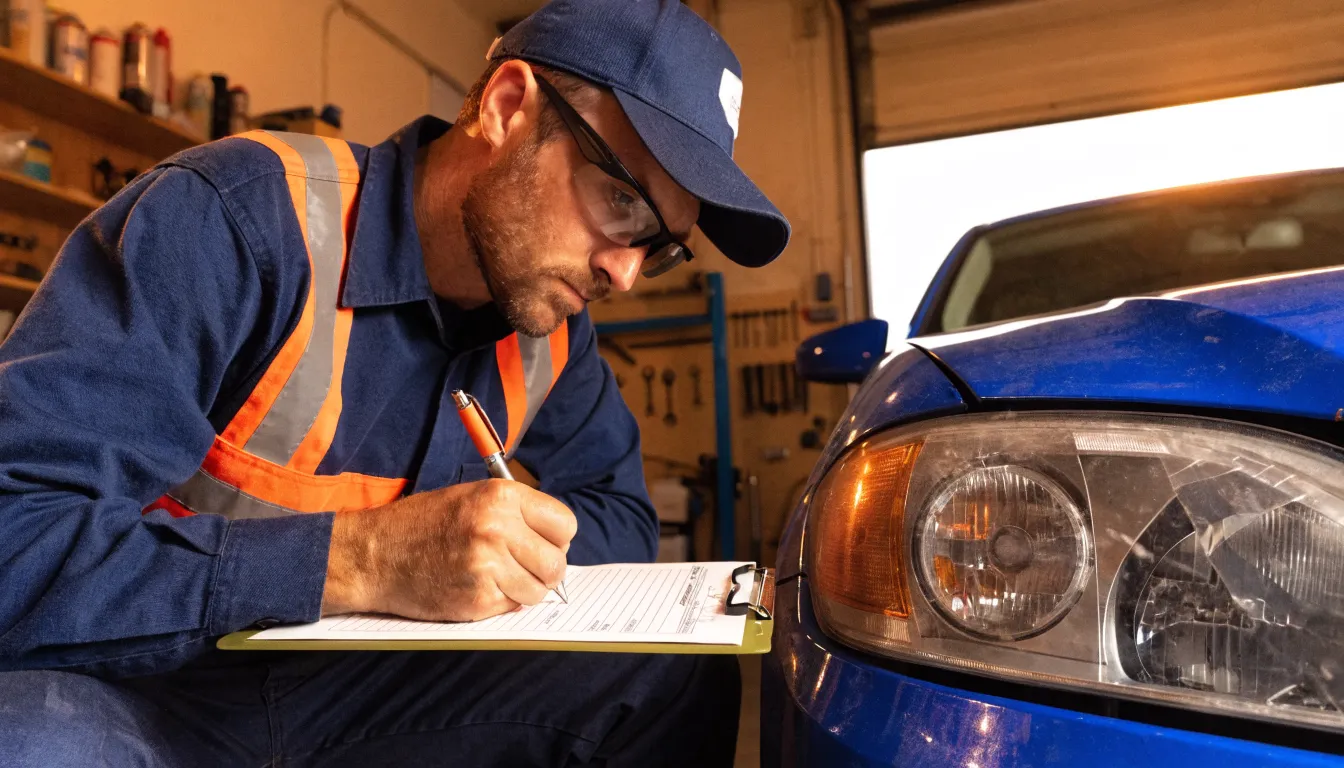
No online price guide substitutes for a written estimate from a local shop. Paint job pricing varies too much by market, vehicle condition, and shop capabilities to produce a precise number without seeing the vehicle in person.
Steps to get useful estimates:
-
Get at least two or three written quotes. Prices vary significantly between shops, and a single quote provides no context. Three quotes reveal what the local market actually charges.
-
Ask what the estimate includes. Does it include primer? How many coats of clear? Will trim be removed or masked? What preparation steps are included? Scope differences explain most price variation between quotes.
-
Ask about warranty terms. A shop confident in their work offers a written warranty. Economy shops may offer none; quality shops typically offer two to five years on paint defects.
-
Inspect examples of completed work. Ask to see photos or visit the lot to examine finished vehicles. Look for consistent coverage, clean edges at trim lines, and absence of orange peel texture (a pebbly surface texture caused by improper application or spray distance).
-
Verify the shop handles your paint type. Not all shops have experience with specialty finishes — candy, matte, or color-shifting paints require specific equipment and skills. Ask directly if the shop has completed similar work.
DIY vs. professional car paint jobs
Some car owners consider a DIY paint job to cut costs. Understanding what that actually involves helps set realistic expectations.
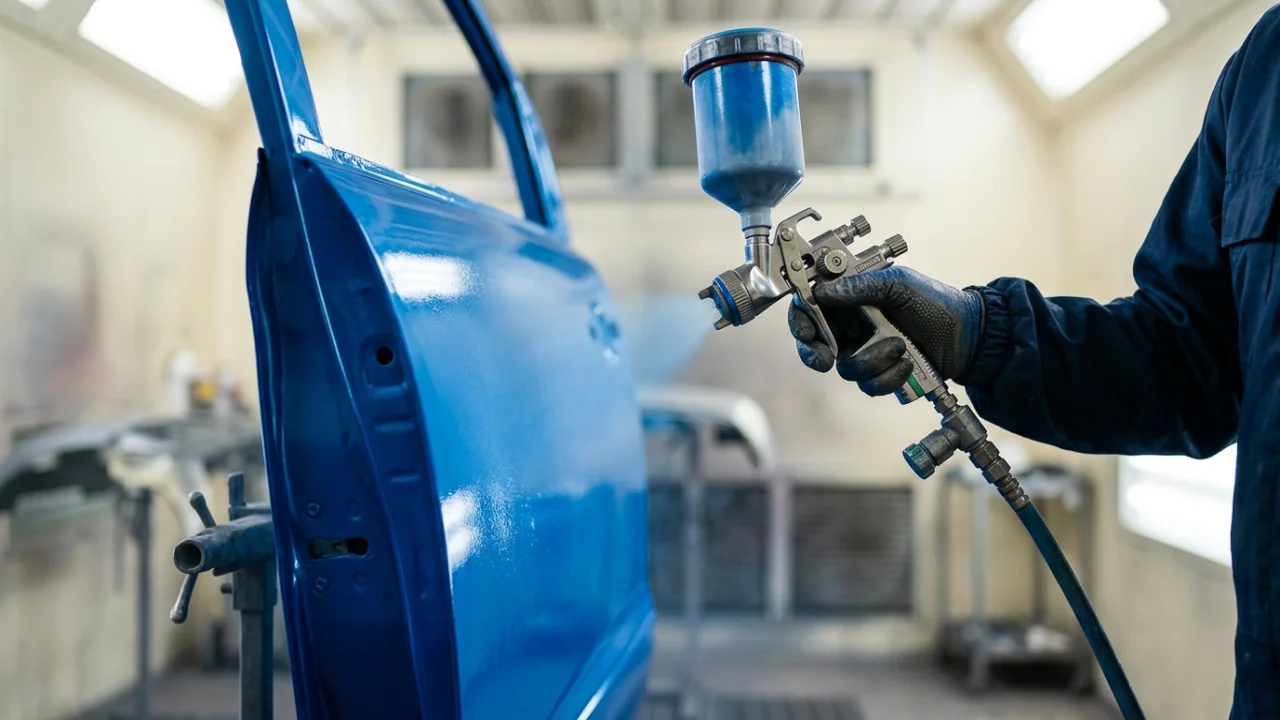
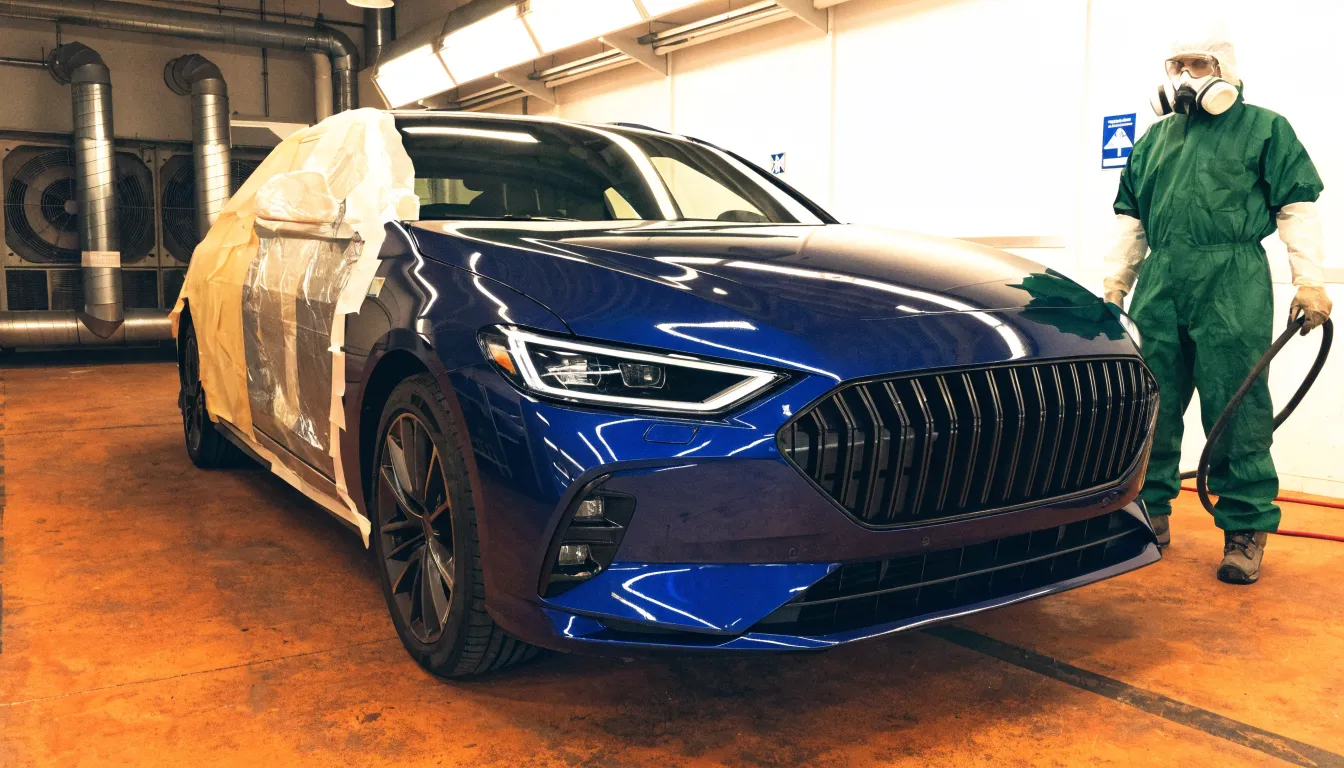
A professional paint job takes place in a climate-controlled, dust-free paint booth with industrial spray equipment. Technicians are trained in color mixing, spray technique, and multi-stage application. The materials are commercial-grade two-part urethane paints and clear coats.
A DIY approach typically means rattle cans or a consumer-grade spray gun in a garage or driveway. Results vary enormously based on the painter's skill, the quality of surface preparation, and environmental conditions. Dust contamination, runs, uneven coverage, and poor clear coat adhesion are common pitfalls for first-time painters.
DIY makes sense primarily for:
- Spot-touching small chips and scratches with touch-up paint pens ($10 to $30)
- Rattlecan resprays on vehicles with purely functional (not cosmetic) goals
- Practice panels for those developing spray painting skills
For any vehicle where the final appearance matters, professional results require professional methods. The auto painting process involves equipment and controlled environments that aren't practically replicable in a home garage.
Industry data from the Automotive Body Parts Association and refinish training standards from I-CAR both emphasize that proper surface preparation and controlled application environments are the largest determinants of paint job longevity — factors that favor professional shops over DIY attempts for any finish meant to last.
Cost by vehicle size
Vehicle size is one of the biggest cost multipliers. Larger panels need more material, more labor time, and more masking. Here's how 2026 paint job costs break down by vehicle type for a mid-range base coat/clear coat job.
| Vehicle type | Mid-range paint cost (2026) | Compared to sedan |
|---|---|---|
| Compact car (Civic, Corolla) | $2,000 – $3,500 | Baseline |
| Mid-size sedan (Camry, Accord) | $2,500 – $4,000 | +10 to 15% |
| Full-size sedan (Charger, Impala) | $2,800 – $4,500 | +15 to 25% |
| SUV / crossover (RAV4, Explorer) | $3,000 – $5,500 | +20 to 35% |
| Full-size truck (F-150, Silverado) | $3,500 – $6,000 | +30 to 40% |
| Van / large SUV (Suburban, Transit) | $4,000 – $7,000 | +40 to 60% |
These estimates assume a standard same-color respray. Color changes, metallic finishes, and rust repair add to these numbers regardless of vehicle size.
Chain vs local shop vs dealership: cost comparison
Where you take the car matters as much as the tier you pick. Here's how the three main options compare in 2026.
| Option | Typical price | Best for | Trade-off |
|---|---|---|---|
| Chain (Maaco, Earl Scheib-style) | $900 – $2,500 out the door | Budget refresh, older cars, daily drivers | Fast, cheap, variable prep quality |
| Local independent body shop | $2,000 – $6,000 | Quality respray, color changes, lasting finish | Higher cost, longer wait |
| Dealership body shop | $4,000 – $10,000+ | Factory-match color, warranty, leases | Highest labor rates |
Chain shops (Maaco)
Chains are the budget lane. In 2026, Maaco advertises Basic, Preferred, and Premium packages starting near $600, $1,000, and $1,500, but real out-the-door prices run 30% to 50% higher once body prep, rust repair, and jamb work are added, so Basic realistically lands around $900 to $1,400 and Premium around $1,800 to $2,500 (CarPaintJobCost.com, "Maaco Paint Job Cost 2026"). Maaco's Basic uses single-stage enamel with a 1-year warranty; Premium uses base coat plus clear coat with a longer warranty. For the full breakdown, see our Maaco paint job cost guide and our Maaco review.
Local independent shops
A good local body shop charges more but controls prep, uses better materials, and can match a color or do a clean color change. This is the sweet spot for anyone who wants the paint to look right and last more than a couple of years. Prices vary by region and shop reputation. Compare a few quotes.
Dealerships
Dealership body shops carry the highest labor rates and are usually overkill for an older car. They make sense when you need an exact factory color match, a warranty-backed repair, or you're fixing a lease before turn-in. The main reason dealerships cost more is labor rate: they charge well above an independent shop for the same hours of work.
Is repainting your car worth it?
Compare the paint cost to the car's value. A $3,000 respray on a $4,000 car rarely makes financial sense unless you plan to keep it for years. On a car you love and intend to drive for a long time, fresh paint that stops rust and restores the look can absolutely be worth it.
Rough guide:
- Selling soon? A cheap chain respray can improve curb appeal, but buyers spot budget paint. Often not worth a premium job.
- Keeping it for years? A quality mid-range paint job protects the body and looks good daily. Worth it.
- Fixing rust or damage? Repainting to stop spreading rust protects the car's structure and is usually money well spent.
If you're weighing paint against other body work, our auto body repair cost guide breaks down what related repairs run in 2026.
Sources
- CostHelper, "How Much Does It Cost to Paint a Car" — https://cars.costhelper.com/auto-painting.html (retrieved 2026-07-24)
- CarPaintJobCost.com, "Maaco Paint Job Cost 2026: Tier-by-Tier Honest Breakdown" — https://carpaintjobcost.com/maaco-paint-job-cost (retrieved 2026-07-24)
- Plymouth Rock Assurance, "Does car insurance cover paint damage?" — https://www.plymouthrock.com/resources/does-car-insurance-cover-paint-damage (retrieved 2026-07-24)
Key takeaways
- Car paint job cost ranges from $500 to $20,000+, depending on service tier, vehicle size, paint type, and shop. Most owners land in the $1,500 to $5,000 range for quality work.
- Economy jobs ($500–$1,500) use single-stage paint with minimal prep and are appropriate for budget situations, resale prep, or vehicles with limited remaining value.
- Standard resprays ($1,500–$3,500) use two-stage base/clear systems with proper preparation — the best value tier for most car owners repainting a vehicle they plan to keep.
- Premium and custom jobs ($3,500–$20,000+) involve full disassembly, extensive surface prep, and specialty materials. Appropriate for collector vehicles, restorations, and custom projects.
- Maaco and national franchise pricing typically runs $500 to $3,500 depending on package tier and location, with prices varying by franchise owner.
- Getting three written estimates is the most reliable way to understand what a fair price is in a specific local market.
- Preparation quality determines longevity. A cheaper job with poor prep will fail sooner than a properly prepped job regardless of the paint brand used.
Sources
- CCC Intelligent Solutions — collision repair cost benchmarks and industry data
- Insurance Information Institute — auto insurance and repair cost statistics
FAQ: car paint job cost questions
How much does a car paint job cost for a full respray?
A full car respray costs $500 to $1,500 for an economy single-stage job, $1,500 to $3,500 for a standard two-stage respray, $3,500 to $7,500 for a premium shop-quality finish, and $7,500 to $20,000 or more for custom and show-quality work. The most common range for owners wanting a quality, durable result on an everyday vehicle is $1,500 to $3,500. Vehicle size, paint type, and geographic location all affect where in the range a specific job lands.
Is a Maaco paint job worth it?
Maaco and similar national chain shops offer predictable, accessible pricing for economy and standard-tier paint work. Their jobs are worth the cost when the goal is cosmetic improvement on a high-mileage daily driver, resale preparation, or freshening up a vehicle without a major investment. They're less suited to precision color matching, specialty finishes, or situations where the paint needs to match factory quality on a newer vehicle. Getting a quote from a Maaco location and comparing it with two or three independent shop estimates gives the clearest sense of whether the price-to-quality ratio makes sense for a specific situation.
Does a paint job add value to a car?
A paint job can improve a vehicle's resale value, but rarely dollar-for-dollar. A car with significant cosmetic paint damage typically sells for less than its market value. Correcting that damage with a quality respray can close some of the gap. Spending $3,000 on a paint job for a $6,000 vehicle rarely adds $3,000 in value, though — the market price ceiling for that vehicle limits the return. Paint jobs make the most financial sense when the cost of the job is a small fraction of the vehicle's market value, or when the owner plans to keep the car long-term and values the improvement for personal use.
How long does a professional paint job last?
A properly applied two-stage paint job on a well-prepared surface typically lasts 10 to 15 years with normal care. Economy single-stage jobs may show fading and chipping in three to five years, especially in high-UV climates like the Southwest or in areas with harsh winters and road salt. Longevity depends heavily on preparation quality, paint grade, UV exposure, and whether the vehicle is garaged or kept outdoors. Regular washing and annual application of paint sealant or wax extends the life of any paint job.
What is the cheapest option for a car paint job?
The cheapest professional option is an economy single-stage paint job from a national chain or budget local shop — typically $500 to $1,000 for a compact vehicle. Beyond that, touch-up paint pens for small chips and scratches run $10 to $30 and are the lowest-cost way to address localized damage. Rattle-can aerosol paint from auto parts stores costs $10 to $30 per can and can cover larger areas at low cost, though the finish rarely matches factory paint quality and is best suited for areas where appearance is secondary to coverage.
Can I change my car's color when repainting it?
Yes, a color change is possible during a full respray and is commonly done. A color change adds cost compared to repainting the existing color because it requires painting door jambs, the trunk interior, and other areas where the original color would otherwise show when doors and panels are open. This typically adds $300 to $800 to the base respray price. Some thorough shops also paint the engine bay, which adds additional cost. Confirm with the shop exactly which surfaces are included in the quote before proceeding.
All cost ranges reflect 2026 national averages from industry sources. Actual prices vary by geographic market, vehicle condition, shop capabilities, and specific scope of work. Requesting written estimates from at least two or three local shops is recommended before committing to any paint job.