Side swipe car damage is one of the most common, and most misunderstood, types of vehicle damage. Unlike a head-on or rear-end collision, a side swipe spreads impact energy across a long stretch of the vehicle, often touching multiple panels, components, and painted surfaces at once. That's what makes sideswiped car repair more complex than it looks.
The damage may appear minor, a scrape here, a dent there, but the repair process frequently involves paint blending across adjacent panels, door realignment, and inspections for hidden structural damage. Costs reflect that complexity, ranging from under $300 for a light paint scuff to $6,000 or more when door replacement or rocker panel damage is involved.
This guide covers what side swipe car damage actually involves, what determines side swipe repair cost, how the repair process works, and how insurance applies to each common scenario. For car owners dealing with a fresh side swipe or planning a repair, understanding these factors helps avoid surprises and supports better decisions at the body shop.
For an overview of how body shops handle accident damage generally, see this collision repair guide.
Side Swipe Car Damage Repair Costs at a Glance
Side swipe car damage repair typically costs $200–$500 for paint scuffs, $500–$1,200 for a single dented panel, $1,200–$3,000 for multi-panel damage, and $3,000–$6,000+ when structural components or door replacement are involved. The final cost depends on how many panels were contacted and whether the rocker panel or B-pillar was damaged.
Side swipe damage cost spans a wide range because the impact can be as minor as light paint contact or as severe as structural compromise. The table below gives a practical cost reference by damage type, based on 2026 industry data.
| Damage type | Typical repair cost | Notes |
|---|---|---|
| Paint scuff / transfer only | $200–$500 | Often buffable; may need spot repaint |
| Single-panel dent + paint | $500–$1,200 | One door or fender, standard repair |
| Multi-panel damage | $1,200–$3,000 | 2–3 panels, blending required |
| Structural / door replacement | $3,000–$6,000+ | Frame damage, rocker panels, door swap |
These figures reflect national averages. Actual side swipe repair cost depends on vehicle make, geographic labor rates, paint complexity, and damage severity. Labor rates in major metro markets can run 40–60% above smaller-market rates, which shifts the final bill significantly.
For additional context on how paint damage fits into the broader repair cost picture, see this breakdown of car paint repair cost.
What Is a Side Swipe?
A side swipe occurs when a moving vehicle makes glancing contact along the lateral surface of another vehicle (or a stationary object) rather than a direct perpendicular impact. The contact typically traces along the driver-side or passenger-side panels as one vehicle moves parallel to or angles across another.
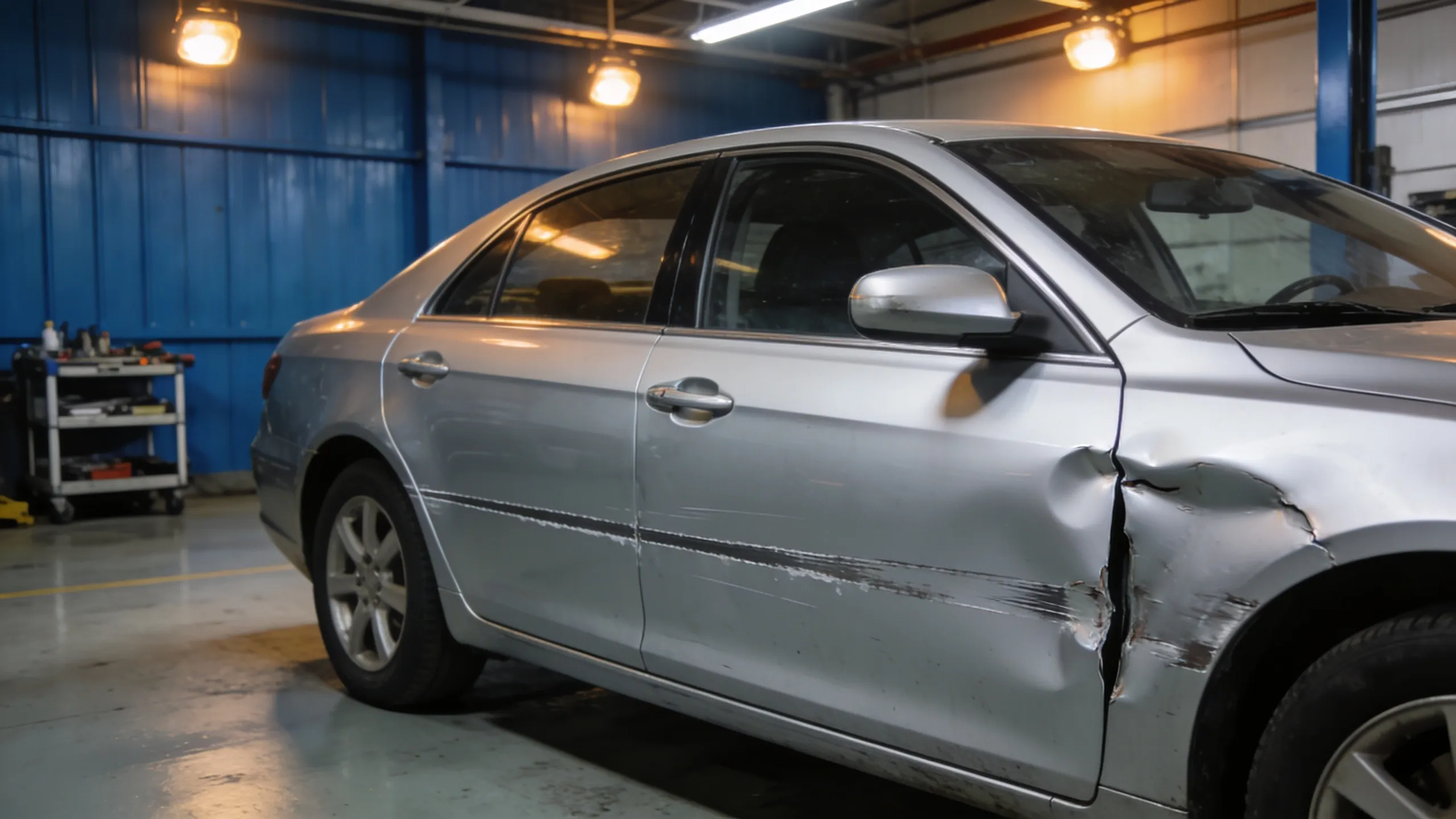
Because the contact is glancing rather than direct, side swipe damage tends to be linear, spread across the length of the car rather than concentrated at a single point. That geometry creates its own repair challenges, particularly around paint matching and multi-panel work.
Common Side Swipe Scenarios
Side swipes happen in predictable situations. The most frequent include:
- Highway lane changes: A vehicle drifts or merges without sufficient clearance, making contact across doors and quarter panels.
- Narrow road or parking structure passes: Two vehicles pass in a tight corridor, with one or both sides sustaining contact.
- Parking lot drive-throughs: A turning or backing vehicle clips an adjacent car, often at low speed but across a wide contact zone.
- Stationary object contact: Scraping against a wall, guardrail, gate post, or pillar in a tight space.
- Hit-and-run side swipes: A passing vehicle clips a parked car and leaves without stopping.
Understanding the scenario matters for insurance purposes, especially when determining fault and coverage type.
Side Swipe vs. Side Impact Collision
Side swipe and side impact collision are not the same thing. A side swipe involves glancing, lateral contact, typically lower-energy and linear across panels. A side impact collision (also called a T-bone) involves a perpendicular, direct strike into the side of the vehicle at the door zone.
Side impacts are higher-energy events that frequently involve airbag deployment, door intrusion, structural deformation, and potential injury. They also typically require more extensive collision repair work and almost always involve an insurance claim.
Side swipes are more often lower-energy cosmetic events, though they can involve structural damage when the contact zone includes the rocker panel, B-pillar (the structural post between the front and rear doors), or door hinge area.
Types of Side Swipe Car Damage
Not all side swipe car damage looks the same. Damage type determines both the repair method and the cost, so identifying what was actually affected is the first step toward an accurate estimate.
Paint Transfer and Scuffs
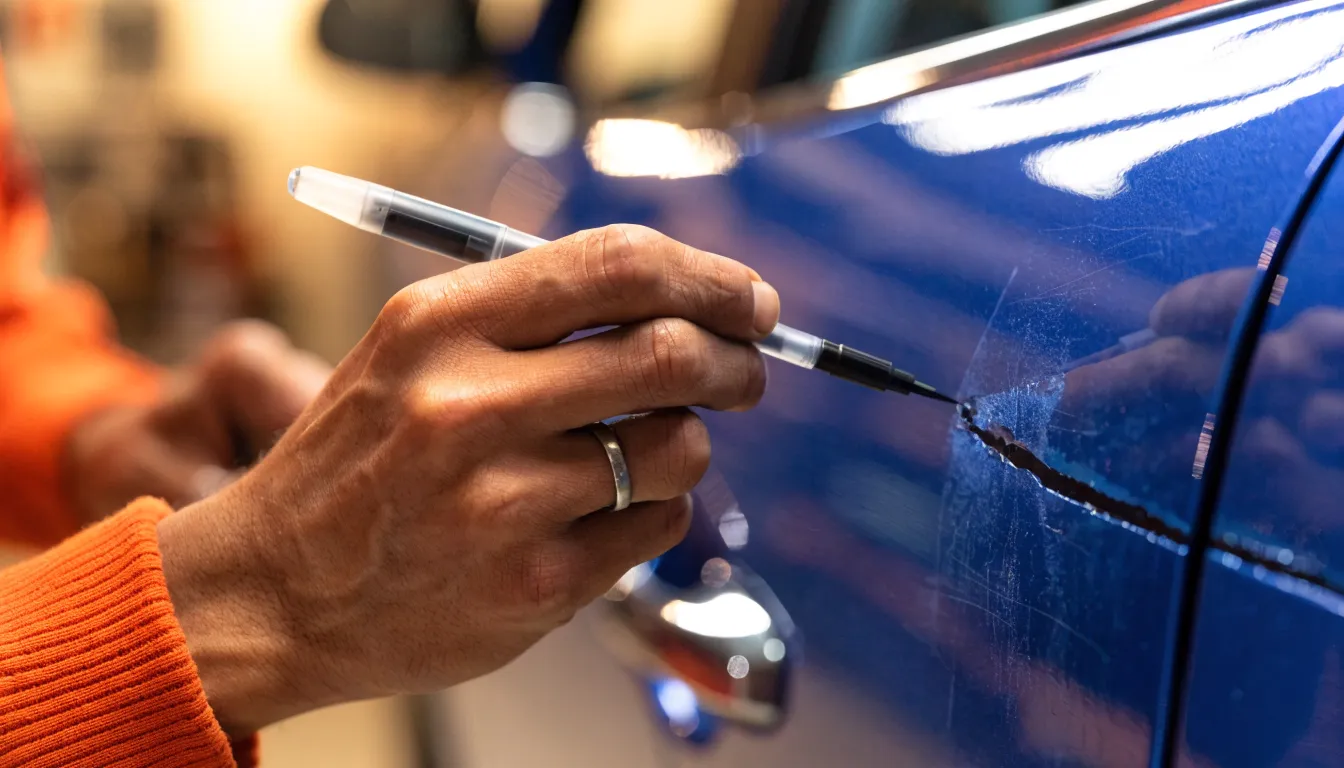
The mildest form of side swipe damage is paint transfer. This is where another vehicle's paint is deposited onto the surface, or the clear coat (the protective top layer of automotive paint) is abraded without penetrating to the color layer below.
Paint transfer often looks worse than it is. In many cases, professional compounding and polishing removes transferred paint and restores the surface. When the clear coat is scratched through, spot repainting may be needed. Costs for this level of damage typically run $200 to $500 depending on the affected area and whether surrounding panels require blending.
For more on cosmetic paint damage, see scratch repair services.
Dents and Creases
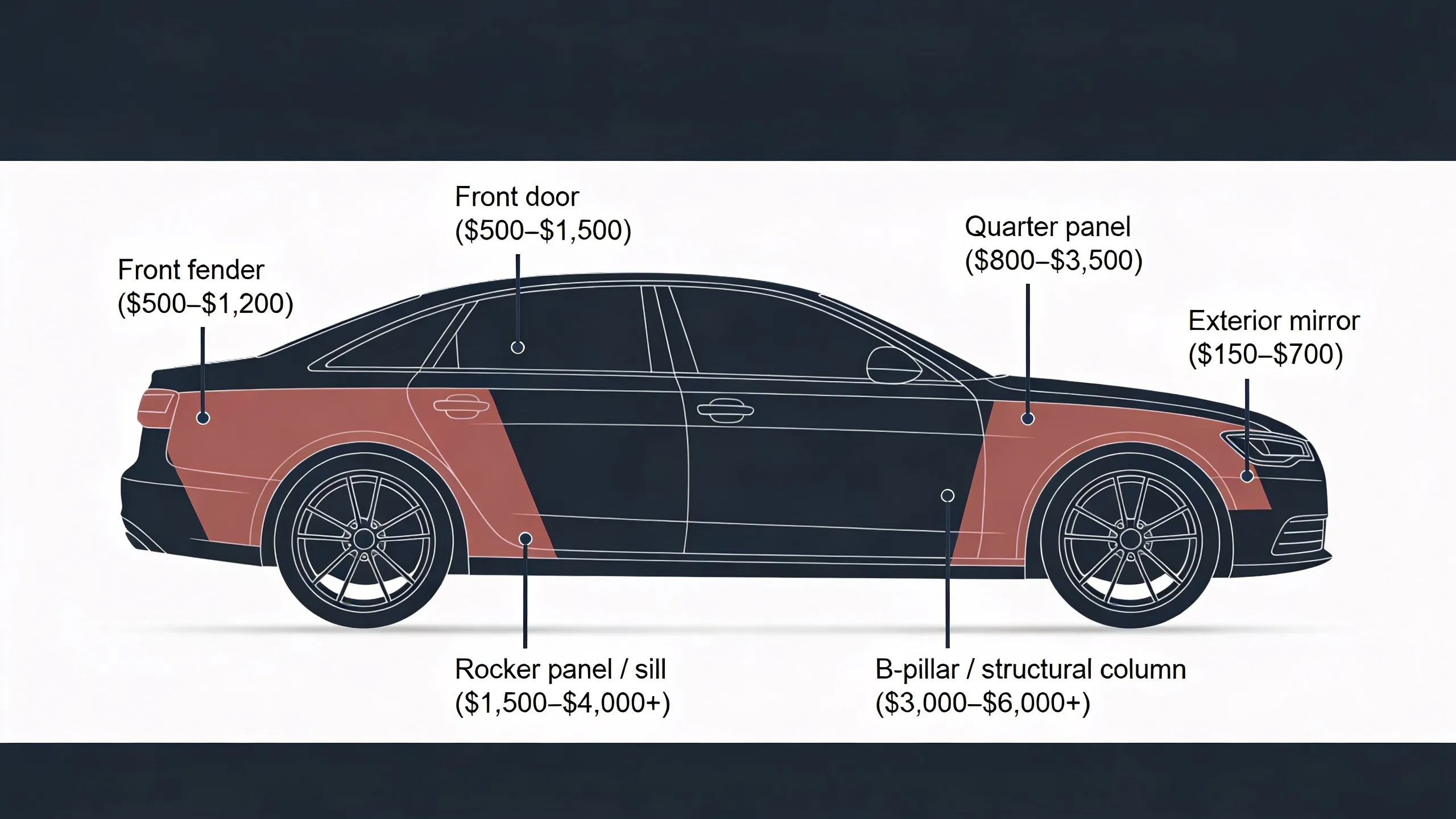
When the contact has enough energy to deform the metal, dents and creases result. A single-panel dent from a side swipe on a door or fender typically costs $500 to $1,200 to repair, depending on the dent size, location, and whether the paint is broken.
Paintless dent repair (PDR) is a technique that reshapes metal from behind the panel without disturbing the paint. It may be an option for smooth, shallow dents where paint is intact. Creases, sharp dents near panel edges, and paint damage typically require conventional body filler work and repainting.
Door and Mirror Damage
Side swipe contact frequently catches door panels and exterior mirrors. Mirror damage ranges from a cracked housing ($150 to $400 for housing replacement) to a completely sheared mirror assembly ($300 to $700 including glass, motor, and housing).
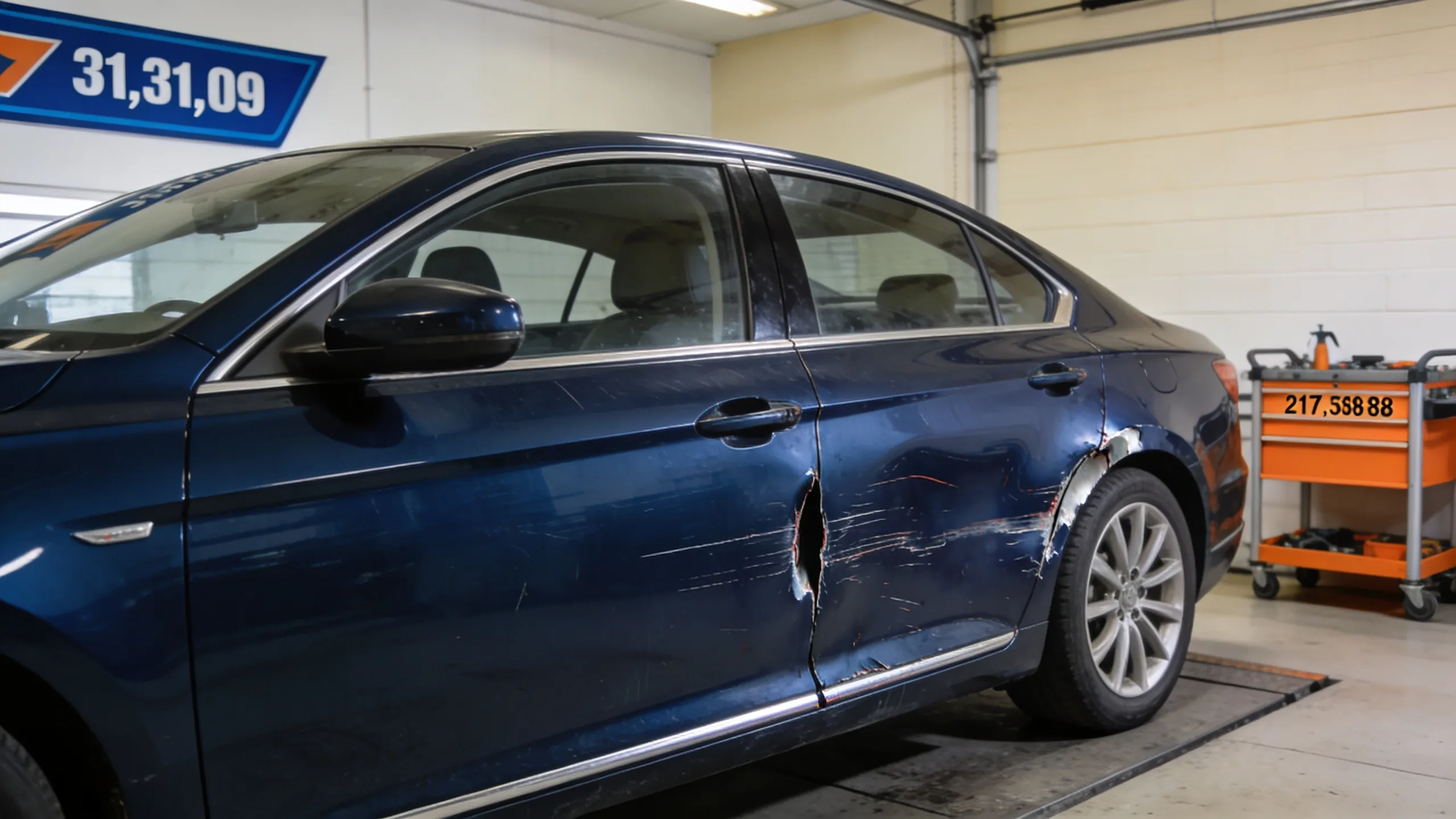
Door damage is more significant. A dented door that needs conventional repair and repaint typically costs $500 to $1,200. A door that requires replacement (because the damage is too severe for repair, or structural integrity is compromised) can cost $1,500 to $3,500 depending on vehicle make, door size, and whether the new door requires painting and hardware transfer.
Quarter Panel Damage
The quarter panel is the body panel that runs from the rear door opening to the rear of the vehicle. It's a structural component welded to the vehicle body, not bolted on. That makes quarter panel replacement significantly more labor-intensive than a door swap.
Quarter panel damage from a side swipe that requires full replacement typically costs $1,500 to $3,500 in labor and parts. Partial repair and repaint, when the metal can be worked rather than replaced, typically runs $800 to $2,000.
Structural Damage (Pillar and Rocker Panel)
The most serious category of side swipe car damage involves structural components. The B-pillar is the vertical support between the front and rear doors. The rocker panel (also called the sill panel) runs horizontally along the bottom of the vehicle between the wheel wells, forming the lower structural rail of the body.
When a side swipe impacts the rocker panel or B-pillar, the structural integrity of the vehicle may be affected. This requires specialized repair involving sectioning, welding, and dimensional measurement to verify the vehicle's geometry is restored to factory specification. Costs for structural side swipe repair typically start at $3,000 and can exceed $6,000 depending on the extent of involvement.
Structural damage after a side swipe is not always obvious from the outside. A visual inspection alone can't rule it out. That's why a thorough assessment at an equipped body shop matters, especially when the contact zone included the lower door area or sill. IIHS side crash safety research shows that low-speed lateral contact can produce structural deformation invisible to the naked eye.
Why Side Swipes Are Tricky to Repair
Side swipe car damage repair involves specific technical challenges that make it more complex than a simple single-panel fix. Understanding these challenges helps car owners interpret estimates accurately.
Multi-Panel Paint Blending
Paint blending refers to gradually fading new paint into the surrounding factory finish so the repaired area matches the surrounding panels naturally. It's standard practice when only one or two panels are repainted, because a new coat of paint on a single panel will rarely match the adjacent panels exactly due to color variation, fade, and metallic flake orientation over time.
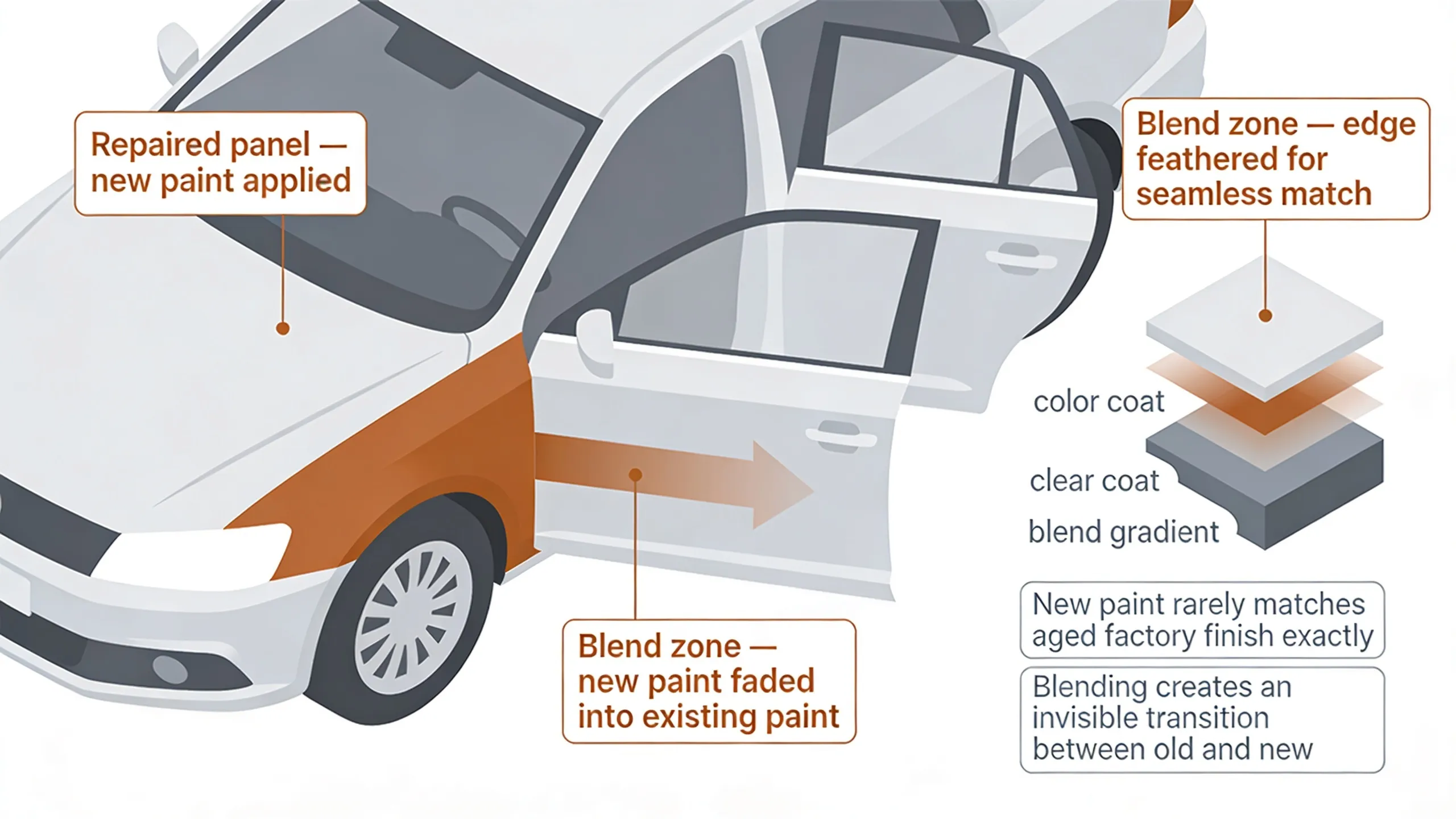
In a side swipe, the linear nature of the damage often means two, three, or more panels need repainting or blending. Each additional panel adds paint material cost and labor time. A complete driver-side side swipe involving a front fender, two doors, and a quarter panel can require blending into the hood, roof, and trunk lid edges, expanding the paint scope further.
For more on how automotive paint is matched and applied, see auto painting services.
Door Alignment and Function
Even when door panels themselves are repaired, a side swipe can affect door alignment, meaning the precise fit of the door within its opening. Misaligned doors may not close correctly, create wind noise, allow water intrusion, or interfere with door seals and weatherstripping.
Restoring door alignment involves adjusting the hinges and striker plates, and sometimes the door frame itself if the opening was distorted. This is separate from the cosmetic panel repair and adds to overall side swipe damage cost. Shops that don't check door operation after a side swipe repair are leaving a common quality issue unaddressed.
Hidden Damage Behind Panels
Body panels aren't the outermost layer of the vehicle. They're one layer above multiple subcomponents. Beneath a door panel are the door shell, reinforcement bars, window regulator mechanism, wiring harness, and potentially a side impact beam or airbag sensors. A side swipe severe enough to dent the outer panel may also damage inner components that are only visible after the panel is removed.
Similarly, under a quarter panel are wheel arch liners, wiring, fuel filler neck connections, and in some vehicles, tail light harness routing. Teardown is frequently required to identify all damage, which is why initial estimates for sideswiped car repair sometimes increase after the shop begins disassembly.
The Side Swipe Damage Repair Process
Understanding the general workflow helps car owners set realistic expectations for timelines and phased estimates.
Assessment
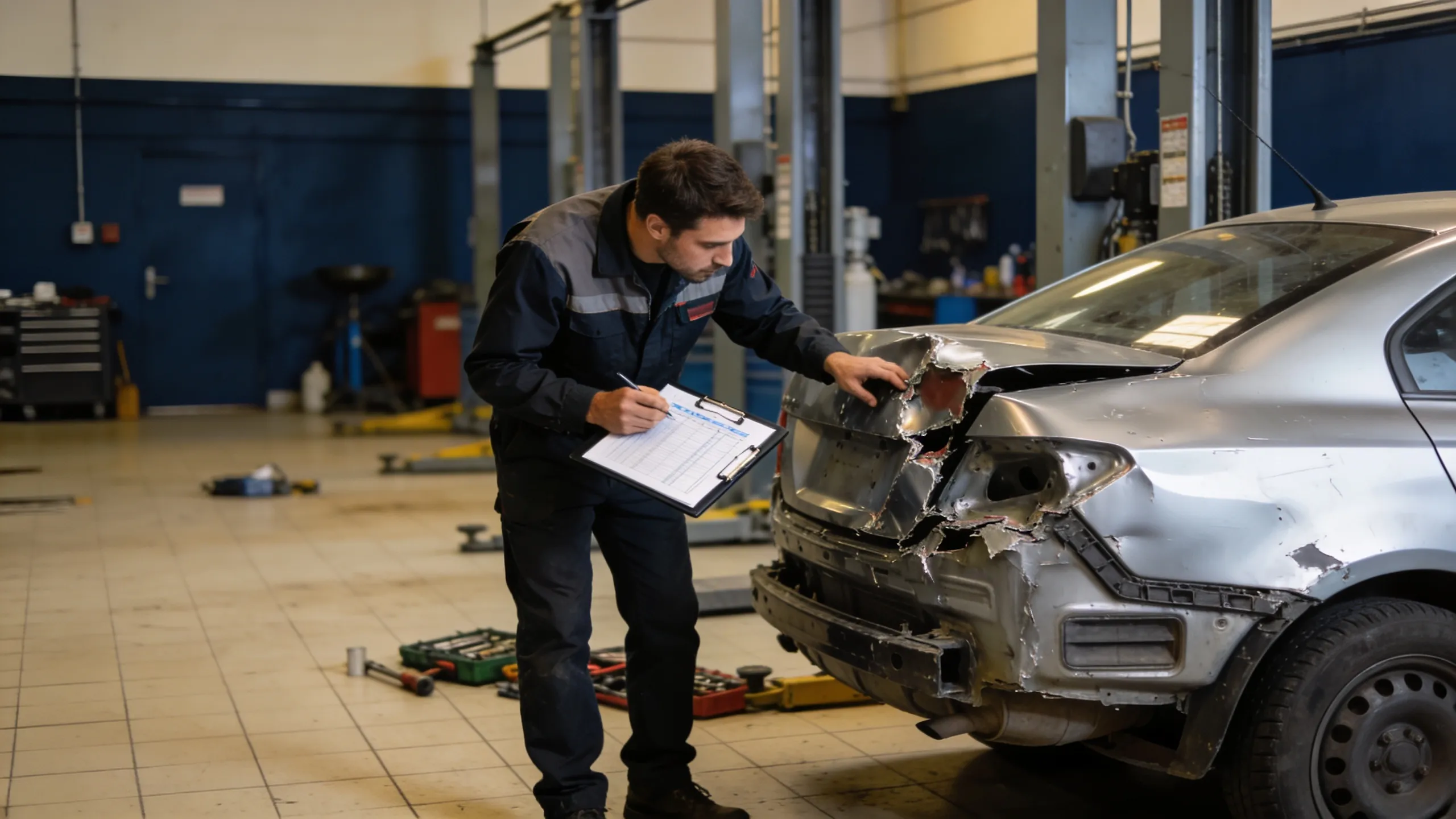
Repair begins with a damage assessment. A trained estimator or technician evaluates the damage visually and, for more severe impacts, probes panels with an inspection tool to detect deformation behind surfaces. Modern shops use vehicle measurement systems for any suspected structural involvement.
Request a written estimate before authorizing any repair. The estimate should itemize each damaged panel, the repair method for each (buff, PDR, fill and paint, replace), and any sublet or specialty operations. For side swipes with potential structural involvement, a pre-repair scan may also identify hidden frame or sensor damage. Shops that follow I-CAR training standards are more likely to perform systematic teardown inspections and catch hidden damage.
Panel Repair or Replacement
Based on the assessment, each panel is either repaired or replaced. Repair involves removing the panel (or accessing it from behind), reshaping the metal, applying body filler to smooth remaining imperfections, and prepping for paint. Replacement involves sourcing a new or reconditioned panel, fitting it to the vehicle, and prepping it for paint.
OEM (Original Equipment Manufacturer) parts guarantee exact fit and finish. Aftermarket parts cost less but may require more fitting time. Both can produce quality results; the best choice depends on vehicle age, owner priorities, and insurance coverage terms.
Paint Matching Across Multiple Panels
After panel work, the vehicle moves to the paint department. A color-match specialist uses the vehicle's paint code (found on a label inside the door or doorjamb) and often a spectrophotometer (a tool that reads the exact color tint of the existing paint) to mix paint that matches the vehicle's current finish as closely as possible.
For side swipe car damage repair involving multiple panels, the painter applies color and clear coat to each affected panel and blends into adjacent panels as needed. This is the most technically demanding part of the process. Each blend zone requires careful material layering, wet sanding, and polishing to eliminate visible transition lines.
Door and Mirror Replacement
When doors or mirrors are replaced, the process involves transferring hardware from the damaged component (hinges, glass, moldings, handles, wiring connectors) to the new unit, or sourcing a complete replacement assembly. New doors require paint, mounting, gap adjustment, and weatherstrip fitting. Mirror replacements on vehicles with heated glass, blind spot sensors, or auto-dimming functions require electronic component transfer or reprogramming.
For a complete breakdown of how body shops price this type of work, see this guide to collision repair costs.
Insurance for Side Swipe Damage
How insurance applies to side swipe car damage depends on the scenario: specifically, who was at fault and what type of coverage the owner carries.
At-Fault Scenarios
When the car owner is at fault for the side swipe, say they drifted into another lane, their liability coverage pays for the other driver's repairs, but not their own vehicle. To have their own vehicle repaired under insurance, they need collision coverage, which is optional in most states.
Collision coverage pays for vehicle damage from an at-fault accident, subject to a deductible. If the deductible is $500 and the side swipe repair cost is $1,200, the insurer pays $700 after the deductible is met. If the repair cost is less than the deductible, filing a claim may not be worthwhile.
Hit-and-Run Side Swipes
A hit-and-run side swipe, where the at-fault driver leaves without exchanging information, is covered under collision coverage in most states, also subject to the deductible. Some states allow uninsured motorist property damage (UMPD) coverage to apply to hit-and-run situations without requiring a deductible, depending on policy terms.
Documentation is critical in hit-and-run cases. Photographs of the damage, time, location, witness statements, and a police report all support the claim. Insurers may require a police report for hit-and-run claims.
Parking Lot Side Swipes (Uninsured Motorist)
When a vehicle is sideswiped while parked by an unidentified driver, the vehicle owner typically files under their own collision coverage. If another driver is identified but carries no insurance, uninsured motorist property damage (UMPD) coverage may apply, depending on the state and policy.
Uninsured motorist property damage is separate from uninsured motorist bodily injury coverage. Not all states require it, and not all drivers carry it. Check your policy's declarations page to confirm what coverage applies.
Insurance processes for side swipe claims vary by state and carrier. Consult the specific policy for details, and consider contacting a licensed public adjuster or insurance professional if a claim involves significant damage or dispute. For a detailed walkthrough of how to handle a collision claim, see this guide to insurance claims for collision repair.
Key Takeaways
Side swipe car damage repair spans a wide cost range, from $200 for a buffable paint scuff to $6,000 or more when structural components or door replacement are involved. The width of that range reflects the nature of side swipe damage: it can look minor and be complex, or it can look bad and be primarily cosmetic.
Several factors drive the final side swipe repair cost:
- Number of panels affected: the more panels involved, the more paint blending required
- Whether structural components were contacted: rocker panels and pillars change the repair scope entirely
- Panel repair vs. replacement: replacement adds parts cost and fitting time
- Door alignment and function: often missed but important to include in any thorough repair
- Local labor rates: costs vary significantly by market
Key steps for car owners after a side swipe:
- Document the damage thoroughly with photos before any repair begins
- Request a written, itemized estimate before authorizing work
- Ask whether the shop will check for hidden damage after panel removal
- Confirm insurance coverage type and deductible before deciding whether to file a claim
- Understand that paint blending across multiple panels is standard practice, not an upsell, for multi-panel side swipe repairs
To find qualified body shops that can assess and estimate side swipe car damage repair, browse collision repair shops near you. Labor rates vary widely by region; for example, auto body shops in Texas typically charge less than metro markets on the East or West Coast.
Frequently Asked Questions
How much does side swipe damage cost to repair?
Side swipe repair cost ranges from $200–$500 for paint scuffs, $500–$1,200 for a single dented panel, $1,200–$3,000 for multi-panel damage, and $3,000–$6,000+ when structural components or door replacement are involved. Final cost depends on vehicle make, local labor rates, and the specific scope of damage.
Can side swipe damage be buffed out?
Light paint transfer and surface scuffs can sometimes be buffed out with compounding and polishing, provided the clear coat is only lightly abraded and the color layer is intact. Deeper scratches, dents, or paint removed entirely can't be buffed. They require conventional repair and repainting.
What should I do if my car is sideswiped in a parking lot?
Document the damage with photographs before moving the vehicle. Look for contact paint to help identify the other party. Exchange insurance information if the other driver is present. File a police report for hit-and-run incidents. Notify your insurance company promptly to start the claims process.
Does insurance cover side swipe damage?
Coverage depends on fault. If the car owner is at fault, collision coverage pays for their vehicle after the deductible. If another identified driver is at fault, their liability coverage pays. Hit-and-run situations fall under collision or uninsured motorist property damage coverage depending on the state. Liability-only policies do not cover the owner's own vehicle.
How long does side swipe repair take?
A minor paint scuff or single-panel repair typically takes 2–4 business days. Multi-panel side swipe damage with blending across three or more panels takes 5–10 business days. Structural damage or parts-ordering delays extend timelines to 10–15 or more business days.
For additional resources, see: