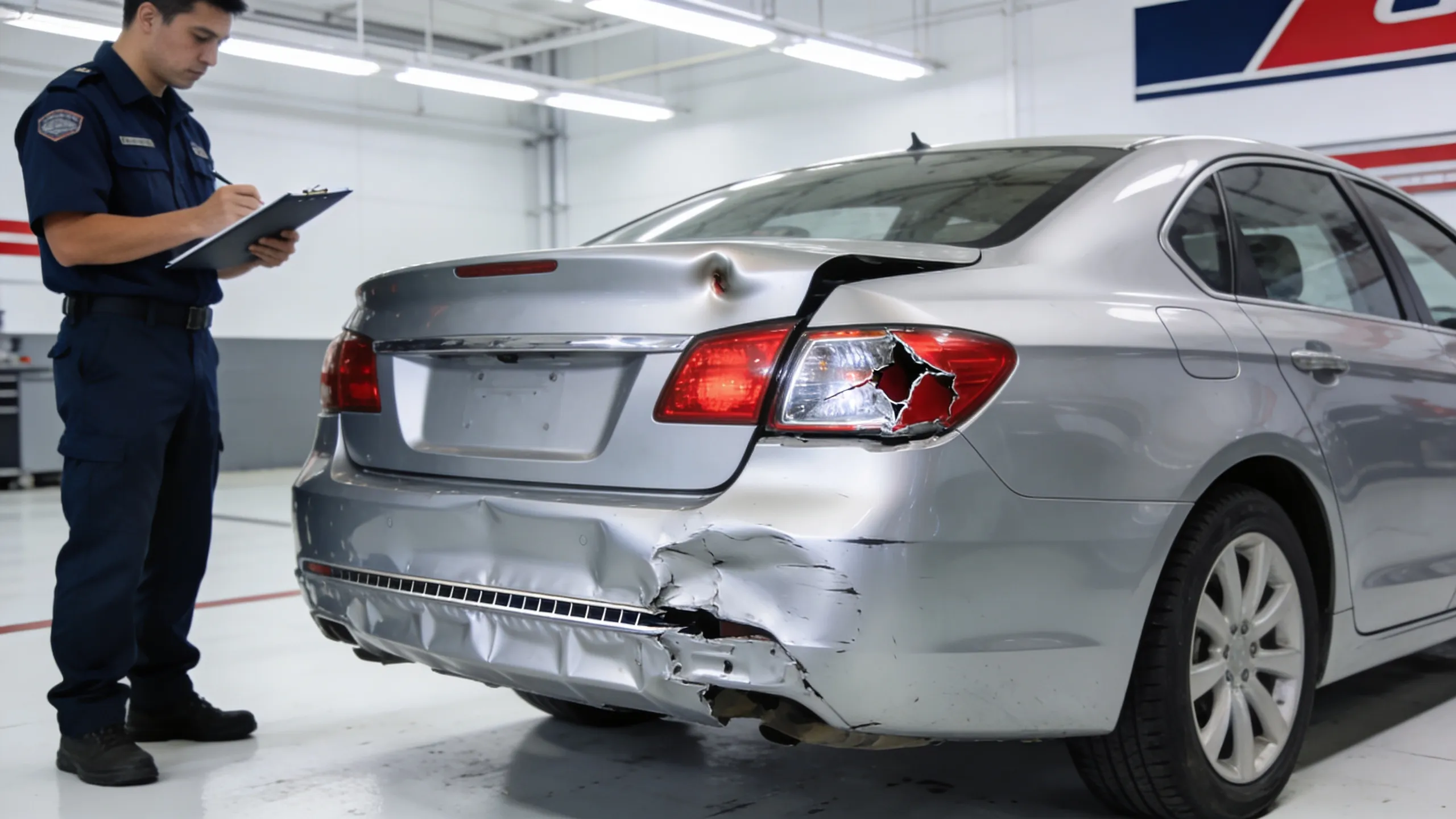
Rear-end collisions are among the most common crashes on U.S. roads. Most people assume the damage is minor: a crumpled bumper, maybe a dent or two. But rear end collision damage routinely goes deeper than the surface, and rear end collision repair cost reflects that reality.
Whether the hit came at five miles per hour in a parking lot or at highway speed, the visible damage is rarely the full picture. Trunk floors buckle. Frame rails crumple. Exhaust systems shift. And in modern vehicles, rear-mounted Advanced Driver Assistance Systems (ADAS) sensors (backup cameras, parking sensors, and blind spot monitors) can go out of alignment without any visible sign.
This guide covers rear end collision repair cost from bumper-only jobs through severe structural damage, breaks down every system that a rear impact can affect, and explains the insurance process from first call to final payment. The goal is to help car owners understand what they're looking at before they authorize any work.
For a broader overview of the collision repair process, see the complete collision repair guide.
How Much Does Rear-End Collision Repair Cost?
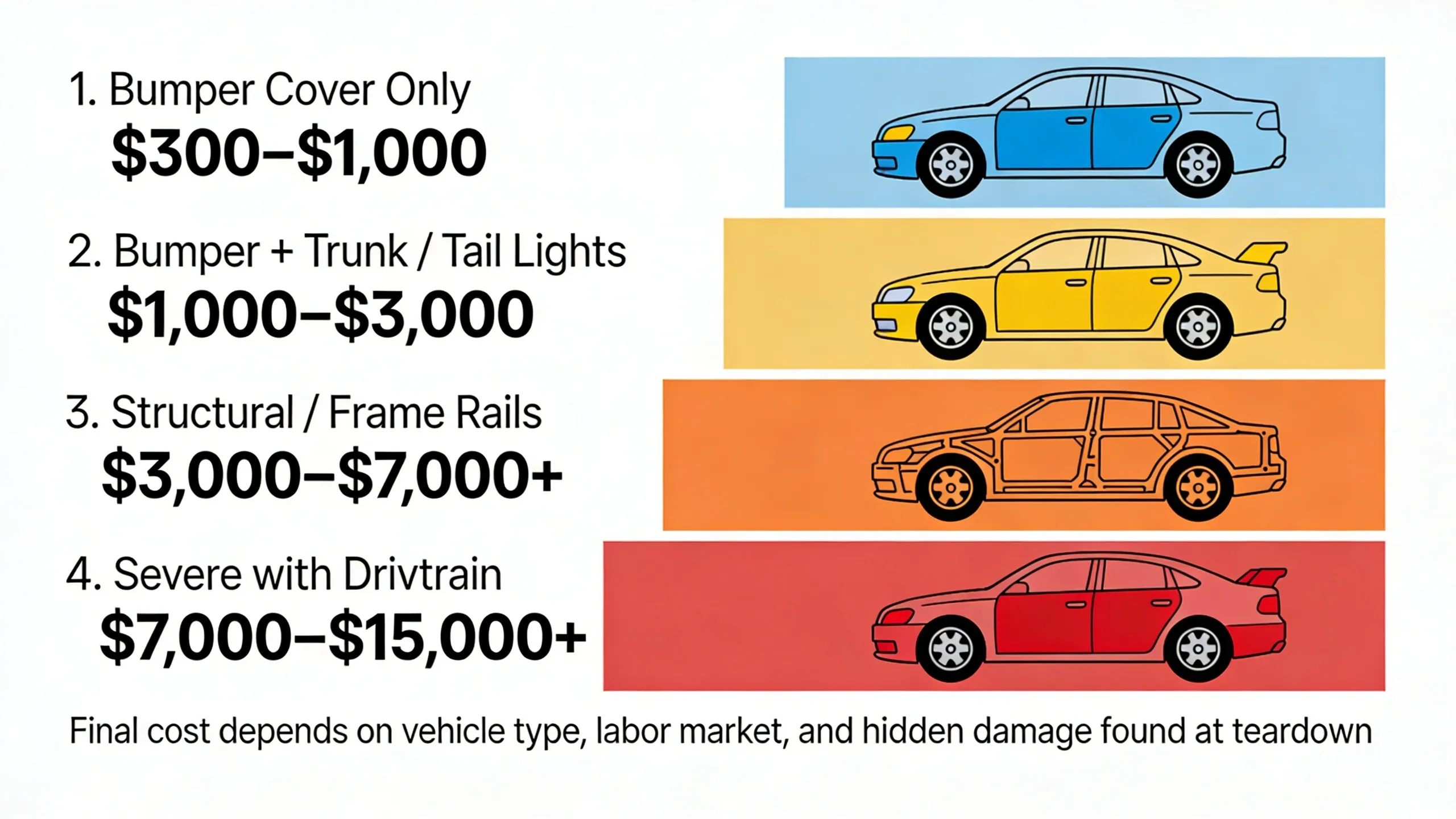
Rear-end collision repair cost ranges from $300 for a bumper-cover-only repair to $15,000 or more when structural frame rails, the drivetrain, and ADAS sensors are involved. Most moderate rear-end collisions (bumper plus trunk damage) fall between $1,000 and $3,000, though hidden damage discovered at teardown often pushes the final bill higher.
The table below shows typical cost ranges for each damage tier.
| Damage Level | What's Involved | Typical Cost Range |
|---|---|---|
| Bumper cover only | Plastic bumper cover repair or replacement, paint | $300–$1,000 |
| Bumper + trunk or hatch | Bumper system, trunk lid or liftgate, tail lights | $1,000–$3,000 |
| Structural / frame rails | Rear frame rails, floor pan, unibody repair | $3,000–$7,000+ |
| Severe with drivetrain | Frame, suspension, exhaust, differential, ADAS | $7,000–$15,000+ |
Several variables affect where any specific repair lands within these ranges:
- Vehicle type: A luxury sedan or SUV typically costs 30–50% more to repair than a mainstream compact, due to higher parts prices and more complex ADAS systems.
- Labor rates: Hourly rates vary 40–60% across U.S. markets. Metropolitan areas run $160 to $240+ per hour; smaller markets typically run $90 to $140.
- Parts sourcing: OEM (Original Equipment Manufacturer) parts, meaning factory-produced replacements, cost more than aftermarket alternatives. Both can produce quality repairs; the right choice depends on vehicle age, owner priorities, and insurance coverage.
- Hidden damage: Damage revealed at teardown can add $500 to $3,000 or more to an initial estimate.
For a deeper comparison of back of car collision repair cost by repair type, see the collision repair cost guide.
Common Rear-End Collision Damage Points
Understanding which systems a rear impact affects helps car owners evaluate estimates and ask the right questions at the shop.
Bumper Cover and Absorber
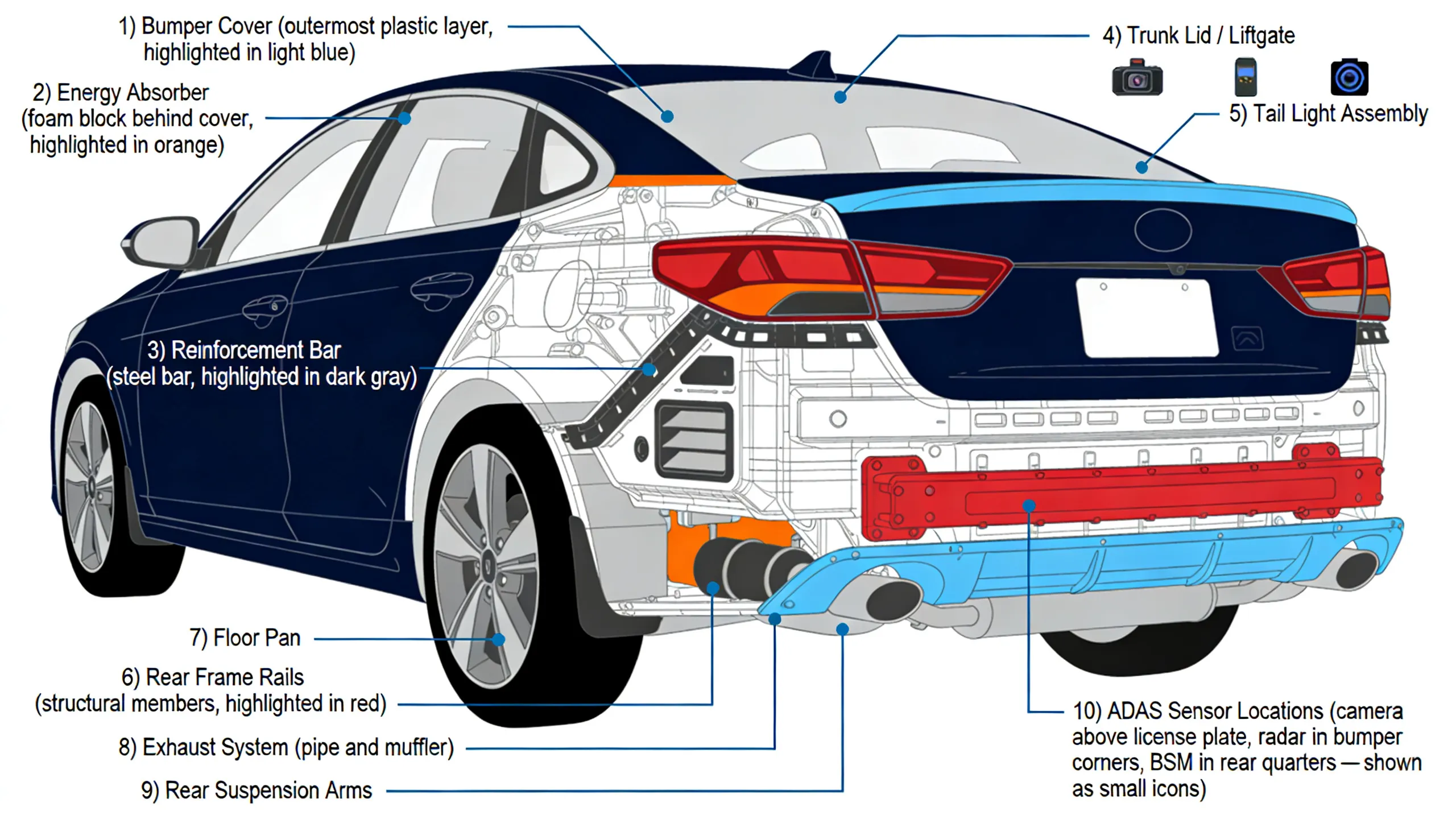
The bumper system on most modern vehicles has three layers: a plastic bumper cover on the outside, a foam or plastic energy absorber behind it, and a steel reinforcement bar bolted to the frame. In low-speed collisions, the cover and absorber take the hit and may need repair or replacement. The reinforcement bar often survives minor impacts but should be inspected. A bent bar that isn't replaced leaves the next collision with no energy management.
Rear bumper collision repair for cover-only damage typically costs $300 to $700 for repair or $500 to $1,000 for full replacement with paint. Once the absorber or reinforcement bar is involved, costs move into the $800 to $1,500 range.
For more on bumper-specific repair options, see bumper repair services.
Trunk, Tailgate, and Tail Lights
Above the bumper, a rear impact can crumple the trunk lid or liftgate, damage tail light assemblies, and deform the rear body panels. Tail lights on modern vehicles are increasingly complex LED assemblies. A single unit can cost $300 to $800 or more just in parts.
Trunk and hatch repairs often require panel replacement rather than straightening if the metal is creased rather than dented. Trunk lid replacement plus paint typically adds $600 to $1,500 to a repair bill.
Rear Frame Rails and Floor Pan
Behind the rear bumper system, the two rear frame rails extend forward toward the vehicle's center. These structural members absorb crash energy and protect the passenger compartment. In moderate to severe rear impacts, frame rails can buckle or crumple (by design in many vehicles), but they must be repaired or replaced to restore crash protection.
This is where rear end accident repair costs climb sharply. Frame rail repair or replacement can add $1,500 to $4,000 or more to a job. The floor pan, a sheet of metal forming the vehicle's floor, can also deform in harder hits and requires specialized straightening or replacement.
For more on structural repair, see frame repair services.
Exhaust System
The exhaust system runs under the vehicle from the engine to the rear. In a rear impact, hangers can break, the muffler can be pushed out of position, and pipes can crack or collapse. Even low-speed rear hits sometimes bend the exhaust tip or dislodge hangers. More significant hits can damage the catalytic converter or create exhaust leaks.
Exhaust repairs typically add $200 to $1,500 depending on which components are affected. Easy to miss on a visual walk-around. Worth checking.
Rear Suspension and Alignment
The rear suspension connects the wheels to the vehicle's body and controls ride and handling. A rear impact can bend control arms, twist subframes, and push the rear axle out of alignment. Even when suspension components look undamaged, wheel alignment can be thrown off enough to cause tire wear and handling problems.
Rear suspension component replacement can add $500 to $2,500 to a job. An alignment check costs $75 to $150 and should be part of every rear end accident repair, even minor ones. Shops that skip this step are leaving a common problem unaddressed.
ADAS Sensors (Backup Camera, Parking Sensors, Blind Spot)
Modern vehicles mount several sensors in the rear bumper fascia and rear body panels (most common on 2019+ models):
- Backup cameras: Typically mounted in the trunk lid, tailgate, or above the license plate
- Parking sensors (ultrasonic): Embedded in the rear bumper cover
- Blind spot monitoring (BSM) radar: Often mounted in rear quarter panels or the rear bumper
- Rear cross-traffic alert: Uses the same or related radar sensors as BSM
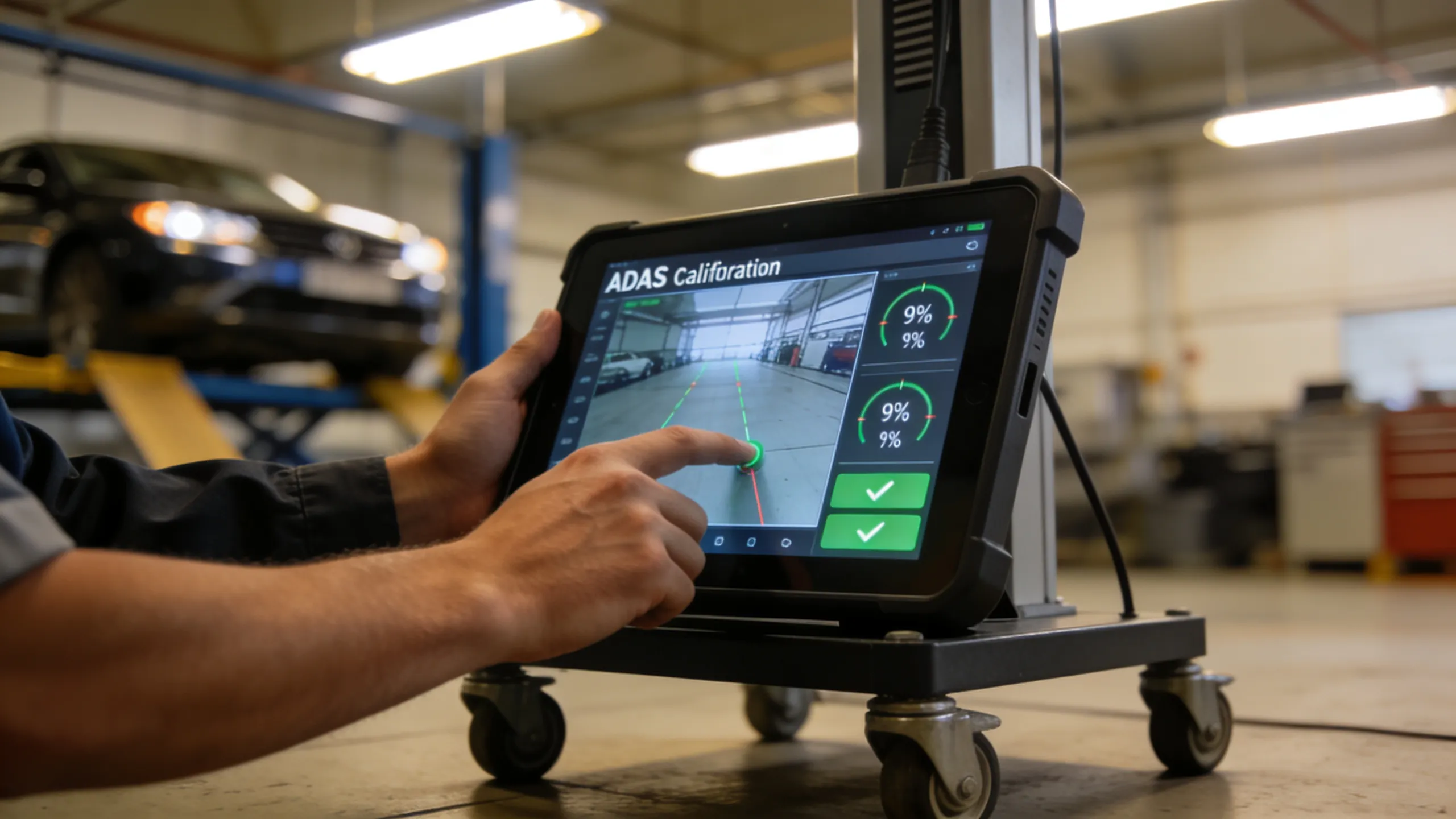
When any of these sensor areas are repaired, ADAS calibration is usually required to restore accurate operation. A backup camera that's two degrees off center can distort the on-screen image. Blind spot radar that has shifted in its mount can fail to detect vehicles in adjacent lanes.
ADAS recalibration after rear repairs typically costs $150 to $450 per system. For a full breakdown of calibration costs and the process, see the ADAS calibration cost guide.
Hidden Damage in Rear-End Collisions
Why Rear-Enders Cost More Than They Look
The bumper system is designed to manage crash energy by absorbing impact and transferring force through a controlled deformation sequence. That same design means the visible surface can look relatively normal while the energy-absorbing components behind it have done their job and need replacement. A bumper cover with a small crack may be hiding a crushed absorber and a bent reinforcement bar.
The unibody structure of modern vehicles, the integrated framework of sheet metal that forms the car's skeleton, can also flex and crumple in rear impacts in ways that don't show at the surface. Pinch welds, floor braces, and structural nodes can deform without producing any obvious exterior damage.
Damage That Only Appears at Teardown
Body shops typically write an initial estimate based on visible damage. Once the bumper cover and other outer panels are removed, additional damage is often found. Industry data consistently shows that supplements (additional charges added after teardown reveals more damage) are common in rear collision repairs. About 60% of moderate rear-end repairs require at least one supplement.
Common teardown discoveries include:
- Crushed energy absorber despite intact bumper cover
- Bent reinforcement bar with no surface indication
- Cracked or displaced exhaust hangers and pipe sections
- Deformed trunk floor or rear body structure
- Damaged trailer hitch or tow package components
- ADAS sensor brackets cracked or out of position
A transparent auto body shop will document teardown findings with photos and explain each additional charge before proceeding. Always ask for documentation of any damage found beyond the initial estimate.
Why Getting a Professional Assessment Matters
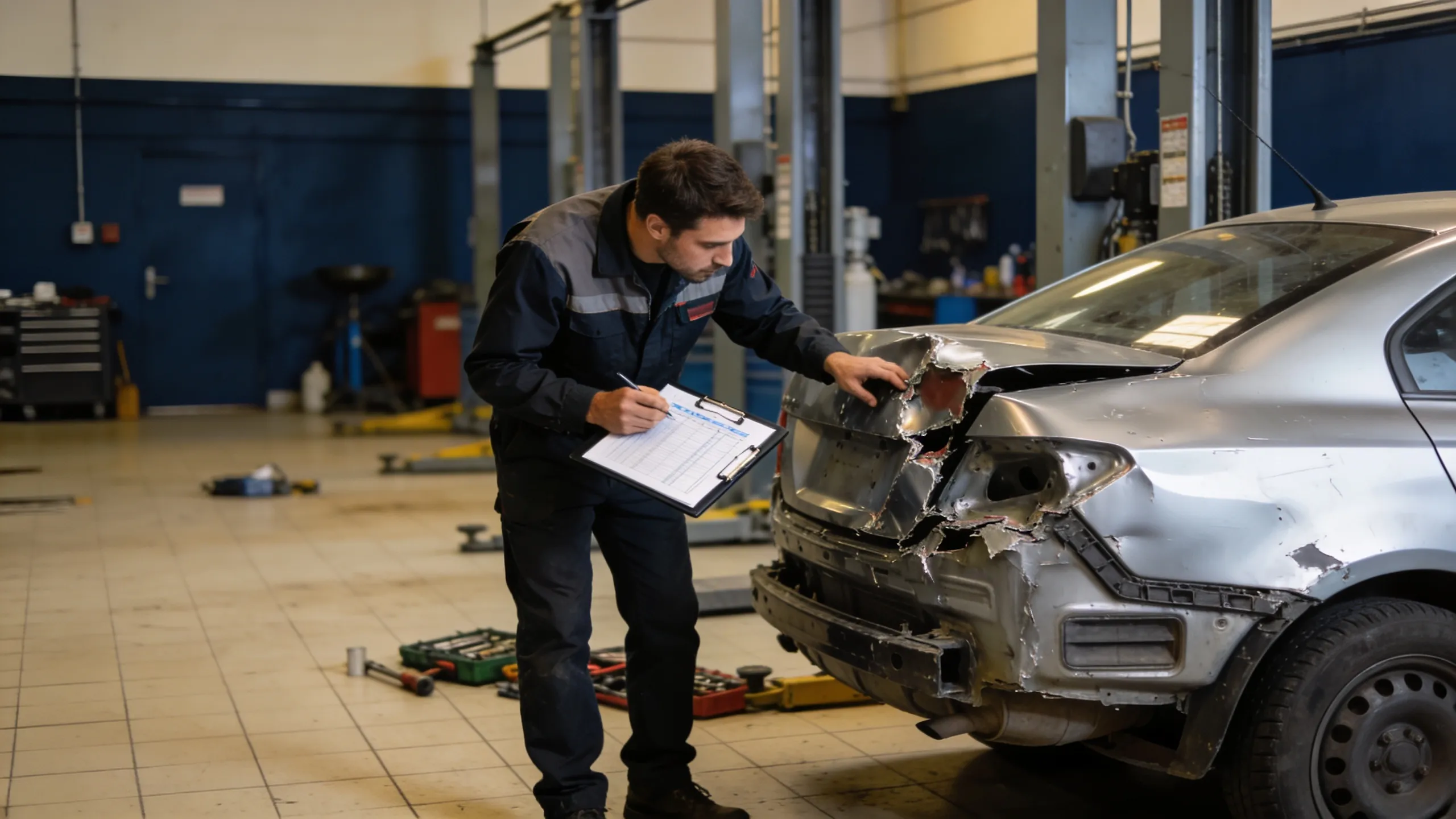
Some rear-end collision damage looks simple from the outside but involves significant structural work. An informal inspection, or a very quick walk-around estimate, may not catch everything. A thorough assessment includes lifting the vehicle, removing outer panels, and scanning for electronic fault codes in ADAS and body control modules.
Shops that follow I-CAR training standards and OEM repair procedures are more likely to catch hidden damage systematically. When evaluating estimates, ask whether a pre-repair scan was performed and whether the estimate includes a teardown inspection allowance.
The Repair Process for Rear-End Collision Damage
Assessment and Estimating
The repair process begins with an estimate. Shops that do thorough estimates will document all visible damage with photographs, perform a pre-repair scan of vehicle electronics, and note any areas where additional damage is expected at teardown. Estimates should be itemized, listing labor hours, parts, paint operations, and sublet work (such as alignment or exhaust repair sent to a specialist) separately.
Getting two or three estimates for significant rear damage is reasonable. Estimates for the same job should be in a similar range; large differences often reflect incomplete assessments rather than better pricing.
Parts Ordering
Once repair authorization is given, the shop orders parts. Parts availability affects repair timeline significantly. Domestic and import bumper components are often in stock locally. Tail light assemblies, body panels, and structural components for some vehicles may require two to five business days or longer. Supply chain conditions in 2026 continue to affect lead times for certain models.
Repair and Paint
Structural repairs come first in the sequence: frame rail straightening or replacement, floor pan repair. Body panels are then fitted and aligned. Paint is applied, typically including a blend (a gradual fade of new paint into the surrounding original paint) to achieve a smooth color match. The painting and curing process typically takes one to three days depending on the number of panels.
ADAS Recalibration
After rear body repairs, any sensor in the affected area must be recalibrated. This step can't be skipped or deferred. A backup camera with a shifted mount, or a blind spot sensor with a bent bracket, will produce inaccurate readings that compromise safety. Recalibration must follow OEM procedure. Most modern vehicles require shop-specific targets and scan tools. Some also require a road test (called dynamic calibration) to complete the process.
Ask the shop specifically whether ADAS recalibration is included in the estimate. It sometimes appears as a separate line item or is added after teardown.
Final Inspection
Before the vehicle is returned, a quality control inspection should verify:
- Panel gaps and alignment
- Color match in natural light
- All lights and electronics function correctly
- All sensors are calibrated and producing no fault codes
- Alignment meets specification
Request the post-repair scan report and ADAS calibration completion documentation before leaving the shop. Not every shop volunteers this.
Insurance for Rear-End Collisions
Liability (Usually Clear-Cut)
In the large majority of rear-end collisions, the driver who struck the rear of a vehicle is found at fault. NHTSA crash data consistently shows rear-end crashes as one of the most common collision types. Fault determination follows established traffic law in most states: a driver who hits another vehicle from behind is presumed to have failed to maintain a safe following distance.
This makes liability relatively straightforward compared to many collision scenarios. The at-fault driver's liability insurance pays for damage to the vehicle that was struck.
What If You Were Rear-Ended?
If another driver struck your vehicle from behind, the repair claim typically goes through the at-fault driver's liability insurance. Key steps:
- Document all damage with photographs immediately after the collision, before the vehicle is moved if possible
- Collect insurance and contact information from the at-fault driver
- File a claim with the at-fault driver's insurance carrier
- Request a written repair estimate from at least one reputable auto body shop
- Know that you have the legal right to choose your own repair facility, regardless of which shop the insurance company suggests
The at-fault insurer may send their own adjuster to assess the damage. You're not required to accept that assessment as final. You can provide a shop estimate and negotiate if the insurer's figure doesn't cover a complete repair.
Filing Through Your Insurance vs. Theirs
Two paths exist for rear-end collision claims:
Through the at-fault driver's insurance (third-party claim):
- No deductible applies
- Slower process in some cases (the at-fault insurer controls the timeline)
- Can include a claim for diminished value (the reduction in the vehicle's market value after a collision, even after full repair) in states that allow it
Through your own collision insurance (first-party claim):
- Deductible applies (typically $500 to $1,500)
- Faster process in most cases (your insurer drives the claim)
- Your insurer then pursues subrogation (reimbursement from the at-fault carrier), which may return your deductible
For minor repairs under the deductible amount, an out-of-pocket payment may be simpler than filing any claim. For anything substantial, the insurance route is almost always appropriate. For a complete walkthrough of the claims process, see the insurance claim guide for collision repair.
For detailed information on collision repair services and what to expect from the process, the service directory lists shops by location. If you're in a high-cost metro area, you can also browse auto body shops in California or find shops in New York where labor rates typically run at the higher end of the national range.
Key Takeaways
Rear end collision repair cost ranges from $300 for a bumper-cover repair to $15,000 or more when structural damage and drivetrain components are involved. Most rear-end repairs fall somewhere in the $1,000 to $4,000 range for moderate collisions, but hidden damage revealed at teardown frequently pushes final costs higher than the initial estimate.
Every rear-end repair should include:
- A thorough teardown inspection, not just a surface estimate
- An alignment check (even low-speed impacts can affect rear wheel alignment)
- A pre-repair and post-repair electronic scan
- ADAS recalibration for any sensor in the affected area
- Documented completion reports for all calibration and structural work
On insurance: liability is typically clear in rear-end collisions, and the at-fault driver's insurance should cover the full cost of repair. You have the right to choose your own repair facility and to dispute estimates you believe are incomplete.
On hidden damage: the bumper system is designed to absorb energy by deforming, which means the exterior can look better than the damage is. Structural components, exhaust systems, suspension geometry, and ADAS sensor brackets can all be affected in ways that aren't visible until the outer panels come off.
Understanding the full scope of rear end collision damage before authorizing repairs is the most effective way to avoid surprises in cost, timeline, and repair quality.
Frequently Asked Questions
How much does rear-end collision repair cost?
Rear-end collision repair cost ranges from $300–$1,000 for bumper-only damage, $1,000–$3,000 for trunk and tail light involvement, $3,000–$7,000 for frame rail damage, and $7,000–$15,000+ for severe impacts. Final cost depends on vehicle type, labor rates, parts sourcing, and hidden damage discovered at teardown.
What hidden damage can a rear-end collision cause?
Common hidden damage includes a crushed energy absorber, bent reinforcement bar, exhaust displacement, frame rail deformation, floor pan damage, and ADAS sensor bracket misalignment. This damage is not visible until outer panels are removed at teardown. Ask the shop for teardown documentation and photos of discovered damage.
Who pays for rear-end collision repair?
In most rear-end collisions, the at-fault driver's liability insurance pays for the struck vehicle's repairs. The driver who struck from behind is generally presumed at fault. Alternatively, the vehicle owner can file through their own collision coverage (subject to a deductible), and their insurer pursues reimbursement from the at-fault carrier.
Do rear-end collisions affect ADAS systems?
Yes. Backup cameras, parking sensors, blind spot radar, and rear cross-traffic alert can all be displaced in rear-end collisions. Even if sensors look intact, bracket movement or panel realignment during repair can shift sensor aim and compromise performance. ADAS recalibration is required after any repair in a sensor zone.
How long does rear-end collision repair take?
Bumper-only repairs take 2–4 business days. Moderate damage involving the trunk and tail lights typically takes 5–8 business days. Structural repairs requiring frame work can take 2–4 weeks. ADAS recalibration adds 1–2 days in some cases. Parts availability remains one of the most common delay factors in 2026.