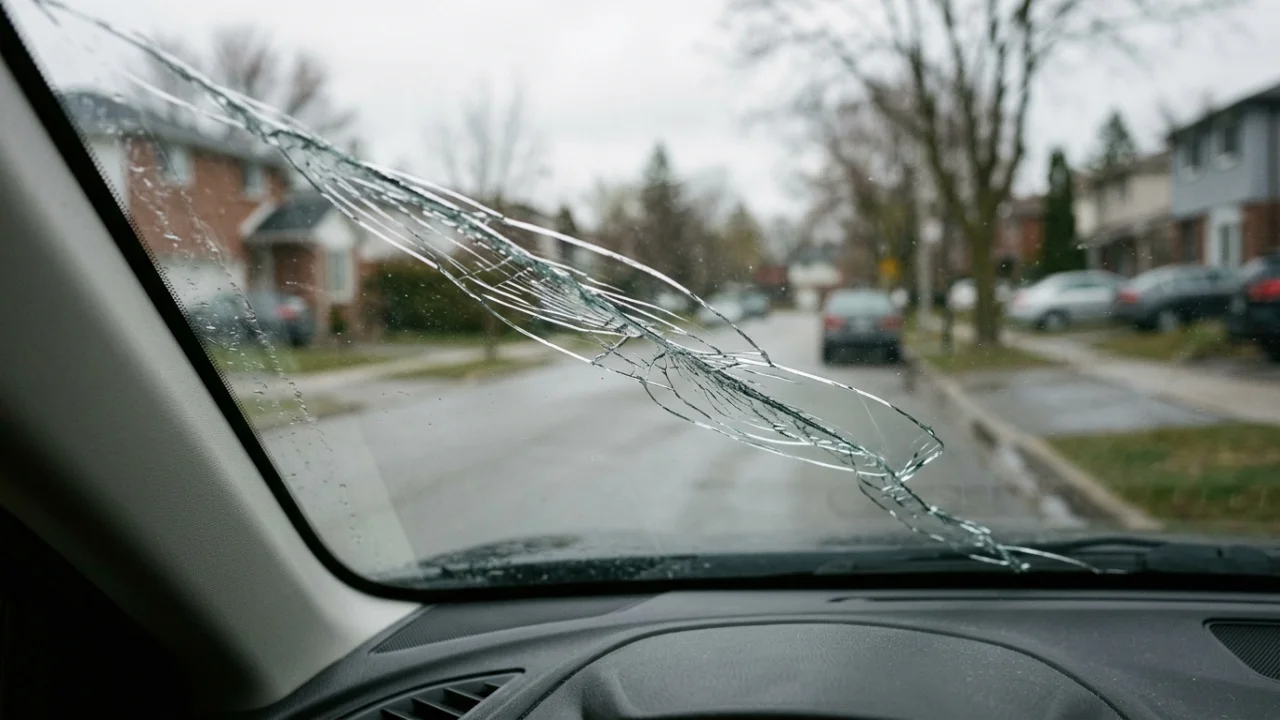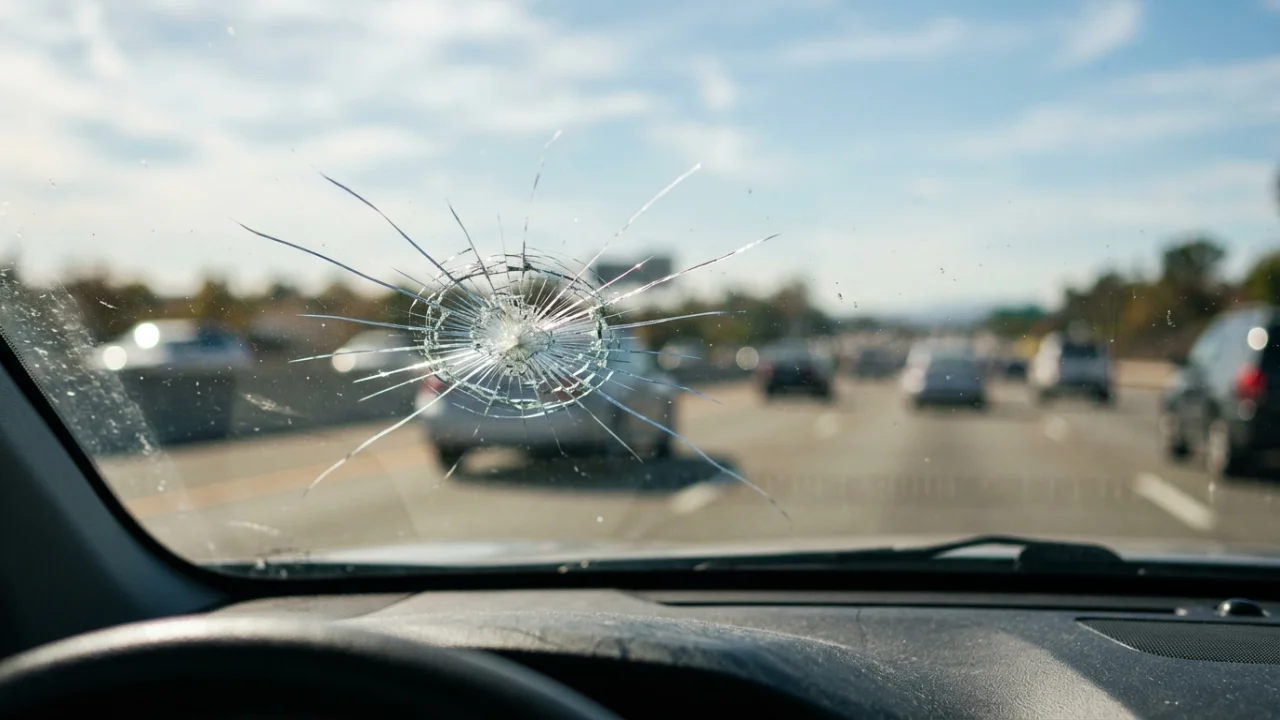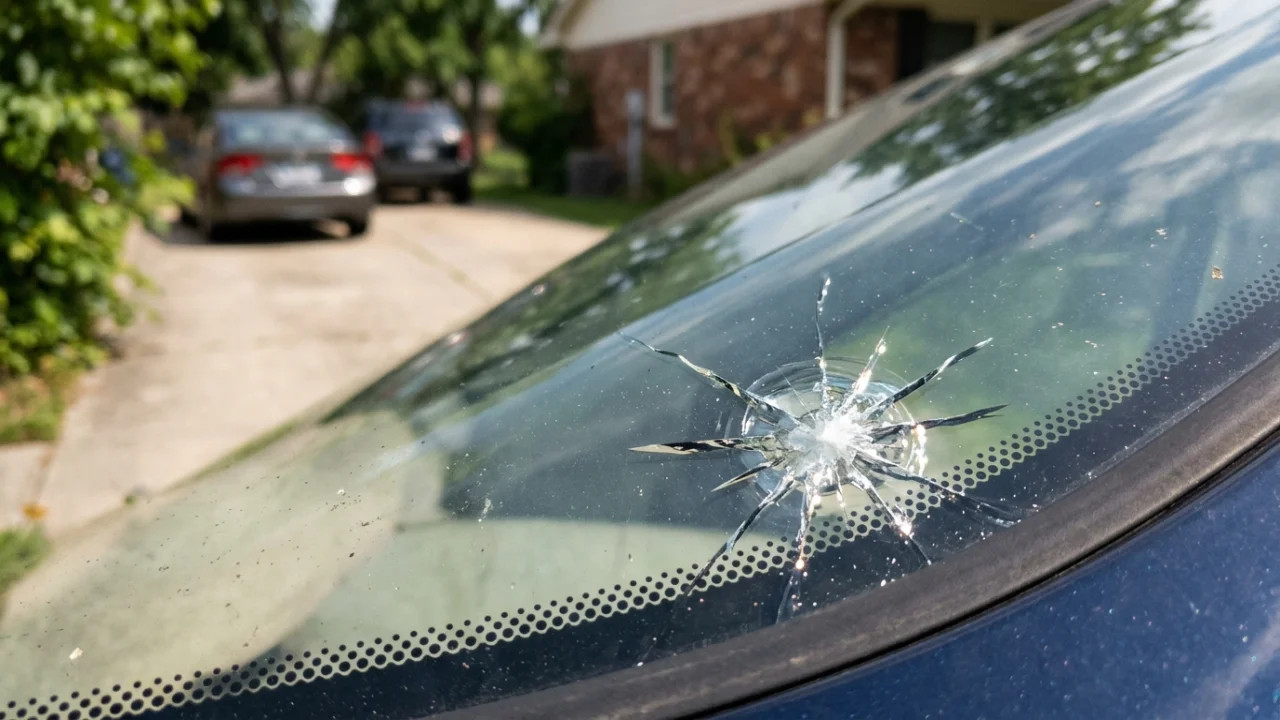
A pebble off a highway truck. A tree branch during a windstorm. A rock chip that spreads overnight into a six-inch crack. These are among the most common reasons car owners reach out to their insurance carrier about glass damage, and for Progressive policyholders, understanding how progressive auto glass coverage works before that call can make the process faster and less stressful.
This guide covers what Progressive includes under auto glass coverage, how deductibles apply, which states have zero-deductible glass laws, and how to file a claim step by step. It also addresses shop choice rights, OEM versus aftermarket glass, ADAS recalibration, and whether a glass claim affects insurance rates.
Insurance processes vary by state and policy. Car owners should review their declarations page and contact Progressive directly to confirm their specific coverage.
Does Progressive cover windshield damage?
Progressive covers windshield and auto glass damage, but only under the right coverage type. The key requirement is comprehensive coverage. Collision coverage, which covers damage from vehicle-to-vehicle impacts, does not pay for glass claims that result from road debris, weather events, or falling objects.
Comprehensive coverage (sometimes called "other than collision" coverage) protects against a broad range of non-collision hazards, including:
- Rock chips and road debris impacts
- Hail and storm damage
- Falling trees or branches
- Vandalism
- Animal strikes
If a policyholder carries only liability insurance, the minimum required in most states, Progressive will not pay for glass damage to their own vehicle. The same applies to those with collision-only add-ons. Comprehensive coverage must be active on the policy for glass claims to be eligible.
Car owners who are unsure whether they carry comprehensive can check their insurance card, the declarations page of their policy documents, or call Progressive's customer service line.
Progressive glass repair vs replacement: what's the difference in coverage?
Whether Progressive covers a repair or a full replacement depends on the size, location, and severity of the damage. This distinction matters because it affects cost, deductible application, and how quickly the vehicle gets back on the road.
When repair is the right call
Windshield repair, injecting a resin compound into a chip or crack to stabilize and fill it, is typically appropriate for:
- Chips smaller than a quarter (approximately one inch in diameter)
- Cracks shorter than six inches
- Damage outside the driver's primary line of sight
- Damage that has not reached the outer glass edge
Repair is faster (30 to 60 minutes), less expensive ($50 to $150), and often carries a lower or waived deductible. Full replacement typically runs $200 to $900 or more depending on the vehicle. Progressive prefers repair when damage qualifies because the cost difference is significant. For more on which crack types are repairable, see types of windshield cracks and when each needs replacement.
When replacement is necessary
Full progressive windshield replacement becomes necessary when:
- A crack is longer than six inches
- The damage falls in the driver's primary line of sight
- The chip or crack has reached the glass edge, compromising the seal
- The outer laminate has separated or the inner layer is cracked
- The damage cannot be stabilized through resin injection
Delaying repair often leads to replacement. A small chip left untreated tends to spread, especially in temperature extremes, turning a $100 repair into a $500-plus claim. For a detailed look at crack patterns and repair eligibility by damage type, see whether a cracked windshield can be repaired.
Progressive auto glass deductible: what to expect
The deductible is the amount a policyholder pays out of pocket before insurance coverage kicks in. For auto glass claims under Progressive, the deductible amount depends on three factors: the policy terms, the state of registration, and whether the claim involves a repair or a replacement.
Standard deductible application
In most states, the standard comprehensive deductible applies to glass replacement claims. Progressive allows policyholders to choose their deductible level, typically ranging from $100 to $1,000. A lower deductible means higher monthly premiums; a higher deductible reduces the monthly cost but increases out-of-pocket exposure per claim.
If a policyholder has a $500 deductible and a replacement costs $450, the insurance payout is $0, the cost falls below the deductible. In that scenario, paying out of pocket without filing a claim may make more sense.
Zero-deductible glass states
As of 2026, Florida, Kentucky, and South Carolina have zero-deductible glass laws. Progressive policyholders in those states with comprehensive coverage pay nothing for glass repairs or replacements. Arizona, Connecticut, Massachusetts, Minnesota, New York, and Pennsylvania have historically had partial glass-friendly provisions, car owners in those states should confirm exact benefits with Progressive directly.
Repair vs. replacement deductible differences
Some Progressive policies waive the deductible specifically for repairs (not replacements), incentivizing policyholders to address chips before they spread. A policyholder with a $500 deductible whose repair costs $120 would pay nothing under a repair waiver, a benefit worth confirming when reviewing policy terms.
How the zero-deductible glass benefit works in practice
A Florida driver with Progressive comprehensive coverage who notices a quarter-sized chip after driving near a dump truck on I-95 pays nothing to get it fixed. Florida's zero-deductible glass law means the driver contacts Progressive, files a claim, and schedules a 45-minute repair, all at no out-of-pocket cost.
An Ohio driver in the same situation faces different math. If their windshield develops a nine-inch crack and they have a $500 deductible, they would pay $500 toward a $650 replacement, with Progressive covering only $150. Some drivers in that scenario choose to pay the full cost out of pocket and skip the claim to avoid any rate impact.
These situations illustrate why knowing the deductible structure and state-specific rules before damage occurs pays off.
How to file a Progressive glass claim: step by step
Filing a progressive glass claim is faster and simpler than a collision claim, no police report required, no other party involved. Here is how the process works.
Step 1: Document the damage. Photograph the chip, crack, or break from multiple angles before any repairs are made. Note when and how the damage occurred.
Step 2: Contact Progressive to open a claim. File through the Progressive app, progressive. com, or by calling 1-800-776-4737. A representative will ask about the damage, vehicle details, and policy information.
Step 3: Receive a claim number. Progressive assigns a claim number and confirms whether the damage qualifies for repair or replacement. Deductible details are confirmed at this stage.
Step 4: Choose a glass shop. Progressive has a preferred network of glass repair providers. Using a network shop typically means Progressive handles billing directly. Car owners are not required to use a preferred shop, any licensed glass shop can be chosen, and Progressive will reimburse based on the claim amount minus any applicable deductible.
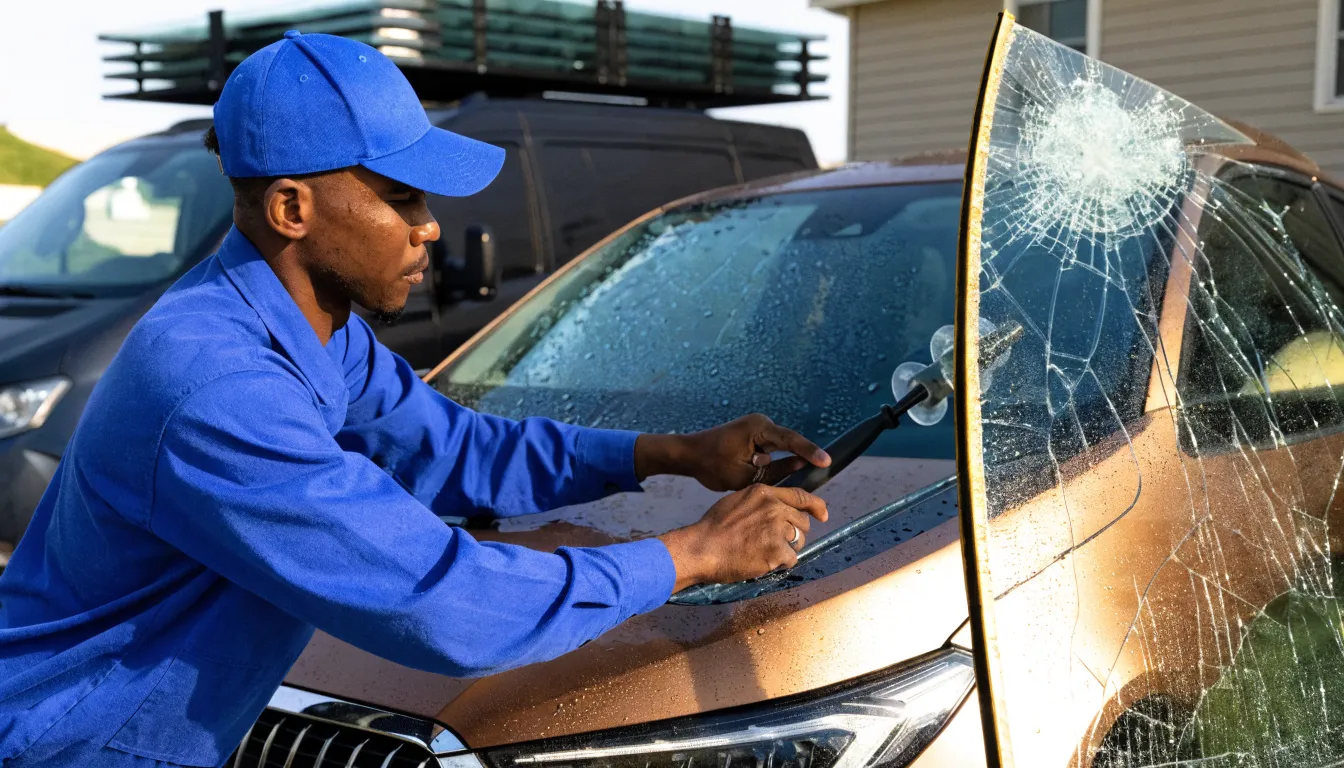
Step 5: Schedule the service. Many glass shops offer mobile service at the car owner's home or workplace. Chip repairs typically take under an hour; replacements require two to three hours plus curing time.
Step 6: Confirm ADAS recalibration if applicable. Vehicles with cameras or sensors mounted near the windshield may require recalibration after replacement. Confirm this is included in the service plan before the appointment.
Step 7: Review the completed work. Inspect the repair before leaving. For chip repairs, there should be minimal visual distortion at the fill point. For replacements, check that the seal is complete and all interior components are correctly reinstalled.
Shop choice rights: can a Progressive customer use any glass shop?
Yes. Car owners have the legal right to choose their own glass repair shop, regardless of what Progressive recommends or directs. This is a consumer protection principle that applies across most states and insurers, including Progressive.
Progressive may suggest network shops for billing simplicity and work warranties, both legitimate benefits. But the choice belongs to the policyholder. If a car owner prefers a local auto glass repair specialist or a shop familiar with a specific vehicle, they can use that shop and submit the bill to Progressive.
When using a non-network shop, car owners should get a written estimate beforehand, confirm the shop will provide a detailed invoice, and keep all documentation for the claim file.
OEM vs. aftermarket glass: does Progressive specify which type?
OEM glass (Original Equipment Manufacturer glass) is made to the exact specifications of the vehicle's original manufacturer. Aftermarket glass comes from third-party producers and is designed to fit the vehicle but may vary slightly in thickness, tinting, or acoustic properties.
Progressive defaults to aftermarket glass unless the policy includes OEM coverage as an add-on, state law mandates OEM glass, or aftermarket alternatives are unavailable for the vehicle. For most everyday vehicles, aftermarket glass from reputable manufacturers meets safety standards.
For vehicles with embedded heating elements, head-up displays, or acoustic dampening in the glass, OEM may be preferable. Policyholders who want OEM should request it during the claim setup and ask how any price difference between OEM and aftermarket will be handled, in some cases the policyholder covers the gap.
ADAS recalibration after windshield replacement
Many vehicles manufactured since 2015 include ADAS (Advanced Driver Assistance Systems), cameras, radar sensors, and lane-departure hardware mounted to or near the windshield. When the windshield is replaced, these systems often require recalibration: a re-alignment process that ensures automatic emergency braking, lane-keeping assist, and forward-collision warning function correctly.
Progressive generally covers ADAS recalibration as part of a glass replacement claim when the vehicle requires it. Car owners should confirm recalibration is included in the shop's plan before the appointment. The process can add $100 to $400 to the replacement cost and may require the vehicle to be driven a set distance on a clear road. Costs vary by make and model.
Will filing a Progressive glass claim raise insurance rates?
In most states, a single glass claim under comprehensive coverage does not result in a rate increase. Comprehensive claims are treated as "not at fault" events and do not reflect on the driver's risk profile the same way an at-fault collision would.
Multiple claims in a short period can affect rates, and in states without no-fault glass protections a single replacement claim may trigger a rate review at renewal. Progressive's general practice is not to surcharge policyholders for a first-time glass claim, but policy and state rules vary. Car owners who want certainty should ask Progressive directly before filing, especially if the repair cost is close to or below their deductible, in which case paying out of pocket may be the better choice.
Key takeaways
- Comprehensive coverage is required. Progressive auto glass coverage only applies when the policyholder carries comprehensive coverage. Liability-only policies do not cover glass damage.
- Repair is preferred when possible. Chips smaller than a quarter and cracks shorter than six inches typically qualify for repair, which is faster and often deductible-free.
- Deductibles vary by state and policy. Florida, Kentucky, and South Carolina have zero-deductible glass laws. Other states apply the standard comprehensive deductible to glass claims.
- Policyholders can choose any glass shop. Progressive preferred shops offer billing convenience, but car owners are not required to use them.
- OEM glass may cost more. Standard claims default to aftermarket glass. OEM coverage may be available as a policy add-on or by request, sometimes with a price difference.
- ADAS-equipped vehicles need recalibration. After windshield replacement on vehicles with cameras or sensors, recalibration is typically covered and should be confirmed before the shop appointment.
- One glass claim rarely raises rates. A single comprehensive glass claim generally does not increase premiums, though multiple claims or specific state rules may apply.
Frequently asked questions
Does Progressive cover windshield replacement?
Yes, Progressive covers windshield replacement under comprehensive coverage. The standard comprehensive deductible applies unless the policyholder is in a zero-deductible state (Florida, Kentucky, or South Carolina) or carries a policy with repair-specific deductible waivers.
How do I start a Progressive glass claim?
Car owners can file through the Progressive mobile app, the website at progressive. com, or by calling 1-800-776-4737. The process requires basic vehicle information, a description of the damage, and the policyholder's claim details. Most glass claims are approved quickly, often the same day.
Does Progressive pay for windshield repair with no deductible?
In some cases, yes. Some Progressive policies waive the comprehensive deductible specifically for glass repairs (not replacements). Additionally, policyholders in Florida, Kentucky, and South Carolina pay no deductible for any glass claim due to state law.
Can I use my own glass shop with Progressive?
Yes. Car owners are not required to use Progressive's preferred glass network. Any licensed glass repair shop can be used, and Progressive will reimburse based on the claim terms. Non-network shops may require the policyholder to handle billing directly and submit documentation for reimbursement.
Will a glass claim affect my Progressive insurance rate?
In most cases, a single glass claim does not raise rates. Comprehensive glass claims are typically considered not-at-fault events. However, multiple claims in a short period or specific state regulations may result in a rate review at renewal. Car owners should call Progressive directly to ask before filing if this is a concern.
Does Progressive cover ADAS recalibration after windshield replacement?
Generally yes. If a vehicle requires Advanced Driver Assistance Systems recalibration after a windshield replacement, Progressive typically covers this as part of the glass claim. Car owners should confirm with the glass shop that recalibration is included in the repair plan and listed on the invoice.
Next steps for Progressive policyholders
Understanding progressive auto glass coverage before a chip or crack appears puts car owners in a stronger position when it matters. The process is straightforward when the right coverage is in place, and knowing deductible details, state-specific rules, and shop rights helps avoid surprises.
Car owners dealing with glass damage that goes beyond a simple chip, including structural concerns around the windshield seal or pillar, may also want to consult a full auto glass repair specialist to assess the full scope of the damage before filing.
For those navigating a broader insurance claim that includes glass along with body damage, the collision repair process involves additional steps and considerations beyond a standard glass claim.
Car owners can also use AutoBodyShopNear. com to find auto body shops near them that handle glass replacement and ADAS recalibration, compare local options, and verify certifications before scheduling service.
Insurance processes and coverage terms vary by state, policy, and claim history. This guide is intended as general consumer education. Car owners should review their specific Progressive policy documents or contact Progressive directly to confirm their coverage details.
Last updated: May 2026