How Hail Damage Is Assessed
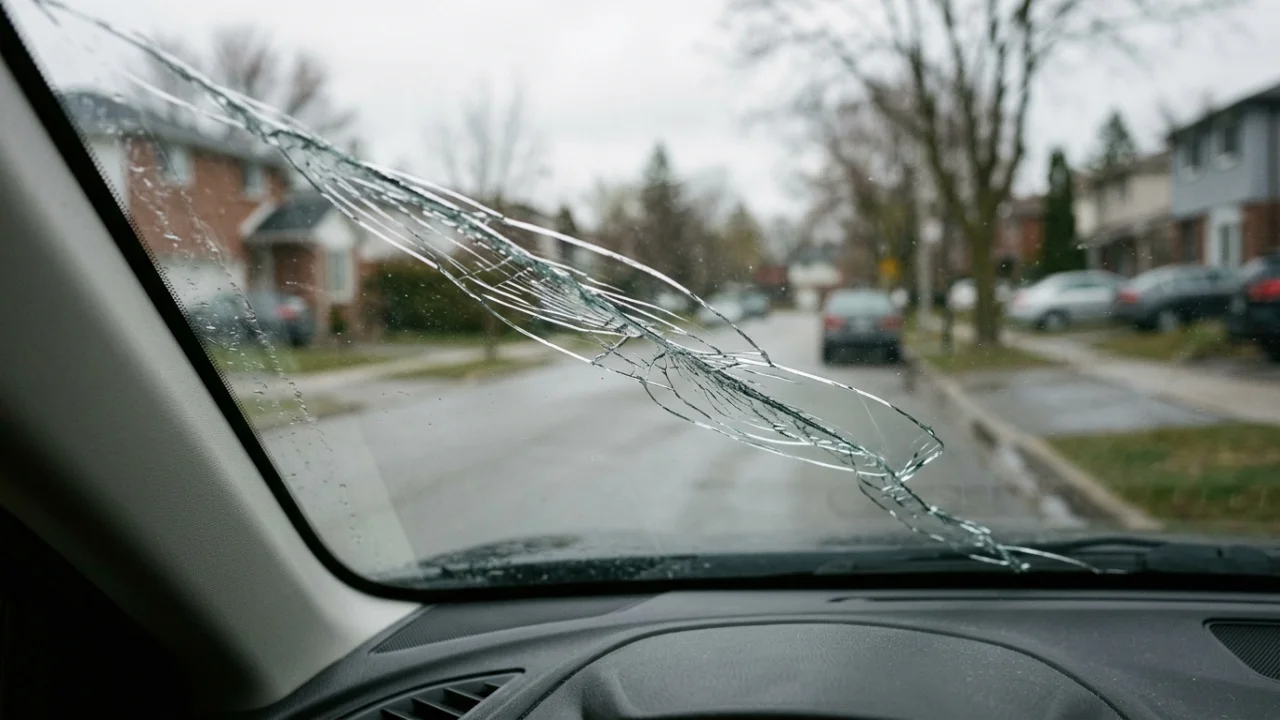
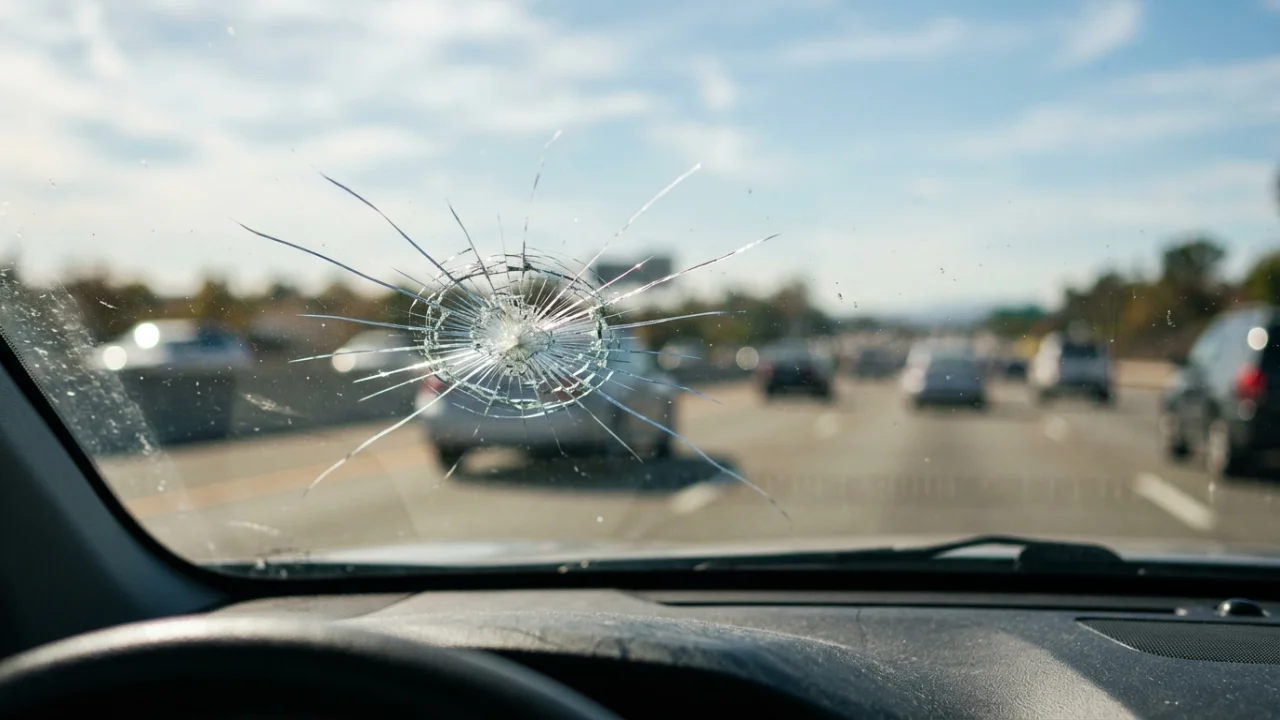
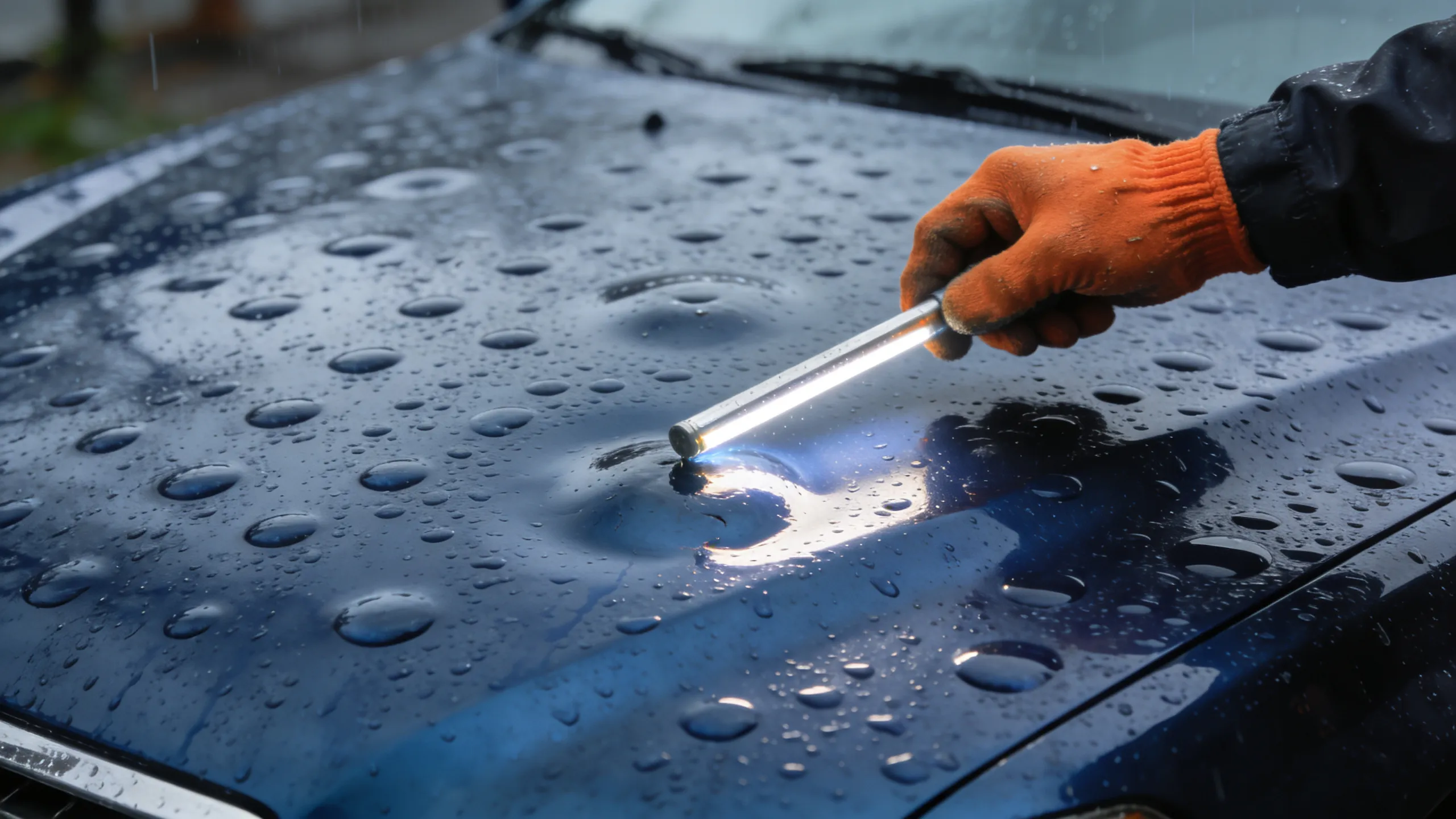
Technicians examine each body panel under specialized lighting to find and measure dents. They check for paint cracking or chipping—that indicates the impact exceeded the paint's flexibility limits. Glass assessment covers windshields, sunroofs, and side windows.
Dents without paint damage are candidates for paintless dent repair (PDR). Dents with cracked clear coat, or those near panel edges, typically need traditional repair with paint refinishing.
Hail Size and Damage Severity
Damage severity tracks closely with hailstone size:
- Pea-sized (0.25"): Rarely causes visible damage
- Dime-sized (0.75"): Light surface dimpling on aluminum panels
- Quarter-sized (1"): Reliably causes dents on most vehicles
- Golf ball-sized (1.75"+): Severe damage, multiple deep dents, roof damage, glass breakage, potential structural issues
Documenting Damage
Photograph all damaged panels before repair begins. Close-up shots of individual dents and wide shots showing panel context both matter. These photos protect you throughout the insurance claim process and support supplement requests if additional damage surfaces during repair.
PDR vs. Traditional Hail Damage Repair
What Is Paintless Dent Repair?
PDR is a technique where trained technicians use specialized metal rods and picks to restore dents from behind panels—or use glue-pulling tools externally—without disturbing the paint. PDR is faster and significantly less expensive than traditional repair, and it leaves no trace of prior damage when done well.
When PDR Is Not Enough
PDR can't restore dents with cracked or chipped paint. It's also less effective on dents near sharp body lines, in panel corners, or where metal access is restricted. Very deep dents may have stretched metal beyond what PDR can correct.
Traditional repair means filling, blocking, priming, then applying base coat and clear coat matched to factory color. It takes longer, costs more, and introduces paint-matching variables.
Side-by-Side Comparison
| Factor | PDR | Traditional Repair |
|---|---|---|
| Best for | Dents without paint damage | Dents with cracked/chipped paint |
| Average cost per panel | $50–$150 per dent; $300–$800 per panel | $500–$1,500+ per panel |
| Repair time | 1–5 days | 5–10+ days |
| Paint color matching | Not required | Required |
| Preserves factory finish | Yes | Partial |
| Resale value impact | Minimal | Minor |
Hail Damage Repair Cost by Severity
Costs vary based on damage severity, panel count, hail size, vehicle type, and local labor rates. Major metro areas run 30 to 50% above national averages.
Cost Table by Damage Severity
| Damage Level | Description | Estimated Cost |
|---|---|---|
| Light | 10–30 small dents, no paint damage, 1–3 panels | $1,000–$2,500 |
| Moderate | 30–75 dents across multiple panels, mixed sizes, minor roof damage | $2,500–$4,500 |
| Severe | 75–200+ dents, large hailstone damage, heavy roof impact, potential glass damage | $4,500–$8,000 |
| Total loss | Repair cost exceeds actual cash value | Declared total loss |
Factors That Affect Repair Cost
- Vehicle type: Aluminum panels need specialized tools and more skill
- Panel count: Trucks and SUVs accumulate more dents due to greater surface area
- Roof damage: Can account for 30–40% of the total repair bill
- Glass damage: Windshield or sunroof replacement adds $300–$1,200+
- ADAS recalibration: Vehicles with camera-embedded windshields need sensor recalibration after replacement ($150–$400)
- Geographic location: Metro labor rates run significantly above national averages
Filing a Hail Damage Insurance Claim: Step by Step
Most comprehensive auto insurance policies cover hail damage. Comprehensive handles weather events and falling objects—collision coverage doesn't apply here.
Step 1: Review Comprehensive Coverage
Confirm comprehensive coverage is active on the affected vehicle. Check the policy declarations page or call your insurer.
Step 2: Document the Damage
Photograph all damaged panels in natural daylight before moving the vehicle. Get close-ups of individual dents and wider contextual shots. Note the storm date, time, and location.
Step 3: File the Claim Promptly
File as soon as possible through the insurer's claims line or online portal. Provide the storm date, damage description, and photos. Write down the claim number—you'll need it.
Step 4: Schedule an Adjuster Inspection
The insurer sends an adjuster for in-person inspection or uses photo-based estimation. The adjuster's estimate sets the baseline payout. You have the legal right to choose your repair facility. If your shop's assessment differs from the adjuster's, they can submit a supplement request for increased payment.
Step 5: Choose a Qualified Repair Shop
Pick a shop before authorizing any work. After widespread hail events, demand surges and reputable shops fill up fast.
Step 6: Authorize Repair and Inspect on Completion
Once the shop has a confirmed estimate and any supplements approved, work begins. Inspect each repaired panel in good lighting before accepting the vehicle—check for remaining dents, paint inconsistencies, or alignment issues.
Understanding Your Deductible
The deductible is the out-of-pocket amount you pay before comprehensive coverage kicks in. Common deductibles: $250, $500, $1,000, and $1,500.
When the Deductible Matters
If repair costs are less than or only slightly above your deductible, filing a claim may not be worth it. A $1,200 estimate with a $1,000 deductible means the insurer pays only $200. Filing for that small amount can affect your claim history and potentially push future premiums up. Some owners just pay out of pocket.
When damage is moderate to severe—estimates of $2,500 or more—filing a claim is usually the right financial call.
One Deductible Per Occurrence
If a storm damaged multiple vehicles on the same policy, each vehicle typically carries its own separate deductible. Confirm with your insurer.
Storm Chaser Scams: What to Watch For
After major hail events, "storm chasers" solicit repair work in affected areas. Some are legitimate mobile PDR technicians. Many are not. They approach car owners in parking lots or door-to-door, offering fast repairs and claiming insurance will cover everything.
Signing their agreements can result in low-quality work, insurance payment disputes, or contracts that assign your insurance benefits directly to the contractor—taking control away from you.
Warning Signs of Storm Chaser Fraud
- Pressure to sign contracts immediately before you get other estimates
- Claims that repair will be "completely free" with insurance
- Requests to sign Assignment of Benefits (AOB) forms that transfer your claim rights
- No fixed business address, no visible licensing, no verifiable online presence
- Offers to waive your deductible (potentially insurance fraud)
- Same-day deadlines or aggressive follow-up after you say no
What to Do Instead
Choose an established local shop with verifiable reviews, confirmed PDR certification, and experience working with insurance supplements. Local shops have reputational accountability that travelling contractors simply don't.
Choosing a Qualified Hail Damage Repair Shop
Not every auto body shop has the tools, training, or technician capacity for large-scale hail damage. Volume hail events need shops with multiple trained PDR technicians, adequate staging space, and solid supplement processes with insurers.
What to Look for in a Hail Repair Shop
PDR certification and experience. Confirm technicians have formal PDR training. The National Alliance of Paintless Dent Repair Technicians (NAPDRT) offers credentials that signal real skill. Experienced technicians work faster and get better results on tight angles.
Written estimate. Any reputable shop gives you a detailed written estimate itemizing repair by panel and method before work authorization.
Supplement process experience. Initial insurance estimates often come in lower than final costs. Shops that know how to work with insurance supplements protect you from unexpected out-of-pocket expenses.
Warranty on repairs. Quality PDR shops typically offer lifetime warranty on repaired dents. Traditional paint work should carry at least a one-year warranty on adhesion and finish. Get it in writing.
Reviews and track record. Online reviews from prior hail seasons show how a shop handles volume work, communication, turnaround time, and quality.
How Long Does Hail Damage Repair Take?
Timelines depend on damage severity, repair method, and current shop demand.
| Scenario | Timeline |
|---|---|
| Light PDR-only (under 30 dents) | 1–3 business days |
| Moderate PDR (30–75 dents) | 3–7 business days |
| Severe PDR + traditional combination | 7–14 business days |
| Windshield/glass replacement | Add 1–3 business days |
| Peak storm season | Add 3–10 business days |
After widespread regional hail events, local shops often face multi-week backlogs. If your comprehensive coverage includes rental reimbursement, activate it if repair extends beyond a few days.
Real Scenarios: What Hail Damage Looks Like in Practice
Scenario 1—Light damage. A midsize sedan with 22 dents across hood, roof, and trunk—no paint cracking—was repaired using PDR in two business days. The $1,650 bill minus the $500 deductible resulted in $1,150 from insurance.
Scenario 2—Moderate damage on pickup truck. A full-size truck with 80-plus dents, including a roof area requiring traditional repaint due to cracked paint, totaled $4,200. With a $1,000 deductible, insurance covered $3,200. Repair took 10 business days.
Scenario 3—Severe damage near total loss. An eight-year-old sedan valued at $7,500 received a $6,800 repair estimate after major hail, including windshield replacement and heavy roof damage. The insurer evaluated the vehicle against state total loss thresholds. Borderline cases depend on state-specific thresholds and ACV calculations.
Key Takeaways
- Hail damage repair costs between $1,000 and $8,000+ depending on panels affected, dent severity, vehicle type, and local labor rates
- PDR is the preferred, less expensive method for most hail damage—hailstones typically create round dents without cracking paint
- Comprehensive insurance covers hail damage in most standard policies; confirm your coverage before storm season
- Deductibles directly affect whether filing makes financial sense; light damage near your deductible may be better handled out of pocket
- Storm chaser scams are common after major hail events; don't sign anything on the spot
- Written estimates, PDR certification, and supplement experience are the three most important factors when choosing a shop
- File claims promptly and document damage thoroughly before repair begins
Frequently Asked Questions About Hail Damage Repair
Does insurance cover hail damage car repair?
Yes, comprehensive auto insurance covers hail damage. Comprehensive handles weather events and non-collision damage. Collision coverage doesn't apply. Owners with only liability coverage pay all repair costs out of pocket.
How much does hail damage repair cost without insurance?
Without insurance, costs range from roughly $1,000 for light PDR-only damage to $8,000+ for severe multi-panel damage with paint work and glass replacement. Get multiple estimates to establish fair pricing.
Is PDR good for hail damage?
PDR is typically the best method when paint remains intact. It's faster, less expensive, and preserves the factory finish. PDR isn't appropriate when dents have cracked paint, sit near sharp body lines, or are too deep for the metal to recover without filler.
Will my insurance rates go up after a hail damage claim?
Rate impact varies by insurer and state. Because hail is a weather event rather than a fault-based incident, many insurers don't surcharge for a single comprehensive claim. Multiple claims in short periods can affect rates with some carriers.
How do I find a reputable hail damage repair shop near me?
Look for established local shops with verifiable reviews, confirmed PDR certification, and experience handling insurance supplements. Avoid signing with soliciting contractors before you get a second estimate.
What is the total loss threshold for hail damage?
Each state sets its own total loss threshold—the percentage of actual cash value a repair must reach before the insurer declares total loss. Most states set this between 70% and 100% of ACV. Car owners facing borderline cases have the right to dispute ACV calculations and negotiate.
Disclaimer: Insurance coverage details, deductible rules, and total loss thresholds vary by state and policy. This guide provides general consumer information and isn't a substitute for reviewing your specific insurance policy or consulting a licensed insurance professional.
Last updated: May 2026