A rock pings off the glass at 65 mph, and by sunset a tiny chip becomes a long split. That fast change is exactly why knowing the types of windshield cracks matters for safety, cost, and insurance timing. Many drivers put it off because all cracks look similar at first glance. Different damage patterns, though, have very different outcomes. Some are quick repair jobs under $150. Others turn into full replacement bills that can reach $1,500 on newer vehicles.
This guide covers the most common types of windshield cracks, how to identify each one, and how professionals decide repair versus replacement. It also covers real cost ranges, insurance details, and owner stories from hot, cold, and storm-prone regions.
What are the main types of windshield cracks?
The main types of windshield cracks are defined by shape, depth, location, and spread risk. Technicians classify these patterns because each one changes repair odds and structural risk. A windshield isn't just glass for visibility — it helps support roof strength and keeps airbags working as designed in many vehicles.
Here are the most common auto glass damage types seen in U.S. repair shops.
| Crack Type | Description | Size Threshold | Repairable? |
|---|---|---|---|
| Bullseye crack | Circular chip with a dark center impact point | Usually under 1 inch diameter | Often yes |
| Star break | Impact point with short cracks radiating outward | Usually under 3 inches overall spread | Sometimes |
| Crack chip (half-moon) | Partial circular chip, like a crescent | Usually under 1 inch | Often yes |
| Combination break | Multiple patterns combined (star + bullseye + cracks) | Depends on complexity, often over 2-3 inches | Often no |
| Stress crack windshield | Crack without a visible impact point, often from temperature or body flex | Any length; spread risk increases after 6 inches | Sometimes early, often replacement later |
| Edge crack | Crack starting within about 2 inches of windshield edge | Any visible growth from edge is high risk | Rarely |
| Floater crack | Crack starting in the middle of glass away from edge | Under 6 inches may be repairable if not deep | Sometimes |
Bullseye crack
A bullseye crack is a round, cone-shaped break usually caused by a small stone impact. It often has a clear circle with a darker center where the object hit. This is one of the easiest types of windshield cracks to repair if treated quickly.
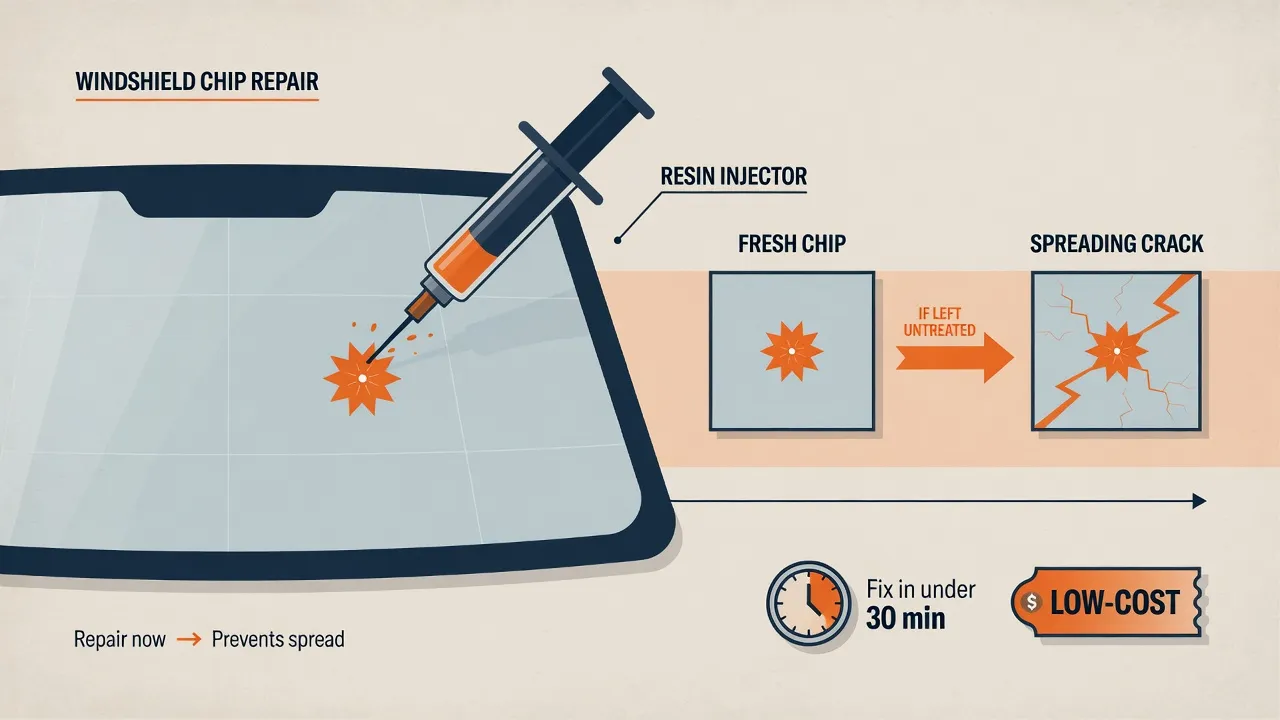
If the damage is small and not deep through both glass layers, resin injection can restore strength and improve clarity. Delay increases contamination from moisture and dirt, which lowers repair quality. Same-day service gives the best result.
Star break
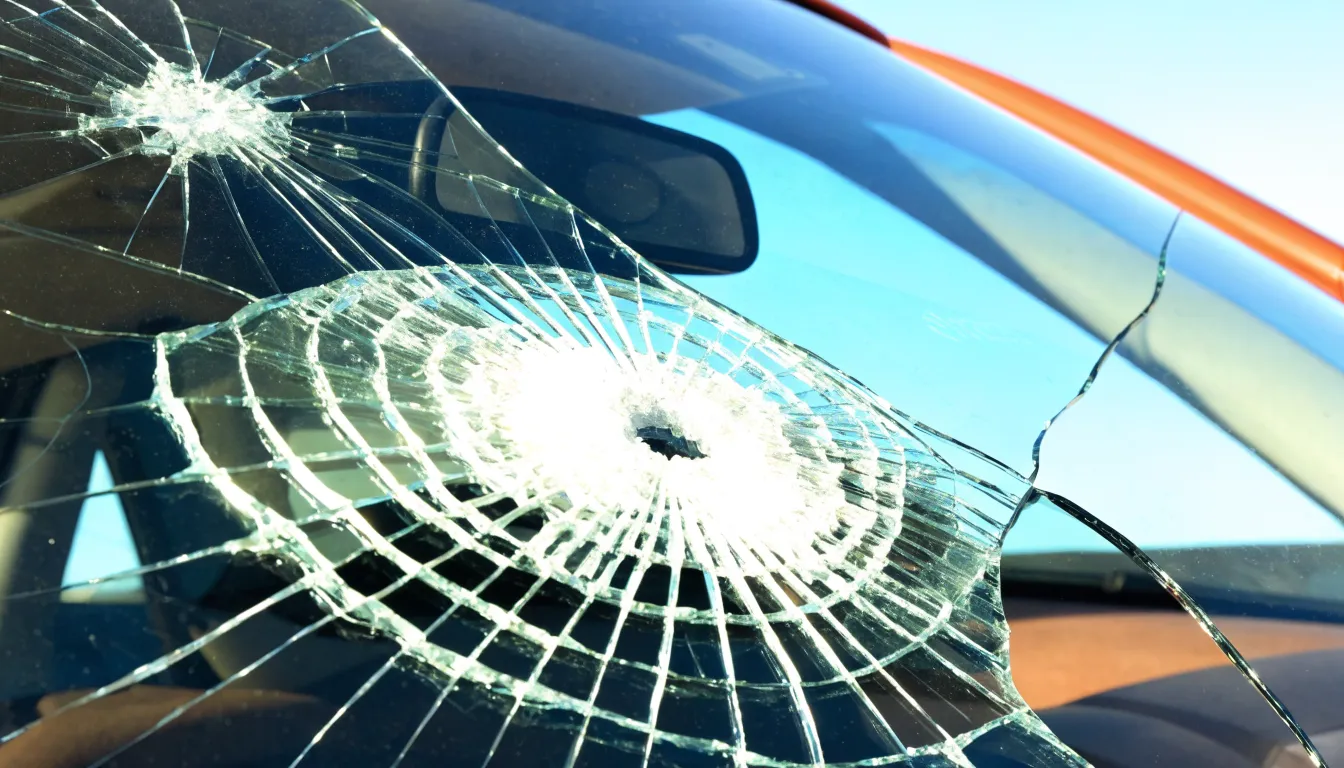
A star break has several short cracks spreading from one center point, similar to a starburst. It's common after higher-speed gravel impact and can look minor until branches lengthen. Among the types of windshield cracks, this one carries moderate spread risk.
Technicians can repair many star breaks if each leg is short and the center stays stable. Once branches connect to other chips, replacement becomes more likely. Early sealing matters.
Crack chip (half-moon or partial bullseye)
A crack chip, often called a half-moon, is a partial circular break that doesn't form a full ring. It sits between a bullseye and a simple chip in severity. Many shops treat it as one of the more repair-friendly types of windshield cracks.
Because the shape is open, stress can move through one side faster than in a complete bullseye. Repair is usually possible when the diameter stays small and the damage falls outside the driver's direct line of sight.
Combination break
A combination break mixes two or more patterns in one damaged area, like a bullseye with star legs and short linear cracks. This is one of the most unpredictable types of windshield cracks because stress lines interact.
Even if the visible size looks moderate, internal damage can be complex. Many combination breaks exceed repair limits or produce poor optical results after resin fill. Shops often recommend replacement.
Stress crack windshield
A stress crack windshield issue starts without a visible rock impact. Temperature swings, frame flex, prior poor installation, or manufacturing defects can trigger it. Drivers often notice it after extreme heat, overnight cold, or defroster use.
Among the types of windshield cracks, stress cracks can spread quickly because tension is already present in the glass. Early short cracks may be monitored or repaired in limited cases, but long stress cracks usually require replacement.
Edge crack
An edge crack begins near the perimeter, often within two inches of the windshield border. It may start from impact, body twist, or an existing weak point near trim pressure. This is one of the highest-risk types of windshield cracks.
Edge areas handle high structural load, so even short cracks can travel fast. Repair success is low compared with center damage. Replacement is common once an edge crack starts growing.
Floater crack
A floater crack starts away from the edge, usually in the middle region, and can appear as a short line or branching mark. It may come from impact or delayed stress release. Floater cracks sometimes have better repair odds than edge cracks.
Still, once a floater extends beyond common repair limits, replacement is safer. Fast diagnosis preserves options.
How to identify your windshield crack type
Correct identification starts with four checkpoints: shape, impact point, location, and length. These factors separate repairable chips from structural cracks. Drivers don't need tools, but clear photos in daylight help.
First, look for an impact point. A visible pit or center crater often means bullseye, star, or half-moon damage. No impact point raises suspicion for a stress crack windshield pattern.
Second, trace the shape. Circular marks suggest bullseye variants. Radiating lines suggest star breaks. Mixed shapes with multiple branches are usually combination breaks.
Third, check location. Damage near the edge has higher replacement odds. Mid-glass damage offers better repair chances if short and clean.
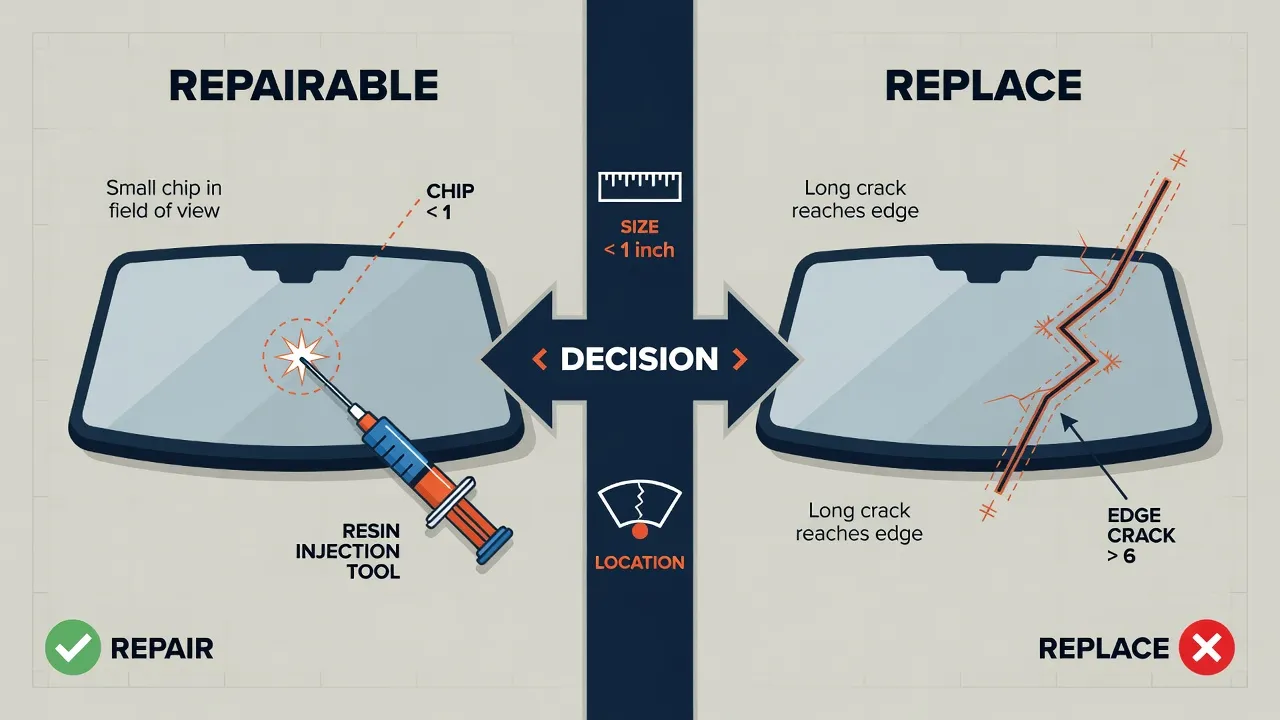
Fourth, estimate size. Many shops use rough thresholds: chips under one inch and cracks under six inches may qualify for repair. Rules vary by state, insurer, and shop policy, especially for cracks in the driver's primary viewing area.
In practice, identifying types of windshield cracks early is less about perfect labels and more about quick action. A small repairable chip can become a replacement candidate by next week if weather and vibration add stress.
Which types of windshield cracks can be repaired vs. replaced?
Repair decisions depend on safety standards, optical clarity, crack depth, contamination, and location. Technicians inject clear resin into eligible damage, then cure it with UV light. This restores much of the original strength, but not all damage qualifies.
Replacement means removing the old windshield, preparing the frame, bonding new glass with automotive urethane adhesive, and respecting cure time. It's required when structural integrity or visibility can't be reliably restored.
Repair eligibility by crack type
Generally, the most repairable types of windshield cracks are bullseye and half-moon chips that are small, clean, and away from edges. Star breaks may qualify if short and isolated. Floater cracks can go either way depending on length and depth.
The least repairable patterns are edge cracks and complex combination breaks. A long stress crack windshield line is also a common replacement case, especially if it reaches the driver's field of vision.
Technicians also reject repairs when moisture, dust, or old DIY resin blocks proper bonding. The longer damage sits exposed, the lower the repair success rate.
Windshield crack repair costs: what to expect
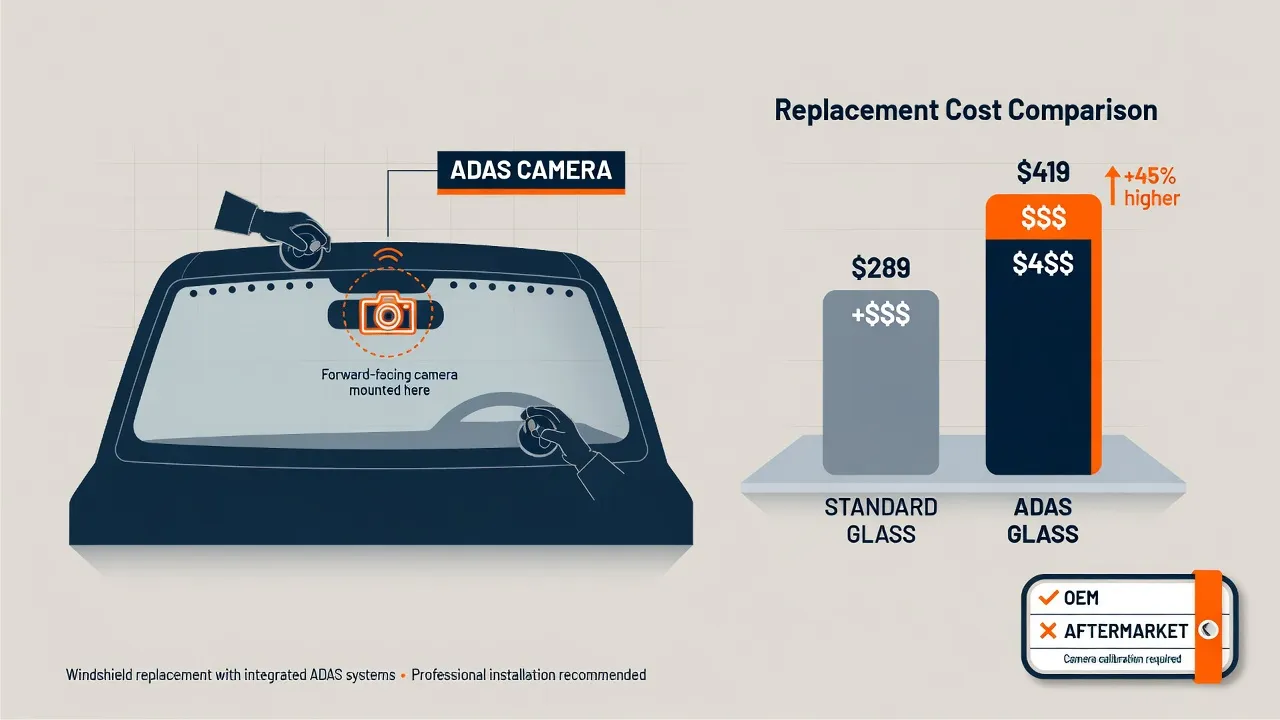
Cost varies by damage type, glass technology, and vehicle class. Standard laminated windshields on older sedans are usually cheaper than modern ADAS-equipped windshields that need camera recalibration after replacement.
Typical U. S. Pricing ranges:
- Chip or small crack repair: $60-$150 per repair
- Multiple chip repairs in one visit: $100-$250
- Full windshield replacement (aftermarket glass): $250-$600
- Full windshield replacement (OEM glass or advanced sensors): $600-$1,500
- ADAS calibration (if required): $150-$500 additional in many markets
These ranges help set expectations for windshield replacement cost planning, but local labor rates and glass availability move quotes up or down.
| Damage Type | Avg. Repair Cost | Avg. Replacement Cost | Insurance Typically Covers? |
|---|---|---|---|
| Small bullseye or chip | $60-$120 | $250-$700 | Often yes (detailed) |
| Star break (single) | $80-$150 | $300-$900 | Often yes |
| Combination break | Usually not repairable | $350-$1,200 | Often yes |
| Edge crack | Rarely repairable | $350-$1,300 | Often yes |
| Long stress crack | Sometimes $100-$180 if very early, often not eligible | $300-$1,500 | Often yes |
Act early, compare quotes, confirm glass type, and ask whether calibration is included. Those four steps handle most cost surprises.
Does car insurance cover windshield crack repair?
Many detailed auto policies cover windshield crack repair with low or zero deductible, especially for small chips. Replacement is also commonly covered under full, but deductible amounts and claim rules differ by policy.
Some states allow zero-deductible windshield replacement under specific coverage structures. Others apply the standard detailed deductible. Drivers should verify policy wording, approved glass vendors, and whether OEM glass is covered.
Claims can affect future premiums in some cases, though many insurers treat glass-only claims differently from collision losses. Before filing, compare the out-of-pocket repair cost with the deductible amount.
From a safety standpoint, windshields are part of occupant protection systems. The Insurance Institute for Highway Safety discusses crash protection context at IIHS. Federal motor vehicle safety standards and recall guidance are available through NHTSA.
Real stories: how car owners handled windshield cracks
Marcus in Phoenix noticed a stress crack windshield line after a week of 110°F heat. It started as a short lower-corner split that seemed stable, so he waited two weeks. By then, the crack had crossed into the driver's viewing area and expanded each afternoon. The final bill was a full replacement at $780, including calibration.
Diane in Chicago took a different path. A highway pebble created a small bullseye crack during her morning commute. She scheduled same-day service, paid $95, and her thorough policy covered it with a $0 deductible. The crack stayed sealed through winter freeze-thaw cycles.
Tom in Houston saw a star break after a hailstorm and ignored an older nearby chip from months earlier. The two damage points linked into a combination break, making resin repair unreliable. His insurer approved OEM replacement. His total out-of-pocket was $400 after deductible.
Same starting damage, very different outcomes. Across all types of windshield cracks, speed of action is usually the biggest cost variable.
Frequently asked questions about windshield cracks
Can a cracked windshield be repaired or does it need replacement?
It depends on crack type, size, depth, and location. Small chips and short cracks away from edges are often repairable. Complex, long, edge-based, or visibility-blocking damage usually needs replacement. A technician should inspect quickly, repair options shrink as contamination and spread increase.
How fast does a windshield crack spread?
Spread speed can range from hours to months. Heat swings, road vibration, potholes, and pressure changes accelerate growth. A small chip may stay stable for days, then expand suddenly after one hot afternoon or cold morning. Early repair is the best way to stop rapid propagation.
Is it safe to drive with a cracked windshield?
Minor chips may allow short-term driving, but safety drops as cracks grow. Windshields contribute to roof support and airbag performance in many vehicles. Cracks in the driver's sightline also reduce visibility. If damage is spreading or obstructing your view, limit driving and schedule service immediately.
Does insurance cover windshield crack repair?
Full coverage often includes glass repair, sometimes with zero deductible for chip repair. Replacement is commonly covered too, but deductible rules vary by state and policy. Confirm claim terms, approved vendors, calibration coverage, and OEM-glass eligibility before authorizing work.
How much does it cost to fix a windshield crack?
Most single-chip repairs cost about $60-$150. Replacement usually runs $250 to $1,500 depending on vehicle type, sensor systems, and glass specification. If ADAS calibration is needed, add roughly $150-$500. Comparing written estimates helps clarify the full job cost.
What causes stress cracks in a windshield?
A stress crack windshield issue can result from rapid temperature changes, body flex on rough roads, poor installation, frame distortion, or manufacturing defects. Unlike impact breaks, these cracks may appear without a stone strike point. Early inspection matters, stress cracks tend to keep growing.
Key takeaways
The most useful step for drivers is learning the types of windshield cracks before damage spreads. Bullseye and half-moon chips are often repairable, while edge cracks, long stress cracks, and complex combination breaks usually need replacement. Fast action can mean a $95 repair instead of a $780 or $1,500 replacement.
When comparing options, focus on three questions: Is the crack in the sightline? Is it near the edge? Is it growing? Those answers usually predict repair odds better than appearance alone. Across all types of windshield cracks, same-week inspection reduces both risk and cost.
Vehicle owners concerned about resale should document repairs, since visible unresolved glass damage can affect buyer confidence and appraisal discussions. Service and value history references can be reviewed through resources like CARFAX.