Insurance adjusters approve claims every day using aftermarket parts without explaining what that choice costs you in the long run. The savings go to the insurance company. The hidden costs, reduced resale value, potential safety system failures, fit problems that surface months later, land on you. Knowing the real differences puts you in a position to make informed decisions and, where it counts, demand better.
What Are OEM and Aftermarket Parts?
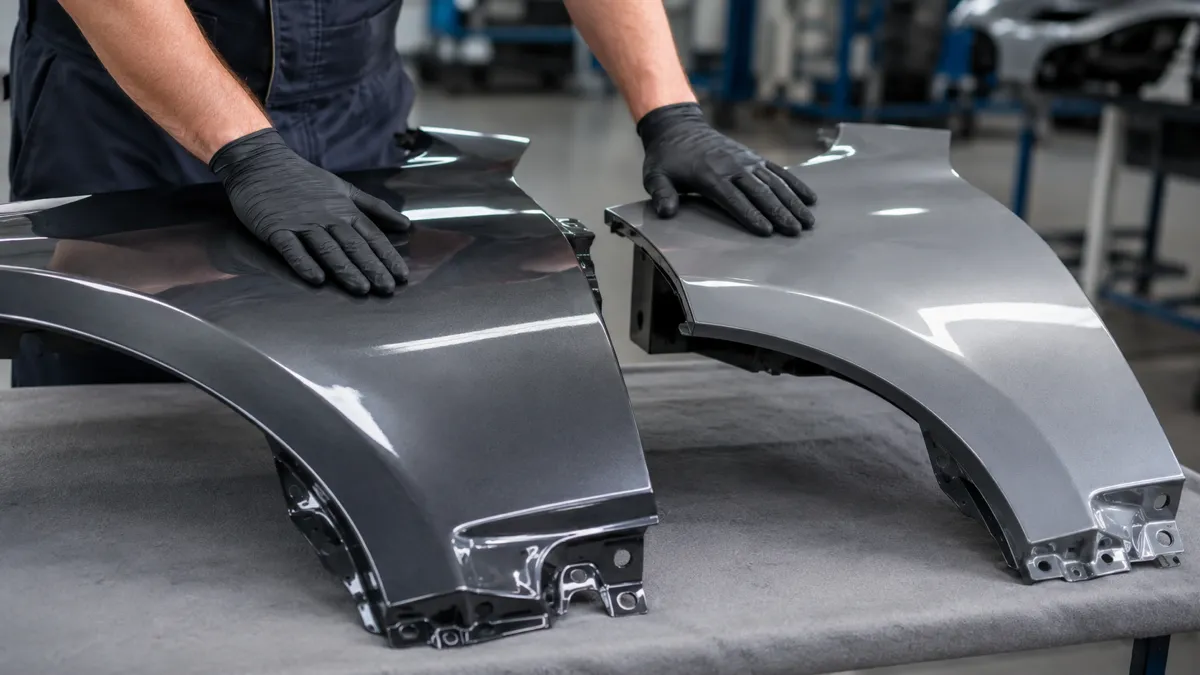
OEM parts come directly from the vehicle manufacturer or their authorized suppliers. A replacement OEM fender for a Honda Accord is the same part Honda installs on new vehicles at the factory: identical materials, fit, finish, and engineering specs.
Aftermarket parts are made by third-party companies. Quality varies dramatically. Some aftermarket manufacturers produce parts that meet or exceed OEM specs. Others cut corners on materials, tolerances, and testing. Unlike OEM parts, which go through manufacturer quality control, aftermarket parts have no universal standard.
CAPA (Certified Automotive Parts Association) certification offers one quality benchmark for aftermarket parts. CAPA-certified parts must meet specific standards for fit, finish, and corrosion resistance. But CAPA certification doesn't guarantee equivalence to OEM parts, and many aftermarket parts used in insurance repairs carry no certification at all.
| Factor | OEM Parts | Aftermarket Parts |
|---|---|---|
| Fit | Exact factory match | May require adjustment |
| Quality | Manufacturer controlled | Varies widely |
| Warranty | Supports OEM warranty | Aftermarket warranty only |
| ADAS compatible | Designed for sensors | Often problematic |
| Cost | Higher (baseline) | 20–50% less |
| Resale impact | Preserves value | 10–15% additional loss |
The Hidden Cost: How Aftermarket Parts Affect Resale Value
Insurance companies focus on repair costs. You should focus on total cost of ownership, including what the vehicle will be worth at trade-in or sale.
Vehicles repaired with OEM parts retain 85–90% of their pre-accident value. Vehicles repaired with aftermarket parts retain only 70–75% of pre-accident value. That 10–15 percentage point difference is real money.
On a vehicle worth $30,000 before an accident, the difference in value retention could mean $3,000–4,500 in lost resale value. The insurance company saved maybe $400–800 using aftermarket parts. You absorb a loss three to five times larger when you sell the vehicle.
This loss compounds the diminished value that already happens from having an accident on the vehicle's history. Non-OEM parts trigger what appraisers call "repair-related diminished value", additional loss beyond the accident stigma itself. Buyers and dealerships can often identify non-OEM parts through fit issues, paint matching problems, or parts markings, and they adjust their offers accordingly.
ADAS Calibration Risks: When Aftermarket Parts Become a Safety Issue
Modern vehicles depend on Advanced Driver Assistance Systems, the cameras, radar, and sensors behind automatic emergency braking, lane keeping, blind spot monitoring, and adaptive cruise control. These systems require precise calibration. Aftermarket parts introduce variables that can compromise that.
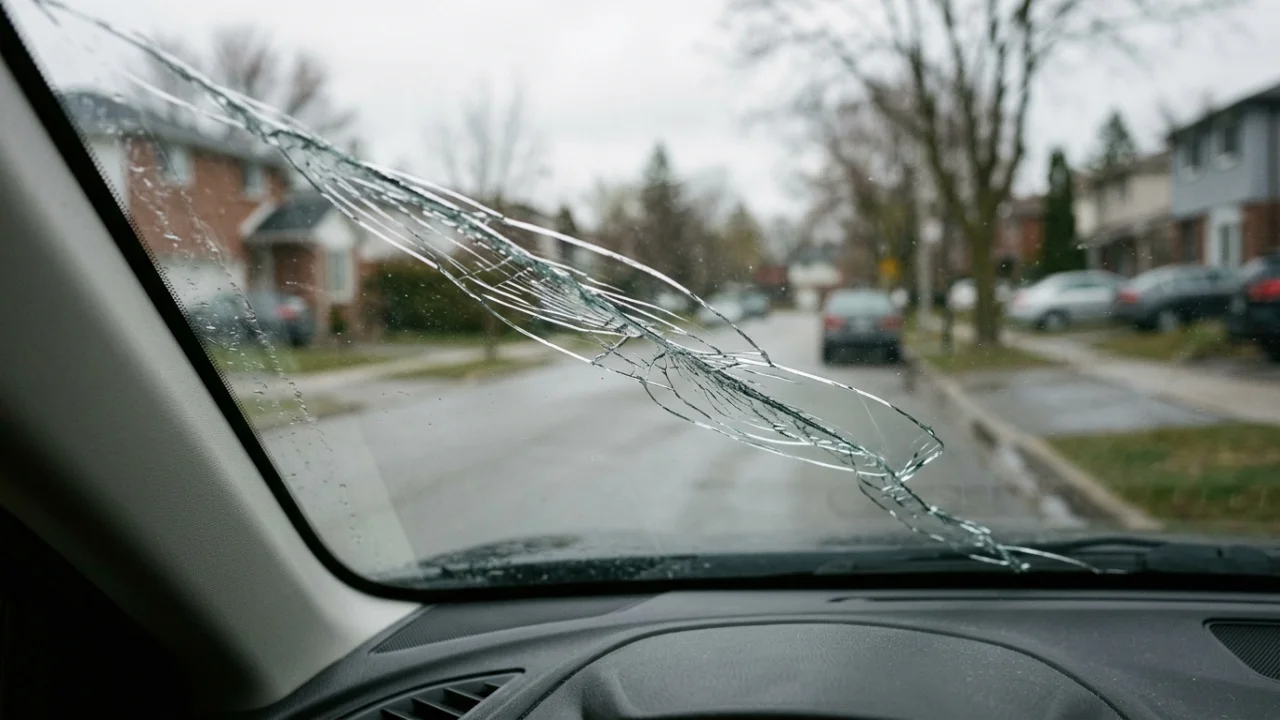
Bumpers, grilles, and windshields increasingly house ADAS sensors. Aftermarket versions of these components may differ from OEM in thickness, curvature, or mounting points by just a few millimeters. Those millimeters matter. The Insurance Institute for Highway Safety found that a forward-facing camera misaligned by just 0.6 degrees reduced automatic emergency braking reaction time by 60%.
General Motors issued a position statement in March 2026 explicitly stating that GM doesn't approve non-OEM parts in collision repairs on vehicles with safety systems. The statement notes that aftermarket parts can interfere with radar, cameras, and ultrasonic sensors, causing calibration failures or reduced accuracy.
Here's the troubling part: the vehicle leaves the shop looking repaired, but safety systems designed to prevent accidents may no longer work correctly. The driver gets no warning. The collision avoidance system that should brake at 30 mph might only engage at 20 mph, or not at all.
For any repair involving bumpers, grilles, windshields, or sensor-adjacent components, ask specifically whether the parts are OEM and whether ADAS recalibration will be done to manufacturer specifications.
State Laws: What Protection Actually Exists
Consumer protection for OEM parts varies significantly by state. Know what applies where you live.
States requiring consent before using aftermarket parts: Six states require written consent from the vehicle owner before a repair facility can install non-OEM parts. Without signed authorization, the shop must use OEM components.
States requiring quality parity: Thirteen states mandate that aftermarket parts meet "like kind and quality" standards compared to OEM parts. Enforcement varies, but these laws give you a basis for challenging substandard parts.
Recent legislative developments:
- Texas SB 1429 (2026): For vehicles 36 months old or newer, insurance providers must authorize OEM glass unless the owner provides written consent for non-OEM alternatives. The disclosure must be in at least 12-point font and explicitly state the part isn't from the original manufacturer.
- New York pending legislation: Bills under consideration would require OEM parts for vehicles within two years of their model year or through the duration of the manufacturer's warranty.
- Ohio HB 636: The "Auto Insurance Transparency Act" would ensure policyholders can choose OEM parts and receive clear disclosure about what parts are being used.
California Insurance Code Section 1874.87 allows insurers to authorize aftermarket or recycled parts only if they're equal to OEM quality in safety and performance and come with a written warranty.
How to Get OEM Parts from Your Insurance Company
Car owners who want OEM parts have several options. The approach depends on policy coverage, state law, and your willingness to pay any cost difference.
Step 1: Check the existing policy. Look for an "OEM endorsement" or "original equipment parts coverage." Many insurers offer this as an add-on for roughly $5–15 per month. If your policy includes it, OEM parts are already covered.
Step 2: Know your state law. When you talk to the adjuster, cite specific state regulations. Referencing Texas SB 1429 for a 2024 vehicle carries more weight than a general preference.
Step 3: Request in writing. Submit a written request for OEM parts before repairs begin. Keep copies of all correspondence. Sample language: "I am requesting that all replacement parts used in this repair be Original Equipment Manufacturer (OEM) parts. Please confirm in writing whether this request will be honored and, if not, the specific reason and any cost difference involved."
Step 4: Offer to pay the difference. If your policy doesn't cover OEM parts and state law doesn't require them, you can offer to pay the cost difference yourself. Typical differences run 20–50% depending on the part. For newer or higher-value vehicles, that investment often pays back in preserved resale value.
Step 5: Escalate if needed. If the insurer refuses without good reason, you can file a complaint with the state insurance commissioner, request a supervisor review, or get a legal consultation for significant claims.
When Aftermarket Parts Make Sense
Not every repair warrants OEM parts. The right call depends on vehicle age, component type, and what's being repaired.
Older vehicles (10+ years). When the car's market value is low, the resale value impact of aftermarket parts becomes less significant. Cost savings may outweigh the marginal difference.
Cosmetic-only components. Parts with no structural or safety function, exterior trim pieces, non-sensor bumper covers on older vehicles, can be reasonable candidates for quality aftermarket options.
CAPA-certified parts. When aftermarket parts are necessary, CAPA-certified components offer more quality assurance than uncertified alternatives.
For vehicles under five years old, structural components, or anything housing ADAS sensors, OEM parts typically represent the better long-term value.
Key Takeaways
The choice between OEM and aftermarket parts affects vehicle safety, resale value, and repair quality. Insurance companies have financial incentives to use aftermarket parts. You've financial incentives to understand when OEM parts are worth requesting.
- Aftermarket parts can reduce resale value by an additional 10–15% compared to OEM repairs
- Vehicles with ADAS face real safety risks when aftermarket parts affect sensor calibration
- State laws provide varying levels of consumer protection, know the regulations that apply to you
- OEM endorsement coverage typically costs $5–15 monthly and can pay for itself with one repair
- Written requests citing specific state regulations carry more weight than verbal preferences
When you read a repair estimate, look at the parts codes: OEM, A/M (aftermarket), or LKQ (like-kind quality). Catching aftermarket substitutions before repairs begin is far easier than addressing them after the fact.