
What to Do When Your Insurance Estimate Is Too Low

If the insurance estimate doesn't cover the real repair cost, you don't have to accept it. Here's how to get a fair payout for your collision damage.

Insurance ClaimsMay 5, 20261 min read

Insurance Estimate Too Low: What to do when your insurance estimate is too low

The insurance adjuster's estimate came in at $1,800. The body shop says the repair will cost $2,600. This gap between what the insurance company offers and what repairs actually cost is one of the most common frustrations car owners face after an accident.

The good news: car owners are not required to accept a low insurance estimate. The claims process includes multiple opportunities to dispute, supplement, and escalate when the initial estimate falls short. Understanding these options transforms an unfair offer into a negotiation.

This guide explains why insurance estimates are often too low and provides a step-by-step process for getting fair payment; including template language for dispute letters.

Why insurance estimates are often lower than body shop quotes: insurance estimate too low

Insurance adjusters and body shops approach damage estimates differently. Understanding these differences explains the gap.

Standardized software vs. actual repair costs. Insurance companies use estimating software that calculates repair costs using national averages and preset formulas. These calculations may not reflect current local labor rates, which vary by 40-60% between markets. A shop in Los Angeles operates on different economics than one in rural Kansas.

Visible damage only. Initial insurance estimates typically cover only damage that can be seen during a visual inspection. However, collision damage often extends beyond what is visible. Damage behind bumper covers, inside door panels, or along structural components only becomes apparent once the vehicle is disassembled. Industry professionals estimate that the majority of initial insurance estimates are written below the final repair cost because of this limitation.

Parts and labor disputes. Insurance estimates may specify aftermarket or used parts where the body shop recommends OEM (Original Equipment Manufacturer) parts. Labor time allowances in the insurance estimate may be lower than what the repair actually requires. These line-item differences add up quickly.

Step 1: Get an independent estimate to challenge low insurance offers: insurance estimate too low

Before disputing anything, car owners need documentation. An independent estimate from a reputable body shop provides the foundation for negotiation.

When selecting a shop for an estimate, certifications matter. Shops with I-CAR Gold Class certification or OEM certifications have demonstrated technical competence. Request a detailed, itemized estimate that breaks down:

  • Parts (with OEM vs. aftermarket clearly noted)
  • Labor hours by operation
  • Paint and materials
  • Any sublet operations (like frame straightening or ADAS calibration)

Multiple estimates strengthen a dispute. If two or three independent shops quote similar amounts that exceed the insurance estimate, this establishes that the insurance figure is the outlier; not the shops.

Step 2: Request a reinspection

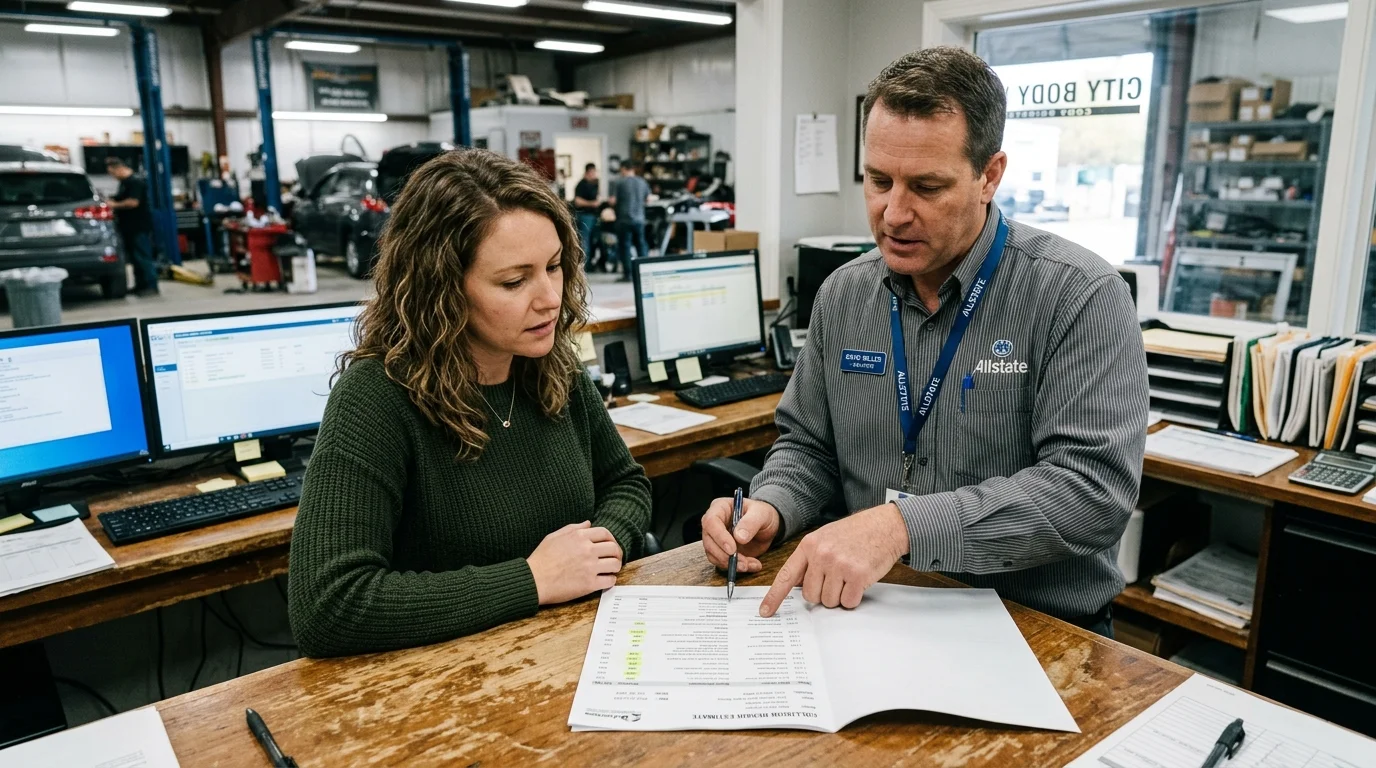
When the insurance estimate is significantly lower than the body shop estimate, car owners can request a reinspection. This brings the insurance adjuster back to examine the vehicle; ideally at the body shop where it will be repaired.

How to request a reinspection:

  1. Contact the claims adjuster in writing (email creates a paper trail)
  2. Identify specific line items where estimates differ
  3. Request an in-person inspection rather than a photo review
  4. Ask that the body shop technician be present during the inspection

During reinspection, the shop can point out damage the adjuster may have missed and explain why certain repair procedures are necessary. This face-to-face discussion often resolves discrepancies without further escalation.

Step 3: Understand the supplement process

A supplement is an additional claim filed when repair costs exceed the original estimate. Supplements are a normal part of collision repair; not an exception.

Once a vehicle is disassembled for collision repair, hidden damage frequently appears. Structural damage behind cosmetic panels, wiring issues, or sensor damage may only become visible during teardown. When this happens, the body shop documents the additional damage and submits a supplement to the insurance company for approval.

Most supplements are approved when properly documented with photos and detailed explanations. The key is ensuring the body shop has experience working with insurance companies and understands documentation requirements. For more detail on how this process works, see understanding insurance supplements.

Step 4: Negotiate when insurance estimate is too low

If reinspection does not resolve the dispute, direct negotiation is the next step. Effective negotiation focuses on specifics, not generalities.

Negotiation strategies that work:

  • Focus on line items, not totals. Instead of arguing that the estimate is "$800 too low," identify specific items: "The estimate allows 2.5 hours for bumper replacement; industry-standard procedure requires 4.2 hours."
  • Reference local labor rates. If the insurance estimate uses below-market labor rates, document what shops in the area actually charge.
  • Put everything in writing. Email creates a record. Phone calls do not.
  • Request a supervisor. If the adjuster will not budge, ask to speak with a claims supervisor who has more authority to approve adjustments.

Template: Dispute letter to insurance company

Car owners can use this template to formally dispute a low estimate:

---

Subject: Formal Dispute of Claim Estimate; Claim #[CLAIM NUMBER]

Dear [ADJUSTER NAME],

I am writing to formally dispute the repair estimate dated [DATE] for Claim #[CLAIM NUMBER] in the amount of $[AMOUNT].

I have obtained an independent estimate from [BODY SHOP NAME], an I-CAR Gold Class certified facility, in the amount of $[AMOUNT]. The difference of $[DIFFERENCE] results from the following discrepancies:

  1. [SPECIFIC LINE ITEM]: Insurance estimate allows [X]; industry-standard repair procedures require [Y].
  2. [SPECIFIC LINE ITEM]: Insurance estimate specifies aftermarket parts; safe and proper repair requires OEM parts because [REASON].
  3. [SPECIFIC LINE ITEM]: [DESCRIPTION OF DISCREPANCY].

I am requesting a reinspection of the vehicle at [BODY SHOP NAME] to review these discrepancies. Please contact me at [PHONE/EMAIL] to schedule this inspection within the next 10 business days.

I am also requesting a written explanation for each denied or reduced line item, as required under [STATE] insurance regulations.

Sincerely, [YOUR NAME] [POLICY NUMBER] [CONTACT INFORMATION]

---

For additional negotiation tactics, see insurance company tactics and how to respond.

Step 5: Escalation paths when negotiation fails

When direct negotiation does not resolve the dispute, car owners have several escalation options.

Internal escalation: Request a formal review by the claims department supervisor or file an internal complaint through the insurance company's customer service process.

Appraisal clause: Most auto insurance policies contain an appraisal clause that allows either party to request an independent appraisal when they disagree on the amount of loss. Each party selects an appraiser, and the two appraisers select an umpire. The decision of any two of these three is binding. This process costs money (typically $200-$500 for the appraiser fee) but may be worthwhile for significant disputes.

State insurance department complaint: Every state has a Department of Insurance (DOI) that regulates insurance company conduct. Filing a formal complaint with the DOI puts the dispute on record and can prompt the insurance company to reconsider. According to the National Association of Insurance Commissioners, nearly 13,000 insurance complaints resulted in the company's position being overturned in 2021 alone. Car owners can file complaints through the NAIC Consumer Information Source.

Legal options: For larger disputes or situations involving bad faith (where the insurance company acts unreasonably or dishonestly), consulting an attorney may be appropriate. Small claims court is an option for disputes within the court's dollar limits (typically $5,000-$10,000 depending on state).

Know your rights as a policyholder

Car owners have specific rights when dealing with auto body repair claims:

  • Right to choose any repair facility. Insurance companies cannot require car owners to use a specific body shop.
  • Right to OEM parts. Some states require insurers to offer OEM parts or disclose when aftermarket parts are specified.
  • Right to a complete, safe repair. Repairs must restore the vehicle to pre-accident condition.
  • Right to dispute estimates. The initial estimate is not final; it is the starting point for negotiation.
  • Right to request reinspection. Car owners can ask for additional inspections when estimates are disputed.

Note: Insurance regulations vary by state. Consult your state's Department of Insurance for specific requirements in your jurisdiction.

Key takeaways

When an insurance estimate is too low, car owners have options:

  1. Get independent estimates from certified body shops to document actual repair costs
  2. Request a reinspection with the body shop technician present
  3. Understand supplements; additional damage discovered during repair is covered
  4. Negotiate on specifics; dispute line items, not just totals
  5. Escalate when necessary; supervisor review, appraisal clause, or state DOI complaint

Accepting a low insurance estimate is a choice, not a requirement. Car owners who document discrepancies, communicate in writing, and understand the escalation process are better positioned to receive fair compensation for repairs.

For a complete overview of managing the claims process, see the auto body insurance claims guide. Insurance estimate too low is easiest to manage when you keep records, compare estimates, and ask for written decisions.

Related Articles
Newsletter

Get repair tips in your inbox

No spam, no sales pitches. Just practical advice on collision repair, insurance claims, and car maintenance — twice a month.

Join 2,400+ car owners. Unsubscribe anytime.