Auto body estimates look complicated, but they follow a simple structure. Here's how to read every section and spot the line items that actually matter.
Anatomy of an Auto Body Repair Estimate
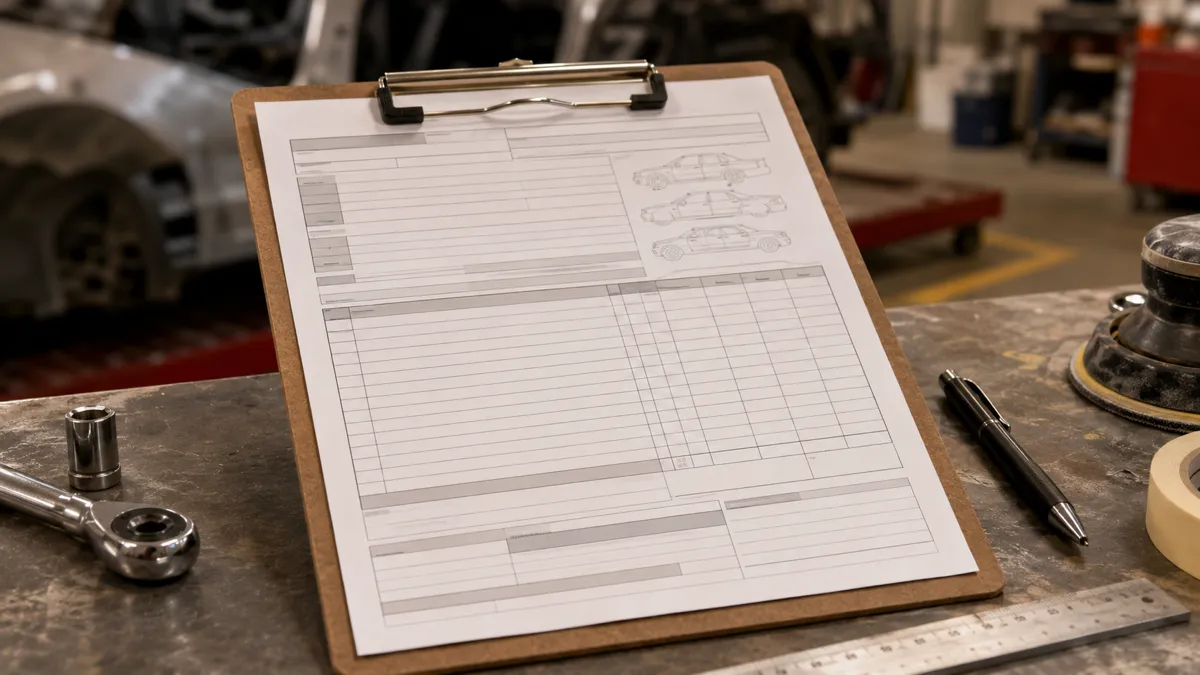
A collision repair estimate is a detailed breakdown of everything needed to fix your car. Most people look at the total and move on. That's a mistake. The line items tell you whether you're getting a thorough repair or a cut-corner job.
Every estimate has the same basic sections: labor, parts, materials, and sublet work. Understanding each one lets you compare estimates intelligently — and catch problems before the repair starts.
Labor: Where Most of the Cost Lives
Labor typically runs 40-60% of a collision repair estimate. It's broken into three categories, each billed at a different rate.
Body Labor
This covers the actual metalwork — removing damaged panels, straightening dents, welding, and fitting replacement parts. Body labor rates range from $48-75/hour depending on your market. Major metro areas run higher.
Paint Labor
Prep, prime, base coat, clear coat, color matching. Paint labor is usually billed at the same hourly rate as body labor, but the hours are calculated differently. Watch for "blend" operations — these feather new paint into adjacent panels so the color transition is invisible. If blend isn't on the estimate, the new paint may look noticeably different from the original in sunlight.
Frame/Structural Labor
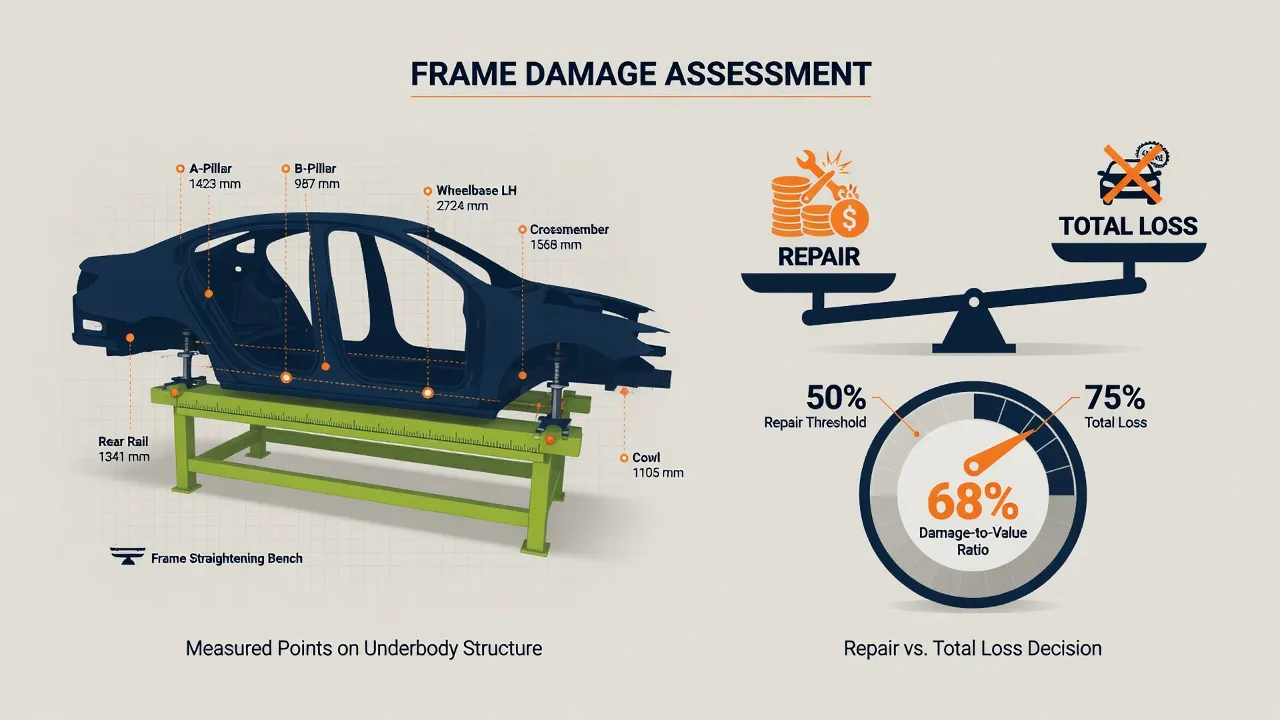
If the impact hit structural components — rails, aprons, pillars — frame labor covers measuring, pulling, and realigning. This is typically billed $5-15 more per hour than body labor because it requires specialized equipment and more training.
Parts: OEM, Aftermarket, and Recycled
The parts section lists every component being replaced. Each part shows a type code that tells you where it came from:
- OEM (O or OE): Original equipment from the vehicle manufacturer. Best fit and finish, highest cost. A single OEM fender runs $400-800.
- Aftermarket (A or AM): Third-party reproductions. 20-50% cheaper than OEM, but fit can be inconsistent. CAPA-certified aftermarket parts meet quality standards.
- Recycled/Used (R or U): Salvage parts pulled from other vehicles. Good option for expensive components like headlight assemblies. Make sure they're undamaged and the right color if visible.
- Reconditioned (Recon): Used parts that have been repaired or refinished. Common for bumper covers and wheels.
Materials and Paint Supplies
Materials cover sandpaper, primer, sealer, adhesives, masking tape, and paint. Some estimates list materials as a flat rate; others itemize each supply. Either way, this section typically runs $200-500 on a standard repair.
Watch for "hazardous waste disposal" or "environmental fees." These are legitimate charges — body shops are legally required to handle and dispose of chemical waste properly, and that has a real cost.
Sublet Work
Sublet charges cover work the body shop sends out to specialists. Common sublet items:
- Wheel alignment: $80-150, required after any front-end impact
- ADAS calibration: $200-500, required when the windshield, bumper, or grille is replaced on vehicles with driver-assist sensors
- Glass replacement: Windshield and side glass, usually handled by a mobile glass company
- Mechanical work: AC recharging, coolant systems, suspension — anything beyond body repair
What to Check on Any Estimate
- Blend operations: If one panel is being repainted, adjacent panels should show a "blend" line item. Without it, the new paint won't match the original under sunlight.
- Corrosion protection: Any bare metal exposed during the repair should get treatment. Look for "cavity wax" or "corrosion protection" line items.
- R&I vs R&R: R&I means remove and reinstall the same part. R&R means remove and replace with a new one. Make sure the estimate uses the right operation for each component.
- Scanning and calibration: Modern vehicles (2015 and newer) need pre- and post-repair diagnostic scans. These should appear as specific line items — not assumed to be included somewhere else.
The total matters, but the line items matter more. Two shops can quote the same price with completely different repair plans.