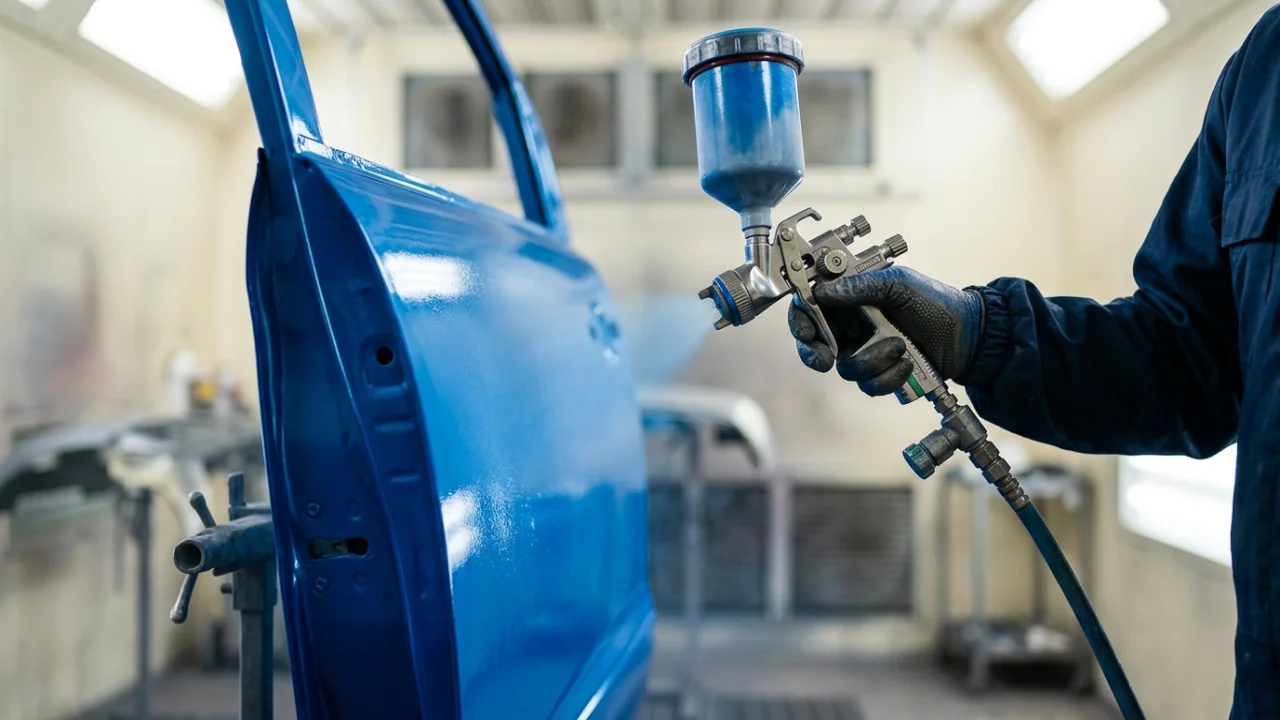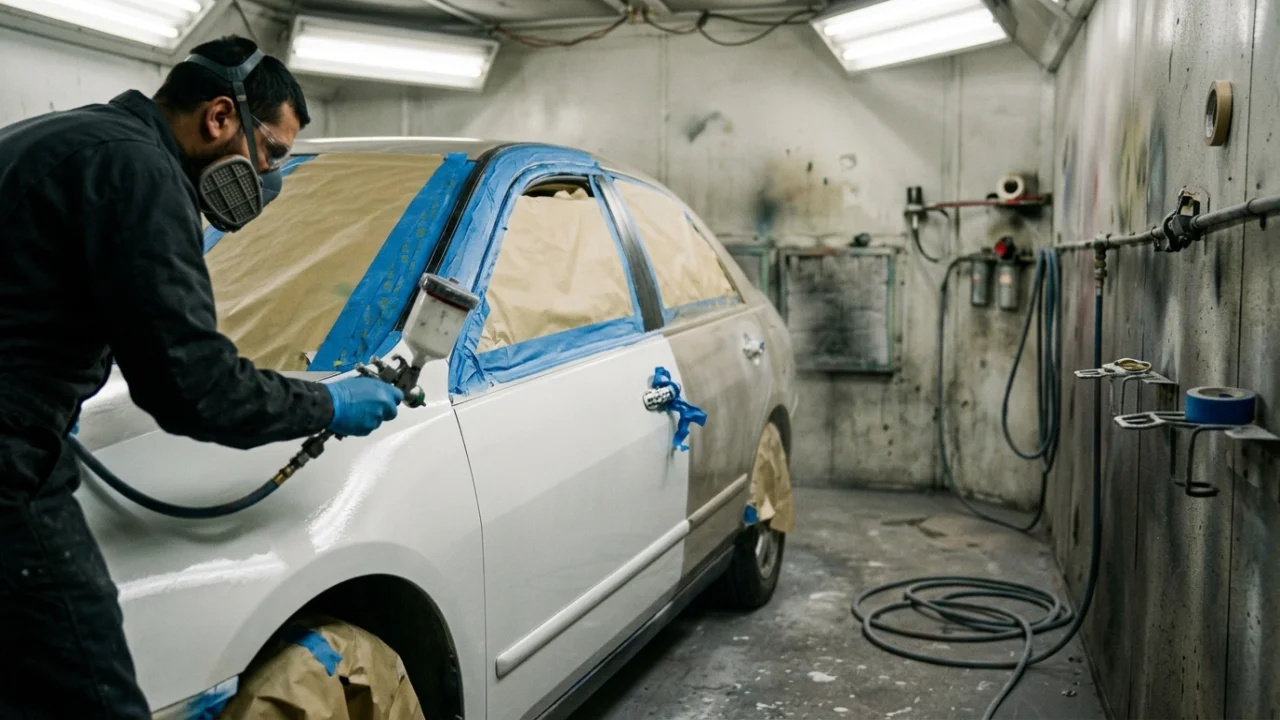
Maaco offers three paint packages in 2026 — Basic, Preferred, and Premium — and the single biggest difference between them is whether you get a clear coat. The Basic package uses single-stage enamel paint with no separate clear coat, which means it fades faster and cannot be polished to restore gloss. The Premium package uses a two-stage base coat plus clear coat system that provides UV protection and can last over a decade with proper care. The Preferred sits in the middle with single-stage urethane that resists chipping better than enamel but still lacks the depth of a true clear coat finish. Understanding what each tier actually includes — and what it leaves out — is the difference between a paint job you're happy with and one you regret within a year.
Key Takeaways
- Basic ($599–$899 advertised, $899–$1,399 after typical upcharges) uses single-stage enamel with a 1-year warranty and no clear coat — expect visible fading within 2–3 years.
- Preferred ($999–$1,399 advertised, $1,299–$1,899 real-world) upgrades to single-stage urethane with a 3-year warranty and better chip resistance, but still no separate clear coat layer.
- Premium ($1,499–$1,999 advertised, $1,799–$2,499 real-world) is the only tier with a base coat plus clear coat system, a 5-year warranty, and door jamb painting included.
- Advertised prices are 30–50% lower than what you'll actually pay because they don't include body prep, rust repair, or trim removal.
- All three tiers offer 45+ color options including metallics, but color-matching accuracy improves significantly at the Premium level.
The Three Maaco Paint Packages Explained
Maaco's tiered system works like airline seating: every level gets you from point A to point B, but the comfort and durability differ dramatically. Here's what each package actually includes and — just as importantly — what it does not.
Basic Package: The Budget Refresh
The Basic package is Maaco's entry-level offering, advertised starting at $599 to $899 depending on vehicle size and location. After typical upcharges for body prep and additional services, most customers pay between $899 and $1,399.
What you get:
- Single-stage enamel paint (color coat only, no separate clear coat)
- Light scuff sanding of the existing finish
- Basic masking of windows, trim, and rubber seals
- One-year warranty against peeling
- Standard color selection from Maaco's catalog
What you do not get:
- No clear coat — the enamel is the final layer, and it has limited UV protection
- No door jamb painting — open your door and you'll see the old color
- No trim removal — tape lines may be visible where masking ends
- No dent repair, rust treatment, or surface correction
- No wet sanding or buffing after painting
The Basic paint job is designed for cars where appearance matters less than function — a daily driver you're keeping for one more year, a work truck, or a vehicle you're preparing to sell. Single-stage enamel fades noticeably within 2 to 3 years of sun exposure and cannot be buffed to restore its gloss because there is no clear coat to polish. For a full breakdown of pricing at every level, see our Maaco paint job cost breakdown.
Preferred Package: The Middle Ground
The Preferred package is advertised at $999 to $1,399 and typically runs $1,299 to $1,899 after real-world upcharges. It's the most popular choice at Maaco locations because it hits a price-to-quality balance that makes sense for cars you plan to keep.
What you get:
- Single-stage urethane paint (more durable than enamel, better gloss retention)
- More thorough surface preparation including hand sanding of problem areas
- Better masking with fine-line tape for cleaner edges
- Three-year warranty against peeling and fading
- Full color catalog access including metallic options
What you do not get:
- Still no separate clear coat — urethane is a single-layer system
- Limited door jamb painting (partial coverage at some locations)
- No trim removal (better masking, but still tape-edge lines)
- No major body repair or rust treatment
Urethane paint is a significant step up from enamel. It resists chipping and chemical damage better, holds its gloss longer, and is less prone to chalking under UV exposure. However, it still lacks the depth and wet-look finish that only a separate clear coat layer provides. Think of urethane as a self-protecting single layer versus the two-layer shield of base plus clear.
Premium Package: The Real Paint Job
The Premium package starts at $1,499 to $1,999 advertised and runs $1,799 to $2,499 after typical additions. This is the only Maaco package that uses the same base coat plus clear coat system found in factory paint jobs.
What you get:
- Two-stage system: urethane base coat plus catalyzed clear coat
- Full surface preparation including wet sanding of the existing finish
- Complete door jamb painting so the color extends into door openings
- Trim removal at participating locations for cleaner paint lines
- Five-year warranty against peeling, fading, and clear coat failure
- Full color catalog including tri-coat metallics and pearl finishes
- Post-paint wet sanding and buffing for a smoother final finish
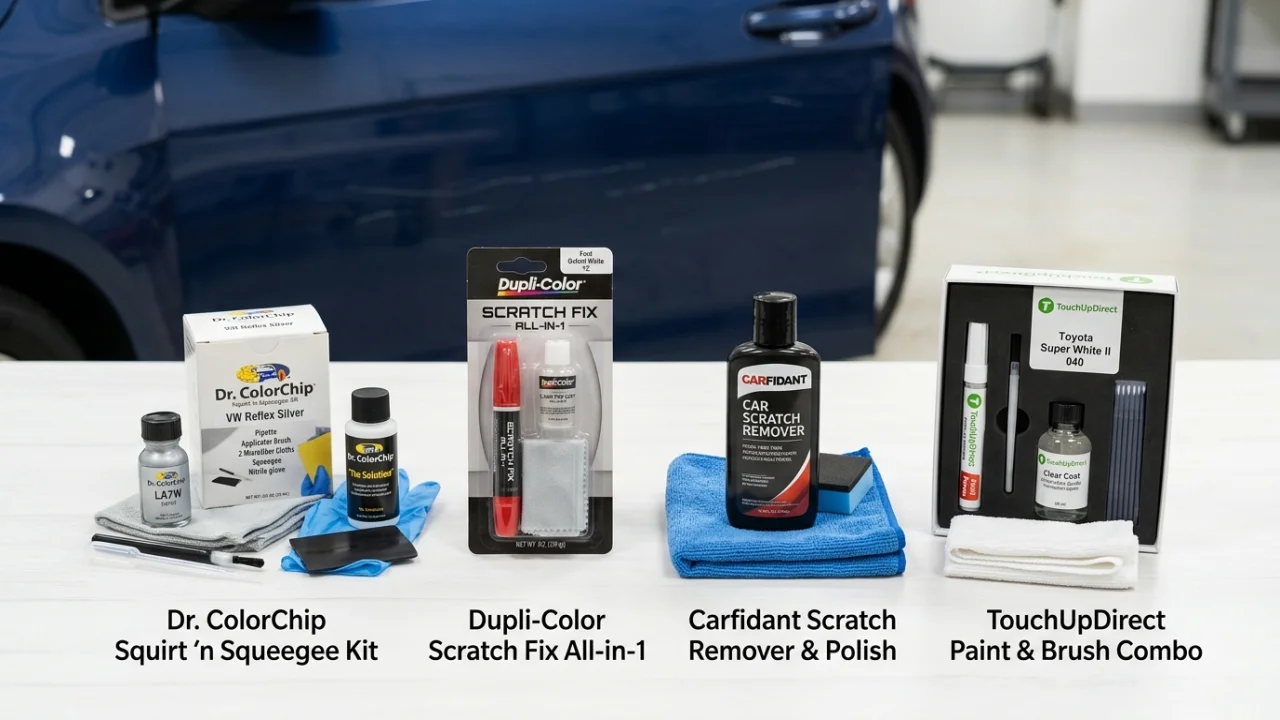
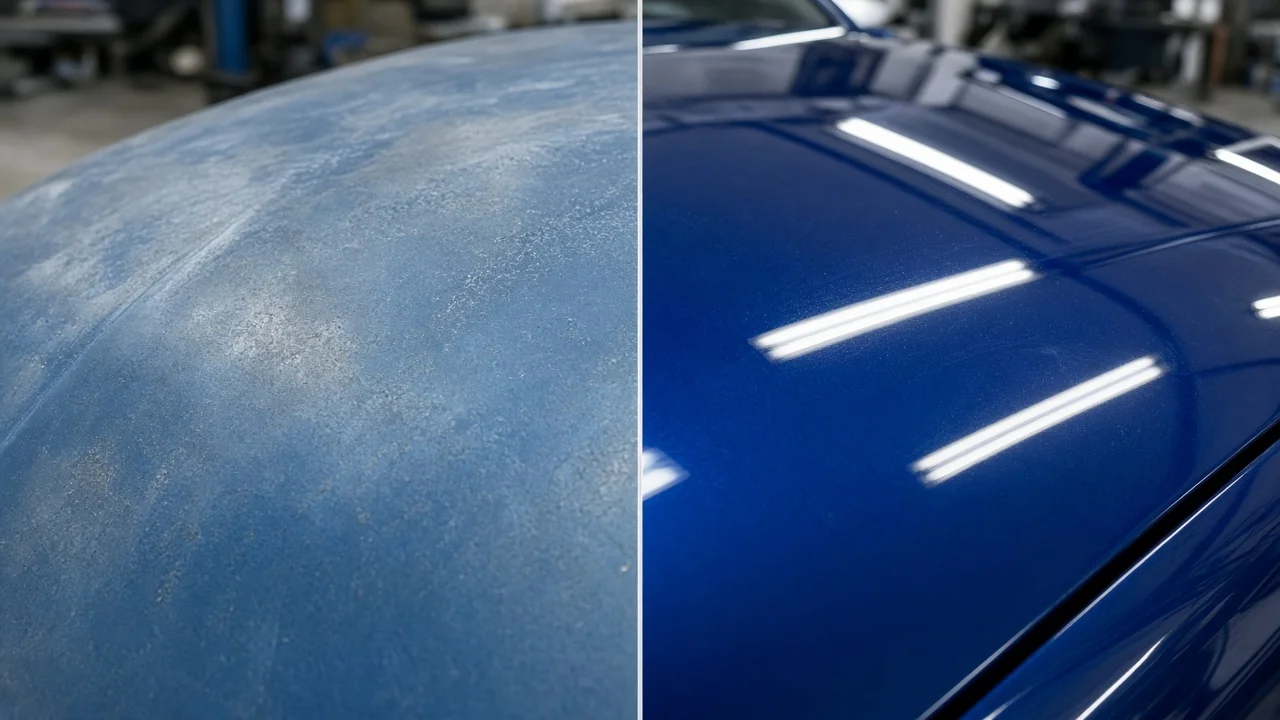
The clear coat is the defining feature. A catalyzed clear coat provides UV protection that can keep the paint looking sharp for 10 to 15 years depending on climate and care. It also allows you to polish out minor swirl marks and oxidation over time — something impossible with single-stage paint because polishing removes the color itself. If you're investing in paint protection afterward, like a touch-up paint pen for minor scratches or ceramic coating, Premium is the only tier where that investment makes sense.
Why the Advertised Price Is Never the Final Price
Maaco's advertised prices represent spray-only work on a car that arrives in perfect condition with no dents, no rust, no peeling clear coat, and no trim that needs removal. That describes almost no car that actually walks through the door.
The typical upcharges that push real-world pricing 30 to 50 percent higher than advertised include:
- Surface preparation: Sanding down peeling or flaking paint, feathering edges around chips, and smoothing imperfections. This is not optional — new paint sprayed over a bad surface peels faster.
- Rust treatment: Any visible rust must be treated before painting. Maaco will sand it down and apply a rust converter, but this is an add-on charge.
- Body work: Small dents, dings, and scratches that need filler are quoted separately. Expect $75 to $200 per panel for minor body work.
- Trim removal: Taking off door handles, mirrors, badges, and moldings for cleaner paint lines. Only included in Premium at some locations; otherwise $100 to $300 extra.
- Vehicle size: Trucks, SUVs, and vans cost more than sedans and coupes due to larger surface area. A full-size truck can add $200 to $500 to any tier.
The smartest way to minimize upcharges is to do your own prep work before dropping the car off. Remove trim pieces, badges, and antenna yourself. Wash the car thoroughly. Sand down any loose or peeling paint with 320-grit sandpaper. The cleaner and smoother the surface when Maaco gets it, the fewer add-ons they need to quote. For context on how Maaco's pricing compares to other budget paint specials, we break down the $299 and $499 tiers that other shops advertise.
Maaco's Color Options: What's Actually Available
Maaco offers over 45 standard automotive paint colors across all three packages. The color catalog includes solid colors (blacks, whites, reds, blues, greens, grays), metallics (silver mist, blue steel, grey metallic), and specialty finishes (pearl white, deep plum pearl, black cherry).
Color availability by tier
All three packages technically access the same color catalog for solid and standard metallic colors. The practical differences:
- Basic: Solid colors work best with single-stage enamel. Metallic colors are available but look flatter without a clear coat to add depth. Color matching to your existing paint is limited — Maaco selects the closest catalog color rather than mixing a custom match.
- Preferred: Metallics look better in urethane than enamel because the paint has more inherent gloss. Color matching is still catalog-based at most locations.
- Premium: Tri-coat metallics and pearl finishes are available. Color matching is more precise because the base coat plus clear coat system is the same technology used for factory color-match formulas. Some locations offer computer-based color matching at this tier.
Custom colors
If you want a color not in the standard catalog — a factory-matched color code from your vehicle, a custom mix, or a color from another manufacturer — expect to pay an additional $100 to $300. Custom color mixing is generally only practical at the Preferred and Premium tiers because single-stage enamel (Basic) has limited pigment options for precise matching.
Color-matching limitations
This is where expectations most often collide with reality. Maaco paints the exterior panels but rarely achieves an invisible blend with unpainted areas like door jambs (Basic and Preferred), under-hood surfaces, or interior trim visible when doors open. The Premium package with door jamb painting reduces this contrast significantly but still does not cover engine bay or trunk interiors. If you're changing colors entirely rather than refreshing the same color, be prepared for visible transitions in areas that are not painted. For more on matching technology, see our car paint color matching guide.
How Long Each Tier's Paint Actually Lasts
Durability is the real difference between the tiers — not just how the car looks on day one, but how it looks on day 365 and beyond.
- Basic (single-stage enamel): Begins showing visible fading within 1 to 3 years, especially on horizontal surfaces (hood, roof, trunk) that take direct sun. Enamel has no UV-blocking clear layer, so the pigment degrades from exposure. The 1-year warranty reflects this reality. In southern or desert climates, fading can start within 6 months.
- Preferred (single-stage urethane): Holds its gloss for 3 to 5 years under normal conditions. Urethane resists chemical damage from bird droppings, tree sap, and road salt better than enamel. The 3-year warranty is realistic for its durability window.
- Premium (base coat plus clear coat): A catalyzed clear coat can protect the base color for 10 to 15 years depending on care and climate. One owner reported their Maaco base-and-clear paint job still looking sharp after 15 years with no crazing, peeling, or buckling. The 5-year warranty is conservative relative to the paint's actual lifespan. This is the tier where investing in ceramic coating or paint protection film afterward actually pays off.
Climate is the single biggest factor in paint longevity. Arizona, Texas, and Florida sun will test any paint job harder than a garage-kept car in the Pacific Northwest. If you park outdoors in a high-UV climate, the cost difference between Basic and Premium pays for itself in the first two years of avoided repainting.
Which Package Should You Choose?
The right package depends on three things: how long you plan to keep the car, where it's parked, and how much the appearance matters to you.
- Choose Basic if you're prepping a car for sale, need a quick cosmetic refresh for a work vehicle, or plan to keep the car less than two years. This is also the right tier for one-day paint jobs where turnaround speed matters more than longevity.
- Choose Preferred if you're keeping the car 3 to 5 years, want a noticeable improvement over faded paint, and park the car outdoors. The urethane upgrade is the best dollar-for-dollar improvement in the lineup.
- Choose Premium if you're keeping the car long-term, care about a factory-like finish, want door jambs painted, or plan to add paint protection products afterward. This is the only tier worth it for color changes or cars with resale value.
One pattern we see in our full Maaco review is customers who spend Basic-tier money and expect Premium-tier results. The packages are honestly differentiated — Maaco is not cutting corners at the Basic level so much as offering a genuinely different product. A $900 paint job and a $2,200 paint job are not the same thing with different marketing. They use different paint chemistry, different preparation techniques, and different finishing processes.
How to Get the Best Results at Any Tier
Regardless of which package you choose, these steps improve your outcome:
Do your own prep work. Remove all badges, emblems, door handles, mirrors, antenna, and any trim you can safely take off. Wash and clay bar the car. Sand any peeling or flaking areas with 320-grit sandpaper. The less Maaco has to charge for prep, the more of your budget goes to actual paint.
Get a written estimate. Walk through the car with the estimator and get every upcharge itemized in writing before leaving the car. Ask specifically about rust treatment, body work, and trim removal so there are no surprises.
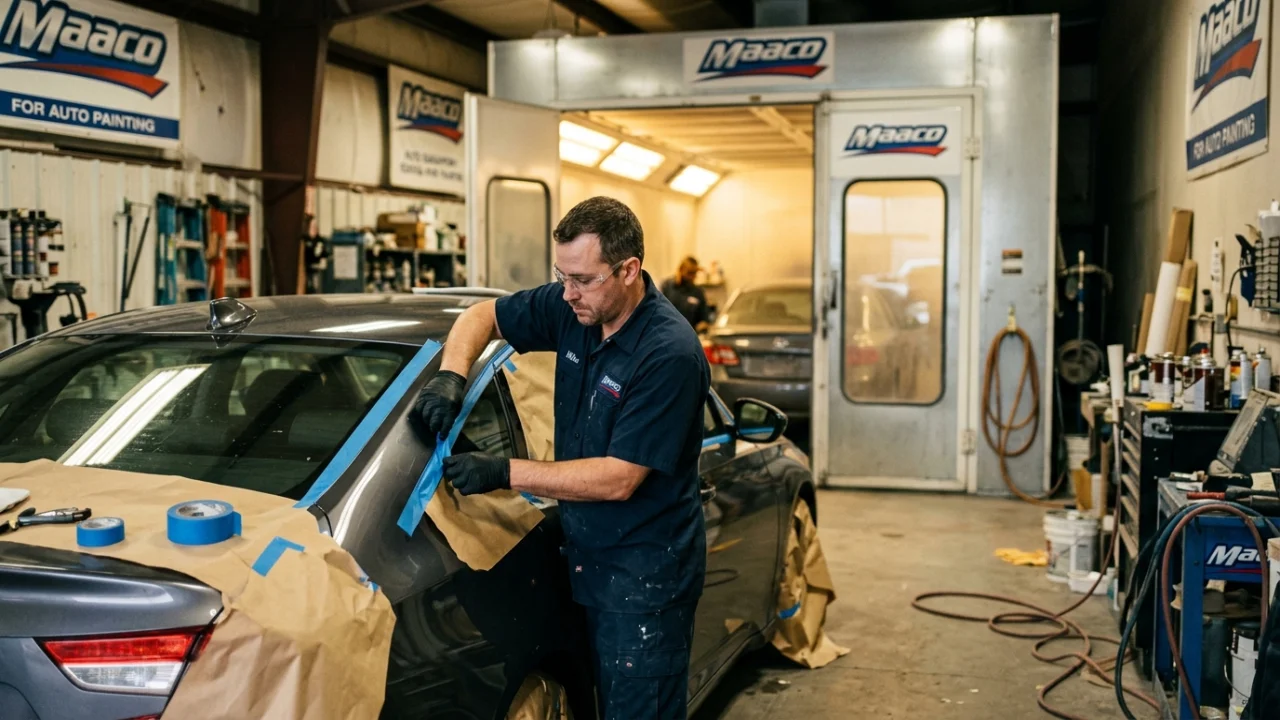
Request to see the masking before they spray. Some locations allow this. Check that glass edges, rubber seals, and trim are properly masked. Poor masking is the number one source of complaints at any paint shop.
Inspect before you pay. Check door edges, under the hood lip, trunk edges, and inside the fuel door. Look for overspray on glass and rubber, tape lines where masking ended, and runs or drips in the paint. These are fixable if caught before you leave.
Compare with local shops. Maaco is not always the cheapest option. Independent auto paint shops sometimes match or beat Maaco's Preferred pricing while offering more thorough prep work. Get at least two quotes. For a direct comparison, read our breakdown of Maaco vs local body shops.
Sources
- CCC Intelligent Solutions — collision repair cost benchmarks and industry data
- Insurance Information Institute — auto insurance and repair cost statistics
Frequently Asked Questions
How many colors does Maaco offer in 2026?
Maaco offers over 45 standard automotive paint colors including solid colors, metallics, and pearl finishes. All three packages — Basic, Preferred, and Premium — access the same color catalog for standard colors. Tri-coat metallics and custom color matching are best suited to the Premium package, where the base coat plus clear coat system supports more precise pigment formulas. Custom color mixing from a factory color code is available for an additional $100 to $300.
What is the difference between Maaco Basic and Premium paint?
The fundamental difference is the paint system. Basic uses single-stage enamel — one layer that serves as both color and protection — with a 1-year warranty. Premium uses a two-stage base coat plus catalyzed clear coat system with a 5-year warranty. The clear coat in Premium provides UV protection, allows buffing and polishing, and gives the paint depth and gloss that single-stage enamel cannot match. Premium also includes door jamb painting and post-paint wet sanding, which Basic does not.
Why is the real Maaco price higher than the advertised price?
Maaco's advertised prices assume a car arriving in perfect condition with no body damage, no rust, no peeling paint, and no need for trim removal. Real cars need surface preparation, and those services are quoted as add-ons. Typical upcharges for prep work, rust treatment, and body repair push the final price 30 to 50 percent higher than advertised. A Basic package advertised at $599 to $899 typically costs $899 to $1,399 after necessary add-ons.
Is the Maaco Preferred package worth the upgrade over Basic?
Yes, for most car owners. The Preferred package upgrades from enamel to urethane paint, which resists chipping, fading, and chemical damage significantly better. The warranty jumps from 1 year to 3 years, and the paint typically holds its gloss for 3 to 5 years versus 1 to 3 years for Basic enamel. If you plan to keep your car more than two years and park it outdoors, the $400 to $500 price difference between Basic and Preferred pays for itself in avoided repainting.
Can Maaco match my car's exact factory paint color?
It depends on the package and location. At the Basic and Preferred levels, most Maaco locations select the closest color from their standard catalog rather than mixing a custom match to your vehicle's paint code. At the Premium level, some locations offer computer-based color matching that reads your vehicle's paint code and mixes a closer match. For the most accurate results, bring your vehicle's paint code (found on the driver's door jamb sticker or in your owner's manual) and request a custom mix, which typically costs an additional $100 to $300.