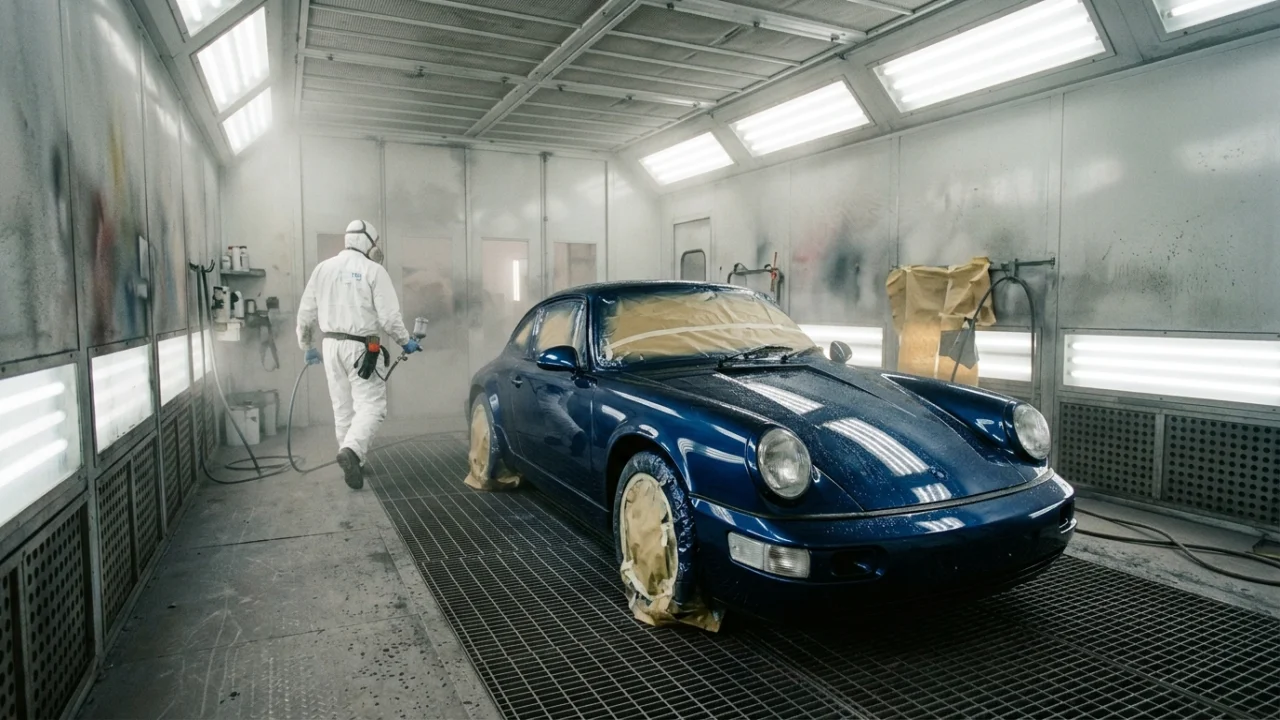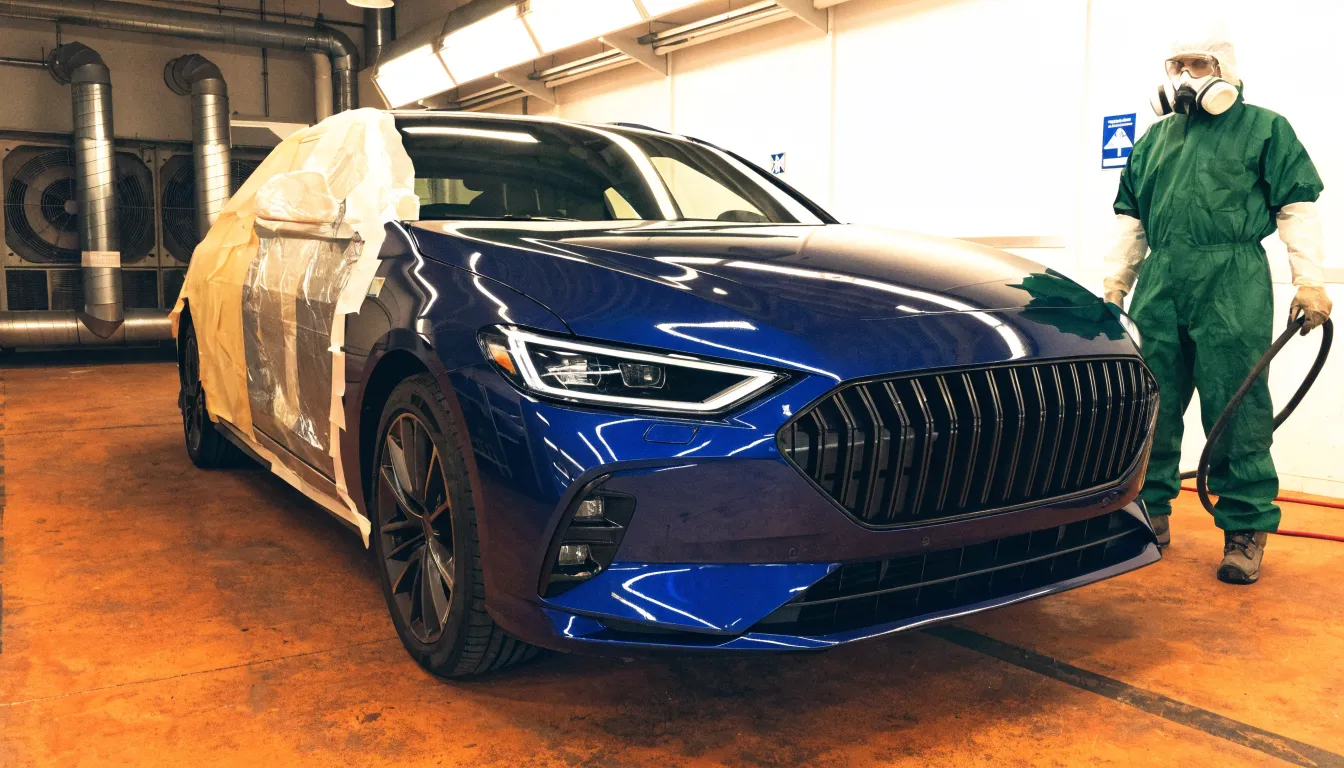
A $299 paint special gets you a single-stage enamel respray with minimal prep, no clear coat, and a 1-year warranty — while a $499 job typically upgrades to urethane paint with better adhesion and a 3-year warranty. Both are real services offered by chains like Maaco, Earl Scheib, and regional discount painters. Neither is a scam, but both come with trade-offs that the advertising doesn't spell out. Understanding exactly what each tier includes — and what it skips — is the difference between a smart budget decision and a $300 lesson in regret.
Key Takeaways
- The $299 tier uses single-stage enamel (color and gloss in one coat, no separate clear coat) with a typical lifespan of 1 to 3 years before noticeable fading.
- The $499 tier upgrades to single-stage urethane or a base coat/clear coat system, lasting 3 to 5 years with better chip and UV resistance.
- Both prices are spray-only quotes — real-world costs run 30% to 50% higher once the shop adds prep work your car actually needs.
- Budget shops mask over trim, handles, and emblems instead of removing them, which causes the most common complaint: visible overspray on rubber seals and plastic trim.
- These specials make financial sense for cars worth under $5,000, pre-sale cosmetic refreshes, and single-color fleet vehicles — not for daily drivers you plan to keep 5+ years.
What the $299 Paint Special Actually Includes
The $299 price point — most commonly associated with Maaco's Basic tier — buys you the minimum viable whole-car respray. Here is what that means in practice:
- Paint type: Single-stage enamel. Color and gloss are mixed into one product. There is no separate clear coat layer for UV protection.
- Coats applied: Typically 2 to 3 passes of single-stage color. No primer on surfaces the shop considers "clean enough."
- Prep work: The car is scuff-sanded (not stripped to bare metal), and only visible damage spots get spot primer. Door jambs are masked shut, not painted.
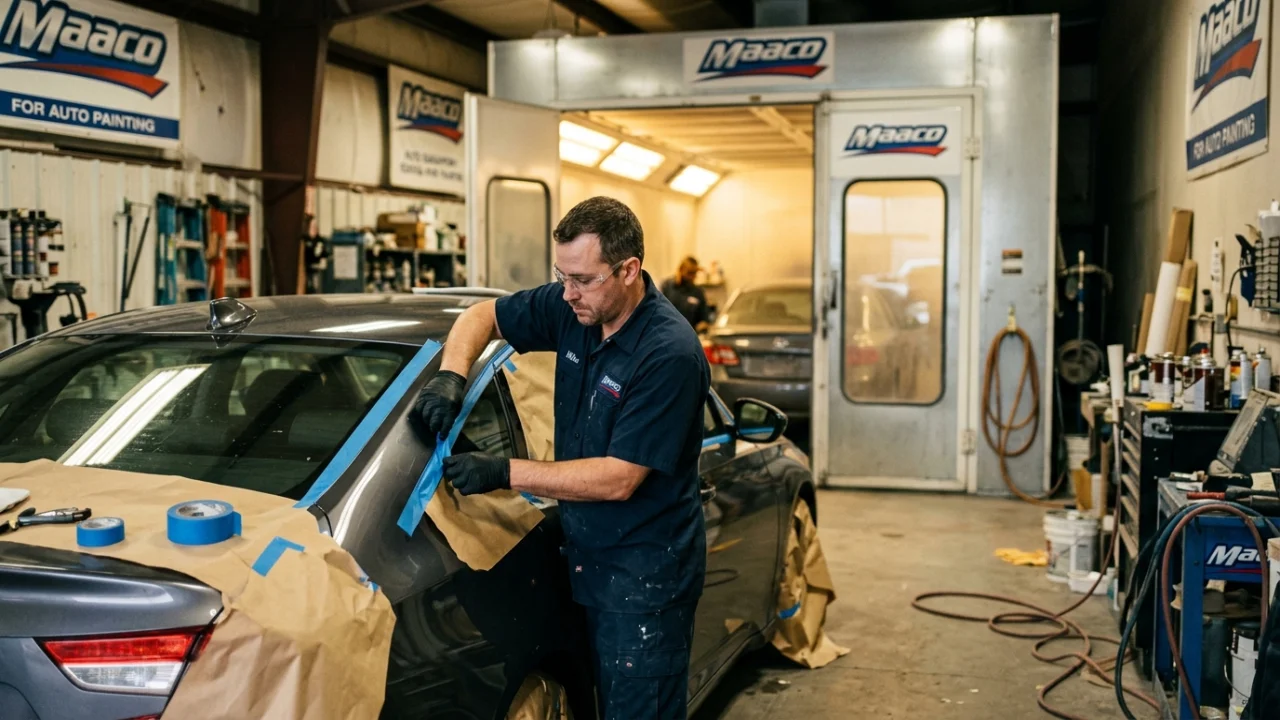
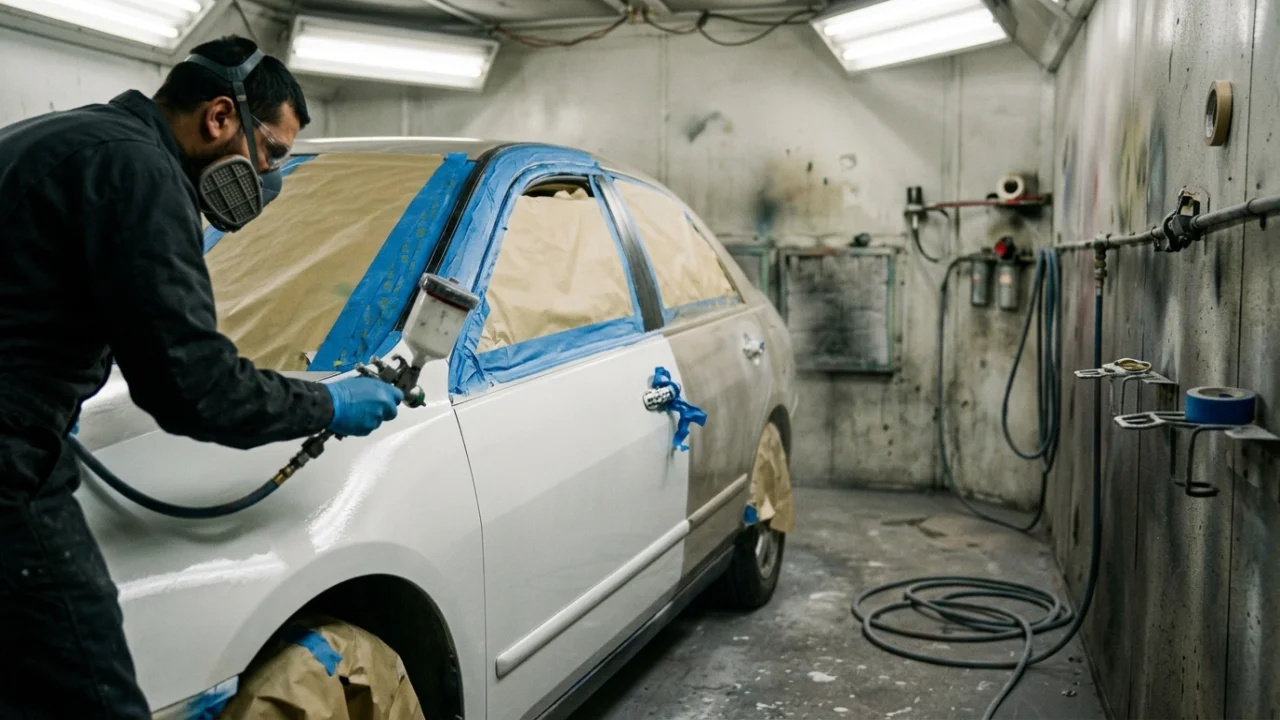
- Masking: Trim, handles, emblems, lights, and rubber seals are taped over, not removed. Windows are masked with paper.
- Warranty: 1 year against peeling or flaking under normal conditions.
- Time in shop: Most $299 jobs are completed in 1 to 2 days. Some shops advertise one-day paint jobs at this tier.
What the $299 does not include: rust treatment, dent repair, body filler, edge sealing on panel gaps, or painting inside door jambs. If your car has surface rust, chips down to bare metal, or any body damage, the shop will quote those as add-ons — typically $150 to $300 for a "body prep package" and $100 to $200 for rust treatment. The real out-the-door cost on a used car with average wear often lands between $400 and $550.
What the $499 Paint Special Gets You
The $499 tier — Maaco's "Preferred" level and comparable mid-range options at other chains — is a meaningful upgrade in paint chemistry, not just price. For a detailed look at all available tiers, see our guide to Maaco paint tiers and packages.
- Paint type: Single-stage urethane or, at some locations, a two-stage base coat/clear coat system. Urethane resists UV fading and chipping significantly better than enamel.
- Coats applied: 3 to 4 passes. If the shop uses base coat/clear coat at this tier, you get 2 color coats plus 1 to 2 clear coats.
- Prep work: More thorough scuff sanding, sealer/primer applied over the entire surface (not just spot primer), and minor imperfections sanded smooth.
- Masking: Same approach as the $299 tier — trim is taped, not removed. This is the biggest area where budget and mid-tier jobs share the same shortcuts.
- Warranty: 3 years against peeling, flaking, or premature fading.
- Time in shop: 2 to 3 days. The additional coats and sealer need proper flash time between layers.
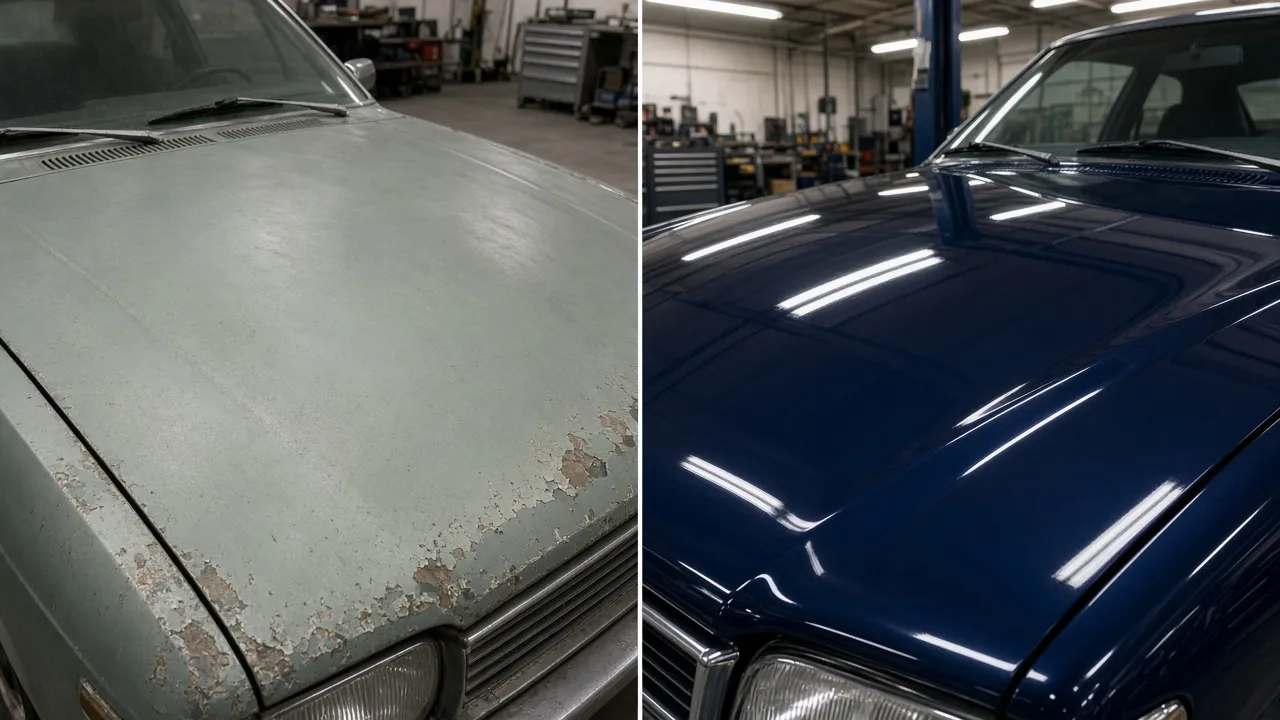
The real-world price after prep add-ons typically lands between $600 and $800 for an average-condition used car. The durability jump is the main selling point: where the $299 enamel starts showing fade and micro-peeling in 12 to 18 months of daily sun exposure, the $499 urethane holds up for 3 to 5 years under the same conditions.
The Fine Print Both Tiers Share
Regardless of whether you pick the $299 or $499 option, every budget paint shop operates under the same economic constraint: labor is the real cost, and the price stays low by cutting prep hours. Understanding these shared shortcuts helps you set realistic expectations.
Trim is taped, not removed
Removing door handles, mirror caps, emblems, and trim pieces before painting adds 3 to 5 hours of labor. No shop offering a sub-$500 whole-car job does this. The result is visible tape lines — a thin ridge where paint meets the edge of masking tape against a rubber seal or plastic trim piece. On dark colors, it is barely noticeable. On lighter colors or metallic finishes, it can look obviously painted.
Overspray happens
The most common complaint about budget paint jobs is overspray on window rubber, headlight housings, taillight lenses, and engine bay edges. Shops minimize it, but at this price point, perfection is not on the menu. Some overspray can be removed with rubbing compound or a clay bar; baked-on overspray on textured plastic is permanent.
Color match on repairs is limited
If your car has existing chips or bare-metal spots, the new color goes over them. The shop will not blend panels or feather edges the way a collision shop does for insurance work. On solid colors (white, black, red), this is usually fine. On metallic or pearl finishes, the old and new layers can look subtly different in direct sunlight.
Door jambs are extra
Both the $299 and $499 tiers paint only the exterior surfaces with door jambs masked shut. Painting the jambs adds $100 to $200 and is worth it if you are changing colors — opening a white door to reveal the old blue underneath is the number one giveaway of a cheap respray.
When a $299 or $499 Paint Job Makes Sense
Budget paint specials are not universally bad — they are a specific tool for specific situations. These are the scenarios where the math works:
- Pre-sale cosmetic refresh: If you are selling a car worth $3,000 to $5,000, a $400 paint job that makes it look presentable can add $500 to $800 in perceived value. This is the highest-ROI use case.
- Beater cars and daily drivers under $5,000: Spending $2,000 on paint for a $4,000 car is upside-down economics. The $299 tier makes sense here.
- Single-color fleet or work vehicles: White or black single-stage on a van or truck that gets scratched regularly anyway.
- Temporary fix before a proper job: If you need the car to look decent now and plan a proper respray later, the $299 tier buys you 1 to 2 years of presentable appearance.
These specials do not make sense for: daily drivers you plan to keep 5+ years (spend $1,500 to $3,000 for a proper mid-grade paint job instead), any car worth over $10,000, color changes without jamb painting, or metallic/pearl finishes where imperfect prep is highly visible. If you are handy with a rattle can, small-area touch-ups with DIY automotive spray paint may cost less and look better than a full cheap respray on a car that only has localized damage.
How to Get the Best Result from a Budget Paint Job
If you decide a $299 or $499 special is right for your situation, these steps protect you from the worst outcomes:
- Wash and clay bar your car first. The shop will not deep-clean the surface. Contaminants under the new paint cause adhesion failure.
- Remove what you can yourself. Take off aftermarket accessories, loose emblems, and antenna masts. The less the shop has to tape around, the cleaner the result.
- Get the real quote in writing. Ask specifically: "What is the total out-the-door price after prep?" The advertised price is the starting number, not the final number.
- Inspect before you pay. Check door edges, under the hood line, around headlights, and window seals for overspray. It is much easier to get the shop to fix issues before you drive off.
- Skip metallic colors at the $299 tier. Metallic and pearl finishes require a clear coat to look right. Single-stage enamel in metallic looks flat and chalky within months.
For a broader look at finding affordable shops that balance cost and quality, see our guide on auto paint shops near you.
Sources
- CCC Intelligent Solutions — collision repair cost benchmarks and industry data
- Insurance Information Institute — auto insurance and repair cost statistics
Frequently Asked Questions
Is the $299 Maaco paint special really $299?
The $299 is a starting price for spray-only work on a car that needs no prep. Most real-world quotes come in 30% to 50% higher once the shop assesses your vehicle and adds prep work, body prep packages, and rust treatment. Expect $400 to $550 out the door for a typical used car with average wear.
How long does a $299 paint job last?
A $299 single-stage enamel paint job lasts 1 to 3 years before noticeable fading and micro-peeling begin, depending on sun exposure, climate, and whether the car is garaged. Cars parked outdoors in Sun Belt states may see degradation in under 12 months. The $499 urethane tier typically lasts 3 to 5 years under the same conditions.
What is the difference between single-stage enamel and base coat/clear coat?
Single-stage enamel combines color and gloss in one product — it goes on in 2 to 3 coats with no separate clear layer. Base coat/clear coat is a two-stage system where the color coat provides the hue and a separate clear coat provides UV protection, depth, and gloss. Base coat/clear coat is how factory paint is applied and lasts significantly longer, but it requires more coats, more flash time, and more labor — which is why it starts at the $499 tier or above.
Can I get a color change with a $299 paint special?
Technically yes, but it is not recommended at the $299 tier. A color change at this level does not include painting the door jambs, engine bay edges, or trunk jambs. Every time you open a door, the old color is visible underneath. Add door jamb painting ($100 to $200 extra) at minimum, which pushes the real cost to $500 or more — at which point the $499 tier with better paint quality is the smarter choice.
Should I go to Maaco or an independent shop for a budget paint job?
Maaco offers consistent pricing and a warranty backed by a national franchise network. Independent shops may offer lower prices or more flexible prep work for the same money. The key comparison is not the brand name but the paint type (enamel vs urethane), the warranty terms, and whether the quote includes prep. Get written quotes from both a chain and an independent Maaco paint job pricing comparison, then ask each shop to specify exactly what prep work is included in the price.