One-day paint jobs exist, but they come with trade-offs that most car owners don't fully understand until the paint starts peeling six months later. Chains like Maaco and ECONO Auto Painting can turn a car around in a single day on their basic tiers, but the speed comes from cutting corners on prep work, reducing coats, and taping over trim instead of removing it. If you're flipping a beater or masking rust before a sale, a same-day paint job can make sense. If you're repainting your daily driver and expect the finish to last, it almost certainly does not.
Key Takeaways
- Maaco and similar budget chains can complete basic paint jobs in as little as one day, but only on their lowest service tiers using single-stage enamel paint.
- Surface preparation accounts for roughly 70% of a quality paint job's total labor time — one-day jobs compress or skip most of this work.
- A proper full-body repaint takes 3 to 10 days at a professional body shop, with 40 to 80 labor hours for complete surface prep, priming, painting, and clear coating.
- One-day paint jobs typically last 1 to 3 years before visible degradation, compared to 5 to 10 years for a properly prepped multi-stage job.
- Same-day painting is reasonable for pre-sale cosmetic fixes, beater cars, and temporary coverage — but a bad choice for color changes, metallic finishes, or any car with existing rust or body damage.
Who Offers One-Day Paint Jobs
The one-day paint job market is dominated by national franchise chains that have built their business model around volume and speed rather than custom quality. Maaco is the largest player, with roughly 400 franchised locations across the U.S. and Canada. Their basic tier, which starts around $300 to $599 depending on the location and any upcharges, uses single-stage enamel paint that can be applied and dried within a single business day. ECONO Auto Painting operates a similar model in the Southeast and Midwest with comparable pricing.
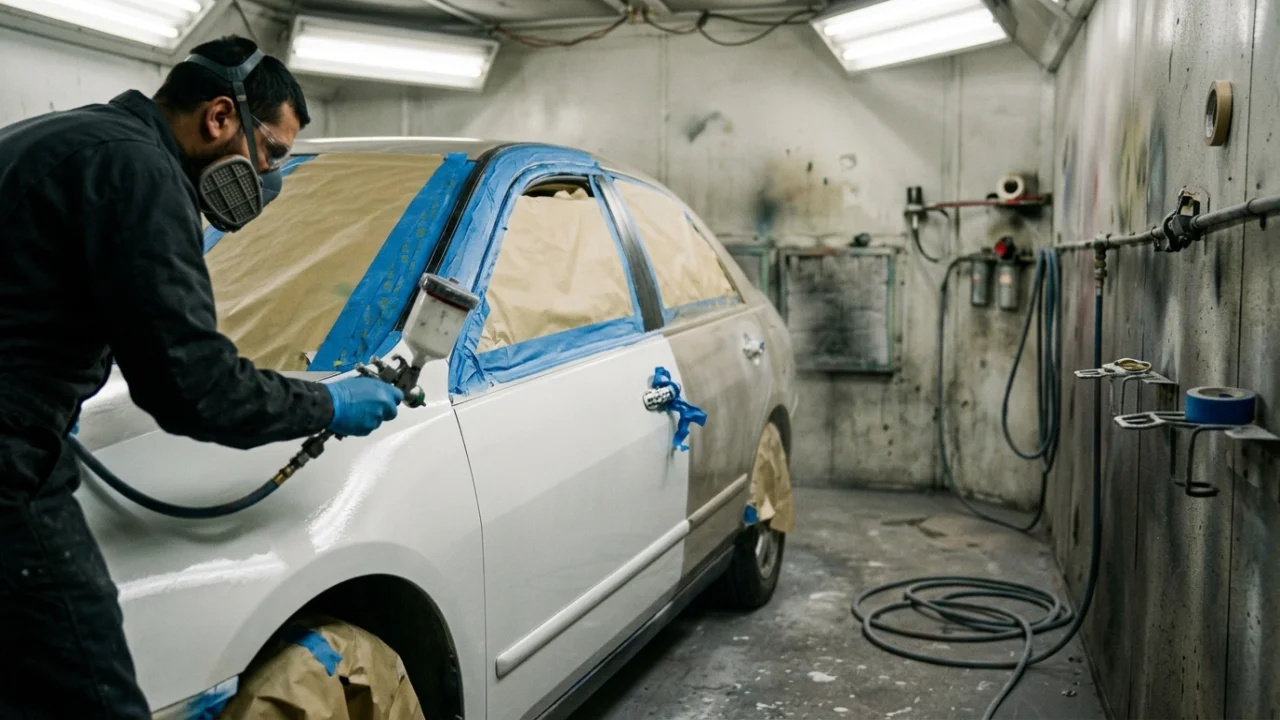
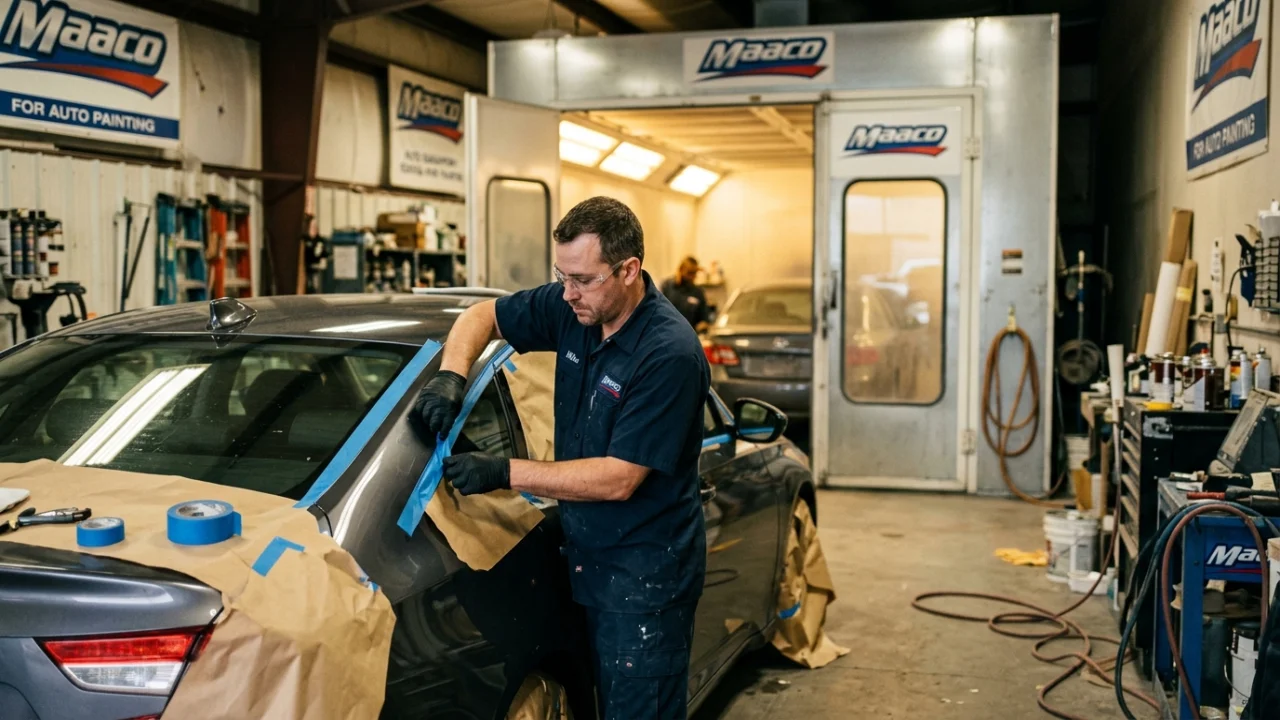
These shops achieve same-day turnaround by standardizing every step of the process. The car comes in early morning, gets a quick scuff sand, trim is taped over rather than removed, one to two coats of single-stage paint go on, and the car bakes in a heated booth. By late afternoon, the owner drives away with a fresh-looking finish. The system works because it eliminates the most time-consuming parts of professional painting: thorough surface prep, primer application, multi-stage paint systems, and extended cure times.
Independent body shops almost never offer true one-day full-body paint jobs. Single-panel touch-ups or bumper resprays can sometimes be completed in a day, but a full vehicle respray in one day requires the kind of shortcuts that most independent shops consider unacceptable for their reputation. If an independent shop promises you a same-day full repaint at a budget price, that's a red flag, not a selling point.
What Gets Cut to Hit a One-Day Timeline
Understanding what a one-day paint job skips is more important than understanding what it includes. Professional painters will tell you that surface preparation accounts for roughly 70% of the total labor time in a quality paint job (Speedway Media, "How Long Does Paint and Auto Body Repair Take," August 2025). Compress that into a few hours and the consequences show up in the finish.
Minimal surface prep
A quality repaint starts with stripping or thoroughly sanding the existing finish down to a smooth, uniform surface. One-day jobs do a light scuff sand at best. Old clear coat damage, minor rust spots, and surface imperfections get painted over rather than corrected. The new paint adheres to the old damaged surface, which means it inherits every problem underneath.
No primer on most surfaces
Primer creates the adhesion bond between the bare surface and the color coat. One-day shops skip primer entirely on most panels because it adds a full application-and-dry cycle. Without primer, the paint's grip on the surface is weaker, and peeling or flaking becomes much more likely within the first year or two.
Tape-over instead of disassembly
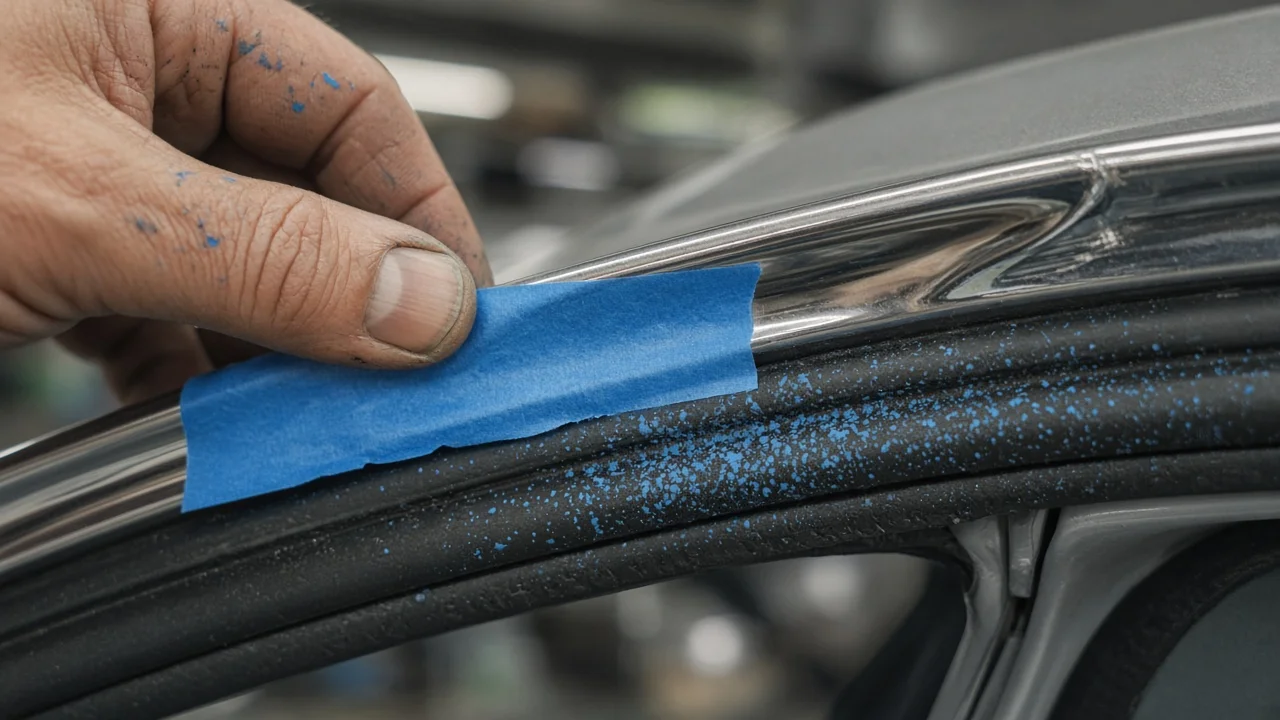
Professional painters remove door handles, mirrors, trim pieces, emblems, and weather stripping before painting. This allows paint to reach every edge and prevents the hard paint lines that form where tape meets the surface. One-day shops tape over everything in place. The result is visible tape lines, paint buildup along trim edges, and overspray on rubber seals and glass that has to be cleaned off — sometimes imperfectly.
Single-stage paint instead of basecoat/clearcoat
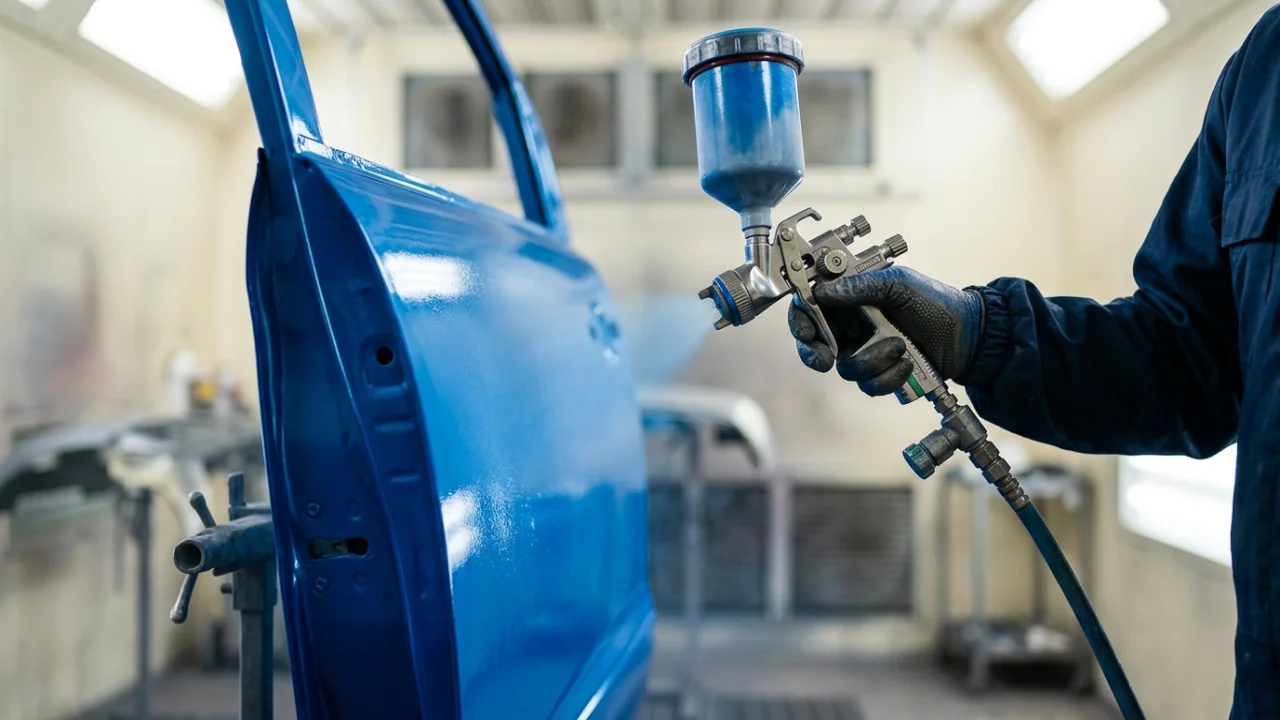
Modern automotive finishes use a two-stage system: a basecoat that carries the color, topped with a clear coat that provides UV protection, gloss, and scratch resistance. One-day jobs use single-stage enamel, which combines color and protection in one layer. It's faster to apply but offers significantly less UV protection and durability. The finish will fade, chalk, and oxidize faster than a basecoat/clearcoat system, especially in sun-heavy climates.
Reduced cure time
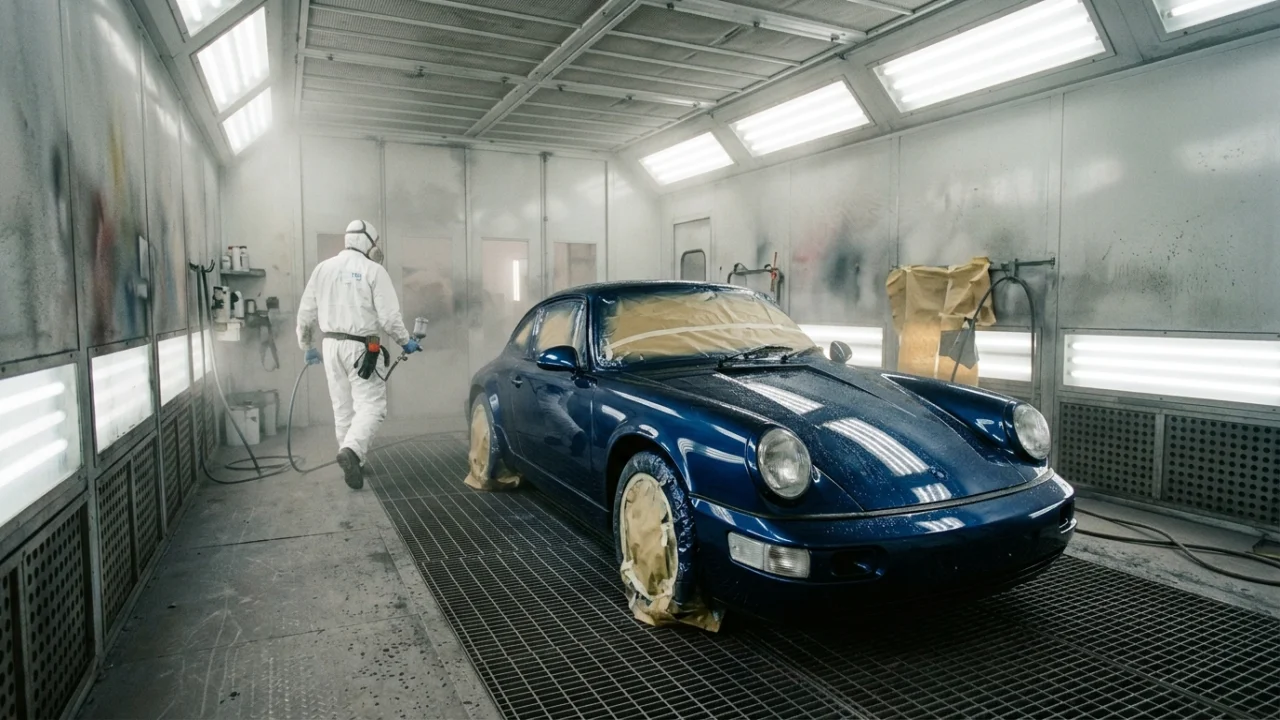
Even with a heated paint booth, proper curing takes time. Most professional shops allow 24 to 48 hours of cure time before the car is handled, washed, or waxed. One-day shops accelerate this with higher booth temperatures and shorter bake cycles, then hand the car back the same day. The paint may feel dry to the touch but hasn't fully hardened, making it more vulnerable to scratches, chemical damage, and swirl marks during the critical first weeks.
How Long a Proper Paint Job Actually Takes
For context, here's what a professional-grade repaint timeline looks like. A small project like a single panel or bumper respray typically takes 1 to 3 days. A full-body respray runs 5 to 10 days. Complex work including color changes, custom finishes, or restoration-quality jobs can extend to 3 to 4 weeks (Eli's Collision Repair, "How Long Does It Take to Paint a Car," 2025).
The total labor hours for a full paint job range from 40 to 80 hours, with the majority spent on disassembly, surface preparation, priming, and blocking — the work that makes the final finish smooth and durable. Each layer of primer, color, and clear coat needs adequate drying time before the next layer goes on. Rushing any of these steps creates adhesion failures, texture problems, and premature degradation.
This isn't to say every car needs a 10-day paint job. But the gap between one day and three to five days is enormous in terms of what your money actually buys. If you're comparing $299 and $499 paint specials, the price difference often reflects whether the shop spends one day or three on your car.
When a One-Day Paint Job Makes Sense
Despite the quality limitations, there are legitimate scenarios where a same-day paint job is the right choice:
- Pre-sale cosmetic refresh: If you're selling or trading in a car and the paint is faded, oxidized, or has visible damage that's hurting its value, a $300 to $500 repaint can add more than its cost to the sale price. The finish doesn't need to last five years — it needs to last through the sale.
- Beater or work vehicle: A car that lives outdoors, gets dinged regularly, and isn't going to be meticulously maintained doesn't need a premium finish. Functional coverage at a low price point is a reasonable trade-off.
- Temporary coverage: If you're waiting on insurance, saving for a proper repaint, or covering bare metal to prevent rust spread, a quick single-stage job can buy you time without a major investment.
- Single-color, no existing damage: If the existing paint is in decent shape (no rust, no peeling clear coat, no body damage) and you're repainting the same color, the prep shortcuts matter less because the surface underneath is already sound.
When a One-Day Paint Job Is a Bad Idea
The scenarios where same-day painting will cost you more in the long run than it saves:
- Color changes: Changing colors requires painting inside door jambs, under the hood, inside the trunk, and along every edge. That's a multi-day disassembly job. A one-day color change means the original color shows everywhere you open something.
- Metallic, pearl, or tri-coat finishes: These multi-stage paints require precise layering and extended flash times between coats. Single-stage enamel cannot replicate them. If your car has a metallic finish and you repaint with single-stage, the result will look noticeably different.
- Existing rust or body damage: Paint over rust and it keeps spreading underneath. Within months, bubbles form and the new paint lifts. Rust repair requires cutting, welding, filling, and priming — work that takes days, not hours.
- Your daily driver that you plan to keep: If you're keeping the car for another 3 to 5 years, a proper repaint at $1,500 to $3,000 is a better investment than a $400 job you'll need to redo in 18 months.
- Lease returns: Lease inspectors look closely at paint quality. A cheap repaint with visible tape lines, overspray, and texture differences can trigger excess wear charges rather than prevent them.
For a detailed breakdown of what different Maaco paint tiers include and whether stepping up to Preferred or Premium is worth the cost, our tier-by-tier guide covers every level. And for a broader look at finding quality work without overpaying, browse auto paint shops near you to compare options beyond the national chains.
How to Evaluate a One-Day Paint Shop Before You Commit
If you decide a quick paint job fits your situation, protect yourself with these steps before dropping the car off:
- Ask what's included in writing. Get a written estimate that specifies: number of coats, type of paint (single-stage vs. basecoat/clearcoat), whether trim is removed or taped, and what warranty applies.
- Check the warranty terms. Maaco's basic tier carries a 1-year warranty. Higher tiers go to 3 or 5 years. Know exactly what's covered — peeling and flaking typically are; fading and oxidation often aren't.
- Inspect the booth and work area. A clean, enclosed paint booth with proper ventilation and lighting suggests the shop takes quality seriously. Painting outdoors or in an open bay with no dust control is a sign of the cheapest possible operation.
- Look at recent work. Ask to see a car that was recently completed. Run your hand along the finish. Check for orange peel texture, drips, overspray on trim, and tape lines along moldings.
- Read reviews specifically about paint longevity. Same-day paint looks great on day one. The real test is what reviewers say 6 to 12 months later. Filter reviews by date and look for follow-up reports on how the finish held up over time.
Sources
- CCC Intelligent Solutions — collision repair cost benchmarks and industry data
- Insurance Information Institute — auto insurance and repair cost statistics
Frequently Asked Questions
Can Maaco really paint a car in one day?
Yes, Maaco can complete their basic-tier paint job in a single day at most locations. The basic package uses single-stage enamel paint, minimal surface preparation, and tape-over masking rather than trim removal. Higher-tier packages (Preferred and Premium) typically take 2 to 3 days because they include additional prep work, primer, and multi-stage paint systems with longer cure times.
How long does a one-day paint job last?
A basic one-day paint job using single-stage enamel typically lasts 1 to 3 years before noticeable fading, chalking, or peeling begins, depending on climate and how the car is stored. Cars kept in garages and regularly waxed will see better longevity. By comparison, a properly prepped basecoat/clearcoat paint job can last 5 to 10 years or longer with basic maintenance.
Why does surface prep take so long on a quality paint job?
Surface preparation involves sanding or stripping the old finish, repairing imperfections, cleaning the surface of contaminants, applying primer, and block-sanding the primer to a smooth base. Each step requires drying or curing time before the next can begin. This process accounts for roughly 70% of the total labor in a professional repaint and is the primary reason quality paint jobs take 3 to 10 days rather than one.
Is a one-day paint job worth it for a car I'm selling?
Often yes. A $300 to $500 cosmetic repaint can improve a car's appearance enough to increase its sale or trade-in value by more than the cost of the job. The key is managing expectations: you're buying a cosmetic improvement for the transaction, not a long-term finish. Make sure the repaint matches the original color closely and doesn't have obvious defects that a buyer would notice during inspection.
What's the difference between single-stage and basecoat/clearcoat paint?
Single-stage paint combines color pigment and protective resins in one layer. It's faster to apply but offers less UV protection and durability. Basecoat/clearcoat is a two-stage system where a color basecoat is applied first, then topped with a separate clear coat that provides gloss, UV protection, and scratch resistance. Nearly all factory paint jobs since the mid-1990s use basecoat/clearcoat, and it's the standard for professional repaints that are expected to last.