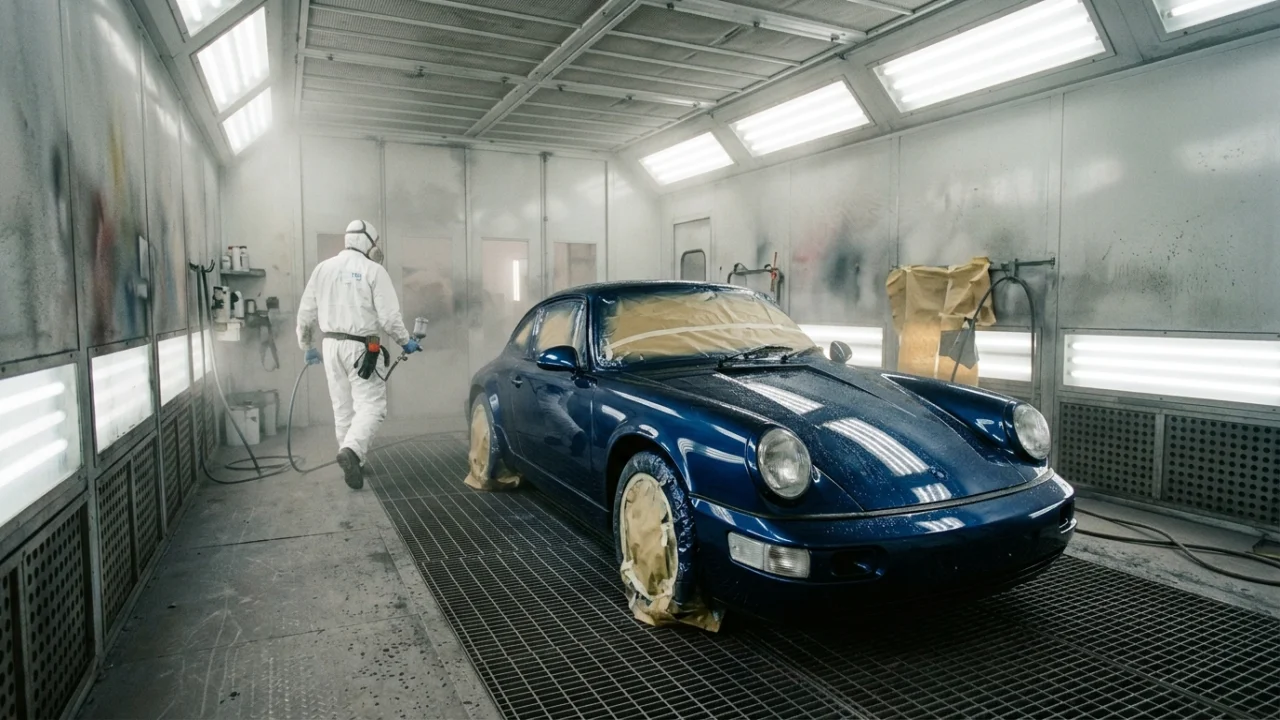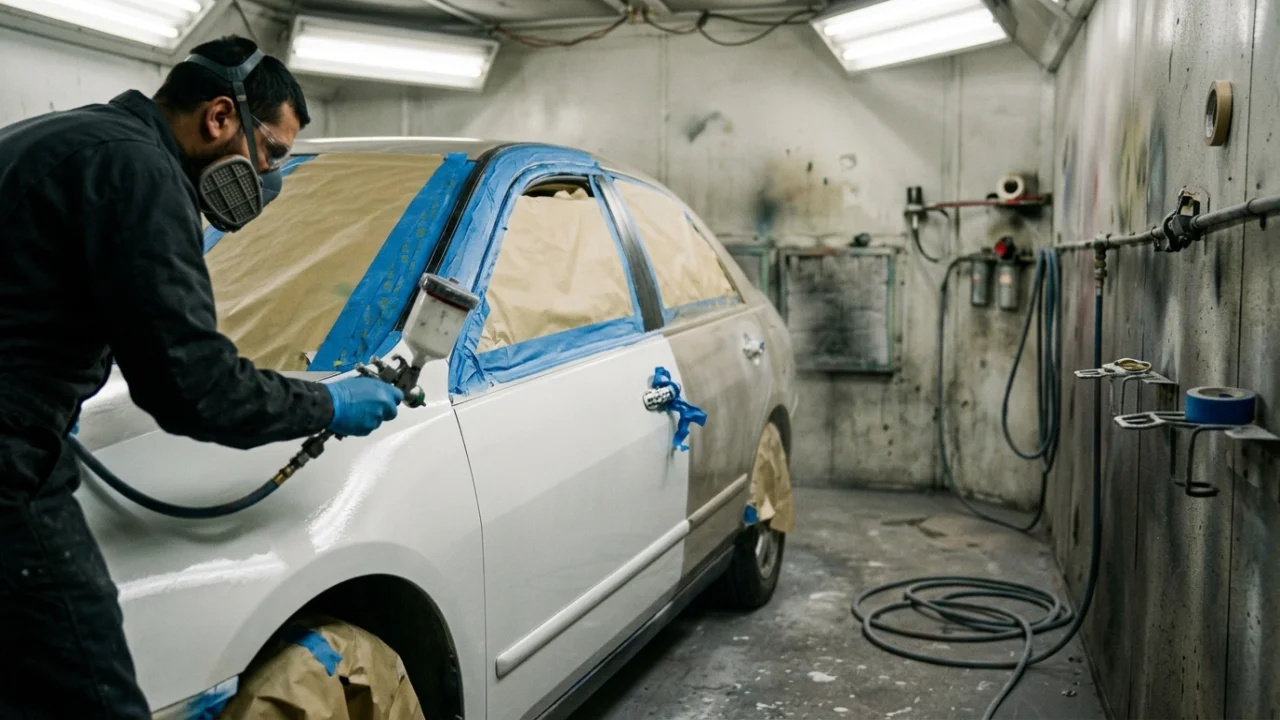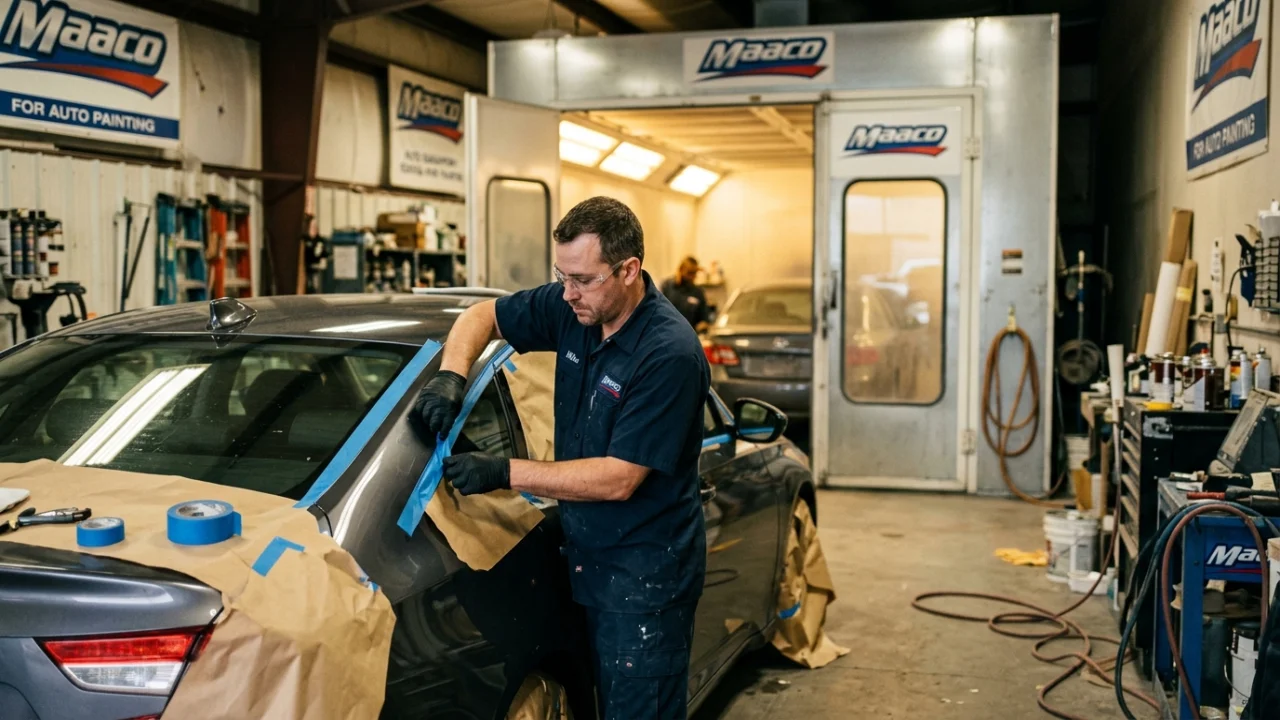
Color matching starts with your paint code, but that code only describes the color when the car left the factory. Shops scan the actual panel with a spectrophotometer to capture years of sun fading, and matches fail when the reading misses how metallic flake lies under the clear.
This happens because color matching is not the lookup exercise most people assume it is. Your paint code identifies a color family, not the precise color currently on your car. Understanding the difference explains why good shops do things that look like overkill, why they charge for panels they did not repair, and why the cheapest paint quote so often produces a two-tone car.
Why Your Paint Code Is Only a Starting Point
Every car has a paint code on a sticker, usually in the driver door jamb, and it seems like that should settle everything. It does not, for three reasons.
First, factory variance. The same paint code was sprayed at different plants, in different batches, over years of production, and those batches never matched each other exactly. Paint companies openly document this: a single popular code can have a dozen known variants, each a formula tweaked to match how that color actually left a particular factory in a particular era. Second, your car has aged. A decade of UV exposure shifts paint measurably. Reds soften, whites yellow, metallics go slightly gray, and clear coat wear changes how light comes back off the surface. Fresh paint mixed to the original formula is being asked to match a color that no longer exists anywhere except on your car. Third, application changes color. The same can of metallic paint sprays lighter or darker depending on gun distance, air pressure, and technique, which is why two painters can spray one formula and get two results.
How Shops Actually Match Color
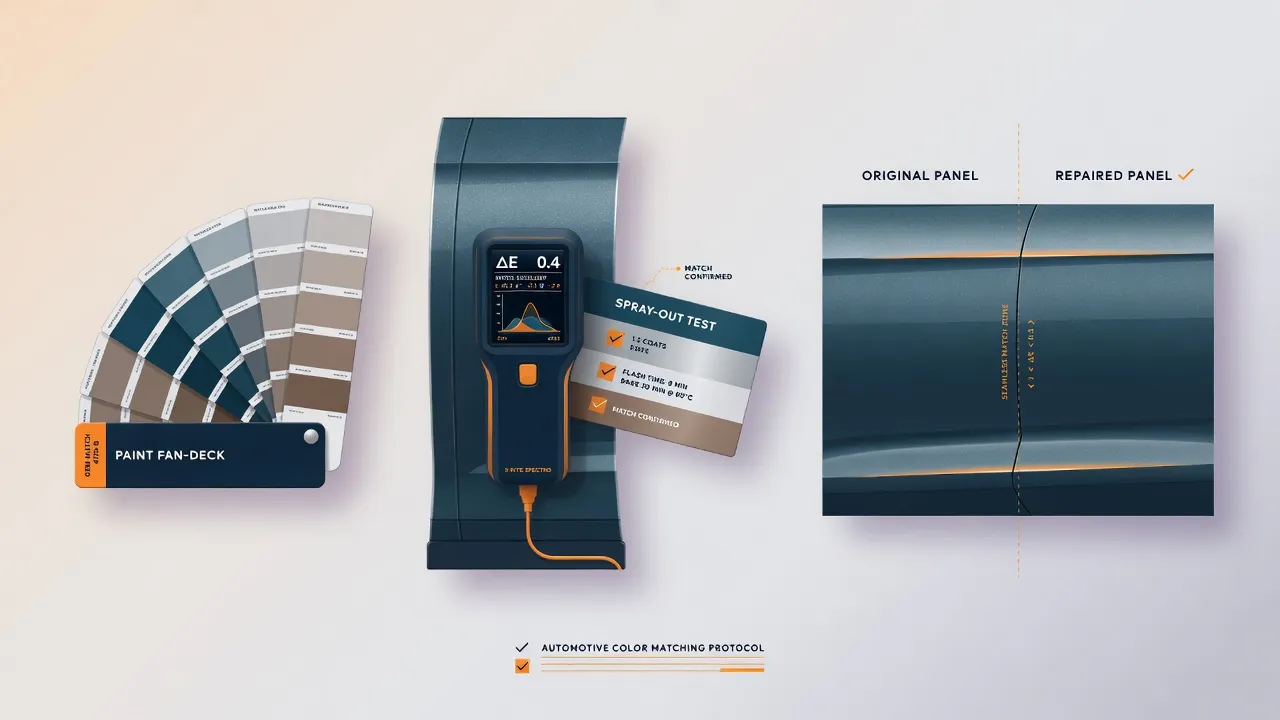
A capable paint shop treats the code as the starting line and then closes the gap in stages. They pull the code and check it against the paint maker's variant deck, a set of sprayed chips showing each known version of your color, held against a clean, polished area of your car in daylight. Many shops also use a spectrophotometer, a handheld camera that reads the actual color off your panel at several angles and suggests the closest formula, including the metallic flake behavior that a flat chip cannot capture.
Then comes the step that separates careful shops from fast ones: the spray-out card. The painter sprays the chosen formula on a test card using the same gun, technique, and clear coat as the real job, lets it flash, and compares it to the car. If it is off, they tint the mix by drops and spray another card. On a difficult color, a painter might do this several times before a drop of paint touches your vehicle. When you get quotes, asking whether the shop does spray-out cards is one of the fastest ways to sort shops by seriousness.
Blending: The Technique That Makes Matches Invisible
Even after all that, a perfect match is not guaranteed, so professionals stopped relying on perfection decades ago. The industry's real answer is blending: instead of painting the repaired panel edge to edge and hoping it matches the neighbors at a hard line, the painter fades the new color partway into the adjacent panels, then clears those panels entirely.
Blending works because of how your eyes operate. You are extremely good at spotting two different colors meeting at a sharp panel gap, and extremely bad at noticing a gradual transition spread across two feet of bodywork. A blend hides a small mismatch completely; a hard edge advertises it.
This is why an estimate for a rear door repair may list the front door and quarter panel too. Blending typically adds $150 to $300 per adjacent panel in 2026, and it is the single most commonly deleted line item when a shop lowballs a quote. If you are comparing a $500 estimate against an $850 one for the same repair, look for the blend. The cheaper shop may be planning to paint to the panel edge and let you discover the difference in the sun, exactly the outcome Aaron got.
The Colors That Cause the Most Trouble
- Silver and light metallics are the hardest common colors, because the aluminum flake changes brightness depending on viewing angle. Painters call this flop: a silver can match dead-on straight up and look gray from a low angle if the flake lies differently. Blending is essentially mandatory on silver.
- Tri-coat pearls and candies, like pearl whites and deep candy reds, get their depth from a translucent mid-coat whose color shifts with every additional layer sprayed. Matching requires test cards at multiple coat counts, and tri-coat work typically adds 20 to 30 percent to a paint estimate.
- Faded single-owner colors of any kind cause trouble when the car has lived outside for years, since the gap between the formula and the car is at its widest.
- Solid black and white are the most forgiving, though white has enough factory variants that it still is not automatic.
Why Color Matches Fail
When a repair comes back visibly off, the cause is usually one of a handful of shortcuts or hard-luck cases. The shop skipped blending and painted to a hard edge. The painter used the stock formula without checking variants against the actual car. The car's original paint was heavily faded and nobody compounded and polished the adjacent panels first, so fresh paint was matched against chalky paint. Bumpers add their own wrinkle: they are plastic while the fenders are steel, the two materials take paint differently, and flexible bumper coatings can shift the final color slightly, which is why a slight bumper-to-fender difference exists on many cars straight from the factory.
Insurance work deserves a note here. After an accident, insurers pay for blend panels when the estimate justifies them, but you may need to make sure it is written in. If you are getting collision repair, ask directly whether adjacent panels are being blended and whether the estimate includes polishing the surrounding paint to receive the blend. Those two questions prevent most of the mismatch disputes that end up in shop lobbies.
What a Proper Match Costs in 2026
Color matching is not usually a separate line item; it lives inside the paint labor and materials. As a practical map: a single-panel repaint runs $300 to $1,000, with careful color work and spray-out cards baked into the better end of that range. Blending adds $150 to $300 per adjacent panel, so a rear door repair with blends into two neighbors realistically lands between $700 and $1,500 on a common color. Tri-coat and pearl finishes add 20 to 30 percent on top. And on a badly sun-worn car, there is a point where matching new paint to failed old paint stops making sense and a full repaint at $1,500 to $5,000 and up becomes the honest recommendation.
How to Check the Match Before You Accept the Car
Do the inspection the shop's lighting is accidentally designed to prevent. Look at the car outdoors in daylight, ideally sun, not under shop fluorescents. View the repair from several angles, including a low angle down the body side, which is where metallic flop shows. Check the transition zones on the blended panels, not just the repaired panel itself. Step back ten feet, because that is the distance mismatches actually live at; up-close inspection finds texture issues, but color issues show at a distance. A reputable shop expects this inspection and will re-tint or re-blend a genuine mismatch, and doing it before you drive away keeps the conversation simple.
Sources
- I-CAR (Inter-Industry Conference on Auto Collision Repair) — collision repair industry training standards
- NHTSA Vehicle Safety — federal vehicle safety and crashworthiness standards
Frequently Asked Questions
Can a body shop match my paint exactly using the paint code?
The code alone is not enough, because most codes have multiple factory variants and your paint has shifted with age and sun. Good shops use the code plus variant chips, often a spectrophotometer reading of your actual panel, and sprayed test cards, then blend into adjacent panels so any remaining difference is invisible.
Why does my new bumper look slightly different from the fenders?
Plastic bumpers and metal body panels take paint differently, and flexible additives in bumper paint can shift the tone slightly. Many cars show a faint bumper-to-body difference from the factory for the same reason. If the difference is obvious rather than faint, the shop may have skipped variant checking or blending, and it is fair to ask them to review it.
What is blending and why am I being charged for panels that were not damaged?
Blending is fading new paint partway into the panels next to the repair so there is no hard color edge for your eye to catch. It adds $150 to $300 per adjacent panel and is standard professional practice, not padding. Estimates that skip blends on metallic or pearl colors are the ones most likely to produce a visible mismatch.
Are some car colors harder to match than others?
Yes. Silver and light metallics are the hardest common colors because flake orientation changes their appearance by angle, and tri-coat pearls and candy colors are the most expensive, adding 20 to 30 percent because the translucent mid-coat changes with every layer. Solid black and white are the most forgiving, though white still has many factory variants.
What should I do if my paint repair does not match?
Go back promptly and show the shop the mismatch outdoors in daylight, at the angles where it shows. Reputable shops warranty their color work and will re-tint or extend the blend. If the shop painted to a hard panel edge without blending on a metallic color, that is the likely cause, and the fix is blending into the adjacent panel rather than simply respraying the same panel again.