Caliber Collision is the better choice if you need widespread availability and insurer convenience, but Classic Collision matches or beats it on repair quality in the states where both chains operate. Caliber runs roughly 1,800 locations across 41 states and has DRP relationships with every major insurer. Classic Collision operates about 350 locations in 19 states, with the strongest concentration in the Southeast. Both offer lifetime warranties, I-CAR Gold Class certification at most shops, and a growing list of OEM repair certifications. The real question is which chain serves your specific situation better.
Key Takeaways
- Caliber Collision is roughly 5x larger than Classic Collision (1,800+ locations in 41 states vs. ~350 in 19 states), giving it a significant availability advantage.
- Classic Collision has been the fastest-growing chain by acquisition pace, adding 51 locations in 2025 alone under TPG Capital ownership, including new markets in Texas and the Pacific Northwest.
- Both chains offer limited lifetime warranties on collision repairs, I-CAR Gold Class certification at most locations, and multiple OEM repair certifications.
- Caliber has DRP partnerships with State Farm, GEICO, Allstate, USAA, and Progressive. Classic Collision holds comparable DRP agreements regionally but with fewer national insurer relationships.
- Customer review averages are similar (both around 4.0–4.5 on Google), with quality varying significantly by individual location at both chains.
Size and Geographic Coverage
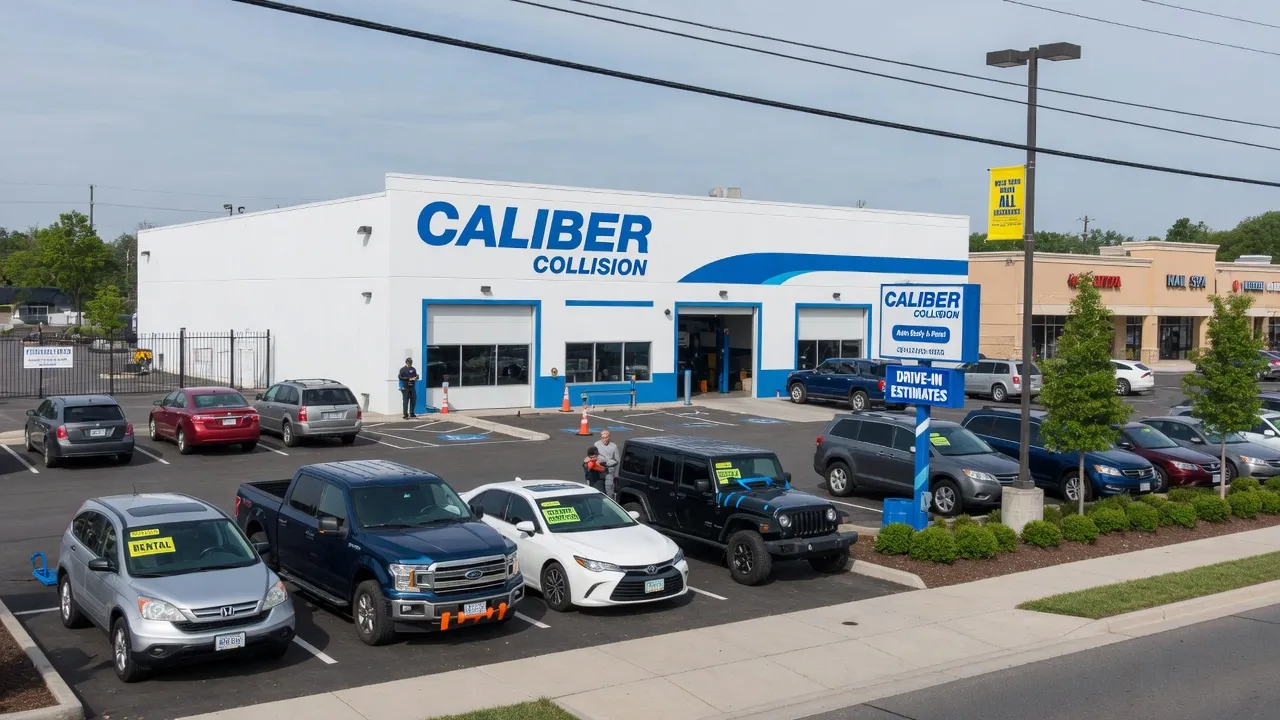
The most obvious difference between these two chains is scale. Caliber Collision operates approximately 1,861 locations across 41 states, making it the largest collision repair chain in North America by location count (Body Shop Business, "2026 Mid-Year Auto Body Consolidation Review," 2026). Its footprint covers most of the continental United States, with particularly dense coverage in Texas, California, and the Mid-Atlantic corridor.
Classic Collision operates roughly 350 locations across 19 states, with the heaviest concentration in Georgia, Florida, Alabama, South Carolina, and Tennessee. The chain was founded in Atlanta in 1983 and built its identity as a Southeast regional player before expanding through acquisitions. Under TPG Capital, which acquired the company in April 2024, Classic Collision has pushed into new markets including Dallas, Oregon, and Colorado (Autobody News, "Classic Collision Enters Dallas Market," 2025).
What this means for you: if you live in the Southeast, you'll likely have multiple Classic Collision locations within driving distance. If you're anywhere else in the country, Caliber is far more likely to have a shop near you. Use a directory like ours to find collision repair near you and compare what's actually available in your area.
Ownership and Financial Stability
Both chains are backed by major private equity firms, but their financial trajectories look different heading into late 2026.
Caliber Collision is majority-owned by Hellman & Friedman, with OMERS and Leonard Green & Partners as minority investors. The company filed confidentially for an IPO in July 2025, with a public debut anticipated in early 2026 (Fender Bender, "Caliber Confidentially Files for IPO," 2025). An IPO would give Caliber access to public capital markets and significantly more financial transparency than any privately held competitor. While the IPO timing has shifted, Caliber's preparation discipline is visible: the company added only nine locations in the first half of 2026 while rationalizing older sites, a pattern consistent with cleaning up the balance sheet for public scrutiny.
Classic Collision is owned by TPG Capital, which acquired the company from the Blackstone-backed predecessor ownership in April 2024. TPG paid an undisclosed amount for what was then a 262-location chain across 16 states (CollisionWeek, "TPG Acquires Classic Collision," April 2024). Under TPG, Classic Collision has been the most aggressive acquirer among the Big Four, adding 51 locations in 2025 through a combination of 44 acquisitions and 7 greenfield or brownfield developments.
The contrast matters because financial health affects long-term investment in equipment, training, and facility quality. Caliber's IPO preparation suggests a focus on sustainable metrics. Classic Collision's aggressive acquisition pace suggests a growth-stage strategy. Neither approach is inherently better for consumers, but it's worth understanding, especially alongside Crash Champions' financial strain and how franchise vs corporate ownership models affect your repair experience.
Certifications and Repair Capabilities
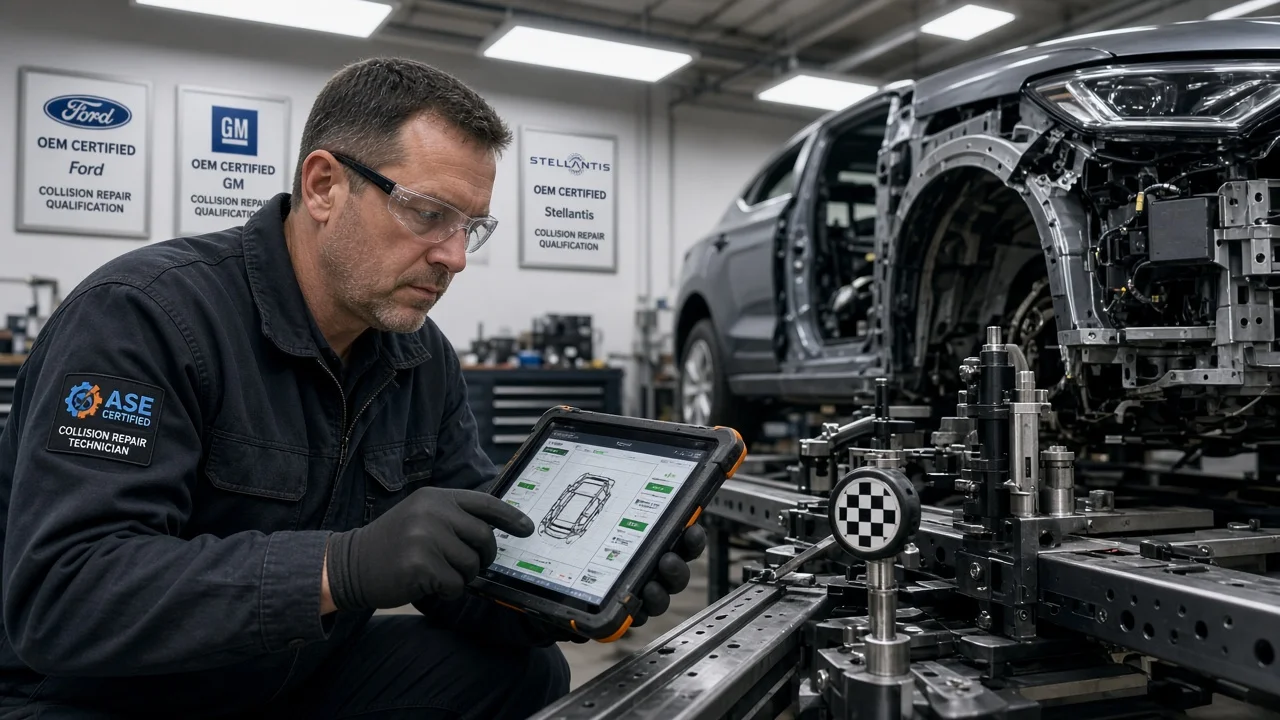
Both chains invest heavily in certifications, and the gap between them is narrower than you might expect given the size difference.
Caliber Collision certifications
Caliber maintains I-CAR Gold Class certification at most locations. The chain holds OEM repair certifications from General Motors, Toyota, Honda, Nissan, Hyundai, and Lexus, and promotes work under BMW, Mercedes-Benz, Porsche, and Subaru programs. Caliber also offers ADAS recalibration at a growing number of locations, which is increasingly important as advanced safety systems become standard on newer vehicles. For a deeper look at Caliber's strengths and weaknesses, read our Caliber Collision review.
Classic Collision certifications
Classic Collision also maintains I-CAR Gold Class certification across its network and holds what it describes as "numerous manufacturer certifications and factory-direct training" (Classic Collision, company website). The chain's OEM certification list has expanded under TPG ownership as new acquisitions bring in shops that already hold specific manufacturer approvals. Classic Collision also offers ADAS calibration and auto glass repair services at many locations.
The practical takeaway: verify the specific certifications at your local shop before booking. A chain-level certification list doesn't mean every individual location holds every certification. Call the shop directly and ask whether they're OEM-certified for your vehicle's make.
Warranty Comparison
Both chains offer a limited lifetime warranty on collision repairs, covering parts and labor included in the original repair estimate.
- Caliber Collision: Written limited lifetime warranty on all certified repairs. Covers workmanship and materials. Excludes rust, normal wear, and damage from subsequent accidents. Valid at any Caliber location nationwide.
- Classic Collision: Limited lifetime warranty on auto body repairs, covering parts, labor, and refinishing included in the collision repair estimate. Valid across the Classic Collision network.
The warranty terms are functionally similar. The difference is portability: Caliber's 1,800+ locations across 41 states make it easier to find a warranty service location if you move. Classic Collision's 350 locations in 19 states means your warranty is more geographically constrained. If you relocate outside Classic Collision's footprint, honoring the warranty becomes logistically harder.
Insurance Relationships and DRP Status
Both chains participate in Direct Repair Programs (DRPs), where insurers pre-negotiate rates and refer policyholders directly to approved shops. DRP status doesn't mean the shop is better, it means the insurer has vetted the shop and agreed to streamlined billing.
Caliber Collision is a DRP partner with most major national insurers, including State Farm, GEICO, Allstate, USAA, and Progressive. If your insurer recommends a Caliber shop, the claims process will be faster because the shop can write estimates and order parts without waiting for an independent adjuster.
Classic Collision holds DRP agreements with major insurers regionally, though the company's smaller national footprint means fewer insurers include it in their nationwide recommendation lists. In the Southeast, Classic Collision's DRP relationships are strong and comparable to Caliber's.
Remember: in every state, you have the legal right to choose your auto body repair shop regardless of your insurer's recommendation. A DRP referral is a convenience, not a requirement.
Customer Reviews and Quality
Aggregate review scores tell a similar story for both chains. Caliber Collision averages around 4.0 on Google across its locations, though individual shops range widely. Classic Collision averages slightly higher at approximately 4.3–4.5 on Google, though this reflects a smaller sample size across fewer locations.
The common complaints are nearly identical at both chains:
- Inconsistent communication during the repair process
- Repair timelines that extend beyond initial estimates
- Paint color matching issues on certain vehicles
- Parts delays (an industry-wide issue, not chain-specific)
The common praise is also similar: professional front-office staff, clean facilities, and solid structural repair work when the shop has the right certifications for the vehicle. Quality at both chains comes down to the individual location's management, technicians, and workload, not the corporate brand on the sign.
For more context on how all the major chains compare, see our Gerber vs Caliber comparison and the full best auto body shop chains guide.
Which Chain Should You Choose?
The decision depends on three factors:
- Where you live: If you're in the Southeast (Georgia, Florida, Alabama, South Carolina, Tennessee), Classic Collision may have more locations near you with strong local reputations. Everywhere else, Caliber's footprint gives you more options.
- Your insurer: Check whether your insurance company has a DRP relationship with the specific location you're considering. A DRP shop streamlines the claims process but doesn't guarantee better repair quality.
- Your vehicle: If you drive a luxury or specialty vehicle, verify that the specific shop holds the OEM certification for your make. A Caliber shop certified for Toyota isn't the right choice for a BMW repair, and vice versa.
For the best outcome regardless of chain, get at least two estimates, verify the shop's certifications for your vehicle's make, and check the individual location's Google reviews rather than the chain's aggregate rating.
Compare: Crash Champions vs Caliber Collision
Compare: Caliber Collision vs Service King
Sources
- I-CAR (Inter-Industry Conference on Auto Collision Repair) — collision repair industry training standards
- NHTSA Vehicle Safety — federal vehicle safety and crashworthiness standards
Frequently Asked Questions
Is Classic Collision the same company as Caliber Collision?
No. Classic Collision and Caliber Collision are completely separate companies with different ownership, management, and locations. Classic Collision is owned by TPG Capital and operates approximately 350 locations in 19 states, primarily in the Southeast. Caliber Collision is majority-owned by Hellman & Friedman and operates roughly 1,800 locations across 41 states. They compete directly in markets where both have shops.
Does Classic Collision offer a lifetime warranty like Caliber?
Yes. Both Classic Collision and Caliber Collision offer limited lifetime warranties on collision repairs. The terms are similar, covering parts, labor, and refinishing from the original repair estimate, and excluding rust, normal wear, and subsequent accident damage. The main difference is portability: Caliber's larger national footprint makes it easier to find a warranty service location if you move out of Classic Collision's regional coverage area.
Which chain has better customer reviews?
Both chains receive broadly similar customer feedback. Classic Collision averages slightly higher on Google (approximately 4.3–4.5 stars) compared to Caliber's roughly 4.0-star average, but Classic Collision has fewer total locations and reviews. At both chains, individual location quality varies significantly. The most reliable indicator is the specific shop's Google reviews, not the chain's overall rating.
Is Classic Collision a DRP shop for State Farm or GEICO?
Classic Collision participates in Direct Repair Programs with major insurers, but its DRP partnerships are strongest in the Southeast where it has the most locations. Caliber Collision has broader national DRP agreements with State Farm, GEICO, Allstate, USAA, and Progressive. Check with your insurer directly to confirm whether a specific Classic Collision location near you is on their approved list.
Who owns Classic Collision in 2026?
Classic Collision is owned by TPG Capital, which acquired the company in April 2024 from its previous Blackstone-backed ownership. Since the TPG acquisition, Classic Collision has been one of the most aggressive acquirers in the collision repair industry, adding 51 locations in 2025 and expanding into new markets including Dallas, Texas, and Oregon. TPG is a global alternative asset management firm based in Fort Worth, Texas.