Crash Champions is under significant financial pressure, but it is not closing down or going bankrupt in 2026. The company carries a heavy debt load from its 2022 merger with Service King and years of rapid acquisition, and Moody's downgraded its credit rating to Caa1 in August 2025, citing very high leverage and weak free cash flow. For car owners, the practical impact so far has been minimal. Shops remain open, warranties are being honored, and insurance relationships are intact. But the financial strain is real, and understanding it helps you make a more informed decision about where to take your car.
Key Takeaways
- Moody's downgraded Crash Champions' credit rating to Caa1 (highly speculative) in August 2025, citing debt-to-EBITDA leverage of roughly 9x and negative free cash flow of -$61 million.
- The debt stems largely from the 2022 Service King merger, funded by Clearlake Capital with a $200 million cash injection and $300 million in preferred securities.
- Crash Champions paused acquisitions entirely in 2025 and shifted to selective greenfield development and balance sheet management in 2026.
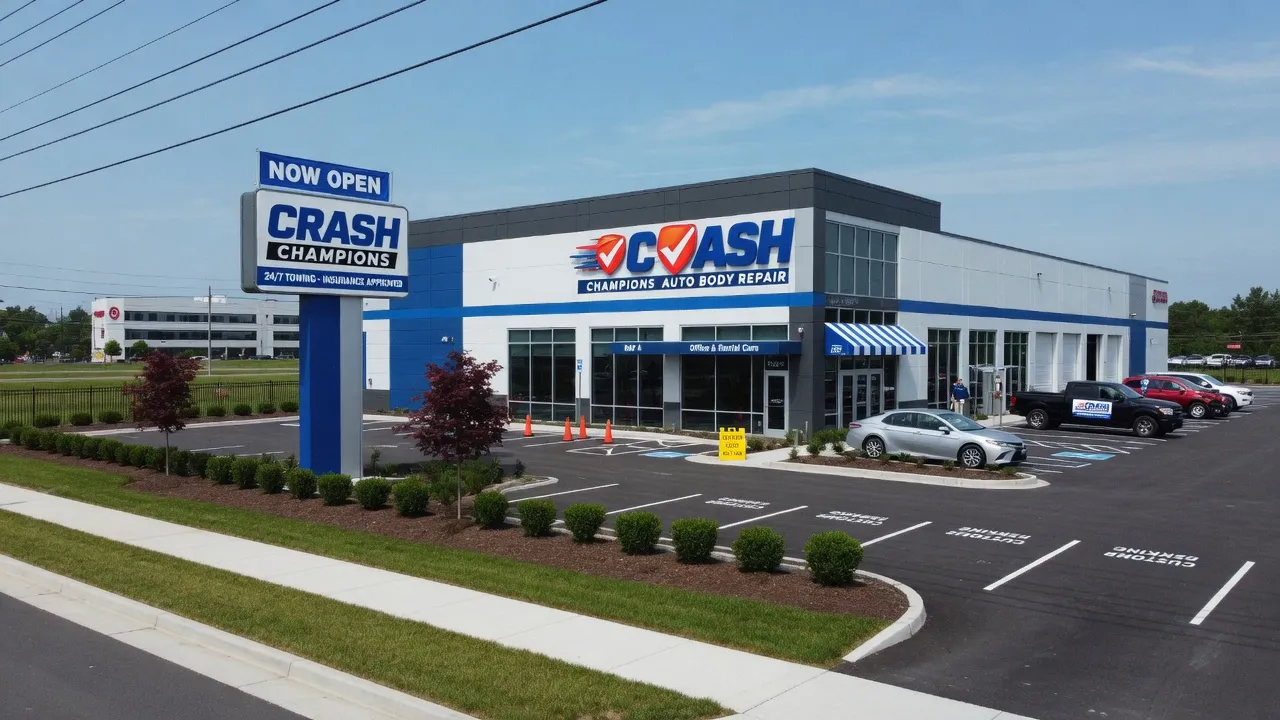
- All 650+ locations across 38 states remain operational. Existing repair warranties and insurance partnerships are unaffected.
- If you have a car at a Crash Champions shop right now, your repair will be completed. The financial issues are a corporate debt problem, not a service delivery crisis.
What's Actually Happening with Crash Champions' Finances
The headline version of Crash Champions' financial situation comes from Moody's Investors Service, which downgraded the company's corporate family rating from B3 to Caa1 in August 2025. In Moody's rating scale, Caa1 means "highly speculative" with obligations that are "considered to be of poor standing and subject to very high credit risk." That sounds alarming, and it should get your attention, but context matters.
The numbers behind the downgrade paint a clearer picture. As of the second quarter of 2025, Crash Champions carried a lease-adjusted debt-to-EBITDA ratio of approximately 9.1x, and roughly 15x on a funded debt basis. Its EBITA-to-interest coverage sat at just 0.4x, and free cash flow was negative $61 million (Moody's Ratings, Champions Financing Inc. Credit Opinion, August 8, 2025). In plain terms: the company owes a lot more than it earns, it doesn't generate enough operating profit to comfortably cover its interest payments, and it's burning cash.
Moody's pointed directly at the root cause: "aggressive financial strategies under private equity ownership and very high leverage." The rating agency acknowledged that Crash Champions has strong insurer relationships and operates in a market with strong long-term demand, but said the financial strain would persist "for some time."
How Crash Champions Got Here: The Service King Merger
Crash Champions' current debt problem traces back to a single defining transaction. In July 2022, the company merged with Service King Collision Repair, which had itself filed for bankruptcy earlier that year after years of debt-fueled acquisition spending (Fender Bender, "Crash Champions Absorbs Service King with New Investment," 2022). Service King's 350+ locations were folded into Crash Champions, creating a 550-shop network with roughly $2 billion in annualized revenue overnight.
The deal was engineered by Clearlake Capital, which acquired a control position in Service King's bonds and converted that debt into equity in the combined company. Clearlake injected a reported $200 million in cash and later issued $300 million in perpetual preferred securities in January 2024 to refinance the operation (Repairer Driven News, August 2025). That capital infusion kept the lights on, but it didn't make the underlying math comfortable.
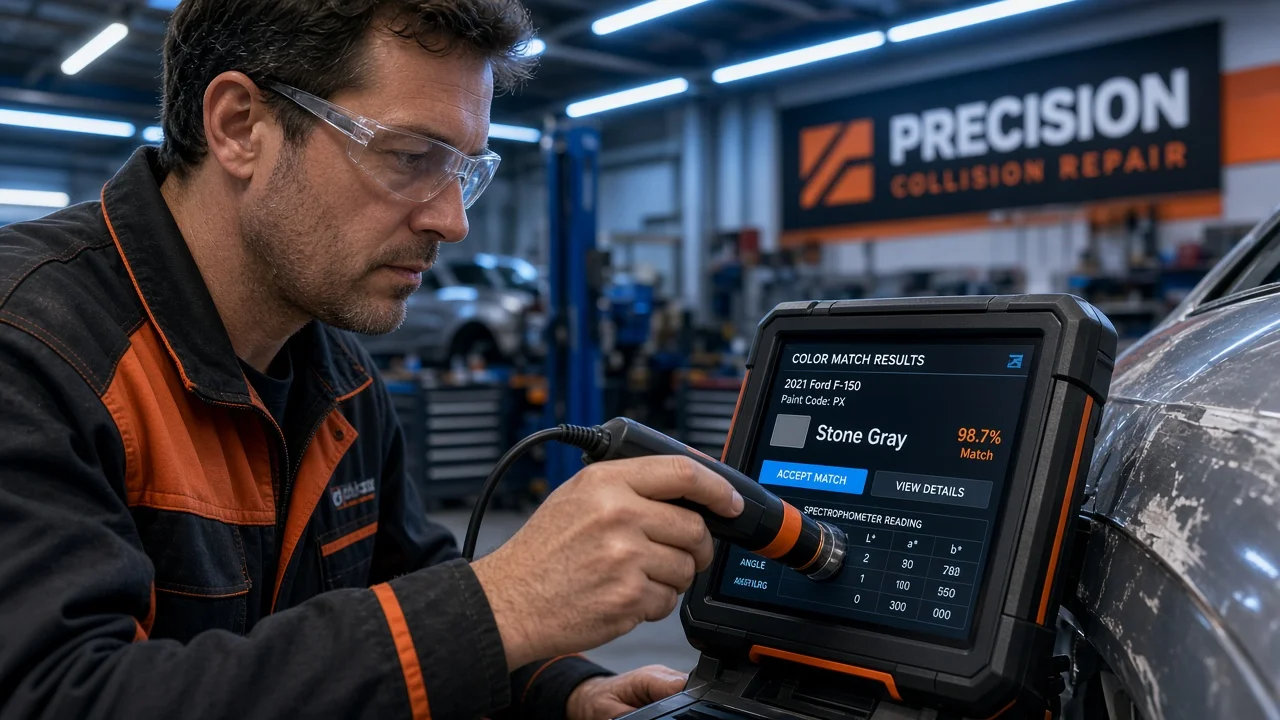
After the merger, Crash Champions kept acquiring. The company added shops through 2024 and into early 2025, pushing its footprint to more than 650 locations across 38 states. Each acquisition added revenue but also added lease obligations and integration costs. By the time Moody's issued its downgrade, the accumulated leverage had reached a level where even strong demand fundamentals couldn't offset the debt service burden.
The 2026 Pivot: No More Acquisitions
The clearest signal that Crash Champions recognizes its financial position is what it stopped doing. The company completed zero acquisitions in 2025, a dramatic reversal for a business that had built its identity on rapid deal-making (Body Shop Business, "2026 Mid-Year Auto Body Consolidation Review," 2026). In the first half of 2026, activity was limited to completing transactions held over from 2025, plus two new developments: a brownfield conversion in Windham, New Hampshire, and a greenfield facility in Dade City, Florida.
The company also invested in a new class of facility it calls "Luxe" shops, which are designed to handle electric vehicle repairs, aluminum-intensive vehicles, and advanced materials. This is a forward-looking bet that the mix of vehicles coming through body shop doors will shift toward higher-value, more complex repairs, which command better margins and stronger insurer reimbursement rates.
Industry analysts read the pause as necessary, not voluntary. When your debt-to-EBITDA is 9x and free cash flow is negative, the capital markets aren't offering attractive terms for more acquisitions. Crash Champions is essentially digesting what it already bought.
How Does This Compare to Other Chains?
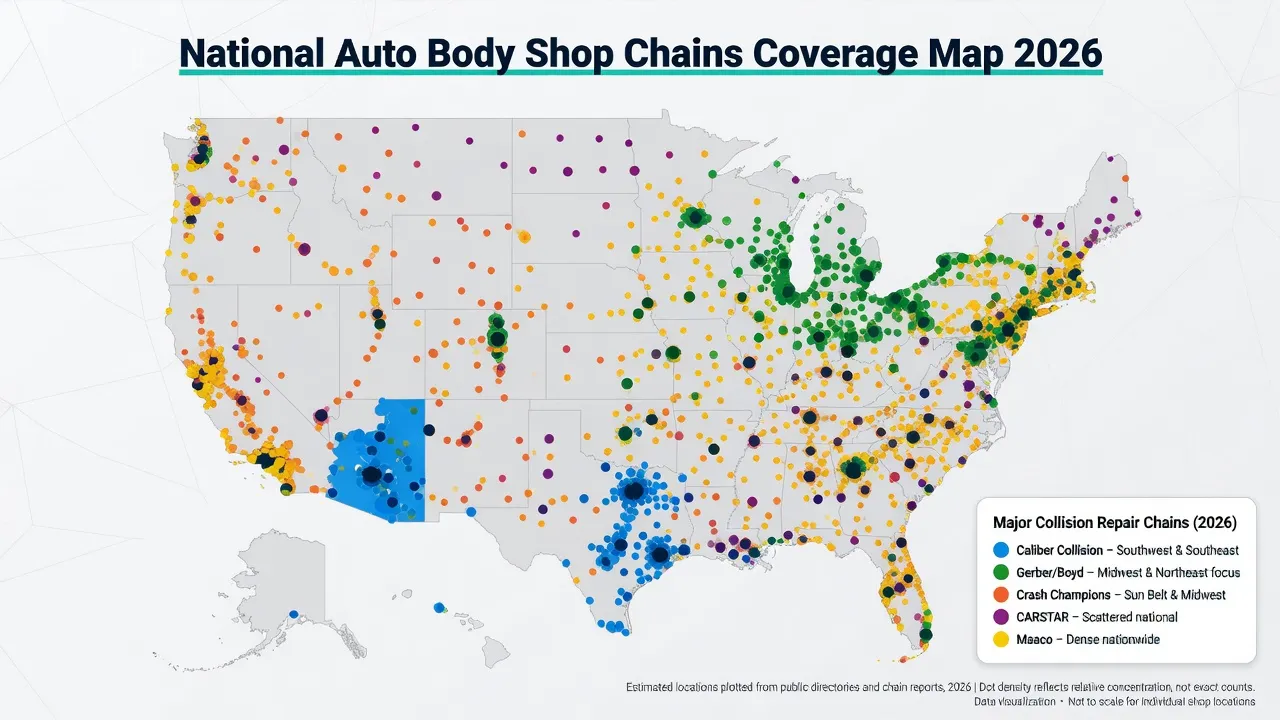
Crash Champions' financial stress looks different from its competitors because its growth path was different. The Big Four collision repair chains, Caliber Collision, Crash Champions, Gerber Collision and Glass, and Classic Collision, collectively operate about 4,019 locations and control roughly 31.7% of the market's revenue, up from 30% at the end of 2024 (Matthews, "Corporate Collision Center Report," 2026). But they got there through very different strategies.
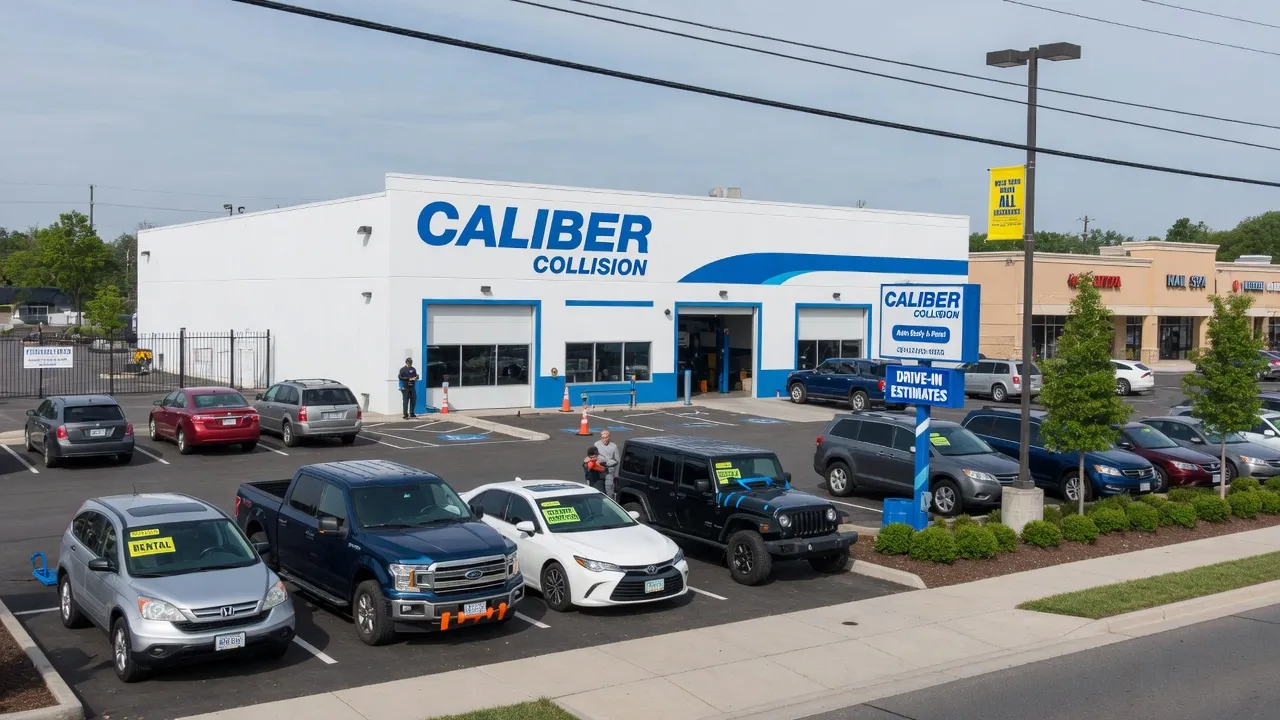
Caliber Collision took the most measured approach. The largest chain by location count, Caliber added approximately 300 locations in 2025 while simultaneously rationalizing parts of its legacy footprint, closing select locations where long-term leases had reached expiration. Caliber filed confidentially for an IPO in mid-2025, with an anticipated public debut in early 2026. An IPO would give it access to public capital markets and significantly more financial flexibility than its privately held competitors, a move that could reshape the competitive landscape.
Gerber Collision and Glass (owned by Boyd Group Services) made the biggest single acquisition of the cycle when it purchased Joe Hudson's Collision Center, adding 258 locations and strengthening its Southeast footprint (Focus Advisors, February 2026). Boyd projects $35 to $45 million in run-rate synergies from the deal. As a publicly traded company (TSX: BYD), Gerber has more transparent financials and access to cheaper capital than privately held competitors.
The contrast matters for consumers because financial health affects service quality over time. A chain that's investing in equipment, training, and facility upgrades can deliver better repairs than one that's cutting costs to service debt. For a deeper look at how all the major chains compare on service quality and customer satisfaction, see our guide to the best auto body shop chains.
What This Means for Your Car Right Now
If your car is currently at a Crash Champions shop or you're considering taking it to one, here's what you need to know.
Your repair will be completed
Financial pressure at the corporate level doesn't mean the shop working on your car is about to close mid-repair. Crash Champions' 650+ locations are operating normally. Technicians are employed, parts are being ordered, and insurance company direct repair programs (DRPs) are active. Corporate debt restructuring, if it eventually happens, is a boardroom event, not a shop-floor event.
Warranties should be honored
Crash Champions offers a lifetime warranty on qualifying repairs. As long as the company continues operating, which all current indicators suggest it will, those warranties remain valid. If a specific location were to close (the company has shed a small number of redundant locations, as have all Big Four chains), the warranty would transfer to the nearest Crash Champions facility.
Watch for quality signals, not financial headlines
The risk for consumers isn't that Crash Champions disappears. It's that prolonged financial pressure could lead to cost-cutting that affects repair quality: lower-grade parts substitution, reduced training investment, or understaffing. None of these are confirmed as happening, but they're the kinds of decisions that financially stressed chains can make over time. Read our full Crash Champions review for a location-by-location quality breakdown.
Know your right to choose
In every state, you have the legal right to choose which shop repairs your vehicle, regardless of what your insurance company recommends. If you're uncomfortable with Crash Champions' financial situation, you can take your car to an independent shop or another chain. Your insurer cannot force you to use a specific DRP shop. Use a directory like ours to find collision repair near you and compare options based on certifications, reviews, and specialization rather than just insurance convenience.
Could Crash Champions Go Bankrupt?
It's not the most likely outcome, but it's not impossible either. The Caa1 rating from Moody's explicitly means the company's debt obligations carry "very high credit risk." However, several factors work against a bankruptcy scenario.
First, Clearlake Capital has already demonstrated willingness to inject capital, having put in $200 million at the Service King merger and another $300 million in preferred securities in 2024. Private equity sponsors typically try to avoid the reputational damage of a portfolio company bankruptcy if they can restructure instead.
Second, the collision repair industry's fundamentals remain strong. Cars are getting more expensive to repair (ADAS technology, aluminum construction, higher labor rates), which means revenue per repair order is rising even if total claims volume fluctuates. A rebound in repairable claims volume through the back half of 2026 could improve the company's cash flow position.
Third, even Service King itself, whose bankruptcy directly preceded the Crash Champions merger, continued operating all of its locations through the bankruptcy process. Modern Chapter 11 proceedings for service businesses typically result in debt restructuring, not liquidation. The shops are worth more open than closed.
The more realistic near-term risk is a debt restructuring event, similar to what Service King went through, rather than a wholesale shutdown. For consumers, the distinction matters: a restructuring might change who owns the company, but it shouldn't change whether your car gets fixed.
How to Protect Yourself as a Consumer
Regardless of which chain or independent shop you choose for auto body repair, these steps apply:
Get everything in writing. Your repair estimate, parts list (OEM vs aftermarket vs used), timeline, and warranty terms should all be documented before work begins. This protects you regardless of what happens at the corporate level.
Verify certifications. Look for I-CAR Gold Class certification, OEM certifications for your vehicle's make, and state licensing. These don't depend on a chain's financial health and indicate the shop has invested in training and equipment.
Check the warranty terms. Understand exactly what's covered, for how long, and whether the warranty is location-specific or transferable across the chain's network. A lifetime warranty is only valuable if the company backing it remains operational.
Compare your options. Don't default to whichever shop your insurance company suggests. Compare at least two or three shops on certifications, online reviews, repair specialization, and estimated turnaround time. Our Crash Champions vs Caliber Collision comparison covers the two largest chains head to head.
Sources
- I-CAR (Inter-Industry Conference on Auto Collision Repair) — collision repair industry training standards
- NHTSA Vehicle Safety — federal vehicle safety and crashworthiness standards
Frequently Asked Questions
Is Crash Champions going out of business in 2026?
No. Crash Champions continues to operate more than 650 locations across 38 states as of mid-2026. While the company faces significant financial pressure, including a Moody's credit downgrade to Caa1 and negative free cash flow, all locations remain operational and there are no announced plans to shut down. The company has shifted from acquisitions to balance sheet management and selective new development.
Will my Crash Champions repair warranty still be honored?
Yes, as long as Crash Champions continues operating, which current indicators suggest it will. The company's lifetime warranty on qualifying repairs remains active across its network. If a specific location closes, the warranty transfers to the nearest Crash Champions facility. Keep your repair documentation, including the estimate, invoice, and warranty certificate, for your records.
Should I avoid Crash Champions because of their financial problems?
Not necessarily. The financial issues are a corporate debt problem, not a shop-level service problem. Individual Crash Champions locations may still deliver excellent repairs depending on their staff, equipment, and management. Judge the specific shop on its certifications, reviews, and the quality of its estimate rather than on corporate headlines. If you're uneasy, get a second estimate from an independent shop or another chain.
What caused Crash Champions' financial trouble?
The primary driver is the debt accumulated from the 2022 merger with Service King, which had itself filed for bankruptcy. Clearlake Capital engineered the deal with $200 million in cash and later $300 million in preferred securities, but the combined debt load resulted in a lease-adjusted debt-to-EBITDA ratio of approximately 9.1x and negative free cash flow of $61 million as of mid-2025. Continued acquisitions through 2024 added further leverage before the company paused deal-making in 2025.
How does Crash Champions compare financially to Caliber Collision and Gerber?
Crash Champions is in a weaker financial position than its two largest competitors. Caliber Collision filed for an IPO in 2025 and is pursuing a public listing that would give it access to cheaper capital and greater financial transparency. Gerber Collision, owned by the publicly traded Boyd Group (TSX: BYD), completed a major acquisition of Joe Hudson's 258 locations with projected synergies of $35 to $45 million. Both competitors have more financial flexibility and lower relative leverage than Crash Champions, which is focused on debt management rather than growth.