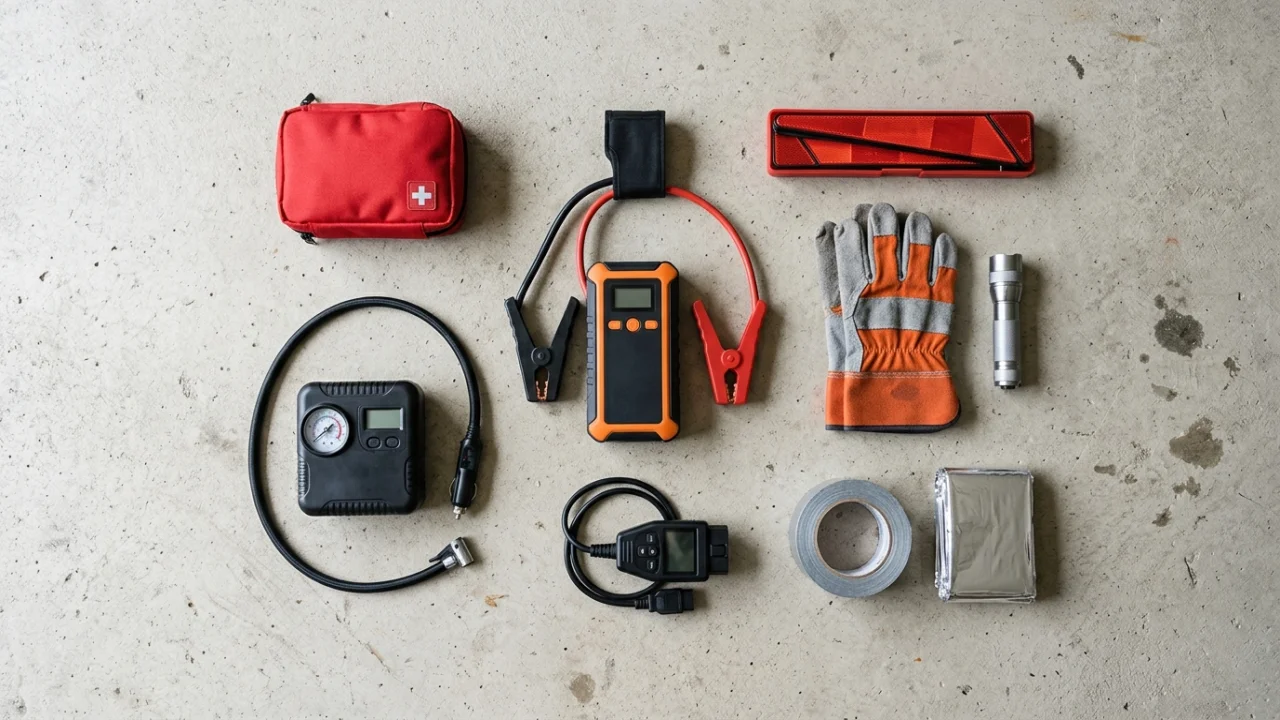
Every car emergency kit should include a portable jump starter, a tire inflator, an OBD2 scanner, a first aid kit, and a small set of basic tools. Those five categories cover the problems that actually strand drivers: a dead battery, a soft or flat tire, a warning light you can't identify, an injury, and the small mechanical fixes that get you to the next exit. A solid kit runs $150 to $300 depending on how much of it is powered gear, and it fits in a single trunk organizer. Below is the full checklist, organized by category, with budget tiers and seasonal add-ons so you can build the kit that matches where and how you drive.
Key Takeaways
- A complete car emergency kit costs $150 to $300 and covers dead batteries, low tires, warning lights, and minor injuries.
- The three most important powered items are a portable jump starter, a tire inflator, and an OBD2 scanner.
- Build your kit in tiers: start with a $50 basics kit and upgrade to powered tools over time.
- Winter kits need ice scrapers, blankets, and traction aids; summer kits need extra water and coolant.
- For collisions or structural damage, your kit can't help. Find an auto body shop near you instead.
Why Every Driver Needs an Emergency Kit
Breakdowns don't sort themselves by how careful a driver you are. Batteries die because they're four years old and it got cold overnight, not because you did something wrong. Tires lose pressure because a screw found them on a construction detour. Check engine lights come on for a loose gas cap as easily as for a failing sensor. AAA responds to tens of millions of roadside calls a year, and battery, tire, and lockout problems make up the bulk of them.
The part people underestimate is the wait. Roadside assistance response times commonly land in the 30 to 60 minute range in metro areas, and they stretch well past that during ice storms, heat waves, and holiday weekends, exactly when you're most likely to need help. If you're on a rural highway shoulder at night, that wait feels a lot longer than the number suggests.
An emergency kit doesn't replace roadside assistance. It replaces the wait for the problems you can solve yourself, which turns out to be most of them. A jump starter turns a 45 minute wait into a 5 minute fix. A tire inflator gets a slow leak up to pressure so you can drive to a shop instead of sitting on the shoulder. And when the problem is genuinely beyond you, having lights, a warning triangle, and water while you wait makes a bad night considerably less bad.
There's a safety angle too. Standing outside a stopped vehicle on the shoulder is one of the more dangerous things a driver does. Reflective triangles, a high visibility vest, and a real flashlight are cheap, and they make you visible to traffic that's moving at 70 mph while you're not.
The Essential Car Emergency Kit Checklist
Here's the full list, grouped by the problem each group solves. Product picks below are curated based on Amazon ratings, review volume, and spec comparisons rather than first-hand testing.
Power and Battery
Dead batteries are the single most common roadside call, and they're the easiest to fix yourself. Your power section should have three things:
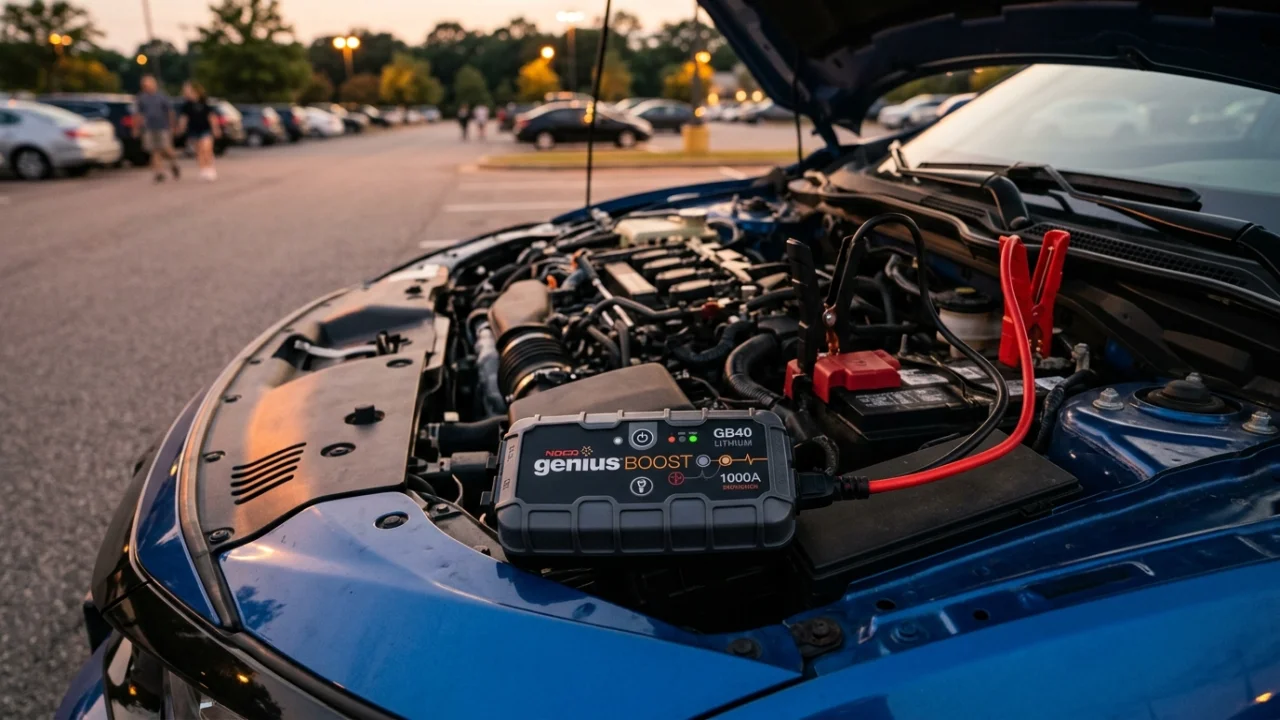
- A portable lithium jump starter. This is the highest value item in the entire kit. It starts your car without a second vehicle, without waiting for a stranger to stop, and without you having to explain to anyone which clamp goes where. Look for at least 1,000 peak amps for a four cylinder and 2,000 or more if you drive a diesel truck or a large V8.
- Jumper cables as a backup. Cables are the fallback when the jump pack is dead because you forgot to recharge it, which happens. Get 4 gauge or thicker, at least 16 feet, with real copper conductors instead of copper-clad aluminum.
- A USB power bank. Separate from the jump starter, because you don't want to drain your car-starting reserve keeping a phone alive. 20,000 mAh is plenty.
For most drivers the NOCO Boost Plus GB40 hits the right balance. It delivers 1,000 peak amps, which covers gas engines up to about 6 liters and diesels up to 3 liters, and it's small enough to live in a glovebox rather than eating trunk space. The clamps are reverse-polarity protected and spark-proof, so hooking it up wrong gives you an error light instead of a bad afternoon. It also holds a charge for up to a year in storage, which matters more than peak amp bragging rights for something that sits unused for months.
If you drive a heavy-duty truck, tow a trailer, or park outside in a climate that regularly drops below freezing, size up. Cold cuts available cranking power significantly, and a pack that's marginal at 70 degrees can be useless at 10. Our jump starter guide breaks down amp ratings by engine size and compares the main models at each tier.
Tire and Inflation
Underinflated and slow-leaking tires cause more roadside stops than blowouts do, and they're fixable in your driveway or on the shoulder with about ten minutes and the right gear.
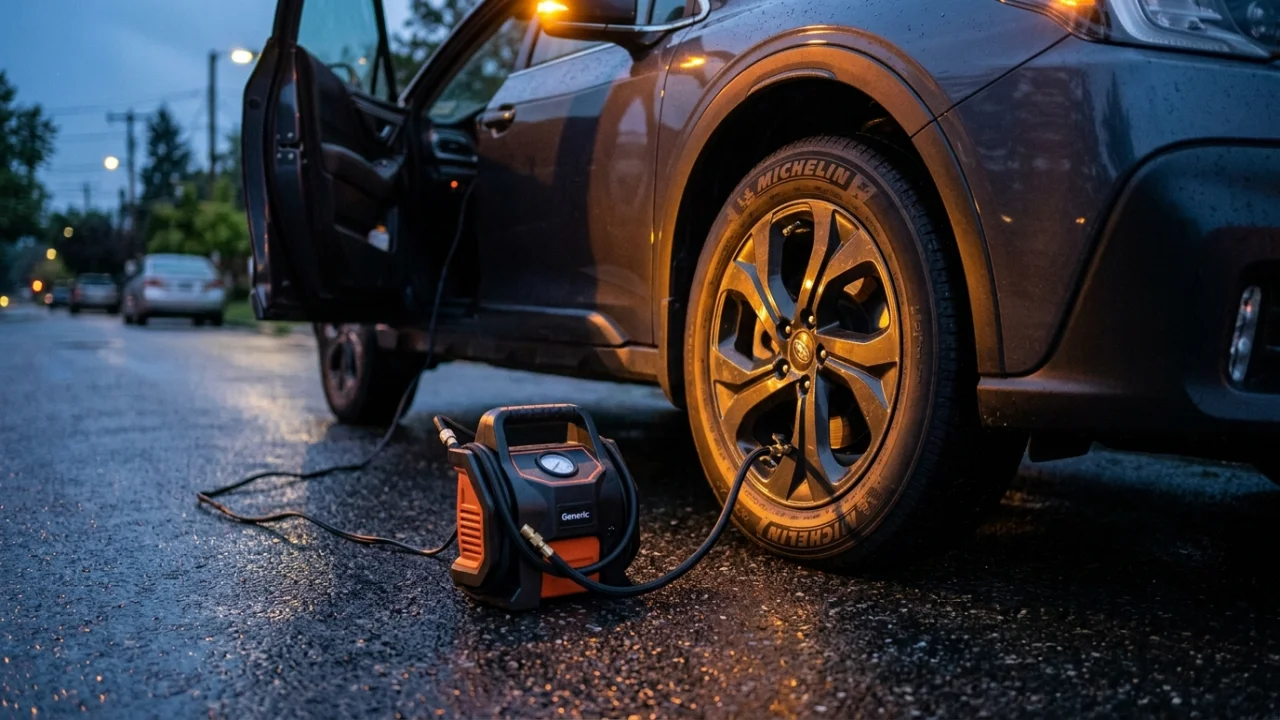
- A 12V portable tire inflator. This handles slow leaks, seasonal pressure drops, and topping off before a road trip. It also saves you from driving on a soft tire looking for a gas station with a working air pump.
- Tire sealant. A can of sealant gets a punctured tire holding air long enough to reach a tire shop. Treat it as a temporary fix, not a repair, and tell the shop you used it.
- A quality tire pressure gauge. Even if your inflator has a built-in gauge, a separate pencil or digital gauge is more accurate and takes five seconds to use.
- A tire plug kit if you're comfortable using one. Plugs handle tread punctures and are more durable than sealant, but they take practice and they're not appropriate for sidewall damage.
The VIAIR 88P is the pick for drivers who want an inflator that won't overheat halfway through a truck tire. It's a direct-to-battery compressor rather than a cigarette lighter unit, which means it pulls real current and moves real air: roughly 1.94 CFM, with a 100 PSI working pressure and a 30 minute duty cycle at 30 PSI. That's the difference between filling four tires in one session and waiting for a cheap inflator to cool down between each one. The tradeoff is that you clamp it to the battery terminals, so it's a bit more setup than plugging into a 12V socket.
If you drive a sedan or compact SUV and want something that plugs into the dash socket and lives in the door pocket, a smaller unit is fine. The tire inflator guide compares duty cycles, CFM ratings, and power sources across the range.
Diagnostics
A check engine light tells you something is wrong and nothing else. That ambiguity is what makes it stressful: it's the same light for a loose gas cap and for a misfire that'll damage your catalytic converter if you keep driving. An OBD2 scanner turns the light into an actual answer.
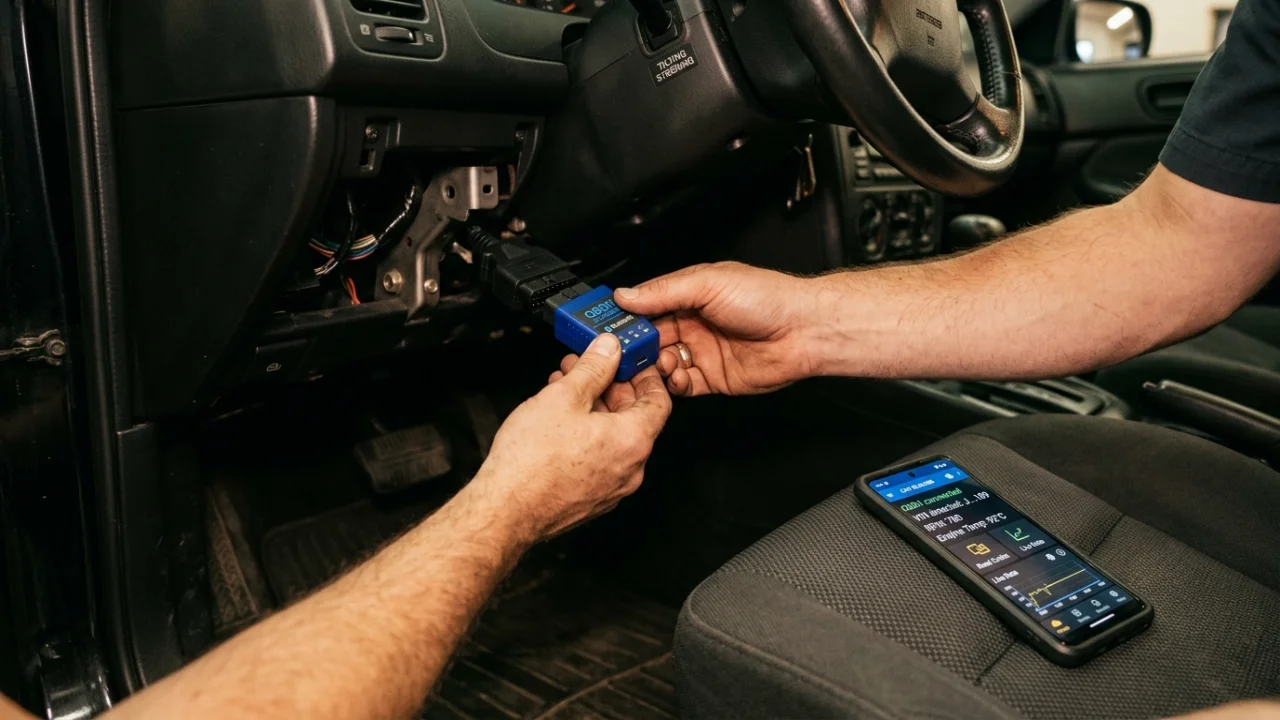
Every car sold in the US since 1996 has an OBD2 port, usually under the dash near the steering column. A scanner reads the stored trouble code, tells you what system it points to, and lets you clear it once you've fixed the cause. Knowing whether you're looking at a P0442 (small evaporative leak, tighten the gas cap) or a P0301 (cylinder 1 misfire, don't drive far) changes what you do next.
The FIXD sensor is the easiest option for drivers who don't want to learn code tables. It's a small dongle that stays plugged into the port and pairs with a phone app, translating raw codes into plain descriptions along with a rough severity rating and a repair cost estimate. It also tracks maintenance intervals and can monitor multiple vehicles from one app. It's not a professional bidirectional scan tool and it won't do live sensor graphing at the level a shop tool does, but for reading codes, checking severity, and deciding whether to drive or call, it does the job.
If you do your own work and want live data, freeze frame, and mode 6 access, step up to a Bluetooth adapter paired with a full-featured app. The OBD2 scanner guide covers what separates a $30 code reader from a $200 tool and which one matches your comfort level.
First Aid and Safety
This section is the one people skip and then regret. It's also the cheapest.
- A first aid kit. Buy a proper one rather than assembling a bag of bandages. You want assorted adhesive bandages, gauze pads and roller gauze, medical tape, antiseptic wipes, tweezers, scissors, nitrile gloves, and a few doses of pain reliever. Check the expiration dates when you buy it and again once a year.
- Reflective warning triangles. Three of them, placed behind the car at increasing distances. Flares work too but triangles don't expire and don't start fires.
- A high visibility vest. Five dollars, folds flat, and makes you visible to a driver who's scrolling instead of scanning.
- An LED flashlight or headlamp with fresh batteries or a rechargeable cell. A headlamp is better because it leaves both hands free. Keep spare batteries in a separate bag so they don't corrode in the light.
- An emergency blanket. The mylar kind costs a couple dollars and takes up no space. If you break down in the cold with no heat, it matters a great deal.
- A rain poncho. Changing a tire in a downpour is miserable and also colder than you expect.
- A seatbelt cutter and window breaker. Keep this in the cabin, not the trunk. A tool you can't reach isn't a tool.
- Drinking water. A few sealed bottles, rotated every six months.
- Non-perishable snacks. Granola bars or nuts. Check them seasonally because heat destroys them faster than the printed date suggests.
Basic Tools
You're not rebuilding an engine on the shoulder. This section covers the small stuff that turns a stranding into an inconvenience.
- Duct tape. Holds a loose bumper cover, a flapping trim piece, or a cracked hose long enough to get somewhere useful.
- Zip ties in assorted sizes. Same idea, better for anything that needs to stay put under vibration.
- A multi-tool with pliers, a knife, and screwdriver bits.
- Work gloves. Lug nuts, hot components, and road grime all argue for these.
- Shop towels or rags. A roll of blue shop towels is worth the space.
- A tow strap rated well above your vehicle weight, if you drive somewhere you could get stuck.
- Your spare tire, jack, and lug wrench. Confirm they're actually in the car and that the spare holds air. Plenty of drivers discover their spare is flat at the worst possible moment. A telescoping lug wrench or a short breaker bar makes seized lug nuts manageable in a way the factory wrench does not.
If you want the deeper version of this list with reasoning on each pick, our roundup of essential car emergency and diagnostic tools goes item by item.
Building Your Kit by Budget
You don't have to buy everything at once. Here's how the kit stacks up in tiers, so you can start cheap and add the powered gear as budget allows.
The $50 Starter Tier
Everything here is non-powered and covers safety plus the basics: a pre-assembled first aid kit, reflective triangles, a high visibility vest, an LED flashlight with spare batteries, an emergency blanket, work gloves, duct tape, zip ties, a tire pressure gauge, a seatbelt cutter, and a few bottles of water. This tier won't start your car, but it keeps you safe and visible while you wait, and it handles minor injuries. If you buy nothing else, buy this.
The $150 Mid Tier
Add the two powered items that solve the most common breakdowns: a portable jump starter in the 1,000 amp range and a 12V tire inflator. Add jumper cables as a backup and a can of tire sealant. At this level you can self-rescue from a dead battery and a slow leak, which together account for a large share of roadside calls. This is the tier most drivers should target.
The $300 Complete Tier
Add an OBD2 scanner, a heavier-duty inflator with a real duty cycle, a bigger jump starter if you drive a truck, a tire plug kit, a multi-tool, a tow strap, a folding shovel, and a trunk organizer to keep it all from rattling around. Add a decent breaker bar for lug nuts. At this level you can diagnose a warning light, decide whether to drive or stop, and handle most non-collision roadside problems without calling anyone.
One note on spending: it's better to buy one good jump starter than three cheap gadgets. The failure mode for budget powered gear is that it works in the driveway and quits in the cold, which is the only time you'll need it.
Seasonal Add-Ons
The core kit stays in the car year round. These items swap in and out.
Winter
- Ice scraper and snow brush with an extendable handle if you drive anything taller than a sedan.
- A real wool or fleece blanket in addition to the mylar emergency blanket. If you're stuck with the engine off, mylar alone gets uncomfortable fast.
- Traction aids: a bag of sand, kitty litter, or a set of folding traction mats. Cat litter does double duty as weight over a rear axle.
- A folding shovel for clearing snow away from tires and, importantly, away from your exhaust pipe. A blocked tailpipe with the engine running is a carbon monoxide risk.
- Hand warmers. Cheap, last for hours, and hold up in storage.
- Extra washer fluid rated for freezing temperatures. Road salt spray blinds a windshield in about thirty seconds.
- Warm gloves, a hat, and boots in a bag. You will not be dressed for standing outside when you break down; nobody ever is.
Summer
- Extra water, more than you think. Plan on a gallon if you drive through desert or long rural stretches.
- Sunscreen and a hat. Waiting an hour on an open shoulder in July is a real sunburn.
- Coolant or premixed antifreeze plus a spare quart of oil. Summer heat exposes cooling system weaknesses.
- A battery check. Heat kills batteries faster than cold does; cold just reveals the damage. If your battery is over three years old, have it load-tested before summer.
- A sunshade, which protects both your dashboard and any gear stored in the cabin. Heat degrades lithium batteries, so keep jump starters and power banks out of direct sun when you can.
Set a calendar reminder twice a year, at the daylight saving time changes, to swap seasonal items, check expiration dates on food and first aid supplies, and top off the jump starter's charge. Lithium packs self-discharge slowly, and a pack at 20 percent won't start anything.
When Roadside Help Isn't Enough
An emergency kit handles mechanical and electrical trouble. It does nothing for a collision, and it's worth being clear about where that line falls.
If you've been in a crash, the priorities are different: get to safety, call 911 if anyone is hurt, document the scene with photos, and exchange insurance information. Your kit still helps here, since triangles, a flashlight, and a first aid kit all matter at a crash site, but the repair is out of your hands.
Some damage looks cosmetic and isn't. A bumper cover that pops back into place can hide a bent reinforcement bar or a crushed crash box. Panel gaps that don't line up, a door that binds when it closes, or a hood that sits high on one side all point to frame or unibody damage. Modern cars also pack sensors, cameras, and radar modules into bumpers and mirrors, and those need recalibration after replacement, not just reinstallation. Skipping that means your lane keeping and automatic emergency braking may not behave the way they should.
If your vehicle took a hit, get it evaluated by a professional. You can find auto body repair shops in your area, and for structural work, paint matching, and post-accident safety system recalibration, look for a shop that specializes in collision repair. A proper estimate also protects you in the insurance conversation, since hidden damage found later is much harder to get covered than damage documented up front.
Frequently Asked Questions
What are the most important things to keep in your car for emergencies?
The five essentials are a portable jump starter, a tire inflator, a first aid kit, a flashlight, and reflective warning triangles. Those cover the most common roadside situations: a dead battery, a low tire, an injury, working in the dark, and staying visible to traffic. If you can add one more item, make it an OBD2 scanner so a check engine light gives you an actual answer instead of a guess. Also confirm your spare tire, jack, and lug wrench are in the car and that the spare still holds air.
How much does a good car emergency kit cost?
A basic non-powered kit with first aid supplies, safety gear, and hand tools runs about $50. Adding a portable jump starter and a tire inflator brings you to roughly $150, which is the tier most drivers should aim for. A complete kit with an OBD2 scanner, a heavier-duty inflator, a tire plug kit, and a tow strap lands in the $250 to $300 range. Spread the purchases out if you need to, starting with safety items and adding powered gear over time.
Where should I store my car emergency kit?
Most of the kit belongs in the trunk or cargo area, ideally in a trunk organizer or a duffel so it doesn't slide around and become a projectile in a crash. A few items should live in the cabin where you can reach them without getting out: a seatbelt cutter and window breaker, a flashlight, and your phone charging cable. Keep the jump starter somewhere temperature-moderate if you can, since extreme heat shortens lithium battery life. A glovebox works for compact packs; a trunk is fine in mild climates.
How often should I check and replace items in my emergency kit?
Check the kit twice a year, and the daylight saving time changes are an easy reminder. Recharge the jump starter and power bank, since lithium cells self-discharge over months. Verify flashlight batteries and swap them if they're old, since alkaline cells can leak and ruin the light. Replace water and snacks every six months, and check expiration dates on first aid supplies and tire sealant annually. Sealant typically expires after four to five years. Also check your spare tire's pressure at the same time.
Do I need different emergency supplies for winter vs summer?
Yes, though the core kit stays the same year round. Winter adds an ice scraper, a warm blanket, traction aids like sand or kitty litter, a folding shovel, hand warmers, and winter-rated washer fluid. Summer adds extra water, sunscreen, a sunshade, and a spare quart of coolant. Cold weather also cuts a jump starter's available power, so if you park outside in a cold climate, size up on peak amps rather than buying the smallest pack that technically matches your engine.