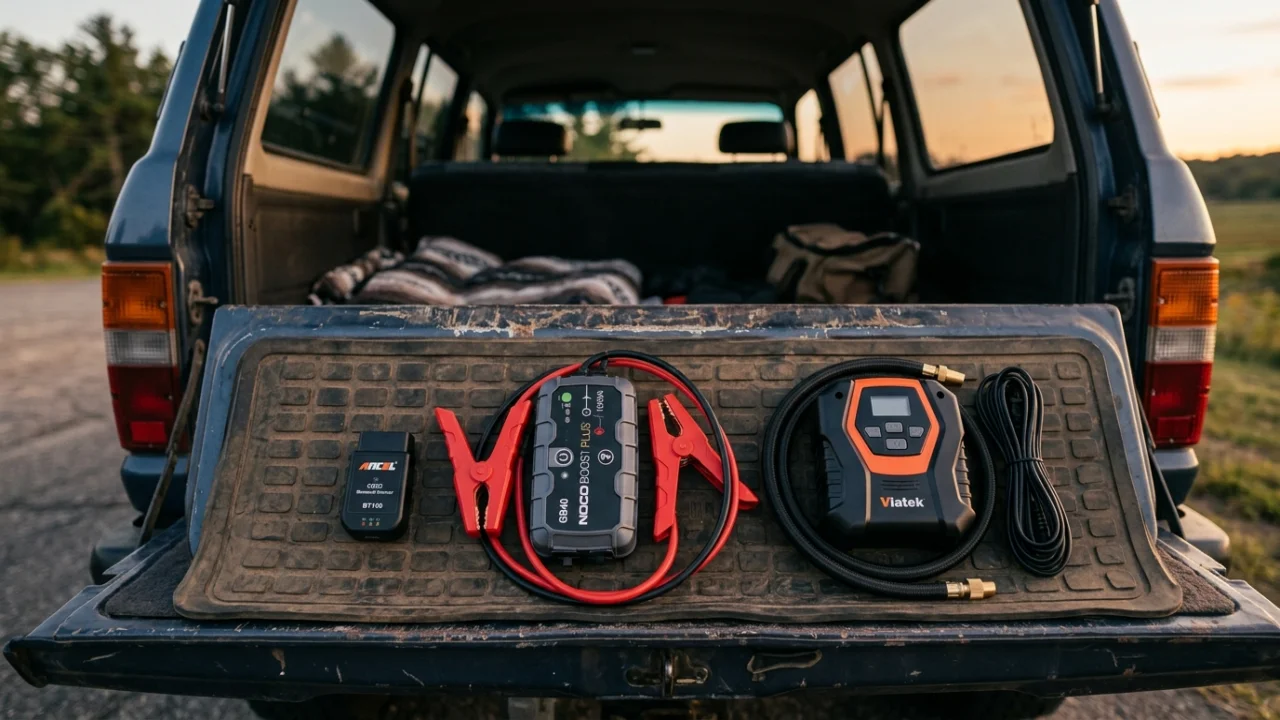
The best portable jump starter for most drivers is the NOCO Boost Plus GB40, a $100 lithium unit rated 4.7 stars that delivers 1000 peak amps and fits in a glove box. It starts gas engines up to 6 liters and diesels up to 3 liters, weighs about 2.4 pounds, and holds a charge long enough to sit forgotten in your trunk until the morning you actually need it. If you drive a full-size truck or a big diesel, step up to the NOCO Boost HD GB70. If you just want something cheap that works, the TOPVISION 2500A covers the basics for around $60. Our picks below are curated based on Amazon ratings, review volume, and published specs rather than first-hand testing.
Key Takeaways
- The NOCO Boost Plus GB40 ($100, 4.7 stars) is the best portable jump starter for most drivers.
- Lithium jump starters weigh 2 to 3 pounds versus 18-plus pounds for lead-acid, with a longer shelf life.
- A quality jump starter pays for itself after one use, since a tow truck call runs $50 to $150.
- Match peak amps to your engine size: 1000A for most cars, 2000A or more for trucks and diesels.
- Recharge your jump starter every 3 to 6 months so it's ready when an emergency actually happens.
Why Every Car Should Have a Jump Starter
Dead batteries are the single most common reason drivers call for roadside assistance. AAA responds to millions of battery-related calls every year, and battery failures spike hard in the first cold snap of winter and again during peak summer heat. Batteries don't usually warn you. They crank a little slower for a few weeks, you don't notice, and then one morning you turn the key and get a click.
The old solution was jumper cables plus a stranger. That plan has two problems. First, it needs another car, another driver willing to help, and enough room to park nose to nose. In a tight parking garage or a highway shoulder, that's not happening. Second, plenty of people connect cables wrong, and reversed polarity can cook an alternator or an ECU.
A portable jump starter removes the stranger from the equation. You keep a small lithium pack in your glove box or door pocket, clamp it on, and drive away in under a minute. A roadside assistance call typically means a 30 to 60 minute wait, sometimes much longer during a storm or a heat wave when everyone's battery dies at once. If you don't have a AAA membership, a single tow runs $50 to $150 depending on distance, which means a $100 jump starter pays for itself the first time you use it.
There's a safety angle too. Being stuck on a shoulder waiting for help is one of the more dangerous things you can do in a car. Getting yourself moving in 60 seconds is worth a lot more than the $100 on the price tag. A jump starter belongs in the same category as a spare tire and a first aid kit, which is why it shows up on any decent car emergency kit checklist.
Best Portable Jump Starters for 2026
These picks are based on Amazon ratings, review counts, and manufacturer specs. We looked for units with high star ratings across thousands of reviews, honest amp claims, and safety features like reverse-polarity protection and spark-proof clamps.
NOCO Boost Plus GB40: Best Overall
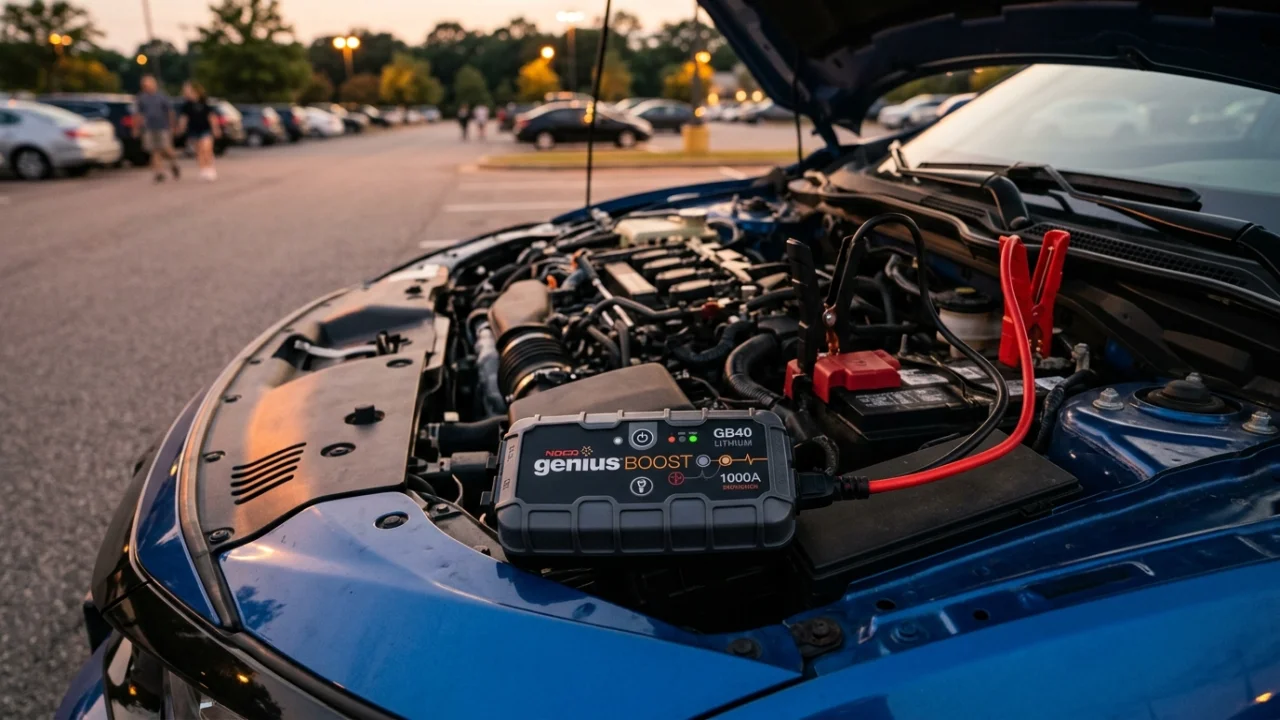
The GB40 is the default answer for most drivers, and it has been for years. It puts out 1000 peak amps, which is enough for gas engines up to 6 liters and diesel engines up to 3 liters. That covers essentially every sedan, crossover, and small SUV on the road. At roughly 2.4 pounds and the size of a paperback, it lives in a glove box without being a nuisance. NOCO includes reverse-polarity protection and spark-proof clamps, so hooking it up backwards gives you an error light instead of a shower of sparks. It also works as a USB power bank and has a built-in LED flashlight with an SOS mode. The 4.7-star rating across a very large review base is the main reason it stays at the top: it's the unit people keep in their car for three years and it still fires up when they need it.
NOCO Boost HD GB70: Best for Trucks and SUVs
If you drive an F-250, a Suburban, or anything with a big diesel, the GB40 will eventually leave you disappointed. The GB70 doubles the output to 2000 peak amps, which handles gas engines up to 8 liters and diesels up to 6 liters. It's noticeably bigger and heavier at about 5 pounds, with thicker clamps and heavier gauge cables that can actually carry the current. Same safety features as the GB40, same 4.7-star rating, roughly double the price at $200. Buy this one if your engine is large, if you live somewhere that gets genuinely cold, or if you want the extra headroom for jumping a battery that's fully flat rather than just weak. Cold weather and deeply discharged batteries both eat into available cranking power, and the GB70 has enough margin to absorb that.
HULKMAN Alpha85: Best Value
The Alpha85 delivers 2000 peak amps for around $110, which undercuts the GB70 by roughly half while claiming the same peak output. It's rated 4.6 stars and has earned a solid reputation among people who want truck-level power without paying the NOCO premium. The standout feature is the large color display showing exact battery percentage and status, which beats squinting at a row of LEDs trying to remember what three bars means. It also supports fast recharging, so topping it up before a road trip doesn't take all evening. The tradeoff versus NOCO is long-term track record: NOCO has been building these longer and its warranty support is better documented. For most buyers, the Alpha85 is the smart-money pick.
Clore JNC660: Best Professional
The JNC660 is the odd one out here because it's lead-acid, not lithium. It weighs about 18 pounds and it's built like shop equipment, because that's what it is. Clore's Jump-N-Carry line is what you find in independent repair shops and fleet garages, and the JNC660 delivers 1700 peak amps through heavy commercial-grade clamps and cables. Lead-acid handles repeated high-draw starts better than a small lithium pack, and it doesn't care about heat the way lithium chemistry does. At $170 and 4.6 stars, it's the right buy if you're jumping vehicles regularly: a mechanic, a fleet manager, a farm, or anyone with a row of seasonal vehicles that all need waking up in spring. It's the wrong buy if you want something to keep in a sedan trunk, because 18 pounds gets old fast.
TOPVISION 2500A: Best Budget
At around $60, the TOPVISION is the cheapest unit here that still holds a 4.5-star rating. It claims 2500 peak amps and covers gas engines up to 8 liters and diesels up to 6 liters, plus the usual extras: USB charging ports, an LED work light, and a carrying case. Treat the peak amp number with some skepticism, since budget brands measure peak output generously and the real-world figure is usually lower than the label. Still, for a commuter car that needs one jump every couple of years, it works. Buy this if the alternative is having no jump starter at all, which is a much worse position to be in than owning a budget one.
Lithium vs Lead-Acid Jump Starters
Nearly every consumer jump starter sold today uses lithium cells, but lead-acid units haven't disappeared, and there are real reasons for that. The differences matter more than the marketing suggests.
Weight and size. This is the big one. A lithium pack like the GB40 weighs 2 to 3 pounds and fits in a glove box. A lead-acid unit like the JNC660 weighs 18 pounds and takes up real trunk space. If you're carrying it every day in a passenger car, lithium wins without much argument.
Sustained cranking power. Lead-acid wins here. A lithium pack can deliver a huge burst for a few seconds, but it heats up and needs a cooldown between attempts. Most units limit you to a handful of consecutive tries before requiring a rest. A lead-acid box will crank repeatedly with less complaint, which is exactly why shops still buy them.
Shelf life and self-discharge. Lithium wins. A charged lithium jump starter holds usable charge for months, often up to a year depending on the model and storage temperature. Lead-acid self-discharges faster and, worse, sulfates if you leave it flat, which permanently reduces capacity. Leave a lead-acid box uncharged in a garage for six months and you may find it's ruined.
Maintenance. Lithium needs a top-up every 3 to 6 months and that's it. Lead-acid wants to be kept on or near full charge continuously, which in practice means keeping it plugged in on a shelf. Some shops just leave theirs on a maintainer permanently.
Temperature behavior. Both chemistries lose output in the cold, but lithium loses more, and lithium doesn't like being stored in a hot car all summer either. If you live somewhere with punishing summers, don't leave a lithium pack baking on a dashboard. Trunk or under a seat is better.
For nearly all private owners, lithium is the right call. Buy lead-acid only if you're jumping vehicles frequently or need a unit that lives on a shop floor and gets abused.
How to Use a Portable Jump Starter Safely
The process is simple, but the order matters, and the mistakes people make are the expensive kind.
- Turn everything off. Ignition off, headlights off, radio off, climate control off. Put the car in park with the parking brake set.
- Check the jump starter's charge. If it shows below about 50 percent, a start on a very dead battery is unlikely. Check this before you're stranded, not during.
- Connect red to positive. Clamp the red lead to the positive battery terminal, usually marked with a plus sign and a red cover. Get a solid bite on clean metal.
- Connect black to negative or ground. Clamp the black lead to the negative terminal, or better, to a bare unpainted metal part of the engine block or chassis away from the battery. Grounding away from the battery keeps any spark away from hydrogen gas the battery may be venting.
- Turn the jump starter on. Most units stay in standby until they detect a connected battery. Look for the green ready light. If you get a red light or an alarm, you've reversed the clamps: stop and fix it.
- Crank the engine. Turn the key and hold no longer than 3 to 5 seconds. If it doesn't catch, wait 30 seconds before trying again. Grinding the starter continuously overheats both the starter and the jump pack.
- Disconnect in reverse. Once the engine's running, turn the jump starter off, remove the black clamp first, then the red. Store the clamps so they can't touch each other.
- Drive for at least 20 to 30 minutes. The alternator needs real running time to put meaningful charge back into the battery. A five minute trip to the store will leave you stranded again.
A few safety points worth repeating. Never let the two clamps touch while the unit is powered on. Don't jump a battery that's visibly cracked, leaking, swollen, or frozen, since it can rupture. Keep sparks and cigarettes away from the battery, which vents flammable hydrogen. And don't leave a lithium jump starter charging unattended overnight in an enclosed space.
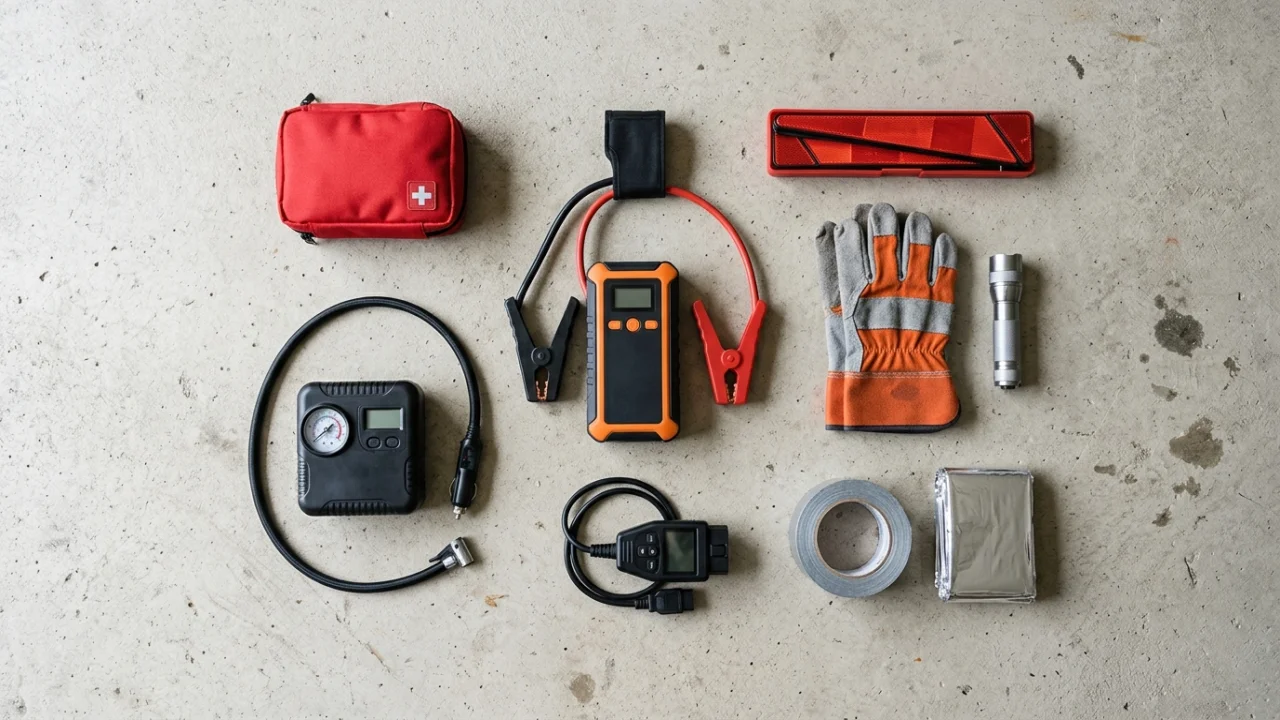
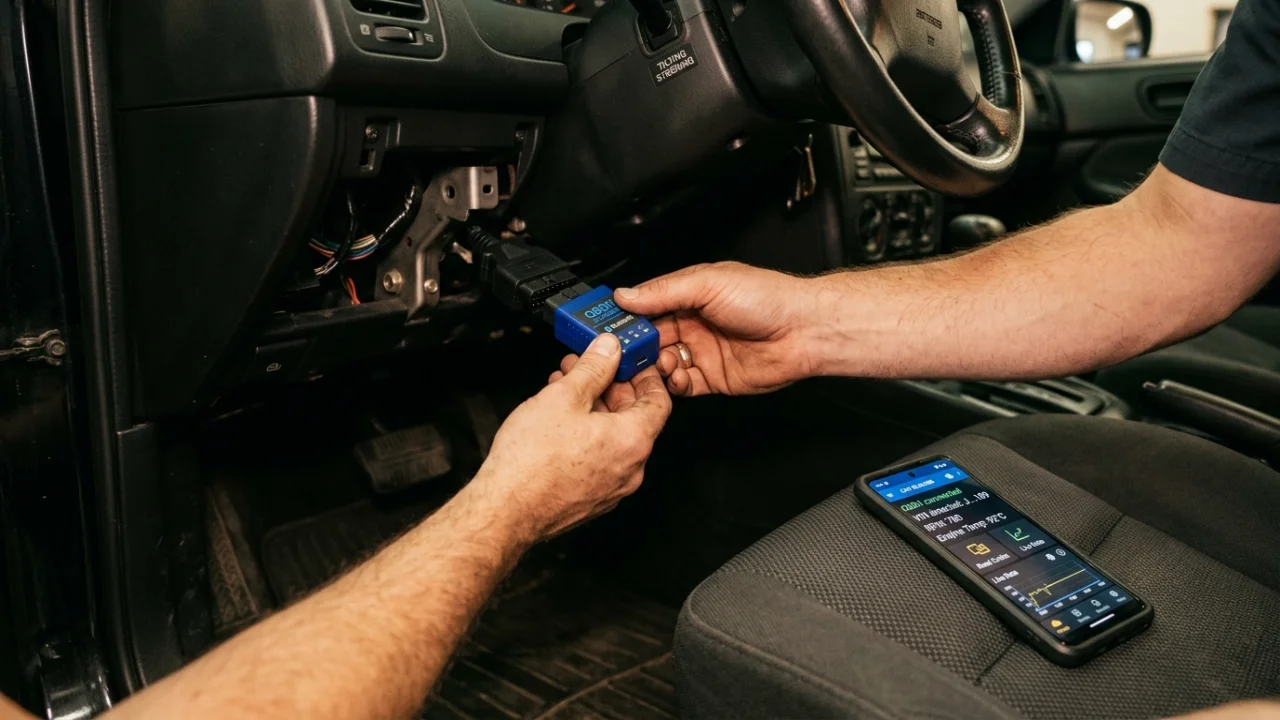
Once you're rolling again, it's worth finding out why the battery died in the first place. A cheap code reader tells you whether the charging system is throwing faults, and our roundup of the best OBD2 scanners covers the models that read charging-system data instead of just clearing check-engine lights. A jump starter and a scanner together cover most of what goes wrong in a parking lot, along with the other gear in our guide to essential car emergency and diagnostic tools.
When a Jump Start Won't Fix It
A jump starter solves exactly one problem: a battery too weak to turn the starter. Plenty of no-start situations look identical from the driver's seat but have a different cause, and repeatedly jumping the car just delays the real fix.
A failing alternator. If the car starts on a jump and then dies within a few minutes, or the battery light stays on while driving, the alternator isn't charging. You can jump it every morning if you want, but the car is running on borrowed time and will eventually quit somewhere inconvenient.
A battery past its life. Most batteries last 3 to 5 years. If yours is older and needs a jump more than once, it's not coming back. A jump starter buys you the trip to the parts store, not a repair.
Starter or ignition faults. If the headlights are bright and the dash lights stay strong but you get a single loud click or nothing at all, the battery probably isn't the problem. That points at the starter motor, the solenoid, or the ignition switch.
Corroded or loose terminals. Sometimes the battery is fine and the connection isn't. White or bluish crust on the terminals blocks current. Cleaning and tightening the connections fixes a surprising number of no-starts for free.
Collision damage near the battery. This one gets overlooked. Even a modest front-end impact can shift the battery tray, crack the case, pinch a ground strap, or damage wiring in the engine bay. If your car had a fender-bender and started having electrical gremlins afterward, that's not a coincidence. Repeatedly jumping a car with damaged battery wiring is a genuine fire risk. Get it inspected by a shop that handles collision repair and can check the structural and electrical damage together. If you're dealing with visible panel damage as well, a local auto body repair shop can quote both at once.
The general rule: one jump to get home or to a shop is fine. Two jumps in a week means something is broken and needs diagnosis. While you're stocking the trunk, low tire pressure is the other thing that strands people regularly, and our guide to the best portable tire inflators covers that side of the kit.
Frequently Asked Questions
How many times can a portable jump starter start a car on one charge?
Most quality lithium jump starters deliver 15 to 20 starts on a full charge, and larger units like the NOCO GB70 can manage 40 or more. Those numbers assume a healthy engine that catches quickly. A deeply discharged battery, a big diesel, or freezing temperatures will cut the count significantly, sometimes by half. In practice, a fully charged jump starter has plenty of capacity for a single emergency plus several more, which is the scenario that actually matters.
Can a jump starter damage my car's electronics?
A quality jump starter with reverse-polarity protection and spark-proof technology is safer than traditional jumper cables, because it refuses to send current when the clamps are backwards. The classic way to damage an ECU or alternator is reversing cables between two cars, and modern jump starters block that. Risk comes from cheap units without protection circuits, or from ignoring an error light and forcing a connection. Stick with rated units from established brands and follow the sequence, and the risk is minimal.
How long does a portable jump starter hold its charge?
Lithium jump starters typically hold a usable charge for 6 to 12 months in storage, though hot summers and freezing winters both shorten that. Manufacturers recommend recharging every 3 to 6 months, which is good advice mostly because a jump starter you forgot about for two years is a jump starter that will fail when you need it. Set a calendar reminder twice a year, top it up when you rotate tires, or just check it whenever you change the clocks.
What size jump starter do I need for my car?
Match peak amps to engine displacement. For most sedans, hatchbacks, and small crossovers with engines under 4 liters, 400 to 1000 peak amps is plenty, which puts the NOCO GB40 comfortably in range. Larger V8 gas engines and diesels want 1500 to 2000 peak amps or more, meaning the GB70, the HULKMAN Alpha85, or the Clore JNC660. If you live in a cold climate, buy more capacity than the minimum, since cold reduces both battery output and jump starter performance. Extra headroom costs a little money; not enough amps costs you the morning.
Can I use a jump starter on a hybrid or electric vehicle?
Yes for hybrids and most EVs, with one important distinction. These vehicles have a separate 12-volt accessory battery that powers the computers, lights, and door locks, and it's completely separate from the high-voltage traction pack. That 12-volt battery dies just like any other, and when it does the car won't boot up at all. A standard jump starter connects to that 12-volt battery normally. Never connect anything to the high-voltage system. Check your owner's manual first, because many hybrids and EVs have a designated jump point under the hood rather than direct battery access, and the manual will show you exactly where it is.
The Bottom Line
For most drivers, the NOCO Boost Plus GB40 at around $100 is the right jump starter: small enough to forget about, powerful enough for nearly any car, and backed by a 4.7-star rating built on a very large pile of reviews. Truck and diesel owners should spend the extra and get the GB70, buyers who want maximum power per dollar should look at the HULKMAN Alpha85, professionals who jump vehicles daily want the lead-acid Clore JNC660, and anyone on a tight budget is still far better off with the $60 TOPVISION than with nothing. Whichever you buy, charge it, put it in the car, and top it up twice a year. It's insurance that costs less than one tow.