The best OBD2 scanner for most drivers is the BlueDriver Bluetooth Pro, which pairs with your phone and delivers repair reports that go well past a plain code number for around $100. If you just want to know why your check engine light came on, though, a $13 handheld reader will tell you that in under a minute. The right scanner depends on how deep you want to go: reading and clearing a code is cheap and easy, while live sensor data, ABS and airbag codes, and manufacturer-specific diagnostics cost more. The picks below are curated based on Amazon ratings, review volume, and feature sets, not first-hand testing.
Key Takeaways
- The BlueDriver Bluetooth Pro is the best overall OBD2 scanner for most DIY car owners at about $100.
- Budget picks like the ANCEL AD310 (about $13) can still read and clear basic check engine codes.
- Bluetooth scanners pair with phone apps for deeper diagnostics; corded scanners work without a phone at all.
- An OBD2 scanner can save $100 or more per diagnostic visit by reading trouble codes at home.
- For body damage, electrical faults, or advanced ADAS problems, you still want a professional shop.
What an OBD2 Scanner Actually Does
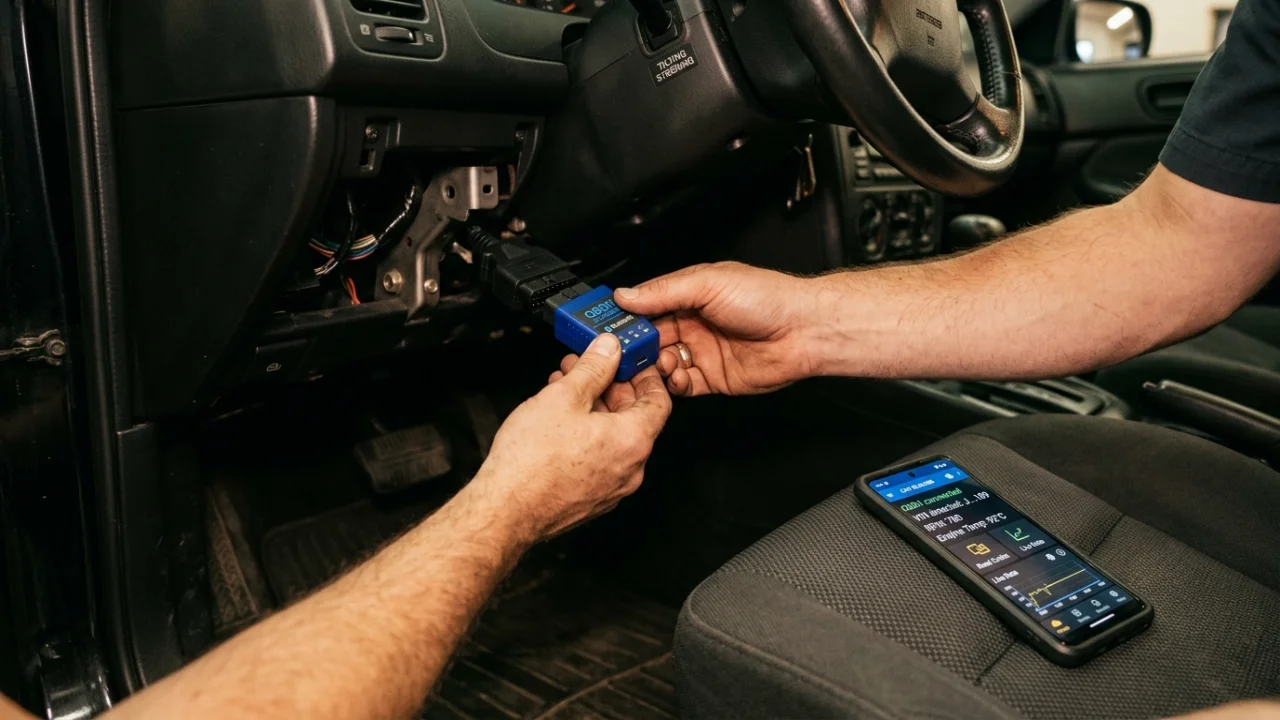
Every car, truck, and SUV sold in the United States since 1996 has an OBD2 port, a trapezoid-shaped 16-pin connector that's almost always tucked under the driver's side dash near the knee bolster. On some vehicles it hides behind a small plastic flap or sits above the pedals, but it's there. That port is a direct line into your car's computers.
When something goes wrong, the engine control module stores a diagnostic trouble code, or DTC. That's the five-character string you've probably seen quoted at you by a parts store employee: P0301, P0420, P0171. The letter tells you the system (P for powertrain, B for body, C for chassis, U for network), and the digits narrow it down from there. P0301 is a cylinder 1 misfire. P0420 is catalytic converter efficiency below threshold. A scanner pulls those codes out and, on better models, tells you what they mean in plain English.
Codes are only half the story. Most scanners also read freeze frame data, a snapshot of engine conditions at the moment the fault triggered: RPM, coolant temperature, fuel trim, vehicle speed. A misfire that only appears at 2,000 RPM under load points somewhere different than one that shows up at idle. Better scanners add live data streaming, so you can watch oxygen sensor voltages swing in real time or check whether fuel trims are drifting rich or lean.
There's also the emissions readiness check, which is genuinely useful if your state does inspections. After you clear codes or disconnect the battery, your car's monitors reset and need a drive cycle to complete. A scanner tells you whether they're ready before you waste a trip to the testing station.
What a scanner can't do is diagnose the car for you. A P0420 code doesn't mean you need a catalytic converter. It means the downstream oxygen sensor isn't seeing the difference it expects, which could be a bad sensor, an exhaust leak, an engine running rich, or yes, a failed cat. The code narrows the search. You still have to think.
Best OBD2 Scanners for 2026
BlueDriver Bluetooth Pro: Best Overall
The BlueDriver is a small blue dongle that plugs into the OBD2 port and talks to a free iOS or Android app. What sets it apart is the repair report feature: instead of just handing you a code, it generates a document that lists the most likely fixes for that code on your specific year, make, and model, drawn from a database of verified repairs. For a DIYer staring at an unfamiliar code, that's the difference between guessing and having a starting point. It also reads ABS, airbag, transmission, and other manufacturer-specific modules on most vehicles, which is territory that cheap generic readers can't touch. At roughly $100 with a 4.7-star average across a very large review base, it's the one to get if you plan to actually fix things yourself. The tradeoff is that it's useless without a charged phone.
FIXD OBD2 Scanner: Best for Beginners
FIXD takes the same Bluetooth dongle approach but aims squarely at people who don't know a fuel trim from a fuel filter. The app translates codes into everyday language, rates the severity so you know whether to pull over or drive to work and deal with it Saturday, and gives a rough repair cost estimate. It'll also track maintenance intervals and send alerts. Around $50 with a 4.5-star rating, it's a good gift for a new driver or anyone who wants reassurance more than raw data. Some of the deeper features sit behind a paid subscription tier, which is worth knowing before you buy, but the core code reading and clearing is free.
ANCEL AD310: Best Budget Pick
The AD310 is about as simple as an OBD2 scanner gets, and that's the point. It's a corded handheld with a small backlit screen, four buttons, and no app, no Bluetooth, no subscription, and no batteries. Plug it in, turn the key, read the code, clear the code. It handles generic powertrain codes, freeze frame data, I/M readiness, and live data on the basic PIDs. It won't read ABS or airbag modules and it won't tell you what to fix. But at roughly $13 with a 4.4-star rating from an enormous number of buyers, it's the cheapest way to stop paying someone else to read your check engine light. Keep it in the glovebox alongside the rest of your car emergency kit checklist items.
Innova CarScan Pro 5610: Best Advanced Option
If you're doing your own brake jobs and chasing intermittent electrical gremlins, the 5610 is a real scan tool rather than a code reader. It has a color screen, reads ABS and SRS codes, performs battery and charging system tests, does oil light and battery reset procedures, and includes bidirectional-adjacent functions that let you go further than reading. It also supports live data graphing on the device itself, so you're not squinting at a phone under the hood. At around $200 with a 4.3-star rating, it's the most expensive pick here, and it's overkill if all you want is a code number. For someone who works on multiple cars or wants to skip the shop for routine diagnostics, it earns its price back quickly.
Autel AutoLink AL319: Best Compact
The AL319 splits the difference between the ANCEL and the app-based dongles. It's a corded handheld with a color-coded LED and audible tone system that tells you the emissions status at a glance: green means you're good, red means there's a stored code. It reads and clears codes, shows freeze frame data, and includes a DTC lookup library on the device. Around $30 with a 4.5-star rating, it's a sensible upgrade over the bare-bones budget readers if you want a slightly nicer screen and a built-in code library without moving to a phone-dependent setup. It's also small enough to live in a door pocket permanently.
How to Choose the Right Scanner
Bluetooth versus corded. Bluetooth dongles are cheaper to manufacture, so you get more software for your money, and phone screens are bigger and nicer than anything built into a $50 handheld. The catch is dependency: a dead phone, an app update that breaks pairing, or a discontinued app can turn your scanner into a paperweight. Corded readers keep working forever with no account and no connection. If you want a tool that'll sit in the trunk untouched for two years and still work when you need it, go corded.
Basic versus advanced. Ask yourself what you'd actually do with the information. If the answer is "decide whether to drive it to the shop or call a tow," a $13 reader is enough. If the answer is "diagnose and fix it in my driveway," you want live data, ABS and SRS access, and manufacturer-specific codes, which means spending $100 or more. Buying a $200 scan tool to read a gas cap code is money you could put toward the repair.
Vehicle coverage. Generic OBD2 codes work on everything from 1996 onward. Manufacturer-specific codes and non-engine modules are where coverage varies a lot, especially on European brands and newer vehicles with heavy module counts. Check the compatibility list for your specific year and model before buying anything in the higher price tiers.
Update policy. Standalone scan tools sometimes need firmware updates for newer vehicles, and some manufacturers charge for them. App-based scanners usually update for free but may gate features behind a subscription. Know which model you're signing up for.
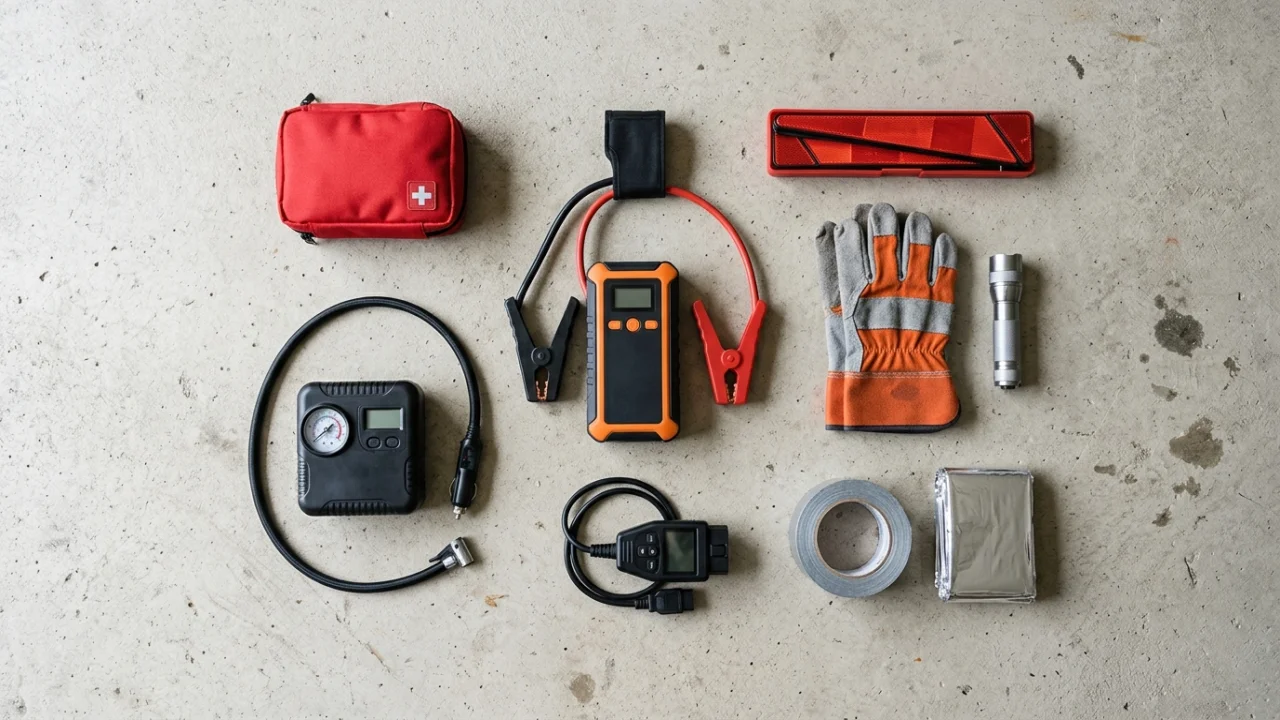
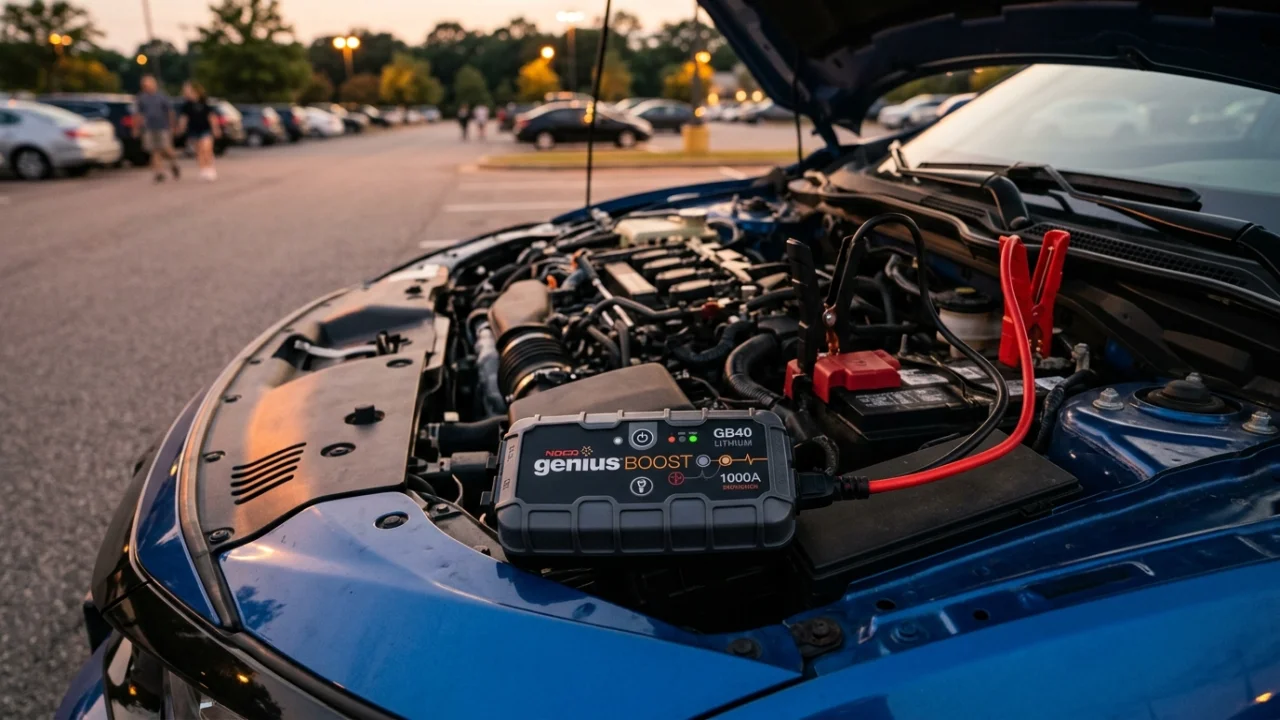
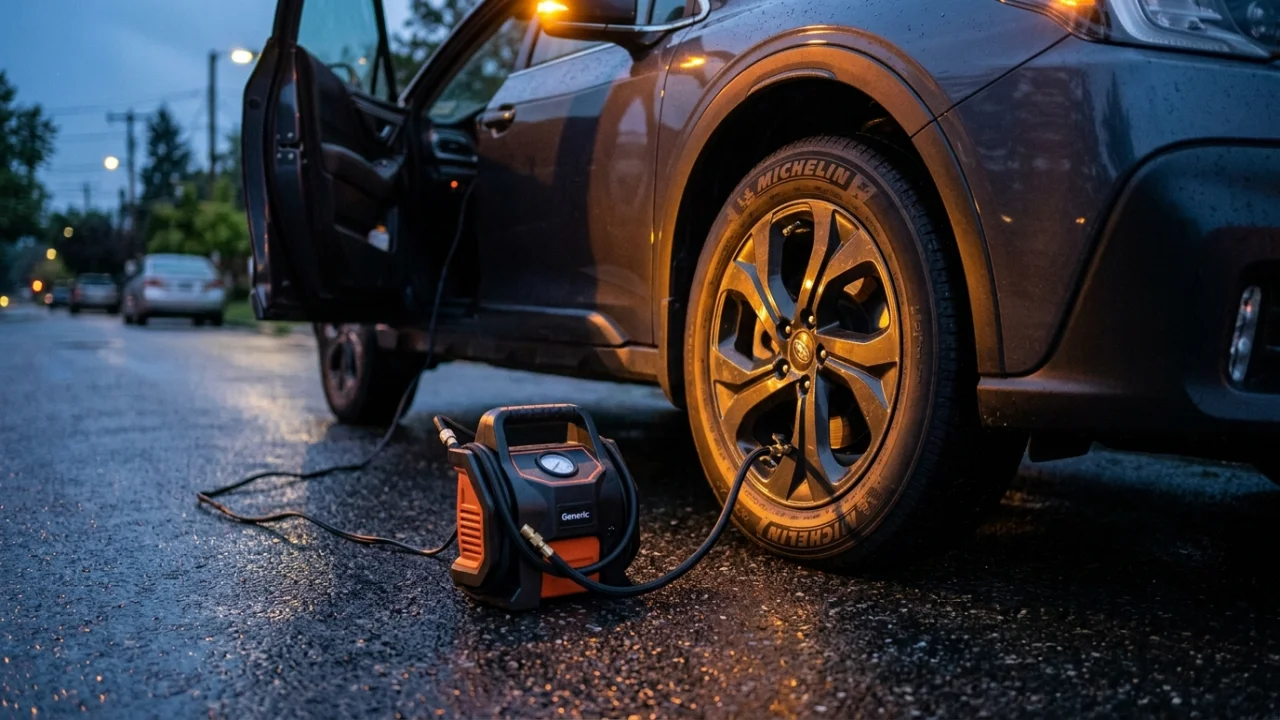
A scanner is one piece of a sensible trunk setup. It pairs naturally with the best portable jump starters and the best portable tire inflators, which cover the two most common roadside failures. Our roundup of essential car emergency and diagnostic tools covers how these pieces fit together.
When to DIY vs Visit a Shop
A scanner is great at telling you which system is unhappy. It's not great at telling you what a repair costs, whether a part is genuinely bad or just reporting bad, or whether two codes share one root cause. Those calls take experience.
Reasonable to handle yourself: a loose gas cap triggering an EVAP code, a failed oxygen sensor on an accessible exhaust run, a mass airflow sensor that needs cleaning, a single-cylinder misfire that traces to an obvious coil or plug, and clearing codes after you've made a repair to confirm the fix held.
Worth handing off: anything involving the airbag or restraint system, since a mistake there has real safety consequences. Intermittent electrical faults, which often need an oscilloscope and a wiring diagram rather than a code reader. Transmission codes, because internal diagnosis usually means pulling the pan or the unit. And anything touching advanced driver assistance systems, where cameras and radar units need calibration after even minor work.
That last category matters more than people expect. If your car has been in a collision, even a low-speed one, the sensors behind the bumper cover and windshield frequently need recalibration, and a scanner that reads codes can't perform that procedure. Structural and cosmetic damage belongs with a shop that does collision repair properly. The same goes for panel alignment, paint matching, and frame measurements, which is what auto body repair specialists handle every day. A code reader is a diagnostic tool, not a body shop.
The honest math on ownership: shops commonly charge $100 to $150 for a diagnostic scan, and many will credit it toward the repair only if you have them do the work. Owning a $30 reader means you walk in already knowing the code, which makes it much harder for an estimate to drift somewhere you didn't expect. That alone is usually worth the purchase.
Frequently Asked Questions
Do OBD2 scanners work on all cars?
Any gasoline vehicle sold in the US from model year 1996 onward, and diesels from 2008 onward, has a standardized OBD2 port and will work with any OBD2 scanner for generic codes. Access to manufacturer-specific codes and modules like ABS, airbag, and transmission varies by scanner and by vehicle, and coverage tends to be thinner on European brands. Older pre-1996 vehicles use OBD1 systems with proprietary connectors and need different equipment entirely.
Can an OBD2 scanner turn off the check engine light?
Yes. Every scanner listed here can clear stored codes, which turns the light off. The important caveat is that clearing a code doesn't fix anything. If the underlying fault is still there, the light comes back, usually within a few drive cycles. Clearing also resets your emissions readiness monitors, so if you're headed for an inspection, you'll need to complete a full drive cycle before the car will pass.
What's the difference between OBD2 codes and manufacturer-specific codes?
Generic OBD2 codes are standardized across all manufacturers and typically start with P0. They cover emissions-related powertrain faults and mean the same thing on a Honda as they do on a Ford. Manufacturer-specific codes usually start with P1 and higher, or appear under body, chassis, and network categories, and they're defined by the automaker for systems the standard doesn't cover. Reading those requires a scanner with enhanced coverage for your brand, which is one of the main things you pay for when moving up in price.
Do I need a Bluetooth or wired OBD2 scanner?
Get Bluetooth if you want detailed repair guidance, live data on a large screen, and regular software improvements, and you're comfortable depending on your phone. Get wired if you want a tool that works instantly with no pairing, no app, and no account, which is the better choice for a glovebox backup or for anyone who'd rather not manage another app. Plenty of people own both: a cheap wired reader that lives in the car and a Bluetooth unit for actual diagnostic work.
When should I skip the scanner and go straight to a mechanic?
If the check engine light is flashing rather than steady, that signals an active misfire that can damage the catalytic converter, so stop driving and get it looked at. Also skip the DIY route for overheating, loss of brake assist, steering that feels wrong, transmission slipping, any airbag warning, and anything following a collision. In those cases the code is not the useful information; the physical inspection is. Read the code if you want context for the conversation, then let a shop handle it.