A car body repair estimate is a written document that breaks down the projected cost of repairing vehicle damage. It's not a final bill — it's an initial assessment based on visible damage at the time of inspection.
Estimates are generated through a combination of physical inspection and software. Most professional body shops use estimating platforms such as CCC ONE, Mitchell, or Audatex — programs that contain database pricing for hundreds of thousands of parts and calculate labor times based on industry-standard guidelines. The result is a structured, printed or emailed cost breakdown listing every repair operation, part, and material.
The key word is "visible." An estimate reflects damage a technician can observe without disassembling the vehicle. Once repair begins and panels are removed, additional damage may be discovered, leading to a supplemental estimate — which is a normal and expected part of the process for anything beyond minor cosmetic damage.
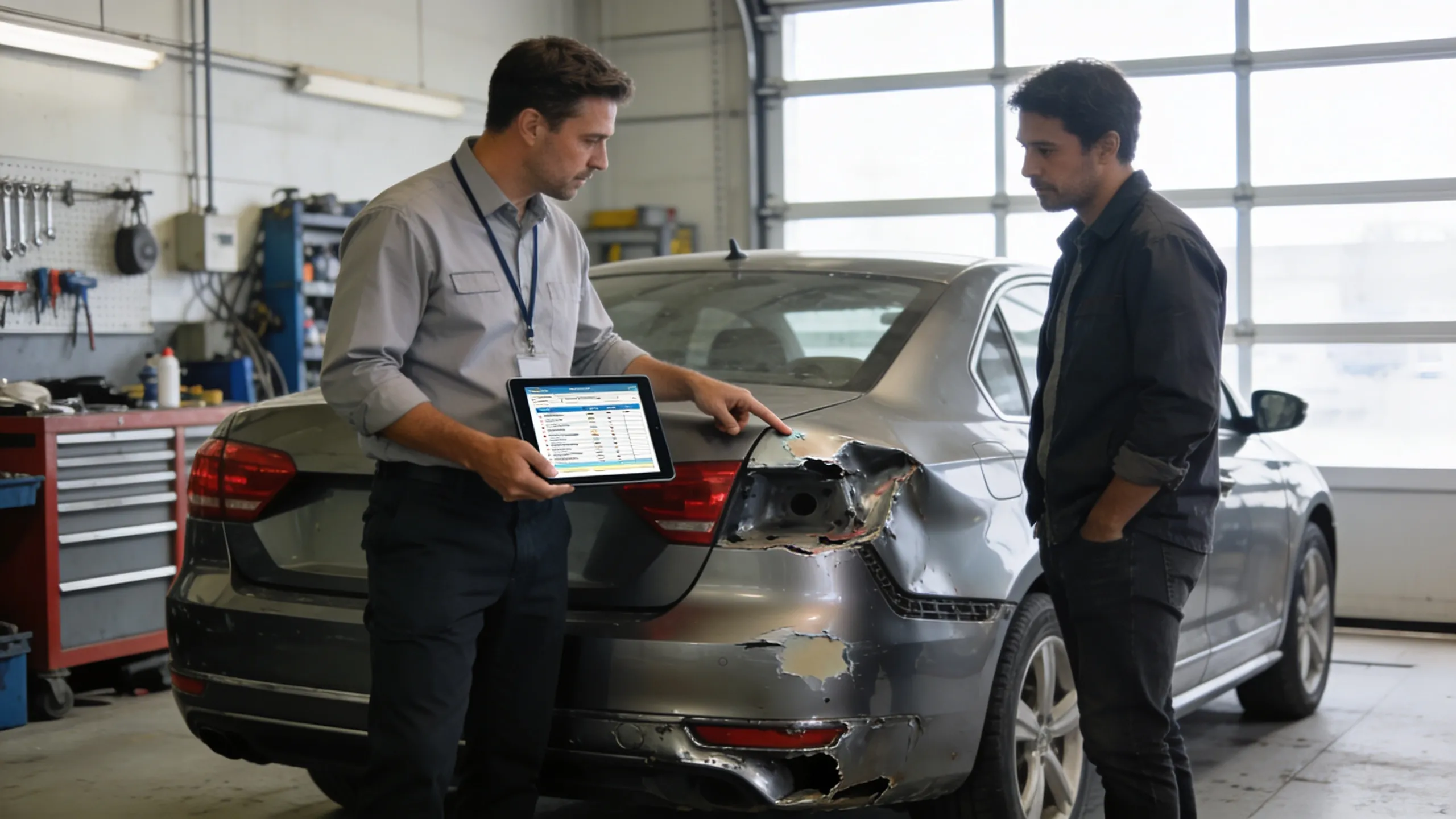
Most shops offer free car body repair estimates by appointment, typically completed in 30 to 60 minutes. A damage appraiser walks around the vehicle, notes every affected area, and enters the data into the estimating system. Car owners aren't required to leave the vehicle; most initial assessments can be completed while the owner waits.
What's Included in a Standard Body Shop Estimate
Understanding what a body shop estimate contains makes it far easier to compare quotes from multiple shops and catch errors or omissions. A complete estimate document typically includes the following sections.
Labor charges
Labor is usually the largest cost component in any body repair estimate. Shops charge an hourly labor rate that varies by market. In 2026, national averages range from $55 to $130 per hour, with major metropolitan areas at the high end and rural markets at the low end.
Labor times aren't arbitrary. The estimating software pulls standard repair times from industry databases, representing how long a qualified technician should take to complete each operation. These are listed in hours or fractions of hours next to each repair line.
There are typically three categories of labor on an estimate:
- Body labor: Structural straightening, metal work, dent repair, and panel replacement
- Refinish labor: Sanding, priming, painting, and clear coat application
- Mechanical labor: When damage affects mechanical components such as cooling systems, sensors, or lights
Parts costs
Each replacement part appears as a separate line item on the estimate, listed by part number, part type, and price. Parts fall into a few categories:
OEM parts (Original Equipment Manufacturer) are produced by the vehicle's manufacturer or approved suppliers. They carry a guarantee of exact fit and quality but cost 20 to 50% more than alternatives.
Aftermarket parts are made by third-party manufacturers. Quality ranges widely. Reputable aftermarket parts can deliver solid results at lower cost; lower-quality pieces may require fitment adjustments or create finish problems.
Recycled or used OEM parts come from salvage vehicles and are OEM quality at a reduced price. Availability depends on the specific part and local market.
Insurance companies commonly authorize aftermarket or recycled parts to reduce claim costs. Car owners have the right to discuss parts choices with both the shop and their adjuster.
Paint and materials
Refinishing costs include materials like primer, base coat paint, clear coat (the transparent protective layer applied over color paint), and blending materials. These appear as a separate line item, often calculated as a percentage of refinish labor.
"Blending" means gradually fading new paint into the surrounding original paint so the repaired area matches the rest of the vehicle. Blending adds cost but is often necessary on panels adjacent to the repair area. When an estimate omits blending that a shop would realistically need to perform, that's worth questioning.
Sublet charges and taxes
Some operations require equipment or expertise beyond what the shop provides in-house. Common sublet work includes wheel alignment, glass replacement, and ADAS (Advanced Driver Assistance Systems) sensor recalibration — the process of resetting cameras and radar sensors that mount to body panels and must be recalibrated after any collision that moves or replaces those components. Omitting ADAS calibration from an estimate on a qualifying vehicle is a significant oversight. These sublet charges appear as separate line items.
Sales tax on parts and materials appears at the bottom of the estimate, and shop supply fees (chemicals, sandpaper, masking materials) often appear as a flat charge or small percentage of the total.
Average Body Repair Costs by Damage Type (2026)
Understanding average body repair costs by damage category helps car owners evaluate whether a car body damage estimate is in a reasonable range before they've spoken to multiple shops.
| Repair Type | Average Cost Range | Typical Timeline |
|---|---|---|
| Minor dent, PDR (paint intact) | $75–$300 | Same day – 1 day |
| Major dent, traditional repair | $300–$800 | 2–4 days |
| Surface scratch (clear coat only) | $150–$400 | 1–2 days |
| Deep scratch (primer exposed) | $400–$900 | 2–4 days |
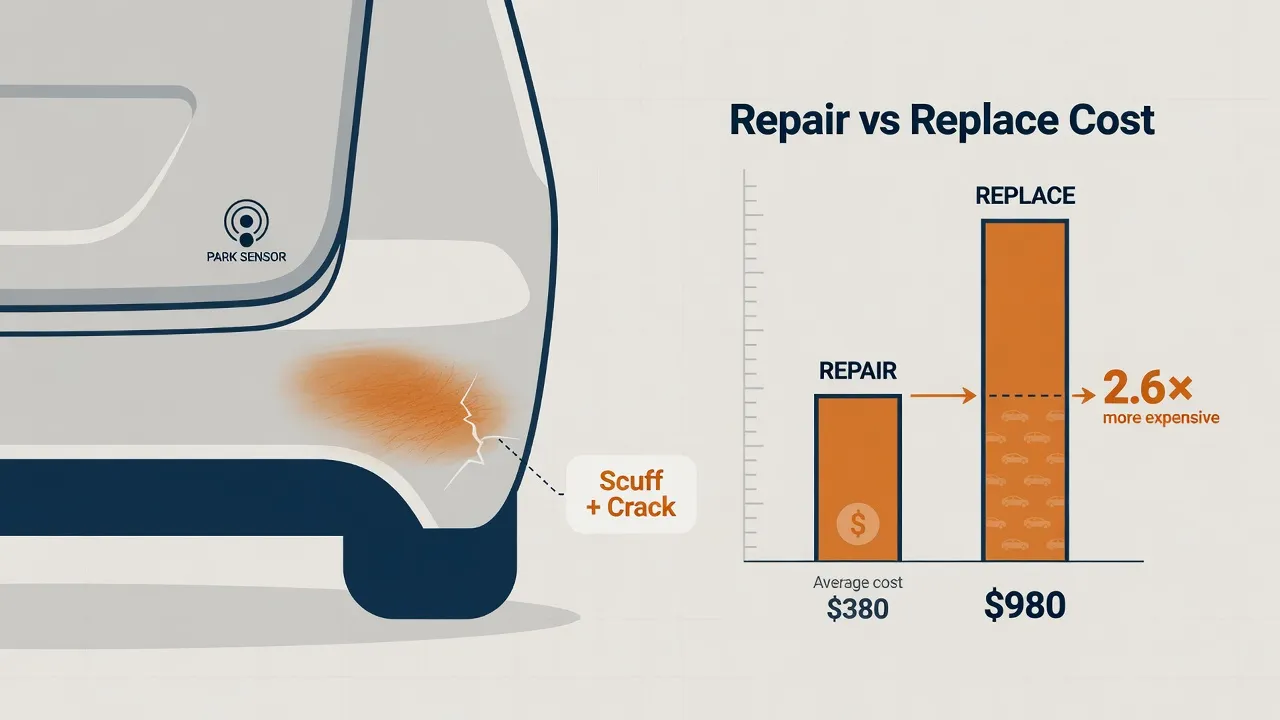
| Bumper repair (minor) | $300–$600 | 1–2 days |
| Bumper replacement | $800–$1,800 | 2–4 days |
| Fender repair | $500–$1,200 | 2–5 days |
| Door panel repair | $400–$1,100 | 2–5 days |
| Hood repair or replacement | $900–$2,200 | 3–6 days |
| Rear quarter panel repair | $1,000–$2,500 | 4–7 days |
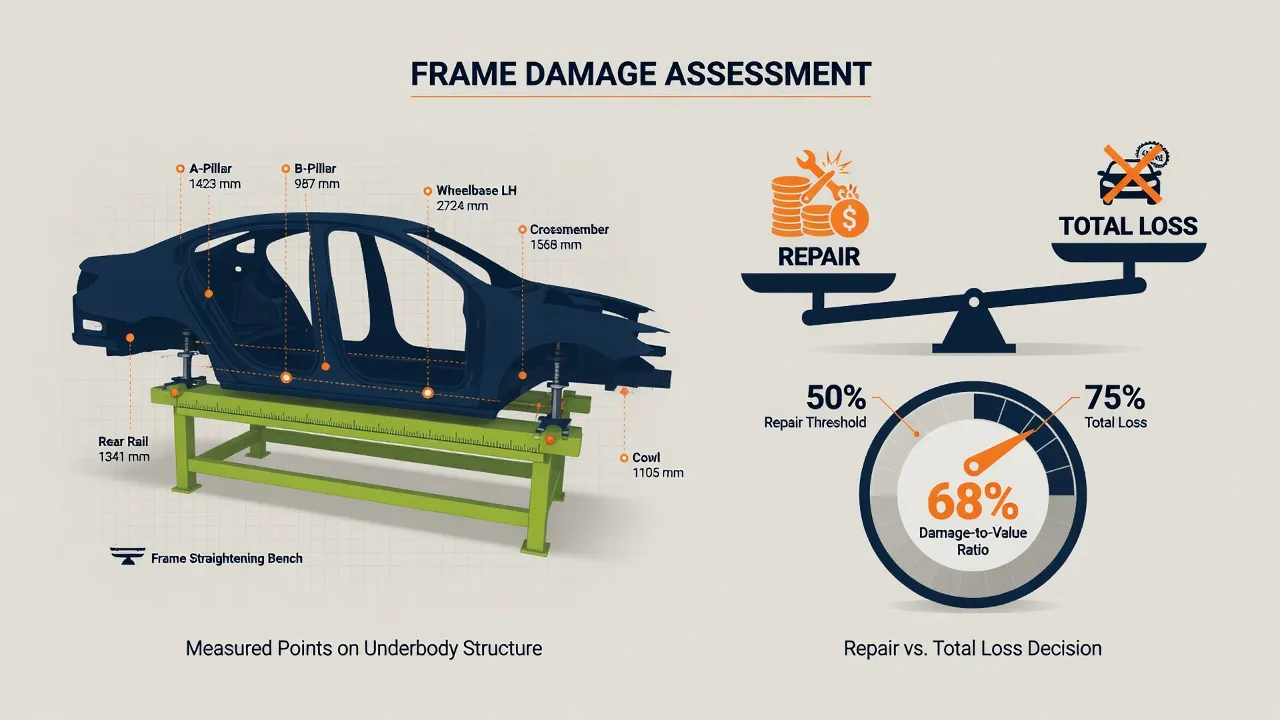
| Structural/frame repair | $1,000–$4,000+ | 5–10 days |
Costs reflect 2026 national averages. Actual pricing varies by 20 to 40% based on geographic market, vehicle make and model, and damage severity.
How to Get a Free Car Body Repair Estimate
Getting a free car body repair estimate from a shop near you involves a few straightforward steps. Understanding the process in advance makes it easier to gather accurate, comparable quotes.
Step 1: Document the damage thoroughly
Before visiting any shop, photograph all damage in detail. Take photos in good lighting from multiple angles — close-up shots of each damaged area and wider shots showing the full panel in context. This documentation protects the car owner's interests and gives shops consistent information to work from.
Step 2: Contact two to three shops for appointments
Most reputable auto body shops offer free estimates by appointment. Calling ahead is standard; walk-in estimates are possible at some shops but availability varies. When calling, have ready: the vehicle year, make, model, and a basic description of the damage.
Car owners dealing with an insurance claim should clarify whether the insurer requires specific shops. In most states, car owners have the legal right to choose their own repair facility, regardless of any "preferred shop" list an insurer suggests. The insurer's list is a recommendation, not a requirement.
Step 3: Be present for the estimate inspection
Attending the estimate appointment in person creates an opportunity to ask questions, understand what the estimator is noting, and clarify any concerns. Ask the estimator to walk through the estimate document and explain each major section before leaving.
Step 4: Compare estimates on equal terms
When comparing estimates from multiple shops, the goal is to ensure each estimate covers the same scope of work. Comparing total dollar amounts without comparing scope is misleading. One estimate might be lower because it omits blending, uses aftermarket parts, or skips ADAS calibration that another shop included.
A useful approach: look at the same line items across estimates rather than just totaling each document.
How to Read a Body Shop Estimate
Knowing how to read a body shop estimate lets car owners catch errors and ask informed questions before authorizing work.
Verify vehicle information first. The top of every estimate lists the vehicle by year, make, model, VIN (Vehicle Identification Number), and color. Confirming this information matches the actual vehicle ensures parts pricing is based on the correct car.
Review each repair line item. Each line represents one discrete repair operation. It should show a description of the work, whether the part is OEM, aftermarket, or used, the part cost, labor time in hours, and the labor cost at the shop's rate. If a panel is being replaced, adjacent operations for priming, painting, and blending should also appear. Missing paint operations on a replacement panel are worth questioning.
Look for the supplement acknowledgment. Most estimates from reputable shops include language acknowledging that hidden damage may be discovered during repair and that a supplemental estimate will be provided before proceeding. That's a positive sign — it means the shop operates transparently.
Insurance Estimate vs. Body Shop Estimate
One of the most common sources of confusion is the difference between an insurance company's damage estimate and a body shop's estimate. These two documents can differ significantly.
Insurance adjusters use the same estimating software as body shops — CCC ONE or Mitchell — but apply their contracted labor rates with Direct Repair Program (DRP) shops, which are lower than standard independent-shop rates. Insurers also default to aftermarket or recycled parts to reduce claim costs. The result is often a lower estimate than what an independent shop quotes for the same damage.
This gap is common and expected. It doesn't mean either party is wrong. The difference is resolved through the supplement process. When the shop's repair scope exceeds the insurance estimate, the shop documents the gap and submits it to the adjuster for review and approval. Reputable shops manage this process directly with the insurer and keep the car owner informed.
Maria's experience after a rear-end collision
Maria's insurer issued an estimate of $1,850 for rear bumper replacement, tailgate repair, and paint after another driver rear-ended her. The body shop she chose found additional damage to the backup camera mount, rear sensor array, and a cracked light housing once disassembly began. The shop submitted a supplement for $620, the insurer approved most of it, and the final total came to $2,390. Maria paid only her $500 deductible. The shop communicated every addition before proceeding — which is exactly how a well-run supplement process works.
Red Flags to Watch for in a Body Shop Estimate
Not all estimates reflect legitimate repair planning. Certain patterns suggest a shop may be cutting corners, underquoting to win the job, or providing an assessment that won't produce a quality repair.
Red flag 1: Unusually low total with no explanations
An estimate significantly below others — without a clear reason such as a simpler repair scope or clear parts difference — is worth scrutinizing. Some shops quote low to win authorization, then seek supplements later or deliver inferior work.
Red flag 2: Missing operations for adjacent panels
When a panel is replaced or repainted, adjacent panels usually require blending to achieve a consistent color match. An estimate that replaces a door but shows no blending on the adjacent fender and bumper may produce a visible color mismatch.
Red flag 3: No mention of ADAS calibration on a modern vehicle
Any vehicle built after approximately 2018 with safety features such as automatic emergency braking, lane departure warning, or backup cameras may require sensor recalibration after a collision. An estimate that doesn't address ADAS on a qualifying vehicle is incomplete.
Red flag 4: No supplement acknowledgment
A legitimate estimate for anything beyond minor cosmetic damage should acknowledge that hidden damage may be found and commit to communicating before proceeding. An estimate presented as a firm final price for major collision damage without this caveat is unrealistic.
Red flag 5: Pressure to authorize immediately
A reputable shop presents an estimate and lets the car owner decide. Pressure tactics to authorize quickly — or suggestions that the estimate will change if the car owner "shops around" — are signs of a shop to avoid.
How Supplements Work After the Initial Estimate
A supplement is an addition to the original estimate, issued when hidden damage or required operations are discovered after repair begins. Supplements are a normal part of the body repair process for most collision jobs.
The supplement process step by step
- Repair begins under the original authorized estimate
- The shop discovers additional damage when panels are removed
- The shop stops work and documents the new damage with photos and descriptions
- The shop submits a supplement request to the adjuster (for insurance claims) or contacts the car owner directly (for out-of-pocket repairs)
- The adjuster or car owner reviews and approves or negotiates the supplement
- Repair proceeds once the supplement is approved
Reputable shops don't proceed with unauthorized work. If a shop presents a larger bill at vehicle pickup without prior approval, that's a significant concern.
James's supplement scenario
James brought his truck to a body shop after a moderate front-end collision. The initial estimate was $2,900 for hood replacement, bumper assembly replacement, and headlight replacement. During disassembly, the shop found that the radiator support — a structural component behind the bumper — was bent and required straightening. The shop called James with photos and an explanation, provided a written supplement for $480, and waited for his approval before proceeding. Total repair came to $3,380. James had already set aside a small buffer for exactly this scenario after reading about the supplement process beforehand.
Body Repair Estimate Near Me: Choosing the Right Shop
Finding a shop for a body repair estimate near you involves more than using the closest location. Certain factors indicate a shop is equipped and qualified to produce accurate estimates and quality repairs.
I-CAR Gold Class certification is the industry's primary training benchmark. I-CAR (Inter-Industry Conference on Auto Collision Repair) Gold Class shops require technicians to complete ongoing training in collision repair methods, including modern vehicle materials and ADAS requirements. Gold Class shops represent a higher level of repair competency than non-certified facilities.
OEM certifications indicate a shop meets specific manufacturer standards. Tesla, BMW, Audi, Toyota, and other manufacturers run certification programs for shops that invest in the right equipment and training. For newer or complex vehicles, OEM-certified shops are better positioned to restore the car to factory specifications.
In-house ADAS calibration capability is increasingly important. A shop that must sublet all calibration work adds time and sometimes cost. Asking directly — "do you perform ADAS calibration in-house?" — reveals whether the shop is set up for modern vehicle repair.
Key Takeaways
A car body repair estimate is a detailed cost projection, not a final bill. Understanding what it contains and how it's generated gives car owners the ability to compare quotes accurately, work through the insurance process effectively, and make informed repair decisions.
- Get two to three estimates for any repair over $500. Compare scope, not just totals.
- Free car body repair estimates are standard industry practice. No obligation comes with requesting one.
- Insurance estimates and body shop estimates often differ. The supplement process resolves that gap — it's normal, not suspicious.
- Know the red flags: missing operations, absent ADAS acknowledgment, and pressure to authorize quickly are worth questioning.
- Supplements are expected for anything beyond minor cosmetic damage. A shop that communicates before proceeding is operating correctly.
- Certified shops with I-CAR or OEM credentials are better positioned to produce accurate estimates and quality repairs.
The estimate process can feel opaque when a car owner encounters it for the first time. With the information in this guide, that process becomes something you can navigate with confidence.
Sources
- CCC Intelligent Solutions — collision repair cost benchmarks and industry data
- Insurance Information Institute — auto insurance and repair cost statistics
Frequently Asked Questions
How much does a car body repair estimate cost?
Most reputable auto body shops provide estimates at no charge. Getting a free car body repair estimate from two or three local shops is standard practice and creates no obligation to choose that shop for the repair. A shop that charges for a basic damage estimate is an outlier in the industry.
How long does it take to get a car body repair estimate?
A standard estimate appointment takes 30 minutes to one hour for typical collision or cosmetic damage. More complex damage — involving multiple panels, structural components, or ADAS systems — may take longer or require the shop to keep the vehicle for a more thorough inspection. Many shops can provide an estimate the same day as the appointment.
Why is the insurance estimate lower than the body shop estimate?
Insurance companies typically apply their contracted labor rates and default to aftermarket or recycled parts to control claim costs. Body shops that aren't in the insurer's Direct Repair Program (DRP) often charge higher labor rates and recommend OEM parts. The resulting gap is common and is resolved through the supplement process, where the shop documents the additional costs and the insurer reviews them.
Can a car body repair estimate change after work begins?
Yes. Initial estimates reflect visible damage at the time of inspection. When a shop removes exterior panels, they may find hidden damage to structural components, sensors, brackets, or other parts. A reputable shop stops work, documents the new damage, and obtains approval before proceeding. This is called a supplement. Car owners should expect the final cost on any moderate to major repair to differ somewhat from the initial estimate.
Do I need to get an estimate before filing an insurance claim?
In most cases, car owners file a claim first and the insurance company arranges an adjuster inspection. Getting an independent estimate from a body shop before or alongside the insurance appraisal is entirely reasonable. The shop's estimate provides a useful benchmark and often reveals scope differences. Car owners aren't required to accept the insurance company's estimate as the final word on repair cost.