What Drives Auto Body Repair Cost?
Auto body work pricing involves multiple cost components that interact in ways most vehicle owners don't anticipate. Four main variables shape any estimate.
Labor Rates Vary by 40-60% Across the Country
The single largest variable in auto body repair cost is the shop's labor rate. In 2026, national averages range from $55 to $130 per hour, with significant geographic variation:
- Major metros (Los Angeles, New York, Chicago, Seattle): $100-$130/hour
- Mid-size cities (Denver, Atlanta, Phoenix): $75-$100/hour
- Small cities and rural areas: $55-$75/hour
A four-hour repair can swing from $220 to $520 in labor costs alone based on location. Regional "average cost" figures are nearly useless for individual market predictions.
Parts Costs: OEM vs. Aftermarket
Every replaced panel, bumper, bracket, or light assembly adds to repair costs. Body shops source parts in two main categories:
OEM parts (Original Equipment Manufacturer) are made by the vehicle's manufacturer or approved suppliers. They're guaranteed to fit, match factory specifications, and preserve warranties. They typically cost 20-50% more than alternatives.
Aftermarket parts are made by third-party manufacturers. Quality varies widely. Well-made aftermarket pieces can produce excellent results at lower cost. Lower-quality pieces may require fitment adjustments or produce subpar finishes.
Many insurance companies default to authorizing aftermarket parts. In some states, car owners have legal rights to request OEM parts through direct communication with adjusters. This choice can shift repair estimates by hundreds of dollars.
Paint and Materials
Refinishing — applying primer, base coat, and clear coat — adds real cost to most body repairs. A single panel repaint costs $300 to $900 in materials and labor alone.
Color complexity affects pricing. Standard solid colors are least expensive. Metallic and pearl finishes cost more due to precise mixing requirements and multiple coats for correct matching. Factory two-tone or specialty finishes cost most to match.
"Blending" — gradually fading new paint into surrounding panels for smooth matching — adds cost but dramatically improves final results. Shops that skip blending often produce repairs with visible color differences under certain lighting. You'll notice. So will a future buyer.
Damage Severity
The relationship between visible damage and actual repair cost isn't linear. A 4-inch dent in a door might cost $250 if the paint is intact and the panel is easily accessible. That same dent near a body line, with cracked paint and a misaligned door, might cost $900.
Hidden damage — discoverable only during repair — commonly generates supplement estimates that increase final costs. Structural components, impact absorbers, and sensor brackets behind exterior panels may sustain invisible damage. Reputable shops flag potential hidden damage and communicate before proceeding when they find it.
Auto Body Repair Cost by Repair Type (2026 National Averages)
These ranges reflect 2026 national average costs across various shop types and geographic markets. Actual costs may be 20-40% higher in major metropolitan areas and 15-25% lower in rural markets.
| Repair Type | Average Cost Range | Typical Timeline |
|---|---|---|
| Minor dent (PDR, paint intact) | $75-$300 | Same day - 1 day |
| Major dent (traditional repair) | $300-$800 | 2-4 days |
| Surface scratch (paint touch-up) | $150-$400 | 1-2 days |
| Deep scratch (primer exposed) | $400-$900 | 2-4 days |
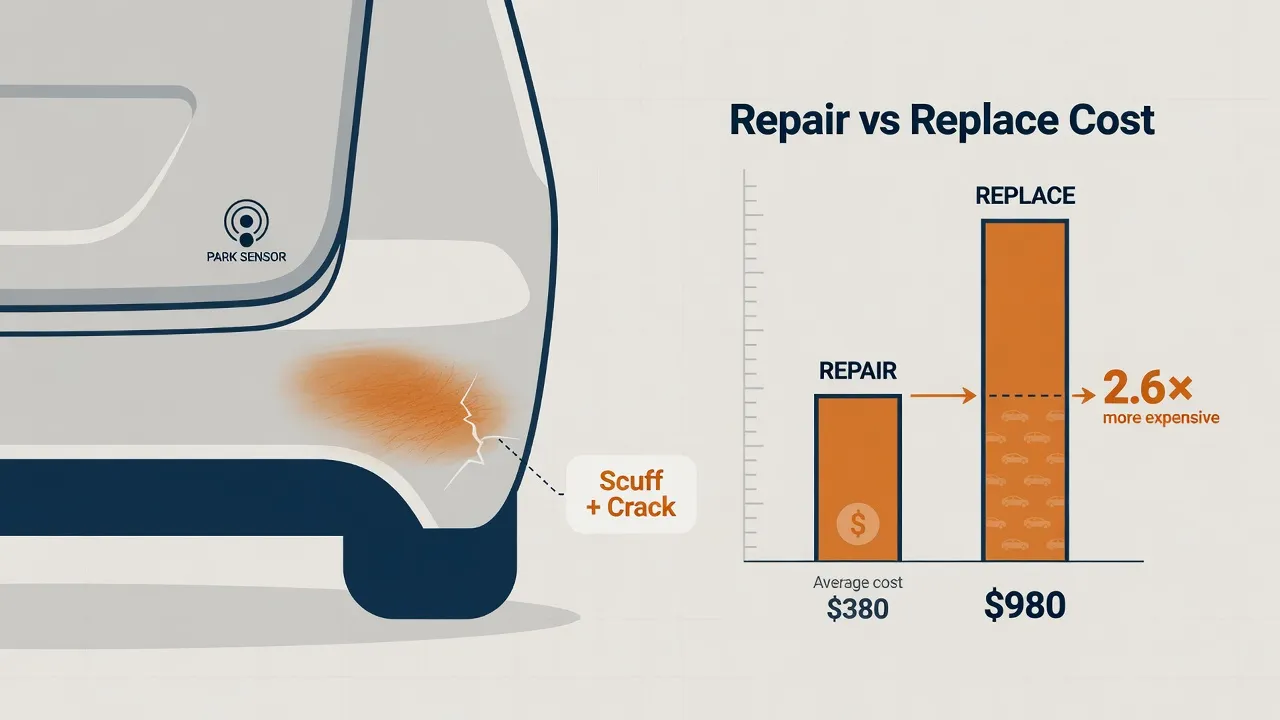
| Bumper repair (minor) | $300-$600 | 1-2 days |
| Bumper replacement | $800-$1,800 | 2-4 days |
| Fender repair | $500-$1,200 | 2-5 days |
| Fender replacement | $900-$2,000 | 3-6 days |
| Door repair (minor to moderate) | $400-$1,100 | 2-5 days |
| Door replacement | $1,200-$2,800 | 4-7 days |
| Hood repair | $400-$1,000 | 2-4 days |
| Hood replacement | $800-$2,000 | 3-5 days |
| Full panel repaint | $400-$1,000 | 2-4 days |
| Rear quarter panel repair | $1,000-$3,000 | 5-10 days |
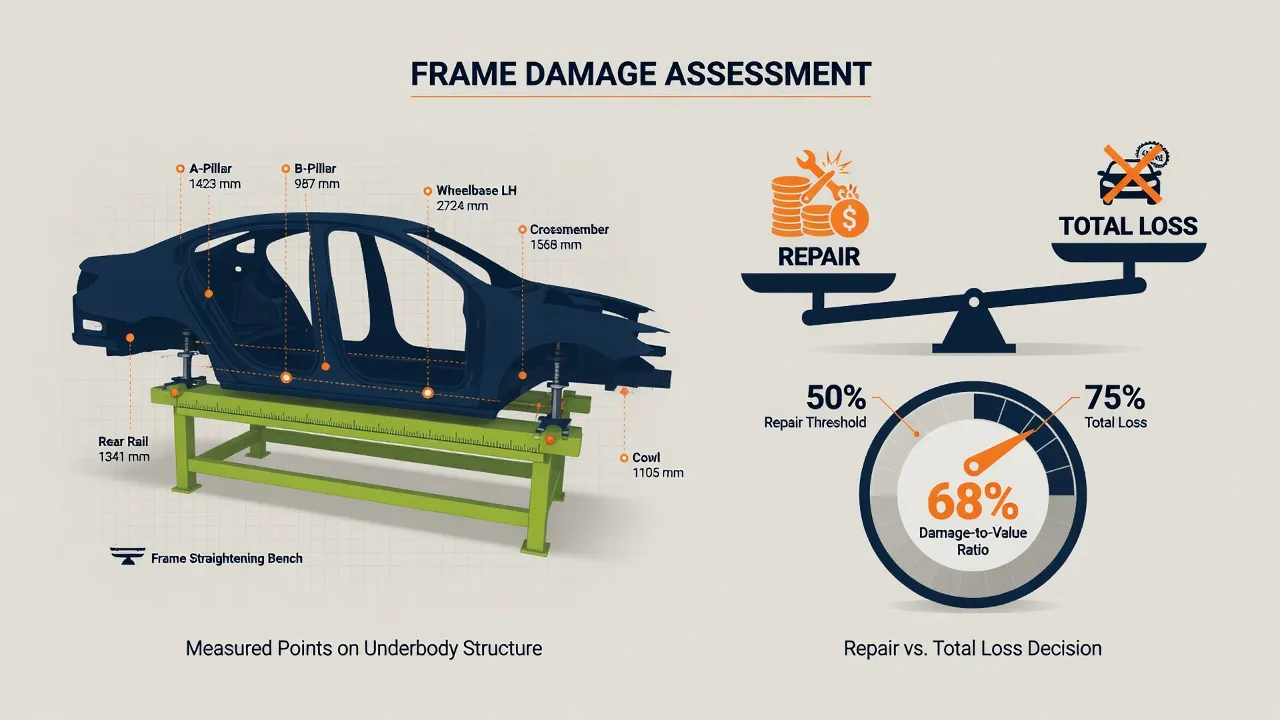
| Structural/frame repair | $600-$10,000+ | 5-21 days |
Note: These ranges include parts and labor. Vehicle make, model, and year affect parts costs considerably. Luxury and European vehicles typically fall in the upper range or above it.
Dent Repair: PDR vs. Traditional Body Work
Dent repair is one of the most common auto body services — and one of the most misunderstood when it comes to pricing. The repair method determines both cost and outcome.
Paintless Dent Repair (PDR)
Paintless Dent Repair uses specialized metal rods and tools to push dents back into shape from behind the panel, without body filler, primer, or repainting. When successful, PDR preserves the factory paint finish completely.
PDR costs $75 to $300 for a single dent, with same-day turnaround in most cases. It's the right choice for:
- Round door dings and parking lot dents
- Hail damage (where dozens of dents can be efficiently repaired)
- Dents on flat, accessible panels with intact paint
PDR is unsuitable for dents with cracked or chipped paint, sharp creases, damage on body lines, or fiberglass and carbon fiber panels. Attempting PDR on ineligible damage can make things worse.
Traditional Dent Repair
When PDR isn't viable, traditional repair involves sanding the damaged area, applying body filler, sanding to shape, priming, and repainting. This costs $300 to $800 per panel for typical damage, more for complex panels or large areas.
Slower and more expensive. But necessary for damage PDR can't address.
Bumper Repair and Replacement Costs
Bumpers are among the most commonly damaged parts on vehicles. They're also more complex than they look. Modern bumpers often contain sensors for parking assistance, backup cameras, and adaptive cruise control — components that considerably increase replacement costs.
Bumper repair vs. replacement is a judgment call based on damage severity:
- Repairable (minor cracks, scuffs, light warping): $300-$600, 1-2 days
- Replacement needed (major cracking, structural damage, destroyed mounting): $800-$1,800, 2-4 days
Vehicles with bumper-integrated sensors — standard on most vehicles built after 2018 — should budget for sensor recalibration. ADAS recalibration typically adds $150 to $400 to bumper replacement.
Scratch and Paint Damage: What Determines the Cost?
Scratches are highly variable in cost. They range from surface-level scuffs that barely affect paint to deep gouges reaching bare metal. Scratch depth determines the repair process and the price.
Auto body paint consists of four layers:
- Primer: the adhesion layer applied to bare metal
- Base coat: the color layer
- Clear coat: the hard, glossy protective outer layer
- Wax/sealant: the outermost protective coat (not part of factory paint)
A scratch affecting only the clear coat can often be polished out with no painting required: $50 to $150. A scratch removing the base coat requires spot painting: $150 to $400. A scratch reaching primer or bare metal requires full-panel preparation and repainting: $400 to $900 per panel.
Quick test: run a fingernail across the mark. If the fingernail catches, the scratch has penetrated the clear coat and likely needs professional attention.
Door and Panel Repair Costs
Door repairs cover a wide range — from small dings and scrapes to full panel replacements after significant impact. Cost depends heavily on whether the door's structure is affected and whether glass, window regulator, or door electronics need attention.
A 14-inch dent with paint transfer can generate estimates ranging from $680 to $1,050 for the same damage, reflecting parts choices and repair philosophy rather than dishonesty.
This is exactly why getting multiple estimates matters. Comparing estimates from local shops for identical damage frequently reveals a 20-40% price spread, even among reputable businesses.
Rear Quarter Panels: The Most Expensive Body Panel Repair
The rear quarter panel — the large body panel behind the rear door — is typically the most expensive non-structural repair. It can't be unbolted like a door or hood. It must be cut, welded, or repaired in place. This labor-intensive process, combined with extended painting and blending, pushes costs to $1,000 to $3,000 for typical damage.
How Body Shop Labor Rates Are Set
Auto body labor rates are unregulated in most states. Shops set their own rates based on local market conditions, technician wages, overhead costs, and shop positioning.
The national average body shop labor rate in 2026 is approximately $75 to $90 per hour, but this average hides significant variation:
- Dealer body shops: $100-$130/hour; OEM-focused, premium positioning
- Insurance DRP shops: $65-$85/hour; volume-focused, insurer-negotiated rates
- Independent shops: $60-$100/hour; wide variation based on reputation and market position
- Franchise shops (national chains): $70-$90/hour; standardized rates, consistent processes
Higher labor rates don't automatically mean higher quality. Technician skill, equipment quality, and repair standards vary independently of hourly rate. The I-CAR Gold Class designation — awarded by the Inter-Industry Conference on Auto Collision Repair — is a more reliable quality indicator than hourly rate alone.
Insurance vs. Out-of-Pocket: Which Makes More Sense?
Whether to file an insurance claim or pay out of pocket depends on a simple calculation. The decision also has long-term implications many car owners overlook.
When paying out of pocket usually makes sense:
- Repair cost is close to or less than the deductible
- The repair is cosmetic and doesn't affect safety or vehicle function
- The driver has a history of claims and concerns about premium increases
- The vehicle is older and has limited market value
When filing a claim usually makes sense:
- Repair cost significantly exceeds the deductible
- Multiple systems (ADAS, structural) need repair
- Injuries were involved
- A third party was at fault (their insurance may cover the repair)
One factor many car owners overlook: insurance companies track claims through industry databases (CLUE reports). Filing a claim — even one where the driver isn't at fault — can appear in this database and potentially affect future premium quotes from other insurers. Worth understanding before filing for minor damage.
State regulations also matter. Texas generally protects against premium increases for not-at-fault accidents, which changes the math entirely.
How to Read a Body Shop Estimate
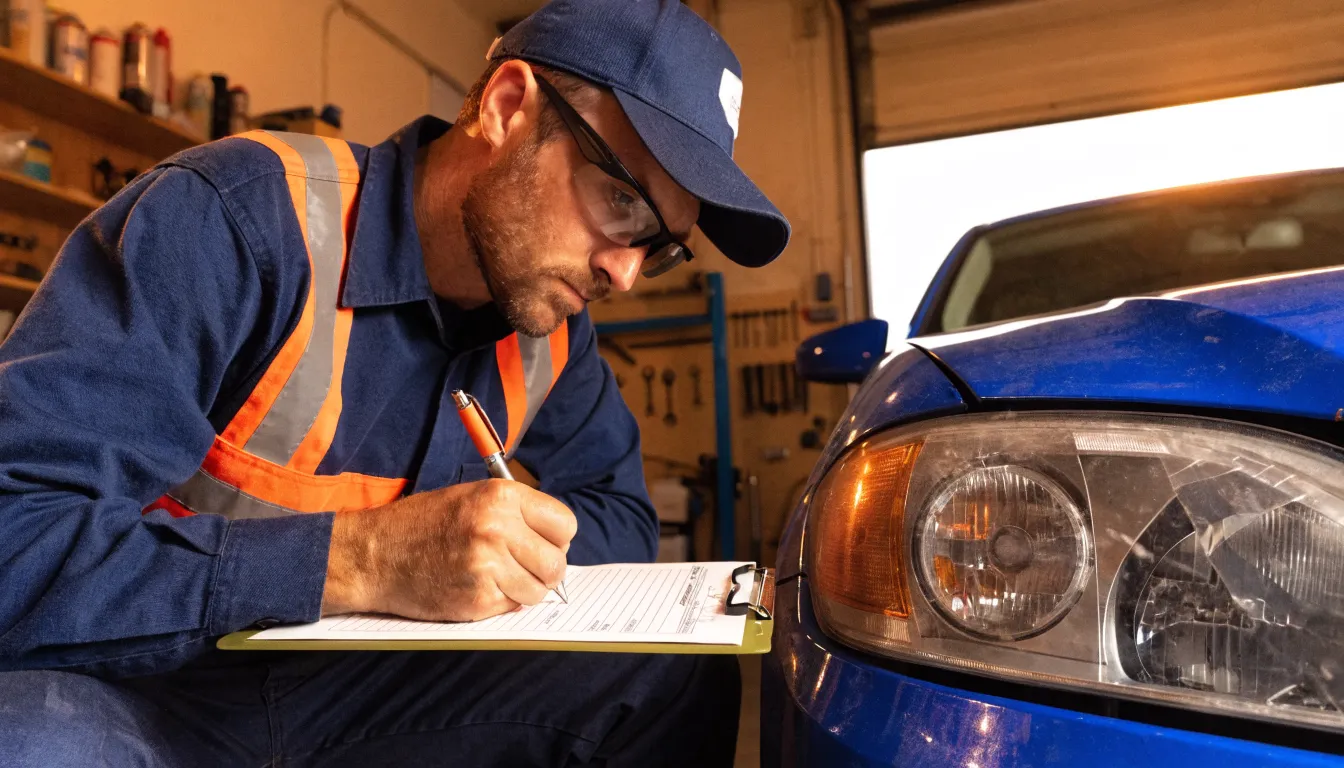
A body shop estimate itemizes every cost in the repair. Understanding each line item helps car owners catch errors, compare estimates accurately, and ask appropriate questions.
Key line items to review:
- Labor hours: The estimated time for each repair operation. Compare this to industry standard times using reference databases like Mitchell and CCC.
- Parts: Each part listed should include whether it's OEM, aftermarket, or LKQ (like-kind-quality — used OEM). Parts source affects cost and quality.
- Materials: Paint, primer, body filler, and refinishing materials. These are legitimate costs, not markup.
- Sublet: Work sent to specialty providers (frame alignment, glass, ADAS calibration). Should be itemized clearly.
- Tax: Applied to parts in most states. Should be calculated on parts only, not labor.
One common issue: estimates from insurance adjusters often use lower labor rates and aftermarket parts by default. Car owners have the right to negotiate with the insurer and request OEM parts in many circumstances. When the shop's estimate and insurance estimate differ significantly, the shop can work directly with the insurer on a "supplement" — an updated estimate accounting for discovered damage or parts discrepancies.
Sources
- CCC Intelligent Solutions — collision repair cost benchmarks and industry data
- Insurance Information Institute — auto insurance and repair cost statistics
- I-CAR (Inter-Industry Conference on Auto Collision Repair) — collision repair industry training standards
- NHTSA Vehicle Safety — federal vehicle safety and crashworthiness standards
Frequently Asked Questions About Auto Body Repair Cost
How much does minor auto body repair cost?
Minor repairs — small dents with intact paint, surface scratches, light scuffs — typically cost $75 to $400, depending on repair type and location. Paintless Dent Repair for a single door ding usually runs $75 to $150. Surface scratch touch-up ranges from $150 to $400 per panel.
Why are body shop estimates so different from each other?
Estimates vary because shops make different choices on parts sourcing (OEM vs. aftermarket), repair approach (repair vs. replace), and labor time. Geographic market also affects labor rates. A 20-40% spread between legitimate estimates is common for identical damage. Getting three estimates gives you a clearer picture of the fair market range.
Does auto body repair cost more for luxury or European vehicles?
Yes, significantly. OEM parts for luxury and European brands (BMW, Mercedes-Benz, Audi, Volvo) cost 30-80% more than comparable parts for domestic or Japanese vehicles. Repair procedures are often more complex, and some manufacturers require dealer-authorized calibration for safety systems. Budget 40-60% above average national figures for premium European or exotic vehicles.
How long does collision repair take?
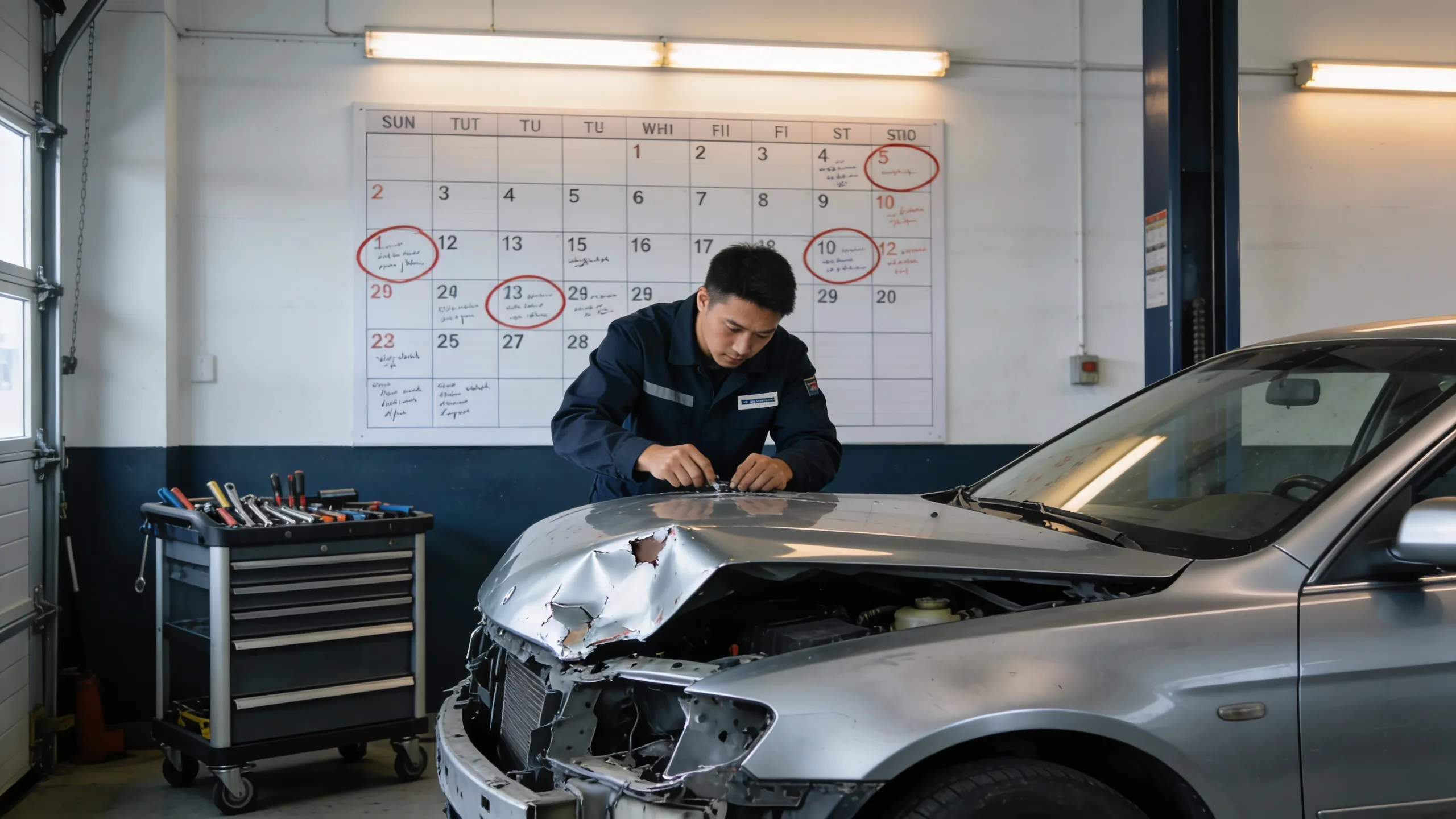
Repair time depends heavily on damage severity and parts availability. Minor cosmetic repairs take 1-3 days. Moderate collision repairs (one or two panels) typically take 5-10 business days. Major repairs involving structural damage can take 3-6 weeks. Parts delays — particularly for specialty or imported components — can extend timelines beyond initial estimates.
What is a supplement in auto body repair?
A supplement is an updated estimate submitted to the insurance company when additional damage is discovered during repair. This happens frequently. Hidden damage behind exterior panels is common and can't always be identified before disassembly. Reputable shops document discovered damage with photographs and communicate with both insurer and car owner before proceeding.
Can I get a reliable estimate online or over the phone?
Online and phone estimates are useful for ballpark planning. They're not reliable for actual repair decisions. Accurate estimates require a physical inspection by a trained estimator. Photo-based estimates can be a useful starting point but frequently miss damage that only becomes apparent during in-person inspection.
Key Takeaways
Auto body repair cost depends on four core variables: labor rate (which varies 40-60% by geography), parts sourcing (OEM vs. aftermarket), repair type, and damage severity. Understanding these factors before getting estimates puts car owners in a much stronger position.
A few practical points worth remembering:
- Get at least three written estimates before authorizing work; price spreads of 20-40% for the same repair are normal
- Ask specifically about parts sourcing; OEM versus aftermarket is a meaningful quality and cost difference
- Understand what insurance covers before deciding between filing a claim or paying out of pocket
- Factor in ADAS recalibration if any sensors are mounted in the damaged area; this is a real and often overlooked cost
- Supplements are normal; reputable shops find hidden damage; that's not a sign of a dishonest estimate
Finding qualified auto body shops and comparing estimates side by side is the most effective way to ensure fair pricing and quality results.