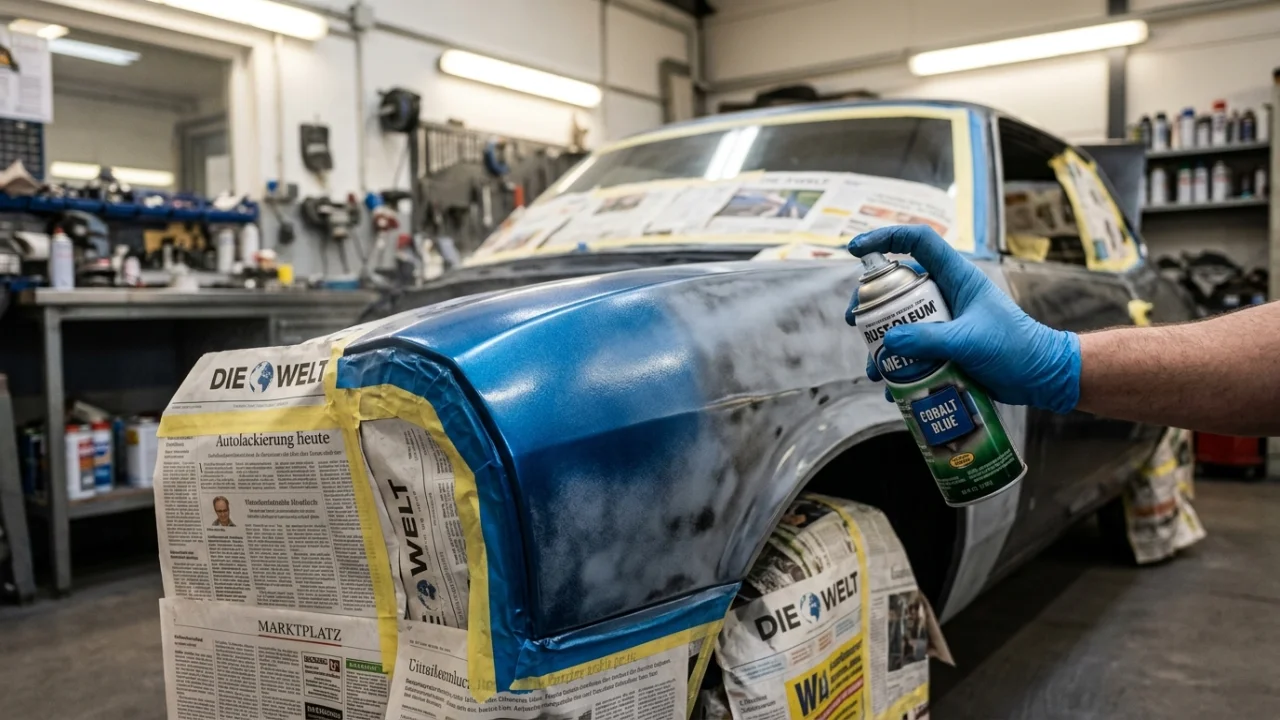
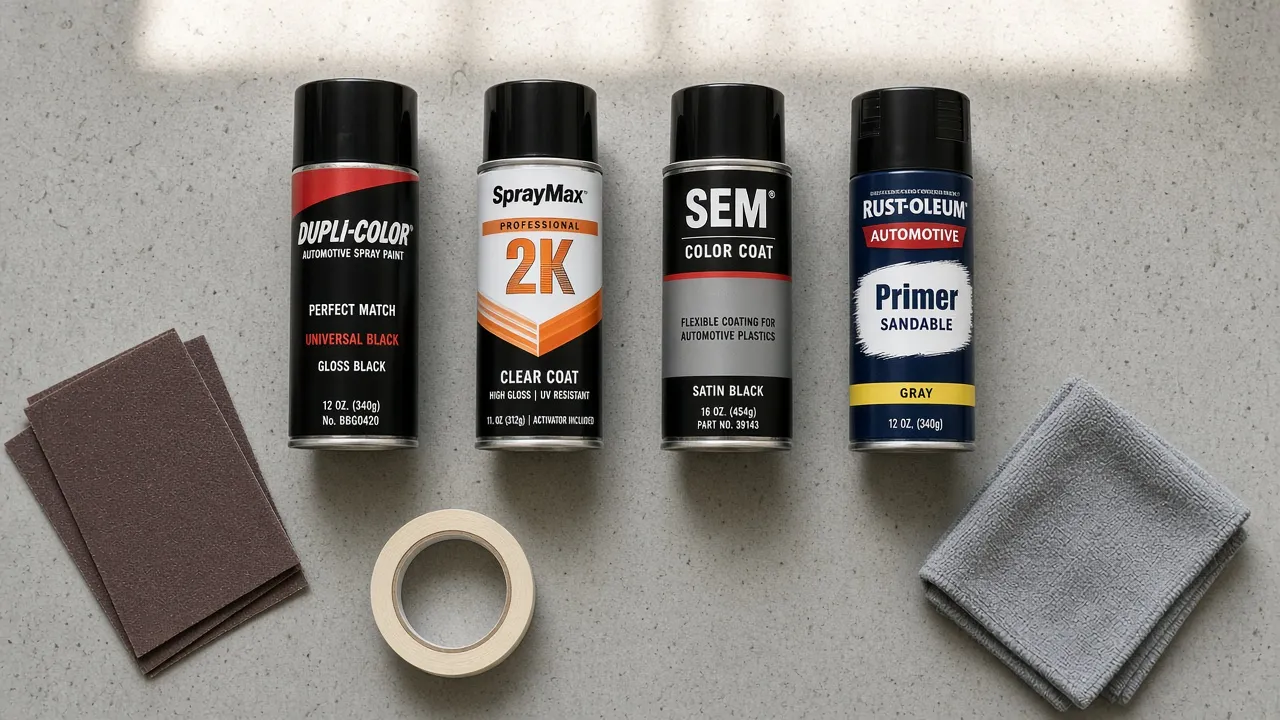
The best automotive spray paint for DIY touch-ups depends on the job: Dupli-Color Perfect Match for color-matched panels, SprayMax 2K Clear Coat for a professional-grade protective finish, SEM Color Coat for interior vinyl and plastic, and Rust-Oleum Automotive for budget-friendly primer-to-clear systems. Rattle can technology has improved dramatically, and the right product paired with proper technique can produce results that rival a $500 body shop paint job on small areas , a bumper scuff, a door edge, a fender scratch , for under $50 in materials.
Key Takeaways
- Dupli-Color Perfect Match covers the widest range of OEM color codes and costs $8–12 per can, making it the go-to for matching your car's factory paint on small exterior repairs.
- SprayMax 2K Glamour Clear Coat ($20–25) is a two-component activated clear that cures to a hard, UV-resistant shell , the closest you can get to a professional spray booth finish from an aerosol can.
- SEM Color Coat ($12–18) is a flexible, permanent coating designed specifically for vinyl, leather, and plastic interior surfaces , not a dye, but a true coating that won't crack or peel.
- Proper prep work (cleaning, sanding, priming) accounts for 80% of your final result. The best spray paint in the world looks terrible on a poorly prepared surface.
- Spray between 60°F and 80°F, in low humidity, and apply 3–4 light coats with 10–15 minutes of flash time between each pass.
How to Find Your Car's Paint Code Before You Buy
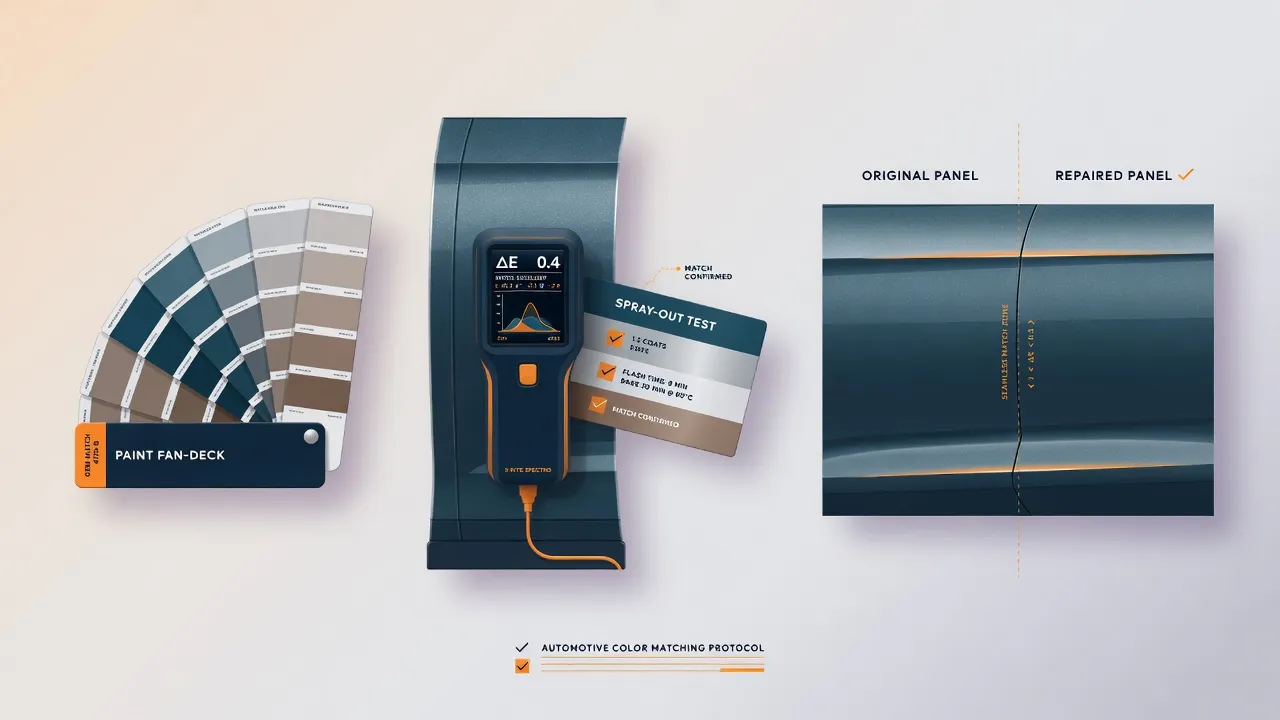
Before you pick up a single can, you need your vehicle's exact paint code. This isn't a color name , "Midnight Blue" could mean a dozen different formulas across manufacturers. Your paint code is typically a 2-to-6 character alphanumeric code that maps to the exact pigment blend your car left the factory with.
The fastest way to find it's on the driver's side door jamb sticker. Open the driver's door and look for a label that includes your VIN, tire pressure specs, and a line marked "PNT," "C," "COLOR," or "EXT." The code sits next to that abbreviation. On some vehicles , particularly Honda, Toyota, and Subaru , it's on a separate metal plate on the firewall under the hood or inside the trunk near the spare tire well.
Your VIN itself doesn't contain the paint code, despite what some online lookup tools claim. VIN-based services contact dealer databases to cross-reference production records, which can be unreliable for vehicles that were repainted or ordered with non-standard colors. The physical sticker on the car is your most reliable source.
Once you have the code, match it to the spray paint brand's color chart. Dupli-Color and Rust-Oleum both offer online lookup tools where you enter make, model, year, and paint code to find the exact can. If your code isn't available in aerosol format, you can order custom-mixed spray cans from TouchUpDirect or PaintScratch for $15–30.
The Four Best Automotive Spray Paints for DIY Work
Dupli-Color Perfect Match: Best for OEM Color Matching
Dupli-Color Perfect Match is the most widely available automotive spray paint in the United States, stocked at AutoZone, O'Reilly, Advance Auto Parts, and most NAPA locations. At $8–12 per 8-oz can, it covers the broadest range of OEM color codes of any rattle can brand , over 200 factory colors across domestic and import vehicles.
The formula is an acrylic lacquer that goes on smoothly and dries relatively fast (touch-dry in 30 minutes, fully cured in 24 hours). The 360-degree adjustable EZ Touch nozzle produces a consistent fan pattern that reduces runs and drips compared to standard aerosol tips. For exterior body panels, pair it with Dupli-Color's matching primer and clear coat for a complete three-stage system.
The main limitation is durability. As a single-stage acrylic lacquer without a hardener, Perfect Match doesn't achieve the chemical cross-linking that makes professional basecoat/clearcoat systems last 5–10 years. Expect 2–3 years of good appearance on exposed panels before you start seeing fading, especially on reds and dark blues. For spots that are partially hidden (rocker panels, lower bumper sections, door edges), it holds up well for much longer. You can extend its life significantly by color matching precisely and applying a quality clear coat on top.
SprayMax 2K Glamour Clear Coat: Best Professional-Grade Finish
SprayMax 2K is the product that changed what's possible with a rattle can. Unlike standard aerosol clear coats, the 2K ("two-component") formula contains a separate hardener sealed inside the can. When you activate it by pressing the red button on the bottom and shaking, the base resin and hardener mix together and begin a chemical curing process identical to what body shops spray with HVLP guns.
The result is a hard, glossy, UV-resistant clear coat that bonds chemically to the paint beneath it rather than just sitting on top. Independent durability tests rate it at 4.6 out of 5 stars, with reviewers consistently describing it as bridging the gap between amateur rattle cans and professional auto body shop finishes (CarXplorer, 2026). It resists gasoline, brake fluid, and most solvents , a meaningful advantage over standard acrylic clears that dissolve if you spill fuel on them.
At $20–25 per can, it's the most expensive option here, and there's a catch: once activated, the can is usable for about 48 hours before the mixed contents harden permanently. You can't save an activated can for next month. Plan your project accordingly and use the entire can in one or two sessions. One can covers approximately 8–10 square feet, which is enough for 1–3 panels. For projects larger than that , a full hood or an entire car , the cost of buying 12–15 cans makes purchasing a compressor and HVLP gun setup the smarter financial move.
SEM Color Coat: Best for Interior Vinyl, Leather, and Plastic
SEM Color Coat occupies a different niche than the other products here. It's a flexible, permanent coating designed specifically for interior surfaces , vinyl dashboards, door panels, armrests, leather seats, plastic trim, carpet, and velour. It's not a dye (which soaks into the material and fades), but a true elastomeric coating that bonds to the surface and flexes with it without cracking or peeling.
The product is the body shop industry standard for interior refinishing, available in 50+ colors including custom-match options. At $12–18 per 16-oz can, it costs more per ounce than exterior paints but covers significantly more surface area because interior surfaces require thinner coats. Long-term tested durability reviews give it a 4.8 out of 5, noting that even after two years of use on high-wear areas like seat strengthens, the coating shows no cracking or flaking (CarXplorer, 2026).
The tradeoff is prep work. SEM Color Coat requires thorough cleaning with SEM's own Soap (a specialty surface cleaner) followed by SEM Plastic & Leather Prep to remove contaminants and open the surface for adhesion. Skipping these steps , or substituting household cleaners , is the number one reason for adhesion failure. Budget an extra $15–20 for the prep products if you don't already have them.
Rust-Oleum Automotive: Best Budget Complete System
Rust-Oleum's automotive line is the most affordable way to get a complete primer-color-clear system from a single brand. Their Automotive Primer ($6–8), Automotive Color ($8–12), and Automotive Clear Coat ($8–10) add up to roughly $25–30 for a full three-can system that covers a single panel. The total cost is comparable to one can of SprayMax 2K clear alone.
Quality is a step below Dupli-Color for OEM color matching , Rust-Oleum offers fewer factory color codes and the finish is noticeably thicker. But for projects where exact color matching isn't critical (underbody panels, truck beds, equipment, or vehicles you're prepping for resale), the price-to-performance ratio is hard to beat. Their 2X Ultra Cover line applies in fewer coats than standard formulas, which saves time and reduces the risk of runs.
If you're doing DIY vs professional body repair on cosmetic-only damage, Rust-Oleum gets you 80% of the visual result at 30% of the cost of premium products.
How to Spray Automotive Paint Like a Pro
Step 1: Prep the Surface
Sand the damaged area with 320-grit sandpaper to remove loose paint, rust, and create a mechanical bond for the new coating. Feather the edges where good paint meets bare metal so there's no hard line. Wipe the entire area with a wax-and-grease remover (not household soap) to eliminate contaminants. Apply 2–3 light coats of primer to bare metal areas, letting each coat flash for 10 minutes.
Step 2: Mask Thoroughly
Use automotive masking tape (not painter's tape , it bleeds) and newspaper or plastic sheeting to protect everything within 3 feet of your spray area. Overspray travels farther than you expect, especially outdoors. Cover wheels, glass, trim, and adjacent panels completely.
Step 3: Spray Technique
Hold the can 8–12 inches from the surface. Start spraying before you reach the panel edge and continue past the other edge , this prevents buildup at start/stop points. Use overlapping horizontal passes, each one covering about 50% of the previous pass. Apply 3–4 light coats rather than 1–2 heavy coats. Heavy coats cause runs, orange peel, and longer cure times.
Step 4: Flash Time and Clear Coat
Wait 10–15 minutes between color coats (the surface should look matte, not glossy, before the next coat). After the final color coat, wait 30 minutes, then apply 2–3 coats of clear coat using the same technique. The clear coat is what provides UV protection, gloss, and durability , skipping it on exterior surfaces guarantees premature fading.
Step 5: Cure and Polish
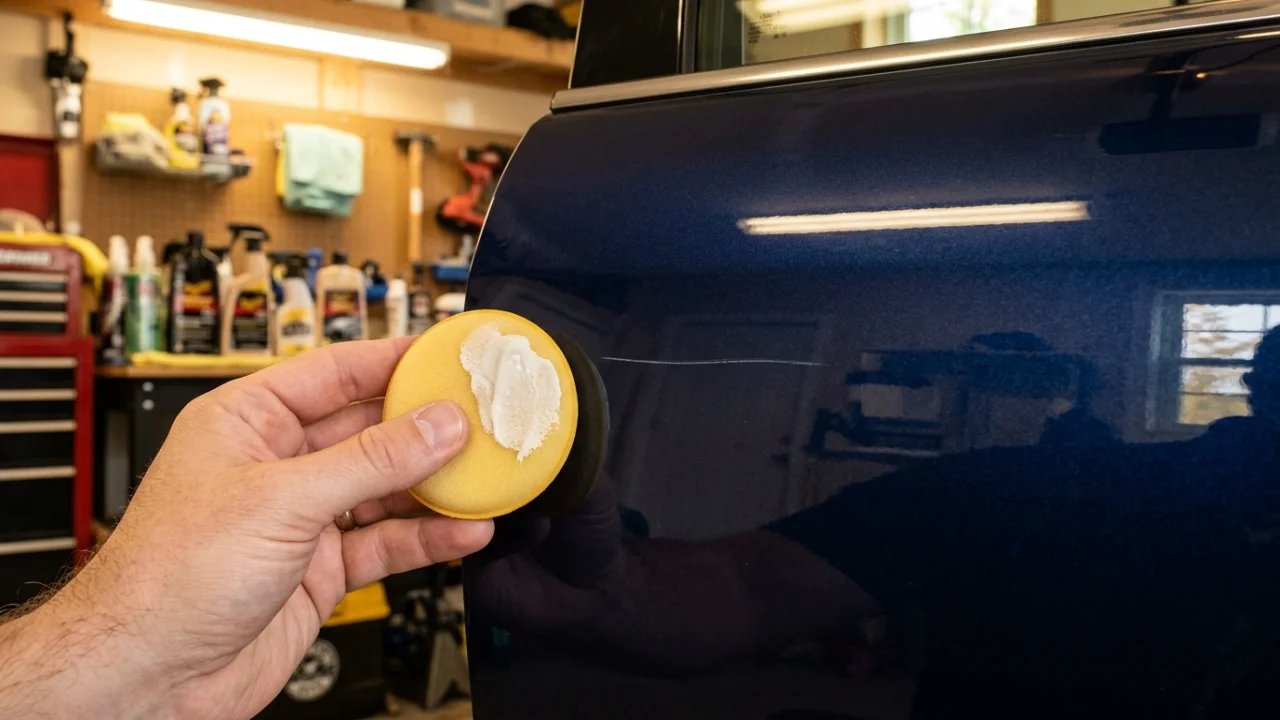
Let the finished panel cure for at least 48 hours (7 days for SprayMax 2K) before polishing or waxing. After full cure, wet-sand any orange peel with 1500–2000 grit sandpaper, then polish with a rubbing compound and finish with scratch removers for surface-level damage to blend the repair area with the surrounding paint. For long-term protection, consider applying a touch-up paint pen for small chips that appear later along the repair edges.
When to Spray and When to Call a Pro
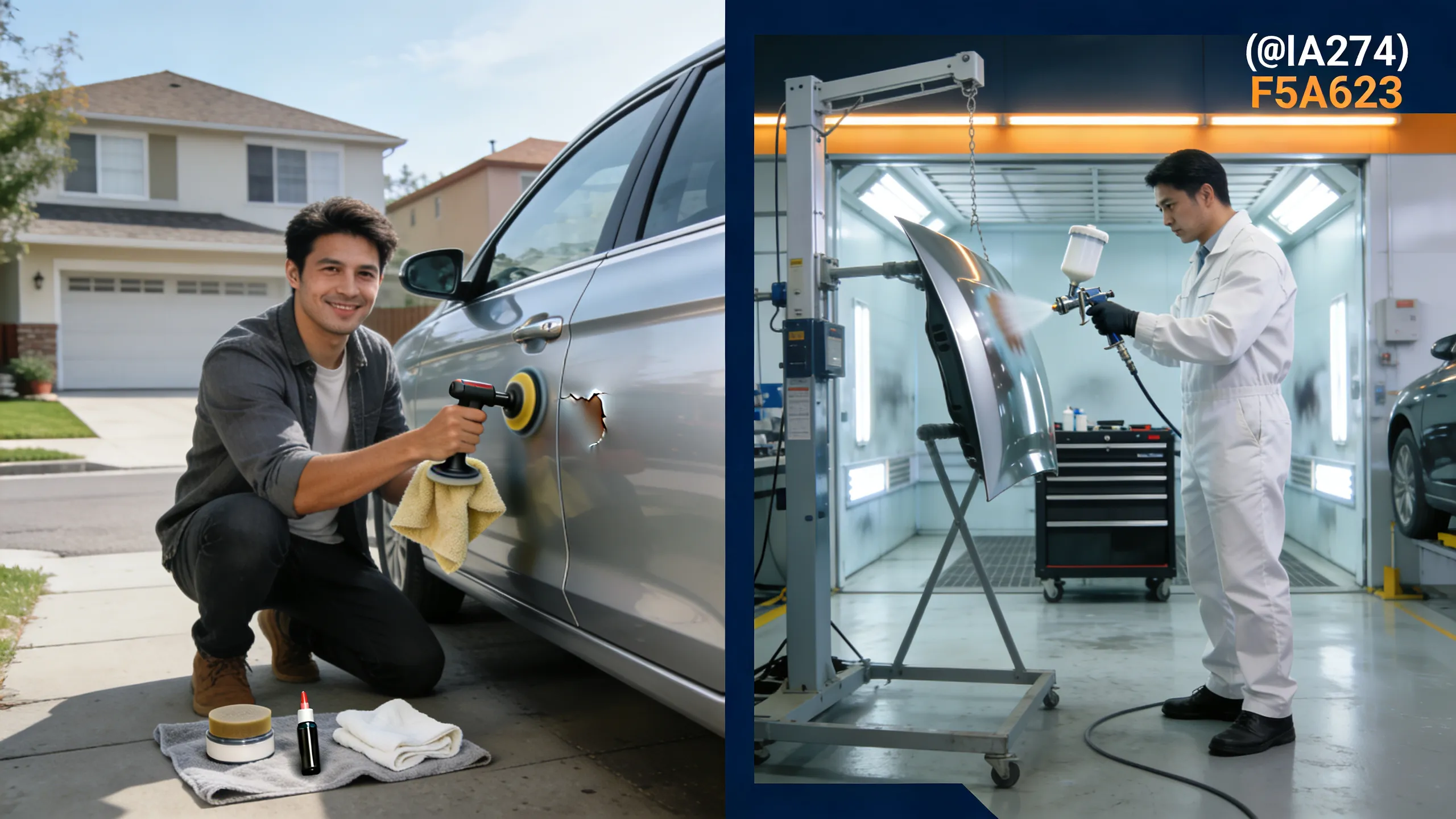
Rattle can paint jobs work well for small, contained areas: a scuffed bumper corner, a keyed door panel, rock chips on a hood edge, or faded trim. They also work for vehicles where cosmetic perfection isn't the goal , a daily commuter with hail damage, a project car in progress, or a pre-sale cleanup.
Call a professional auto paint shop when the damage exceeds a single panel, when you need a precise metallic or pearl color match (these finishes have directional flakes that are nearly impossible to replicate by hand), when there's structural rust that needs cutting and welding, or when the vehicle is a lease return with strict condition requirements. A full professional respray runs $500–$3,000+ depending on the scope , check our car paint job cost guide for detailed pricing.
Temperature, Humidity, and Timing
Spray paint is chemistry, and chemistry cares about conditions. The ideal spray window is 60°F to 80°F (15°C to 27°C) with relative humidity below 65%. Below 50°F, the paint takes too long to flash and runs become almost inevitable. Above 90°F, the solvents evaporate before the paint reaches the surface, creating a rough, sandy texture called "dry spray."
High humidity traps moisture between coats, causing a milky haze called "blushing" in clear coats. If you're working in a humid climate, spray in the morning before the afternoon moisture builds, and keep the cans at room temperature , cold cans produce lower pressure and inconsistent spray patterns.
Wind is the other enemy. Even a light breeze carries overspray onto surfaces you didn't intend to paint and can push the spray pattern off-target. Work in a garage with the door cracked for ventilation, or set up a portable spray shelter if you're working outside.
Frequently Asked Questions
Can rattle can paint match my car's factory finish exactly?
Yes, if you use the correct paint code. Dupli-Color Perfect Match and TouchUpDirect both formulate their aerosol paints to match OEM color codes. The color match is typically excellent on solid colors (whites, blacks, reds, blues). Metallic and pearl finishes are harder to match perfectly because the flake orientation from a spray can differs from a professional spray gun, which can cause subtle differences in how the paint reflects light at certain angles.
How long does rattle can automotive paint last?
Standard acrylic lacquer spray paints (Dupli-Color, Rust-Oleum) last 2–3 years on exposed exterior surfaces before noticeable fading begins, longer if protected with a quality clear coat and regular waxing. SprayMax 2K clear coat dramatically extends this to 5+ years because its two-component formula chemically cross-links during curing, creating a harder, more UV-resistant surface similar to professional spray booth clear coats.
Do I need primer before spraying automotive paint?
Yes, if you're spraying over bare metal, body filler, or heavily sanded areas. Primer provides corrosion protection and creates a uniform surface for the color coat to adhere to. If you're spraying over existing paint that's still in good condition (no peeling, no rust, just scratched or faded), you can skip primer and spray directly over the scuffed original paint after cleaning and light sanding with 400-grit sandpaper.
Is SprayMax 2K clear coat worth the extra cost over regular clear?
For visible exterior panels, yes. The chemical curing process produces a finish that's genuinely comparable to professional clear coat in hardness, gloss, and chemical resistance. For hidden areas (rocker panels, underbody, inside door jambs) or vehicles where long-term appearance isn't a priority, standard acrylic clear coat at $8–10 per can does the job adequately. The activated 48-hour use window means you need to plan your project to use the full can, so buy it only when you're ready to spray.
How many cans of spray paint do I need for one car panel?
For a single panel (a fender, a door, or a bumper cover), budget 2 cans of color coat and 1–2 cans of clear coat. Primer typically requires 1 can per panel. This assumes 3–4 light coats of each product. Larger panels like hoods or roofs may need 3–4 color cans. It's better to buy one extra can than to run out mid-panel , stopping and restarting after the paint has begun to cure creates visible overlap lines that are very difficult to blend out.