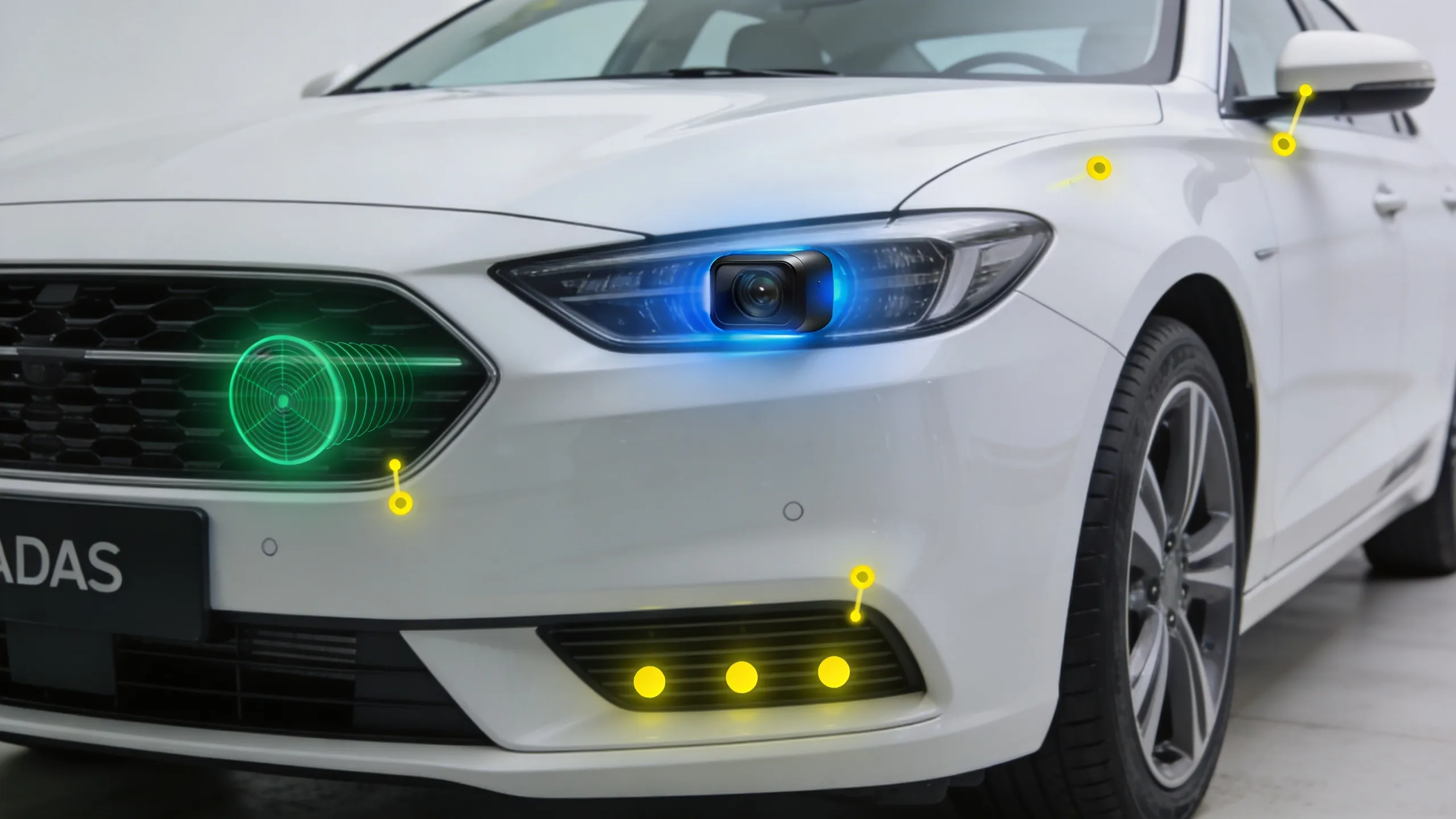
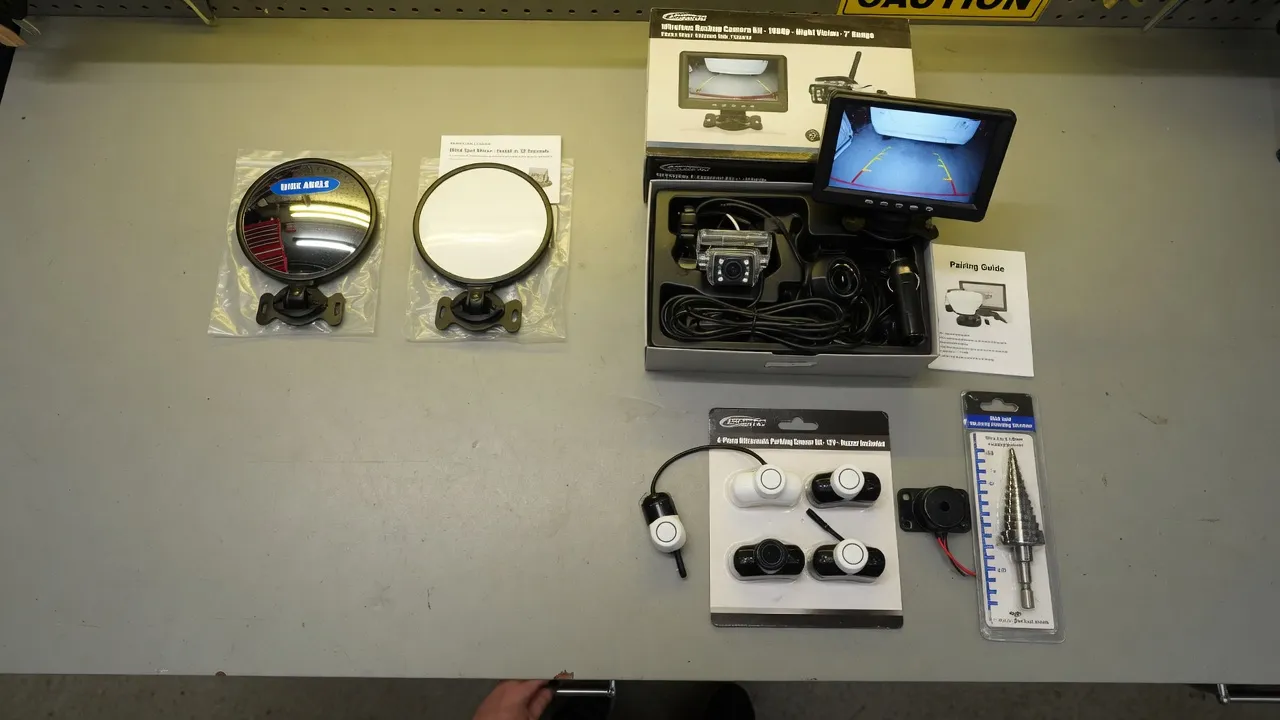
The best blind spot mirror for most cars is the Ampper HD Glass Convex Mirror , a $9 stick-on that eliminates the blind spot on both sides in under two minutes. But mirrors only solve part of the problem. If your older car lacks factory ADAS features like blind spot monitoring or parking sensors, aftermarket solutions ranging from $9 mirror add-ons to $130 wireless backup cameras can close the safety gap without a dealership visit. Here's what actually works, what to skip, and how to match the right product to your vehicle.
Key Takeaways
- Stick-on convex blind spot mirrors like the Ampper ($8–$12 per pair) are the simplest upgrade , they add a wide-angle view to your existing side mirrors with zero wiring.
- Wireless backup cameras like the AUTO-VOX Solar1 ($100–$130) install in under 5 minutes with no drilling or wiring, and provide a clear rear view on a dedicated monitor.
- Aftermarket parking sensor kits ($20–$50) require drilling into your bumper but provide audible proximity alerts that help in tight spaces.
- Aftermarket blind spot detection systems ($300–$500+) use radar but require professional installation and don't match the integration level of factory ADAS systems.
- For most older cars, a combination of stick-on blind spot mirrors plus a wireless backup camera delivers 80% of factory ADAS safety benefits at under $150 total.
Best Stick-On Blind Spot Mirrors
Stick-on convex mirrors are the cheapest and fastest blind spot fix. They attach to the corner of your existing side mirrors with adhesive, adding a wide-angle view of the lane next to you. No wiring, no tools, no permanent modification to your car.
Ampper HD Glass Convex Mirror (Best Overall)
The Ampper is a 2-pack of round, frameless HD glass convex mirrors with a 360-degree adjustable ball joint. The glass is haze-resistant with an IP65 waterproof rating, and the 3M adhesive holds through car washes, rain, and temperature swings. At $8 to $12 for a pair, it's the best value in the category.
- Lens type: HD glass, convex wide-angle
- Adjustability: 360-degree rotate and sway ball joint
- Mount: 3M adhesive, fits any mirror
- Price: $8–$12 per pair
- Best for: Any car, truck, or SUV , universal fit
The only limitation is the small mirror size. Drivers with poor close-range vision may find the reflected image difficult to read at a glance. For larger vehicles like trucks and SUVs, consider the rectangular version for a wider field of view.
FOSHIO Adjustable Blind Spot Mirror (Budget Runner-Up)
The FOSHIO blind spot mirror is a fan-shaped convex design that covers a slightly wider angle than round mirrors. It uses the same 3M adhesive mount and adjustable swivel as the Ampper but at $6 to $8 for a 2-pack, making it the cheapest functional option.
- Lens type: Convex wide-angle, fan shape
- Adjustability: Swivel mount
- Mount: 3M adhesive
- Price: $6–$8 per pair
- Best for: Budget-conscious drivers who want maximum coverage area
Best Wireless Backup Cameras for Older Cars
If your car was built before 2018 (when federal law started requiring backup cameras on new vehicles), adding a wireless backup camera is the single biggest safety upgrade you can make. Modern wireless systems eliminate the hardest part of installation , running a video cable from the rear bumper to the dashboard.
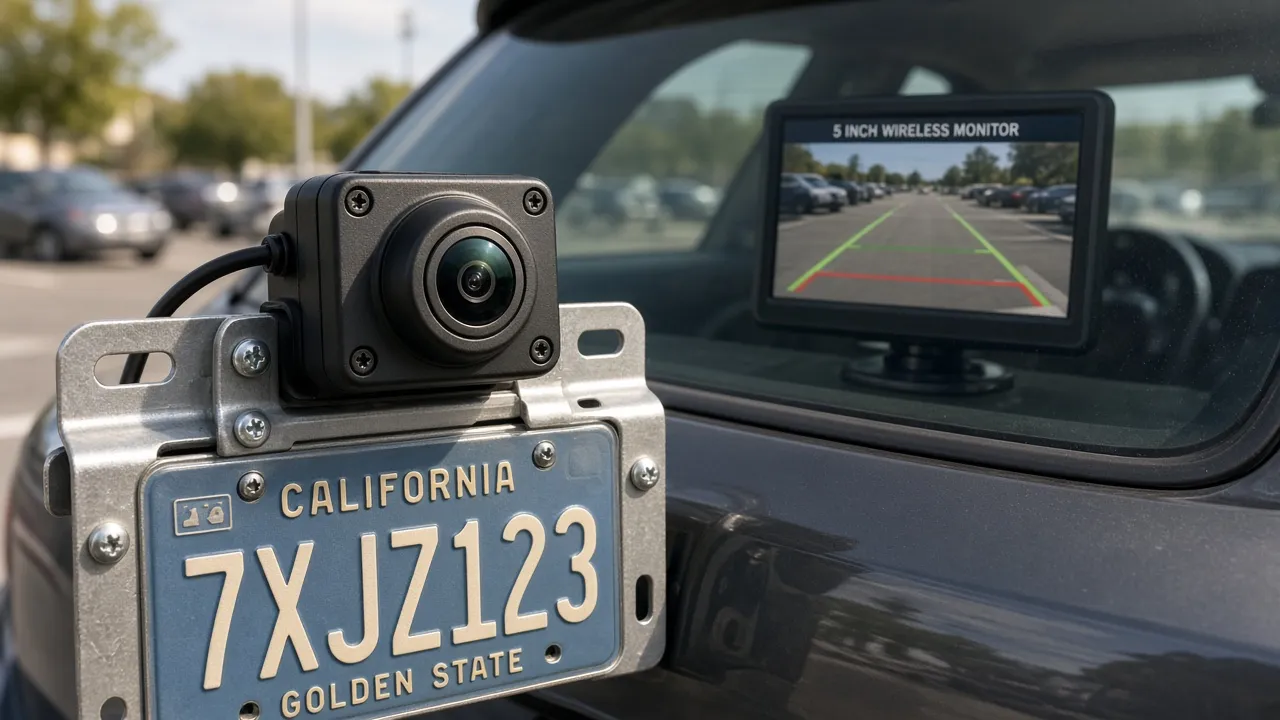
AUTO-VOX Solar1 Wireless Backup Camera (Best Overall)
The AUTO-VOX Solar1 is a completely wireless system , both the camera and the 5-inch monitor run on rechargeable batteries, with solar charging to extend battery life. Installation takes under 5 minutes: mount the camera on or near your license plate, suction-cup the monitor to your windshield, pair them, and drive. No drilling, no wiring, no connection to your car's electrical system.
- Resolution: 1080p HD
- Wireless range: Up to 40 feet (stable 2.4GHz digital signal)
- Battery: 5,000mAh rechargeable, solar-assisted
- Night vision: Yes, infrared LEDs
- Waterproof: IP69K rated
- Price: $100–$130
- Best for: Cars, trucks, SUVs, trailers , any vehicle without a factory backup camera
The Solar1 earned a 4.5 editorial score and "Best Overall" ranking in CarAudioNow's hands-on 2026 buyer's guide. The main trade-off is battery life in cold weather , AUTO-VOX notes that capacity drops by roughly half below freezing, so winter drivers should supplement solar charging with the included USB cable. If your car was involved in a side-swipe incident or parking lot hit-and-run, pairing this camera with a dash cam covers both rear and front recording.
LiDCAM LC-WF Dash and Backup Camera System (Dual-Use Pick)
LiDCAM's system doubles as both a dash cam and a backup camera display, combining two devices into one unit. The front-facing camera records continuously while the rear view activates when you shift into reverse. At $80 to $110, it's a good option for drivers who want both functions without cluttering the windshield with two separate mounts.
- Resolution: 1080p front, 720p rear
- Storage: MicroSD (up to 128GB)
- Mount: Suction cup or adhesive
- Price: $80–$110
- Best for: Drivers who want a dash cam and backup camera in one device
Best Aftermarket Parking Sensors
Parking sensors use ultrasonic transducers mounted in your bumper to detect objects behind (or in front of) your car, beeping faster as you get closer. They require drilling holes in your bumper , typically four for a rear set , so installation is more involved than stick-on mirrors or wireless cameras.
Frostory Car Reverse Parking Sensor System (Best Value)
The Frostory X60D is a 4-sensor rear parking system with a dual-CPU design that improves detection accuracy and filters false alarms. It works in temperatures from -40°F to 185°F, making it reliable in any climate. The buzzer provides distance-based alerts from roughly 8 feet down to contact range.
- Sensors: 4 ultrasonic, rear-mounted
- Detection range: 0 to 8 feet
- Display: LED distance indicator + audible buzzer
- Installation: Drill 4 holes in rear bumper, wire to reverse light
- Price: $20–$30
- Best for: Budget-conscious drivers comfortable with basic wiring
ELSNU 8-Sensor Front and Rear Parktronic System (Most Coverage)
For full coverage, the ELSNU 8-sensor system installs four sensors in the rear bumper and four in the front, with intelligent activation , the front sensors engage at low speeds to help in parking lots and tight garages. A color LCD display shows the exact distance to detected objects.
- Sensors: 8 ultrasonic (4 front, 4 rear)
- Detection range: 0 to 8 feet front and rear
- Display: Color LCD with distance readout
- Installation: Drill 8 holes, wire to reverse light and ignition
- Price: $40–$60
- Best for: Drivers who park in tight spaces frequently
Aftermarket Blind Spot Detection: Is It Worth the Cost?
Aftermarket radar-based blind spot detection systems like the Brandmotion 9002-3010 ($300–$500 plus professional installation) use short-range radar modules mounted inside the rear bumper to detect vehicles in adjacent lanes. They trigger a warning light in or near your side mirrors, mimicking the factory blind spot monitoring experience.
The technology works, but there are important caveats. Aftermarket radar blind spot systems are not integrated with your car's other safety systems the way factory ADAS is. They can't trigger automatic braking, lane-keeping corrections, or other interventions. They're purely advisory , a light and sometimes a beep. Professional installation typically adds $150 to $300 to the product cost, bringing the total to $450 to $800.
For most drivers of older cars, the cost-benefit math doesn't favor aftermarket radar systems. A $9 pair of Ampper blind spot mirrors plus a $120 AUTO-VOX backup camera ($129 total) covers the two most common collision scenarios , lane-change blind spots and backing into obstacles , at a fraction of the cost. Save the radar system for high-end vehicles where the investment matches the car's value. For a full explanation of how factory ADAS compares, see our guide to ADAS sensors explained.
How to Choose the Right Setup for Your Car
The best combination depends on your car, your driving environment, and your comfort level with installation.
Urban drivers in tight parking
Stick-on blind spot mirrors + wireless backup camera + rear parking sensors. Total cost: $130–$170. This setup covers lane changes, parallel parking, and backing into spots.
Highway commuters
Stick-on blind spot mirrors are the priority , lane-change blind spots are the most dangerous gap on highways. A backup camera is a bonus. Total cost: $9–$12.
Truck and SUV owners
Wireless backup camera is the priority , larger vehicles have the worst rear visibility. Add rectangular (not round) blind spot mirrors for the wider mirror surface. Total cost: $110–$150.
Whatever combination you choose, these aftermarket safety accessories are a fraction of the cost of a single collision repair. A $9 mirror that prevents one lane-change sideswipe pays for itself hundreds of times over.
Frequently Asked Questions
Do stick-on blind spot mirrors really work?
Yes. Convex stick-on mirrors like the Ampper HD Glass expand your side mirror's field of view by 30 to 50 degrees, which is enough to see vehicles in your blind spot without turning your head. They're not a substitute for shoulder checks, but they provide an early visual warning that makes lane changes significantly safer. The main limitation is the small mirror size, which can be hard to read at a glance for drivers with poor close-range vision.
Can I install a backup camera on an older car without a screen?
Yes. Wireless backup camera systems like the AUTO-VOX Solar1 come with their own standalone monitor that mounts on your dashboard or windshield via suction cup. You don't need an existing infotainment screen, and the camera doesn't need to connect to your car's electrical system. The entire setup runs on rechargeable batteries with solar charging assist, so installation is completely wire-free.
Are aftermarket parking sensors accurate?
Modern ultrasonic parking sensors are accurate to within 2 to 4 inches at close range, which is sufficient for parking assistance. The Frostory dual-CPU system and similar kits can detect obstacles from about 8 feet away and provide progressive audio alerts as you get closer. Accuracy can be affected by extreme temperatures, heavy rain, or irregular surface shapes, but for standard parking scenarios, aftermarket sensors perform comparably to factory-installed units.
Is aftermarket blind spot detection as good as factory ADAS?
No. Aftermarket radar blind spot systems like the Brandmotion provide visual and audible warnings when a vehicle is in your blind spot, but they're not integrated with your car's other safety systems. Factory ADAS can trigger automatic steering corrections, emergency braking, and lane-keeping interventions when a blind spot threat is detected. Aftermarket systems are advisory only , they tell you something is there, but they can't take action. For a detailed comparison of ADAS technologies, see our guide to ADAS sensors explained.
How much does it cost to add safety features to an older car?
A basic safety upgrade costs $9 to $170 depending on what you install. Stick-on blind spot mirrors run $8 to $12 per pair. A wireless backup camera system costs $80 to $130. Aftermarket parking sensors cost $20 to $60 for a DIY kit. A full setup with all three , mirrors, camera, and sensors , typically totals $130 to $200 including materials. Aftermarket radar blind spot detection is the most expensive option at $300 to $800 including professional installation, but it's optional for most drivers.