The best car scratch remover for most people is Meguiar's Ultimate Compound , it removes light-to-moderate clear coat scratches safely, costs under $15, and works by hand or with a dual-action polisher. But the right product depends on how deep your scratch actually is. A clear coat scuff needs a different fix than a gouge that's reached primer, and using the wrong compound on the wrong scratch wastes your money and your afternoon.
Key Takeaways
- Scratch removers only fix clear coat damage , the top transparent layer of your car's paint. If you can see bare metal or gray primer, you need touch-up paint or professional repair.
- The fingernail test is the fastest way to gauge scratch depth: if your nail catches, the scratch has cut through the clear coat and a rubbing compound alone won't fix it.
- Meguiar's Ultimate Compound is the best all-around pick for moderate scratches and swirl marks at $10–$15. For deeper clear coat damage, the 3M Scratch & Scuff Removal Kit ($15–$20) provides a multi-step system.
- Chemical Guys VSS Scratch & Swirl Remover works as a one-step compound-and-polish, making it the easiest option for beginners.
- Always follow scratch removal with a wax or sealant , compound strips the existing protection, and bare clear coat degrades faster without it.
How Deep Is Your Scratch? The Fingernail Test
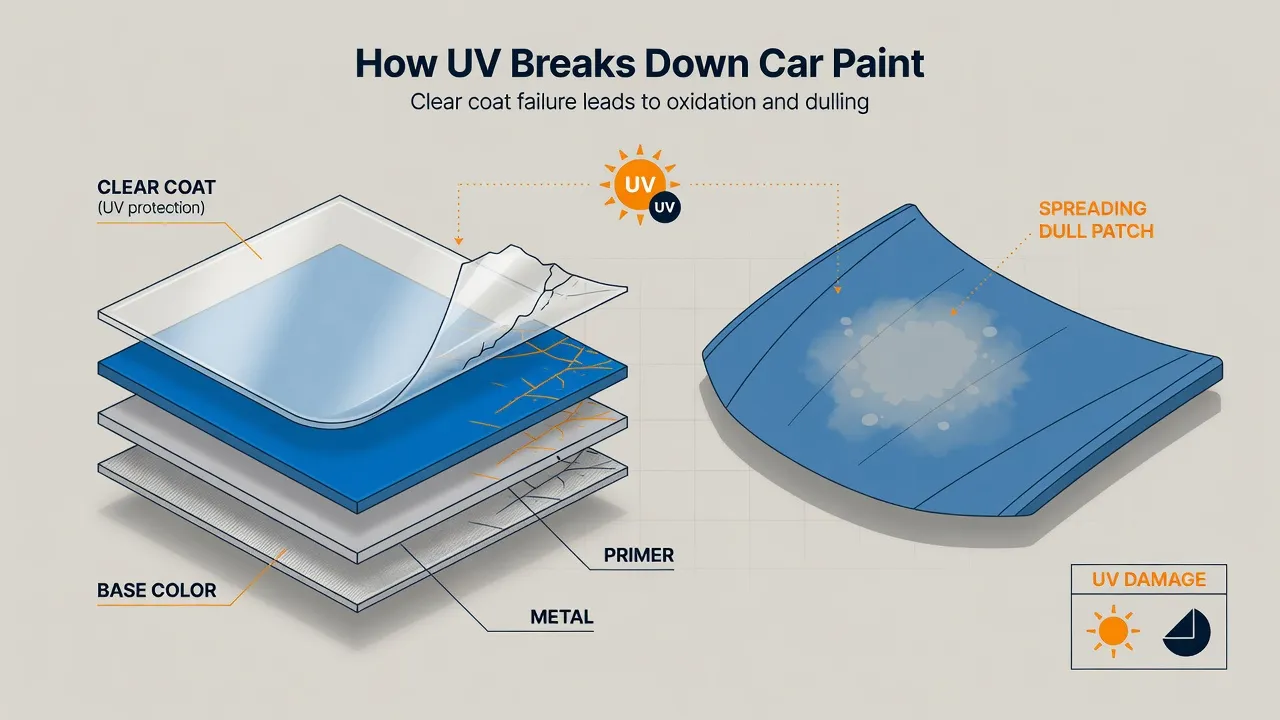
Before you buy anything, figure out what you're actually dealing with. Your car's paint has three layers: a clear coat on top (transparent, protective), a base coat underneath (the color), and primer at the bottom (gray, bonds paint to metal). Scratch removers and rubbing compounds can only fix damage to the clear coat , the outermost layer.
Run your fingernail across the scratch perpendicular to the line. What happens next tells you which product category you need:
- Nail glides smoothly, no catch: Clear coat scratch only. A rubbing compound or scratch remover will handle this. This is what the products in this guide are designed for.
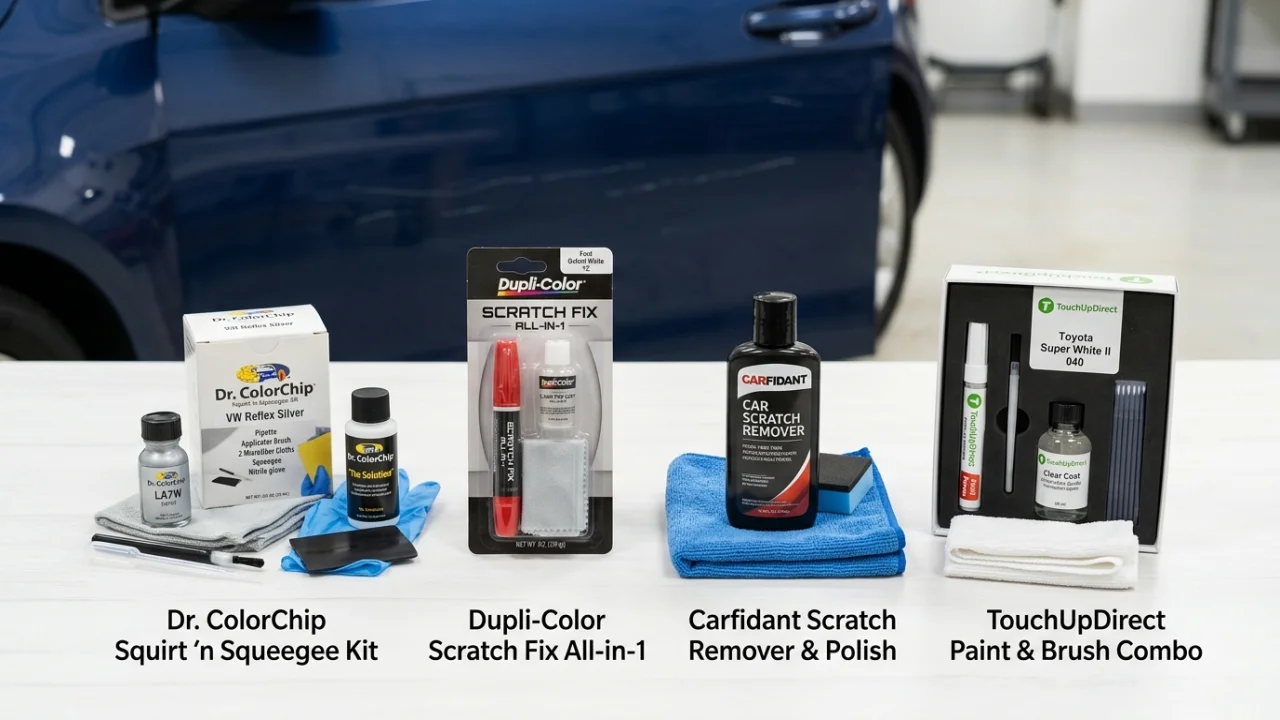
- Nail catches slightly: The scratch has broken through the clear coat into the base coat. You'll need a touch-up paint pen for deeper scratches after compounding, because the color layer is damaged.
- Nail catches hard, you can see gray or white underneath: The scratch has reached primer or bare metal. No consumer scratch remover will fix this. You need professional paint repair or at minimum a multi-step touch-up system.
- You can see bare metal: This needs professional repair immediately , exposed metal starts rusting within days, especially in humid climates.
The products below are ranked for clear coat scratches , the most common type of surface damage on daily drivers. If your scratch fails the fingernail test, skip ahead to the "When to Call a Professional" section at the end.
Best Overall: Meguiar's Ultimate Compound
Meguiar's Ultimate Compound has been the go-to recommendation from detailers and auto enthusiasts for years, and the current formula justifies that reputation. It uses micro-abrasive technology that breaks down during application , the particles start coarse enough to cut through scratches and swirl marks, then become finer as you work the product, leaving a smoother finish without the haze that cheaper compounds produce.
- Best for: Light-to-moderate clear coat scratches, swirl marks, water spots, oxidation
- Price: $10–$15 for an 8 oz bottle
- Application: Hand or dual-action polisher
- Abrasive level: Medium-cut compound
What makes Meguiar's Ultimate Compound stand out is the margin for error. The diminishing abrasive technology means it's difficult to burn through clear coat even if you over-apply or work the product longer than necessary. That safety margin matters when you're working on a $50,000 car's paint.
The limitation is that it's a compound only , it cuts the scratch but doesn't polish or protect. You'll want to follow it with Meguiar's Ultimate Polish and then a wax or sealant for a complete correction. If that sounds like too many steps, look at the Chemical Guys VSS option below.
Best for Deep Clear Coat Scratches: 3M Scratch & Scuff Removal Kit
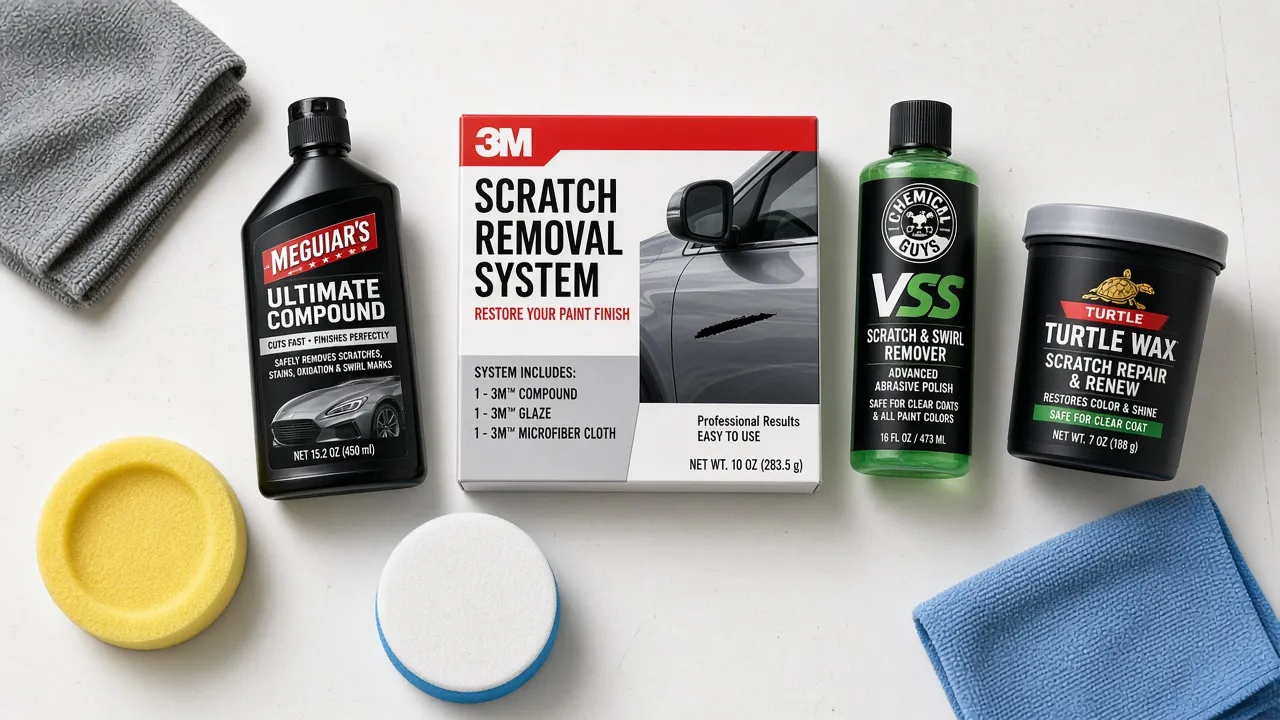
The 3M Scratch & Scuff Removal Kit takes a more aggressive approach than single-product solutions. The kit includes an abrasive square (for initial scratch leveling), a rubbing compound, a scratch remover, a compounding pad, a polishing pad, and a disc holder that attaches to any household drill.
- Best for: Deeper clear coat scratches, key marks, shopping cart scrapes, scuffs from other car doors
- Price: $15–$22 for the complete kit
- Application: Drill-powered (included adapter) or hand
- Abrasive level: Multi-step, coarse to fine
The multi-step system is what separates the 3M kit. The abrasive square physically levels the area around the scratch, reducing the depth before the rubbing compound smooths and the scratch remover polishes. This two-stage approach handles scratches that a single compound like Meguiar's would struggle with.
The trade-off is skill. The abrasive square removes material aggressively, and if you're not careful with pressure and coverage, you can create a dull spot or thin the clear coat unevenly. 3M's instructions are clear, but this kit rewards patience and a light touch. First-timers should practice on an inconspicuous panel first.
Best One-Step Solution: Chemical Guys VSS Scratch & Swirl Remover
Chemical Guys VSS (Variable Speed and Swirl) Scratch and Swirl Remover is designed as a one-step product , it compounds, polishes, and finishes in a single application. The variable abrasive technology adapts to the speed and pressure you apply, cutting more aggressively under pressure and refining as you lighten up.
- Best for: Light scratches, swirl marks, beginners who want one product
- Price: $15–$20 for a 16 oz bottle
- Application: Hand or dual-action polisher (polisher recommended)
- Abrasive level: Variable, adapts to application
The single-step convenience is genuine. You apply VSS, work it in, and wipe off , no follow-up polish needed. This makes it the most beginner-friendly option on this list. The larger 16 oz bottle also provides better value per ounce than most competitors.
The limitation is cutting power. VSS handles swirl marks and light scratches beautifully, but it doesn't have the aggression to tackle deeper clear coat damage. If the fingernail test produces even a slight catch, you'll likely need to step up to the Meguiar's compound or the 3M kit. Think of VSS as a maintenance product , perfect for keeping paint clean between deeper corrections.
Best Budget Option: Turtle Wax Scratch Repair & Renew
Turtle Wax Scratch Repair & Renew costs roughly half what the premium options charge, and for light surface scratches and minor swirl marks, it does a credible job. The formula includes both an abrasive compound and a clear coat-filling resin that optically hides remaining imperfections after polishing.
- Best for: Light surface scratches, minor swirl marks, older vehicles, budget-conscious repairs
- Price: $8–$12
- Application: Hand only (no polisher needed)
- Abrasive level: Light
The clear coat resin is both the product's strength and limitation. It fills micro-scratches and creates a temporary smooth appearance, but that resin washes away over weeks. You're not permanently correcting the scratch , you're masking it. For a daily driver with surface-level wear, that's often good enough. For anything deeper or on a car you plan to keep looking sharp long-term, invest in Meguiar's or 3M.
Turtle Wax Scratch Repair & Renew works best as a hand-applied product. It doesn't perform well with machine polishers , the heat and speed break down the resin filler before it can do its job.
How to Use a Car Scratch Remover Properly
The product matters less than the technique. Here's the process that works across all four products:
Step 1: Wash and dry the area
Dirt particles trapped between your pad and the paint will create new scratches as you work. Wash the scratched panel thoroughly with car wash soap (not dish soap , it strips wax and can damage clear coat). Dry completely with a clean microfiber towel.
Step 2: Apply compound to the pad, not the car
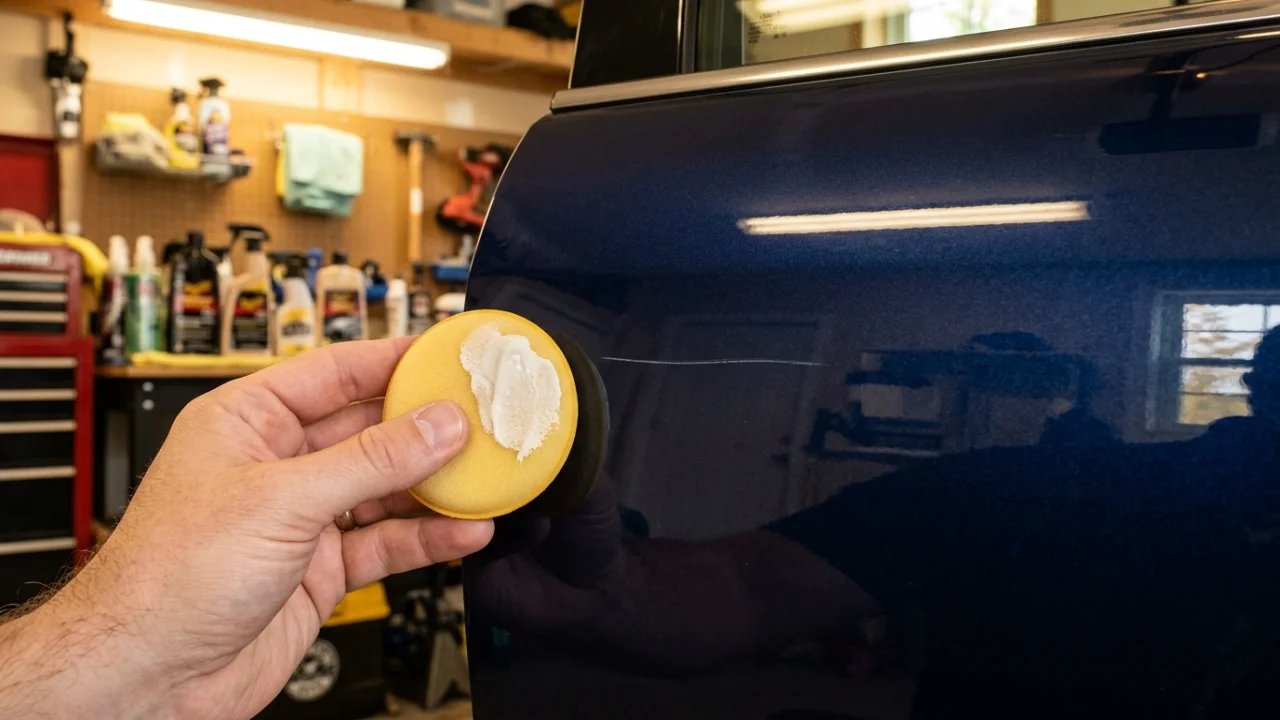
Put a dime-sized amount of product on your foam or microfiber applicator pad. Applying directly to the car wastes product and creates uneven coverage.
Step 3: Work in small sections
Focus on a 12-by-12-inch area at a time. Use firm, even pressure and work the compound in overlapping back-and-forth motions , not circles. Circular motions can create their own swirl pattern. Spend 30–60 seconds per section by hand, or 2–3 passes with a dual-action polisher at medium speed.
Step 4: Wipe clean and inspect
Use a clean microfiber towel to remove the residue. Inspect the area under good lighting , natural daylight or a bright LED work light from a low angle reveals remaining imperfections. Repeat if needed, but limit yourself to three passes in any one area to avoid thinning the clear coat.
Step 5: Protect the repaired area
Compounding removes a thin layer of clear coat along with the scratch, which also removes any wax or sealant that was protecting that area. Apply a wax, sealant, or clear coat protectant within 24 hours of compounding.
When to Call a Professional Instead
Scratch removers have real limits. Skip the DIY approach and get a professional estimate from an auto paint shop if:
- The scratch has reached primer (gray/white visible) or bare metal
- The damaged area is larger than a credit card , large-area compounding by hand produces uneven results
- The scratch is on a metallic, pearl, or tri-coat finish , these multi-layer paints need color-matched repair
- There are multiple deep scratches across a panel , full-panel repaint is more cost-effective than spot-repairing each one
- The car is leased , lease return inspections have strict damage thresholds, and a visible DIY repair can trigger charges
Professional scratch repair typically costs $150–$300 per panel for clear coat blending, or $300–$600+ for base coat damage that requires repainting. Check our car scratch repair cost guide for detailed pricing by scratch type and vehicle. For larger paint damage across multiple panels, automotive spray paint for larger areas may be a middle ground between a $12 compound and a $500 shop bill , but spray technique has a steeper learning curve than compound application.
Frequently Asked Questions
Can scratch removers fix deep scratches down to the metal?
No. Scratch removers and rubbing compounds only work on clear coat damage , the outermost transparent layer of your car's paint. If you can see gray primer or bare metal, the scratch is too deep for any consumer compound product. You'll need touch-up paint for small areas or professional body shop repair for larger damage. Use the fingernail test: if your nail catches hard in the scratch, it's beyond what a rubbing compound can fix.
What's the difference between a rubbing compound and a scratch remover?
Rubbing compounds use abrasive particles to physically remove a thin layer of clear coat, leveling the surface around the scratch until it disappears. Scratch removers may use lighter abrasives combined with filling agents (resins or polymers) that optically mask the remaining imperfection. Compounds provide a permanent correction but remove material. Fillers provide a temporary fix that washes away over time. Many products, like Meguiar's Ultimate Compound, use diminishing abrasives that do both.
Will a car scratch remover damage my clear coat?
Used correctly, no. Modern scratch removers are formulated to remove only a microscopic layer of clear coat , far less than the total thickness. Factory clear coat is typically 1.5 to 2.0 mils thick (38–50 microns), and a single compound pass removes roughly 0.5 to 1.0 microns. The risk increases if you use excessive pressure, work the same area too many times, or use a rotary polisher (not a dual-action) without experience. Limit yourself to three passes in any single area and always use a clean, quality applicator pad.
Do I need a polisher or can I remove scratches by hand?
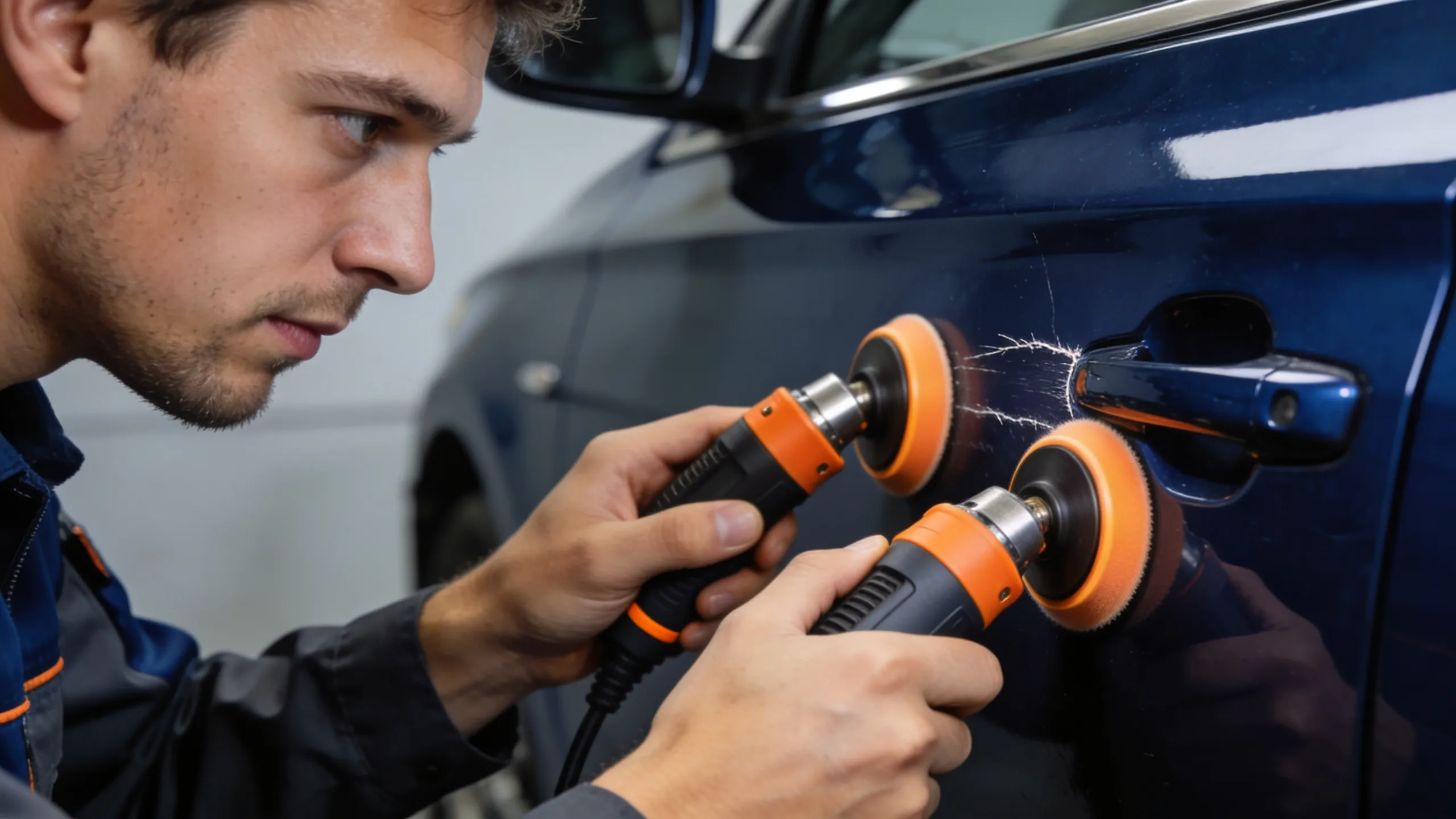
You can remove light clear coat scratches by hand with any of these products. A dual-action polisher makes the job faster and more consistent, especially on larger areas, but it's not required. Hand application works best for spot repairs on small scratches. If you're treating an entire panel for swirl marks, a polisher saves significant time and produces more even results. Avoid rotary polishers unless you have experience , they spin in one direction and can burn through clear coat quickly with improper technique.
How long does a scratch remover repair last?
It depends on the product type. A true compound correction (Meguiar's Ultimate Compound, 3M kit) permanently removes the scratch by leveling the clear coat , that fix is permanent as long as you protect the area with wax or sealant afterward. Products that use filler resins (Turtle Wax Scratch Repair & Renew) provide a temporary cosmetic improvement that fades over 4–8 weeks as the filler washes out. For a lasting repair, use a compound-based product and follow with a paint sealant or ceramic coating.