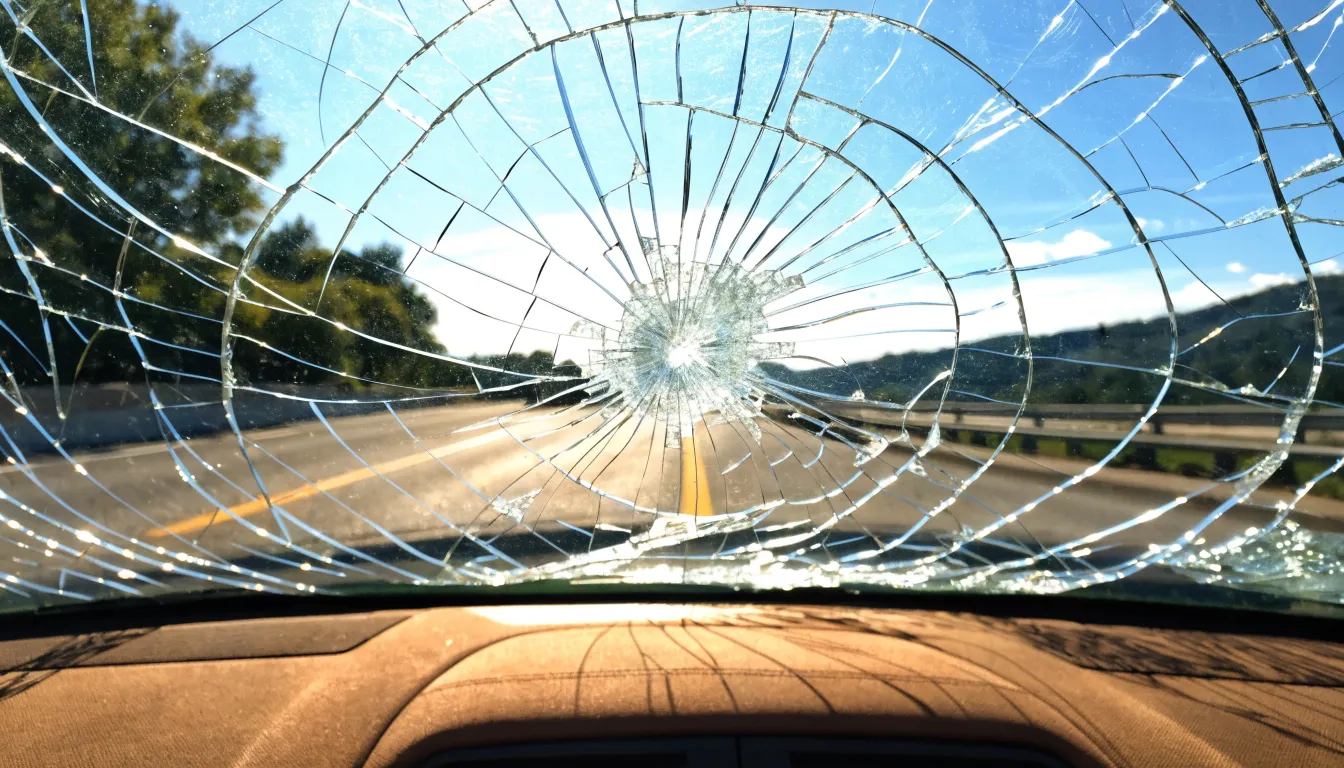
Call three shops about the same cracked windshield and you might hear $300, $500, and $1,400. Nobody is necessarily ripping you off. Windshield pricing in 2026 has split into two different worlds: plain glass for older vehicles, and camera-loaded glass for newer ones that needs electronic recalibration after installation. The quote you get depends on which world your car lives in.
Here is what replacement actually costs this year, why the spread is so wide, and how to decide between OEM and aftermarket glass without overpaying for either one.
Sources
- NHTSA Windshield Safety Standards — federal windshield safety requirements
- Auto Glass Safety Council — auto glass repair and replacement standards
- CCC Intelligent Solutions — collision repair cost benchmarks and industry data
- Insurance Information Institute — auto insurance and repair cost statistics
What Windshield Replacement Costs in 2026
For a typical sedan or SUV without driver-assist cameras, a full replacement at an independent auto glass shop runs $250 to $600 installed. That covers the glass itself, urethane adhesive, new moldings, and labor. Most vehicles from roughly 2015 and earlier land somewhere in this range, and plenty of newer base-trim cars do too.
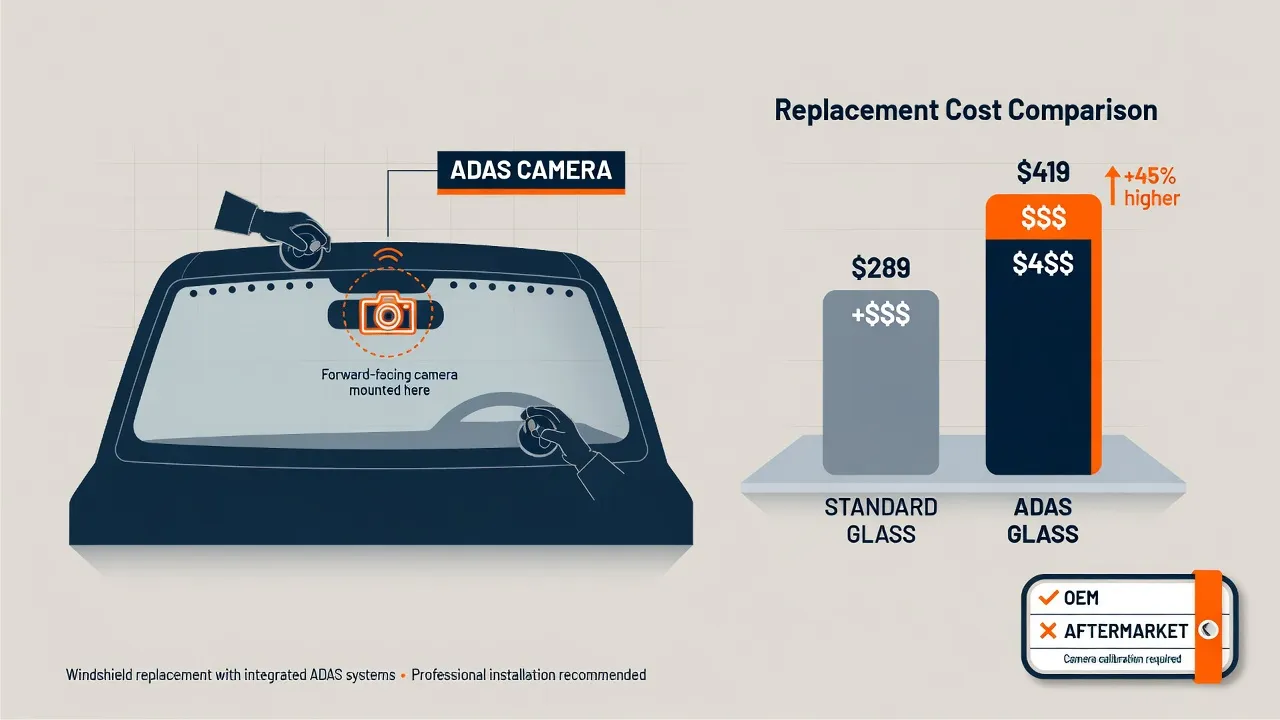
If your vehicle has a forward-facing camera mounted behind the rearview mirror — the hardware behind lane-keep assist, automatic emergency braking, and adaptive cruise control — plan on $600 to $1,600 or more. The glass itself is often pricier because it has a camera bracket and tighter optical tolerances, and the camera must be recalibrated after the new windshield goes in. Recalibration alone typically adds $150 to $400 to the invoice. Luxury models with head-up displays, acoustic glass, or heated wiper park zones can climb past the top of that range.
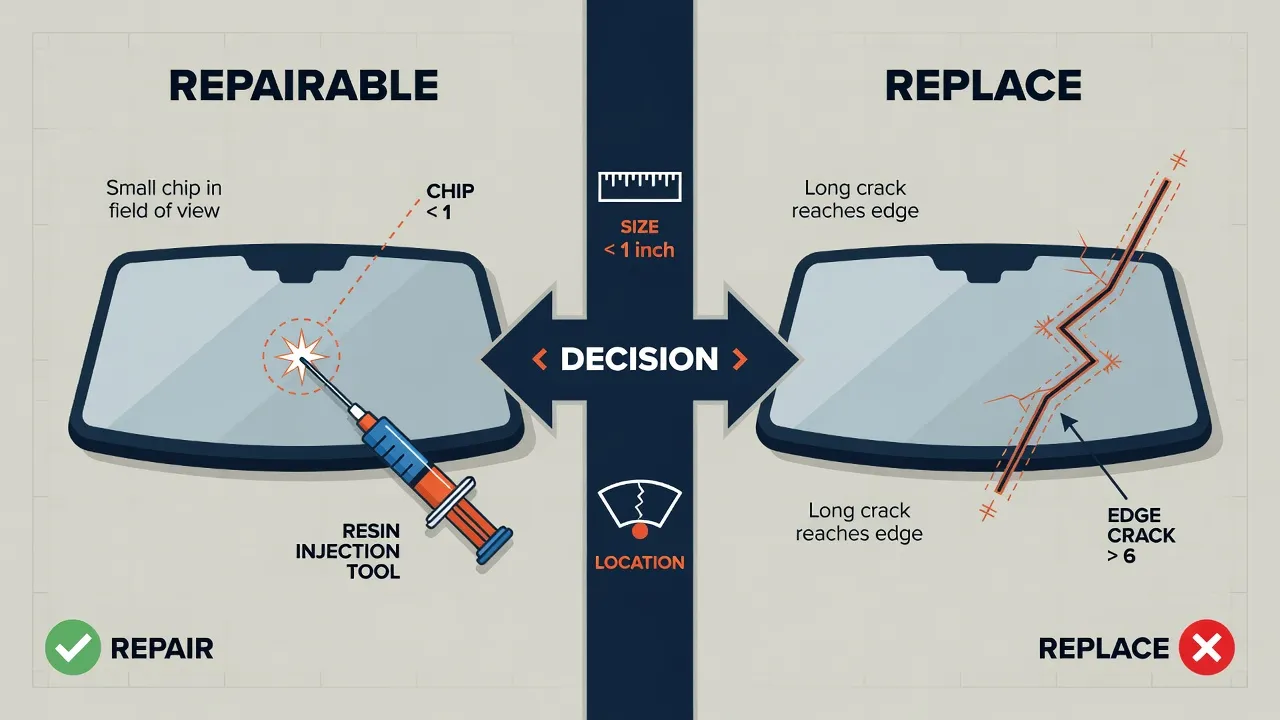
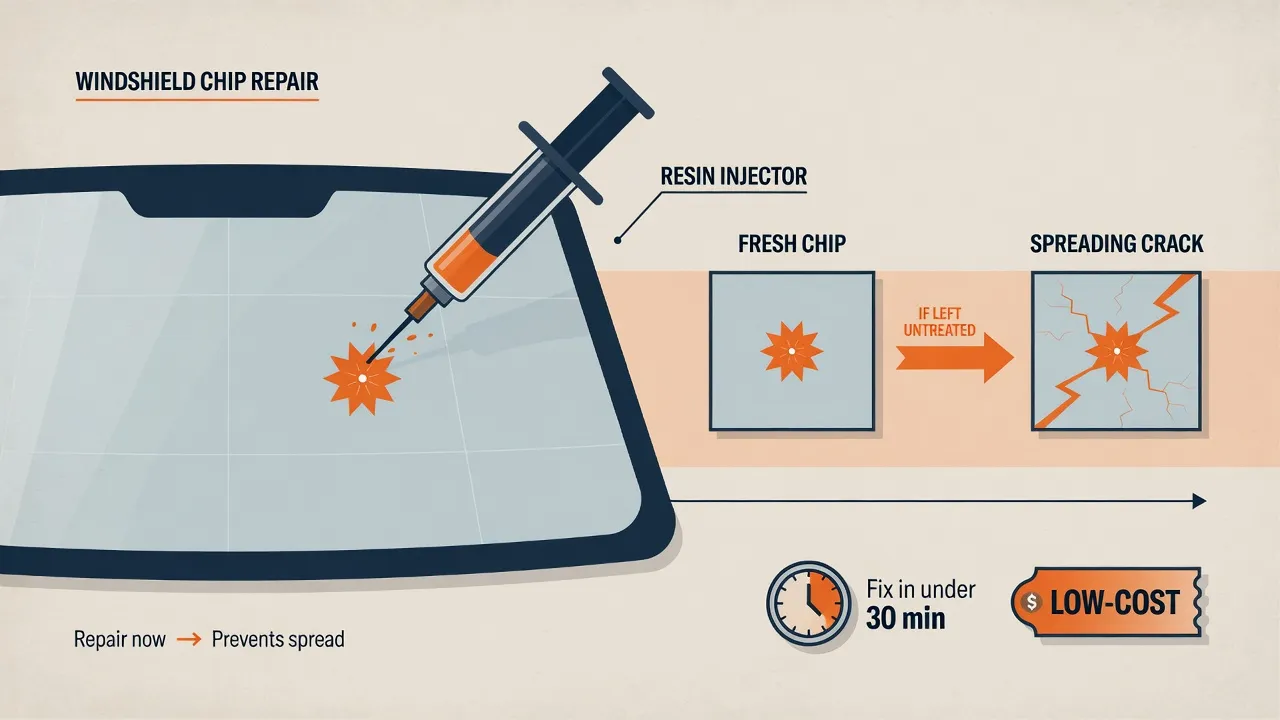
One more number for context: professional chip repair runs $60 to $200. If your damage is a small chip rather than a spreading crack, have it evaluated before you assume you need new glass. A $90 repair beats a $900 replacement every time it is an option.
Why the Price Range Is So Wide
Two windshields that look identical from the driver's seat can be very different pieces of glass. Modern windshields are a mounting point for technology, and every feature baked into the glass raises the part cost:
- Rain and light sensors that need a clear sensor pad in the glass
- Camera brackets and optically precise zones for ADAS systems
- Head-up display projection layers
- Acoustic lamination that quiets wind and road noise
- Heating elements for wipers or full-surface defrost
- Embedded antennas and solar-attenuating coatings
Labor and logistics matter too. Urban markets with heavy competition often price lower than rural areas where glass has to be freighted in. Mobile installation is free at many national chains and a $25 to $50 add-on at some independents. And a two-door coupe with a steeply raked windshield can take more labor time than a boxy pickup, even if the glass costs less.
OEM vs. Aftermarket Glass
What OEM glass gets you
OEM (original equipment manufacturer) glass is made by the same supplier that produced your factory windshield, built to the automaker's exact specification and usually carrying the automaker's logo. Fit is essentially guaranteed, optical quality matches what the car left the assembly line with, and features like HUD projection zones and camera mounts are exactly where the vehicle expects them. The catch is price: OEM glass typically costs 40 to 100 percent more than the aftermarket equivalent. On a $350 aftermarket job, that might mean $500 to $700 for OEM. On an already expensive ADAS windshield, the premium can add several hundred dollars.
What aftermarket glass gets you
Aftermarket glass — often labeled OEE, for original equipment equivalent — is made by third-party manufacturers to meet the same federal safety standard (FMVSS 205) that OEM glass must meet. In many cases the aftermarket producer is literally the same company that makes OEM glass, minus the automaker branding. Quality is generally good, but it is not uniform across brands. Lower-tier aftermarket glass can have slight optical distortion near the edges, thinner acoustic lamination, or fit that requires more adjustment during installation.
How to choose
For most drivers with a standard windshield, quality aftermarket glass from a reputable brand is the sensible call — you get the same safety performance for hundreds less. OEM starts earning its premium in specific situations: vehicles with head-up displays, where cheap glass can double the projected image; some ADAS-equipped vehicles where the automaker or the shop recommends OEM for reliable camera performance; leased vehicles whose contracts require OEM parts; and late-model cars where you want zero question marks at trade-in. Ask the shop which brand of aftermarket glass they install. A shop that names a specific tier-one manufacturer is telling you something; a shop that shrugs is telling you something else.
The ADAS Recalibration Line Item
If your car has lane-keep assist, forward collision warning, or adaptive cruise, the camera that runs those systems looks through your windshield. Replace the glass and the camera's aim shifts by fractions of a degree — enough to make the system misread lane lines or misjudge following distance. That is why every reputable shop requires recalibration after replacing an ADAS windshield, and why you should walk away from any quote that skips it.
For pricing purposes, know two things: recalibration typically runs $150 to $400 depending on whether your vehicle needs a static procedure, a dynamic road test, or both, and some shops sublet the work to a dealer, which can add cost and a day of waiting. Make sure any quote you compare states clearly whether recalibration is included.
Insurance, Deductibles, and Paying Cash
Windshield damage from road debris, weather, or vandalism falls under comprehensive coverage, not collision. Whether a claim makes sense is simple math: if your comprehensive deductible is $500 and the replacement quote is $450, you are paying cash. A few states — Florida, Kentucky, and South Carolina — require insurers to waive the deductible on windshield claims entirely, which makes filing an easy call there. Many insurers in other states offer full glass coverage as a low-cost rider worth checking your policy for.
The picture changes when the glass broke in a crash. If the windshield shattered along with crumpled sheet metal, it gets bundled into the collision repair estimate and claimed under your collision coverage with that deductible instead. Comprehensive glass claims generally do not raise rates the way at-fault collision claims can, but confirm with your carrier before filing.
How to Get a Fair Price
Windshield replacement is one of the few auto repairs where phone quotes are genuinely accurate, because the job is standardized. Use that to your advantage:
- Get at least three quotes with your VIN, so shops price the exact glass variant your car takes
- Ask whether the quote uses OEM or aftermarket glass, and which brand
- Confirm recalibration is included in writing if your car has a camera
- Ask about the warranty — good shops cover leaks, wind noise, and stress cracks for as long as you own the car
- Ask about safe drive-away time, since the adhesive needs about an hour to cure before the car is safe to drive
A $250 quote and a $1,400 quote can both be fair prices — for different cars. Know which glass your vehicle actually needs, and the right number gets obvious fast.
Frequently Asked Questions
How long does windshield replacement take?
The physical work takes 60 to 90 minutes for most vehicles. Add roughly an hour of safe drive-away time while the urethane adhesive cures, and 30 to 60 minutes more if ADAS recalibration is done in-house. Plan on half a day if the shop sublets calibration to a dealer.
Is aftermarket windshield glass safe?
Yes. All windshield glass sold in the US must meet the same federal safety standard, FMVSS 205. The differences between OEM and quality aftermarket glass are about fit, optical clarity, and features like acoustic lamination — not crash safety. The bigger safety variable is the installation itself, so choose the shop as carefully as the glass.
Will my insurance cover windshield replacement?
If you carry comprehensive coverage, yes, minus your deductible. In Florida, Kentucky, and South Carolina, the deductible is waived on windshield claims by law. If your deductible exceeds the quote, skip the claim and pay out of pocket.
Do I have to use OEM glass on a leased car?
Check your lease agreement. Many leases require OEM or manufacturer-approved parts for any repair, and a lease-end inspector can flag a non-OEM windshield as a chargeable item. If the contract is ambiguous, a call to the leasing company before the replacement costs nothing and can save you a dispute later.
Can I drive immediately after a windshield replacement?
No. The urethane adhesive needs a minimum cure period — usually about one hour with modern fast-cure formulas — before the windshield can perform its structural job in a crash. Your installer will give you a specific safe drive-away time. Respect it, and avoid slamming doors or car washes for the first day or two.