A gravel truck merges ahead of you on the interstate, something ticks off your windshield, and now there is a pea-sized chip staring at you from the passenger side of the glass. Right now, that chip is a $60 to $100 problem that takes half an hour to fix. Let it ride through one hard freeze or one blast of summer defrost, and it becomes a crack — and a $250 to $600 replacement, or far more if your car has a camera behind the mirror.
The gap between those two outcomes is usually a week or two of procrastination. Here is how chip repair works, which damage qualifies, and how to know when the window has closed.
Sources
- NHTSA Windshield Safety Standards — federal windshield safety requirements
- Auto Glass Safety Council — auto glass repair and replacement standards
How Chip Repair Actually Works
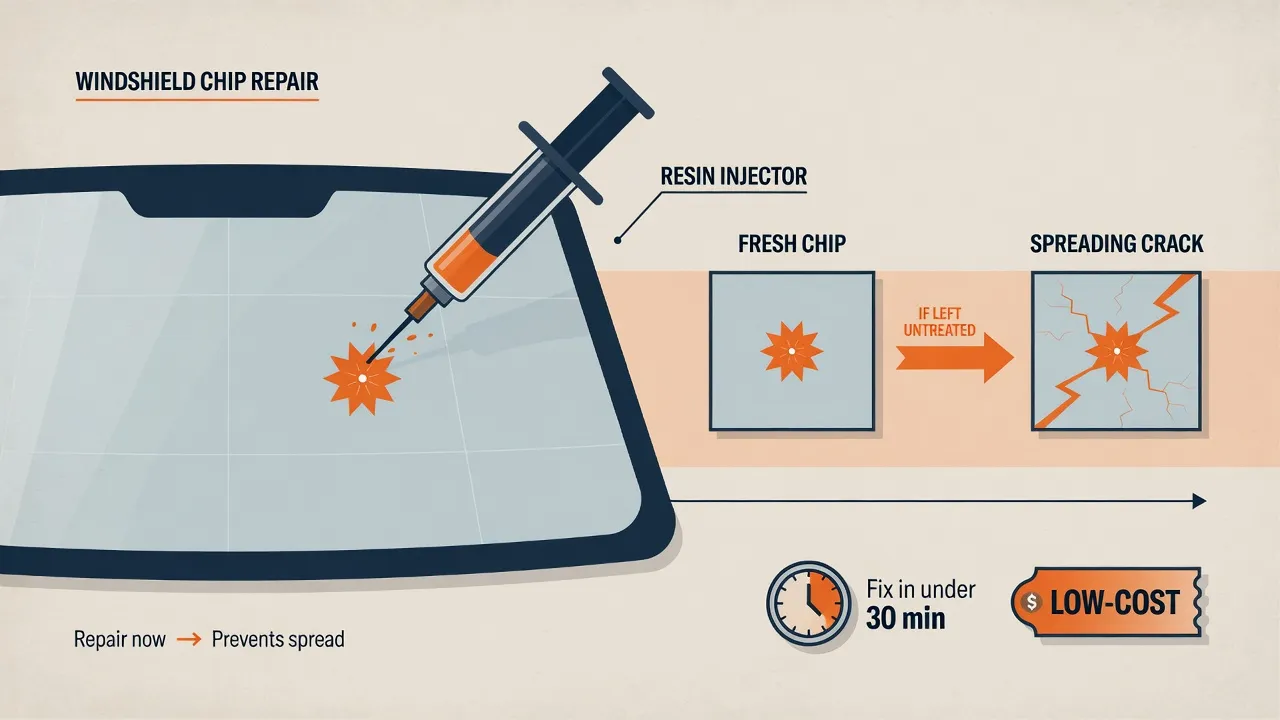
A technician at an auto glass shop cleans the damaged area, mounts an injector over the chip, pulls a vacuum to draw air and moisture out of the break, then forces a clear acrylic resin into every micro-fracture under pressure. The resin cures under UV light in minutes, and the surface gets scraped and polished flush. Start to finish, it is a 20 to 30 minute job, and most shops will do it in your driveway or office parking lot.
Understand what the repair is for. It is a structural fix first and a cosmetic one second. The cured resin bonds the fractured glass back together so the damage cannot spread, restoring most of the windshield's original strength at that spot. Visually, a good repair improves the blemish by roughly 70 to 90 percent — you will still see a faint scar or dimple if you look for it. If you are expecting the chip to vanish completely, you will be disappointed. If you are trying to keep a $90 problem from becoming a $900 one, you will be thrilled.
Chips That Can Be Fixed
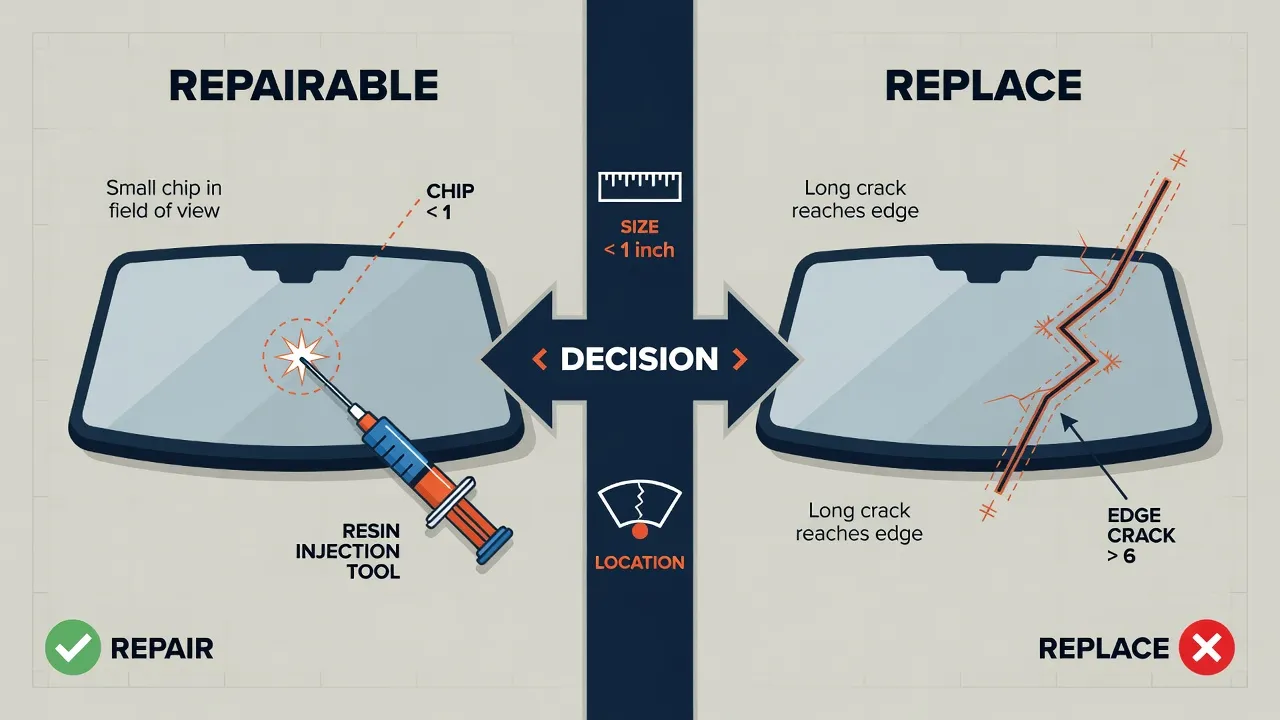
The industry rule of thumb: if the chip is smaller than a quarter and any crack running off it is shorter than about three inches, it is almost certainly repairable. Within that envelope, technicians see a handful of recurring damage patterns, and all of them respond well to resin:
- Bullseye — a clean circular break with a dark cone, the easiest repair with the best cosmetic result
- Star break — a central impact point with short legs radiating outward, very repairable but more prone to spreading if ignored
- Half-moon — a partial bullseye, repairs about as well as the full version
- Combination break — a bullseye with star legs, fixable but the result depends on how much debris got into the cracks
- Surface pit — a small divot that never penetrated the outer layer, which may only need filling for cosmetics
Some shops also offer long-crack repair on cracks up to six inches — about the length of a dollar bill — but success rates drop as cracks grow, and many technicians consider anything past three inches a judgment call rather than a sure thing.
When It's Too Late
Plenty of windshields show up for a $75 repair and leave with a replacement appointment instead. These are the disqualifiers technicians look for:
- Cracks reaching the edge of the glass. Damage within about two inches of the windshield's perimeter compromises the zone that bonds the glass to the car's frame. Edge cracks also spread fastest, because that border area carries the most structural stress.
- Damage in the driver's direct line of sight. Even a good repair leaves slight optical distortion. Most shops will not inject resin in the critical vision area directly in front of the driver, and some state inspection rules back them up.
- Cracks longer than the repairable range. Past six inches, resin cannot reliably restore strength, and the crack will keep walking across the glass.
- Damage through both layers. A windshield is two sheets of glass laminated around a plastic interlayer. If the inner layer is cracked or the plastic is punctured, repair is off the table.
- Old, contaminated chips. Dirt, water, and car-wash wax work into an open break within weeks. Once the fractures are contaminated, resin cannot bond cleanly and the repair turns cloudy or fails.
- Three or more chips, or a chip on top of an old repair. At that point cumulative damage and cost tilt the math toward new glass.
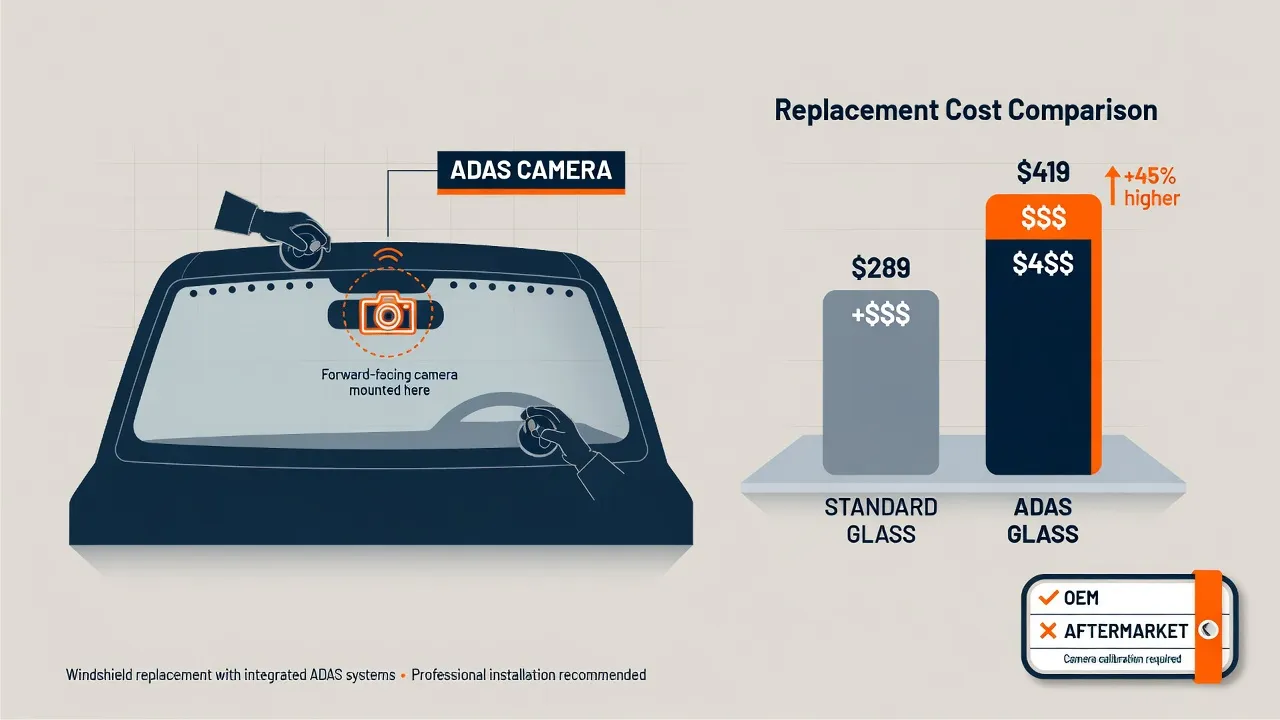
- Damage in the camera's view. If the chip sits in the zone an ADAS camera looks through, most shops replace rather than risk distorting what the camera sees — and that replacement will include recalibration.
What Chip Repair Costs in 2026
Expect $60 to $200 for professional chip repair. The first chip typically runs $60 to $100 at an independent shop or mobile service, with each additional chip on the same windshield adding $25 to $75. Long-crack repairs and combination breaks land at the top of the range. Mobile service is usually included free.
Insurance makes this even easier. Because repairing a chip saves insurers the cost of a replacement claim later, most carriers waive the comprehensive deductible entirely for chip repair — meaning it costs you nothing out of pocket and does not raise your rates. Compare that to replacement at $250 to $600 for standard glass, or $600 to $1,600 and up for windshields with ADAS cameras that need recalibration, and the case for fixing chips immediately makes itself.
DIY Kits vs. Professional Repair
Hardware-store resin kits cost $10 to $25 and can genuinely work on a small, fresh bullseye if you follow the instructions exactly. But you get one attempt. Consumer kits lack the vacuum stage that pulls air and moisture out of the break, so resin often fails to reach the fine fracture tips — and once any resin cures in the chip, no professional can re-repair it. Botch the DIY job and your only remaining option is replacement.
The honest calculus: on a 15-year-old commuter car with a chip you just want stabilized, a careful DIY repair is a defensible $15 gamble. On anything you plan to keep, trade in, or claim on insurance — where the professional repair is likely free anyway — there is no reason to take the gamble.
What to Do the Moment You Get a Chip
You cannot always get a chip repaired the same day, but you can protect it until you do. Put a piece of clear packing tape over the chip to keep out dirt and moisture. Skip the car wash. Avoid slamming doors, which spike air pressure inside the cabin. Most importantly, avoid thermal shock: do not blast the defroster on a frozen windshield or hit hot glass with cold water, because sudden temperature swings are what turn chips into cracks. Then book the repair within days, not weeks.
One more scenario worth planning for: hail. If the storm that chipped your glass also dented your hood and roof, an auto body shop can handle the dent work while the glass shop handles the windshield — insurers treat both under the same comprehensive claim, so it usually makes sense to document everything and file once.
Frequently Asked Questions
Will a repaired chip be completely invisible?
No. A quality repair improves the appearance by roughly 70 to 90 percent, leaving a faint blemish you can spot if you know where to look. The point of repair is structural — stopping the damage from spreading — with cosmetics as a bonus, not a guarantee.
How long can I wait before repairing a chip?
Days, not weeks. Fresh, clean breaks accept resin best; after a few weeks of dirt, moisture, and temperature cycling, repair quality drops and the risk of the chip cracking out rises sharply. Cover it with clear tape and schedule the repair as soon as you can.
Can a chip still spread after it has been repaired?
Rarely, but it happens — usually with star breaks or repairs done on older, contaminated damage. Most reputable shops warranty their repairs and will credit the repair cost toward a replacement if the damage spreads afterward. Ask about that policy before the work is done.
Does insurance really cover chip repair for free?
Very often, yes. Most carriers waive the comprehensive deductible for chip repair because a $75 repair now saves them a far larger replacement claim later. Comprehensive glass claims also do not typically affect your premium the way at-fault accident claims do, but confirm with your insurer.
Are DIY windshield repair kits worth it?
Only in narrow cases: a small, fresh bullseye on a vehicle where appearance and resale do not matter much. Consumer kits skip the vacuum step professionals use, results are inconsistent, and a failed attempt ruins the chip for professional repair. If insurance covers professional repair at no cost to you, DIY saves nothing and risks a lot.