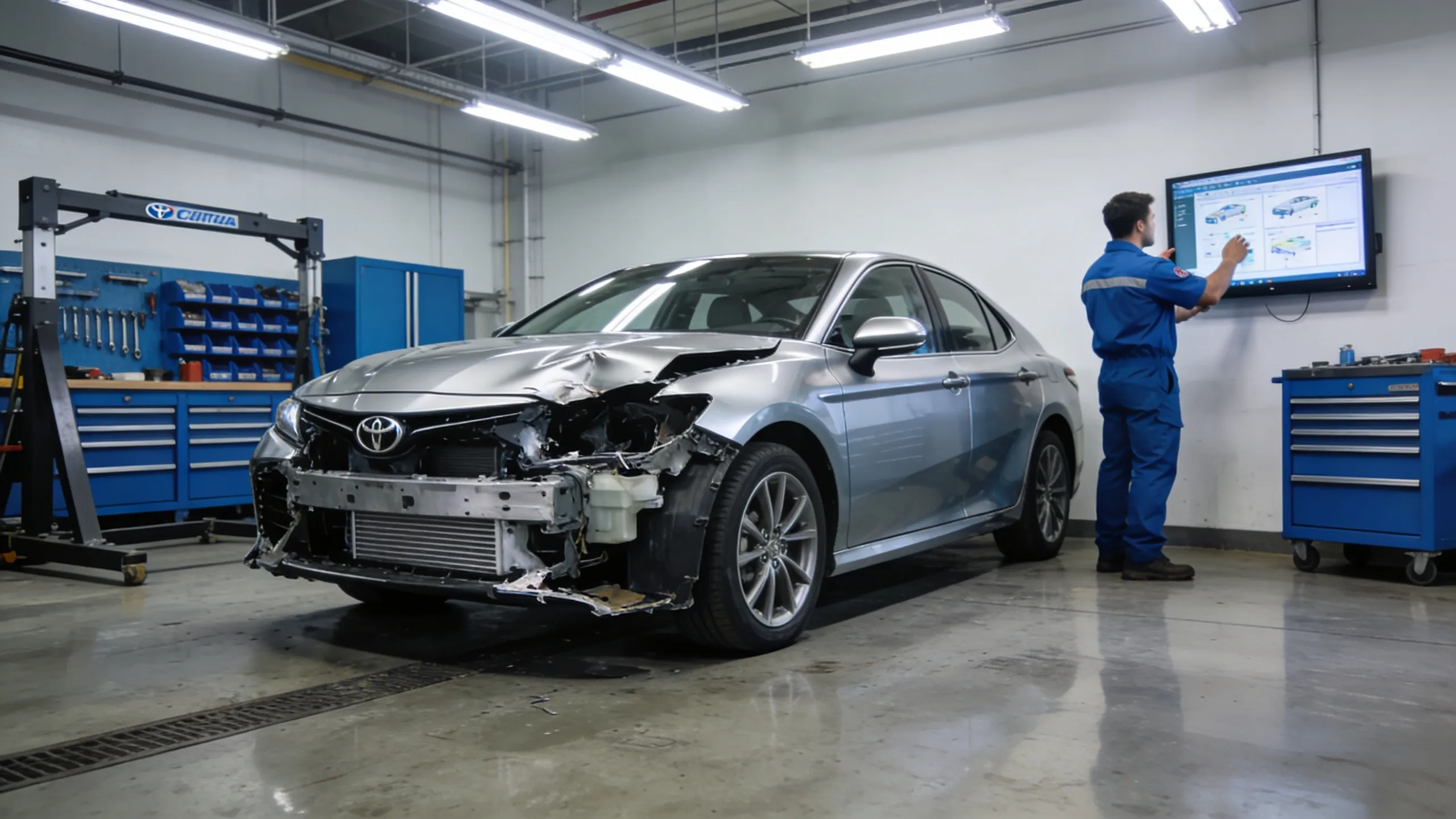
What is a Toyota certified collision center?
A Toyota certified collision center, also called a Toyota Certified Body & Paint facility, is an auto body shop that has met Toyota Motor North America's requirements for equipment, training, and repair processes. This differs from general industry certifications like I-CAR Gold Class, which apply across vehicle makes. Toyota's program is make-specific, it focuses narrowly on Toyota and Lexus repair standards.
Toyota collision center requirements: What shops must meet
Equipment standards
Certified facilities must have specialized tools including:
- Aluminum welding equipment, Toyota vehicles increasingly use aluminum structural components requiring dedicated equipment separate from steel welding tools to prevent cross-contamination and corrosion
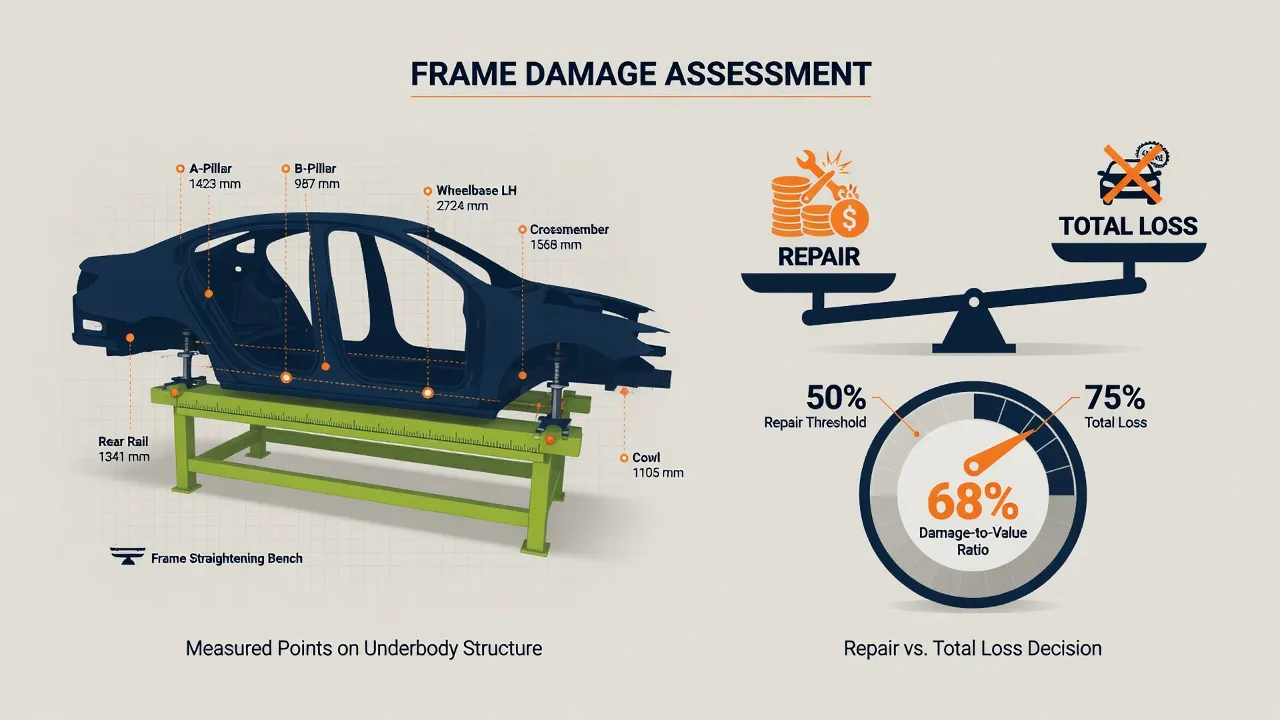
- Vehicle measuring systems, Computerized equipment verifies structural geometry restoration to factory specifications
- OEM-approved adhesives and bonding materials, Modern Toyota vehicles use structural adhesives alongside welding
- Advanced Driver Assistance Systems (ADAS) calibration equipment, Critical for modern safety features
Training and I-CAR requirements
Technicians and estimators must maintain current training credentials through I-CAR, which provides inter-industry standards, plus vehicle-specific training from Toyota Motor North America.
Facility and process standards
Toyota conducts audits evaluating proper aluminum and steel work area segregation, access to Toyota repair manuals and Technical Information System (TIS), quality control processes, and parts sourcing practices prioritizing OEM components.
Why ADAS recalibration is a critical part of Toyota collision repair
Advanced Driver Assistance Systems (ADAS) power features like Toyota Safety Sense, automatic emergency braking, adaptive cruise control, lane departure warning, and automatic high beams. These systems rely on precisely positioned cameras, radar sensors, and ultrasonic sensors around the vehicle.
Collision damage can miscalibrate sensors even slightly. A camera mounted in a windshield that shifts even a fraction of an inch can cause the lane-keeping system to generate false alerts or, worse, fail to alert at all. Vehicles may appear fully repaired while operating with compromised safety features invisible to drivers.
The Insurance Institute for Highway Safety documents that properly functioning ADAS systems significantly reduce crash rates. That benefit disappears without correct calibration after repair.
Toyota Safety Sense: What gets affected in a collision
Depending on collision location and severity, these components may need recalibration:
- Pre-Collision System (PCS), Front radar sensor in lower grille
- Lane Departure Alert (LDA), Front-facing camera in windshield or rearview mirror area
- Automatic High Beams (AHB), Tied to front camera system
- Rear Cross-Traffic Alert, Rear radar sensors
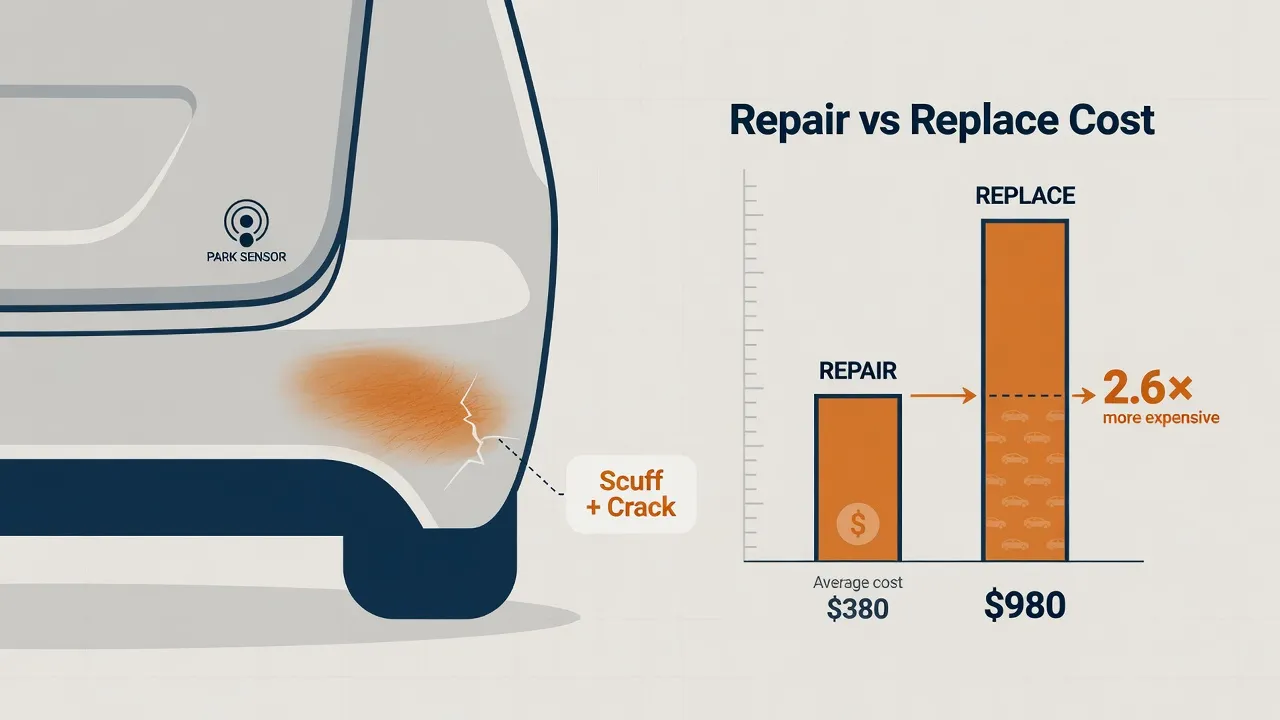
- Backup Camera, Recalibration required if rear body panels or bumper are replaced
Any repair involving the front bumper, windshield, front grille area, or rear bumper likely requires at least one ADAS recalibration step.
Toyota OEM parts: Why they matter and what the alternatives are
OEM parts for Toyota vehicles
Toyota OEM (Original Equipment Manufacturer) parts are manufactured to the same specifications as the original parts installed at the factory. Benefits include:
- Exact fit, No modification or trimming required
- Material match, Steel grades, aluminum alloys, and plastics match original
- Safety compliance, Structural parts meet Toyota's crash test specifications
- Sensor compatibility, Housings and brackets maintain correct sensor positioning
Aftermarket parts for Toyota vehicles
Third-party manufactured aftermarket parts typically cost 30-60% less than OEM alternatives. But they come with real trade-offs:
- Fit tolerances may vary, sometimes requiring adjustment
- Material grades may differ from Toyota specifications
- Structural components may not meet identical crash performance standards
- Sensor mounting brackets may not maintain precise ADAS positioning
Insurance and OEM parts for Toyota repairs
Insurance companies don't automatically approve OEM parts. Car owners can pursue several options:
- Review policy coverage for OEM endorsements
- Check state regulations restricting when insurers can mandate aftermarket parts
- Negotiate with insurers, particularly for vehicles still under warranty
| Part Type | Typical Cost vs. OEM | Fit | ADAS Compatibility |
|---|---|---|---|
| Toyota OEM | Baseline | Factory exact | Engineered to spec |
| Toyota Genuine (dealer) | Same as OEM | Factory exact | Engineered to spec |
| Quality aftermarket | 30–60% less | Close, may vary | May vary |
| Recycled/used OEM | 20–50% less | Exact (original part) | Exact (if undamaged) |
Real-world scenarios: When Toyota certification made a difference
Marcus's experience: After rear-end collision damage on his 2022 RAV4 Hybrid, a non-certified shop couldn't address his backup camera and rear cross-traffic alert issues. He ended up paying out of pocket for ADAS recalibration at the dealer.
Diana's experience: She specifically requested a Toyota certified facility for her 2021 Camry front-end collision. The certified shop documented and performed required Pre-Collision System radar and Lane Departure Alert camera recalibrations on-site and provided paperwork to prove it.
Carlos's experience: His 2020 Tacoma side collision repair at a certified shop included computerized frame measuring and factory-spec straightening. He walked away with a written lifetime workmanship warranty on structural repairs.
How to find a Toyota certified collision center
Toyota maintains an official locator tool at toyota. com for ZIP code searches. Worth knowing: not all Toyota dealership body shops hold Toyota collision certification. Collision repair operations often run separately from mechanical service departments.
Steps to find and verify a Toyota certified body shop
- Use the Toyota certified facility locator at toyota. com
- Call shops directly asking about current certification status and renewal date
- Ask about on-site ADAS calibration capability or whether it's outsourced to dealers
- Request documentation of repair plans before authorizing work, including parts (OEM vs. Aftermarket) and ADAS systems needing recalibration
- Verify parts usage from final invoices listing each part by number
Working through insurance for Toyota certified repairs
The right to choose a repair facility
In all U. S. States, car owners have the legal right to choose their own repair facility, regardless of which shops their insurer designates or recommends. Direct Repair Program (DRP) lists are a convenience, not a requirement. Insurers can't legally mandate specific shops.
Supplement claims and Toyota repair procedures
Certified shops sometimes identify additional repair needs during disassembly through supplement claims. This is a normal part of the process, damage isn't always visible externally. Toyota's published procedures may specify component replacement where insurers' initial estimates list repairability.
Cost expectations for Toyota certified collision repair
Toyota certified collision repair typically costs more than non-certified alternatives for several reasons:
- OEM parts, More expensive than aftermarket, sometimes significantly for complex components
- ADAS calibration labor, Specialized procedures requiring equipment; typically $150-$450 per calibration
- Certified labor rates, As of 2026, ranging from $75-$175 per hour depending on geographic area
- Required procedures, Following Toyota Technical Information System specifications exactly may add steps
For moderate Toyota Camry or RAV4 collisions involving front bumper replacement, hood damage, and ADAS component involvement, total repair costs at a Toyota certified body shop typically run from $3,500 to $7,500 or more depending on severity and location. Non-certified shops may come in lower by using aftermarket parts, skipping ADAS recalibration, or cutting procedural corners.
Key takeaways
- Toyota certified collision centers have met Toyota Motor North America's requirements for equipment, training, and repair procedures, not just generic industry credentials
- ADAS recalibration is critical for modern Toyota repairs; systems like Toyota Safety Sense require precise sensor positioning that collisions disrupt
- Toyota OEM parts are the standard for certified repairs; insurance policies may not automatically cover them
- Car owners have legal rights to choose their repair facility across all U. S. States
- Verifying certification requires confirming current status, asking about on-site ADAS capability, and requesting repair documentation
- Cost differences reflect actual scope differences; lower non-certified estimates may exclude ADAS recalibration or OEM parts
Sources
- I-CAR — collision repair training and certification standards
Frequently asked questions
What's the difference between a Toyota certified collision center and a regular auto body shop?
Certified centers have met Toyota Motor North America's specific equipment, training, and procedure requirements. General shops may repair Toyotas but lack specific equipment, particularly for ADAS calibration and aluminum structural work.
Does Toyota certification guarantee a lifetime warranty on repairs?
Not automatically. While certified shops must follow Toyota procedures, warranty terms vary by shop. Many offer lifetime workmanship warranties as business policy; ask before authorizing repairs.
Will my insurance company pay for repairs at a Toyota certified body shop even if it's not on their preferred list?
Yes. Car owners have legal rights to choose any licensed facility. Insurers must pay according to policy terms regardless of shop selection. Supplement processes handle rate or parts usage differences.
Does every Toyota collision repair require ADAS recalibration?
Not every repair triggers recalibration. It's required when a repair affects components in or near a sensor location, front bumper, windshield, rear bumper, front grille area, or door mirror assemblies on vehicles with blind-spot monitoring.
How can a car owner verify that ADAS recalibration was actually completed?
Request calibration reports as part of final documentation. Toyota-approved equipment generates printouts or digital records of procedures and results. No documentation may mean incomplete calibration.
Are Toyota certified body shops only located at Toyota dealerships?
No. Many certified collision centers are independent shops not affiliated with dealerships. Toyota's program is available to any qualifying shop meeting equipment and training requirements.