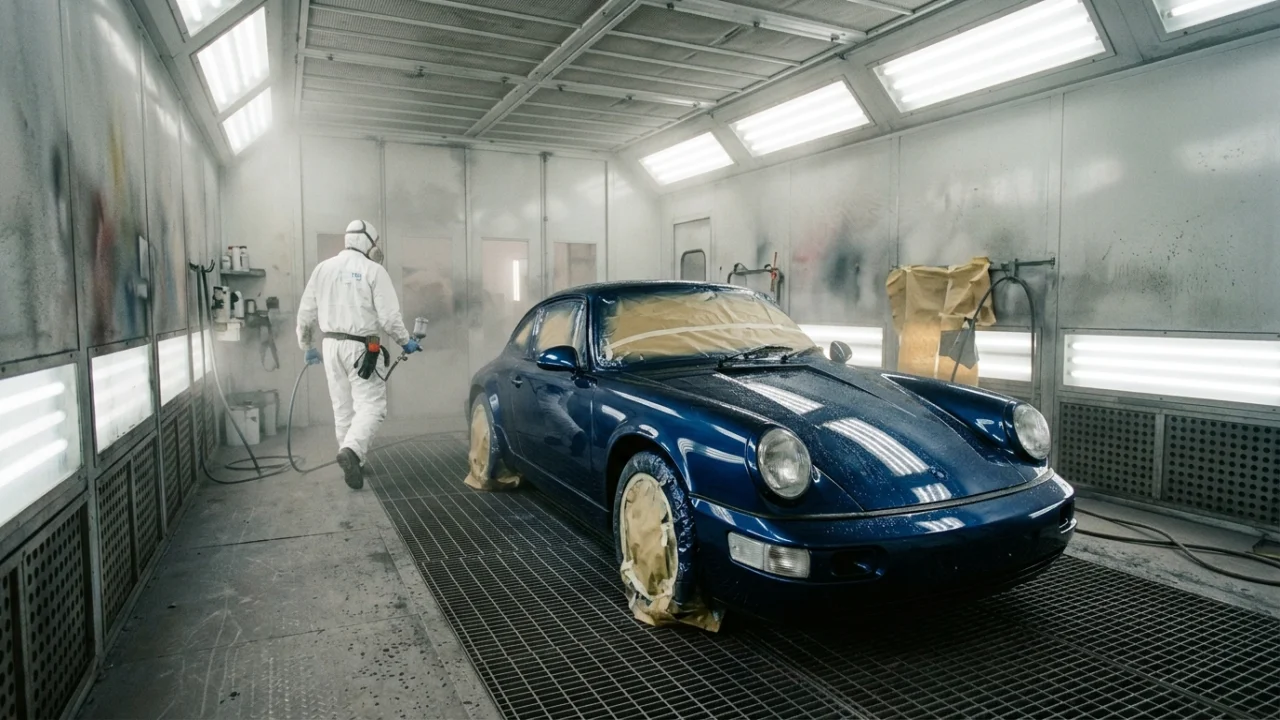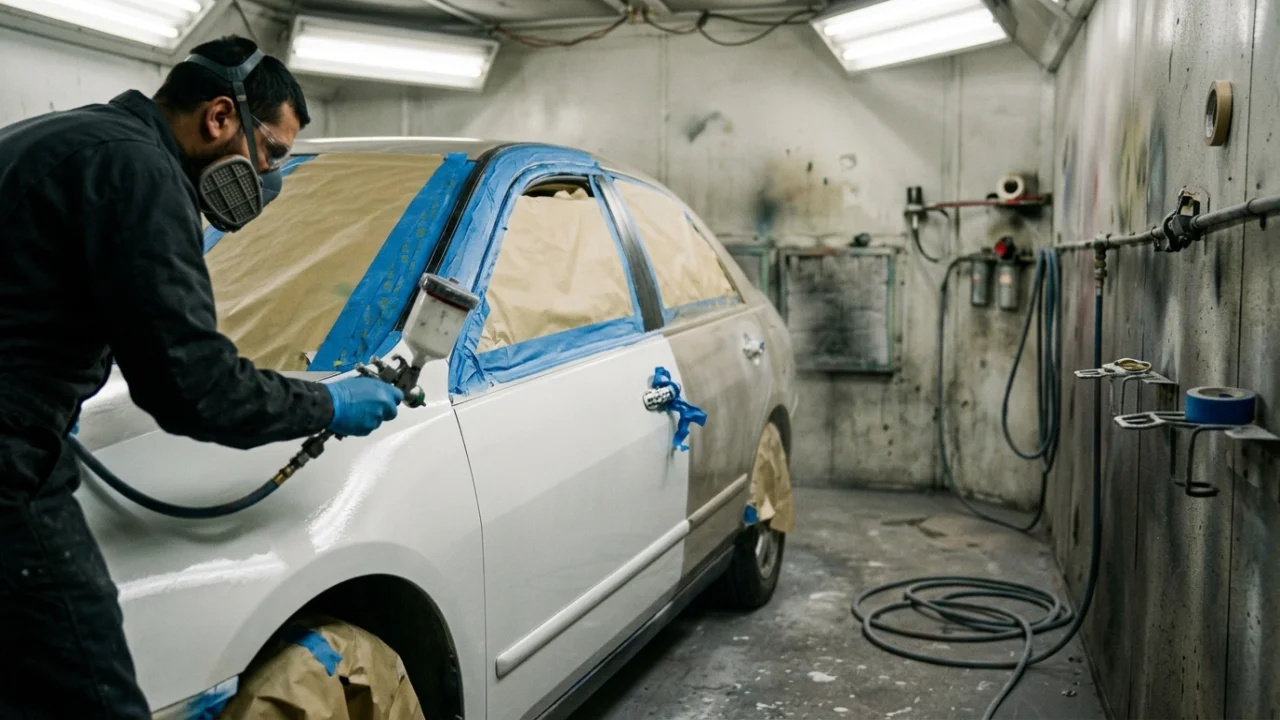
Priya found the chip on her hood on a Saturday: a crater the size of a match head with a bright silver center where a highway rock had punched through to metal. The dealership parts counter sold her a touch-up pen for $22. A body shop quoted $600 to refinish the hood. Both were reasonable answers to the same chip, and which one is right depends on questions nobody at either counter asked her.
The touch-up versus professional decision comes down to a trade most people never hear stated plainly: touch-up paint protects but does not beautify, and professional repair does both at ten to forty times the price. Once you accept that, the choice for any given chip or scratch gets easy.
What Touch-Up Paint Does Well
Touch-up paint has exactly one job it performs excellently: sealing exposed metal and primer so corrosion cannot start. A rock chip that shows bare steel will begin rusting within weeks, and once rust creeps under the surrounding paint, a $600 hood respray becomes a $900 repair with rust remediation. A $22 pen applied this weekend prevents that entirely.
It does this well in the places chips actually happen: the leading edge of the hood, the front bumper, the bottoms of rocker panels, the lip of the trunk. For small, scattered chips in these zones, dabbed touch-up is exactly what a sensible owner and even many detailers would do. From five feet away, a carefully applied dab of correctly coded color on a small chip is genuinely hard to spot, especially on white, black, and other solid colors.
What Touch-Up Paint Cannot Do
Touch-up paint cannot make damage invisible, and it is worth being blunt about why. Factory paint is sprayed in atomized layers and baked; touch-up is brushed or dabbed and air dries. It sits slightly proud of the surface or sinks into the chip, it dries a slightly different sheen because it has no proper clear coat over it, and on metallics the flakes clump instead of lying flat, so the color reads darker or grayer than the panel around it.
The longer the damage, the worse this gets. A dabbed chip disappears at conversation distance. A touch-up pen dragged down a twelve-inch scratch produces a wobbly, raised, mismatched line that is often more noticeable than the scratch was. As a rule: touch-up flatters chips and betrays scratches.
The Costs Side by Side in 2026
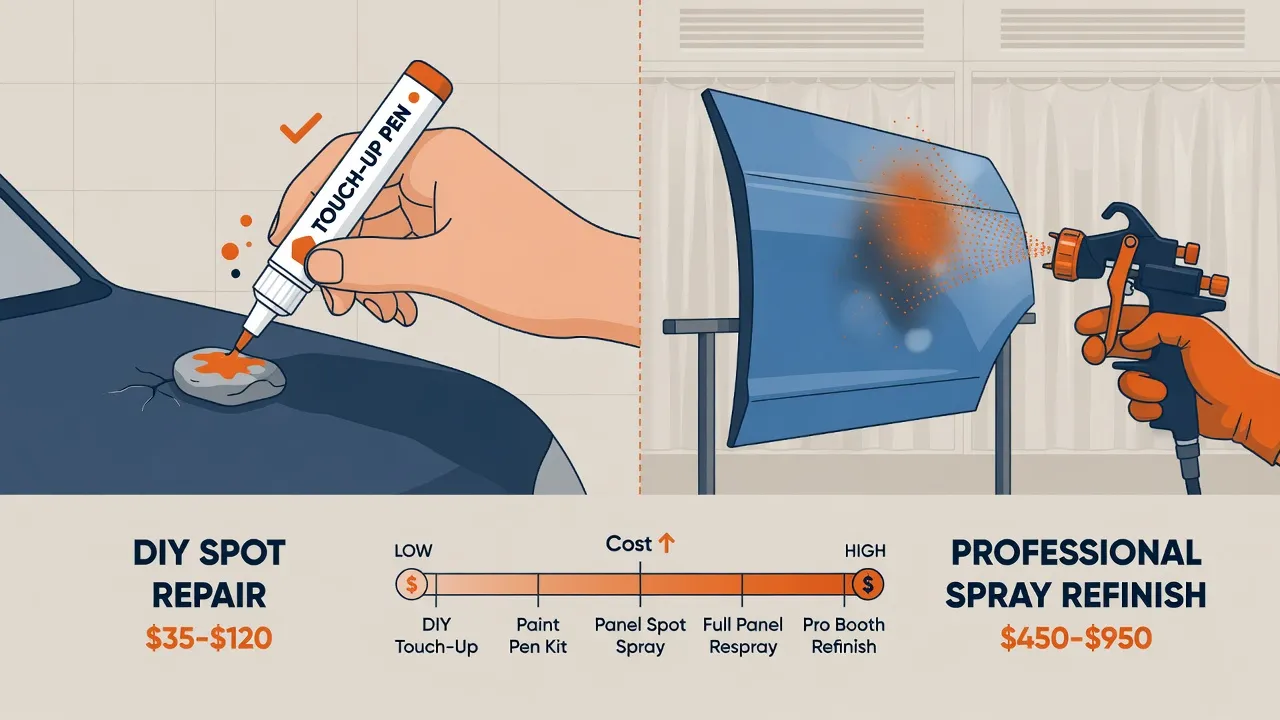
- Touch-up pen or bottle: $10 to $40. Aftermarket pens at the low end, factory-coded paint from a dealer near the top.
- OEM touch-up kit with primer and clear: $20 to $60. The two-or-three-step kits produce noticeably better results than a single pen.
- Mobile chip and scratch repair: $150 to $500. A technician sands, fills, airbrushes color, and clears a localized spot at your home. Much better than DIY, not quite booth quality.
- Professional buffing of clear coat scratches: $75 to $300. Worth remembering that shallow scratches need no paint at all.
- Single-panel repaint: $300 to $1,000. The full fix: sand, prime, base, clear, bake. Blending into adjacent panels adds $150 to $300 per panel, and metallic or pearl finishes add 20 to 30 percent.
Notice the gap between $60 and $300. There is no product in that range that buys you a professional result, which is why the decision is rarely about finding a middle option and almost always about deciding which side of the gap your damage belongs on. If you are unsure which side you are on, most any paint shop will look at a chip or scratch and tell you for free, and the good ones will tell you when touch-up is all you need.
A Simple Decision Framework
Run the damage through these five questions:
- Size. Smaller than a pencil eraser: touch-up is defensible. Larger than that, or a scratch longer than a few inches: professional repair if appearance matters.
- Depth. Bare metal showing: apply touch-up now regardless of your long-term plan, because rust does not wait for your schedule. Clear coat only: buy a $10 to $30 polishing compound instead, since touch-up on a shallow scratch makes it look worse.
- Location. Rocker panels, lower bumper, wheel-arch edges, and other low zones hide touch-up well. Hoods, doors at eye level, and trunk lids display every flaw.
- The car. A twelve-year-old commuter with 160,000 miles earns touch-up. A three-year-old car you plan to sell, or any leased vehicle, usually earns professional repair.
- Color. Solid white, black, and gray forgive touch-up. Silver metallic and tri-coat pearl punish it, because dabbed metallic never matches sprayed metallic.
One scenario overrides the framework: damage from a crash. If a chip or scratch came with a dented panel, a pushed bumper, or any misalignment, you are no longer making a cosmetic decision, and a proper body shop should look at the whole area before anyone touches paint.
How to Apply Touch-Up Paint So You Do Not Regret It
Most bad touch-up jobs fail on technique, not product. If you have decided a chip qualifies, do it right:
- Buy paint matched to your paint code, which is printed on the driver door jamb sticker, not matched by eyeballing color names.
- Clean the chip with alcohol and let it dry fully. Paint over wax or road film peels.
- If metal shows, touch in primer first and let it cure.
- Apply the color in thin dabs with a toothpick or fine brush, building up in layers. One thick blob is the signature of every bad touch-up job you have ever seen.
- Slightly underfill rather than overfill. A shallow chip with color in it disappears; a raised bump catches light.
- Give it weeks to cure before polishing the area or hitting it with a pressure washer.
The Hidden Cost of Bad Touch-Up
Here is the part the pen packaging never mentions: touch-up paint is not a stepping stone to a professional repair. It is a small obstacle to one. When a shop eventually refinishes the panel, every blob of touch-up has to be sanded out first, and thick, sloppy touch-up in a deep scratch adds prep labor to the estimate. If you suspect you will eventually pay for the real repair, either do the touch-up thinly and neatly or limit it to a bare-minimum seal against rust.
Lease returns deserve their own warning. Lease inspectors work to written damage standards, and a chip smaller than a stated size, often around the size of a dime, commonly passes uncharged, while an obvious amateur touch-up smear over that same chip can get flagged as poor-quality repair. Before touching up anything on a lease, read your brand's wear-and-tear guide. Sometimes the cheapest move on a lease is doing nothing, and the second cheapest is a $150 to $500 mobile repair a month before turn-in.
Sources
- CCC Intelligent Solutions — collision repair cost benchmarks and industry data
- Insurance Information Institute — auto insurance and repair cost statistics
Frequently Asked Questions
Does touch-up paint ever look as good as professional repair?
No, and it is not designed to. Touch-up is brushed on and lacks the sprayed clear coat that gives factory paint its depth, so it always reads slightly different in texture and sheen up close. On small chips in low-visibility areas and forgiving solid colors, it can look very good from normal viewing distance, which is a different and more honest standard.
Should I touch up a rock chip or leave it alone?
If the chip shows primer or bare metal, seal it with touch-up promptly, because corrosion starting under the paint turns a cosmetic issue into a structural one. If the chip only nicked the clear coat and shows color underneath, it will not rust, so leaving it alone is a reasonable choice, especially on a lease.
How much does professional chip repair cost in 2026?
Mobile spot-repair services charge $150 to $500 to sand, fill, and airbrush a chip or small scratch area. A full panel respray at a shop runs $300 to $1,000, plus $150 to $300 per adjacent panel if blending is needed. For a hood peppered with many highway chips, shops usually recommend refinishing the whole panel rather than chasing chips individually.
Can a shop just paint over my old touch-up paint?
No. Proper refinishing requires sanding the old touch-up out completely, because paint sprayed over raised blobs telegraphs every lump through the new finish. Heavy or thick touch-up adds prep time to a later professional repair, which is why thin, minimal application matters if a real repaint might be in the panel's future.
Is touch-up paint good enough for a car I am about to sell?
For a private sale of an older car, neat touch-up on chips is usually worth the $20, since it signals care and prevents buyers from fixating on bare-metal dings. For a newer car, a $150 to $500 professional spot repair often pays for itself at negotiation time, while obvious amateur touch-up can cost you more in buyer confidence than the chip would have.