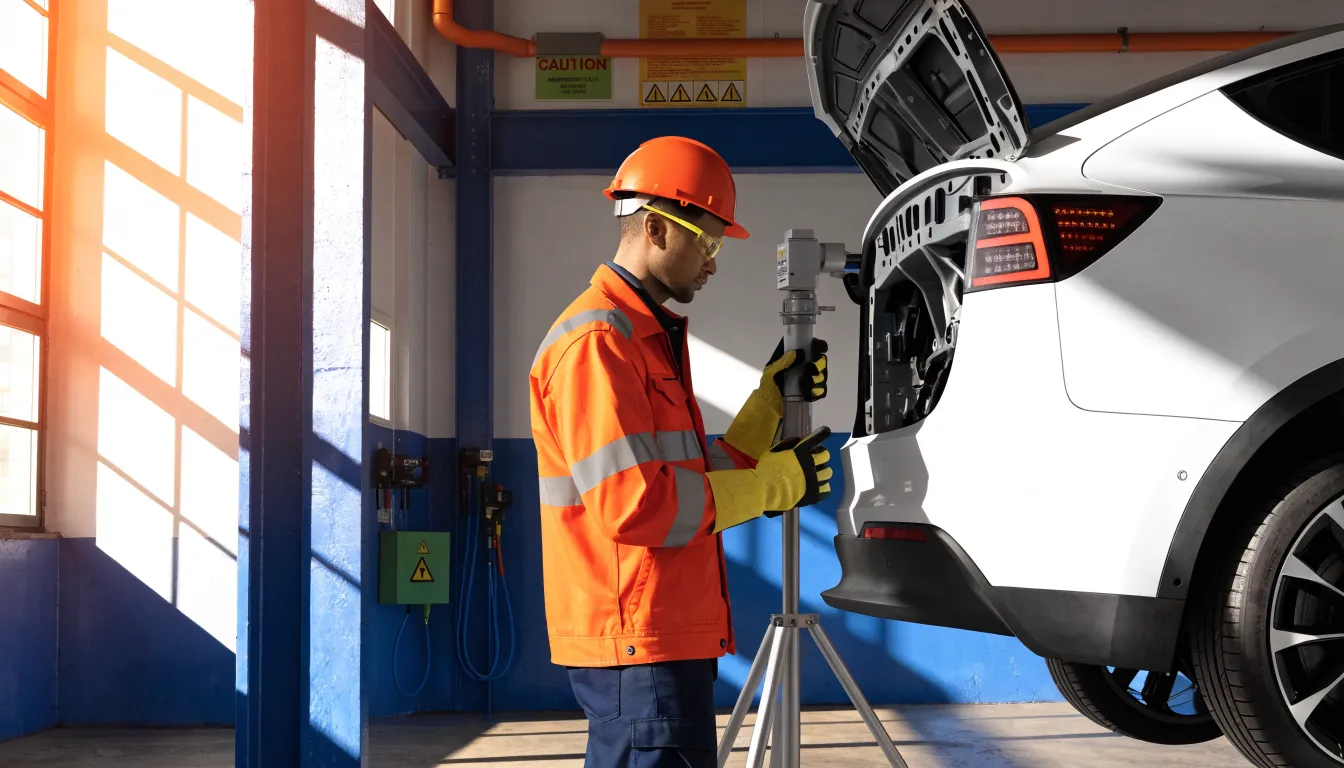
Tesla Certified Body Shop: How to Find One & Why It Matters

When Marcus bought his Model Y in 2023, he assumed any decent auto body shop could handle repairs if something went wrong. After a side-swipe in a parking garage left a crumpled door and damaged front quarter panel, he found a local shop with good reviews and dropped the car off. What followed wa...

collision-repairMay 8, 202618 min read
GS

Gaurav Sharma

Gaurav brings strategic leadership and business development expertise to Auto BodyShop Near. With a focus on growth and partnerships, he drives the company's vision to become the most trusted auto body shop directory in the United States.

When Marcus bought his Model Y in 2023, he assumed any decent auto body shop could handle repairs if something went wrong. After a side-swipe in a parking garage left a crumpled door and damaged front quarter panel, he found a local shop with good reviews and dropped the car off. What followed was four months of delays, a repair that failed Tesla's sensor calibration, and a battery management warning light that wasn't there before the accident. The shop had no idea what they were doing with the car's aluminum structure or the high-voltage systems running beneath the floor.

Marcus's experience is not unusual. Tesla vehicles use construction methods and materials that differ significantly from conventional cars, and those differences require shops with specific training, equipment, and authorization to repair correctly. A tesla certified body shop is not just a marketing label. It represents a formal certification program that Tesla administers directly, with strict requirements around tools, technician training, and repair procedures.

This guide explains what Tesla's certification program involves, how it differs from standard auto body repair, what repairs typically cost, and how to find a tesla approved body shop near me that can handle the work safely.

For broader context on collision repair shops and what separates quality facilities from the rest, the collision repair resource center at AutoBodyShopNear. me covers the fundamentals any car owner should understand.


Why Tesla vehicles require specialized collision repair

Tesla's construction approach differs from most traditional vehicles in four major ways: extensive use of aluminum, large single-piece structural castings, a high-voltage battery system integrated into the floor, and a dense network of Advanced Driver Assistance Systems (ADAS) sensors that must be recalibrated after repairs. Each of these creates complications that standard body shops are not equipped to handle.

Aluminum and high-strength steel construction

Most conventional vehicles use steel as the primary structural material. Steel is forgiving to work with, it bends, and experienced technicians can straighten it with standard equipment. Aluminum behaves differently. It does not return to shape the way steel does; instead, it work-hardens when bent, meaning it becomes more brittle with each attempt to reshape it. Repairing aluminum requires dedicated aluminum-certified equipment, specialized welding tools, and technicians trained specifically in aluminum repair procedures.

Tesla uses aluminum extensively across its body panels, structural components, and door frames. The Model S and Model X are built almost entirely on aluminum platforms. The Model 3 and Model Y use a mixed-material approach combining aluminum with high-strength steel, but critical structural sections remain aluminum. Attempting to repair these sections with standard steel-focused techniques risks compromising the structural integrity of the vehicle, often in ways that are not visible to the naked eye.

Gigacasting: the large single-piece structural sections

Tesla introduced a manufacturing process called gigacasting, which produces large structural components as single aluminum castings rather than welding many smaller pieces together. The rear underbody of many Model Y vehicles, for example, is a single cast piece that replaces what would have been 70 or more individual stamped steel parts in a conventional vehicle.

This approach creates manufacturing efficiencies and can improve rigidity, but it fundamentally changes how collision repair works. When a cast section is damaged, it typically cannot be straightened, it must be sectioned or replaced entirely. Only shops with Tesla authorization have access to the correct replacement parts, the approved repair procedures for sectioning these castings, and the documentation needed to ensure the repair meets Tesla's standards.

High-voltage battery system

Every Tesla has a lithium-ion battery pack mounted beneath the passenger floor, running the full length and width of the cabin. In a collision, this battery can sustain damage that is not always visible from outside the vehicle. A compromised battery can cause fires hours or even days after a collision, a well-documented risk that requires specific safety procedures during inspection and repair.

Tesla's repair procedures include mandatory high-voltage safety protocols for any repair that comes near the battery enclosure. Certified shops train technicians to power down the high-voltage system safely before any structural work begins near the battery area. Non-certified shops often lack both the training and the equipment, including insulated tools rated for high-voltage work, to perform this safely.

ADAS sensor recalibration requirements

Tesla vehicles are equipped with a sophisticated network of cameras, radar (on older models), and ultrasonic sensors that power Autopilot and safety features like automatic emergency braking and lane keeping. These sensors are mounted throughout the vehicle, front bumper, rear bumper, door pillars, roof, and windshield.

Any time body work is done near these sensors, or any time a sensor is removed and reinstalled, the system must be recalibrated using Tesla's proprietary software. This recalibration cannot be performed with generic aftermarket diagnostic tools. It requires Tesla's calibration equipment and a specific driving calibration process or a static calibration setup. Shops without Tesla authorization cannot perform this step, which means the vehicle's safety systems will not function correctly after the repair.


What Tesla's certification program requires

Tesla's collision repair certification program, officially called the Tesla Approved Body Shop program, sets specific requirements that shops must meet before receiving authorization. Understanding these requirements helps car owners evaluate whether a shop claiming Tesla certification is legitimate.

Equipment requirements

Certified shops must invest in several categories of specialized equipment:

  • Aluminum repair equipment: Dedicated aluminum welding systems, aluminum-specific straightening tools, and separate work areas to prevent steel contamination (steel particles embedded in aluminum cause corrosion)
  • High-voltage safety equipment: Insulated gloves and tools rated for high-voltage work, high-voltage probe sets, and lock-out/tag-out equipment for disabling the battery system
  • Tesla calibration tools: The diagnostic and calibration equipment needed to recalibrate Tesla's ADAS systems after repairs
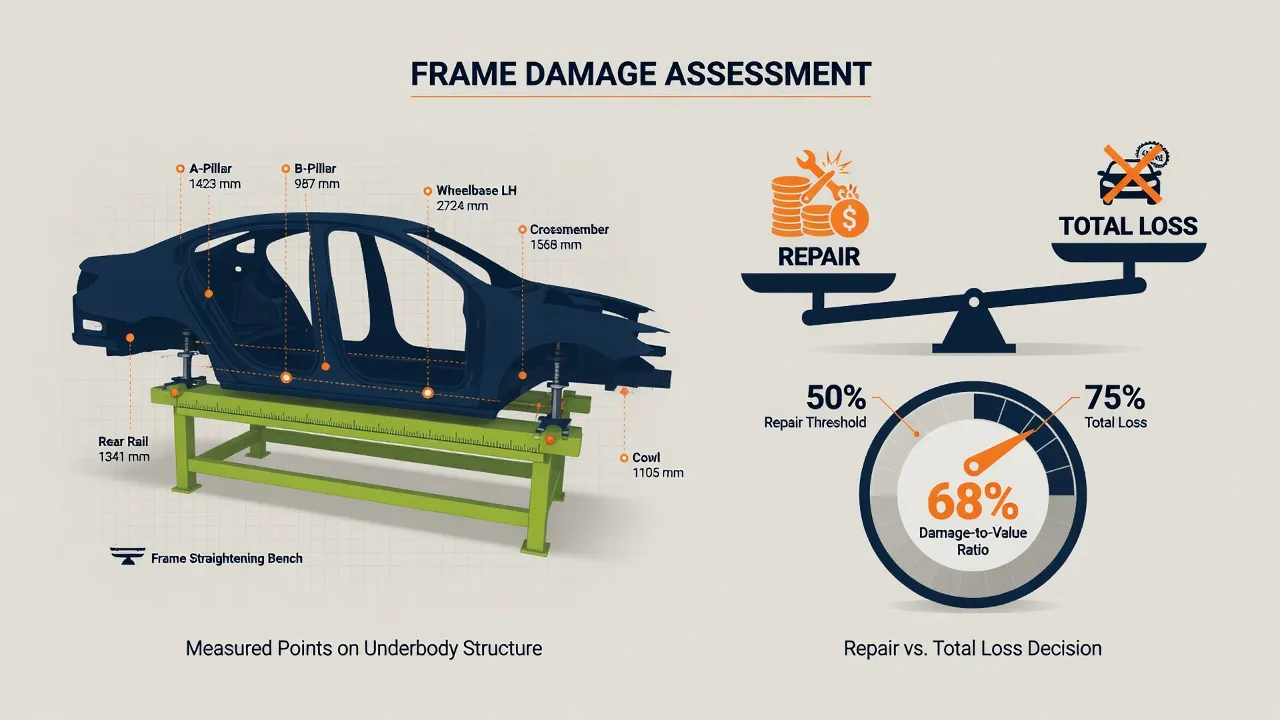
  • Frame measuring systems: Three-dimensional measuring equipment capable of verifying alignment to Tesla's specific tolerances
  • Spray booth standards: Paint booths capable of baking paint at the temperatures required for Tesla's paint finishes

Technician training requirements

Beyond equipment, Tesla requires shops to maintain technicians with specific training credentials. Tesla partners with I-CAR (Inter-Industry Conference on Auto Collision Repair), the collision repair industry's primary training and certification organization, to deliver Tesla-specific training programs. Technicians must complete these programs and maintain current certification.

I-CAR offers a Gold Class designation for shops that meet ongoing training requirements across all technician roles. Tesla's program layers Tesla-specific training on top of I-CAR's standard curriculum. Car owners can verify I-CAR credentials at the I-CAR website as one element of confirming a shop's qualifications.

Parts sourcing requirements

Tesla authorized shops must use Tesla OEM (Original Equipment Manufacturer) parts, meaning parts made by Tesla directly, not aftermarket alternatives. This matters because aftermarket parts for Teslas are not manufactured to the same tolerances as factory parts, which can affect sensor alignment, panel fit, and structural performance in a subsequent collision.

Some insurance companies push back on OEM parts due to cost. Car owners should be aware that in many states, OEM part requirements can be written into repair authorizations, and several states have laws that give car owners the right to specify OEM parts in insurance-covered repairs. Consulting the specific insurance policy and state regulations is advisable when this becomes a point of dispute.


How to find a Tesla approved body shop near you

Tesla maintains a searchable directory of certified collision repair facilities. The most direct way to find a tesla approved body shop near me is through Tesla's official body shop finder on tesla. com. Entering a zip code or city returns a list of certified shops in the area, along with contact information.

A few points to keep in mind when using this directory:

Coverage varies significantly by region. In major metro areas, Los Angeles, Dallas, Seattle, Miami, multiple certified shops typically exist within a reasonable drive. In rural areas or smaller cities, the nearest certified shop may be 50 to 150 miles away. This is a real inconvenience for Tesla owners in less populated markets.

Certification status can change. Shops can lose certification if they fail to maintain equipment or training requirements. The Tesla directory reflects current certification status, so it is worth checking directly rather than relying on a shop's claim from a prior interaction.

Contact the shop directly to confirm. Before scheduling work, call the shop and confirm they are currently Tesla-certified, ask about their experience with the specific Tesla model involved, and ask whether they have the parts needed in stock or will need to order them (this affects repair timeline significantly).

Car owners looking for auto body shops can also browse the AutoBodyShopNear. me directory to compare certified collision centers in their area alongside other shop options.


What to expect for Tesla repair costs

Tesla collision repair typically costs more than equivalent repairs on a conventional vehicle. Several factors drive this cost difference: specialized labor, OEM part pricing, potential battery inspection requirements, and ADAS recalibration fees. The ranges below reflect 2026 national averages and will vary based on location, damage severity, and the specific Tesla model.

Cost comparison by repair type

Repair type Conventional vehicle Tesla (certified shop)
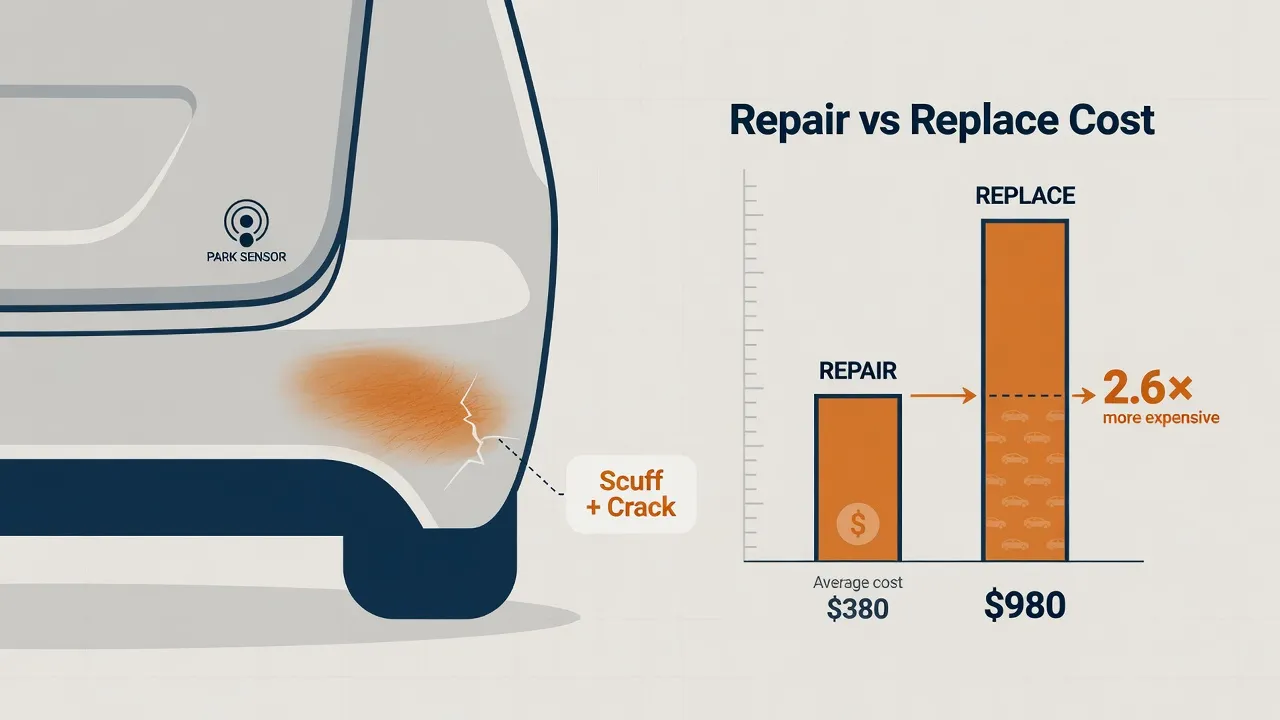
Minor bumper repair $500–$1,000 $1,200–$2,500
Door panel replacement $800–$1,500 $1,500–$3,500
Quarter panel repair $1,500–$3,000 $3,000–$6,000
Front-end collision (moderate) $3,000–$6,000 $6,000–$15,000
Rear-end collision (structural) $2,500–$5,000 $5,000–$20,000+
ADAS recalibration (standalone) $200–$500 $400–$1,200
Battery inspection (post-collision) N/A $500–$2,000

These ranges are estimates. The actual tesla repair cost for any specific incident depends on whether structural castings were damaged, whether the battery requires inspection or replacement, how many ADAS sensors need recalibration, and local labor rates. Tesla repair labor rates in major metros can run $150 to $250 per hour, 30% to 60% higher than standard body shop labor in the same markets.

Why battery damage can dramatically increase repair costs

Battery pack damage is the repair cost variable that catches many Tesla owners by surprise. The battery is the most expensive single component in any Tesla, replacement costs range from $10,000 to $22,000 depending on the model and pack size. In a significant rear-end collision or undercarriage impact, battery damage is common even when exterior damage appears moderate.

Tesla's repair protocol for any collision involving the battery area includes a mandatory high-voltage inspection. If the battery enclosure is compromised, even without cell damage, the enclosure must be repaired or replaced to maintain the battery's protective structure and thermal management.

Model-specific repair considerations

Model 3 and Model Y: These are Tesla's highest-volume vehicles, which means parts availability is generally better and repair costs tend to be somewhat lower than the S and X. The mixed aluminum and steel construction is less exotic than the Model S platform, which can reduce repair complexity on body panels. However, both models still use gigacast rear sections that significantly affect structural repair costs.

Model S and Model X: These vehicles use a more extensive aluminum structure, which makes most repairs more complex and expensive. Parts availability can be a limiting factor, sometimes extending repair timelines. The Model X's complex falcon-wing door system adds another variable, specialized parts and alignment requirements that few shops are equipped to handle correctly.

Model S Plaid and newer long-range variants: These models may have additional complexity in their battery and thermal management systems. Repair procedures continue to evolve as Tesla updates vehicle designs, which means even certified shops need to verify they have the most current repair documentation for newer vehicle configurations.


Insurance complications specific to Tesla repairs

Insurance claims involving Tesla vehicles can be more complicated than standard collision claims. Understanding these issues before they arise helps car owners navigate the process more effectively.

Insurer pushback on OEM parts

Many insurance companies default to allowing aftermarket or used parts in collision repairs. For most vehicles, this is a manageable trade-off. For Tesla vehicles, however, aftermarket structural parts do not exist for most components, Tesla does not license its designs to third-party manufacturers, and the complexity of the gigacasting technology means aftermarket alternatives are not practical for most structural sections.

Car owners can specify OEM parts in their repair authorization. In states with OEM parts laws, including California and others, insurers must honor this request. Even in states without specific OEM laws, the argument that no suitable aftermarket alternative exists for certain Tesla-specific parts is generally supportable. Working with the certified shop on documentation for the insurer is advisable.

Preferred shop programs and Tesla certification

Many insurance companies operate Direct Repair Programs (DRPs), networks of shops that have agreements with the insurer to accept the insurer's labor rates and parts pricing. Insurers sometimes pressure car owners to use DRP shops rather than their chosen repair facility.

Car owners have the legal right to choose their own repair shop regardless of insurer suggestions. If the DRP network does not include any Tesla certified shops near the owner's location, which is common, the car owner can reasonably insist on using a certified facility. Documenting this reasoning in writing with the insurance company creates a paper trail if the claim becomes disputed.

Total loss thresholds

Because Tesla repair costs are higher than conventional vehicle repairs, Tesla vehicles reach insurance total-loss thresholds at lower damage severity levels. A total loss is declared when the estimated repair cost exceeds a certain percentage of the vehicle's actual cash value (ACV), typically 70% to 80%, depending on the state and insurer.

For a three-year-old Model 3 with an ACV of $28,000, a repair estimate of $20,000 might trigger a total loss declaration. The same level of physical damage on a conventional car worth $28,000 might cost $8,000 to repair and clearly remain a repair case. Tesla owners should be aware of this dynamic and understand their rights in disputing a total loss determination if they believe the vehicle can be properly repaired for less than the insurer estimates.

For more detail on navigating insurance claims and understanding your rights in the repair process, the auto body shops near me guide at AutoBodyShopNear. me covers the broader context of working with insurers on collision claims.


How long does Tesla collision repair take?

Repair timelines at a tesla certified collision center are often longer than at conventional shops, for reasons that are partly unavoidable and partly manageable with good planning.

Parts availability

Tesla parts supply has improved significantly since 2021, when wait times for some components stretched to three to six months. As of 2026, routine parts, doors, bumper covers, fenders, typically arrive within one to four weeks for Model 3 and Model Y. Structural components, specialty items for Model S and X, and certain gigacast sections can still take four to eight weeks.

When a shop contacts Tesla for parts, they receive an estimated availability date. That date can shift, particularly for newer model variants where production demand for repair parts competes with vehicle production demand.

Repair complexity

The actual repair work on a Tesla often takes longer than equivalent work on a conventional vehicle. Aluminum welding requires more preparation time than steel welding. Gigacast section replacement involves more complex disassembly. ADAS recalibration, which must happen after all other repairs are complete, adds a day or more at the end of the process.

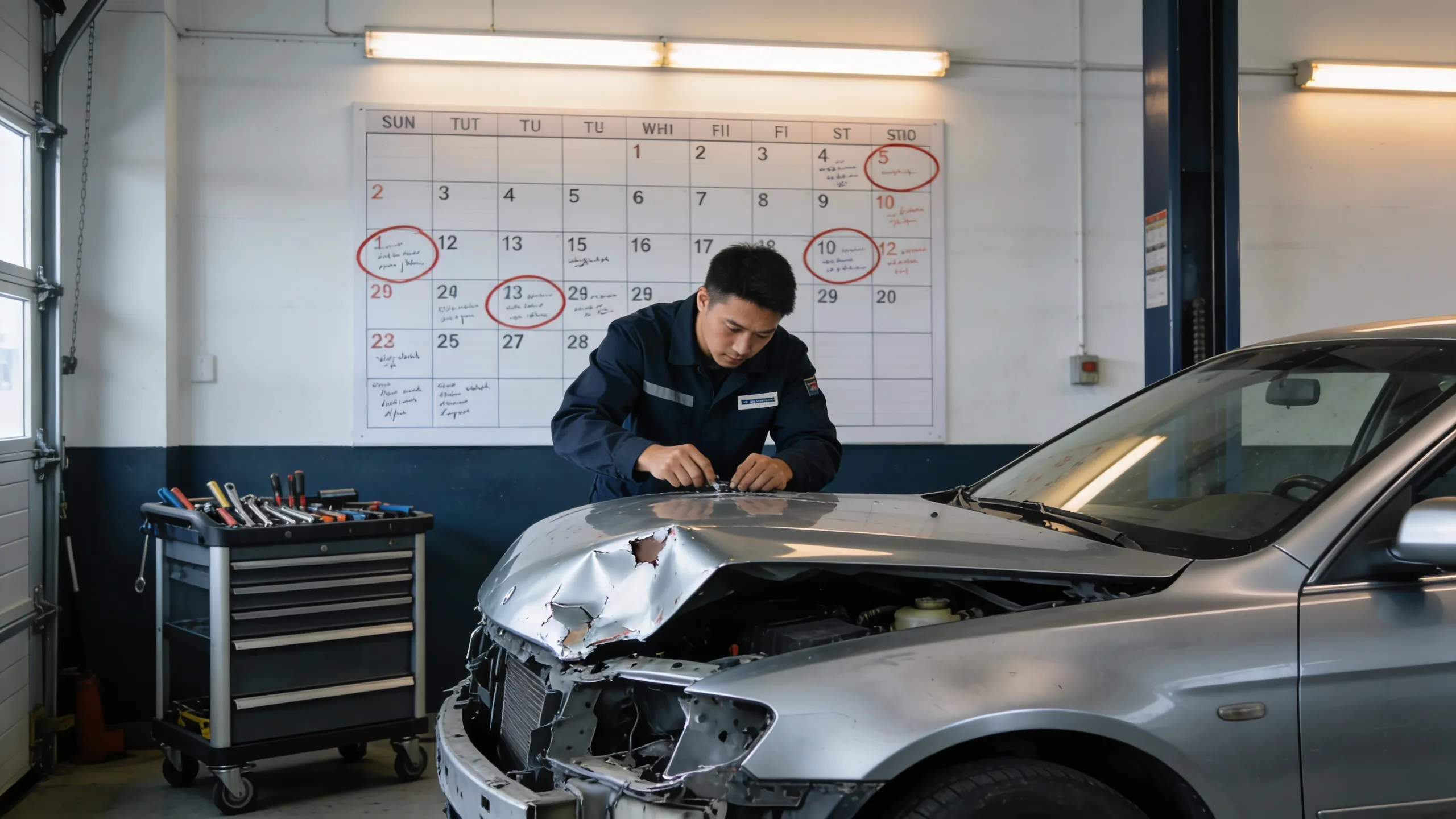
A moderate collision repair that might take 10 to 14 business days on a conventional vehicle can realistically take 20 to 35 business days on a Tesla at a certified shop. More complex repairs involving structural casting replacement or battery work can take 60 to 90 business days.

Rental vehicle planning

Because Tesla repairs take longer, rental vehicle planning matters more. Car owners should confirm rental coverage with their insurance policy before the repair begins. Standard rental coverage caps, often $30 to $50 per day for 30 to 60 days, may not cover the full repair duration for significant Tesla repairs. This gap is worth negotiating with the insurer before authorizing repair work.


Verifying a shop's Tesla certification before committing

Jennifer, a Model 3 owner in Denver, learned to verify certification status the hard way. After a rear-end collision, she called three shops that all described themselves as "Tesla specialists" or "experienced with Teslas." Only one of the three was actually listed in Tesla's certified shop directory, the other two had completed some Tesla-related training courses but did not hold current authorization from Tesla.

She chose the actually certified shop. The repair took six weeks but came back with all sensors calibrated, battery integrity confirmed, and a warranty on the work backed by Tesla's certified repair program.

To verify a shop's actual certification status:

  1. Search Tesla's official directory at tesla. com/support/body-shop-support using your zip code
  2. Confirm the shop appears by name at the exact address, not a nearby address or a parent company with a different location
  3. Ask the shop directly for their Tesla certification documentation or authorization number
  4. Ask about their repair volume, shops that regularly work on Teslas will have established workflows and parts ordering relationships that reduce delays
  5. Ask specifically about your model, authorization for Model 3 repairs does not automatically mean the shop is experienced with Model X falcon-wing door systems

For questions about finding and comparing certified auto body shops more broadly, AutoBodyShopNear. me's blog covers shop selection criteria, certification types, and what to ask before leaving a vehicle for repair.


What happens if a non-certified shop repairs a Tesla

Daniel's situation illustrates the risks concretely. His Model S was rear-ended at a moderate speed, causing cosmetic damage to the trunk lid and surrounding panels but no apparent structural damage. A non-certified shop offered to complete the repair for 40% less than the certified shop's estimate. Daniel authorized the work.

Three months later, the car's automatic emergency braking system generated repeated false alerts. A service visit to Tesla revealed that the rear camera mount had been reinstalled incorrectly and the camera calibration had never been performed, because the shop lacked the equipment to do it. Tesla's service center charged $900 to perform the calibration correctly. More concerning, Tesla also noted that the rear bumper support structure had been repaired rather than replaced, using a repair method not sanctioned by Tesla's body repair manual. This left a structural ambiguity about how the rear section would perform in a subsequent collision.

The risks of non-certified repairs extend beyond immediate repair quality:

Warranty implications: Tesla's vehicle warranty does not cover damage caused by improper repairs. If a non-certified repair compromises a structural or electrical system and that leads to a subsequent failure, Tesla can reasonably deny warranty coverage for the affected systems.

Safety system reliability: Incorrectly calibrated ADAS sensors may generate false warnings, fail to activate when needed, or, in the worst case, activate incorrectly. The IIHS (Insurance Institute for Highway Safety) has documented that improperly recalibrated ADAS systems represent a genuine safety concern, not merely a performance issue.

Resale and trade-in value: Non-certified repairs can appear on a vehicle's history report and during pre-purchase inspections. Buyers and dealers increasingly recognize Tesla-specific repair documentation, and a repair history without certified shop involvement can reduce resale value.


Key takeaways

  • Tesla vehicles require specialized repair: Aluminum construction, gigacast structural sections, high-voltage battery systems, and complex ADAS sensor networks make Tesla collision repair fundamentally different from conventional auto body work. General body shops, regardless of their quality rating for conventional vehicles, are not equipped to handle this work.

  • Find certification through Tesla's official directory: The only reliable way to confirm a shop holds current Tesla authorization is through Tesla's own body shop finder at tesla. com. Self-described "Tesla specialists" without directory listing should be treated with skepticism.

  • Budget for higher costs and longer timelines: Tesla repair costs run 40% to 100% higher than equivalent conventional vehicle repairs, and repair timelines are often two to three times longer due to parts availability and repair complexity. Planning for this reality before a collision occurs, including reviewing rental car coverage limits, is worthwhile.

  • Know your insurance rights: Car owners have the right to choose a certified shop regardless of insurer DRP recommendations. OEM parts requirements can be enforced, particularly in states with OEM parts laws. Total loss thresholds hit Tesla vehicles at lower damage levels, so understanding the valuation process matters.

  • The certification gap is real: Non-certified repairs carry genuine risks, uncalibrated safety systems, compromised structural integrity, warranty implications, and reduced resale value. The cost savings from a non-certified shop do not account for these downstream risks.

  • Model matters: Model 3 and Y are the most repair-accessible Teslas due to higher parts availability and simpler construction relative to Model S and X. Owners of S and X should plan for potentially longer timelines and higher part costs.


Finding a tesla certified body shop takes more research than selecting a conventional repair facility, but the effort is justified by the complexity of what is being repaired. Tesla's certification program exists because the stakes of getting the repair wrong are higher, not just for repair quality, but for the vehicle's safety systems and long-term reliability.

Car owners looking to find certified collision repair facilities in their area can start with AutoBodyShopNear. me's get an estimate tool to connect with shops and compare options, or browse the collision repair directory for more information on certified shop requirements across vehicle types.


Frequently asked questions

Does Tesla require repairs to be done at a certified shop?

Tesla does not technically require repairs at a certified shop to maintain vehicle operation, but unauthorized repairs can affect warranty coverage. Tesla's vehicle warranty does not cover damage caused by improper repairs. More importantly, ADAS recalibration after body work requires Tesla's proprietary equipment, which only certified shops possess. A vehicle repaired at a non-certified shop may have safety systems that do not function correctly without additional work at a certified location.

How many Tesla certified body shops are there in the US?

As of 2026, Tesla has certified several hundred collision repair facilities across the United States. Coverage is concentrated in major metropolitan areas. Rural markets and smaller cities often have limited access to certified facilities, sometimes requiring owners to transport vehicles 50 to 150 miles to the nearest authorized shop. Tesla continues to expand the program, so checking the current directory at tesla. com reflects the most up-to-date coverage.

Will my insurance cover repairs at a Tesla certified body shop?

Most auto insurance policies cover collision repairs at the car owner's chosen facility. Insurance companies may attempt to limit costs by recommending cheaper non-certified shops through their Direct Repair Programs (DRPs), but car owners have the legal right to choose their own repair facility. If cost disputes arise between the insurer's estimate and the certified shop's estimate, the shop can submit a supplement claim documenting the additional required work. Some insurers are more familiar with Tesla repair costs than others; shops with Tesla certification and high Tesla repair volume typically have established processes for navigating these disputes.

What is the difference between a Tesla certified shop and a Tesla authorized shop?

These terms are sometimes used interchangeably, but Tesla's official program uses "Tesla Approved Body Shop" as the formal designation. Shops meeting all program requirements, equipment, training, parts sourcing, and facility standards, receive this designation and appear in Tesla's directory. Some shops may have completed partial training programs or worked on Teslas without holding full program authorization. The distinction matters: only fully authorized shops can perform certain repairs, source all Tesla OEM parts directly, and provide Tesla-backed repair documentation.

Can a Tesla repair be covered under the factory warranty if something goes wrong?

Tesla's factory warranty covers defects in materials and workmanship on Tesla-manufactured components. It does not cover damage from accidents or improper repairs. If a certified shop performs a repair and that repair leads to a related component failure, the shop's warranty on the work, which certified shops are required to provide, covers the failure. If the failure involves a Tesla-manufactured component that was not related to the repair, the factory warranty may still apply. Non-certified repairs that damage or compromise Tesla-manufactured systems can void warranty coverage for those affected systems.

How long does it take to get a Tesla repaired after a collision?

Timelines vary significantly based on parts availability, damage severity, and shop workload. Minor cosmetic repairs, bumper cover replacement with no structural involvement, can be completed in 10 to 20 business days. Moderate structural repairs typically take 25 to 45 business days. Repairs involving gigacast section replacement, battery inspection, or parts on backorder can take 60 to 90 business days or longer. Parts availability has improved since 2021 but remains the most common cause of extended timelines, particularly for Model S and Model X components.

Is it worth buying a used Tesla that was repaired after a collision?

A used Tesla with a certified collision repair history is meaningfully different from one with a non-certified repair history. Key questions when evaluating a used Tesla with prior collision damage: Was the repair performed at a Tesla certified shop? Is documentation of the ADAS recalibration available? Was the battery inspected and cleared? Was any structural casting sectioned or replaced? Getting a pre-purchase inspection at a Tesla service center, which can run a full diagnostic including battery health and sensor calibration status, is strongly advisable before purchasing any used Tesla with a collision history.

Related Articles
Newsletter

Get repair tips in your inbox

No spam, no sales pitches. Just practical advice on collision repair, insurance claims, and car maintenance — twice a month.

Join 2,400+ car owners. Unsubscribe anytime.