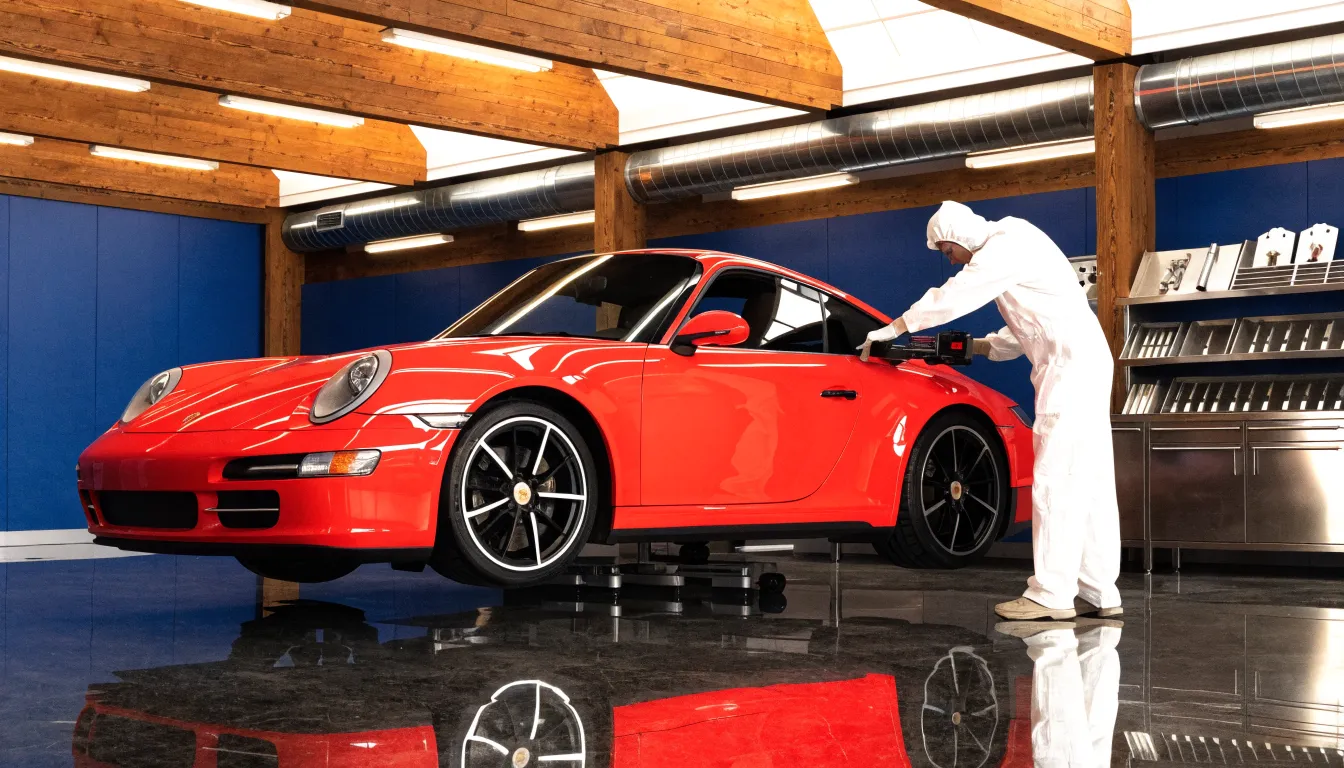
When a Porsche, a vehicle engineered to sub-millimeter tolerances, suffers collision damage, the repair process carries a higher technical bar than it does for a standard family sedan. A porsche certified collision center is a body shop that has passed Porsche's own qualification process, demonstrating the equipment, training, and parts sourcing standards Porsche considers necessary to restore these vehicles correctly.
This guide explains what that certification actually means, why it matters for safety and resale value, what it typically costs, and how Porsche owners can find and verify a qualified shop near them. It covers the Porsche Collision Certification Program (PCCP), which governs these requirements, along with honest trade-offs to consider before making a repair decision.
For those navigating the broader collision repair process, AutoBodyShopNear. me's collision repair resource library provides additional guidance on estimates, insurance claims, and shop selection criteria.
What is the Porsche Collision Certification Program (PCCP)?
The Porsche Collision Certification Program, commonly referred to as the PCCP program, is Porsche Cars North America's formal credentialing system for collision repair facilities. It sets minimum standards for tools, equipment, training, and parts sourcing that a shop must maintain to carry the Porsche Certified designation.
Porsche introduced the PCCP program to address a specific problem: modern Porsche vehicles use complex multi-material construction, combining high-strength steel, aluminum alloys, magnesium components, and carbon fiber reinforced polymer (CFRP) in different areas of the vehicle. Repairing these materials correctly requires different techniques, different equipment, and different training than repairing a conventional steel unibody.
A shop that earns PCCP certification has demonstrated to Porsche that it meets these baseline requirements. Certification does not guarantee a perfect repair on every job, but it does mean the shop has the foundational capability to perform Porsche-approved procedures.
What the PCCP program requires of certified shops
To earn and maintain certification, a Porsche approved body shop must meet requirements across four categories:
Equipment: Certified shops must operate a dedicated, contamination-free aluminum repair area, physically separated from steel repair areas to prevent galvanic corrosion between dissimilar metals. Required tools include aluminum-specific MIG/MAG welding equipment, rivet bonding systems, computerized measuring systems capable of mapping Porsche's exact structural dimensions, and spray booth systems that meet Porsche's paint temperature and humidity standards.
Training: Technicians must complete Porsche-approved training through programs recognized by I-CAR (the Inter-Industry Conference on Auto Collision Repair, the collision industry's primary training organization). This includes Porsche-specific structural repair procedures and aluminum repair methodology. I-CAR's training standards are publicly available for consumers who want to verify technician credentials.
Parts sourcing: Certified shops commit to using Porsche OEM (Original Equipment Manufacturer) parts, components made by or for Porsche to exact factory specifications, for structural and safety-related repairs. This is the Porsche OEM parts requirement that distinguishes certified shops from general body shops that may substitute aftermarket or salvage components.
Facility standards: Porsche conducts periodic audits of certified locations to verify compliance. Shops that fall out of compliance can lose certification.
Why certification matters for Porsche repairs specifically
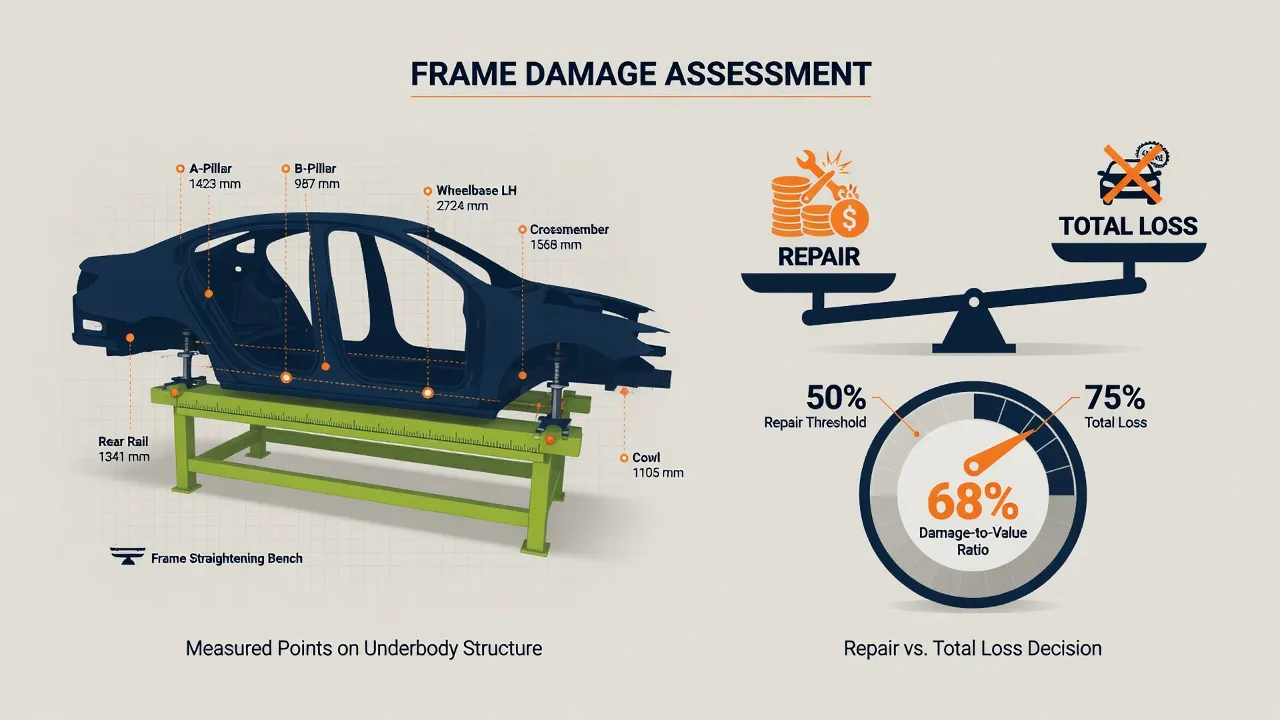
The technical case for using a porsche certified collision center is strongest when structural damage is involved. Here is why the specialization matters.
Aluminum repair requires a dedicated environment
Many Porsche models, particularly the Panamera, Cayenne, Taycan, and 911, use extensive aluminum in their body structures. Porsche aluminum repair requires a separate workspace because aluminum particles, if they contaminate a steel welding area, can cause pitting corrosion that compromises metal strength over time. A shop without a dedicated aluminum environment cannot safely perform these repairs, regardless of how skilled its technicians are.
Improper aluminum repair is not always visible. A panel can look correct while the underlying structure is weakened, which has implications for how the vehicle performs in a subsequent collision.
Multi-material construction changes repair procedures
Modern Porsche vehicles use structural adhesive bonding alongside traditional welding. This means some components are bonded together with engineered adhesives, not just welded. Replacing or repairing these sections requires both the correct adhesive systems and the correct curing procedures. Using the wrong bonding agent, or skipping the curing step, can compromise the structural integrity of the repair.
Porsche publishes model-specific repair procedures, detailed, step-by-step documentation for how each structural area should be repaired. Certified shops have access to these procedures. Non-certified shops typically do not.
ADAS systems require recalibration after structural repairs
Most current Porsche models are equipped with Advanced Driver Assistance Systems (ADAS), technologies including automatic emergency braking, lane departure warning, adaptive cruise control, and blind-spot monitoring. These systems depend on precisely positioned sensors and cameras. After any collision that involves structural repair or significant panel work, these sensors must be recalibrated to factory specifications.
Miscalibrated ADAS can give false readings or fail to respond correctly in a driving emergency. Certified Porsche shops have the diagnostic equipment required for this recalibration. Some general body shops subcontract ADAS recalibration to dealers, which can add time and cost, and introduces a handoff point where accountability becomes unclear.
To understand the broader scope of collision repair for luxury vehicles, AutoBodyShopNear. me's auto body shops directory includes filterable listings by certification type.
What Porsche certified collision repair typically costs
Using a porsche certified collision center generally costs more than using a non-certified general body shop. Understanding why, and how much more, helps owners make an informed decision.
Why certified shops charge more
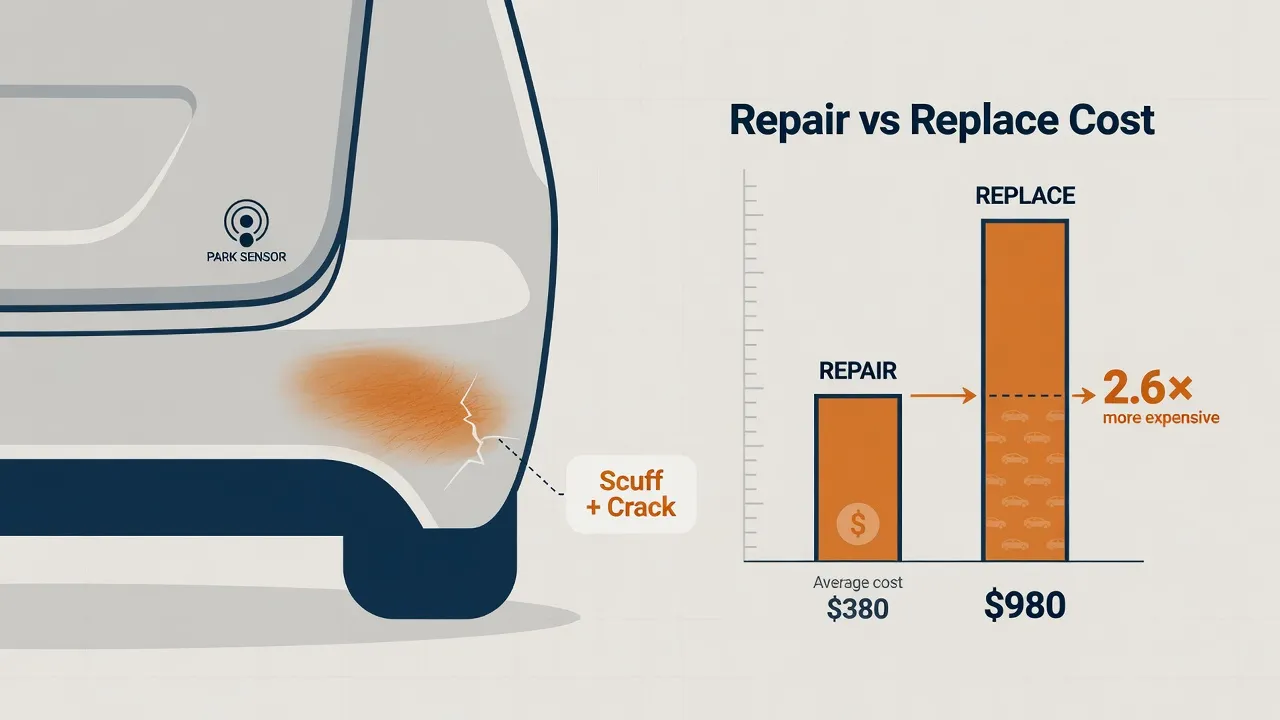
The cost premium reflects real overhead. Dedicated aluminum repair equipment, Porsche-specific diagnostic tools, and ongoing technician training all carry significant capital and operating costs. Certified shops pass some portion of that overhead into their labor rates.
Additionally, certified shops use Porsche OEM parts rather than lower-cost aftermarket alternatives. OEM parts cost more because they are manufactured to Porsche's tolerances and backed by Porsche's warranty on the parts themselves.
Typical cost ranges for certified Porsche repairs
Cost varies widely by damage severity, specific model, and geographic location. The following ranges reflect general market data as of 2026:
| Repair type | Estimated cost range | Notes |
|---|---|---|
| Minor panel repair (cosmetic only) | $800 to $2,500 | Depends on panel material and paint complexity |
| Moderate collision damage (one zone) | $3,000 to $8,000 | May involve structural components, ADAS recalibration |
| Significant structural damage | $10,000 to $25,000+ | Multiple structural zones, full ADAS reset |
| Carbon fiber component repair/replacement | $5,000 to $20,000+ | Highly model- and part-specific |
Labor rates at certified Porsche shops in major metro markets typically run $150 to $200 per hour or higher, compared to $80 to $130 per hour at general body shops. This difference compounds on large repairs.
Insurance and certified shops
Insurance companies do not always automatically approve the higher rates charged by Porsche certified body shops. Car owners may need to advocate for:
- OEM parts coverage (some policies include this; others require an endorsement or rider)
- Certified shop labor rates rather than the insurer's default labor rate benchmark
- ADAS recalibration costs, which adjusters sometimes flag as an add-on rather than a required repair element
Car owners have the legal right to choose their own repair facility, regardless of which shop an insurance company may suggest. The insurance company is required to pay for a repair that restores the vehicle to its pre-accident condition. If the insurer's estimate is insufficient to cover a certified-shop repair, the owner can submit a supplement, a formal request for additional funds backed by the shop's documented procedure requirements.
For more on navigating estimates and insurance disputes, AutoBodyShopNear. me's guide to collision repair claims covers the supplement process in detail.
Real-world examples: what certification means in practice
The following scenarios illustrate how the PCCP certification decision plays out for actual Porsche owners. Names are illustrative composites drawn from common repair situations.
Scenario 1: The rear-end collision on a Taycan
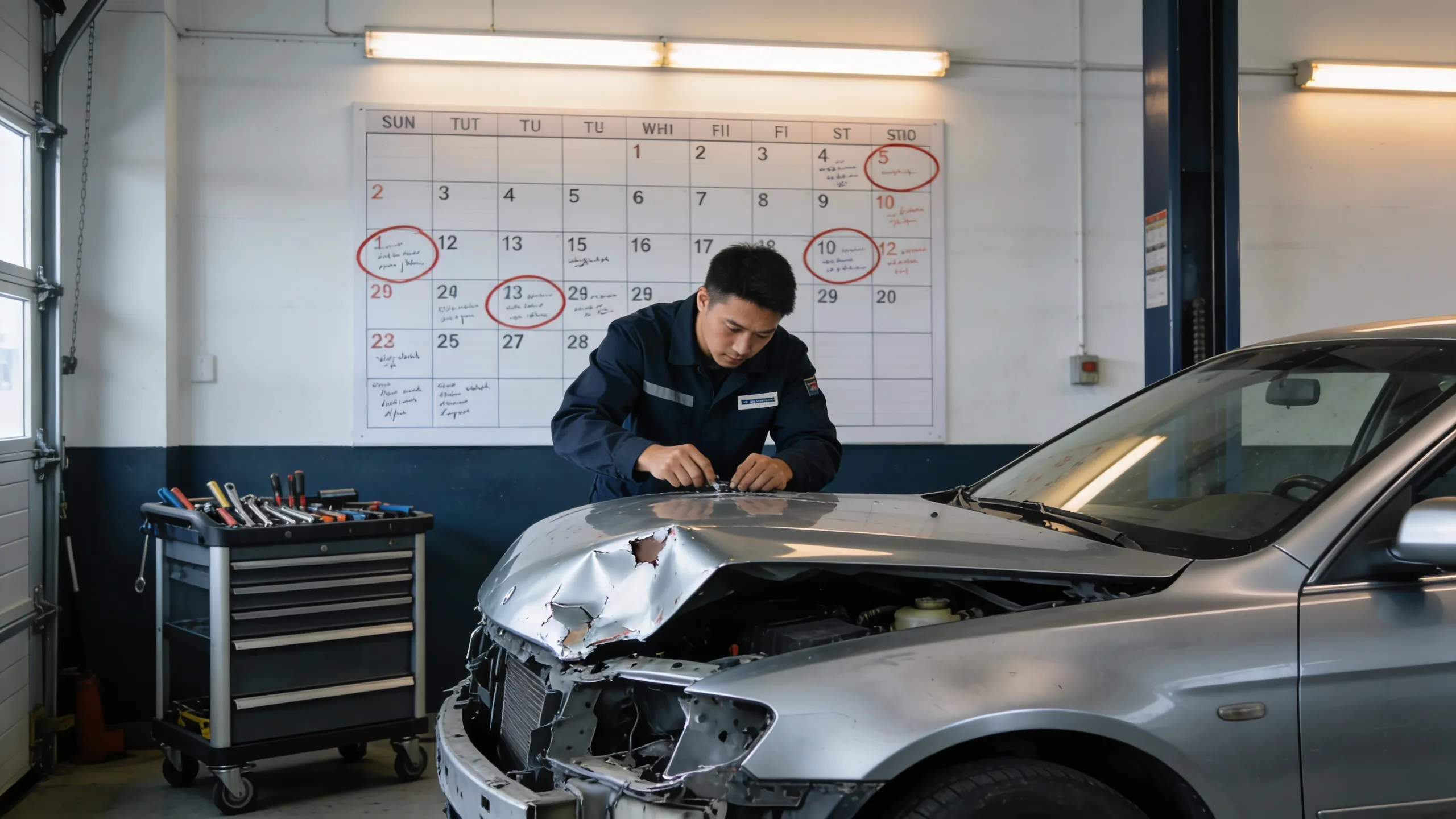
Marcus, a Taycan owner in the Atlanta suburbs, was rear-ended at moderate speed in a parking structure. The visible damage appeared limited to the rear fascia and trunk lid. A local general body shop quoted $2,200 and said the car could be done in four days.
A PCCP-certified facility in the same market quoted $4,800 and flagged that the Taycan's rear aluminum subframe showed minor deformation that was not visible on the surface. That shop also noted that the Taycan's rear-mounted battery housing proximity to the impact zone required inspection per Porsche's EV repair guidelines.
The non-certified shop had not identified the subframe issue because it lacked the computerized measuring equipment to check structural alignment against Porsche's specifications. Marcus chose the certified shop. The repair took nine business days and came in at $5,400 after the subframe work was documented. His insurer initially declined the subframe line item, but the certified shop provided Porsche's repair procedure documentation as supporting evidence, and the supplement was approved.
Scenario 2: The cosmetic-only repair decision
Priya owned a 2019 Cayenne with a door ding and a scuff on the rear quarter panel, both purely cosmetic, with no structural involvement. A PCCP-certified shop near her in Chicago quoted $3,100. A well-regarded independent body shop with I-CAR Gold Class certification (a high general-industry standard) quoted $1,650 for the same work.
After confirming with the certified shop that neither repair area involved structural components or ADAS sensors, Priya chose the independent shop. The completed repair was cosmetically correct. This example illustrates that PCCP certification is most critical when structural or electronic systems are involved, for purely cosmetic work on non-critical panels, a well-qualified independent shop can be a reasonable alternative.
Scenario 3: Resale value and the certified repair record
David purchased a 2021 911 Carrera from a private seller. Before closing the deal, he pulled the vehicle history report, which showed a prior collision claim. He asked whether the repair had been performed at a PCCP-certified facility. The seller confirmed it had and provided the repair documentation from the certified shop.
David's independent Porsche pre-purchase inspector noted that having certified repair records is meaningful to buyers and to Porsche's Approved Pre-Owned (CPO) program. Vehicles repaired at non-certified facilities can face scrutiny in the CPO process, which can affect resale value. David purchased the vehicle with confidence. This scenario reflects the downstream value of choosing a certified shop at the time of the original repair, even if the car is later sold.
How to find and verify a Porsche certified collision center near you
Finding a porsche collision repair near me that is actually PCCP-certified requires verification, not just trust.
Use Porsche's official locator
Porsche Cars North America maintains an official dealer and certified collision shop locator on porsche. com. Searching from this source provides the most current list of certified locations, since certification status can change as shops are added, audited, or removed from the program.
Verify directly with the shop
When contacting a shop that claims PCCP certification, ask specifically:
- Are you currently certified under the Porsche Collision Certification Program?
- What year did you achieve certification, and when was your most recent audit?
- Do you have a dedicated aluminum repair area separate from your steel repair workspace?
- Do your technicians have current Porsche-approved training documentation?
A legitimate certified shop will answer these questions specifically. Vague responses, "we work on Porsches all the time" or "we're certified for luxury vehicles", are not the same as active PCCP certification.
Cross-reference with your Porsche dealer
A local authorized Porsche dealer can typically confirm which collision facilities in the area are current PCCP-certified partners. Dealers have a direct relationship with these shops and often refer collision repairs to them.
What to look for in the shop itself
A verified porsche approved body shop will typically have visible Porsche certification signage, a separate and clearly marked aluminum repair area, and computerized frame measuring equipment. Technicians should be able to reference Porsche's online repair procedures during the estimate process.
The IIHS (Insurance Institute for Highway Safety) provides consumer guidance on structural repair quality standards that applies across vehicle makes, a useful reference for understanding what "correct" structural repair documentation should look like.
The impact of repair quality on Porsche resale value
The collision repair decision has financial consequences that extend beyond the repair itself. Porsche vehicles hold strong residual values, but that value is sensitive to repair history and the quality of that repair.
How buyers and programs assess repair history
Porsche's Approved Pre-Owned (CPO) program requires inspection of vehicles that have prior collision history. Repairs performed at PCCP-certified facilities, using OEM parts and documented procedures, are more likely to pass CPO inspection than repairs performed without documentation or with aftermarket parts.
Private buyers of used Porsches increasingly use vehicle history reports and request repair documentation as standard practice. A repair record showing a PCCP-certified facility and OEM parts can be a meaningful selling point. A repair record showing a non-certified shop, or the absence of any documentation, raises questions.
Diminished value considerations
Diminished value, the reduction in a vehicle's market value following a collision, even after a complete repair, is a concept that applies to all vehicles but is particularly significant for high-value cars like Porsches. Insurance claims for diminished value are separate from repair cost claims and are recognized in most states.
Repairs performed at PCCP-certified facilities, with full documentation, tend to result in lower diminished value assessments than repairs performed without documentation or with non-OEM parts. This is because certified repairs provide evidence that the vehicle was restored to manufacturer specifications, which is the standard appraisers use when calculating post-repair value.
Key factors to weigh when choosing a certified vs. non-certified shop
Not every Porsche collision repair requires a PCCP-certified facility. The following framework helps owners assess the decision:
Strongly favor a certified shop when:
- Any structural zone of the vehicle is involved
- ADAS sensors, cameras, or radar units are in the repair area
- The vehicle uses aluminum construction in the damaged area
- The vehicle is new, under warranty, or will be returned to CPO consideration
- The repair involves carbon fiber components
A qualified non-certified shop may be appropriate when:
- The damage is purely cosmetic (paint, minor body panel, no structural involvement)
- The shop has verifiable I-CAR Gold Class certification and documented experience with luxury vehicles
- A certified facility is not available within a reasonable distance
- The repair cost difference is material and the vehicle is older or out of CPO eligibility
Car owners who are unsure should request written estimates from both a certified and a non-certified facility, and compare not just price but what each shop's estimate includes, particularly around structural inspection, measuring, and ADAS recalibration.
Frequently asked questions
What is the Porsche Collision Certification Program (PCCP)?
The PCCP program is Porsche Cars North America's official certification program for collision repair facilities. To earn certification, shops must meet Porsche's standards for equipment (including dedicated aluminum repair areas), technician training through Porsche-approved courses, and parts sourcing using Porsche OEM components for structural repairs. Porsche audits certified shops periodically to maintain compliance. The program exists because Porsche's multi-material construction, combining aluminum, high-strength steel, and carbon fiber, requires specialized techniques and tools that general body shops typically do not have.
Does using a Porsche certified collision center affect my warranty?
Porsche's new vehicle warranty covers defects in materials and workmanship from the factory. Collision damage is not covered under the factory warranty regardless of where it is repaired. However, the method of repair can affect warranty-adjacent programs. Repairs performed with non-OEM parts or outside Porsche's approved procedures can create grounds for Porsche to decline warranty claims on components affected by those repairs. Using a PCCP-certified shop with OEM parts and documented procedures protects the owner from these complications.
Will my insurance pay for a Porsche certified body shop?
Insurance companies are required to pay for a repair that restores the vehicle to its pre-accident condition. Whether the insurer automatically approves a certified shop's labor rate and OEM parts pricing varies by carrier and policy. Some policies include OEM parts coverage as a standard feature; others require a rider or endorsement. Owners may need to submit a supplement, additional documentation from the certified shop, to secure full reimbursement. Car owners always retain the right to choose their own repair facility. The insurer cannot require a specific shop.
How do I verify that a shop is actually PCCP-certified?
The most reliable verification method is Porsche's official shop locator at porsche. com, which lists current certified facilities. Certification status can change, so checking the official source is more reliable than relying on a shop's self-reported claims. Owners can also ask the shop for their PCCP certification documentation, confirm the certification year and most recent audit date, and cross-reference with their local authorized Porsche dealer.
Does PCCP certification guarantee a perfect repair?
Certification indicates that a shop meets Porsche's minimum equipment, training, and parts standards, it does not guarantee the outcome of any specific repair. Repair quality still depends on the skill of individual technicians and the thoroughness of the shop's process on a given job. Certification is a meaningful baseline quality indicator, but owners should still review the estimate carefully, ask to see the shop's repair procedure documentation, and understand the warranty the shop offers on completed work.
Is it necessary to use a certified shop for minor cosmetic damage?
Not necessarily. For damage that is purely cosmetic, surface scratches, minor paint damage, or small dents with no structural involvement or ADAS proximity, a well-qualified independent body shop with I-CAR Gold Class certification can often produce acceptable results at a lower cost. PCCP certification is most important when structural components, aluminum construction, or ADAS systems are involved in the repair. Owners should confirm with the shop whether the specific repair requires certified capabilities before making the decision based on cost alone.
Key takeaways
-
A porsche certified collision center holds active certification under the Porsche Collision Certification Program (PCCP), which requires dedicated aluminum repair equipment, Porsche-approved technician training, and OEM parts usage for structural repairs.
-
PCCP certification is most important when the repair involves structural components, aluminum construction areas, or ADAS sensor systems, all common in current Porsche models.
-
Certified shops typically charge more than general body shops, reflecting higher equipment costs, trained labor, and OEM parts pricing. Cost premiums of 30% to 80% over non-certified shops are common for structural repairs.
-
Insurance companies do not always automatically cover the full cost of a certified repair. Car owners may need to submit supplements documenting Porsche's required repair procedures to secure full reimbursement.
-
Resale value and CPO eligibility are affected by where and how collision repairs are performed. Certified repairs with full documentation provide a verifiable paper trail that supports vehicle value.
-
To find a verified porsche approved body shop, use the official Porsche shop locator at porsche. com and confirm certification status directly with the facility.
-
For cosmetic-only repairs with no structural or ADAS involvement, a qualified non-certified shop may be appropriate; but owners should confirm this with both facilities before deciding.
Car owners facing a Porsche repair decision can browse auto body shops near them and request a repair estimate to compare options before committing to a shop. Understanding what PCCP certification means, and when it matters most, is the foundation for making that decision with confidence.
Last updated: May 2026. Porsche PCCP program requirements and certified shop lists are subject to change. Verify current certification status directly through the official Porsche locator at porsche. com.